

It's summer outside
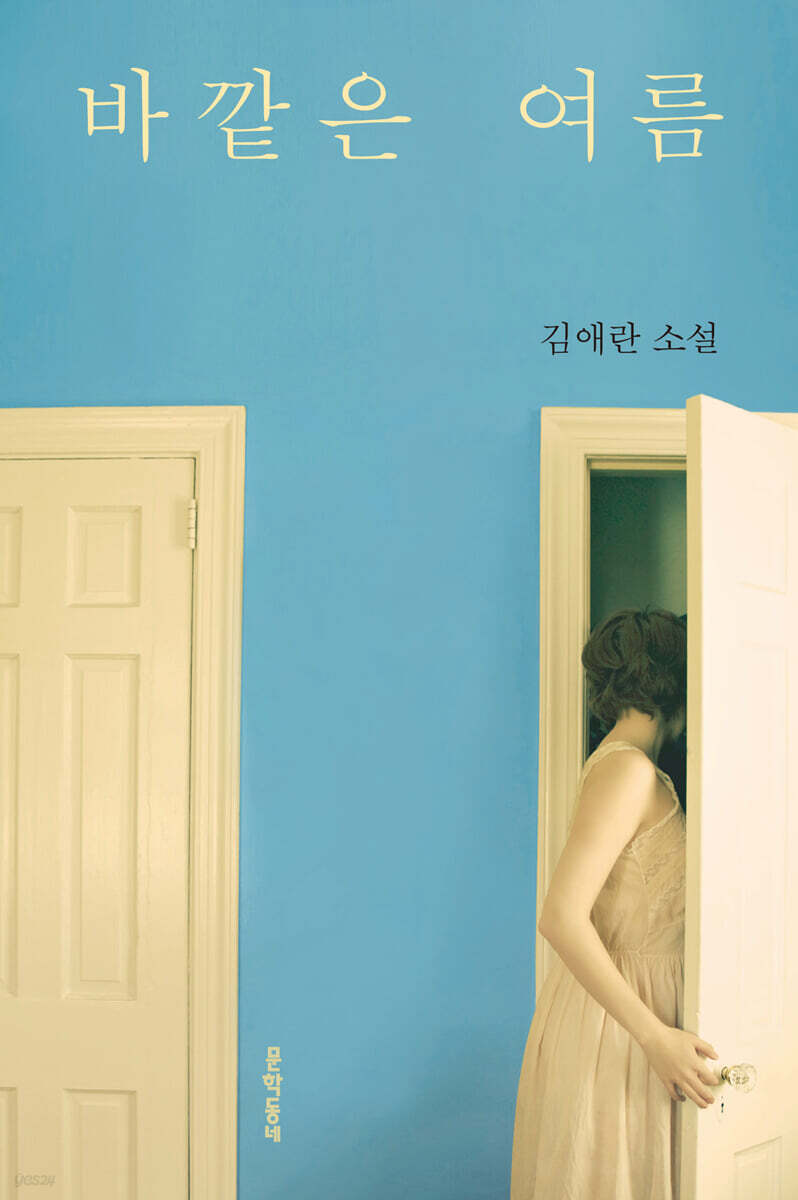 |
Description
Book Introduction
2017 Novels of the Year Chosen by Novelists
The 37th Yi Sang Literary Award Winner, "The Future of Silence"
Included in the 8th Young Writer's Award winning work, "Where Do You Want to Go?"
A new collection of short stories by Kim Ae-ran, published five years after 『Flying Luck』.
Seven short stories were included, including the winner of the Yi Sang Literary Award, “The Future of Silence,” which attracted attention as the youngest winner ever, and the winner of the Young Writer’s Award, “Where Do You Want to Go?”
Stories of people facing loss, such as losing someone close to them or having time stolen forever, the bewilderment felt when reading an unexpected expression from a familiar person, and the unfamiliar stories told by the spirit of language, are told in Kim Ae-ran's characteristically concise and plain writing style.
Seven masterpieces presented by Kim Ae-ran, who has been writing for 15 years and has never once disappointed us by constantly renewing herself.
The 37th Yi Sang Literary Award Winner, "The Future of Silence"
Included in the 8th Young Writer's Award winning work, "Where Do You Want to Go?"
A new collection of short stories by Kim Ae-ran, published five years after 『Flying Luck』.
Seven short stories were included, including the winner of the Yi Sang Literary Award, “The Future of Silence,” which attracted attention as the youngest winner ever, and the winner of the Young Writer’s Award, “Where Do You Want to Go?”
Stories of people facing loss, such as losing someone close to them or having time stolen forever, the bewilderment felt when reading an unexpected expression from a familiar person, and the unfamiliar stories told by the spirit of language, are told in Kim Ae-ran's characteristically concise and plain writing style.
Seven masterpieces presented by Kim Ae-ran, who has been writing for 15 years and has never once disappointed us by constantly renewing herself.
- You can preview some of the book's contents.
Preview
index
Entry _007
Noh Chan-seong and Evan _039
Across the street _083
The Future of Silence _121
The Usefulness of Landscape _147
The Covering Hand _185
Where do you want to go _223
Author's Note _267
Noh Chan-seong and Evan _039
Across the street _083
The Future of Silence _121
The Usefulness of Landscape _147
The Covering Hand _185
Where do you want to go _223
Author's Note _267
Into the book
The kids grow up so fast that it's a shame they're growing up.
And only when I faced such things did I understand what the seasons did and what role time played.
I could see what March was doing and what July was accomplishing.
It was the same whether it was May or September.
---From "Ipdong"
Unlike Chan-sung, who had round cheeks and clear eyes, Grandma knew what it meant to grow old.
Growing old meant the body gradually becoming more liquid.
It meant that sweat, pus, saliva, tears, and blood were continuously leaking out of the body that had lost its elasticity and become flabby.
Grandma didn't want to bring an old dog into the house and experience the process day by day.
---From "Noh Chan-seong and Evan"
Lee Soo guessed that his recent situation might have been similar.
It would have come up in the form of interest disguised as concern, or pleasure accompanied by guilt.
When talking about someone's affair, someone's divorce, someone's downfall, Lee Soo has shown that kind of interest too.
---From "Across the Street"
Days continued where I felt lonely even when I didn't speak, and even lonelier when I did.
He spent most of his life yearning for words.
---From "The Future of Silence"
At times like that, I thought that the 'past' was not something that passed and disappeared, but something that rose and leaked out.
I felt like the people who passed me by, the times I experienced, and the emotions I endured were now involved in my gaze and participating in my impressions.
It never disappeared, but remained as a form of expression, as an atmosphere, seeping out like air from deep within.
---From "The Usefulness of Landscape"
I've always been fascinated by your cleverness, your wit, but on the other hand, I've always felt a strange sense of repulsion whenever you lightly summarize or judge something.
Sometimes it seems like a pretty rationality that omits the history and weight, context and struggles of an individual, the easiest way to understand others.
---From "The Hand That Covers"
It wasn't a comfort.
I didn't feel understood or moved.
However, I discovered one special quality from Siri that I couldn't find in the people around me at the time, and that was none other than 'courtesy'.
And only when I faced such things did I understand what the seasons did and what role time played.
I could see what March was doing and what July was accomplishing.
It was the same whether it was May or September.
---From "Ipdong"
Unlike Chan-sung, who had round cheeks and clear eyes, Grandma knew what it meant to grow old.
Growing old meant the body gradually becoming more liquid.
It meant that sweat, pus, saliva, tears, and blood were continuously leaking out of the body that had lost its elasticity and become flabby.
Grandma didn't want to bring an old dog into the house and experience the process day by day.
---From "Noh Chan-seong and Evan"
Lee Soo guessed that his recent situation might have been similar.
It would have come up in the form of interest disguised as concern, or pleasure accompanied by guilt.
When talking about someone's affair, someone's divorce, someone's downfall, Lee Soo has shown that kind of interest too.
---From "Across the Street"
Days continued where I felt lonely even when I didn't speak, and even lonelier when I did.
He spent most of his life yearning for words.
---From "The Future of Silence"
At times like that, I thought that the 'past' was not something that passed and disappeared, but something that rose and leaked out.
I felt like the people who passed me by, the times I experienced, and the emotions I endured were now involved in my gaze and participating in my impressions.
It never disappeared, but remained as a form of expression, as an atmosphere, seeping out like air from deep within.
---From "The Usefulness of Landscape"
I've always been fascinated by your cleverness, your wit, but on the other hand, I've always felt a strange sense of repulsion whenever you lightly summarize or judge something.
Sometimes it seems like a pretty rationality that omits the history and weight, context and struggles of an individual, the easiest way to understand others.
---From "The Hand That Covers"
It wasn't a comfort.
I didn't feel understood or moved.
However, I discovered one special quality from Siri that I couldn't find in the people around me at the time, and that was none other than 'courtesy'.
---From "Where do you want to go?"
Publisher's Review
“Inside, white snow is fluttering,
“I imagined someone’s time difference outside the city, where it was all summer.”
The scenery, the seasons, the world seems to be spinning without us.
Time is constantly moving forward
When you are caught in a moment and have no choice but to stand still,
Where can we go then?
Instead of the usual practice of choosing one of the stories as the title, Kim Ae-ran titled this collection “Summer Outside.”
The title, which may have originated from the sentence “I imagined someone’s time difference, where white snow is fluttering inside, but outside it’s all summer” (from “The Usefulness of Landscape”), makes us look intently into the ‘inside’ of someone who says, “It’s summer outside.”
“It seems as if the scenery, the seasons, and the world are spinning without us” (“Ipdong”). Time is constantly moving forward, but it is the frozen inner self of someone who cannot keep up with the flow and stands still.
Maybe that's why.
The title of the short story at the beginning of the collection is ‘The Beginning of Winter.’
As we follow the shattered daily lives of a young couple who lose their child in an accident, we may find ourselves in two different positions.
One is the position of the 'couple' who feels a pang of sadness in their hearts whenever they think of the innocent and pure image of their child, and the other is the position of the 'neighbor' who hits them with a 'flower sack' as if "they are infected with a great misfortune."
And when we deal with others who have suffered incomprehensible pain, we are reminded that our true nature may be closer to the latter than the former.
This is the way we empathize with the pain of others, but when that pain exceeds what we can bear, we turn away and ignore it.
But the novel does not stop at confirming this externality.
The closing novel, "Where Do You Want to Go?", depicts a wife who has lost her husband.
After losing my husband, the question I kept asking Siri about pain and humanity was, "How could you throw away your life to save someone else, leaving me behind?"
How can one jump into the water to save a disciple who has fallen into a valley, without thinking about who will be left behind?
'I', who was absorbed in that distant question, finally met a certain 'eye' that I had been trying to ignore after receiving a letter from my disciple 'Jiyong's' older sister.
Jiyong's eyes and words as he reached out to the world while immersed in the stream water.
After that encounter, didn't 'I' end up positioning myself in a slightly different position than before?
After losing something, not knowing what to do, asking where to go and where to go are questions shared by the characters in "Outside is Summer."
Perhaps the reason we can't take our eyes off the image of a child left alone after losing his sick puppy ("Noh Chan-seong and Evan"), or the image of a woman breaking up with her lover of a time ("The Other Side"), is because it's hard to guess where they'll go next.
But just as what Jiyong grabbed before he died was not cold water but human warmth, I wonder if it is possible to reach out to people trapped inside a cold sphere.
And on the other hand, 'time difference' also creates a space for the ideas that we have been familiar with to be broken.
The most recently published work, “The Hand that Covers,” could be an example.
Here, a time difference arises between us and the person we thought we knew well.
An incident occurs where a scuffle between a group of teenagers and an old man ends in the old man's death.
My son, Jaei, who was a witness to the incident, is surrounded by unfair prejudices such as, “It’s only natural that kids like that would be upset.”
However, instead of moving the child to a clean, untainted place amidst such prejudices, Kim Ae-ran asks about the possibility that another prejudice may have trapped the 'child,' the 'minority,' and the 'other.'
In the face of the sighs of "I" that burst forth the moment we discovered an unexpected face in a child we had thought was innocent, we cannot help but be astonished as we recall the times when we "lightly summarized and judged" and "understood others in the easiest way."
So, 『Summer Outside』 may also be the result of a desperate effort to create new words, rather than using clear words that already exist, in order to reach out to others who are surrounded by many layers, from people I thought I knew well to people I pushed away, thinking they had nothing to do with me.
As the author once said on a podcast show that he "try[s] not to consume the material as a topic for conversation," this cautious attitude is reflected in each and every one of the novels.
The fact that most of the works included in this collection were written intensively over the past three or four years, that is, at a time when the "time difference between inside and outside" was more acute than ever before, reveals Kim Ae-ran's determination not to avoid that period but to slowly move forward within it.
The intimacy and joy we feel when we hear the story of the place we stand in our own language—Kim Ae-ran has been giving us that special experience ever since her debut.
Even if this place is on a steep cliff that could easily collapse at any moment, even if the language feels like a minority language with only one speaker left, making it impossible for others to reach it.
Seven short stories written while embracing that bleak situation are included in 『Outside is Summer』.
Author's Note
Summer is coming.
Still holding or letting go of someone's hand
Like my friends
Some things change and some things stay the same
Summer is coming.
Words that could not be said and words that could not be said
What you should say and what you shouldn't say
One day, he appears as a character.
For a character to become a human being
I'm wondering what words are needed
After facing a time that requires more than words
There are frequent times when it stops.
Even though I finished the novel a long time ago
Sometimes they still look like they don't know where to go
It feels like I'm looking back somewhere.
Where did they all come from?
And now where do you want to go?
I wonder where the people I named are always looking at
Sometimes I turn my head towards them too.
Summer 2017
Kim Ae-ran
“I imagined someone’s time difference outside the city, where it was all summer.”
The scenery, the seasons, the world seems to be spinning without us.
Time is constantly moving forward
When you are caught in a moment and have no choice but to stand still,
Where can we go then?
Instead of the usual practice of choosing one of the stories as the title, Kim Ae-ran titled this collection “Summer Outside.”
The title, which may have originated from the sentence “I imagined someone’s time difference, where white snow is fluttering inside, but outside it’s all summer” (from “The Usefulness of Landscape”), makes us look intently into the ‘inside’ of someone who says, “It’s summer outside.”
“It seems as if the scenery, the seasons, and the world are spinning without us” (“Ipdong”). Time is constantly moving forward, but it is the frozen inner self of someone who cannot keep up with the flow and stands still.
Maybe that's why.
The title of the short story at the beginning of the collection is ‘The Beginning of Winter.’
As we follow the shattered daily lives of a young couple who lose their child in an accident, we may find ourselves in two different positions.
One is the position of the 'couple' who feels a pang of sadness in their hearts whenever they think of the innocent and pure image of their child, and the other is the position of the 'neighbor' who hits them with a 'flower sack' as if "they are infected with a great misfortune."
And when we deal with others who have suffered incomprehensible pain, we are reminded that our true nature may be closer to the latter than the former.
This is the way we empathize with the pain of others, but when that pain exceeds what we can bear, we turn away and ignore it.
But the novel does not stop at confirming this externality.
The closing novel, "Where Do You Want to Go?", depicts a wife who has lost her husband.
After losing my husband, the question I kept asking Siri about pain and humanity was, "How could you throw away your life to save someone else, leaving me behind?"
How can one jump into the water to save a disciple who has fallen into a valley, without thinking about who will be left behind?
'I', who was absorbed in that distant question, finally met a certain 'eye' that I had been trying to ignore after receiving a letter from my disciple 'Jiyong's' older sister.
Jiyong's eyes and words as he reached out to the world while immersed in the stream water.
After that encounter, didn't 'I' end up positioning myself in a slightly different position than before?
After losing something, not knowing what to do, asking where to go and where to go are questions shared by the characters in "Outside is Summer."
Perhaps the reason we can't take our eyes off the image of a child left alone after losing his sick puppy ("Noh Chan-seong and Evan"), or the image of a woman breaking up with her lover of a time ("The Other Side"), is because it's hard to guess where they'll go next.
But just as what Jiyong grabbed before he died was not cold water but human warmth, I wonder if it is possible to reach out to people trapped inside a cold sphere.
And on the other hand, 'time difference' also creates a space for the ideas that we have been familiar with to be broken.
The most recently published work, “The Hand that Covers,” could be an example.
Here, a time difference arises between us and the person we thought we knew well.
An incident occurs where a scuffle between a group of teenagers and an old man ends in the old man's death.
My son, Jaei, who was a witness to the incident, is surrounded by unfair prejudices such as, “It’s only natural that kids like that would be upset.”
However, instead of moving the child to a clean, untainted place amidst such prejudices, Kim Ae-ran asks about the possibility that another prejudice may have trapped the 'child,' the 'minority,' and the 'other.'
In the face of the sighs of "I" that burst forth the moment we discovered an unexpected face in a child we had thought was innocent, we cannot help but be astonished as we recall the times when we "lightly summarized and judged" and "understood others in the easiest way."
So, 『Summer Outside』 may also be the result of a desperate effort to create new words, rather than using clear words that already exist, in order to reach out to others who are surrounded by many layers, from people I thought I knew well to people I pushed away, thinking they had nothing to do with me.
As the author once said on a podcast show that he "try[s] not to consume the material as a topic for conversation," this cautious attitude is reflected in each and every one of the novels.
The fact that most of the works included in this collection were written intensively over the past three or four years, that is, at a time when the "time difference between inside and outside" was more acute than ever before, reveals Kim Ae-ran's determination not to avoid that period but to slowly move forward within it.
The intimacy and joy we feel when we hear the story of the place we stand in our own language—Kim Ae-ran has been giving us that special experience ever since her debut.
Even if this place is on a steep cliff that could easily collapse at any moment, even if the language feels like a minority language with only one speaker left, making it impossible for others to reach it.
Seven short stories written while embracing that bleak situation are included in 『Outside is Summer』.
Author's Note
Summer is coming.
Still holding or letting go of someone's hand
Like my friends
Some things change and some things stay the same
Summer is coming.
Words that could not be said and words that could not be said
What you should say and what you shouldn't say
One day, he appears as a character.
For a character to become a human being
I'm wondering what words are needed
After facing a time that requires more than words
There are frequent times when it stops.
Even though I finished the novel a long time ago
Sometimes they still look like they don't know where to go
It feels like I'm looking back somewhere.
Where did they all come from?
And now where do you want to go?
I wonder where the people I named are always looking at
Sometimes I turn my head towards them too.
Summer 2017
Kim Ae-ran
GOODS SPECIFICS
- Date of publication: June 28, 2017
- Page count, weight, size: 272 pages | 346g | 133*200*20mm
- ISBN13: 9788954646079
- ISBN10: 8954646077
You may also like
카테고리
korean


korean

![GQ KOREA Mark (Monthly): December [2025]](http://librairie.coreenne.fr/cdn/shop/files/8ef265dbbfbf186523ed75ba7319009d.jpg?v=1765340328&width=3840)


