

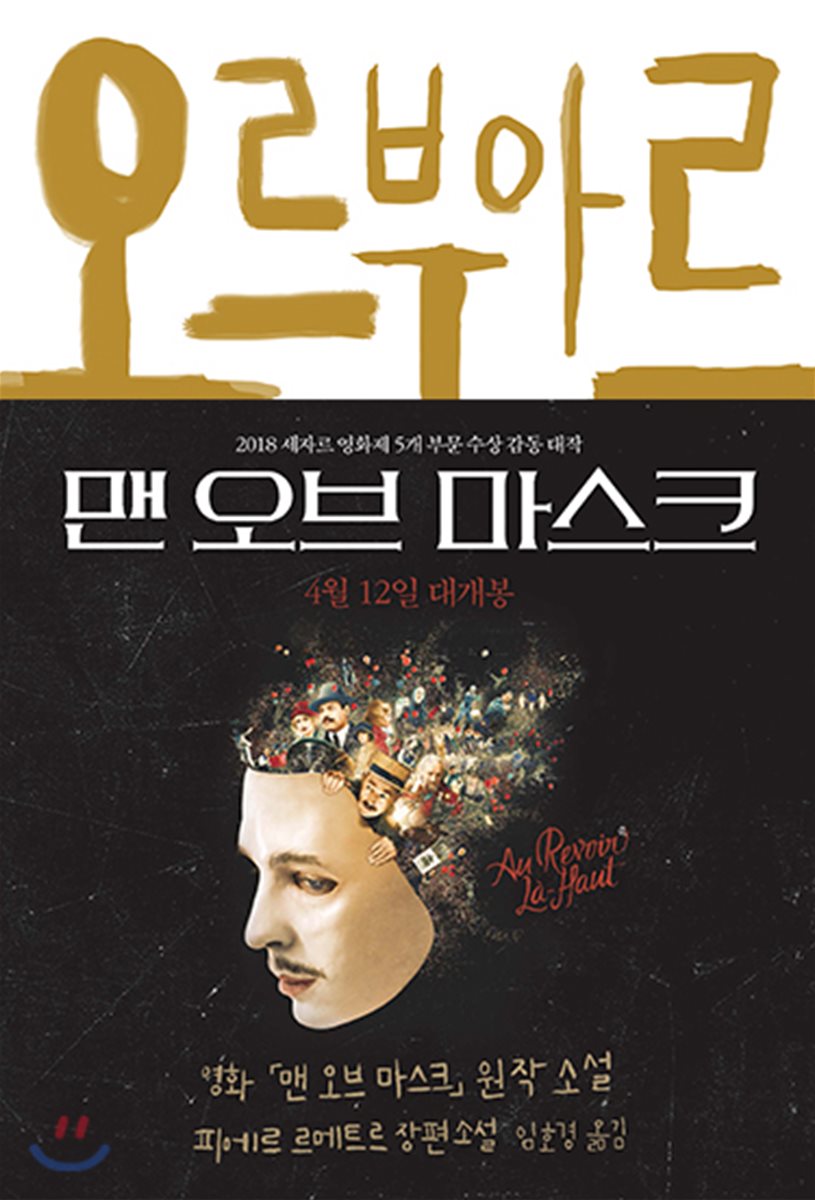
Orbuar
 |
Description
Book Introduction
A new direction for French literature!
The most beautiful literature published in this era!
A brilliant, thrilling, and heart-pounding novel
Pierre Lemaître's Goncourt Prize-winning novel, Orbuir (2013, Albin Michel), was published by Open Books.
Pierre Lemaître is a late-blooming writer who made his debut at the age of 55, and his first novel, Irène, made a brilliant debut when it won the Cognac Mystery Literature Festival Novel Prize.
In 2013, he won the Prix Goncourt, one of the world's top three literary awards and France's highest literary award, for "Orboir," and emerged as a leading figure in European literature.
It was unusual even in France for a popular literature writer to be selected for the highest literary award, which is given based on literary and artistic merit.
Lemaître, who proved himself to be a writer with both popularity and literary value by winning the Prix Goncourt, is considered a new horizon and a new paradigm for French literature.
This book, "Orbuar," is set in Paris, France after World War I, and contains an unprecedented fraud story about two young men, wounded by the war waged by the older generation, who fight against a hypocritical world.
The process by which even war develops into a struggle for vested interests among businessmen is depicted with a meticulous composition and a thrilling writing style.
The author, who possesses a thrilling sensibility comparable to that of a Hollywood film and the delicate sensibility and profound philosophy characteristic of French literature, has produced a masterpiece that perfectly combines suspense, humor, crime and twists, love and reconciliation, and tragedy.
2013 Prix Goncourt
2013 French National Broadcasting Literature Award
2013 Le Point - Nancy City Book Award
2013 Brignole City Literary Award
2013 Lire-L'Express [Best French Novel]
Selected as the best French novel by Libre Hebdo in 2013
Selected as one of the best books of the year by Le Point magazine in 2013
The most beautiful literature published in this era!
A brilliant, thrilling, and heart-pounding novel
Pierre Lemaître's Goncourt Prize-winning novel, Orbuir (2013, Albin Michel), was published by Open Books.
Pierre Lemaître is a late-blooming writer who made his debut at the age of 55, and his first novel, Irène, made a brilliant debut when it won the Cognac Mystery Literature Festival Novel Prize.
In 2013, he won the Prix Goncourt, one of the world's top three literary awards and France's highest literary award, for "Orboir," and emerged as a leading figure in European literature.
It was unusual even in France for a popular literature writer to be selected for the highest literary award, which is given based on literary and artistic merit.
Lemaître, who proved himself to be a writer with both popularity and literary value by winning the Prix Goncourt, is considered a new horizon and a new paradigm for French literature.
This book, "Orbuar," is set in Paris, France after World War I, and contains an unprecedented fraud story about two young men, wounded by the war waged by the older generation, who fight against a hypocritical world.
The process by which even war develops into a struggle for vested interests among businessmen is depicted with a meticulous composition and a thrilling writing style.
The author, who possesses a thrilling sensibility comparable to that of a Hollywood film and the delicate sensibility and profound philosophy characteristic of French literature, has produced a masterpiece that perfectly combines suspense, humor, crime and twists, love and reconciliation, and tragedy.
2013 Prix Goncourt
2013 French National Broadcasting Literature Award
2013 Le Point - Nancy City Book Award
2013 Brignole City Literary Award
2013 Lire-L'Express [Best French Novel]
Selected as the best French novel by Libre Hebdo in 2013
Selected as one of the best books of the year by Le Point magazine in 2013
- You can preview some of the book's contents.
Preview
Into the book
Albert's face turned pale, and his temples began to throbbed at an unimaginable rate.
All the blood vessels in my body are about to burst.
He calls Cecil.
I want to get between her legs.
I want to be squeezed so tightly that I can't stand it.
But Cecil's appearance doesn't reach him.
It's as if he's too far away to come, and that's what breaks his heart the most.
That I can't see her now, that she's not by my side.
Now only her name remains.
Because in the world he is now immersed in, there are no bodies, only words.
He wants to beg her to go with him.
Dying is terrifyingly scary.
But it's a futile effort.
He must die alone without her.
Well then, goodbye, see you in heaven.
After a very long time.
Hello, my Cecil.
--- p.37~38
People from nearby cities came and talked to the soldiers.
They had miserable faces.
Women stretched out their arms and held out photographs, saying they were looking for their sons and husbands.
It was like looking for a needle in a haystack.
The fathers stayed behind.
It has always been women who have struggled, who have asked questions, who have continued their silent struggle, and who have risen again each morning with the sliver of hope that still remains.
The men had long since given up hope.
The soldiers who were asked the question nodded and answered vaguely.
The pictures were all similar.
--- p.146
Edouard didn't think much about his family, but he thought more about Madeleine than about anyone else.
I had quite a few memories of her.
The laughter that threatened to burst out, the smile sent from the door, the crooked fingers that scratched his head, and their complicity.
My heart felt heavy when I thought of her.
When she heard the news of her brother's death, she must have been heartbroken, as any woman who has lost someone would be.
But then comes the time, the great doctor… … .
People eventually get used to someone's death.
--- p.284
He would pick up this wooden billboard near the subway station every morning and carry it around, then swap it out for something else during his quick lunch break.
The staff, mostly discharged soldiers who had yet to find regular jobs, numbered about ten per district, and there was a supervisor there, a vicious man who was always hiding somewhere, and if you stopped for a moment to rub his shoulder, he would jump out like lightning and threaten to fire you if you didn't move right away.
(…) It was forbidden to even stand for a moment to take out the hat from the pocket.
I had to keep walking.
“Walking is your job,” the supervisor used to say.
"Weren't you a [land dog] in the army? This is the same."
All the blood vessels in my body are about to burst.
He calls Cecil.
I want to get between her legs.
I want to be squeezed so tightly that I can't stand it.
But Cecil's appearance doesn't reach him.
It's as if he's too far away to come, and that's what breaks his heart the most.
That I can't see her now, that she's not by my side.
Now only her name remains.
Because in the world he is now immersed in, there are no bodies, only words.
He wants to beg her to go with him.
Dying is terrifyingly scary.
But it's a futile effort.
He must die alone without her.
Well then, goodbye, see you in heaven.
After a very long time.
Hello, my Cecil.
--- p.37~38
People from nearby cities came and talked to the soldiers.
They had miserable faces.
Women stretched out their arms and held out photographs, saying they were looking for their sons and husbands.
It was like looking for a needle in a haystack.
The fathers stayed behind.
It has always been women who have struggled, who have asked questions, who have continued their silent struggle, and who have risen again each morning with the sliver of hope that still remains.
The men had long since given up hope.
The soldiers who were asked the question nodded and answered vaguely.
The pictures were all similar.
--- p.146
Edouard didn't think much about his family, but he thought more about Madeleine than about anyone else.
I had quite a few memories of her.
The laughter that threatened to burst out, the smile sent from the door, the crooked fingers that scratched his head, and their complicity.
My heart felt heavy when I thought of her.
When she heard the news of her brother's death, she must have been heartbroken, as any woman who has lost someone would be.
But then comes the time, the great doctor… … .
People eventually get used to someone's death.
--- p.284
He would pick up this wooden billboard near the subway station every morning and carry it around, then swap it out for something else during his quick lunch break.
The staff, mostly discharged soldiers who had yet to find regular jobs, numbered about ten per district, and there was a supervisor there, a vicious man who was always hiding somewhere, and if you stopped for a moment to rub his shoulder, he would jump out like lightning and threaten to fire you if you didn't move right away.
(…) It was forbidden to even stand for a moment to take out the hat from the pocket.
I had to keep walking.
“Walking is your job,” the supervisor used to say.
"Weren't you a [land dog] in the army? This is the same."
--- p.391~392
Albert's face turned pale, and his temples began to throbbed at an unimaginable rate.
All the blood vessels in my body are about to burst.
He calls Cecil.
I want to get between her legs.
I want to be squeezed so tightly that I can't stand it.
But Cecil's appearance doesn't reach him.
It's as if he's too far away to come, and that's what breaks his heart the most.
That I can't see her now, that she's not by my side.
Now only her name remains.
Because in the world he is now immersed in, there are no bodies, only words.
He wants to beg her to go with him.
Dying is terrifyingly scary.
But it's a futile effort.
He must die alone without her.
Well then, goodbye, see you in heaven.
After a very long time.
Hello, my Cecil.
--- pp.37-38
People from nearby cities came and talked to the soldiers.
They had miserable faces.
Women stretched out their arms and held out photographs, saying they were looking for their sons and husbands.
It was like looking for a needle in a haystack.
The fathers stayed behind.
It has always been women who have struggled, who have asked questions, who have continued their silent struggle, and who have risen again each morning with the sliver of hope that still remains.
The men had long since given up hope.
The soldiers who were asked the question nodded and answered vaguely.
The pictures were all similar.
--- p.146
Edouard didn't think much about his family, but he thought more about Madeleine than about anyone else.
I had quite a few memories of her.
The laughter that threatened to burst out, the smile sent from the door, the crooked fingers that scratched his head, and their complicity.
My heart felt heavy when I thought of her.
When she heard the news of her brother's death, she must have been heartbroken, as any woman who has lost someone would be.
But then comes the time, the great doctor… … .
People eventually get used to someone's death.
--- p.284
"Okay, let me tell you what's ethical.
That's what we're gonna do, Captain Pradel, put a bullet in that son of a bitch! That's what we're gonna do! Because this shitty life, this pathetic mess we're in right now, it all comes from him! (...) I think he'd have a great marriage, thanks to all those medals and citations...
A hero like that would be a fight among women! While we're all languishing like this, that guy must have made a big deal out of it...
Do you think this is ethical?
Surprisingly, Edouard had a cold expression on his face, contrary to Albert's expectations.
He raised his eyebrows, bent over the paper, and wrote:
“All of this is primarily because of the war.
If there had been no war, there would have been no Pradel.
Albert was breathless.
Of course I felt disappointed, but more than anything, I was so, so sad.
--- pp.355-356
He would pick up this wooden billboard near the subway station every morning and carry it around, then swap it out for something else during his lunch break, when he would just do a quick yoga.
The staff, mostly discharged soldiers who had yet to find regular jobs, numbered about ten per district, and there was a supervisor there, a vicious man who was always hiding somewhere, and if you stopped for a moment to rub his shoulder, he would jump out like lightning and threaten to fire you if you didn't move right away.
(…) It was forbidden to even stand for a moment to take out the hat from the pocket.
I had to keep walking.
“Walking is your job,” the supervisor used to say.
"Weren't you a [land dog] in the army? This is the same."
--- pp.391-392
For a long time, Merlin would recall the night he had given up on Nodaji.
Giving up Nodaji was for something that felt, if not more valuable, at least closer to ethics.
Although he was not usually fond of the Gotham Junron theory, after retirement, the incidents of the soldiers who were discovered continued to occupy his mind.
Was it necessary to retire in order to take an interest in world affairs and read newspapers?
Through these newspapers he learned of the arrest of Henri Donepradel and the sensational trial of the so-called [Death Moracles].
He read the article reporting his court testimony with a thrill of satisfaction.
But this article was not at all respectful to him.
The reporters did not like this gloomy witness, who was so unpleasant in appearance that he roughly pushed them away when they tried to interview him on the steps in front of the Supreme Court.
Then the world's interests changed, and people lost interest in this case.
Albert's face turned pale, and his temples began to throbbed at an unimaginable rate.
All the blood vessels in my body are about to burst.
He calls Cecil.
I want to get between her legs.
I want to be squeezed so tightly that I can't stand it.
But Cecil's appearance doesn't reach him.
It's as if he's too far away to come, and that's what breaks his heart the most.
That I can't see her now, that she's not by my side.
Now only her name remains.
Because in the world he is now immersed in, there are no bodies, only words.
He wants to beg her to go with him.
Dying is terrifyingly scary.
But it's a futile effort.
He must die alone without her.
Well then, goodbye, see you in heaven.
After a very long time.
Hello, my Cecil.
--- pp.37-38
People from nearby cities came and talked to the soldiers.
They had miserable faces.
Women stretched out their arms and held out photographs, saying they were looking for their sons and husbands.
It was like looking for a needle in a haystack.
The fathers stayed behind.
It has always been women who have struggled, who have asked questions, who have continued their silent struggle, and who have risen again each morning with the sliver of hope that still remains.
The men had long since given up hope.
The soldiers who were asked the question nodded and answered vaguely.
The pictures were all similar.
--- p.146
Edouard didn't think much about his family, but he thought more about Madeleine than about anyone else.
I had quite a few memories of her.
The laughter that threatened to burst out, the smile sent from the door, the crooked fingers that scratched his head, and their complicity.
My heart felt heavy when I thought of her.
When she heard the news of her brother's death, she must have been heartbroken, as any woman who has lost someone would be.
But then comes the time, the great doctor… … .
People eventually get used to someone's death.
--- p.284
"Okay, let me tell you what's ethical.
That's what we're gonna do, Captain Pradel, put a bullet in that son of a bitch! That's what we're gonna do! Because this shitty life, this pathetic mess we're in right now, it all comes from him! (...) I think he'd have a great marriage, thanks to all those medals and citations...
A hero like that would be a fight among women! While we're all languishing like this, that guy must have made a big deal out of it...
Do you think this is ethical?
Surprisingly, Edouard had a cold expression on his face, contrary to Albert's expectations.
He raised his eyebrows, bent over the paper, and wrote:
“All of this is primarily because of the war.
If there had been no war, there would have been no Pradel.
Albert was breathless.
Of course I felt disappointed, but more than anything, I was so, so sad.
--- pp.355-356
He would pick up this wooden billboard near the subway station every morning and carry it around, then swap it out for something else during his quick lunch break.
The staff, mostly discharged soldiers who had yet to find regular jobs, numbered about ten per district, and there was a supervisor there, a vicious man who was always hiding somewhere, and if you stopped for a moment to rub his shoulder, he would jump out like lightning and threaten to fire you if you didn't move right away.
(…) It was forbidden to even stand for a moment to take out the hat from the pocket.
I had to keep walking.
“Walking is your job,” the supervisor used to say.
"Weren't you a [land dog] in the army? This is the same."
--- pp.391-392
For a long time, Merlin would recall the night he had given up on Nodaji.
Giving up Nodaji was for something that felt, if not more valuable, at least closer to ethics.
Although he was not usually fond of the Gotham Junron theory, after retirement, the incidents of the soldiers who were discovered continued to occupy his mind.
Was it necessary to retire in order to take an interest in world affairs and read newspapers?
Through these newspapers he learned of the arrest of Henri Donepradel and the sensational trial of the so-called [Death Moracles].
He read the article reporting his court testimony with a thrill of satisfaction.
But this article was not at all respectful to him.
The reporters did not like this gloomy witness, who was so unpleasant in appearance that he roughly pushed them away when they tried to interview him on the steps in front of the Supreme Court.
Then the world's interests changed, and people lost interest in this case.
All the blood vessels in my body are about to burst.
He calls Cecil.
I want to get between her legs.
I want to be squeezed so tightly that I can't stand it.
But Cecil's appearance doesn't reach him.
It's as if he's too far away to come, and that's what breaks his heart the most.
That I can't see her now, that she's not by my side.
Now only her name remains.
Because in the world he is now immersed in, there are no bodies, only words.
He wants to beg her to go with him.
Dying is terrifyingly scary.
But it's a futile effort.
He must die alone without her.
Well then, goodbye, see you in heaven.
After a very long time.
Hello, my Cecil.
--- pp.37-38
People from nearby cities came and talked to the soldiers.
They had miserable faces.
Women stretched out their arms and held out photographs, saying they were looking for their sons and husbands.
It was like looking for a needle in a haystack.
The fathers stayed behind.
It has always been women who have struggled, who have asked questions, who have continued their silent struggle, and who have risen again each morning with the sliver of hope that still remains.
The men had long since given up hope.
The soldiers who were asked the question nodded and answered vaguely.
The pictures were all similar.
--- p.146
Edouard didn't think much about his family, but he thought more about Madeleine than about anyone else.
I had quite a few memories of her.
The laughter that threatened to burst out, the smile sent from the door, the crooked fingers that scratched his head, and their complicity.
My heart felt heavy when I thought of her.
When she heard the news of her brother's death, she must have been heartbroken, as any woman who has lost someone would be.
But then comes the time, the great doctor… … .
People eventually get used to someone's death.
--- p.284
"Okay, let me tell you what's ethical.
That's what we're gonna do, Captain Pradel, put a bullet in that son of a bitch! That's what we're gonna do! Because this shitty life, this pathetic mess we're in right now, it all comes from him! (...) I think he'd have a great marriage, thanks to all those medals and citations...
A hero like that would be a fight among women! While we're all languishing like this, that guy must have made a big deal out of it...
Do you think this is ethical?
Surprisingly, Edouard had a cold expression on his face, contrary to Albert's expectations.
He raised his eyebrows, bent over the paper, and wrote:
“All of this is primarily because of the war.
If there had been no war, there would have been no Pradel.
Albert was breathless.
Of course I felt disappointed, but more than anything, I was so, so sad.
--- pp.355-356
He would pick up this wooden billboard near the subway station every morning and carry it around, then swap it out for something else during his lunch break, when he would just do a quick yoga.
The staff, mostly discharged soldiers who had yet to find regular jobs, numbered about ten per district, and there was a supervisor there, a vicious man who was always hiding somewhere, and if you stopped for a moment to rub his shoulder, he would jump out like lightning and threaten to fire you if you didn't move right away.
(…) It was forbidden to even stand for a moment to take out the hat from the pocket.
I had to keep walking.
“Walking is your job,” the supervisor used to say.
"Weren't you a [land dog] in the army? This is the same."
--- pp.391-392
For a long time, Merlin would recall the night he had given up on Nodaji.
Giving up Nodaji was for something that felt, if not more valuable, at least closer to ethics.
Although he was not usually fond of the Gotham Junron theory, after retirement, the incidents of the soldiers who were discovered continued to occupy his mind.
Was it necessary to retire in order to take an interest in world affairs and read newspapers?
Through these newspapers he learned of the arrest of Henri Donepradel and the sensational trial of the so-called [Death Moracles].
He read the article reporting his court testimony with a thrill of satisfaction.
But this article was not at all respectful to him.
The reporters did not like this gloomy witness, who was so unpleasant in appearance that he roughly pushed them away when they tried to interview him on the steps in front of the Supreme Court.
Then the world's interests changed, and people lost interest in this case.
Albert's face turned pale, and his temples began to throbbed at an unimaginable rate.
All the blood vessels in my body are about to burst.
He calls Cecil.
I want to get between her legs.
I want to be squeezed so tightly that I can't stand it.
But Cecil's appearance doesn't reach him.
It's as if he's too far away to come, and that's what breaks his heart the most.
That I can't see her now, that she's not by my side.
Now only her name remains.
Because in the world he is now immersed in, there are no bodies, only words.
He wants to beg her to go with him.
Dying is terrifyingly scary.
But it's a futile effort.
He must die alone without her.
Well then, goodbye, see you in heaven.
After a very long time.
Hello, my Cecil.
--- pp.37-38
People from nearby cities came and talked to the soldiers.
They had miserable faces.
Women stretched out their arms and held out photographs, saying they were looking for their sons and husbands.
It was like looking for a needle in a haystack.
The fathers stayed behind.
It has always been women who have struggled, who have asked questions, who have continued their silent struggle, and who have risen again each morning with the sliver of hope that still remains.
The men had long since given up hope.
The soldiers who were asked the question nodded and answered vaguely.
The pictures were all similar.
--- p.146
Edouard didn't think much about his family, but he thought more about Madeleine than about anyone else.
I had quite a few memories of her.
The laughter that threatened to burst out, the smile sent from the door, the crooked fingers that scratched his head, and their complicity.
My heart felt heavy when I thought of her.
When she heard the news of her brother's death, she must have been heartbroken, as any woman who has lost someone would be.
But then comes the time, the great doctor… … .
People eventually get used to someone's death.
--- p.284
"Okay, let me tell you what's ethical.
That's what we're gonna do, Captain Pradel, put a bullet in that son of a bitch! That's what we're gonna do! Because this shitty life, this pathetic mess we're in right now, it all comes from him! (...) I think he'd have a great marriage, thanks to all those medals and citations...
A hero like that would be a fight among women! While we're all languishing like this, that guy must have made a big deal out of it...
Do you think this is ethical?
Surprisingly, Edouard had a cold expression on his face, contrary to Albert's expectations.
He raised his eyebrows, bent over the paper, and wrote:
“All of this is primarily because of the war.
If there had been no war, there would have been no Pradel.
Albert was breathless.
Of course I felt disappointed, but more than anything, I was so, so sad.
--- pp.355-356
He would pick up this wooden billboard near the subway station every morning and carry it around, then swap it out for something else during his quick lunch break.
The staff, mostly discharged soldiers who had yet to find regular jobs, numbered about ten per district, and there was a supervisor there, a vicious man who was always hiding somewhere, and if you stopped for a moment to rub his shoulder, he would jump out like lightning and threaten to fire you if you didn't move right away.
(…) It was forbidden to even stand for a moment to take out the hat from the pocket.
I had to keep walking.
“Walking is your job,” the supervisor used to say.
"Weren't you a [land dog] in the army? This is the same."
--- pp.391-392
For a long time, Merlin would recall the night he had given up on Nodaji.
Giving up Nodaji was for something that felt, if not more valuable, at least closer to ethics.
Although he was not usually fond of the Gotham Junron theory, after retirement, the incidents of the soldiers who were discovered continued to occupy his mind.
Was it necessary to retire in order to take an interest in world affairs and read newspapers?
Through these newspapers he learned of the arrest of Henri Donepradel and the sensational trial of the so-called [Death Moracles].
He read the article reporting his court testimony with a thrill of satisfaction.
But this article was not at all respectful to him.
The reporters did not like this gloomy witness, who was so unpleasant in appearance that he roughly pushed them away when they tried to interview him on the steps in front of the Supreme Court.
Then the world's interests changed, and people lost interest in this case.
--- pp.665-666
Publisher's Review
The Goncourt Prize's groundbreaking decision!
After debuting at the age of 55, he swept various literary awards!
Pierre Lemaître, who changed the paradigm of 21st-century French literature
Pierre Lemaître was born in Paris, France in 1951.
In 1977, he founded a company providing communication education services for adults, and until the mid-2000s, he held literature seminars for local government officials and librarians, before writing a novel at the age of 55.
The manuscript was rejected by all 22 publishers, and eight days later, one publisher called to say they had changed their mind.
Her first published work, Irene (Le Masque, 2006), won the Cognac Mystery Literature Festival Novel Prize.
With the consecutive publication of 『Wedding Dress』, 『Unemployed』, 『Alex』, and 『Camille』, he won the 2009 Sangdang Crewe Mystery Literature Prize, the 2010 Le Point European Mystery Literature Prize, the 2010 European Mystery Novel Grand Prix, and the CWA International Dagger Award, the highest genre literature award in the English-speaking world, in 2013 and 2015, creating an unusual situation in which all of his works published after his debut won literary awards, earning him the nickname of [craftsman] of mystery novels.
Lemaître recalls that he learned a lot during the 20 years he taught literature, and that during this period he [consolidated his general knowledge, systematized his knowledge, and filled in his shortcomings].
Lemaître, who swept literary awards across Europe, also won the Prix Goncourt in 2013 for Orboir.
It was unusual even in France for a popular literature writer to be selected for the highest literary award, which is given based on literary and artistic merit.
Lemaître, who proved himself to be a writer with both popularity and literary value by winning the Prix Goncourt, is considered a new horizon and a new paradigm for French literature.
Lemaître, who always keeps in mind that his novels will be adapted into films when he writes them, is a writer who possesses an exciting sensibility no less than that of Hollywood films, as well as the delicate sensibility and profound philosophy characteristic of French literature.
Orbuir was praised by juror Pierre Assouline as "the most powerful novel published in this era" and sold one million copies in France alone.
This is the first time since the 2000s that Goncourt Prize-winning works have sold more than double the average of 400,000 copies (2006 winner [The Good Goddesses] 615,000 copies, 2009 winner [Three Women] 518,000 copies, 2010 winner [Maps and Territories] 490,000 copies).
"Orbuir" won the French National Television Literary Award, the Brignole Poetry Literary Award, and the Le Point-Nancy Poetry Book Award, and was selected as the [Best French Novel] in 2013 by Le Point, L'Express, and Libre Hebdo.
It continues to take groundbreaking steps, such as being recognized for both literary quality and popularity, becoming a bestseller, exporting copyrights to 26 countries around the world, and producing graphic novels.
It is set to be made into a film with a screenplay by Albert Dupontel, a famous actor and winner of the Best Screenplay Award at the 39th César Film Festival in 2014.
Orbuar, a depiction of the great tragedy of a violent capitalist society
Stealing our youth, stealing our loved ones, stealing our jobs,
A fierce revenge against the world by two young men who have lost even the possibility of survival!
The novel begins with a sudden shooting incident a few days before the end of the war.
News of a French scout's death by gunfire causes a stir, leading the French to raid the German positions.
During the battle, soldier Albert accidentally learns of the horrific truth behind a shooting incident and is buried in a shell crater. Edouard, who tries to rescue him, is hit by shell fragments and loses half his face.
Two friends who survived a devastating war return to society, but must once again struggle to survive.
Amidst the hypocrisy of a nation that mourns the fallen while trying to ignore the troublesome survivors, two comrades, driven to the margins of society, decide to take advantage of the post-war chaos to plot an unacceptable farce...
Inspired by the embezzlement scandal that arose during the exhumation of the remains of fallen soldiers in 1922, this novel masterfully depicts post-World War I France, where swindlers triumph and capitalists amass wealth on the ruins.
Although the setting of the work is France 100 years ago, the reason why 『Orboir』 does not feel like an old-fashioned historical novel at all is because it depicts the hypocrisy and deception of the capitalist society that dominates the world now, or more than ever.
Lemaître says that the world we live in today began 100 years ago, in the confrontation between individuals being destroyed by violent capitalism and those individuals rebelling to preserve a minimum of human dignity.
The savage capitalism and violent system, the individuals mercilessly destroyed by it, the people running wild in their pursuit of money and power, the society rife with corruption, injustice, and crime are no different from the modern world.
In France, just after World War I, as history is about to turn the page, the protagonists discover that discharged soldiers are being relegated to the status of social outcasts.
Because the country neglects the discharged soldiers who only add to the number of unemployed.
In this ruthless, gear-like, materialistic society, what keeps humanity alive are the most primal and human emotions.
Compassion for the unfortunate, friendship, sacrifice, tears, laughter, anger and protest against injustice, love for family, for women, for life… … .
"Orbuar" is a work that includes all of these.
A perfect blend of suspense, humor, crime and twists, love and reconciliation, and tragedy, this is the best French novel since 2010, offering a truly [fun reading experience].
The most beautiful literature published in this era!
It hurts, angers, and confuses the reader - [Paju]
Lemaître said he dreamed of Tolstoy writing the works of Alexandre Dumas.
As is well known, Dumas, the author of 'The Three Musketeers' and 'The Count of Monte Cristo', is the pinnacle of popular literature.
What I mean here is that I want to add more depth to Tolstoy.
"Orbuar" is a work that realizes this ideal.
Readers will feel their hearts pounding, angered, tearful, laugh, and ultimately, overwhelmed with emotion as they read.
And then we start to think again about the world we live in, about capitalism, about war, about the meaning of life, and we feel the desire to read the work again.
If you want to kill two birds with one stone with your work—fun and depth—this book will be just the thing for you.
Press reviews
A writer with great suspense - Stephen King
A gifted storyteller! A masterful portrayal of post-World War I France! The author's delight is fully conveyed to the reader.
- [Le Monde]
A horrific, ingenious, and extremely dangerous fraud! A novel that vividly recreates the post-war period - [Le Point]
Vibrant yet restrained, original yet unpretentious.
This breathtaking novel is a must-read.
- [Express]
Capturing the corrupt capitalism of post-war society, readers will find themselves rooting for the protagonist's fraud.
- [Publisher's Weekly]
The most beautiful literature published in this era! It breaks the heart, angers, and confuses the reader. - [Paju]
After debuting at the age of 55, he swept various literary awards!
Pierre Lemaître, who changed the paradigm of 21st-century French literature
Pierre Lemaître was born in Paris, France in 1951.
In 1977, he founded a company providing communication education services for adults, and until the mid-2000s, he held literature seminars for local government officials and librarians, before writing a novel at the age of 55.
The manuscript was rejected by all 22 publishers, and eight days later, one publisher called to say they had changed their mind.
Her first published work, Irene (Le Masque, 2006), won the Cognac Mystery Literature Festival Novel Prize.
With the consecutive publication of 『Wedding Dress』, 『Unemployed』, 『Alex』, and 『Camille』, he won the 2009 Sangdang Crewe Mystery Literature Prize, the 2010 Le Point European Mystery Literature Prize, the 2010 European Mystery Novel Grand Prix, and the CWA International Dagger Award, the highest genre literature award in the English-speaking world, in 2013 and 2015, creating an unusual situation in which all of his works published after his debut won literary awards, earning him the nickname of [craftsman] of mystery novels.
Lemaître recalls that he learned a lot during the 20 years he taught literature, and that during this period he [consolidated his general knowledge, systematized his knowledge, and filled in his shortcomings].
Lemaître, who swept literary awards across Europe, also won the Prix Goncourt in 2013 for Orboir.
It was unusual even in France for a popular literature writer to be selected for the highest literary award, which is given based on literary and artistic merit.
Lemaître, who proved himself to be a writer with both popularity and literary value by winning the Prix Goncourt, is considered a new horizon and a new paradigm for French literature.
Lemaître, who always keeps in mind that his novels will be adapted into films when he writes them, is a writer who possesses an exciting sensibility no less than that of Hollywood films, as well as the delicate sensibility and profound philosophy characteristic of French literature.
Orbuir was praised by juror Pierre Assouline as "the most powerful novel published in this era" and sold one million copies in France alone.
This is the first time since the 2000s that Goncourt Prize-winning works have sold more than double the average of 400,000 copies (2006 winner [The Good Goddesses] 615,000 copies, 2009 winner [Three Women] 518,000 copies, 2010 winner [Maps and Territories] 490,000 copies).
"Orbuir" won the French National Television Literary Award, the Brignole Poetry Literary Award, and the Le Point-Nancy Poetry Book Award, and was selected as the [Best French Novel] in 2013 by Le Point, L'Express, and Libre Hebdo.
It continues to take groundbreaking steps, such as being recognized for both literary quality and popularity, becoming a bestseller, exporting copyrights to 26 countries around the world, and producing graphic novels.
It is set to be made into a film with a screenplay by Albert Dupontel, a famous actor and winner of the Best Screenplay Award at the 39th César Film Festival in 2014.
Orbuar, a depiction of the great tragedy of a violent capitalist society
Stealing our youth, stealing our loved ones, stealing our jobs,
A fierce revenge against the world by two young men who have lost even the possibility of survival!
The novel begins with a sudden shooting incident a few days before the end of the war.
News of a French scout's death by gunfire causes a stir, leading the French to raid the German positions.
During the battle, soldier Albert accidentally learns of the horrific truth behind a shooting incident and is buried in a shell crater. Edouard, who tries to rescue him, is hit by shell fragments and loses half his face.
Two friends who survived a devastating war return to society, but must once again struggle to survive.
Amidst the hypocrisy of a nation that mourns the fallen while trying to ignore the troublesome survivors, two comrades, driven to the margins of society, decide to take advantage of the post-war chaos to plot an unacceptable farce...
Inspired by the embezzlement scandal that arose during the exhumation of the remains of fallen soldiers in 1922, this novel masterfully depicts post-World War I France, where swindlers triumph and capitalists amass wealth on the ruins.
Although the setting of the work is France 100 years ago, the reason why 『Orboir』 does not feel like an old-fashioned historical novel at all is because it depicts the hypocrisy and deception of the capitalist society that dominates the world now, or more than ever.
Lemaître says that the world we live in today began 100 years ago, in the confrontation between individuals being destroyed by violent capitalism and those individuals rebelling to preserve a minimum of human dignity.
The savage capitalism and violent system, the individuals mercilessly destroyed by it, the people running wild in their pursuit of money and power, the society rife with corruption, injustice, and crime are no different from the modern world.
In France, just after World War I, as history is about to turn the page, the protagonists discover that discharged soldiers are being relegated to the status of social outcasts.
Because the country neglects the discharged soldiers who only add to the number of unemployed.
In this ruthless, gear-like, materialistic society, what keeps humanity alive are the most primal and human emotions.
Compassion for the unfortunate, friendship, sacrifice, tears, laughter, anger and protest against injustice, love for family, for women, for life… … .
"Orbuar" is a work that includes all of these.
A perfect blend of suspense, humor, crime and twists, love and reconciliation, and tragedy, this is the best French novel since 2010, offering a truly [fun reading experience].
The most beautiful literature published in this era!
It hurts, angers, and confuses the reader - [Paju]
Lemaître said he dreamed of Tolstoy writing the works of Alexandre Dumas.
As is well known, Dumas, the author of 'The Three Musketeers' and 'The Count of Monte Cristo', is the pinnacle of popular literature.
What I mean here is that I want to add more depth to Tolstoy.
"Orbuar" is a work that realizes this ideal.
Readers will feel their hearts pounding, angered, tearful, laugh, and ultimately, overwhelmed with emotion as they read.
And then we start to think again about the world we live in, about capitalism, about war, about the meaning of life, and we feel the desire to read the work again.
If you want to kill two birds with one stone with your work—fun and depth—this book will be just the thing for you.
Press reviews
A writer with great suspense - Stephen King
A gifted storyteller! A masterful portrayal of post-World War I France! The author's delight is fully conveyed to the reader.
- [Le Monde]
A horrific, ingenious, and extremely dangerous fraud! A novel that vividly recreates the post-war period - [Le Point]
Vibrant yet restrained, original yet unpretentious.
This breathtaking novel is a must-read.
- [Express]
Capturing the corrupt capitalism of post-war society, readers will find themselves rooting for the protagonist's fraud.
- [Publisher's Weekly]
The most beautiful literature published in this era! It breaks the heart, angers, and confuses the reader. - [Paju]
GOODS SPECIFICS
- Publication date: November 10, 2015
- Page count, weight, size: 680 pages | 702g | 128*188*45mm
- ISBN13: 9788932917337
- ISBN10: 8932917337
You may also like
카테고리
korean


korean

![GQ KOREA Mark (Monthly): December [2025]](http://librairie.coreenne.fr/cdn/shop/files/8ef265dbbfbf186523ed75ba7319009d.jpg?v=1765340328&width=3840)


