

warden
 |
Description
Book Introduction
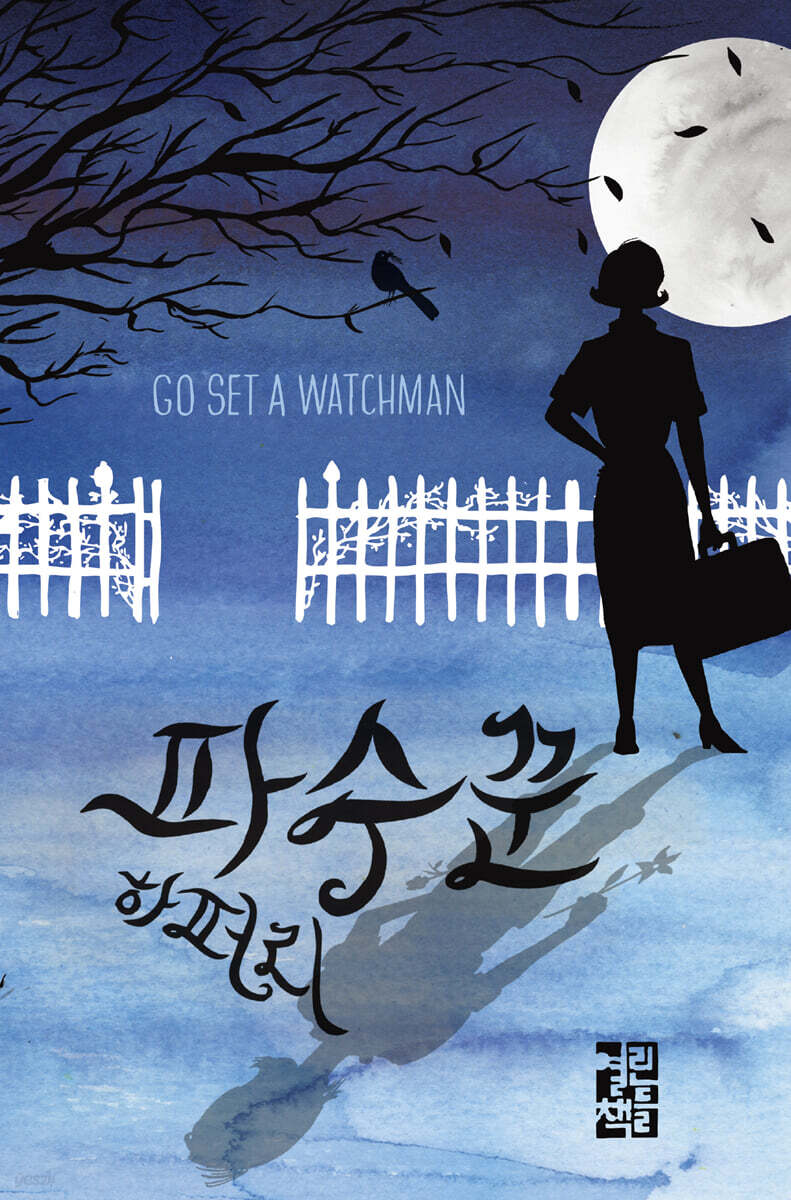
The first edition in the US sold 2 million copies and ranked first on Amazon pre-orders. Harper Lee's work rediscovered after 55 years, released worldwide on July 14, 2015. Harper Lee, author of To Kill a Mockingbird, has published her new book, Watchman, through Open Books. A total of 10 countries, including the United States, the United Kingdom, Spain, Germany, Brazil, Denmark, the Netherlands, Catalonia, Sweden, and Korea, published it simultaneously on July 14, 2015. Even before its publication, the first edition sold 2 million copies and ranked first in pre-order sales on Amazon, garnering attention from the global media. Harper Lee's second work, "A Watchman," published 55 years later, is the prequel and sequel to "To Kill a Mockingbird," previously known as her only work, and her first and last work. This is because it is Harper Lee's first work, which served as the basis for writing To Kill a Mockingbird, and it is a story about the protagonist of To Kill a Mockingbird, who has grown up 20 years later. The Watchman was written in the mid-20th century, when the civil rights movement for black people was in full swing in the United States. Although the novel was written over 50 years ago, its themes remain relevant today. In "The Watchman," Harper Lee speaks about where true conscience lies in our society and what the essence of humanity is through the conflict and opposition between a father and a daughter. |
- You can preview some of the book's contents.
Preview
Into the book
warden
The front door closed as her father and Henry left, and Jean Louise went over to the chair where her father had been sitting to clear away the papers on the floor.
I organized the documents into sections and placed them on the sofa.
Then, as I was moving to the other side to tidy up the books piled on the lamp table, a pamphlet the size of a commercial envelope caught my eye.
There was a picture of a cannibalistic Negro on the cover of the booklet.
The words “Black Death” were written on the painting.
The author's name is accompanied by several degrees.
Jean Louise opened the booklet, sat down on her father's chair, and began to read.
After reading it all, I grabbed a corner of the booklet like I was grabbing a dead rat by the tail and went to the kitchen.
And I pushed it in front of my aunt.
“What is this?” she said.
Alexandra looked up over her glasses.
"It's your father's."
Jean Louise stepped on the trash can pedal, opened the lid, and threw the booklet away.
--- p.144~145
Among the people sitting on the rough benches beneath the balcony were not only most of the scum of Maycomb County, but also some of the finest.
She looked down at the other end.
At a long table beyond the railing that separated the courtroom from the audience sat her father, Henry Clinton, a few people she knew very well, and one person she didn't know.
At one end of the table, a gray slug-like creature resembling a giant tree, was William Willoughby.
He was a political symbol of everything that people like her father despised.
She thought Willoughby was the last of his kind.
My father tried not to talk to him, but he sat at the same table with him… … .
--- p.150
If Jean Louise had had the insight to see through the barriers of the highly selective and exclusive world that surrounded her, she might have discovered it.
That he had lived his entire life with a visual impairment that had gone unnoticed and overlooked even by those closest to him: that he was congenitally color blind.
--- p.173
Either I'm blind or that's what I look like.
I never opened my eyes.
I have never tried to look into other people's minds.
I only saw the face briefly.
Completely blind, like a stone… … .
Pastor Stone.
Pastor Stone posted a watchman at yesterday's service.
He should have posted a watchman for me.
I need a watchman who will take my hand and lead me, and announce what he sees every hour.
I need a watchman to tell me that this person says this but really means that, to draw a line down the middle and say that on one side there is this definition and on the other side there is that definition, so that I can understand the difference.
I need a watchman to go out and tell them that all those twenty-six years is too long for anyone to be messing around, no matter how fun it is.
The front door closed as her father and Henry left, and Jean Louise went over to the chair where her father had been sitting to clear away the papers on the floor.
I organized the documents into sections and placed them on the sofa.
Then, as I was moving to the other side to tidy up the books piled on the lamp table, a pamphlet the size of a commercial envelope caught my eye.
There was a picture of a cannibalistic Negro on the cover of the booklet.
The words “Black Death” were written on the painting.
The author's name is accompanied by several degrees.
Jean Louise opened the booklet, sat down on her father's chair, and began to read.
After reading it all, I grabbed a corner of the booklet like I was grabbing a dead rat by the tail and went to the kitchen.
And I pushed it in front of my aunt.
“What is this?” she said.
Alexandra looked up over her glasses.
"It's your father's."
Jean Louise stepped on the trash can pedal, opened the lid, and threw the booklet away.
--- p.144~145
Among the people sitting on the rough benches beneath the balcony were not only most of the scum of Maycomb County, but also some of the finest.
She looked down at the other end.
At a long table beyond the railing that separated the courtroom from the audience sat her father, Henry Clinton, a few people she knew very well, and one person she didn't know.
At one end of the table, a gray slug-like creature resembling a giant tree, was William Willoughby.
He was a political symbol of everything that people like her father despised.
She thought Willoughby was the last of his kind.
My father tried not to talk to him, but he sat at the same table with him… … .
--- p.150
If Jean Louise had had the insight to see through the barriers of the highly selective and exclusive world that surrounded her, she might have discovered it.
That he had lived his entire life with a visual impairment that had gone unnoticed and overlooked even by those closest to him: that he was congenitally color blind.
--- p.173
Either I'm blind or that's what I look like.
I never opened my eyes.
I have never tried to look into other people's minds.
I only saw the face briefly.
Completely blind, like a stone… … .
Pastor Stone.
Pastor Stone posted a watchman at yesterday's service.
He should have posted a watchman for me.
I need a watchman who will take my hand and lead me, and announce what he sees every hour.
I need a watchman to tell me that this person says this but really means that, to draw a line down the middle and say that on one side there is this definition and on the other side there is that definition, so that I can understand the difference.
I need a watchman to go out and tell them that all those twenty-six years is too long for anyone to be messing around, no matter how fun it is.
--- p.254~255
Publisher's Review
warden
The prequel and sequel to "To Kill a Mockingbird," the first and last work
Why was "The Watchman" rediscovered after 55 years, and how was it written?
On Christmas Day 1956, at the age of 30, Harper Lee received a gift that would change her life.
A friend named Michael Brown gave me a year's allowance to write whatever I wanted.
It appears that he gave all the manuscripts to the copyright agent over a period of six weeks starting in January 1957, so he seems to have worked on the manuscript of "The Watchman" in earnest for three months, and completed the revision in May and submitted it to J.
Submitted to B. Lippincott Publishers.
Afterwards, editor Tay Hohoff, who was assigned to work with Harper Lee among the publishing house editors, expressed his thoughts after reading 'The Watchman' as follows.
There was no doubt that this manuscript had elements of a novel.
It was a vivid story.
The characters seemed alive and three-dimensional.
Overall, the true qualities of a writer shine through.
Harper Lee had never published a single essay or short story, but this novel was certainly no amateur's work.
However, Tay Hohoff saw the need to rewrite the manuscript differently.
It seems that the content covered in 『The Watchman』 was judged to be too close and direct to the hot issues that were happening at the time.
Harper Lee, following Tay Hohoff's advice, began writing novels in the first-person voice of a child, resulting in To Kill a Mockingbird, a novel quite different from Watchman, published in July 1960.
It is said that Harper Lee planned to publish To Kill a Mockingbird, write one more novel, and then publish Watchman, which she had put on hold.
However, when To Kill a Mockingbird became an unexpected success, the media attention poured in, and Harper Lee, fearing that she would never be able to write a work that surpassed To Kill a Mockingbird, went into seclusion.
Except for interviews immediately following the publication of To Kill a Mockingbird, Harper Lee avoided contact with the press, only sending a note to those who requested an interview: "I don't want to die."
When Alice Lee, Harper Lee's older sister who had protected her from the world's excessive attention, died in November 2014, Tonya Carter, Alice's lawyer, took over as guardian.
Tonya Carter reportedly discovered the manuscript of "The Watchman" in Harper Lee's safe deposit box in late August 2014.
Harper Lee is said to have hesitated about publishing "The Watchman," but after hearing opinions from those around her, she decided to publish "The Watchman."
"To Kill a Mockingbird" and "The Watchman," a story set 20 years later
A coming-of-age novel for adults, written in a more mature voice.
Since its publication in 1960, "To Kill a Mockingbird" has been translated into 40 languages and sold over 40 million copies worldwide. In Korea, it has also been a bestseller and steady seller, selling over 300,000 copies since its official release in 2003.
It won the Pulitzer Prize in 1961, was ranked as the most influential book after the Bible, was ranked as the most influential novel of the 20th century, and was ranked as the best novel in history by the British people.
In 2001, it was selected as a book for the [One City, One Book] movement in Chicago, contributing to the resolution of racial discrimination, a major problem in the area at the time, and changing the consciousness of citizens.
To Kill a Mockingbird is a work that sounded the alarm on racial discrimination and human rights violations in the United States in the 1930s.
『The Watchman』 is also similar in a broad sense.
However, if the protagonist of 'To Kill a Mockingbird', Jean Louise, was a six-year-old child, the protagonist of 'The Watchman' is a twenty-six-year-old adult.
The difference in perception of the world is evident as there is a 20-year difference.
The black civil rights movement and white riots that were actually happening around the author at the time of writing are depicted, and the conflicting opinions of the people at the time on these issues are directly reflected in the characters in the work.
Other world historical events and literary citations also serve as important blood vessels in reading the work.
"To Kill a Mockingbird" and "The Watchman" are both similar in that they take the form of coming-of-age novels.
The protagonist of "The Watchman" is an adult, but has just entered the adult world.
For Jean Louise, her father was like a guardian of her conscience.
He defended black people in court and treated everyone equally, regardless of skin color.
But the daughter discovers another side of her father.
At my father's house, I came across a pamphlet full of black-degrading comments.
From that moment on, the father becomes an object of hatred and overcoming for the daughter.
The disappointment, anger, conflict and confrontation that follow make her grow into a true adult.
America in the mid-20th century, when the flames of the black civil rights movement were spreading
A masterpiece of modern literature, captured as it is
In the 1950s, when Harper Lee wrote "The Watchman," the flames of the civil rights movement were spreading in the United States.
Even though more than a hundred years had passed since the abolition of black slavery, the boundaries between blacks and whites remained clear.
Even on public transportation, blacks and whites were not allowed to sit together, and in 1954, the [Brown v. Board of Education] case occurred.
The Supreme Court ruled that racial segregation in public schools was illegal.
The ruling was seen as the federal government trampling on the autonomy of the states.
Thus, attacks on racial segregation and discrimination accelerated, but the backlash against this only deepened racial segregation and discrimination and increased violence against blacks.
In 1956, the [Osserin Lucy Incident] occurred.
When Auserin Lucy became the first black student to enroll in graduate school at the University of Alabama, white students rioted.
These two incidents triggered the rise of racial separatist groups such as the KKK (Ku Klux Klan) and the White House Neighborhood Council.
The world that Harper Lee, a young woman interested in writing, wanted to show through her first book was the world she herself belonged to.
The author's home state of Alabama was the most active in the civil rights movement and also the most intense in the backlash from white people.
Harper Lee was born and raised there during that time, so it is natural that black civil rights issues would be a major theme in her works.
Moreover, Harper Lee's father was a lawyer and a state legislator.
Harper Lee created the hero Atticus based on her father, and in "Watchmen," she challenges Atticus as a god-like figure.
Harper Lee did not turn away from the turbulent times she lived in and captured the impact they had on people.
Looking at 『The Watchman』 in its raw, unrefined state, we can see how intensely the author agonized over and struggled with the world he lived in, and how he sought to capture that process as it was.
Hate crimes, including indiscriminate shootings against black people, continue to occur in the United States.
It's not just an American problem.
In our country, incidents that arise from not being able to distinguish between [difference] and [error] are not uncommon, not only in the past but also in the present.
"The Watchman" is a fierce record of an individual's struggle against the times, and its fervor continues undiminished not only in America 50 years ago but also in this very era.
The prequel and sequel to "To Kill a Mockingbird," the first and last work
Why was "The Watchman" rediscovered after 55 years, and how was it written?
On Christmas Day 1956, at the age of 30, Harper Lee received a gift that would change her life.
A friend named Michael Brown gave me a year's allowance to write whatever I wanted.
It appears that he gave all the manuscripts to the copyright agent over a period of six weeks starting in January 1957, so he seems to have worked on the manuscript of "The Watchman" in earnest for three months, and completed the revision in May and submitted it to J.
Submitted to B. Lippincott Publishers.
Afterwards, editor Tay Hohoff, who was assigned to work with Harper Lee among the publishing house editors, expressed his thoughts after reading 'The Watchman' as follows.
There was no doubt that this manuscript had elements of a novel.
It was a vivid story.
The characters seemed alive and three-dimensional.
Overall, the true qualities of a writer shine through.
Harper Lee had never published a single essay or short story, but this novel was certainly no amateur's work.
However, Tay Hohoff saw the need to rewrite the manuscript differently.
It seems that the content covered in 『The Watchman』 was judged to be too close and direct to the hot issues that were happening at the time.
Harper Lee, following Tay Hohoff's advice, began writing novels in the first-person voice of a child, resulting in To Kill a Mockingbird, a novel quite different from Watchman, published in July 1960.
It is said that Harper Lee planned to publish To Kill a Mockingbird, write one more novel, and then publish Watchman, which she had put on hold.
However, when To Kill a Mockingbird became an unexpected success, the media attention poured in, and Harper Lee, fearing that she would never be able to write a work that surpassed To Kill a Mockingbird, went into seclusion.
Except for interviews immediately following the publication of To Kill a Mockingbird, Harper Lee avoided contact with the press, only sending a note to those who requested an interview: "I don't want to die."
When Alice Lee, Harper Lee's older sister who had protected her from the world's excessive attention, died in November 2014, Tonya Carter, Alice's lawyer, took over as guardian.
Tonya Carter reportedly discovered the manuscript of "The Watchman" in Harper Lee's safe deposit box in late August 2014.
Harper Lee is said to have hesitated about publishing "The Watchman," but after hearing opinions from those around her, she decided to publish "The Watchman."
"To Kill a Mockingbird" and "The Watchman," a story set 20 years later
A coming-of-age novel for adults, written in a more mature voice.
Since its publication in 1960, "To Kill a Mockingbird" has been translated into 40 languages and sold over 40 million copies worldwide. In Korea, it has also been a bestseller and steady seller, selling over 300,000 copies since its official release in 2003.
It won the Pulitzer Prize in 1961, was ranked as the most influential book after the Bible, was ranked as the most influential novel of the 20th century, and was ranked as the best novel in history by the British people.
In 2001, it was selected as a book for the [One City, One Book] movement in Chicago, contributing to the resolution of racial discrimination, a major problem in the area at the time, and changing the consciousness of citizens.
To Kill a Mockingbird is a work that sounded the alarm on racial discrimination and human rights violations in the United States in the 1930s.
『The Watchman』 is also similar in a broad sense.
However, if the protagonist of 'To Kill a Mockingbird', Jean Louise, was a six-year-old child, the protagonist of 'The Watchman' is a twenty-six-year-old adult.
The difference in perception of the world is evident as there is a 20-year difference.
The black civil rights movement and white riots that were actually happening around the author at the time of writing are depicted, and the conflicting opinions of the people at the time on these issues are directly reflected in the characters in the work.
Other world historical events and literary citations also serve as important blood vessels in reading the work.
"To Kill a Mockingbird" and "The Watchman" are both similar in that they take the form of coming-of-age novels.
The protagonist of "The Watchman" is an adult, but has just entered the adult world.
For Jean Louise, her father was like a guardian of her conscience.
He defended black people in court and treated everyone equally, regardless of skin color.
But the daughter discovers another side of her father.
At my father's house, I came across a pamphlet full of black-degrading comments.
From that moment on, the father becomes an object of hatred and overcoming for the daughter.
The disappointment, anger, conflict and confrontation that follow make her grow into a true adult.
America in the mid-20th century, when the flames of the black civil rights movement were spreading
A masterpiece of modern literature, captured as it is
In the 1950s, when Harper Lee wrote "The Watchman," the flames of the civil rights movement were spreading in the United States.
Even though more than a hundred years had passed since the abolition of black slavery, the boundaries between blacks and whites remained clear.
Even on public transportation, blacks and whites were not allowed to sit together, and in 1954, the [Brown v. Board of Education] case occurred.
The Supreme Court ruled that racial segregation in public schools was illegal.
The ruling was seen as the federal government trampling on the autonomy of the states.
Thus, attacks on racial segregation and discrimination accelerated, but the backlash against this only deepened racial segregation and discrimination and increased violence against blacks.
In 1956, the [Osserin Lucy Incident] occurred.
When Auserin Lucy became the first black student to enroll in graduate school at the University of Alabama, white students rioted.
These two incidents triggered the rise of racial separatist groups such as the KKK (Ku Klux Klan) and the White House Neighborhood Council.
The world that Harper Lee, a young woman interested in writing, wanted to show through her first book was the world she herself belonged to.
The author's home state of Alabama was the most active in the civil rights movement and also the most intense in the backlash from white people.
Harper Lee was born and raised there during that time, so it is natural that black civil rights issues would be a major theme in her works.
Moreover, Harper Lee's father was a lawyer and a state legislator.
Harper Lee created the hero Atticus based on her father, and in "Watchmen," she challenges Atticus as a god-like figure.
Harper Lee did not turn away from the turbulent times she lived in and captured the impact they had on people.
Looking at 『The Watchman』 in its raw, unrefined state, we can see how intensely the author agonized over and struggled with the world he lived in, and how he sought to capture that process as it was.
Hate crimes, including indiscriminate shootings against black people, continue to occur in the United States.
It's not just an American problem.
In our country, incidents that arise from not being able to distinguish between [difference] and [error] are not uncommon, not only in the past but also in the present.
"The Watchman" is a fierce record of an individual's struggle against the times, and its fervor continues undiminished not only in America 50 years ago but also in this very era.
GOODS SPECIFICS
- Date of issue: July 14, 2015
- Page count, weight, size: 432 pages | 440g | 128*188*30mm
- ISBN13: 9788932917221
- ISBN10: 8932917221
You may also like
카테고리
korean


korean

![GQ KOREA Mark (Monthly): December [2025]](http://librairie.coreenne.fr/cdn/shop/files/8ef265dbbfbf186523ed75ba7319009d.jpg?v=1765340328&width=3840)


