

Jod set
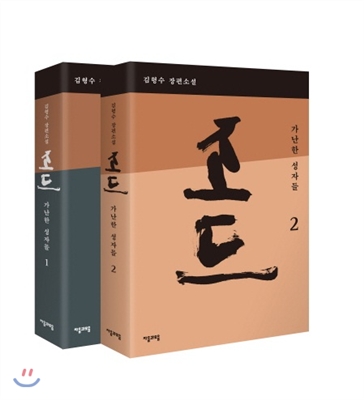 |
Description
Book Introduction
A 10-month stay in Mongolia! A whirlwind epic, completed while experiencing the vast grasslands!
This is the story of the nomadic life and lifestyle of Temujin (Genghis Khan) as he roamed the vast Mongolian steppes and became the Khan.
Beginning with a description of Temujin's childhood and his fight with a wolf, the novel features Temujin, Jamukha, and numerous other characters, and vividly portrays the life of 13th-century nomads and the wars and hunting they had to endure to survive, told in the third person.
The main narrative of this novel unfolds in chapters, with the stories of Temujin and Jamukha intersecting and unfolding in different places at the same time.
In it, the life, lifestyle, and customs of the Mongolian nomads of that time are described very specifically and realistically.
The title of the novel, 'Zod', refers to a disaster that occurs in arid regions such as the Eurasian continent.
If a tsunami has the nature of a 'water storm', then a 'zod' is the exact opposite phenomenon. It refers to a 'winter disaster' that occurs when drought and cold overlap in a place with a lack of water, and when extreme cold reaches its peak, livestock such as sheep, cattle, and horses die in large numbers at once.
Author Kim Hyeong-su stayed in Mongolia for 10 months to write 『Jod』 and serialized it online.
Spatially, the novel was completed by visiting all the major events that took place across the entire Mongolian Plateau, and temporally, by collecting and reading as many books on myths, folktales, and history as possible that could provide insight into the nomadic world of the 12th and 13th centuries.
The novel is not a heroic epic about the figure of Genghis Khan, but rather focuses on the lives of the nomads of that period, centered around the figure of Genghis Khan, and thus depicts the medieval history of Asia, which is different from previous novels based on Genghis Khan.
There have been many war hero novels with Genghis Khan as the main character up until now.
And those stories had pretty much the same narrative.
Breaking away from this same narrative, no novel has ever reimagined 13th-century Asia's medieval past through the lives and history of nomads centered around Genghis Khan.
Because it has sufficient rarity value, it has the potential to become an issue not only domestically but also in Mongolia and Europe.
*This book is a set (2 volumes)
『Zod』1~2
This is the story of the nomadic life and lifestyle of Temujin (Genghis Khan) as he roamed the vast Mongolian steppes and became the Khan.
Beginning with a description of Temujin's childhood and his fight with a wolf, the novel features Temujin, Jamukha, and numerous other characters, and vividly portrays the life of 13th-century nomads and the wars and hunting they had to endure to survive, told in the third person.
The main narrative of this novel unfolds in chapters, with the stories of Temujin and Jamukha intersecting and unfolding in different places at the same time.
In it, the life, lifestyle, and customs of the Mongolian nomads of that time are described very specifically and realistically.
The title of the novel, 'Zod', refers to a disaster that occurs in arid regions such as the Eurasian continent.
If a tsunami has the nature of a 'water storm', then a 'zod' is the exact opposite phenomenon. It refers to a 'winter disaster' that occurs when drought and cold overlap in a place with a lack of water, and when extreme cold reaches its peak, livestock such as sheep, cattle, and horses die in large numbers at once.
Author Kim Hyeong-su stayed in Mongolia for 10 months to write 『Jod』 and serialized it online.
Spatially, the novel was completed by visiting all the major events that took place across the entire Mongolian Plateau, and temporally, by collecting and reading as many books on myths, folktales, and history as possible that could provide insight into the nomadic world of the 12th and 13th centuries.
The novel is not a heroic epic about the figure of Genghis Khan, but rather focuses on the lives of the nomads of that period, centered around the figure of Genghis Khan, and thus depicts the medieval history of Asia, which is different from previous novels based on Genghis Khan.
There have been many war hero novels with Genghis Khan as the main character up until now.
And those stories had pretty much the same narrative.
Breaking away from this same narrative, no novel has ever reimagined 13th-century Asia's medieval past through the lives and history of nomads centered around Genghis Khan.
Because it has sufficient rarity value, it has the potential to become an issue not only domestically but also in Mongolia and Europe.
*This book is a set (2 volumes)
『Zod』1~2
- You can preview some of the book's contents.
Preview
Into the book
My father used to say before he died that to be a proper adult, you need to be able to distinguish the twelve different wind sounds that blow in the highlands. So, I got into the habit of reading the flow of air delicately.
He gently peels off the buttocks attached to the twisted goat skin and then reattaches them.
Last night, the weather, which had been calm for several days, became infinitely calm, and at some point, I didn't miss the change in the wind's breath, and the occasional buzzing sound in my head whenever the circulation of the air stopped.
The fact that the tinnitus was now intermittent was a sure sign.
When the sun rises and three or four days pass, a ghostly wind will blow, blowing its white hair.
On that windy day, under the sky and on the meadow, all living things tremble in fear.
Thanks to this, there is nothing to pollute the air, and the energy of the great plains floats in the clear, untainted air.
I heard from the weasel grandmother that riding a horse on such a day would restore your energy and give you the energy of heaven.
The boy had been through so many near-death experiences that he was extremely calm.
Parents just need to allow their children to climb the ladder.
How could anyone know that their father had changed his life if he rode on his golden wolf-eared horse, unless the sky was clear? And even if he did, nothing would change.
When a golden wolf-eared horse with fur as shiny as gold and ears that stood upright like a wolf appeared, all the nomads would stare in awe until it disappeared from sight.
“Let’s think that today my father will be watching,” he thought, and jumped up onto the horse.
At that moment, a wolf's howl was heard from beyond the mountain of the horse's spine.
Volume 1, pp. 47-48
“A lot of people will die this winter.
“You have to do well when the grassland is in disarray.”
“War or Zod?”
“It’s going to be a very, very cold day.
When the autumn drought begins, be prepared.
“The people follow the one who saves even one more person.”
It was true.
A few days ago, Teptengri saw a flock of geese flying away without leaving a trace, so he immediately went to check on the anthill.
The ant nest was so high that it seemed like it might be where pheasants lived, indicating that wintering would be no easy task.
When a fire is lit during a ritual, the grass turns into white ash and flies away in the wind.
Crows also come near and make a lot of noise, and flocks of sparrows make a lot of noise every day as if there is going to be chaos.
The heavens, the earth, and all the animals were foretelling that such a severe cold would come.
He gently peels off the buttocks attached to the twisted goat skin and then reattaches them.
Last night, the weather, which had been calm for several days, became infinitely calm, and at some point, I didn't miss the change in the wind's breath, and the occasional buzzing sound in my head whenever the circulation of the air stopped.
The fact that the tinnitus was now intermittent was a sure sign.
When the sun rises and three or four days pass, a ghostly wind will blow, blowing its white hair.
On that windy day, under the sky and on the meadow, all living things tremble in fear.
Thanks to this, there is nothing to pollute the air, and the energy of the great plains floats in the clear, untainted air.
I heard from the weasel grandmother that riding a horse on such a day would restore your energy and give you the energy of heaven.
The boy had been through so many near-death experiences that he was extremely calm.
Parents just need to allow their children to climb the ladder.
How could anyone know that their father had changed his life if he rode on his golden wolf-eared horse, unless the sky was clear? And even if he did, nothing would change.
When a golden wolf-eared horse with fur as shiny as gold and ears that stood upright like a wolf appeared, all the nomads would stare in awe until it disappeared from sight.
“Let’s think that today my father will be watching,” he thought, and jumped up onto the horse.
At that moment, a wolf's howl was heard from beyond the mountain of the horse's spine.
Volume 1, pp. 47-48
“A lot of people will die this winter.
“You have to do well when the grassland is in disarray.”
“War or Zod?”
“It’s going to be a very, very cold day.
When the autumn drought begins, be prepared.
“The people follow the one who saves even one more person.”
It was true.
A few days ago, Teptengri saw a flock of geese flying away without leaving a trace, so he immediately went to check on the anthill.
The ant nest was so high that it seemed like it might be where pheasants lived, indicating that wintering would be no easy task.
When a fire is lit during a ritual, the grass turns into white ash and flies away in the wind.
Crows also come near and make a lot of noise, and flocks of sparrows make a lot of noise every day as if there is going to be chaos.
The heavens, the earth, and all the animals were foretelling that such a severe cold would come.
Volume 2 ---p.47
Publisher's Review
A climactic epic that overturns medieval history, which consists solely of Chinese and Roman history!
Temujin, a boy abandoned in the wilderness.
And the Middle Ages in the wilderness hidden by European civilization
Behold, here unfolds the peace of the earth, where good and evil are kicked aside and run wild.
Listen, only that wild stage plays the epic of fate, unaware that it will fly away like a storm or a breeze.
Kim Hyung-soo embodies the past and present of Mongolia and gives us this amazing record.
I'm scared of him.
- Go Eun (poet)
A 10-month stay in Mongolia! A whirlwind epic, completed while experiencing the vast grasslands!
Author Kim Hyeong-su stayed in Mongolia for 10 months to write 『Jod』 and serialized it online.
Spatially, the novel was completed by visiting all the major events that took place across the entire Mongolian Plateau, and temporally, by collecting and reading as many books on myths, folktales, and history as possible that could provide insight into the nomadic world of the 12th and 13th centuries.
Additionally, this novel depicts the 'Middle Ages of Asia' set in a vast grassland.
The author's conviction that in order to shed new light on the history of the Earth in a broader way, beyond the 'European modern era,' we must reexamine the medieval history that can be said to have been the cause of the European modern era, led to the creation of this novel.
The author says that although we say we must overcome Eurocentrism, it is not easy to correct the 'image of human history' because we do not know what the world actually looked like outside of Europe.
So, the author is depicting a history centered around the differences between nomads and farmers, rather than a history centered around the conflict between Catholics and non-Catholics.
The Middle Ages, neglected by humanity, are breaking out of the valley of Western civilization.
"Jod - The Poor Saints" is a story about the nomadic life and lifestyle of Temujin (Genghis Khan) as he roamed the vast Mongolian steppes and became the Khan.
Beginning with a description of Temujin's childhood and his fight with a wolf, the novel features Temujin, Jamukha, and numerous other characters, and vividly portrays the life of 13th-century nomads and the wars and hunting they had to endure to survive, told in the third person.
The main narrative of this novel unfolds in chapters, with the stories of Temujin and Jamukha intersecting and unfolding in different places at the same time.
In it, the life, lifestyle, and customs of the Mongolian nomads of that time are described very specifically and realistically.
The title of the novel, 'Zod', refers to a disaster that occurs in arid regions such as the Eurasian continent.
If a tsunami has the nature of a 'water storm', then a 'zod' is the exact opposite phenomenon. It refers to a 'winter disaster' that occurs when drought and cold overlap in a place with a lack of water, and when extreme cold reaches its peak, livestock such as sheep, cattle, and horses die in large numbers at once.
The United Nations is preparing to list this phenomenon as the next global disaster after the tsunami, as it is a phenomenon that occurs in conjunction with events such as desertification and yellow dust on Earth.
As the title suggests, this novel is not a heroic epic about the figure of Genghis Khan, but rather focuses on the lives of the nomads of that period and depicts the medieval history of Asia, making it different from previous novels based on Genghis Khan.
There have been many war hero novels with Genghis Khan as the main character up until now.
And those stories had pretty much the same narrative.
Breaking away from this same narrative, no novel has ever reimagined 13th-century Asia's medieval past through the lives and history of nomads centered around Genghis Khan.
Because it has sufficient rarity value and has the potential to become an issue not only in Korea but also in Mongolia and Europe, 『Jod - The Poor Saints』 deserves attention.
Author's Note
“Humanity must not forget that a boy abandoned on the plains in the 12th century overturned the ‘fabricated utopia’ dreamed of by the settlers of the time through a tumultuous struggle for survival.
“I wrote this novel because I was convinced that Temujin’s values were different from the ‘systemic spirit of the Genghis Khan Empire.’” (Kim Hyeong-su)
Temujin, a boy abandoned in the wilderness.
And the Middle Ages in the wilderness hidden by European civilization
Behold, here unfolds the peace of the earth, where good and evil are kicked aside and run wild.
Listen, only that wild stage plays the epic of fate, unaware that it will fly away like a storm or a breeze.
Kim Hyung-soo embodies the past and present of Mongolia and gives us this amazing record.
I'm scared of him.
- Go Eun (poet)
A 10-month stay in Mongolia! A whirlwind epic, completed while experiencing the vast grasslands!
Author Kim Hyeong-su stayed in Mongolia for 10 months to write 『Jod』 and serialized it online.
Spatially, the novel was completed by visiting all the major events that took place across the entire Mongolian Plateau, and temporally, by collecting and reading as many books on myths, folktales, and history as possible that could provide insight into the nomadic world of the 12th and 13th centuries.
Additionally, this novel depicts the 'Middle Ages of Asia' set in a vast grassland.
The author's conviction that in order to shed new light on the history of the Earth in a broader way, beyond the 'European modern era,' we must reexamine the medieval history that can be said to have been the cause of the European modern era, led to the creation of this novel.
The author says that although we say we must overcome Eurocentrism, it is not easy to correct the 'image of human history' because we do not know what the world actually looked like outside of Europe.
So, the author is depicting a history centered around the differences between nomads and farmers, rather than a history centered around the conflict between Catholics and non-Catholics.
The Middle Ages, neglected by humanity, are breaking out of the valley of Western civilization.
"Jod - The Poor Saints" is a story about the nomadic life and lifestyle of Temujin (Genghis Khan) as he roamed the vast Mongolian steppes and became the Khan.
Beginning with a description of Temujin's childhood and his fight with a wolf, the novel features Temujin, Jamukha, and numerous other characters, and vividly portrays the life of 13th-century nomads and the wars and hunting they had to endure to survive, told in the third person.
The main narrative of this novel unfolds in chapters, with the stories of Temujin and Jamukha intersecting and unfolding in different places at the same time.
In it, the life, lifestyle, and customs of the Mongolian nomads of that time are described very specifically and realistically.
The title of the novel, 'Zod', refers to a disaster that occurs in arid regions such as the Eurasian continent.
If a tsunami has the nature of a 'water storm', then a 'zod' is the exact opposite phenomenon. It refers to a 'winter disaster' that occurs when drought and cold overlap in a place with a lack of water, and when extreme cold reaches its peak, livestock such as sheep, cattle, and horses die in large numbers at once.
The United Nations is preparing to list this phenomenon as the next global disaster after the tsunami, as it is a phenomenon that occurs in conjunction with events such as desertification and yellow dust on Earth.
As the title suggests, this novel is not a heroic epic about the figure of Genghis Khan, but rather focuses on the lives of the nomads of that period and depicts the medieval history of Asia, making it different from previous novels based on Genghis Khan.
There have been many war hero novels with Genghis Khan as the main character up until now.
And those stories had pretty much the same narrative.
Breaking away from this same narrative, no novel has ever reimagined 13th-century Asia's medieval past through the lives and history of nomads centered around Genghis Khan.
Because it has sufficient rarity value and has the potential to become an issue not only in Korea but also in Mongolia and Europe, 『Jod - The Poor Saints』 deserves attention.
Author's Note
“Humanity must not forget that a boy abandoned on the plains in the 12th century overturned the ‘fabricated utopia’ dreamed of by the settlers of the time through a tumultuous struggle for survival.
“I wrote this novel because I was convinced that Temujin’s values were different from the ‘systemic spirit of the Genghis Khan Empire.’” (Kim Hyeong-su)
GOODS SPECIFICS
- Date of issue: February 13, 2012
- Page count, weight, size: 800 pages | 896g | 148*210*60mm
- ISBN13: 9788957076057
- ISBN10: 8957076050
You may also like
카테고리
korean


korean

![GQ KOREA Mark (Monthly): December [2025]](http://librairie.coreenne.fr/cdn/shop/files/8ef265dbbfbf186523ed75ba7319009d.jpg?v=1765340328&width=3840)


