

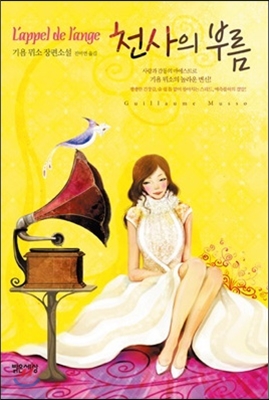
Angel's Call
 |
Description
Book Introduction
Guillaume Musso's ninth novel, The Call of an Angel, is a masterpiece that not only widely publicizes the author's transformation but also fully demonstrates his talent for writing exceptionally entertaining and moving novels, regardless of the subject matter.
Among his previously published novels, there were several that blended fantasy and thriller elements, but none of them were as thrilling as The Call of an Angel.
In this novel, Guillaume Musso presents a novel of an entirely new style, reinforcing his trademark emotional code and adding thriller elements that keep the reader on the edge of their seats.
Guillaume Musso's transformation was a success, and he achieved another very important career milestone in his writing career.
He creates unique scripts as if he were fitting together Lego blocks, and he manipulates the concepts of time and space as skillfully as a skilled cowboy handles his horse.
He has written novels that blend universal materials with the aspirations, tastes, and curiosities of ordinary people to create a wonderful combination, and this novel is no exception.
His meticulous attention to detail and his method of connecting with readers in the most effective way possible, regardless of formality, remain unchanged.
It starts with a man and a woman accidentally bumping into each other at JFK Airport in New York, dropping their phones and accidentally putting each other's phones in their pockets before boarding the plane.
Through this novel, Guillaume Musso demonstrates the importance of cell phones in modern life, while also proving that he is a writer who is very sensitive to the trends of the times.
New cultures and trends, like mobile phones, always provide him with solid and rich story material.
Another pleasure to be had from this novel is that it presents a diverse culinary world by setting the protagonist as chef Jonathan, who cooks the food.
In this novel, Guillaume Musso's writing technique still seems attractive.
He is characterized by his original ideas, visual writing, short chapter structure, and a lot of dialogue, and he devises his own new methods rather than relying on traditional grammar when describing situations, events, or characters in his writing.
The book deals with cutting-edge devices such as computers and smartphones that are indispensable in our lives, but it can be said that it is a novel that primarily talks about the human will to pursue happiness.
The main theme of this novel is, of course, ‘love.’
Guillaume Musso always says that he cannot imagine a work without a love story.
Among his previously published novels, there were several that blended fantasy and thriller elements, but none of them were as thrilling as The Call of an Angel.
In this novel, Guillaume Musso presents a novel of an entirely new style, reinforcing his trademark emotional code and adding thriller elements that keep the reader on the edge of their seats.
Guillaume Musso's transformation was a success, and he achieved another very important career milestone in his writing career.
He creates unique scripts as if he were fitting together Lego blocks, and he manipulates the concepts of time and space as skillfully as a skilled cowboy handles his horse.
He has written novels that blend universal materials with the aspirations, tastes, and curiosities of ordinary people to create a wonderful combination, and this novel is no exception.
His meticulous attention to detail and his method of connecting with readers in the most effective way possible, regardless of formality, remain unchanged.
It starts with a man and a woman accidentally bumping into each other at JFK Airport in New York, dropping their phones and accidentally putting each other's phones in their pockets before boarding the plane.
Through this novel, Guillaume Musso demonstrates the importance of cell phones in modern life, while also proving that he is a writer who is very sensitive to the trends of the times.
New cultures and trends, like mobile phones, always provide him with solid and rich story material.
Another pleasure to be had from this novel is that it presents a diverse culinary world by setting the protagonist as chef Jonathan, who cooks the food.
In this novel, Guillaume Musso's writing technique still seems attractive.
He is characterized by his original ideas, visual writing, short chapter structure, and a lot of dialogue, and he devises his own new methods rather than relying on traditional grammar when describing situations, events, or characters in his writing.
The book deals with cutting-edge devices such as computers and smartphones that are indispensable in our lives, but it can be said that it is a novel that primarily talks about the human will to pursue happiness.
The main theme of this novel is, of course, ‘love.’
Guillaume Musso always says that he cannot imagine a work without a love story.
- You can preview some of the book's contents.
Preview
index
prolog
Part 1: The Cat and the Mouse
Chapter 1: The Switched Phone
Chapter 2 Separate lives
Chapter 3 Secret
Chapter 4 Parallax
Chapter 5 You've Got Mail
Chapter 6 String
Chapter 7: The Fall of Lampreur
Chapter 8: The People We Love
Chapter 9: A Secret No One Knows
Chapter 10: The Lives of Others
Chapter 11 Investigation
Part 2: The Alice Dixon Case
Chapter 12 Alice
Chapter 13: A Series of Failures
Chapter 14: Intimate Enemy
Chapter 15 The girl who wasn't there
Chapter 16 Parcel
Chapter 17 Black Western Orchids
Chapter 18 Hypnosis
Chapter 19: Meeting You
Chapter 20: The Inside Story of Pain
Chapter 21: The Wild Side
Chapter 22: The Ghost of Manchester
Chapter 23: Two-Sided Mirror
Part 3: Two people become one
Chapter 24: What the Dead Leave to the Living
Chapter 25: The City That Never Sleeps
Chapter 26: The Girl with Modigliani's Eyes
Chapter 27: Prisoners
Chapter 28 Francesca
Chapter 29: The Angel in Hell
Chapter 30: The Dark Side of the Moon
Chapter 31 Enemy Line
Chapter 32: The Truth About Danny Doyle
Chapter 33 Witnesses
Chapter 34: The Girl in the Dark
Chapter 35: The Crossroads of Life and Death
Chapter 36: Finding Alice
Chapter 37 Hot Blood
Chapter 38: Little Odessa
Epilogue
People who helped
Place names and personal names
Quote Source
Translator's Note
Part 1: The Cat and the Mouse
Chapter 1: The Switched Phone
Chapter 2 Separate lives
Chapter 3 Secret
Chapter 4 Parallax
Chapter 5 You've Got Mail
Chapter 6 String
Chapter 7: The Fall of Lampreur
Chapter 8: The People We Love
Chapter 9: A Secret No One Knows
Chapter 10: The Lives of Others
Chapter 11 Investigation
Part 2: The Alice Dixon Case
Chapter 12 Alice
Chapter 13: A Series of Failures
Chapter 14: Intimate Enemy
Chapter 15 The girl who wasn't there
Chapter 16 Parcel
Chapter 17 Black Western Orchids
Chapter 18 Hypnosis
Chapter 19: Meeting You
Chapter 20: The Inside Story of Pain
Chapter 21: The Wild Side
Chapter 22: The Ghost of Manchester
Chapter 23: Two-Sided Mirror
Part 3: Two people become one
Chapter 24: What the Dead Leave to the Living
Chapter 25: The City That Never Sleeps
Chapter 26: The Girl with Modigliani's Eyes
Chapter 27: Prisoners
Chapter 28 Francesca
Chapter 29: The Angel in Hell
Chapter 30: The Dark Side of the Moon
Chapter 31 Enemy Line
Chapter 32: The Truth About Danny Doyle
Chapter 33 Witnesses
Chapter 34: The Girl in the Dark
Chapter 35: The Crossroads of Life and Death
Chapter 36: Finding Alice
Chapter 37 Hot Blood
Chapter 38: Little Odessa
Epilogue
People who helped
Place names and personal names
Quote Source
Translator's Note
Into the book
Jonathan couldn't resist the temptation and pressed the button on his phone again.
As it powered on, the phone emitted a bright, clean light.
The red bar-shaped icon lit up.
It was a sign that an email had arrived.
Once again captive to curiosity, he instinctively pressed the icon and began reading the email.
Surprisingly, the email was addressed to him.
Jonathan (I'll just omit titles like Mr. Lampreur.
If you're reading my email right now, I'm sure you've also seen the photo albums I have on my phone.
There are a few 'art' photos in there, so you must have had a lot of fun.
If you've actually seen my pictures, I can say in one word that you have a perverted taste.
Well, I don't care if you're a pervert or not, but I hope you don't do anything like posting those pictures on Facebook.
(Because the person I'm going to marry will be really upset if he sees this.)
The rain became heavier.
Thunder rumbled and lightning flashed across the sky, but Madeline, who was looking into Francesca's past, paid no attention.
Her finger glided across the LCD screen, and when she touched an icon, an online article from Vanity Fair appeared.
A few years ago, Vanity Fair magazine devoted six full pages to the Jonathans under the title, “Cooking, Another Name for Love.”
There were numerous photos of the couple in sexy poses that had little to do with the cooking interview.
There was also a photo of the couple revealing their shoulder blades, which had identical tattoos.
Madeline zoomed in on the tattoo's text.
You'll never walk alone.
How wonderful it would be if we could spend our whole lives together.
The photo of the now separated couple suddenly looked miserable.
“Madeline, you’ll catch a cold if you do that.”
Raphael opened the door to the terrace and called her.
Francesca, a former model dressed in brightly colored cotton, was walking hand-in-hand with a man named Georges on a white sandy beach lapping at the sparkling turquoise water.
The last photo showed two lovers sharing a sweet kiss on the terrace of a colonial-style cafe.
The photos had a sexy yet vintage feel, like a Calvin Klein advertisement from the 1990s.
This magazine, which mainly published articles exposing male pop stars, seemed to have made a deliberate effort to focus on 'Francesca's affair.'
Her affair was a perfect story, with all the tragic elements that befit our duplicitous and hypocritical world.
First, a charming woman who had an affair with her husband's best friend and went on a honeymoon trip to a resort.
Second, the husband of a woman who remains in New York to care for her son and struggle to save a restaurant on the verge of bankruptcy.
Third, the female government, which has as much weight as the two main characters above.
What led Inspector Madeleine to make such a drastic choice? Guilt? Overwork? Could it be an inability to overcome the psychological stress of a grueling investigation? The latter seems the most likely reason at present.
Manchester Metropolitan Police Chief Constable Henry Polster said in a statement that Inspector Madeleine was on leave when she learned of Alice Dixon's death.
Alice Dixon, 14, was the latest victim of notorious cereal killer Harold Bishop, who was arrested by Merseyside Police a few days ago.
When her colleagues heard the news of Inspector Madeleine's suicide attempt, they were shocked and outraged.
"That Liverpool butcher almost claimed another victim behind bars," said Detective Inspector Jim Fluherty, who worked alongside Madeleine on the Alice Dixon case.
I have a bad feeling about this.
If the child ran away from home, there's no way he would have left money behind.
Madeline ran through various scenarios in her head.
The scientific investigation team she had urgently requested had just arrived at the scene.
The forensic investigators collected samples using tweezers, scalpels, and chisels, then carefully placed them in sealed containers.
While the police officers who had arrived at the scene loaded up the evidence into a car, Madeline opened the files she had organized, including the assignments Alice had submitted and received back from school.
I received high marks for every assignment, and the teachers' evaluations were full of praise.
Alice needed a sanctuary called study to escape from her terrible daily life.
To protect oneself from violence, fear, and frustration, using study and knowledge as a shield.
Even the most dedicated police officer faces difficult moments.
Many police officers, faced with senseless deaths, women exposed to severe domestic violence, child abuse, and the suffering of victims' families, find themselves unconsciously empathizing with them, causing serious psychological distress.
Among Madeline's colleagues, there were some who were so depressed that they lost control of their thoughts.
Last year, one of Madeline's fellow detectives was questioning a suspect when he suddenly lost his mind and shot and killed a gang boss without any justification.
Six months ago, there was an incident where a female police officer receiving training committed suicide with her official pistol.
Fortunately, Madeline never became disillusioned with her job as a police officer or suffered from depression.
She was the one who volunteered to stay in Cheethambridge.
Whether they were veterans or newcomers, they couldn't last long in this rough neighborhood.
The more this happened, the more opportunities were given to her.
She has established herself as a strong figure within the Cheethambridge Police Station, which has allowed her to investigate some of the most horrific and brutal cases with a degree of autonomy.
Madeline dreamed about Alice every night.
The child's gaze held her all night long and did not let go.
She woke up every morning hoping to find a new clue or discover a groundbreaking investigation direction she had never thought of before.
Her fellow detectives and superiors always regarded Madeline as a strong-willed and determined police officer.
Even she, who was like that, was falling apart helplessly this time.
What has sustained her all this time is her compassion for the victims.
She actively utilized the deep compassion she felt for the victims through empathy in her investigations.
The moment she thoroughly internalized the victim's pain, her investigation became more effective than ever.
In investigative terms, it is called the 'proximity effect'.
It was a risky method, but it was clearly very effective in the investigation.
Madeline had just such an experience while investigating Alice's disappearance.
From the moment the missing person report came in, she couldn't properly control her emotions.
Alice was a child who was just like herself in her childhood.
Even though she knew full well how much her identification with the victim, her instinctive attraction, and her unconscious attachment to it tormented her, she made no effort to shake off such thoughts.
She felt a great sense of responsibility that transcended her personal interests.
I was convinced that I was the only one who truly cared about my child.
The burden of being responsible for the disappearance, no longer the child's mother, weighed heavily on her shoulders.
On June 15, a mysterious package was delivered to Cheethambridge Police Station.
The recipient was Detective Inspector Madeleine Green, the detective in charge of the Alice Dixon case.
It was a plastic airtight container similar to a picnic icebox.
Madeline opened the lid and crushed ice cubes appeared.
As I dug down through the ice, more and more red was revealed.
Madeline's heart began to race as she realized that the liquid that was turning the ice cube red was blood.
She paused for a moment, catching her breath and calming herself.
Then I put my hand into the ice cube again.
The moment she saw the half-thawed clump of blood at the bottom, she couldn't help but vomit.
It was an organ removed from a human body.
A heart roughly removed with a scalpel.
The human heart.
Alice's heart.
Until now, I have only looked forward and run forward.
I overcame the obstacles blocking my way head-on.
I have been combative, I have carved out my own destiny, I have created opportunities.
But today I encountered a formidable enemy.
It's me.
The final enemy.
The most dangerous enemy.
It wasn't something I planned and prepared for months in advance.
I had found the only solution that would allow me to escape this sudden loneliness that had been gnawing at me for days, pushing me into a swamp of nothingness.
Friendship? I've never had any friends around me.
Family? I have no family anymore.
Love? Now love is gone.
The moment Charlie's face flashed through my mind, my heart ached and I tried my best to cling to it.
But even my love for my child wasn't enough to shake off my longing for death.
I placed the revolver barrel against my temple and felt the cold metallic feel.
After loading the bullet, I looked at the sun once more, took one last deep breath, and finally pulled the trigger, feeling liberated.
“Hasn’t Bishop ever claimed to be the culprit, even when he didn’t kill someone?”
“That’s right.
Among the serial killers like Bishop, there are some who make such claims.
However, it is virtually impossible to uncover all of Bishop's crimes.
That guy talks a lot, but he never says a single word that's actually useful for the investigation.
He's a very calculating psychopath.
When I was being interrogated, I saw that he was a very smart guy who could even fool the investigators.
He's the kind of guy who confesses to a crime, then quickly recants it, and then suddenly confesses to another crime, causing confusion in the investigation.
All the remains found in Bishop's yard were collected and tested for DNA, but Alice's genetic profile did not appear to match.
But that doesn't mean that Bishop didn't kill Alice, does it?"
Jonah felt nauseous as he took a bite of the fried fish.
It was so stuffy, like I was in a steam bath, that it was really uncomfortable to sit there.
He unbuttoned one of his shirt buttons and ordered a Perrier (a French brand of sparkling water).
“Do you still love Madeline?”
Jonathan asked abruptly as he opened the cap of his soda.
Jim suddenly looked as if he couldn't contain his shock.
The anger bubbling across his face was palpable.
“Be honest and admit it.
You have a pretty face, you're smart, and you have guts.
Madeline is truly charming, isn't she? She's a woman you can't help but love.
Isn't that right?"
At that moment, Jim slammed his fist on the table.
“Where did you hear such nonsense…….”
As it powered on, the phone emitted a bright, clean light.
The red bar-shaped icon lit up.
It was a sign that an email had arrived.
Once again captive to curiosity, he instinctively pressed the icon and began reading the email.
Surprisingly, the email was addressed to him.
Jonathan (I'll just omit titles like Mr. Lampreur.
If you're reading my email right now, I'm sure you've also seen the photo albums I have on my phone.
There are a few 'art' photos in there, so you must have had a lot of fun.
If you've actually seen my pictures, I can say in one word that you have a perverted taste.
Well, I don't care if you're a pervert or not, but I hope you don't do anything like posting those pictures on Facebook.
(Because the person I'm going to marry will be really upset if he sees this.)
The rain became heavier.
Thunder rumbled and lightning flashed across the sky, but Madeline, who was looking into Francesca's past, paid no attention.
Her finger glided across the LCD screen, and when she touched an icon, an online article from Vanity Fair appeared.
A few years ago, Vanity Fair magazine devoted six full pages to the Jonathans under the title, “Cooking, Another Name for Love.”
There were numerous photos of the couple in sexy poses that had little to do with the cooking interview.
There was also a photo of the couple revealing their shoulder blades, which had identical tattoos.
Madeline zoomed in on the tattoo's text.
You'll never walk alone.
How wonderful it would be if we could spend our whole lives together.
The photo of the now separated couple suddenly looked miserable.
“Madeline, you’ll catch a cold if you do that.”
Raphael opened the door to the terrace and called her.
Francesca, a former model dressed in brightly colored cotton, was walking hand-in-hand with a man named Georges on a white sandy beach lapping at the sparkling turquoise water.
The last photo showed two lovers sharing a sweet kiss on the terrace of a colonial-style cafe.
The photos had a sexy yet vintage feel, like a Calvin Klein advertisement from the 1990s.
This magazine, which mainly published articles exposing male pop stars, seemed to have made a deliberate effort to focus on 'Francesca's affair.'
Her affair was a perfect story, with all the tragic elements that befit our duplicitous and hypocritical world.
First, a charming woman who had an affair with her husband's best friend and went on a honeymoon trip to a resort.
Second, the husband of a woman who remains in New York to care for her son and struggle to save a restaurant on the verge of bankruptcy.
Third, the female government, which has as much weight as the two main characters above.
What led Inspector Madeleine to make such a drastic choice? Guilt? Overwork? Could it be an inability to overcome the psychological stress of a grueling investigation? The latter seems the most likely reason at present.
Manchester Metropolitan Police Chief Constable Henry Polster said in a statement that Inspector Madeleine was on leave when she learned of Alice Dixon's death.
Alice Dixon, 14, was the latest victim of notorious cereal killer Harold Bishop, who was arrested by Merseyside Police a few days ago.
When her colleagues heard the news of Inspector Madeleine's suicide attempt, they were shocked and outraged.
"That Liverpool butcher almost claimed another victim behind bars," said Detective Inspector Jim Fluherty, who worked alongside Madeleine on the Alice Dixon case.
I have a bad feeling about this.
If the child ran away from home, there's no way he would have left money behind.
Madeline ran through various scenarios in her head.
The scientific investigation team she had urgently requested had just arrived at the scene.
The forensic investigators collected samples using tweezers, scalpels, and chisels, then carefully placed them in sealed containers.
While the police officers who had arrived at the scene loaded up the evidence into a car, Madeline opened the files she had organized, including the assignments Alice had submitted and received back from school.
I received high marks for every assignment, and the teachers' evaluations were full of praise.
Alice needed a sanctuary called study to escape from her terrible daily life.
To protect oneself from violence, fear, and frustration, using study and knowledge as a shield.
Even the most dedicated police officer faces difficult moments.
Many police officers, faced with senseless deaths, women exposed to severe domestic violence, child abuse, and the suffering of victims' families, find themselves unconsciously empathizing with them, causing serious psychological distress.
Among Madeline's colleagues, there were some who were so depressed that they lost control of their thoughts.
Last year, one of Madeline's fellow detectives was questioning a suspect when he suddenly lost his mind and shot and killed a gang boss without any justification.
Six months ago, there was an incident where a female police officer receiving training committed suicide with her official pistol.
Fortunately, Madeline never became disillusioned with her job as a police officer or suffered from depression.
She was the one who volunteered to stay in Cheethambridge.
Whether they were veterans or newcomers, they couldn't last long in this rough neighborhood.
The more this happened, the more opportunities were given to her.
She has established herself as a strong figure within the Cheethambridge Police Station, which has allowed her to investigate some of the most horrific and brutal cases with a degree of autonomy.
Madeline dreamed about Alice every night.
The child's gaze held her all night long and did not let go.
She woke up every morning hoping to find a new clue or discover a groundbreaking investigation direction she had never thought of before.
Her fellow detectives and superiors always regarded Madeline as a strong-willed and determined police officer.
Even she, who was like that, was falling apart helplessly this time.
What has sustained her all this time is her compassion for the victims.
She actively utilized the deep compassion she felt for the victims through empathy in her investigations.
The moment she thoroughly internalized the victim's pain, her investigation became more effective than ever.
In investigative terms, it is called the 'proximity effect'.
It was a risky method, but it was clearly very effective in the investigation.
Madeline had just such an experience while investigating Alice's disappearance.
From the moment the missing person report came in, she couldn't properly control her emotions.
Alice was a child who was just like herself in her childhood.
Even though she knew full well how much her identification with the victim, her instinctive attraction, and her unconscious attachment to it tormented her, she made no effort to shake off such thoughts.
She felt a great sense of responsibility that transcended her personal interests.
I was convinced that I was the only one who truly cared about my child.
The burden of being responsible for the disappearance, no longer the child's mother, weighed heavily on her shoulders.
On June 15, a mysterious package was delivered to Cheethambridge Police Station.
The recipient was Detective Inspector Madeleine Green, the detective in charge of the Alice Dixon case.
It was a plastic airtight container similar to a picnic icebox.
Madeline opened the lid and crushed ice cubes appeared.
As I dug down through the ice, more and more red was revealed.
Madeline's heart began to race as she realized that the liquid that was turning the ice cube red was blood.
She paused for a moment, catching her breath and calming herself.
Then I put my hand into the ice cube again.
The moment she saw the half-thawed clump of blood at the bottom, she couldn't help but vomit.
It was an organ removed from a human body.
A heart roughly removed with a scalpel.
The human heart.
Alice's heart.
Until now, I have only looked forward and run forward.
I overcame the obstacles blocking my way head-on.
I have been combative, I have carved out my own destiny, I have created opportunities.
But today I encountered a formidable enemy.
It's me.
The final enemy.
The most dangerous enemy.
It wasn't something I planned and prepared for months in advance.
I had found the only solution that would allow me to escape this sudden loneliness that had been gnawing at me for days, pushing me into a swamp of nothingness.
Friendship? I've never had any friends around me.
Family? I have no family anymore.
Love? Now love is gone.
The moment Charlie's face flashed through my mind, my heart ached and I tried my best to cling to it.
But even my love for my child wasn't enough to shake off my longing for death.
I placed the revolver barrel against my temple and felt the cold metallic feel.
After loading the bullet, I looked at the sun once more, took one last deep breath, and finally pulled the trigger, feeling liberated.
“Hasn’t Bishop ever claimed to be the culprit, even when he didn’t kill someone?”
“That’s right.
Among the serial killers like Bishop, there are some who make such claims.
However, it is virtually impossible to uncover all of Bishop's crimes.
That guy talks a lot, but he never says a single word that's actually useful for the investigation.
He's a very calculating psychopath.
When I was being interrogated, I saw that he was a very smart guy who could even fool the investigators.
He's the kind of guy who confesses to a crime, then quickly recants it, and then suddenly confesses to another crime, causing confusion in the investigation.
All the remains found in Bishop's yard were collected and tested for DNA, but Alice's genetic profile did not appear to match.
But that doesn't mean that Bishop didn't kill Alice, does it?"
Jonah felt nauseous as he took a bite of the fried fish.
It was so stuffy, like I was in a steam bath, that it was really uncomfortable to sit there.
He unbuttoned one of his shirt buttons and ordered a Perrier (a French brand of sparkling water).
“Do you still love Madeline?”
Jonathan asked abruptly as he opened the cap of his soda.
Jim suddenly looked as if he couldn't contain his shock.
The anger bubbling across his face was palpable.
“Be honest and admit it.
You have a pretty face, you're smart, and you have guts.
Madeline is truly charming, isn't she? She's a woman you can't help but love.
Isn't that right?"
At that moment, Jim slammed his fist on the table.
“Where did you hear such nonsense…….”
---From the text
Publisher's Review
Guillaume Musso, the maestro of love and emotion, has published his latest work, "The Call of an Angel," in 2011!
#1 Amazon France Bestseller! Published in 40 countries worldwide!
- Tight tension, breathless speed, and an unpredictable ending!
Guillaume Musso's 2011 work, The Call of an Angel, sold 100,000 copies in France within ten days of its initial release and quickly ranked first on Amazon France, showing that the 'Musso phenomenon' is alive and well.
This novel has continued to be a bestseller with every novel it has published, including After That, Save Me, Will You Be There?, Because I Love You, Returning to Find Love, What About Me Without You?, and Paper Woman, and has recorded the highest sales among the author's published novels in France.
Guillaume Musso has risen to become France's best-selling author amidst the enthusiastic response of readers, with each of his published works reaching number one on the bestseller lists.
Guillaume Musso's ninth novel, The Call of an Angel, is a masterpiece that not only widely publicizes the author's transformation but also fully demonstrates his talent for writing exceptionally entertaining and moving novels, regardless of the subject matter.
Among his previously published novels, there were several that blended fantasy and thriller elements, but none of them were as thrilling as The Call of an Angel.
In this novel, Guillaume Musso presents a completely new style of novel, reinforcing his trademark emotional code and adding thriller elements that keep the reader on the edge of their seats.
Guillaume Musso's transformation was a success, and he achieved another very important career milestone in his writing career.
This novel, which will keep you gripped until the very end once you pick it up, is a true page-turner.
In this novel, Guillaume Musso creates a unique screenplay as if fitting together Lego blocks, and handles the concepts of time and space as skillfully as a skilled cowboy handles his horse.
He has written novels that blend universal materials with the aspirations, tastes, and curiosities of ordinary people to create a wonderful combination, and this novel is no exception.
His meticulous attention to detail and his method of connecting with readers in the most effective way possible, regardless of formality, remain unchanged.
Guillaume Musso's novels have enthusiastic fans in over 40 countries around the world, extending beyond France.
In France alone, more than 10 million copies have been sold, and in domestic bookstores, every novel that comes out is a bestseller.
Readers will find heartwarming emotions and a passion for life in Guillaume Musso's novels.
"Call of the Heavens" begins with a man and a woman who accidentally bump into each other at JFK Airport in New York, drop their phones, and board a plane with each accidentally putting the other's phone in their pockets.
Through this novel, Guillaume Musso demonstrates the importance of cell phones in modern life, while also proving that he is a writer who is very sensitive to the trends of the times.
New cultures and trends, like mobile phones, always provide him with solid and rich story material.
Another pleasure to be had from this novel is that it presents a diverse culinary world by setting the protagonist as chef Jonathan, who cooks the food.
In this novel, Guillaume Musso's writing technique still seems attractive.
He is characterized by his original ideas, visual writing, short chapter structure, and a lot of dialogue, and he devises his own new methods rather than relying on traditional grammar when describing situations, events, or characters in his writing.
《Angel's Call》 is a novel that deals with cutting-edge devices such as computers and smartphones that are indispensable to our lives, but most importantly, it can be said to be a novel that talks about the human will to pursue happiness.
To live happily ever after, the novel's two main characters, Madeline and Jonathan, must shake off the ghosts of their past and dive into the urgent investigation of a case.
The main theme of this novel is, of course, ‘love.’
Guillaume Musso always says that he cannot imagine a work without a love story.
His guiding principle is that all human actions stem from love or the lack of love, and his obsession with love is also the basis for his novels to deeply connect with readers.
“It was four years ago when I was returning from a trip to Canada to promote a book.
I was charging my phone at the airport, and a woman thought it was hers and put it in her bag.
I was mistaken because it was the exact same model as my phone.
At that time, on the plane back to Paris, I wrote a two-page synopsis.
Then I forgot about it for a while and went to sleep.
Then, about a year and a half ago, I had an appointment with my doctor and was waiting in the hospital waiting room.
There were five patients waiting for treatment like me, and they were all looking intently at their phones.
At that time, I thought I absolutely had to write this novel.
“These days, cell phones are practically portable ‘archives’ of our lives.”
-From an interview with Guillaume Musso
Musso is a writer who is like a watch repairman.
Find a breakthrough in any situation and present a surprising ending to readers.
- 《Paris Match》
In this novel, Musso discovered the possibility of building a 3D cathedral by creating arches with action and stained glass with psychological description.
- 《Le Parisien》
A story that could happen to anyone.
If you want to know the amazing secret, you have no choice but to read the novel to the end.
- 《France Info》
"The Call of an Angel" is a high-intensity thriller like nothing Musso has ever produced before.
-《RTL》
It's a real page-turner.
Once you open it, you can never close it.
-《Europe1, Café Culture》
The use of time-space crossings and flashback repetition devices makes it impossible to put the book down.
-《M?tro》
Amazing magic works.
Like a little child jumping into a puddle with both feet together, we are drawn into a 'Musso-style mystery'.
-《Le Parisien》
In this novel, Guillaume Musso once again demonstrates his talent as an extraordinary storyteller.
-《Le Figaro/TV Mag》
The perfect combination of love story and thriller! -《Le Progr?s》
No one will escape this thriller unscathed, not even the readers.
-《France Soir》
Musso once again draws readers into a tightly woven, incredibly efficiently written story.
-《Gala》
Even bookstore owners fall in love the moment they read it.
A surreal and unbelievable story, but one that you will believe until the end.
-《Sud Ouest》
Guillaume Musso once again proves himself to be a masterful storyteller with his ninth novel.
-《Le Soir Magazine》
A true masterpiece! A quick read.
It's a shame we have to wait another year until next year.
-《M?tro》
"Angel's Call" is a novel with many strengths: numerous twists and turns, complex and unique protagonists, a solid plot, an exciting and tense story that makes it impossible not to turn to the next chapter, and vivid descriptions.
The reader becomes immersed in the story as if watching a great movie.
-《Le Journal du Qu?bec》
The suspense reaches its peak, and readers who are curious about the plot will eventually be drawn into the story without being able to put the book down.
-《Le Journal de Montr?al》
A book you can't help but get lost in.
"The Call of an Angel" is Musso's best work.
-《Terra Femina》
#1 Amazon France Bestseller! Published in 40 countries worldwide!
- Tight tension, breathless speed, and an unpredictable ending!
Guillaume Musso's 2011 work, The Call of an Angel, sold 100,000 copies in France within ten days of its initial release and quickly ranked first on Amazon France, showing that the 'Musso phenomenon' is alive and well.
This novel has continued to be a bestseller with every novel it has published, including After That, Save Me, Will You Be There?, Because I Love You, Returning to Find Love, What About Me Without You?, and Paper Woman, and has recorded the highest sales among the author's published novels in France.
Guillaume Musso has risen to become France's best-selling author amidst the enthusiastic response of readers, with each of his published works reaching number one on the bestseller lists.
Guillaume Musso's ninth novel, The Call of an Angel, is a masterpiece that not only widely publicizes the author's transformation but also fully demonstrates his talent for writing exceptionally entertaining and moving novels, regardless of the subject matter.
Among his previously published novels, there were several that blended fantasy and thriller elements, but none of them were as thrilling as The Call of an Angel.
In this novel, Guillaume Musso presents a completely new style of novel, reinforcing his trademark emotional code and adding thriller elements that keep the reader on the edge of their seats.
Guillaume Musso's transformation was a success, and he achieved another very important career milestone in his writing career.
This novel, which will keep you gripped until the very end once you pick it up, is a true page-turner.
In this novel, Guillaume Musso creates a unique screenplay as if fitting together Lego blocks, and handles the concepts of time and space as skillfully as a skilled cowboy handles his horse.
He has written novels that blend universal materials with the aspirations, tastes, and curiosities of ordinary people to create a wonderful combination, and this novel is no exception.
His meticulous attention to detail and his method of connecting with readers in the most effective way possible, regardless of formality, remain unchanged.
Guillaume Musso's novels have enthusiastic fans in over 40 countries around the world, extending beyond France.
In France alone, more than 10 million copies have been sold, and in domestic bookstores, every novel that comes out is a bestseller.
Readers will find heartwarming emotions and a passion for life in Guillaume Musso's novels.
"Call of the Heavens" begins with a man and a woman who accidentally bump into each other at JFK Airport in New York, drop their phones, and board a plane with each accidentally putting the other's phone in their pockets.
Through this novel, Guillaume Musso demonstrates the importance of cell phones in modern life, while also proving that he is a writer who is very sensitive to the trends of the times.
New cultures and trends, like mobile phones, always provide him with solid and rich story material.
Another pleasure to be had from this novel is that it presents a diverse culinary world by setting the protagonist as chef Jonathan, who cooks the food.
In this novel, Guillaume Musso's writing technique still seems attractive.
He is characterized by his original ideas, visual writing, short chapter structure, and a lot of dialogue, and he devises his own new methods rather than relying on traditional grammar when describing situations, events, or characters in his writing.
《Angel's Call》 is a novel that deals with cutting-edge devices such as computers and smartphones that are indispensable to our lives, but most importantly, it can be said to be a novel that talks about the human will to pursue happiness.
To live happily ever after, the novel's two main characters, Madeline and Jonathan, must shake off the ghosts of their past and dive into the urgent investigation of a case.
The main theme of this novel is, of course, ‘love.’
Guillaume Musso always says that he cannot imagine a work without a love story.
His guiding principle is that all human actions stem from love or the lack of love, and his obsession with love is also the basis for his novels to deeply connect with readers.
“It was four years ago when I was returning from a trip to Canada to promote a book.
I was charging my phone at the airport, and a woman thought it was hers and put it in her bag.
I was mistaken because it was the exact same model as my phone.
At that time, on the plane back to Paris, I wrote a two-page synopsis.
Then I forgot about it for a while and went to sleep.
Then, about a year and a half ago, I had an appointment with my doctor and was waiting in the hospital waiting room.
There were five patients waiting for treatment like me, and they were all looking intently at their phones.
At that time, I thought I absolutely had to write this novel.
“These days, cell phones are practically portable ‘archives’ of our lives.”
-From an interview with Guillaume Musso
Musso is a writer who is like a watch repairman.
Find a breakthrough in any situation and present a surprising ending to readers.
- 《Paris Match》
In this novel, Musso discovered the possibility of building a 3D cathedral by creating arches with action and stained glass with psychological description.
- 《Le Parisien》
A story that could happen to anyone.
If you want to know the amazing secret, you have no choice but to read the novel to the end.
- 《France Info》
"The Call of an Angel" is a high-intensity thriller like nothing Musso has ever produced before.
-《RTL》
It's a real page-turner.
Once you open it, you can never close it.
-《Europe1, Café Culture》
The use of time-space crossings and flashback repetition devices makes it impossible to put the book down.
-《M?tro》
Amazing magic works.
Like a little child jumping into a puddle with both feet together, we are drawn into a 'Musso-style mystery'.
-《Le Parisien》
In this novel, Guillaume Musso once again demonstrates his talent as an extraordinary storyteller.
-《Le Figaro/TV Mag》
The perfect combination of love story and thriller! -《Le Progr?s》
No one will escape this thriller unscathed, not even the readers.
-《France Soir》
Musso once again draws readers into a tightly woven, incredibly efficiently written story.
-《Gala》
Even bookstore owners fall in love the moment they read it.
A surreal and unbelievable story, but one that you will believe until the end.
-《Sud Ouest》
Guillaume Musso once again proves himself to be a masterful storyteller with his ninth novel.
-《Le Soir Magazine》
A true masterpiece! A quick read.
It's a shame we have to wait another year until next year.
-《M?tro》
"Angel's Call" is a novel with many strengths: numerous twists and turns, complex and unique protagonists, a solid plot, an exciting and tense story that makes it impossible not to turn to the next chapter, and vivid descriptions.
The reader becomes immersed in the story as if watching a great movie.
-《Le Journal du Qu?bec》
The suspense reaches its peak, and readers who are curious about the plot will eventually be drawn into the story without being able to put the book down.
-《Le Journal de Montr?al》
A book you can't help but get lost in.
"The Call of an Angel" is Musso's best work.
-《Terra Femina》
GOODS SPECIFICS
- Date of issue: November 30, 2011
- Page count, weight, size: 475 pages | 600g | 153*224*30mm
- ISBN13: 9788984371125
- ISBN10: 8984371122
You may also like
카테고리
korean


korean

![GQ KOREA Mark (Monthly): December [2025]](http://librairie.coreenne.fr/cdn/shop/files/8ef265dbbfbf186523ed75ba7319009d.jpg?v=1765340328&width=3840)


