

Heuksan Mountain
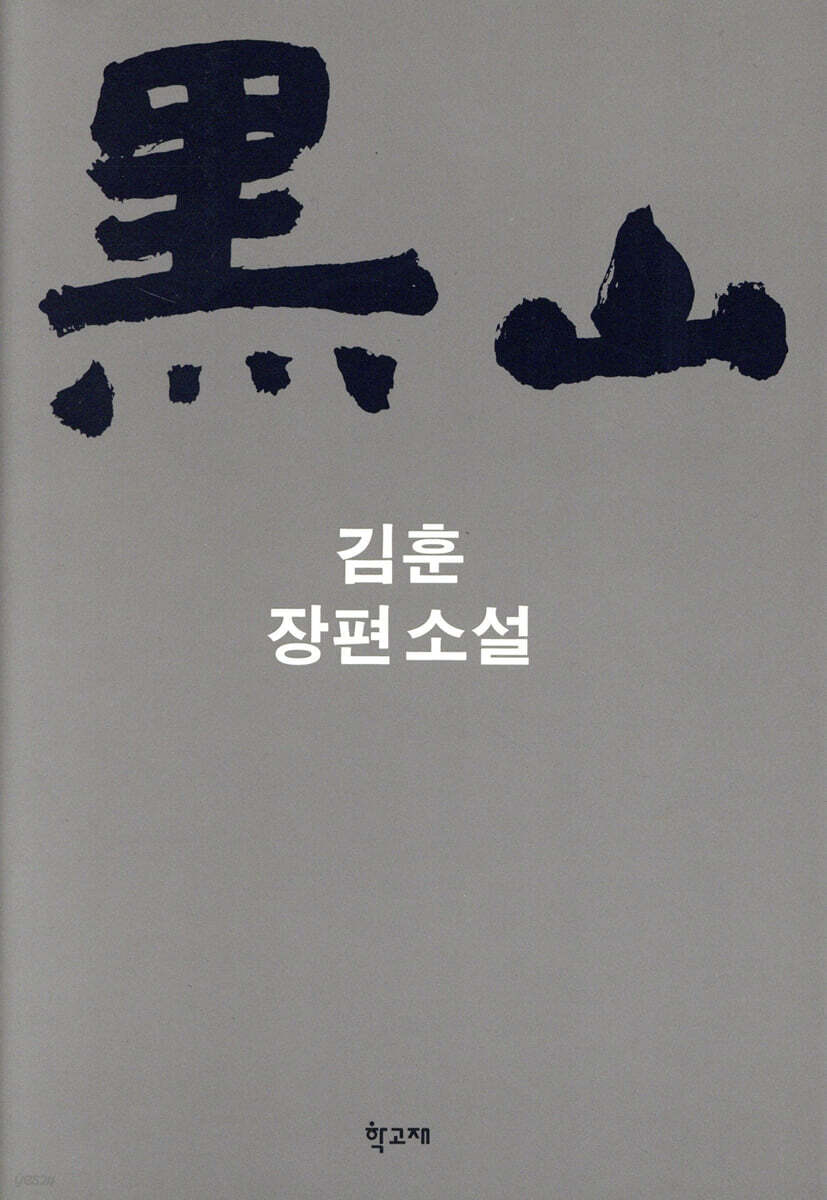 |
Description
Book Introduction
Kim Hoon's new full-length novel, "Heuksando," deals with the inner lives of intellectuals like Jeong Yak-jeon and Hwang Sa-yeong, who clashed with the traditions of Joseon society in the late 18th and early 19th centuries.
At that time, among the people who were waking up to the tyranny of corrupt officials and the injustice of the Neo-Confucian class system, the idea of 'Jeonggamnok', which predicted the arrival of 'Haedo Jinin' and the opening of a new world, was spreading.
Catholicism, which was introduced along with Western civilization, was a new alternative for intellectuals who wanted to overcome the chaos of the late Joseon Dynasty.
Author Kim Hoon develops "Heuksando" by focusing on the life and death of Jeong Yak-jeon, who was involved in Catholicism, and Hwang Sa-yeong, his nephew-in-law and a leader of the Joseon Catholic Church.
Jeong Yak-jeon once glimpsed beyond the world, but then returned to the world and lived a life of betrayal.
He wrote the empirical fish ecology book, 'Jasan Fish Book', while observing the fish in front of him in the Black Sea, where he was exiled.
Hwang Sa-young fought against the existing social order and ideology with his whole body for the salvation of the world beyond.
In the mountain village of Baeron, Jecheon, where he hid from the arrest of the government, he wrote a letter to the Beijing church known as the 'Hwang Sa-yeong White Paper'.
In this piece, written in 13,300 characters on silk, Hwang Sa-yeong denounced the horrors of persecution and appealed to God to open a new world that would overthrow the old Joseon Dynasty.
And in November 1801, he was captured in the Baron's Cave and executed on charges of 'treason'.
There are over 20 characters in 『Heuksando』.
This is also the character with the most characters in Kim Hoon's novels.
With the stories of Jeong Yak-jeon and Hwang Sa-yeong as one axis, the vivid characters from each class, including the court, noble intellectuals, middle-class officials, lower-ranking officials, coachmen, fishermen, and slaves, are interwoven into the story, forming another axis that makes up the spectacle of 『Heuksando』.
It depicts the tragedy of the Joseon people with chilling descriptive power.
The petition of the people who had to abandon their farming to erect a monument to the governor who changed every three or four months (page 22), the cry of Jang Pal-su, a resident of Heuksando who ate steamed mud cakes and threw young pine tree roots to avoid paying tribute (page 196), “Lord, do not let us be beaten to death.
In Oh Dong-hee's prayer in Korean, "Lord, do not let us starve to death" (page 58), the common people of Joseon endure a life so miserable that it is difficult to bear to look at.
It is likely that the fact that Do-Cham's incantations, such as the "Jeonggamnok" that sings of the end times and a new world throughout "Heuksando," overlap with the Catholic Church's fervent wish for salvation and bliss, stems from this background.
At that time, among the people who were waking up to the tyranny of corrupt officials and the injustice of the Neo-Confucian class system, the idea of 'Jeonggamnok', which predicted the arrival of 'Haedo Jinin' and the opening of a new world, was spreading.
Catholicism, which was introduced along with Western civilization, was a new alternative for intellectuals who wanted to overcome the chaos of the late Joseon Dynasty.
Author Kim Hoon develops "Heuksando" by focusing on the life and death of Jeong Yak-jeon, who was involved in Catholicism, and Hwang Sa-yeong, his nephew-in-law and a leader of the Joseon Catholic Church.
Jeong Yak-jeon once glimpsed beyond the world, but then returned to the world and lived a life of betrayal.
He wrote the empirical fish ecology book, 'Jasan Fish Book', while observing the fish in front of him in the Black Sea, where he was exiled.
Hwang Sa-young fought against the existing social order and ideology with his whole body for the salvation of the world beyond.
In the mountain village of Baeron, Jecheon, where he hid from the arrest of the government, he wrote a letter to the Beijing church known as the 'Hwang Sa-yeong White Paper'.
In this piece, written in 13,300 characters on silk, Hwang Sa-yeong denounced the horrors of persecution and appealed to God to open a new world that would overthrow the old Joseon Dynasty.
And in November 1801, he was captured in the Baron's Cave and executed on charges of 'treason'.
There are over 20 characters in 『Heuksando』.
This is also the character with the most characters in Kim Hoon's novels.
With the stories of Jeong Yak-jeon and Hwang Sa-yeong as one axis, the vivid characters from each class, including the court, noble intellectuals, middle-class officials, lower-ranking officials, coachmen, fishermen, and slaves, are interwoven into the story, forming another axis that makes up the spectacle of 『Heuksando』.
It depicts the tragedy of the Joseon people with chilling descriptive power.
The petition of the people who had to abandon their farming to erect a monument to the governor who changed every three or four months (page 22), the cry of Jang Pal-su, a resident of Heuksando who ate steamed mud cakes and threw young pine tree roots to avoid paying tribute (page 196), “Lord, do not let us be beaten to death.
In Oh Dong-hee's prayer in Korean, "Lord, do not let us starve to death" (page 58), the common people of Joseon endure a life so miserable that it is difficult to bear to look at.
It is likely that the fact that Do-Cham's incantations, such as the "Jeonggamnok" that sings of the end times and a new world throughout "Heuksando," overlap with the Catholic Church's fervent wish for salvation and bliss, stems from this background.
- You can preview some of the book's contents.
Preview
index
scholar
Gambling
Manori
boatman
Hand wraps
Park Cha-dol
island
Yukson
White Sea
Three drops
crab legs
prison
My way
White bellflower
shrimp paste shop
coachman
Mud cake
flying fish
mackerel
Here
slander
Suyuri
Oppa
Hwang Sa-kyung
bishop
fairway
spying
Building a house
crypt
four women
The sound of grasshoppers
asset
silver
Disappearance
Silk writing
Spit out words
execution ground
The rooster crows
Reviews
References
chronology
Word Explanation
Gambling
Manori
boatman
Hand wraps
Park Cha-dol
island
Yukson
White Sea
Three drops
crab legs
prison
My way
White bellflower
shrimp paste shop
coachman
Mud cake
flying fish
mackerel
Here
slander
Suyuri
Oppa
Hwang Sa-kyung
bishop
fairway
spying
Building a house
crypt
four women
The sound of grasshoppers
asset
silver
Disappearance
Silk writing
Spit out words
execution ground
The rooster crows
Reviews
References
chronology
Word Explanation
Into the book
I was exiled to Heuksando and thought about the life, dreams, hopes and frustrations of the Confucian scholar who died while looking at fish.
The vastness and distance of the sea blocked my thoughts, and I shot my words at that wall of separation.
No one can give up on life, whether they are killed while testifying to a new life or turn around and return to their place in this world. --- From the author's words
The people say
In this small village, the magistrate has changed four times in the past year, and the village has become disorganized and the people cannot stand on their own two feet because they have to send and receive the magistrate's procession every three or four months.
In the fall, the magistrate changed again, so two memorial steles were erected at once, one for the departing person and one for the returning person, and so twenty memorial steles were erected at the entrance to the village where there was no place to eat.
In a village abandoned by its people, would a priest or magistrate act as a governor to Songdeokbi?
I beg you not to twist the people's weak wrists and take away the food they hold in their hands, and since it is too much for us to say whether it is good or bad government, please allow the new governor to stay for a long time...
If you punish us for making a fuss by saying that we are making a fuss by submitting a petition, we, as dry as dry leaves, will be crushed by a single blow of a stick. ---p.22, Petition submitted by the people of Gurye Gangmaeul to the governor
The subject said
Even if we save those lowly people, they will never return to being human. Even if we release the grain and feed them, it is only a handful of millet in the river and a ladleful of water for a forest fire, so they will only waste grain and eventually die… … .
It is not a monarchy to destroy those born with human skin, but when they are about to die and disappear, we can feel pity for their lives, which are like dead leaves, but there is no reason to try to save them... … ---p.28, Words presented to the king by the high-ranking officials of the Office of Military Affairs
The contrast is clear
Ah, you people, you wandering husbands and wives, you young children, rely on me and return to your homeland.
Go and live on the ground.
When there is a flood, the husband digs a ditch to drain the water, and when there is a drought, he stores the water and irrigates the fields.
Wouldn't it be beautiful if a mother wove a cloth to cover an old person and breastfeed a child at night?
The movement of the sun and moon produces crops, so if there is a shortage, how can you not know that it will be repaid the following year?
Know that wandering is the path to death, and that returning and taking care of one another is the only way to survive. ---p.121, The Queen Dowager's teachings to the people
Jeong Yak-jeon thinks
The death of my younger brother, Jeong Yak-jong, who had his head cut off while laughing, happened a few months ago, but it felt distant like a dream from a past life, and the further away it got, the more vivid it became.
Would it be a betrayal of God to abandon the ecstatic thoughts of the past and stay a little longer on this worldly land with my life preserved by drawing others in?
Why is life only possible through betrayal?
As the dead herbalist said, there was no trust in me in the first place, so there is no betrayal.
Is that so or not?
The vastness and distance of the sea blocked my thoughts, and I shot my words at that wall of separation.
No one can give up on life, whether they are killed while testifying to a new life or turn around and return to their place in this world. --- From the author's words
The people say
In this small village, the magistrate has changed four times in the past year, and the village has become disorganized and the people cannot stand on their own two feet because they have to send and receive the magistrate's procession every three or four months.
In the fall, the magistrate changed again, so two memorial steles were erected at once, one for the departing person and one for the returning person, and so twenty memorial steles were erected at the entrance to the village where there was no place to eat.
In a village abandoned by its people, would a priest or magistrate act as a governor to Songdeokbi?
I beg you not to twist the people's weak wrists and take away the food they hold in their hands, and since it is too much for us to say whether it is good or bad government, please allow the new governor to stay for a long time...
If you punish us for making a fuss by saying that we are making a fuss by submitting a petition, we, as dry as dry leaves, will be crushed by a single blow of a stick. ---p.22, Petition submitted by the people of Gurye Gangmaeul to the governor
The subject said
Even if we save those lowly people, they will never return to being human. Even if we release the grain and feed them, it is only a handful of millet in the river and a ladleful of water for a forest fire, so they will only waste grain and eventually die… … .
It is not a monarchy to destroy those born with human skin, but when they are about to die and disappear, we can feel pity for their lives, which are like dead leaves, but there is no reason to try to save them... … ---p.28, Words presented to the king by the high-ranking officials of the Office of Military Affairs
The contrast is clear
Ah, you people, you wandering husbands and wives, you young children, rely on me and return to your homeland.
Go and live on the ground.
When there is a flood, the husband digs a ditch to drain the water, and when there is a drought, he stores the water and irrigates the fields.
Wouldn't it be beautiful if a mother wove a cloth to cover an old person and breastfeed a child at night?
The movement of the sun and moon produces crops, so if there is a shortage, how can you not know that it will be repaid the following year?
Know that wandering is the path to death, and that returning and taking care of one another is the only way to survive. ---p.121, The Queen Dowager's teachings to the people
Jeong Yak-jeon thinks
The death of my younger brother, Jeong Yak-jong, who had his head cut off while laughing, happened a few months ago, but it felt distant like a dream from a past life, and the further away it got, the more vivid it became.
Would it be a betrayal of God to abandon the ecstatic thoughts of the past and stay a little longer on this worldly land with my life preserved by drawing others in?
Why is life only possible through betrayal?
As the dead herbalist said, there was no trust in me in the first place, so there is no betrayal.
Is that so or not?
---p.18, a scene where Jeong Yak-jeon reflects on Jeong Yak-jong's death.
Publisher's Review
Kim Hoon returns with a new historical novel
What kind of novel is the new full-length novel 『Heuksando』?
Four years after Namhansanseong
Kim Hoon visits Heuksando, the world's last island.
In 2011, Kim Hoon's new historical novel, "Heuksando," was published.
Kim Hoon, who was called a 'lightning blessing to Korean literature' in 2001 for his novel 'Song of the Sword' (1 million copies sold), which depicted the inner self of a nihilistic hero in a rippling, whimsical style.
He firmly established himself as a historical novelist, once again enjoying both critical acclaim and popular popularity with 『Namhansanseong』 (600,000 copies sold) in 2007, which dealt with the tragic history of the Second Manchu Invasion of Korea.
The winter of 1636 at Namhansanseong Fortress, where the country's humiliation was endured, made the late author Park Wan-seo suffer from a cold, saying, "Kim Hoon's cold, short sentences cut through my skin like sharp ice." It also caused a huge social repercussion as it was linked to social issues of the time, such as the Korea-U.S. FTA.
Moreover, the popular success of 『Namhansanseong』 confirmed the true nature of Kim Hoon's literature, which is strong in historical novels.
Joseon intellectuals fascinated by Catholicism
Shaking up 19th century Joseon
Kim Hoon's new full-length novel, "Heuksando," deals with the inner lives of intellectuals like Jeong Yak-jeon and Hwang Sa-yeong, who clashed with the traditions of Joseon society in the late 18th and early 19th centuries.
At that time, among the people who were waking up to the tyranny of corrupt officials and the injustice of the Neo-Confucian class system, the idea of 'Jeonggamnok', which predicted the arrival of 'Haedo Jinin' and the opening of a new world, was spreading.
Catholicism, which was introduced along with Western civilization, was a new alternative for intellectuals who wanted to overcome the chaos of the late Joseon Dynasty.
Author Kim Hoon develops "Heuksando" by focusing on the life and death of Jeong Yak-jeon, who was involved in Catholicism, and Hwang Sa-yeong, his nephew-in-law and a leader of the Joseon Catholic Church.
Jeong Yak-jeon once glimpsed beyond the world, but then returned to the world and lived a life of betrayal.
He wrote the empirical fish ecology book, 'Jasan Fish Book', while observing the fish in front of him in the Black Sea, where he was exiled.
Hwang Sa-young fought against the existing social order and ideology with his whole body for the salvation of the world beyond.
In the mountain village of Baeron, Jecheon, where he hid from the arrest of the government, he wrote a letter to the Beijing church known as the 'Hwang Sa-yeong White Paper'.
In this piece, written in 13,300 characters on silk, Hwang Sa-yeong denounced the horrors of persecution and appealed to God to open a new world that would overthrow the old Joseon Dynasty.
And in November 1801, he was captured in the Baron's Cave and executed on charges of 'treason'.
『Heuksando』, about 20 characters
Forming a tangled web of life and fate
To write "Heuksando," author Kim Hoon left home and entered Seongamdo in Ansan, Gyeonggi Province, in April of this year, and completed the manuscript in 1,135 pages after five months of seclusion.
It is the longest novel ever published.
During the arduous process of writing each character with a pencil, he visited Heuksando Island, the Nanyang Shrine of Our Lady in Hwaseong, Gyeonggi Province, and the Baeron Shrine in Jecheon, Chungcheongbuk-do. The references at the back of the book, including historical materials such as the "Records of the Office of the Inspector General" and research papers on Catholic history, demonstrate the author's struggle to portray the times.
There are over 20 characters in 『Heuksando』.
This is also the character with the most characters in Kim Hoon's novels.
With the stories of Jeong Yak-jeon and Hwang Sa-yeong as one axis, the vivid characters from each class, including the court, noble intellectuals, middle-class officials, lower-ranking officials, coachmen, fishermen, and slaves, are interwoven into the story, forming another axis that makes up the spectacle of 『Heuksando』.
The Queen Dowager Kim, who urgently orders the slaughter of Catholics, the commander of the Upodo Island, Lee Pan-su, who uses the former chief of the Police Bureau, Park Cha-dol, to arrest Hwang Sa-yeong, and the commander of the Su-gunjin Byeol-gu, who wields king-like power in the place of exile, Heuksando, are all characters who try to uphold tradition and the pro-royalist order.
On the other hand, the fisherman Jang Pal-su, Jo Pung-heon, and the eldest brother of Jeong Yak-jeon, Kim Gae-dong and Yuk Son-i, who are slaves in Myeoncheon and help Hwang Sa-yeong, are characters who reveal the disintegration and chaos of the social order in the late Joseon Dynasty.
The activities of female believers, which actually served as a pretext for the persecution of Catholicism, are depicted in the novel as the devotion of women like Gilgalnyeo and Gangsanyeo.
In particular, Coach Manori plays an important role as a secret envoy connecting the Beijing church and Huang Sa-yeong, based on his experience as a guide following the Beijing mission.
Also, the role of Park Cha-dol, a former police chief and apostate Catholic, as a double agent who goes back and forth between being the pursuer and the pursued, and his tragic reunion and separation from his younger sister Park Han-nyeo, add dramatic tension and make the novel enjoyable.
In this way, Heuksando holds the readers' attention until the very end with its high level of completion and narrative structure reminiscent of a historical novel.
The tragedy of Park Min, who took the flesh of the people,
The common people who sing of the end times, relying on the truth
Author Kim Hoon depicts the tragedy of the Joseon people in 『Heuksando』 with chilling descriptive power.
The petition of the people who had to abandon their farming to erect a monument to the governor who changed every three or four months (page 22), the cry of Jang Pal-su, a resident of Heuksando who ate steamed mud cakes and threw young pine tree roots to avoid paying tribute (page 196), “Lord, do not let us be beaten to death.
In Oh Dong-hee's prayer in Korean, "Lord, do not let us starve to death" (page 58), the common people of Joseon endure a life so miserable that it is difficult to bear to look at.
It is likely that the fact that Do-Cham's incantations, such as the "Jeonggamnok" that sings of the end times and a new world throughout "Heuksando," overlap with the Catholic Church's fervent wish for salvation and bliss, stems from this background.
Hwang Sa-young and the Hwang Sa-young White Paper Incident
Hwang Sa-yeong passed the Jinsa exam in 1791 at the young age of 16.
It is said that King Jeongjo personally called him to the palace and stroked his wrist to praise him, and that Hwang Sa-yeong wrapped red silk around his wrist that had been touched by his hand.
While Hwang Sa-yeong was broadening his knowledge by meeting the great scholars of the time, he met the family of Dasan Jeong Yak-yong and became the son-in-law of Jeong Yak-hyeon, the eldest brother of the Jeong Yak-jeon brothers.
Hwang Sa-yeong, who heard about the Catholic doctrine from his wife's family, the Ma Jae Jeong clan, gave up his official career and walked a difficult path by becoming a leader of the Joseon Catholic Church.
When the Sinyu Persecution broke out in 1801, Hwang Sa-yeong left Seoul and went into hiding as a baron in the mountains of Jecheon, Chungcheong Province.
Upon hearing the news of the persecution of the faithful and the execution of Father Zhou Wenmo, he was disheartened and indignant, so he wrote a petition to Bishop Gouvea of the Peking Church.
However, Hwang Sim, who was heading to Beijing carrying the white book (called the 'white book' because it was written on silk), was captured, and Hwang Sa-yeong was also sentenced to the extreme punishment of beheading as a traitor.
At this time he was 27 years old.
Because of this incident, his widowed mother was exiled to Geoje Island, his wife Jeong Myeong-ryeon to Jeju Island, and his only son Gyeong-han to Chuja Island.
The original copy of the white paper was left in the warehouse of the Office of the Inspector General for over a hundred years, and was finally discovered in 1894.
Bishop Mutel presented it to Pope Pius XI during the beatification ceremony of the 79 Korean martyrs in 1925, and it is currently housed in the Vatican.
The white paper is 62 centimeters wide and 38 centimeters high on white silk, and contains 122 lines and 13,384 characters, written in extremely fine brush strokes, each as small and neat as a grain of rice.
The content is roughly divided into three parts.
First, it records the Catholic Church at the time, the activities of the Chinese priest Zhou Wenmo, the facts of the Sinyu Persecution, and the biographies of the martyrs who died at that time. Next, it records the facts of the surrender and execution of Father Zhou Wenmo, and finally, the actual situation in Joseon at the time and the necessary measures for future missionary work.
The 'Hwang Sa-yeong White Paper' has been the target of attacks stemming from nationalist sentiments for its attempt to attract foreign powers, but some historians also argue that the church's egalitarian principles and its revolutionary influence on Joseon society at the time should not be overlooked.
Shin Yu Persecution
When King Jeongjo, who had pursued a relatively moderate policy toward Catholicism, died in 1801 (the first year of King Sunjo's reign), Queen Dowager Kim issued a decree prohibiting Catholicism, ordering the identification and punishment of Catholic believers.
At this time, an incident occurred in which Jeong Yak-jong was caught moving Catholic books, and this incident became the fuse for large-scale persecution.
The persecution came to an end when Father Zhou Wenmo, a Chinese priest who had infiltrated Joseon to preach, was beheaded in May of that year, and Hwang Sa-yeong and others were arrested in November and executed in December.
This first large-scale persecution of Catholics, known as the Sinyu Persecution, was a clash between forces that sought to uphold the Neo-Confucian order and traditions and the common people and intellectuals who longed for a new society.
The Catholic power, weakened by this incident, was reorganized from being centered on intellectuals to being centered on the middle class and missionaries, foreshadowing even greater persecution in the future.
What kind of novel is the new full-length novel 『Heuksando』?
Four years after Namhansanseong
Kim Hoon visits Heuksando, the world's last island.
In 2011, Kim Hoon's new historical novel, "Heuksando," was published.
Kim Hoon, who was called a 'lightning blessing to Korean literature' in 2001 for his novel 'Song of the Sword' (1 million copies sold), which depicted the inner self of a nihilistic hero in a rippling, whimsical style.
He firmly established himself as a historical novelist, once again enjoying both critical acclaim and popular popularity with 『Namhansanseong』 (600,000 copies sold) in 2007, which dealt with the tragic history of the Second Manchu Invasion of Korea.
The winter of 1636 at Namhansanseong Fortress, where the country's humiliation was endured, made the late author Park Wan-seo suffer from a cold, saying, "Kim Hoon's cold, short sentences cut through my skin like sharp ice." It also caused a huge social repercussion as it was linked to social issues of the time, such as the Korea-U.S. FTA.
Moreover, the popular success of 『Namhansanseong』 confirmed the true nature of Kim Hoon's literature, which is strong in historical novels.
Joseon intellectuals fascinated by Catholicism
Shaking up 19th century Joseon
Kim Hoon's new full-length novel, "Heuksando," deals with the inner lives of intellectuals like Jeong Yak-jeon and Hwang Sa-yeong, who clashed with the traditions of Joseon society in the late 18th and early 19th centuries.
At that time, among the people who were waking up to the tyranny of corrupt officials and the injustice of the Neo-Confucian class system, the idea of 'Jeonggamnok', which predicted the arrival of 'Haedo Jinin' and the opening of a new world, was spreading.
Catholicism, which was introduced along with Western civilization, was a new alternative for intellectuals who wanted to overcome the chaos of the late Joseon Dynasty.
Author Kim Hoon develops "Heuksando" by focusing on the life and death of Jeong Yak-jeon, who was involved in Catholicism, and Hwang Sa-yeong, his nephew-in-law and a leader of the Joseon Catholic Church.
Jeong Yak-jeon once glimpsed beyond the world, but then returned to the world and lived a life of betrayal.
He wrote the empirical fish ecology book, 'Jasan Fish Book', while observing the fish in front of him in the Black Sea, where he was exiled.
Hwang Sa-young fought against the existing social order and ideology with his whole body for the salvation of the world beyond.
In the mountain village of Baeron, Jecheon, where he hid from the arrest of the government, he wrote a letter to the Beijing church known as the 'Hwang Sa-yeong White Paper'.
In this piece, written in 13,300 characters on silk, Hwang Sa-yeong denounced the horrors of persecution and appealed to God to open a new world that would overthrow the old Joseon Dynasty.
And in November 1801, he was captured in the Baron's Cave and executed on charges of 'treason'.
『Heuksando』, about 20 characters
Forming a tangled web of life and fate
To write "Heuksando," author Kim Hoon left home and entered Seongamdo in Ansan, Gyeonggi Province, in April of this year, and completed the manuscript in 1,135 pages after five months of seclusion.
It is the longest novel ever published.
During the arduous process of writing each character with a pencil, he visited Heuksando Island, the Nanyang Shrine of Our Lady in Hwaseong, Gyeonggi Province, and the Baeron Shrine in Jecheon, Chungcheongbuk-do. The references at the back of the book, including historical materials such as the "Records of the Office of the Inspector General" and research papers on Catholic history, demonstrate the author's struggle to portray the times.
There are over 20 characters in 『Heuksando』.
This is also the character with the most characters in Kim Hoon's novels.
With the stories of Jeong Yak-jeon and Hwang Sa-yeong as one axis, the vivid characters from each class, including the court, noble intellectuals, middle-class officials, lower-ranking officials, coachmen, fishermen, and slaves, are interwoven into the story, forming another axis that makes up the spectacle of 『Heuksando』.
The Queen Dowager Kim, who urgently orders the slaughter of Catholics, the commander of the Upodo Island, Lee Pan-su, who uses the former chief of the Police Bureau, Park Cha-dol, to arrest Hwang Sa-yeong, and the commander of the Su-gunjin Byeol-gu, who wields king-like power in the place of exile, Heuksando, are all characters who try to uphold tradition and the pro-royalist order.
On the other hand, the fisherman Jang Pal-su, Jo Pung-heon, and the eldest brother of Jeong Yak-jeon, Kim Gae-dong and Yuk Son-i, who are slaves in Myeoncheon and help Hwang Sa-yeong, are characters who reveal the disintegration and chaos of the social order in the late Joseon Dynasty.
The activities of female believers, which actually served as a pretext for the persecution of Catholicism, are depicted in the novel as the devotion of women like Gilgalnyeo and Gangsanyeo.
In particular, Coach Manori plays an important role as a secret envoy connecting the Beijing church and Huang Sa-yeong, based on his experience as a guide following the Beijing mission.
Also, the role of Park Cha-dol, a former police chief and apostate Catholic, as a double agent who goes back and forth between being the pursuer and the pursued, and his tragic reunion and separation from his younger sister Park Han-nyeo, add dramatic tension and make the novel enjoyable.
In this way, Heuksando holds the readers' attention until the very end with its high level of completion and narrative structure reminiscent of a historical novel.
The tragedy of Park Min, who took the flesh of the people,
The common people who sing of the end times, relying on the truth
Author Kim Hoon depicts the tragedy of the Joseon people in 『Heuksando』 with chilling descriptive power.
The petition of the people who had to abandon their farming to erect a monument to the governor who changed every three or four months (page 22), the cry of Jang Pal-su, a resident of Heuksando who ate steamed mud cakes and threw young pine tree roots to avoid paying tribute (page 196), “Lord, do not let us be beaten to death.
In Oh Dong-hee's prayer in Korean, "Lord, do not let us starve to death" (page 58), the common people of Joseon endure a life so miserable that it is difficult to bear to look at.
It is likely that the fact that Do-Cham's incantations, such as the "Jeonggamnok" that sings of the end times and a new world throughout "Heuksando," overlap with the Catholic Church's fervent wish for salvation and bliss, stems from this background.
Hwang Sa-young and the Hwang Sa-young White Paper Incident
Hwang Sa-yeong passed the Jinsa exam in 1791 at the young age of 16.
It is said that King Jeongjo personally called him to the palace and stroked his wrist to praise him, and that Hwang Sa-yeong wrapped red silk around his wrist that had been touched by his hand.
While Hwang Sa-yeong was broadening his knowledge by meeting the great scholars of the time, he met the family of Dasan Jeong Yak-yong and became the son-in-law of Jeong Yak-hyeon, the eldest brother of the Jeong Yak-jeon brothers.
Hwang Sa-yeong, who heard about the Catholic doctrine from his wife's family, the Ma Jae Jeong clan, gave up his official career and walked a difficult path by becoming a leader of the Joseon Catholic Church.
When the Sinyu Persecution broke out in 1801, Hwang Sa-yeong left Seoul and went into hiding as a baron in the mountains of Jecheon, Chungcheong Province.
Upon hearing the news of the persecution of the faithful and the execution of Father Zhou Wenmo, he was disheartened and indignant, so he wrote a petition to Bishop Gouvea of the Peking Church.
However, Hwang Sim, who was heading to Beijing carrying the white book (called the 'white book' because it was written on silk), was captured, and Hwang Sa-yeong was also sentenced to the extreme punishment of beheading as a traitor.
At this time he was 27 years old.
Because of this incident, his widowed mother was exiled to Geoje Island, his wife Jeong Myeong-ryeon to Jeju Island, and his only son Gyeong-han to Chuja Island.
The original copy of the white paper was left in the warehouse of the Office of the Inspector General for over a hundred years, and was finally discovered in 1894.
Bishop Mutel presented it to Pope Pius XI during the beatification ceremony of the 79 Korean martyrs in 1925, and it is currently housed in the Vatican.
The white paper is 62 centimeters wide and 38 centimeters high on white silk, and contains 122 lines and 13,384 characters, written in extremely fine brush strokes, each as small and neat as a grain of rice.
The content is roughly divided into three parts.
First, it records the Catholic Church at the time, the activities of the Chinese priest Zhou Wenmo, the facts of the Sinyu Persecution, and the biographies of the martyrs who died at that time. Next, it records the facts of the surrender and execution of Father Zhou Wenmo, and finally, the actual situation in Joseon at the time and the necessary measures for future missionary work.
The 'Hwang Sa-yeong White Paper' has been the target of attacks stemming from nationalist sentiments for its attempt to attract foreign powers, but some historians also argue that the church's egalitarian principles and its revolutionary influence on Joseon society at the time should not be overlooked.
Shin Yu Persecution
When King Jeongjo, who had pursued a relatively moderate policy toward Catholicism, died in 1801 (the first year of King Sunjo's reign), Queen Dowager Kim issued a decree prohibiting Catholicism, ordering the identification and punishment of Catholic believers.
At this time, an incident occurred in which Jeong Yak-jong was caught moving Catholic books, and this incident became the fuse for large-scale persecution.
The persecution came to an end when Father Zhou Wenmo, a Chinese priest who had infiltrated Joseon to preach, was beheaded in May of that year, and Hwang Sa-yeong and others were arrested in November and executed in December.
This first large-scale persecution of Catholics, known as the Sinyu Persecution, was a clash between forces that sought to uphold the Neo-Confucian order and traditions and the common people and intellectuals who longed for a new society.
The Catholic power, weakened by this incident, was reorganized from being centered on intellectuals to being centered on the middle class and missionaries, foreshadowing even greater persecution in the future.
GOODS SPECIFICS
- Date of publication: October 20, 2011
- Page count, weight, size: 416 pages | 414g | 128*188*30mm
- ISBN13: 9788956251622
- ISBN10: 8956251622
You may also like
카테고리
korean


korean

![GQ KOREA Mark (Monthly): December [2025]](http://librairie.coreenne.fr/cdn/shop/files/8ef265dbbfbf186523ed75ba7319009d.jpg?v=1765340328&width=3840)


