

Summer of Jugemu
 |
Description
Book Introduction
- A word from MD
-
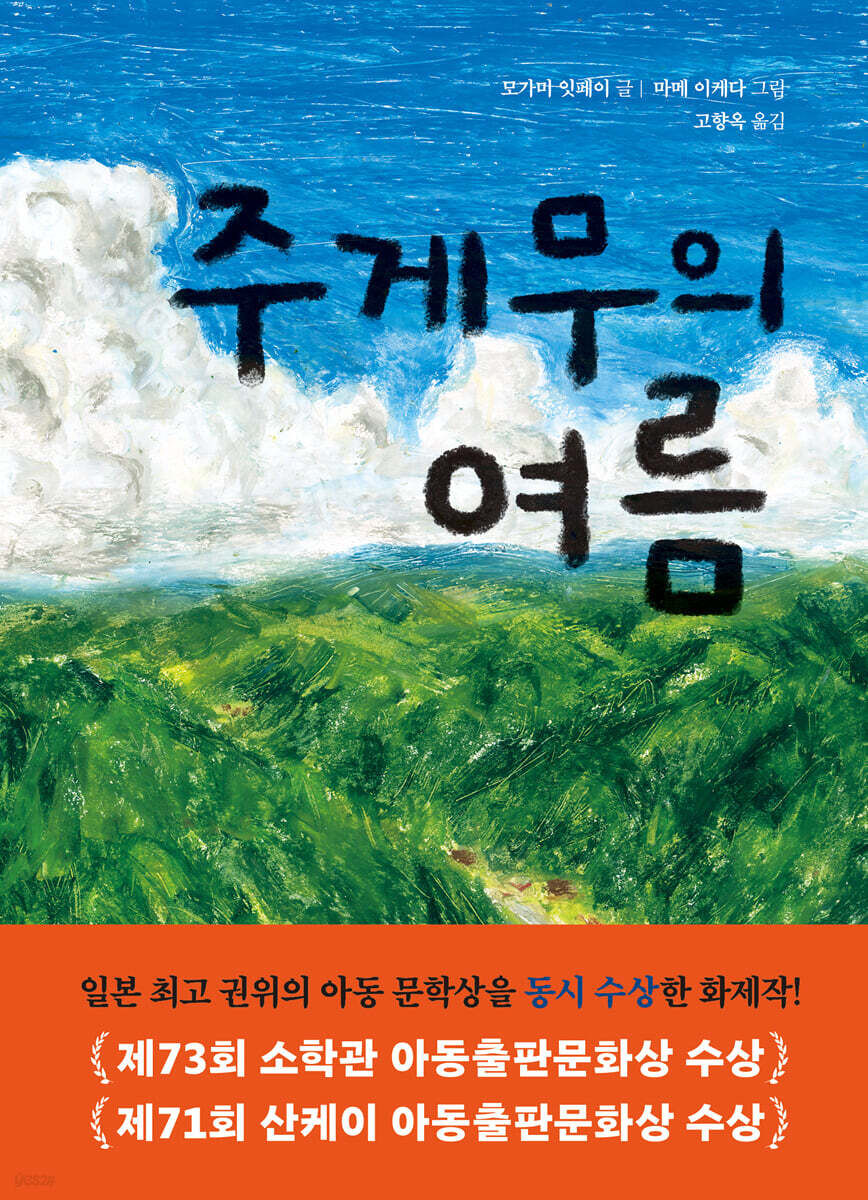
A dazzling summer vacation for your sparkling friendsWinner of the 73rd Shogakukan Children's Publishing Culture Award and the 71st Sankei Children's Publishing Culture Award.
A special summer vacation for Katsu and his friends, who suffer from a disease that weakens their muscles.
It depicts the story of friendship and growth of children who live in the present, cherishing the time that will never come again.
A summer fairy tale depicting the sparkling courage of childrenJuly 15, 2025. Children's PD Baek Jeong- min
A sensational work that has won two of Japan's most prestigious literary awards simultaneously!
Winner of the 73rd Shogakukan Children's Publishing Culture Award
Winner of the 71st Sankei Children's Publishing Culture Award
Books selected for the 70th National Youth Reading Contest
Immediately after its publication, 『Summer of Jugemu』, which swept numerous awards and became a hot topic, was also published in Korea.
"Juugemu no Summer" is a work that won both the Sankei Children's Publishing Culture Award and the Shogakukan Children's Publishing Culture Award, the most prestigious children's literature awards in Japan. It is rare even in Japan for a single work to win both awards.
The Sankei Children's Publishing Culture Award is a literary award with a long history and authority, and is also the award given to authors beloved around the world, such as Shinsuke Yoshidake for "Is This Really an Apple?", Yoko Sano for "The Cat Who Lived a Million Times," and Sachiko Kashiwaba for "Summer in the Alley of the Demonic Temple."
The Shogakukan Children's Publishing Culture Award is a traditional literary award with a history of over 70 years, and is considered one of the most prestigious awards in Japan, along with the Sankei Children's Publishing Culture Award.
As the judges commented, "It sensually evokes the light and breeze of a midsummer day, a time of longing." This work, brimming with the scent of summer, was recognized for its literary value and was selected as a book for the 70th National Youth Reading Appreciation Contest, establishing itself as a must-read for elementary school students.
Since his debut, author Mogami Ippei has continued to write extensively, and as this work culminates in his literary prowess, you will feel a surge of emotion throughout your reading.
Winner of the 73rd Shogakukan Children's Publishing Culture Award
Winner of the 71st Sankei Children's Publishing Culture Award
Books selected for the 70th National Youth Reading Contest
Immediately after its publication, 『Summer of Jugemu』, which swept numerous awards and became a hot topic, was also published in Korea.
"Juugemu no Summer" is a work that won both the Sankei Children's Publishing Culture Award and the Shogakukan Children's Publishing Culture Award, the most prestigious children's literature awards in Japan. It is rare even in Japan for a single work to win both awards.
The Sankei Children's Publishing Culture Award is a literary award with a long history and authority, and is also the award given to authors beloved around the world, such as Shinsuke Yoshidake for "Is This Really an Apple?", Yoko Sano for "The Cat Who Lived a Million Times," and Sachiko Kashiwaba for "Summer in the Alley of the Demonic Temple."
The Shogakukan Children's Publishing Culture Award is a traditional literary award with a history of over 70 years, and is considered one of the most prestigious awards in Japan, along with the Sankei Children's Publishing Culture Award.
As the judges commented, "It sensually evokes the light and breeze of a midsummer day, a time of longing." This work, brimming with the scent of summer, was recognized for its literary value and was selected as a book for the 70th National Youth Reading Appreciation Contest, establishing itself as a must-read for elementary school students.
Since his debut, author Mogami Ippei has continued to write extensively, and as this work culminates in his literary prowess, you will feel a surge of emotion throughout your reading.
- You can preview some of the book's contents.
Preview
index
1.
Chickpea and Pineapple Flavored Cider… 8
2.
Summer of Jugemu… 55
3.
Monster Seven-Leaf Tree… 83
Chickpea and Pineapple Flavored Cider… 8
2.
Summer of Jugemu… 55
3.
Monster Seven-Leaf Tree… 83
Detailed image

Into the book
Katsu, who dreamed of becoming a comedian, studied comedians diligently by reading books and watching videos.
In particular, we have heard the story of "Jugemu" being the one that Katsu practiced the most, hundreds of times.
Thanks to that, the 'longest name in the world' that appears there was something that not only I but also Shu and Yama could always roll off their lips.
--- p.17
But I wasn't walking slowly on purpose.
Katsura was doing his best.
We, who knew this fact better than anyone else, did not find Gatsu strange or criticize him for walking slowly.
Every time Katsu fell behind, they just waited while playing stupid pranks on each other.
Katsu also showed no sign of apologizing to us.
What was normal for Katsu was normal for the three of us.
--- p.28
Katsu asked cautiously.
“Hey… how was it when you fought the bear and won?” “Hmm, what could I say?
I just fought for my life without thinking.
“You too, live with all your might.” “With all your might?” “Yes.
“No matter what, if you give it your all, if you put your life into it, a path will definitely open up.” “I will.” Katsu’s face was quite serious.
--- p.50
The bear-catcher grandfather looked at us with a proud face and drank the cider in gulps.
Immediately afterwards, a loud trimming sound was heard.
“Guys, I don’t know what adventure is, but have fun like you are doing now.
“What’s so boring about hanging out with four people?”
--- p.53
Yama and I picked up some rocks and grass around us and threw them into the river.
“I’m sure you won’t change your mind or anything, right?” I was secretly worried.
No, actually, very much.
“Maybe?” Yama answered playfully.
“Are you sure you’ll be okay?” “Probably will be okay.
“It’ll be okay even when it’s not okay.” Yama said something incomprehensible.
We looked down the river again.
The river water sparkled in the sunlight.
--- p.59
“I want to jump off the bridge too.
I might not be able to do it next year.
I think this year might be my last chance.
So please.
“Huh?” Katsuhiko put her hands together and looked at us with longing eyes.
And then he quickly farted.
--- p.67
The monster seven-leafed tree was so big that the four of us couldn't hold it all together even if we held hands.
Suddenly, a large hole at the bottom caught my eye.
It seemed like a cave had formed as the tree rotted.
We went inside.
The cave was spacious enough to accommodate ten people.
The cave was so high that it seemed to reach the sky, and through the holes here and there, bluish rays of light streamed in.
Even though such a large cave was created, the seven-leafed tree is still alive.
It was so surprising and amazing that I couldn't believe it.
We felt inside the stem.
It felt like an unimaginably long time had passed.
--- p.117
“Guys, let’s write our names down and bury them here as a souvenir.” “Okay, okay!” Yama replied immediately, and the others agreed as if they had been waiting for it.
“What do you want to be when you grow up? What are your future dreams?
“Let’s write that down too.” “I haven’t thought about things like future dreams yet,” I said cautiously.
“It’s okay if you didn’t think about it.
“Just write down your dream for today.”
In particular, we have heard the story of "Jugemu" being the one that Katsu practiced the most, hundreds of times.
Thanks to that, the 'longest name in the world' that appears there was something that not only I but also Shu and Yama could always roll off their lips.
--- p.17
But I wasn't walking slowly on purpose.
Katsura was doing his best.
We, who knew this fact better than anyone else, did not find Gatsu strange or criticize him for walking slowly.
Every time Katsu fell behind, they just waited while playing stupid pranks on each other.
Katsu also showed no sign of apologizing to us.
What was normal for Katsu was normal for the three of us.
--- p.28
Katsu asked cautiously.
“Hey… how was it when you fought the bear and won?” “Hmm, what could I say?
I just fought for my life without thinking.
“You too, live with all your might.” “With all your might?” “Yes.
“No matter what, if you give it your all, if you put your life into it, a path will definitely open up.” “I will.” Katsu’s face was quite serious.
--- p.50
The bear-catcher grandfather looked at us with a proud face and drank the cider in gulps.
Immediately afterwards, a loud trimming sound was heard.
“Guys, I don’t know what adventure is, but have fun like you are doing now.
“What’s so boring about hanging out with four people?”
--- p.53
Yama and I picked up some rocks and grass around us and threw them into the river.
“I’m sure you won’t change your mind or anything, right?” I was secretly worried.
No, actually, very much.
“Maybe?” Yama answered playfully.
“Are you sure you’ll be okay?” “Probably will be okay.
“It’ll be okay even when it’s not okay.” Yama said something incomprehensible.
We looked down the river again.
The river water sparkled in the sunlight.
--- p.59
“I want to jump off the bridge too.
I might not be able to do it next year.
I think this year might be my last chance.
So please.
“Huh?” Katsuhiko put her hands together and looked at us with longing eyes.
And then he quickly farted.
--- p.67
The monster seven-leafed tree was so big that the four of us couldn't hold it all together even if we held hands.
Suddenly, a large hole at the bottom caught my eye.
It seemed like a cave had formed as the tree rotted.
We went inside.
The cave was spacious enough to accommodate ten people.
The cave was so high that it seemed to reach the sky, and through the holes here and there, bluish rays of light streamed in.
Even though such a large cave was created, the seven-leafed tree is still alive.
It was so surprising and amazing that I couldn't believe it.
We felt inside the stem.
It felt like an unimaginably long time had passed.
--- p.117
“Guys, let’s write our names down and bury them here as a souvenir.” “Okay, okay!” Yama replied immediately, and the others agreed as if they had been waiting for it.
“What do you want to be when you grow up? What are your future dreams?
“Let’s write that down too.” “I haven’t thought about things like future dreams yet,” I said cautiously.
“It’s okay if you didn’t think about it.
“Just write down your dream for today.”
--- p.122
Publisher's Review
“How about we make our fourth-year summer vacation the best vacation ever?”
The special adventure of four boys as bright and dazzling as the midsummer sun
The season called 'summer' has its own unique feeling.
The dazzling sun, the rippling river, the deep green trees.
As the title suggests, “Summer of Jugemu” is set in midsummer.
Katsu, Yama, Shu, and Akin, who live in Tenshin Village, decide to go on a special adventure that can only be done 'now' during the summer vacation of their fourth year.
Katz, who suffers from muscular dystrophy, a disease that causes muscles to gradually weaken, was looking forward to this summer more than anyone else.
Because he noticed that it was getting harder and harder for him to walk, he wanted to make precious memories with his friends.
The four boys enjoy the summer of their eleventh year, a summer that will never return, while exploring the nature of a mountain village where summer comes earlier than anywhere else.
The children grow up like the trees of summer, vigorously stretching out their branches, as they go to meet a mysterious old man nicknamed "Bear Catcher" after defeating a fearsome bear ("Chick and Pineapple-Flavored Cider"), plan to dive into the river from the village bridge ("Juugemu's Summer"), and go see a thousand-year-old horse chestnut tree ("Monster Horse Chestnut Tree").
The three adventures are even more special because they are firmly rooted in reality, not relying on fantasy, and proceed solely by the children's will.
Because it shows that children have the power to make reality magical and exciting.
"Jugemu's Summer" takes readers into the heart of summer through the children's adventures.
Just like lying on a sun-warmed rock after playing in the water, this work, which permeates your whole body with a cool yet warm summer feeling, will become a 'summer fairy tale' that you will want to read every summer starting this year.
“Long, long, long, long, like the dust of the universe.”
Stories of children living in this moment
Katsu, whose dream is to become a comedian, always enjoys singing a line from the "Juugemu" comedian.
This is the part where a long name that starts with 'Jugemu Jugemu' appears.
The direct translation of "Jugemu" in Korean is "life has no end," and it is a very long name because it is made up of several words related to longevity.
This name, which is the favorite of Katsu, who suffers from an incurable disease, contains Katsu's wish to live a long and healthy life.
Another thing to note here is that Katsu is reciting none other than 'manzai'.
Through the manzai that tells funny and witty stories, we can see Katsu's positive attitude of not being pessimistic about his situation but rather accepting it cheerfully.
His friends also know that Katsu's condition is getting worse, but they try to find a way to enjoy the present by singing manzai together.
Thanks to this, "Summer of Jugemu" becomes a bright and cheerful adventure story rather than a gloomy and sad story of separation.
With this mindset, Katsu and his three friends begin to value their lives more.
Instead of regretting a past when you didn't get sick or worrying about a future where your symptoms will get worse, do your best with what you can do now.
That's why, throughout their summer adventure, the four children's strength to live as hard as they can is conveyed on every page.
Summer vacation in the fourth grade only comes once in a lifetime, but the vitality that the children show will last a long time.
★ IBBY Barrier-Free Children's Books Japan Recommended Book, Selected for the Children's Welfare Culture Award Publishing Category
“What was normal for Garth was normal for the three of us.”
Rather than focusing on Katsu's illness, "Juugemu no Natsu" places more emphasis on showing Katsu's various characteristics, such as Katsu's dream of becoming a comedian and Katsu's odd suggestions.
This tells us that disability is only a part of a person, not the whole of them.
Katsu, who is well aware of this fact, instead of confining himself within the fence of his disability, freely displays his wit and sparkling thoughts.
The three friends also treat Katsu honestly as a 'friend' without taking sides between excessive consideration and indifference.
Rather than supporting Katsu, who is slow to walk, the children wait until Katsu catches up on his own.
This attitude may seem indifferent, but it actually comes from a heart that cares for and supports Katsu more than anyone else.
Another special thing about this work is that it doesn't hide Katsu's illness or hastily predict that he will get better.
Rather, we look at the given reality as it is, saying, 'I might not be able to do it next year.'
By choosing neither ignorance nor excessive kindness, the work discovers a way to truly not marginalize disability.
This thoughtfulness is naturally incorporated throughout, making "Summer of Jugemu" a truly remarkable work.
The special adventure of four boys as bright and dazzling as the midsummer sun
The season called 'summer' has its own unique feeling.
The dazzling sun, the rippling river, the deep green trees.
As the title suggests, “Summer of Jugemu” is set in midsummer.
Katsu, Yama, Shu, and Akin, who live in Tenshin Village, decide to go on a special adventure that can only be done 'now' during the summer vacation of their fourth year.
Katz, who suffers from muscular dystrophy, a disease that causes muscles to gradually weaken, was looking forward to this summer more than anyone else.
Because he noticed that it was getting harder and harder for him to walk, he wanted to make precious memories with his friends.
The four boys enjoy the summer of their eleventh year, a summer that will never return, while exploring the nature of a mountain village where summer comes earlier than anywhere else.
The children grow up like the trees of summer, vigorously stretching out their branches, as they go to meet a mysterious old man nicknamed "Bear Catcher" after defeating a fearsome bear ("Chick and Pineapple-Flavored Cider"), plan to dive into the river from the village bridge ("Juugemu's Summer"), and go see a thousand-year-old horse chestnut tree ("Monster Horse Chestnut Tree").
The three adventures are even more special because they are firmly rooted in reality, not relying on fantasy, and proceed solely by the children's will.
Because it shows that children have the power to make reality magical and exciting.
"Jugemu's Summer" takes readers into the heart of summer through the children's adventures.
Just like lying on a sun-warmed rock after playing in the water, this work, which permeates your whole body with a cool yet warm summer feeling, will become a 'summer fairy tale' that you will want to read every summer starting this year.
“Long, long, long, long, like the dust of the universe.”
Stories of children living in this moment
Katsu, whose dream is to become a comedian, always enjoys singing a line from the "Juugemu" comedian.
This is the part where a long name that starts with 'Jugemu Jugemu' appears.
The direct translation of "Jugemu" in Korean is "life has no end," and it is a very long name because it is made up of several words related to longevity.
This name, which is the favorite of Katsu, who suffers from an incurable disease, contains Katsu's wish to live a long and healthy life.
Another thing to note here is that Katsu is reciting none other than 'manzai'.
Through the manzai that tells funny and witty stories, we can see Katsu's positive attitude of not being pessimistic about his situation but rather accepting it cheerfully.
His friends also know that Katsu's condition is getting worse, but they try to find a way to enjoy the present by singing manzai together.
Thanks to this, "Summer of Jugemu" becomes a bright and cheerful adventure story rather than a gloomy and sad story of separation.
With this mindset, Katsu and his three friends begin to value their lives more.
Instead of regretting a past when you didn't get sick or worrying about a future where your symptoms will get worse, do your best with what you can do now.
That's why, throughout their summer adventure, the four children's strength to live as hard as they can is conveyed on every page.
Summer vacation in the fourth grade only comes once in a lifetime, but the vitality that the children show will last a long time.
★ IBBY Barrier-Free Children's Books Japan Recommended Book, Selected for the Children's Welfare Culture Award Publishing Category
“What was normal for Garth was normal for the three of us.”
Rather than focusing on Katsu's illness, "Juugemu no Natsu" places more emphasis on showing Katsu's various characteristics, such as Katsu's dream of becoming a comedian and Katsu's odd suggestions.
This tells us that disability is only a part of a person, not the whole of them.
Katsu, who is well aware of this fact, instead of confining himself within the fence of his disability, freely displays his wit and sparkling thoughts.
The three friends also treat Katsu honestly as a 'friend' without taking sides between excessive consideration and indifference.
Rather than supporting Katsu, who is slow to walk, the children wait until Katsu catches up on his own.
This attitude may seem indifferent, but it actually comes from a heart that cares for and supports Katsu more than anyone else.
Another special thing about this work is that it doesn't hide Katsu's illness or hastily predict that he will get better.
Rather, we look at the given reality as it is, saying, 'I might not be able to do it next year.'
By choosing neither ignorance nor excessive kindness, the work discovers a way to truly not marginalize disability.
This thoughtfulness is naturally incorporated throughout, making "Summer of Jugemu" a truly remarkable work.
GOODS SPECIFICS
- Date of issue: July 2, 2025
- Format: Hardcover book binding method guide
- Page count, weight, size: 132 pages | 400g | 150*210*17mm
- ISBN13: 9791130667607
- ISBN10: 113066760X
- KC Certification: Certification Type: Conformity Confirmation
You may also like
카테고리
korean


korean

![ELLE 엘르 스페셜 에디션 A형 : 12월 [2025]](http://librairie.coreenne.fr/cdn/shop/files/b8e27a3de6c9538896439686c6b0e8fb.jpg?v=1766436872&width=3840)


