

Bingheogak next door
 |
Description
Book Introduction
- A word from MD
-
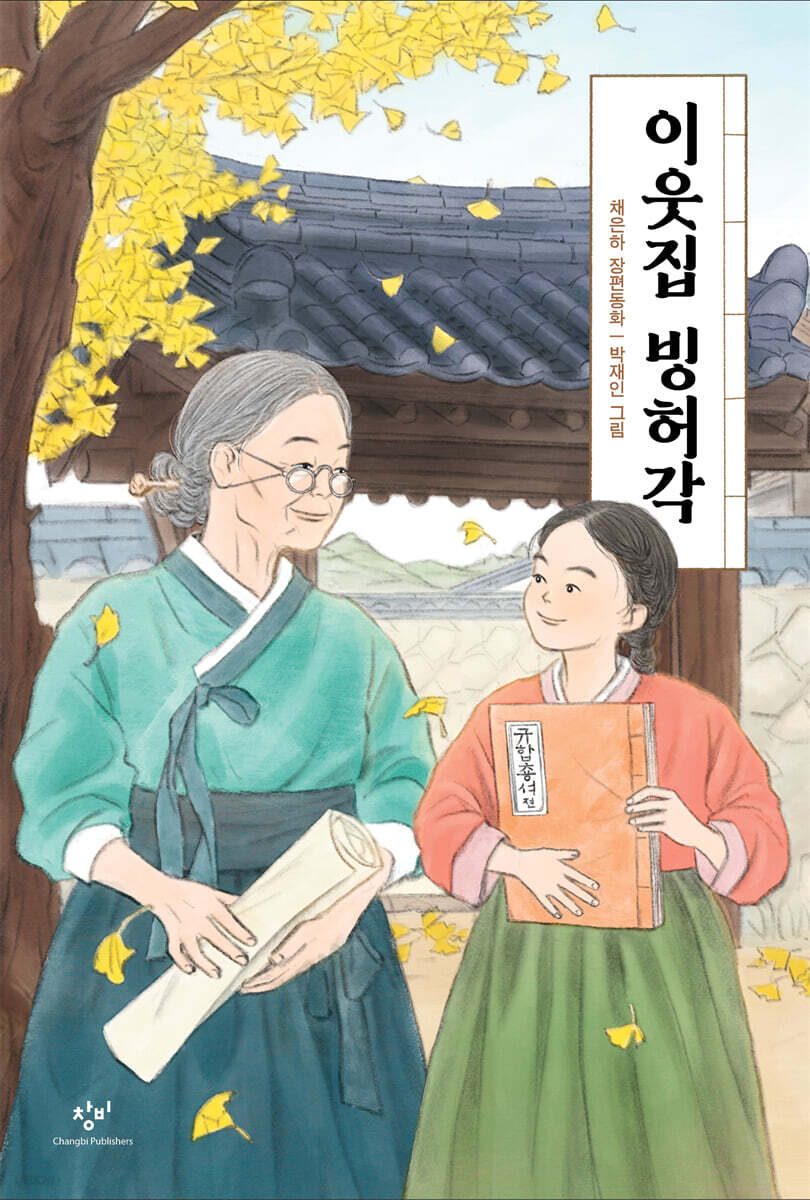
I want to keep writing and learning!A historical tale depicting the story of Deokju, the daughter of a poor nobleman, and her collaboration with Bingheogak, the only female scholar of Silhak in Joseon, to create the first practical Korean encyclopedia, Gyuhap Chongseo.
The story of a girl pursuing her dreams is deeply moving, capturing the lives of women in the late Joseon Dynasty with delicate and vivid prose.
A new work by Chae Eun-ha, winner of Changbi's 'Good Children's Book' award, 'Ruho'.
November 29, 2024. Children's PD Kim Hyun-joo
Girl Deokju meets Bingheogak, Joseon's only female scholar of Silhak.
The story of two women who put the whole world into a book.
Chae Eun-ha, winner of the 26th Changbi 'Good Children's Book' Award, has published her new work, 'The Neighborhood Bingheogak'.
This is a historical tale that tells the story of Deokju, the daughter of a poor nobleman, who later creates the first practical Korean encyclopedia, Gyuhap Chongseo, together with Bingheogak, who is known as the only female scholar of Silhak in Joseon.
The story of Deok-ju, who first sees a woman writing and studying at Bingheogak, and who secretly pursues his own dream, is deeply moving.
The way Deok-ju and Bing-heo-gak constantly ask themselves what it means to live a life true to themselves and eventually find the answer gives readers special courage.
The story of two women who put the whole world into a book.
Chae Eun-ha, winner of the 26th Changbi 'Good Children's Book' Award, has published her new work, 'The Neighborhood Bingheogak'.
This is a historical tale that tells the story of Deokju, the daughter of a poor nobleman, who later creates the first practical Korean encyclopedia, Gyuhap Chongseo, together with Bingheogak, who is known as the only female scholar of Silhak in Joseon.
The story of Deok-ju, who first sees a woman writing and studying at Bingheogak, and who secretly pursues his own dream, is deeply moving.
The way Deok-ju and Bing-heo-gak constantly ask themselves what it means to live a life true to themselves and eventually find the answer gives readers special courage.
- You can preview some of the book's contents.
Preview
index
1.
The river flows far away
2.
I keep dreaming
3.
My mother is busy all day long
4.
Weaving
5.
Tour of the main building
6.
Is it Vernacular or Real?
7.
Cheonraksu experiment
8.
The morality of a nobleman
9.
The name Bingheogak
10.
Chaste Women's Records
11.
If Deokju writes a book
12.
Sadal
13.
How a loach lives
14.
The book flows far away
Author's Note
The river flows far away
2.
I keep dreaming
3.
My mother is busy all day long
4.
Weaving
5.
Tour of the main building
6.
Is it Vernacular or Real?
7.
Cheonraksu experiment
8.
The morality of a nobleman
9.
The name Bingheogak
10.
Chaste Women's Records
11.
If Deokju writes a book
12.
Sadal
13.
How a loach lives
14.
The book flows far away
Author's Note
Detailed image

Publisher's Review
“How could there be no talent in the assembly?”
Bringing the Lives of Late Joseon Women to the "Here and Now"
Chae Eun-ha, who received praise for bringing our old stories to life in a lively and exciting narrative with her work 『Ruho』, which won the 26th Changbi 'Good Children's Book' Grand Prize, has published the historical fairy tale 『Bingheogak Next Door』.
The story of Deokju, a girl with fire in her eyes, creating the 『Gyuhap Chongseo』 with Bingheogak, who would later be called the only female Silhak scholar in Joseon, is told in delicate prose.
『Gyuhap Chongseo』 is the first practical Korean encyclopedia that has been passed down and enjoyed popularity among women during the Joseon Dynasty for a long time.
Joseon is called a country of records, but there are very few records featuring women.
The author focuses on the late Joseon Dynasty era, a time when women were expected to be willing to humble themselves and make sacrifices, and reinterprets this period as one in which women, who took the initiative in managing their households and lives, sought knowledge on their own.
"The Neighborhood Bingheogak" vividly portrays life in the late Joseon Dynasty while flexibly reproducing history.
It vividly depicts the inner quarters of Bingheogak, filled with all sorts of objects, and dynamically portrays the lives of women in the Joseon Dynasty, each leading a different life.
At its core, 『Gyuhap Chongseo』 serves as a bridge that resolves the characters' conflicts and provides an opportunity to help them pursue their individual dreams.
It is a meaningful work that revives the life of the historical figure Bingheogak Lee and the process of creation of the 『Gyuhap Chongseo』 from a new perspective.
“I want to keep writing and learning.”
Deok-ju's growth story of nurturing dreams with Bingheogak
The protagonist, Deok-ju, is feeling unspeakably frustrated and wanders the hills at dawn when he meets Bingheogak, and by chance learns how to live in that house.
Bingheogak asks Deokju, who is confused at seeing a woman studying and writing for the first time.
“What do you think it would be like if a woman wrote a book about making a living?” But Deok-ju, who had no time to learn Chinese characters because she was working all day, asked back, “If it is a book that will benefit the people’s lives, why did you write it in such difficult characters?”
In the eyes of the two women, who fiercely clashed over whether to write the book in Korean or Chinese characters, there was a spark of determination to stubbornly pursue their own goals no matter what difficulties they faced.
Deok-ju's father values the morality of a nobleman, and his mother seems indifferent to Deok-ju because she is busy working all day.
But when he was caught writing, his mother encouraged him to keep writing, saying, “Do whatever you want.”
On the other hand, the father strongly opposes, saying that women should humble themselves and live as if they do not exist.
When her father asks her why she is taking such a difficult path, Deok-ju says with firm determination, “I will not be broken.”
Encouraged by the unconventional image of Bingheogak and the love of those around her, Deokju pursues her dream of writing her own book.
"The Neighborhood Bingheogak" concludes by hinting at a future in which Deokju's novels in the vernacular become very popular.
Deok-ju's growth as she wanders the wide world and pursues her longed-for dreams is dazzling.
The figures of Deok-ju and Bing-heo-gak, who wisely and courageously face their own dreams, encourage us in reality who boldly protect our hearts.
The theme that the heart that never gives up is the most precious thing will enlighten the hearts of many.
“I will definitely write my book.”
The power of books that flows far and wide
Bingheogak, who had been busy all his life taking care of affairs inside and outside the home, only began to write his own work in his old age.
Deok-ju asks Bing-heo-gak why he is writing a book about 'the hardships that have plagued him his entire life.'
“Why do you write it?
The answer is in what you said.
Because it's what I've been doing my whole life, and it's what I know best.
Even if some people dismiss it as just a woman's job, and even if it's rough and arduous, it contains my experiences and my life." (p. 151)
Bingheogak's answer becomes a gentle ripple, filling Deokju's heart with stories from beyond the world she has yet to encounter.
“Me.
I like the story.
Every time I hear a story, I feel like I'm getting a little closer to the world.
And then I start dreaming.
I wonder if I can tell you something important too.
“I wonder if it could make someone’s heart flutter.” (p. 152)
The story that Deokju and Bingheogak share with the world through their combined efforts is like breaking open a dam to let stagnant water flow.
When the village women realized that their lives and experiences, which they had previously considered insignificant, were included in the book, their faces filled with pride.
As the book progresses, the village women's secret encouragement gradually transforms into powerful voices.
『Gyuhap Chongseo』 was later treasured by many women, and was hand-copied from hand to hand, and has been passed down to the present day.
The bond that grows stronger through books brings heartwarming emotions.
I hope that many readers will join this dazzling solidarity.
Bringing the Lives of Late Joseon Women to the "Here and Now"
Chae Eun-ha, who received praise for bringing our old stories to life in a lively and exciting narrative with her work 『Ruho』, which won the 26th Changbi 'Good Children's Book' Grand Prize, has published the historical fairy tale 『Bingheogak Next Door』.
The story of Deokju, a girl with fire in her eyes, creating the 『Gyuhap Chongseo』 with Bingheogak, who would later be called the only female Silhak scholar in Joseon, is told in delicate prose.
『Gyuhap Chongseo』 is the first practical Korean encyclopedia that has been passed down and enjoyed popularity among women during the Joseon Dynasty for a long time.
Joseon is called a country of records, but there are very few records featuring women.
The author focuses on the late Joseon Dynasty era, a time when women were expected to be willing to humble themselves and make sacrifices, and reinterprets this period as one in which women, who took the initiative in managing their households and lives, sought knowledge on their own.
"The Neighborhood Bingheogak" vividly portrays life in the late Joseon Dynasty while flexibly reproducing history.
It vividly depicts the inner quarters of Bingheogak, filled with all sorts of objects, and dynamically portrays the lives of women in the Joseon Dynasty, each leading a different life.
At its core, 『Gyuhap Chongseo』 serves as a bridge that resolves the characters' conflicts and provides an opportunity to help them pursue their individual dreams.
It is a meaningful work that revives the life of the historical figure Bingheogak Lee and the process of creation of the 『Gyuhap Chongseo』 from a new perspective.
“I want to keep writing and learning.”
Deok-ju's growth story of nurturing dreams with Bingheogak
The protagonist, Deok-ju, is feeling unspeakably frustrated and wanders the hills at dawn when he meets Bingheogak, and by chance learns how to live in that house.
Bingheogak asks Deokju, who is confused at seeing a woman studying and writing for the first time.
“What do you think it would be like if a woman wrote a book about making a living?” But Deok-ju, who had no time to learn Chinese characters because she was working all day, asked back, “If it is a book that will benefit the people’s lives, why did you write it in such difficult characters?”
In the eyes of the two women, who fiercely clashed over whether to write the book in Korean or Chinese characters, there was a spark of determination to stubbornly pursue their own goals no matter what difficulties they faced.
Deok-ju's father values the morality of a nobleman, and his mother seems indifferent to Deok-ju because she is busy working all day.
But when he was caught writing, his mother encouraged him to keep writing, saying, “Do whatever you want.”
On the other hand, the father strongly opposes, saying that women should humble themselves and live as if they do not exist.
When her father asks her why she is taking such a difficult path, Deok-ju says with firm determination, “I will not be broken.”
Encouraged by the unconventional image of Bingheogak and the love of those around her, Deokju pursues her dream of writing her own book.
"The Neighborhood Bingheogak" concludes by hinting at a future in which Deokju's novels in the vernacular become very popular.
Deok-ju's growth as she wanders the wide world and pursues her longed-for dreams is dazzling.
The figures of Deok-ju and Bing-heo-gak, who wisely and courageously face their own dreams, encourage us in reality who boldly protect our hearts.
The theme that the heart that never gives up is the most precious thing will enlighten the hearts of many.
“I will definitely write my book.”
The power of books that flows far and wide
Bingheogak, who had been busy all his life taking care of affairs inside and outside the home, only began to write his own work in his old age.
Deok-ju asks Bing-heo-gak why he is writing a book about 'the hardships that have plagued him his entire life.'
“Why do you write it?
The answer is in what you said.
Because it's what I've been doing my whole life, and it's what I know best.
Even if some people dismiss it as just a woman's job, and even if it's rough and arduous, it contains my experiences and my life." (p. 151)
Bingheogak's answer becomes a gentle ripple, filling Deokju's heart with stories from beyond the world she has yet to encounter.
“Me.
I like the story.
Every time I hear a story, I feel like I'm getting a little closer to the world.
And then I start dreaming.
I wonder if I can tell you something important too.
“I wonder if it could make someone’s heart flutter.” (p. 152)
The story that Deokju and Bingheogak share with the world through their combined efforts is like breaking open a dam to let stagnant water flow.
When the village women realized that their lives and experiences, which they had previously considered insignificant, were included in the book, their faces filled with pride.
As the book progresses, the village women's secret encouragement gradually transforms into powerful voices.
『Gyuhap Chongseo』 was later treasured by many women, and was hand-copied from hand to hand, and has been passed down to the present day.
The bond that grows stronger through books brings heartwarming emotions.
I hope that many readers will join this dazzling solidarity.
GOODS SPECIFICS
- Date of issue: November 22, 2024
- Page count, weight, size: 196 pages | 302g | 152*223*12mm
- ISBN13: 9788936443405
- KC Certification: Certification Type: Conformity Confirmation
You may also like
카테고리
korean


korean

![ELLE 엘르 스페셜 에디션 A형 : 12월 [2025]](http://librairie.coreenne.fr/cdn/shop/files/b8e27a3de6c9538896439686c6b0e8fb.jpg?v=1766436872&width=3840)


