

I observe Paris again today
 |
Description
Book Introduction
- A word from MD
-
What a beautiful worldFrom damp corners to hard concrete paths, even behind curtains no one sees, a world of tiny creatures lies beyond our grasp! Filled with microscopically detailed images and fascinating facts that stimulate intellectual curiosity, this is the world's most beautiful and engaging observational guide.
November 3, 2023. Children's PD Park Eun-young
A Guide to the World's Most Beautiful and Fun Observational Explorations
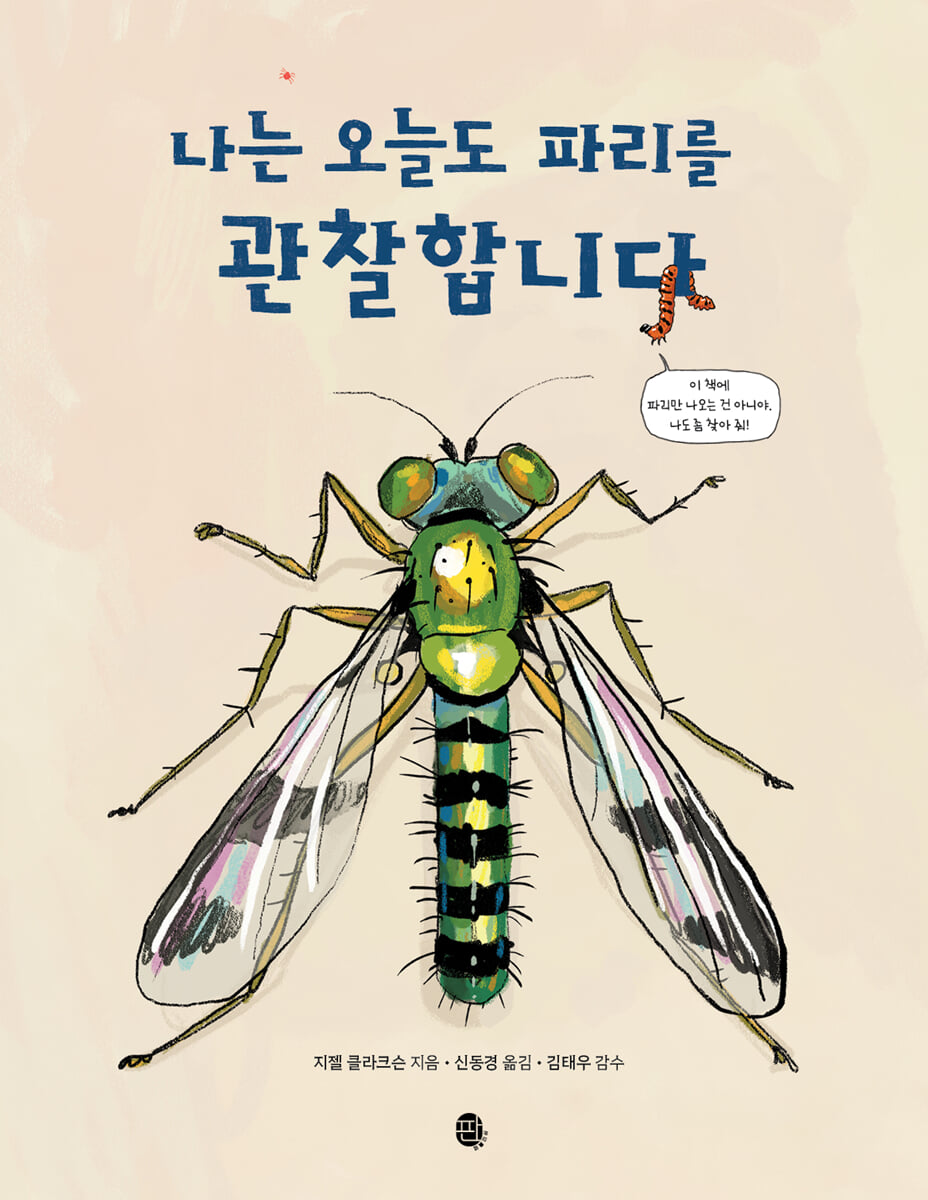
Flies are annoying, black, flying insects.
But the fly on the cover of this book is different.
Its beautiful green color is so elegant.
The 100 or so species of tiny creatures featured in this book each boast their own unique beauty.
The leopard slug is as majestic as a jungle leopard, the armored rattlesnake is imposing, and the newly shed cockroach looks like an angel.
The beauty of tiny creatures, captured with keen observation by author Gisele Clarkson, shatters our preconceptions.
Those little creatures that we used to avoid or trample on as soon as we saw them because they were disgusting, dirty, and scary, could actually be so beautiful!
This book goes beyond simply listing beautiful creatures.
The moment you open the book, boredom disappears.
Exciting facts that pique your curiosity, detailed illustrations that let you examine animals' bodies as if through a microscope, a slightly messy poop guide, and short cartoons about insects chattering away will keep you glued to your smartphone screen.
It's a kind of analog antidote to digital addiction.
Observe the nature around us and feel the small but surprising changes that observation brings.
Flies are annoying, black, flying insects.
But the fly on the cover of this book is different.
Its beautiful green color is so elegant.
The 100 or so species of tiny creatures featured in this book each boast their own unique beauty.
The leopard slug is as majestic as a jungle leopard, the armored rattlesnake is imposing, and the newly shed cockroach looks like an angel.
The beauty of tiny creatures, captured with keen observation by author Gisele Clarkson, shatters our preconceptions.
Those little creatures that we used to avoid or trample on as soon as we saw them because they were disgusting, dirty, and scary, could actually be so beautiful!
This book goes beyond simply listing beautiful creatures.
The moment you open the book, boredom disappears.
Exciting facts that pique your curiosity, detailed illustrations that let you examine animals' bodies as if through a microscope, a slightly messy poop guide, and short cartoons about insects chattering away will keep you glued to your smartphone screen.
It's a kind of analog antidote to digital addiction.
Observe the nature around us and feel the small but surprising changes that observation brings.
- You can preview some of the book's contents.
Preview
index
Observational studies
4 Observation: Looking at something closely and for a long time
8 Principles Observationalists Must Follow
11. Careful preparation for enjoyable observation
12 Taxonomy: Finding the Place of Organisms
14 Difficult but accurate scientific names
16 Tools You Need to Become a Special Observationist
18 Invertebrate Anatomy for Observationists
damp corner
26 Snails and Snails
32 Mold
36 Daughter-in-law
38 Similar yet different civets and songbirds
40 Really wet ponds and puddles
42 A scene visible only at night
44 Scenes that require patience
45 How to get flies out at night
46 Hide tightly so that you can't be seen!
hard concrete road
50 ants
55 Bird droppings are a guide to finding birds.
56 Observation collections that become treasures when collected
58 Lichens
60 Biological Phenology
62 Slightly Messy Poop Encyclopedia
63 Round Flat Egg Encyclopedia
64 Earthworms
68 Earthworms in danger of being trampled
How to rescue safely
69 How to sneak up on bugs
Weedy meadow
73 bees
75 How to Help Exhausted Honeybees or Squash Bees
77 Wasps vs. Bees
78 Wasps
80 Playing with nature
83 On a rainy day
84 Insect growth is metamorphosis
86 Butterfly and Moth Caterpillar
88 seeds
90 Eye-Catching Leaves
Behind the curtain where no one sees
94 cockroaches
99 Paris
102 Observing with Sound
104 Spider
110 Spider Movement Operation
111 How to safely rescue a moth in danger of drowning
112 moths
115 Moth vs. Butterfly
116 Observationist Certification Exam
4 Observation: Looking at something closely and for a long time
8 Principles Observationalists Must Follow
11. Careful preparation for enjoyable observation
12 Taxonomy: Finding the Place of Organisms
14 Difficult but accurate scientific names
16 Tools You Need to Become a Special Observationist
18 Invertebrate Anatomy for Observationists
damp corner
26 Snails and Snails
32 Mold
36 Daughter-in-law
38 Similar yet different civets and songbirds
40 Really wet ponds and puddles
42 A scene visible only at night
44 Scenes that require patience
45 How to get flies out at night
46 Hide tightly so that you can't be seen!
hard concrete road
50 ants
55 Bird droppings are a guide to finding birds.
56 Observation collections that become treasures when collected
58 Lichens
60 Biological Phenology
62 Slightly Messy Poop Encyclopedia
63 Round Flat Egg Encyclopedia
64 Earthworms
68 Earthworms in danger of being trampled
How to rescue safely
69 How to sneak up on bugs
Weedy meadow
73 bees
75 How to Help Exhausted Honeybees or Squash Bees
77 Wasps vs. Bees
78 Wasps
80 Playing with nature
83 On a rainy day
84 Insect growth is metamorphosis
86 Butterfly and Moth Caterpillar
88 seeds
90 Eye-Catching Leaves
Behind the curtain where no one sees
94 cockroaches
99 Paris
102 Observing with Sound
104 Spider
110 Spider Movement Operation
111 How to safely rescue a moth in danger of drowning
112 moths
115 Moth vs. Butterfly
116 Observationist Certification Exam
Detailed image

Publisher's Review
The amazing world beneath our feet, visible only to observers
The author takes readers, free from preconceptions, into shady corners, hard concrete paths, weedy meadows, and the homes where we live.
There, I invite you to crouch down, pick up fallen leaves, turn over stones, and become an observational scientist who gazes intently.
Then, you will discover interesting facts in places you usually pass by without much thought.
Things like this.
·The spiral shape of a snail shell almost always turns to the right.
·If you look closely, mushrooms are the reproductive organs of fungi.
·Earthworms are not bald.
It has smooth skin and fine hair.
·Amazingly, butterflies taste with their feet.
·Squash bees raise their middle legs to send a warning signal.
“Don’t touch me!”
·The stork radish shoots its seeds like rockets and sends them far away.
If you take just one more step, you can have an even more thrilling experience.
Things like the stickiness of a snail crawling across your foot, the ticklish sensation of a caterpillar wriggling across your palm, and the softness and coolness of an earthworm burrowing between your fingers.
How about it? Aren't you itching to experience it for yourself? Well then, let's go outside now.
Reading a book like this and not meeting the little creatures is like going to an art museum and only reading the descriptions but not actually seeing the artwork.
Observation: A skill that will last a lifetime
The author of this book, Gisele Clarkson, has been to an island near Antarctica.
I wanted to look at the penguin closely with my own two eyes before drawing it.
The secret to being able to write and illustrate such a beautiful and interesting book was, of course, observation.
The secret to Sherlock Holmes becoming a great detective is also observation.
Holmes can quickly determine a person's occupation and characteristics by simply looking at them.
It wasn't a display of supernatural powers, but rather a result of observing details like facial complexion, worn sleeves, and calluses on fingers.
Observation is also the foundation of creative invention.
This is well illustrated by the example of Georges de Mestral, who invented Velcro after observing the seeds that stuck to his socks as he walked through the forest.
Observation skills aren't just for detectives and inventors.
If you have the ability to see what others cannot see, the ability to find the information you need—in other words, the ability to observe—you will be able to do well in whatever you do, at any time.
The good news is that anyone can develop these observational skills.
There's nothing better than observing living things to hone your observation skills.
Grab your curiosity and patience and get outside now!
Reviewer's Note: An Analog Antidote to Digital Addiction
This is the most beautiful observation note I've ever seen.
I couldn't take my eyes off the biologist's secret notebook for a second because it was so much fun to sneak a peek at it.
It provides detailed information on scientific knowledge and observation methods, making it the best book for developing observation and concentration skills.
But this biologist is quite humorous.
There were pictures and texts hidden here and there that made people laugh.
After reading this book, your steps will probably slow down.
Because I can't just pass by anywhere.
Kim Tae-woo, Environmental Researcher, National Institute of Biological Resources
The author takes readers, free from preconceptions, into shady corners, hard concrete paths, weedy meadows, and the homes where we live.
There, I invite you to crouch down, pick up fallen leaves, turn over stones, and become an observational scientist who gazes intently.
Then, you will discover interesting facts in places you usually pass by without much thought.
Things like this.
·The spiral shape of a snail shell almost always turns to the right.
·If you look closely, mushrooms are the reproductive organs of fungi.
·Earthworms are not bald.
It has smooth skin and fine hair.
·Amazingly, butterflies taste with their feet.
·Squash bees raise their middle legs to send a warning signal.
“Don’t touch me!”
·The stork radish shoots its seeds like rockets and sends them far away.
If you take just one more step, you can have an even more thrilling experience.
Things like the stickiness of a snail crawling across your foot, the ticklish sensation of a caterpillar wriggling across your palm, and the softness and coolness of an earthworm burrowing between your fingers.
How about it? Aren't you itching to experience it for yourself? Well then, let's go outside now.
Reading a book like this and not meeting the little creatures is like going to an art museum and only reading the descriptions but not actually seeing the artwork.
Observation: A skill that will last a lifetime
The author of this book, Gisele Clarkson, has been to an island near Antarctica.
I wanted to look at the penguin closely with my own two eyes before drawing it.
The secret to being able to write and illustrate such a beautiful and interesting book was, of course, observation.
The secret to Sherlock Holmes becoming a great detective is also observation.
Holmes can quickly determine a person's occupation and characteristics by simply looking at them.
It wasn't a display of supernatural powers, but rather a result of observing details like facial complexion, worn sleeves, and calluses on fingers.
Observation is also the foundation of creative invention.
This is well illustrated by the example of Georges de Mestral, who invented Velcro after observing the seeds that stuck to his socks as he walked through the forest.
Observation skills aren't just for detectives and inventors.
If you have the ability to see what others cannot see, the ability to find the information you need—in other words, the ability to observe—you will be able to do well in whatever you do, at any time.
The good news is that anyone can develop these observational skills.
There's nothing better than observing living things to hone your observation skills.
Grab your curiosity and patience and get outside now!
Reviewer's Note: An Analog Antidote to Digital Addiction
This is the most beautiful observation note I've ever seen.
I couldn't take my eyes off the biologist's secret notebook for a second because it was so much fun to sneak a peek at it.
It provides detailed information on scientific knowledge and observation methods, making it the best book for developing observation and concentration skills.
But this biologist is quite humorous.
There were pictures and texts hidden here and there that made people laugh.
After reading this book, your steps will probably slow down.
Because I can't just pass by anywhere.
Kim Tae-woo, Environmental Researcher, National Institute of Biological Resources
GOODS SPECIFICS
- Date of issue: November 10, 2023
- Format: Hardcover book binding method guide
- Page count, weight, size: 128 pages | 570g | 199*257*12mm
- ISBN13: 9791198360021
- ISBN10: 119836002X
You may also like
카테고리
korean


korean

![ELLE 엘르 스페셜 에디션 A형 : 12월 [2025]](http://librairie.coreenne.fr/cdn/shop/files/b8e27a3de6c9538896439686c6b0e8fb.jpg?v=1766436872&width=3840)


