

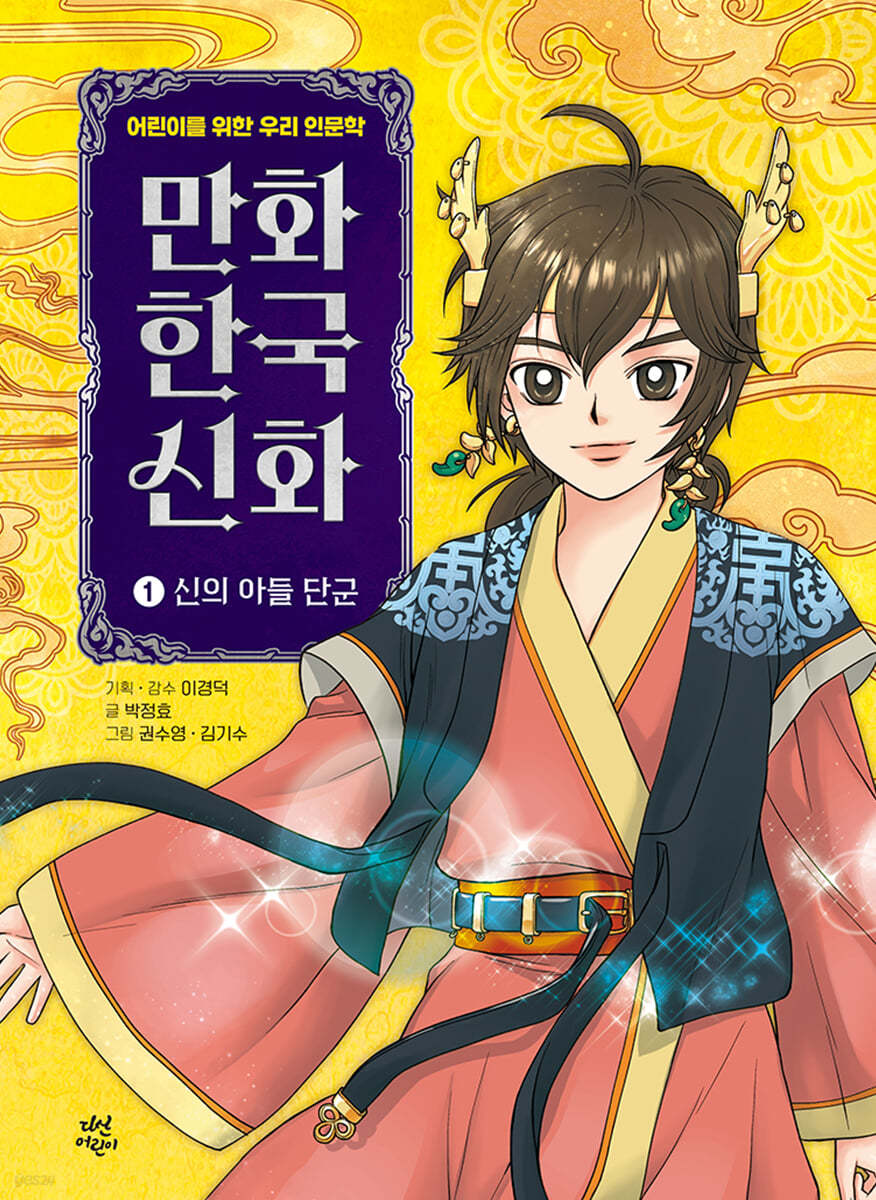
Korean Mythology Comics 1
 |
Description
Book Introduction
A humanities series that our children must know has been born. 『Korean Mythology in Comics』 is a book that introduces Korean mythology through easy and fun comics for children who are more unfamiliar with Korean mythology than with Greek and Roman mythology. With a story that has been verified by mythologist Lee Gyeong-deok and a sophisticated cartoon style, anyone can instantly immerse themselves in Korean mythology. At the same time, it will be an opportunity to take pride in knowing that we too have great gods and beautiful myths. Korean mythology promotes harmony and hospitality, rather than the conflict and competition that are considered problems of modern society. Additionally, it contains modern values, with various characters, including female gods, growing independently. Now that the world is focusing on K-culture, it is time to take a closer look at Korean mythology, the root of our culture. Dangun, the main character of 『Korean Mythology in Comics』, goes to various places to meet gods who live with humans. Now, a great journey of adventure and growth begins with Dangun and our story. |
- You can preview some of the book's contents.
Preview
index
Published article… 4
Characters… 6
Chapter 1.
The Wedding of the Gods Under the Shindansu Tree… 12
Chapter 2.
Dangun, the leader of the play… 28
Chapter 3.
The Cliffs of Night, Not Alone… 44
Chapter 4.
A son who resembles his father… 58
Chapter 5.
Hwanung, the god who loved the heavens… 72
Chapter 6.
A New World for Humanity, Shinshi… 86
Chapter 7.
Dream of the Bear and the Tiger… 102
Chapter 8.
The bear girl's earnest wish... 116
Chapter 9.
The Belt That Holds the Secret of Adventure… 128
Chapter 10.
In search of the god Bari… 140
Volume 2 trailer… 160
Lee Kyung-deok's Special Lecture on Korean Mythology… 161
Characters… 6
Chapter 1.
The Wedding of the Gods Under the Shindansu Tree… 12
Chapter 2.
Dangun, the leader of the play… 28
Chapter 3.
The Cliffs of Night, Not Alone… 44
Chapter 4.
A son who resembles his father… 58
Chapter 5.
Hwanung, the god who loved the heavens… 72
Chapter 6.
A New World for Humanity, Shinshi… 86
Chapter 7.
Dream of the Bear and the Tiger… 102
Chapter 8.
The bear girl's earnest wish... 116
Chapter 9.
The Belt That Holds the Secret of Adventure… 128
Chapter 10.
In search of the god Bari… 140
Volume 2 trailer… 160
Lee Kyung-deok's Special Lecture on Korean Mythology… 161
Detailed image

Publisher's Review
★ "A book that will benefit the world!" Highly recommended by 22 current elementary school teachers!
★ Includes review, commentary, and curriculum linkage by mythologist Professor Lee Gyeong-deok!
The Korean myths that shaped our culture and identity
The fundamental humanities that every Korean must know!
[Korean Mythology in Cartoons] for Children started with the question, "We know Greek and Roman mythology well, but why don't we know Korean mythology?"
If we can understand Western culture and learn life wisdom through Greco-Roman mythology, we can learn about our culture and values through Korean mythology.
As we explore the world around us and the roots of our identity, we find Korean mythology firmly established.
[Korean Mythology in Cartoon] creates a worldview so that many children can enjoy reading Korean mythology, and tells the story in a sophisticated cartoon style.
Traditional tales shed the image of being boring and rigid, and clearly show the original value of Korean mythology, which is mysterious and even cheerful.
Here, mythologist Professor Lee Gyeong-deok participated in everything from planning to editing and commentary, and included the most reliable stories, stories that are necessary for us in the modern era.
Korean mythology emphasizes the values of harmony over competition and consideration over conflict.
Female deities are often the protagonists of the stories, and the deities are always by our side.
They are friendly beings who do not look down on humans in their own world, but live together with them.
I hope that through Korean mythology, which embodies such modern values, children will understand our cultural identity and learn about the world around us.
The beginning of elementary school history studies
The story of the Dangun myth, representative of Korean mythology
The beginning of our history, as we learn in elementary school textbooks, is Gojoseon.
And what we learn along with the emergence of Gojoseon is the ‘Dangun myth.’
Volume 1, ‘Dangun, Son of God’, deals with the Dangun myth based on [Samguk Yusa].
You can easily learn the familiar yet unknown details of the Dangun myth, such as Hwanung, who came down to the human world with the Hongik Ingan ideology, and Ungnyeo, who became human from a bear, through comics.
You can encounter the myth in a familiar and up-close way as a Dangun character of a child's age rather than a dignified grandfather.
Just as there is a main character named Zeus in Greco-Roman mythology, there is also a wonderful and attractive god named Dangun in Korean mythology.
Hwanung, who means heaven, and Ungnyeo, who means earth.
The two were united under the blessings of all gods, and Dangun was born from their union.
Dangun, born in harmony and hospitality, symbolizes us, and the Dangun myth that contains this story represents Korean mythology and is our identity.
The challenging and considerate young Dangun leads the [Korean Mythology Comics] series and meets our gods.
As you follow Dangun's adventures, you will soon learn about Korean gods one by one.
At the same time, children will be able to imagine where Dangun's adventure will end, learn the wisdom of the gods, and achieve inner growth alongside Dangun.
A special lecture on mythology by mythologist Professor Lee Gyeong-deok
Thorough and extensive reading activities
[Korean Mythology Comics] introduces the Dangun myth to children who are encountering Korean mythology for the first time through fun comics.
First, by reading the comics and becoming familiar with the Dangun myth, the 'Lee Gyeong-deok's Mythology Special Lecture' corner, which allows children to learn the content in more detail and in a broader way, stimulates their intellectual curiosity.
Professor Lee Kyung-deok's special lecture on mythology consists of seven sections: ① Reading the original text, ② In-depth study of Korean mythology, ③ Symbolic dictionary, ④ Looking at different versions together, ⑤ Korean mythology and world mythology, ⑥ Mythology in culture, and ⑦ Mythology field trip.
It faithfully captures the most reliable sources and uses everyday material to easily explain how ancient myths relate to our lives and culture.
Comparisons with other civilization myths help children expand their thinking through reading.
[Korean Mythology in Comics] goes beyond simply consuming mythology as an interesting story and helps children develop a humanistic understanding.
Additionally, it is sufficient to build cultural capital by learning about Korean mythology that has been reborn as various contents.
Furthermore, it is structured so that you can acquire subject knowledge through curriculum-linked tips that allow you to come into contact with elementary Korean and elementary social studies concepts.
★ Includes review, commentary, and curriculum linkage by mythologist Professor Lee Gyeong-deok!
The Korean myths that shaped our culture and identity
The fundamental humanities that every Korean must know!
[Korean Mythology in Cartoons] for Children started with the question, "We know Greek and Roman mythology well, but why don't we know Korean mythology?"
If we can understand Western culture and learn life wisdom through Greco-Roman mythology, we can learn about our culture and values through Korean mythology.
As we explore the world around us and the roots of our identity, we find Korean mythology firmly established.
[Korean Mythology in Cartoon] creates a worldview so that many children can enjoy reading Korean mythology, and tells the story in a sophisticated cartoon style.
Traditional tales shed the image of being boring and rigid, and clearly show the original value of Korean mythology, which is mysterious and even cheerful.
Here, mythologist Professor Lee Gyeong-deok participated in everything from planning to editing and commentary, and included the most reliable stories, stories that are necessary for us in the modern era.
Korean mythology emphasizes the values of harmony over competition and consideration over conflict.
Female deities are often the protagonists of the stories, and the deities are always by our side.
They are friendly beings who do not look down on humans in their own world, but live together with them.
I hope that through Korean mythology, which embodies such modern values, children will understand our cultural identity and learn about the world around us.
The beginning of elementary school history studies
The story of the Dangun myth, representative of Korean mythology
The beginning of our history, as we learn in elementary school textbooks, is Gojoseon.
And what we learn along with the emergence of Gojoseon is the ‘Dangun myth.’
Volume 1, ‘Dangun, Son of God’, deals with the Dangun myth based on [Samguk Yusa].
You can easily learn the familiar yet unknown details of the Dangun myth, such as Hwanung, who came down to the human world with the Hongik Ingan ideology, and Ungnyeo, who became human from a bear, through comics.
You can encounter the myth in a familiar and up-close way as a Dangun character of a child's age rather than a dignified grandfather.
Just as there is a main character named Zeus in Greco-Roman mythology, there is also a wonderful and attractive god named Dangun in Korean mythology.
Hwanung, who means heaven, and Ungnyeo, who means earth.
The two were united under the blessings of all gods, and Dangun was born from their union.
Dangun, born in harmony and hospitality, symbolizes us, and the Dangun myth that contains this story represents Korean mythology and is our identity.
The challenging and considerate young Dangun leads the [Korean Mythology Comics] series and meets our gods.
As you follow Dangun's adventures, you will soon learn about Korean gods one by one.
At the same time, children will be able to imagine where Dangun's adventure will end, learn the wisdom of the gods, and achieve inner growth alongside Dangun.
A special lecture on mythology by mythologist Professor Lee Gyeong-deok
Thorough and extensive reading activities
[Korean Mythology Comics] introduces the Dangun myth to children who are encountering Korean mythology for the first time through fun comics.
First, by reading the comics and becoming familiar with the Dangun myth, the 'Lee Gyeong-deok's Mythology Special Lecture' corner, which allows children to learn the content in more detail and in a broader way, stimulates their intellectual curiosity.
Professor Lee Kyung-deok's special lecture on mythology consists of seven sections: ① Reading the original text, ② In-depth study of Korean mythology, ③ Symbolic dictionary, ④ Looking at different versions together, ⑤ Korean mythology and world mythology, ⑥ Mythology in culture, and ⑦ Mythology field trip.
It faithfully captures the most reliable sources and uses everyday material to easily explain how ancient myths relate to our lives and culture.
Comparisons with other civilization myths help children expand their thinking through reading.
[Korean Mythology in Comics] goes beyond simply consuming mythology as an interesting story and helps children develop a humanistic understanding.
Additionally, it is sufficient to build cultural capital by learning about Korean mythology that has been reborn as various contents.
Furthermore, it is structured so that you can acquire subject knowledge through curriculum-linked tips that allow you to come into contact with elementary Korean and elementary social studies concepts.
GOODS SPECIFICS
- Date of issue: April 12, 2023
- Format: Hardcover book binding method guide
- Page count, weight, size: 176 pages | 610g | 188*255*13mm
- ISBN13: 9791130696614
- ISBN10: 1130696618
- KC Certification: Certification Type: Conformity Confirmation
You may also like
카테고리
korean


korean

![ELLE 엘르 스페셜 에디션 A형 : 12월 [2025]](http://librairie.coreenne.fr/cdn/shop/files/b8e27a3de6c9538896439686c6b0e8fb.jpg?v=1766436872&width=3840)


