

Monster Child
 |
Description
Book Introduction
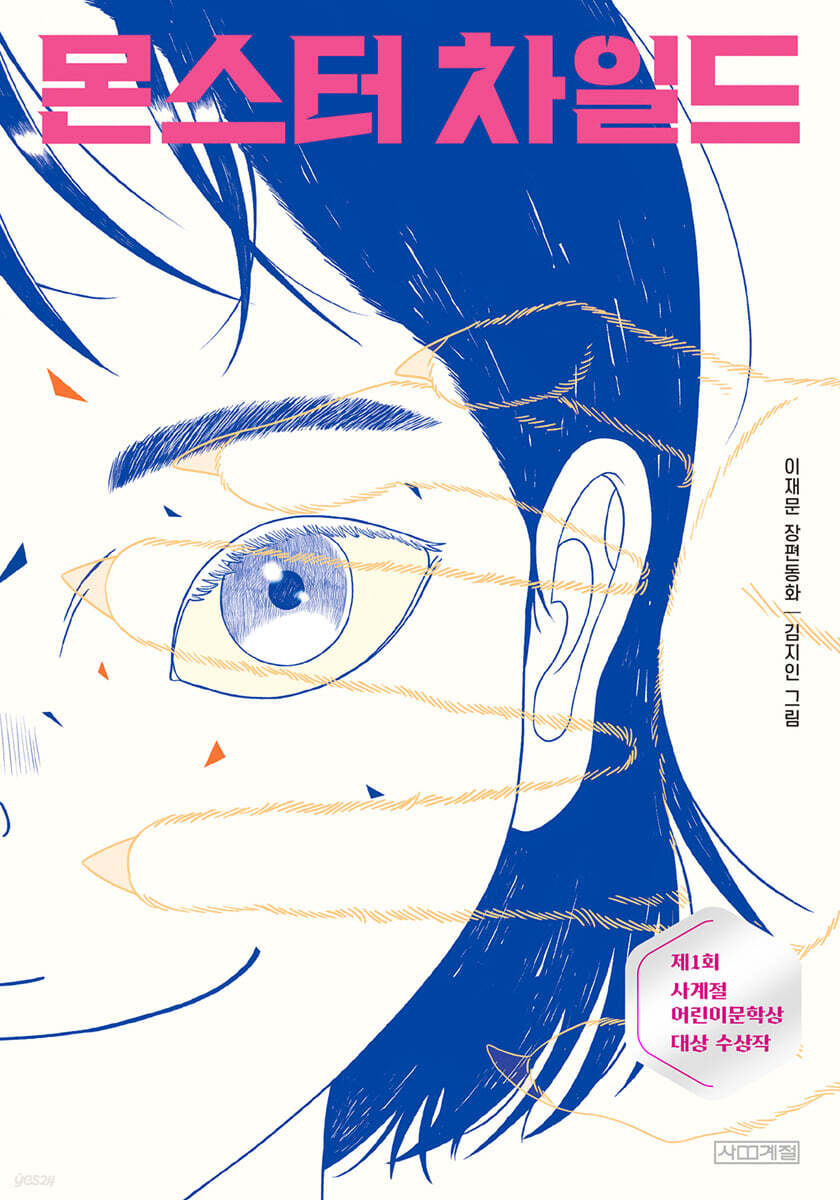
The first Four Seasons Children's Literature Award Grand Prize winner: A powerful leap forward for mutants to overcome the barriers of discrimination and prejudice! There's a child who's unusually sensitive to what others think. When the mutant gene in the body becomes active, the child's entire body becomes covered in hair, and he develops sharp claws and incredible strength. As time passes, the child returns to his previous form, but people fear him and call him a 'monster'. When did that child become a monster? From the moment he was born with a mutant gene, from the moment he developed a unique personality, from the moment he appeared different... or from the moment people began calling him a monster? "Monster Child," the winner of the first Four Seasons Children's Literature Award, is a captivating fantasy based on the fictional disease "Monster Child Syndrome." A society where children who suddenly turn into furry creatures are treated as a social problem and a danger. Hani, who has been living while hiding her true identity, dreams of a free life for the first time when she meets the mutant Yeonwoo at her seventh transfer school. But when the village is attacked by an unidentified monster, the hostile gaze of the people turns towards the mutants. The adventures, solidarity, and growth of the Monster Children as they fight against discrimination and prejudice to protect themselves and their loved ones are enough to capture the eyes and hearts of readers. It also overlaps with the image of the underprivileged who are discriminated against and oppressed for not belonging to the 'ordinary' or 'majority', and makes us look back on today and dream of a new tomorrow. This work, which has the appeal of a genre piece, the virtue of a fairy tale, and a sense of social issues, has sold over 100,000 copies in just three years since its publication, and is considered the "most read book in elementary school" and "a book that children recommend to their friends." The author's approach, which follows the popular narrative of creature fiction while also questioning the social perspective on illness and disability and showing affection and faith in the vitality of children, is admirable. - The 1st Four Seasons Literature Award judges, Lee Geum-i, Choi Na-mi, and Kim Min-ryeong. The 1st Four Seasons Children's Literature Award Grand Prize winner? The copyright was exported to Japan immediately after publication. Gumi City Book of the Year? Iksan City Book of the Year? National Library for Children and Young Adults Librarian Recommendation? Gyeongnam Reading Festival Selection? Literature Sharing Selection |
- You can preview some of the book's contents.
Preview
index
prolog
1.
red meat
2.
Another MCS
3.
training school
4.
unexpected help
5.
misunderstanding
6.
A ray of hope
7.
I will protect you
8.
What I want to believe
9.
ash-colored fur
10.
abandoned child
11.
Be my friend
12.
gate crasher
13.
qualifications
14.
gift
15.
Monster Child
Commentary on the work
Author's Note in Commemoration of 100,000 Copies Sold
Artist's Notes on Celebrating 100,000 Copies Sold
1.
red meat
2.
Another MCS
3.
training school
4.
unexpected help
5.
misunderstanding
6.
A ray of hope
7.
I will protect you
8.
What I want to believe
9.
ash-colored fur
10.
abandoned child
11.
Be my friend
12.
gate crasher
13.
qualifications
14.
gift
15.
Monster Child
Commentary on the work
Author's Note in Commemoration of 100,000 Copies Sold
Artist's Notes on Celebrating 100,000 Copies Sold
Detailed image
.jpg)
Publisher's Review
Conflicts and questions surround the virtual disease: What is the truth?
Mutant Cancerous Syndrome (MCS), or 'mutant tumor syndrome' in Korean.
Symptoms begin between the ages of five and seven, and one common symptom is physical changes that occur after the seizures occur.
Hair grows all over the body, the body grows larger, and strength increases several times.
People call it 'Monster Child Syndrome' because it turns children into 'monsters'.
The main characters, Hani and her younger brother Sandeul, are the 'Monster Child'.
The Hani siblings are constantly taking medication to suppress their seizures, and when they have a seizure and their identity is revealed, they transfer schools and move repeatedly.
But on the seventh day of transferring to a neighborhood known to have a hidden MCS treatment center, Hani meets another MCS student, Yeonwoo, before even entering the classroom.
Hani is shocked and confused by Yeonwoo's seizures and mutations at school and her indifference to bullying from her classmates.
Although MCS is a fictional disease, its detailed description makes it seem as if it were real, increasing the reader's immersion.
But there's something strange about the rumors about MCS.
An infectious disease that is uncontrollable, attacks people in a mutated state, eats raw meat like an animal, and can infect anyone with just a touch of a hair…
Those wild rumors seem far removed from Hani, San, and Yeonwoo.
Moreover, the director of the 'MCS Self-Reliance Training Center' that Hani and Sandeul visited says that MCS is not a disease.
Just when everything seems suspicious, the village farm is attacked by a monster. Clues surrounding the MCS, the emergence of new mutants, and the secrets hidden within add even more tension to the already robust narrative.
Readers will be anticipating the next scene until they close the last page, and will feel a thrill of joy as each truth is revealed.
Just as a bird is a bird and a tree is a tree, you are you!
On the way home, Hani finds Yeonwoo having a seizure and tries to help her.
The children say that it is dangerous to approach the mutated Yeonwoo, but Hani firmly believes that Yeonwoo will not attack.
Hani, who tried to help Yeonwoo but ended up having a seizure, wakes up in Yeonwoo's hideout.
For the first time in my life, in a completely mutated form.
The mutation she had been so afraid of brought unexpected freedom to Hani.
Hani runs vigorously through the forest, releasing all the strength she has been suppressing.
“We have different hair and eye colors.
So, keep this in mind.
“My eyes are blue, and yours are summer green.”
Yeonwoo stared intently into my eyes, and strangely, my heart started pounding.
(Page 95)
Even when Hani can't bear to look in the mirror, Yeonwoo looks at Hani with the same eyes as before.
It is something that neither her mother, who tried to make Hani 'better', nor her younger brother, Sandeul, who kept the secret with her, could do.
The fact that there is someone who accepts her as she is gives Hani the courage to face herself.
Hani reconciles with the 'other self' within her, the Monster Child, and decides to love that child.
Hani, who has denied and hated herself, and Yeonwoo, who has given up on forming relationships with others because she cannot hate herself.
This work does not take sides between the two children who each chose different ways to overcome their wounds.
Through the process of Hani and Yeonwoo sharing their hearts, healing each other, and embracing other wounded mutants, it only shows faith in children and hope for solidarity.
Questioning the standards of 'normal' and 'average'
This work is said to have started with the sentence, 'Children are like monsters.'
In reality, society and adults tend to judge or control children arbitrarily because they find it difficult to express or regulate their emotions, and because they are clumsy or young.
I only want to see bright, quiet, and obedient children.
Author Jae-Moon Lee, an elementary school teacher, does not hide his awareness of the problems children face in reality, and completely incorporates them into his fantasy.
The image of mutants, each with their own unique appearance, running freely through the forest contains the author's wish that all children can be free as they are.
At the same time, mutants bring to mind minorities and the weak who are denied existence, discriminated against, and hated simply because they differ from the standards set by society.
I won't criticize them outright, but I hope they're not in the same class. The true face of a society that says "I don't hate them" while opposing the establishment of a treatment facility in our neighborhood is clearly revealed in "Monster Child."
"Monster Child" questions society's standards of "normal" on behalf of all those oppressed and excluded for various reasons, including disability, gender, race, religion, and identity.
If the problem is the inability to acknowledge the existence of someone who clearly exists, then isn't that a problem that society must shoulder and resolve? That's why Hani's final words sound like a confident cry from every Monster Child in the world.
Stop turning away or discriminating, and acknowledge the ‘me’ that exists here.
It's okay to be afraid, but you'll have to look straight at me to call that name.
“Yeah, that’s right.
(Omitted) I am Oh Ha-ni, Monster Child.” (Page 199)
Mutant Cancerous Syndrome (MCS), or 'mutant tumor syndrome' in Korean.
Symptoms begin between the ages of five and seven, and one common symptom is physical changes that occur after the seizures occur.
Hair grows all over the body, the body grows larger, and strength increases several times.
People call it 'Monster Child Syndrome' because it turns children into 'monsters'.
The main characters, Hani and her younger brother Sandeul, are the 'Monster Child'.
The Hani siblings are constantly taking medication to suppress their seizures, and when they have a seizure and their identity is revealed, they transfer schools and move repeatedly.
But on the seventh day of transferring to a neighborhood known to have a hidden MCS treatment center, Hani meets another MCS student, Yeonwoo, before even entering the classroom.
Hani is shocked and confused by Yeonwoo's seizures and mutations at school and her indifference to bullying from her classmates.
Although MCS is a fictional disease, its detailed description makes it seem as if it were real, increasing the reader's immersion.
But there's something strange about the rumors about MCS.
An infectious disease that is uncontrollable, attacks people in a mutated state, eats raw meat like an animal, and can infect anyone with just a touch of a hair…
Those wild rumors seem far removed from Hani, San, and Yeonwoo.
Moreover, the director of the 'MCS Self-Reliance Training Center' that Hani and Sandeul visited says that MCS is not a disease.
Just when everything seems suspicious, the village farm is attacked by a monster. Clues surrounding the MCS, the emergence of new mutants, and the secrets hidden within add even more tension to the already robust narrative.
Readers will be anticipating the next scene until they close the last page, and will feel a thrill of joy as each truth is revealed.
Just as a bird is a bird and a tree is a tree, you are you!
On the way home, Hani finds Yeonwoo having a seizure and tries to help her.
The children say that it is dangerous to approach the mutated Yeonwoo, but Hani firmly believes that Yeonwoo will not attack.
Hani, who tried to help Yeonwoo but ended up having a seizure, wakes up in Yeonwoo's hideout.
For the first time in my life, in a completely mutated form.
The mutation she had been so afraid of brought unexpected freedom to Hani.
Hani runs vigorously through the forest, releasing all the strength she has been suppressing.
“We have different hair and eye colors.
So, keep this in mind.
“My eyes are blue, and yours are summer green.”
Yeonwoo stared intently into my eyes, and strangely, my heart started pounding.
(Page 95)
Even when Hani can't bear to look in the mirror, Yeonwoo looks at Hani with the same eyes as before.
It is something that neither her mother, who tried to make Hani 'better', nor her younger brother, Sandeul, who kept the secret with her, could do.
The fact that there is someone who accepts her as she is gives Hani the courage to face herself.
Hani reconciles with the 'other self' within her, the Monster Child, and decides to love that child.
Hani, who has denied and hated herself, and Yeonwoo, who has given up on forming relationships with others because she cannot hate herself.
This work does not take sides between the two children who each chose different ways to overcome their wounds.
Through the process of Hani and Yeonwoo sharing their hearts, healing each other, and embracing other wounded mutants, it only shows faith in children and hope for solidarity.
Questioning the standards of 'normal' and 'average'
This work is said to have started with the sentence, 'Children are like monsters.'
In reality, society and adults tend to judge or control children arbitrarily because they find it difficult to express or regulate their emotions, and because they are clumsy or young.
I only want to see bright, quiet, and obedient children.
Author Jae-Moon Lee, an elementary school teacher, does not hide his awareness of the problems children face in reality, and completely incorporates them into his fantasy.
The image of mutants, each with their own unique appearance, running freely through the forest contains the author's wish that all children can be free as they are.
At the same time, mutants bring to mind minorities and the weak who are denied existence, discriminated against, and hated simply because they differ from the standards set by society.
I won't criticize them outright, but I hope they're not in the same class. The true face of a society that says "I don't hate them" while opposing the establishment of a treatment facility in our neighborhood is clearly revealed in "Monster Child."
"Monster Child" questions society's standards of "normal" on behalf of all those oppressed and excluded for various reasons, including disability, gender, race, religion, and identity.
If the problem is the inability to acknowledge the existence of someone who clearly exists, then isn't that a problem that society must shoulder and resolve? That's why Hani's final words sound like a confident cry from every Monster Child in the world.
Stop turning away or discriminating, and acknowledge the ‘me’ that exists here.
It's okay to be afraid, but you'll have to look straight at me to call that name.
“Yeah, that’s right.
(Omitted) I am Oh Ha-ni, Monster Child.” (Page 199)
GOODS SPECIFICS
- Publication date: September 10, 2021
- Page count, weight, size: 216 pages | 356g | 147*210*20mm
- ISBN13: 9791160947540
- ISBN10: 1160947546
- KC Certification: Certification Type: Conformity Confirmation
You may also like
카테고리
korean


korean

![ELLE 엘르 스페셜 에디션 A형 : 12월 [2025]](http://librairie.coreenne.fr/cdn/shop/files/b8e27a3de6c9538896439686c6b0e8fb.jpg?v=1766436872&width=3840)


