

Wild Robot
 |
Description
Book Introduction
- A word from MD
-
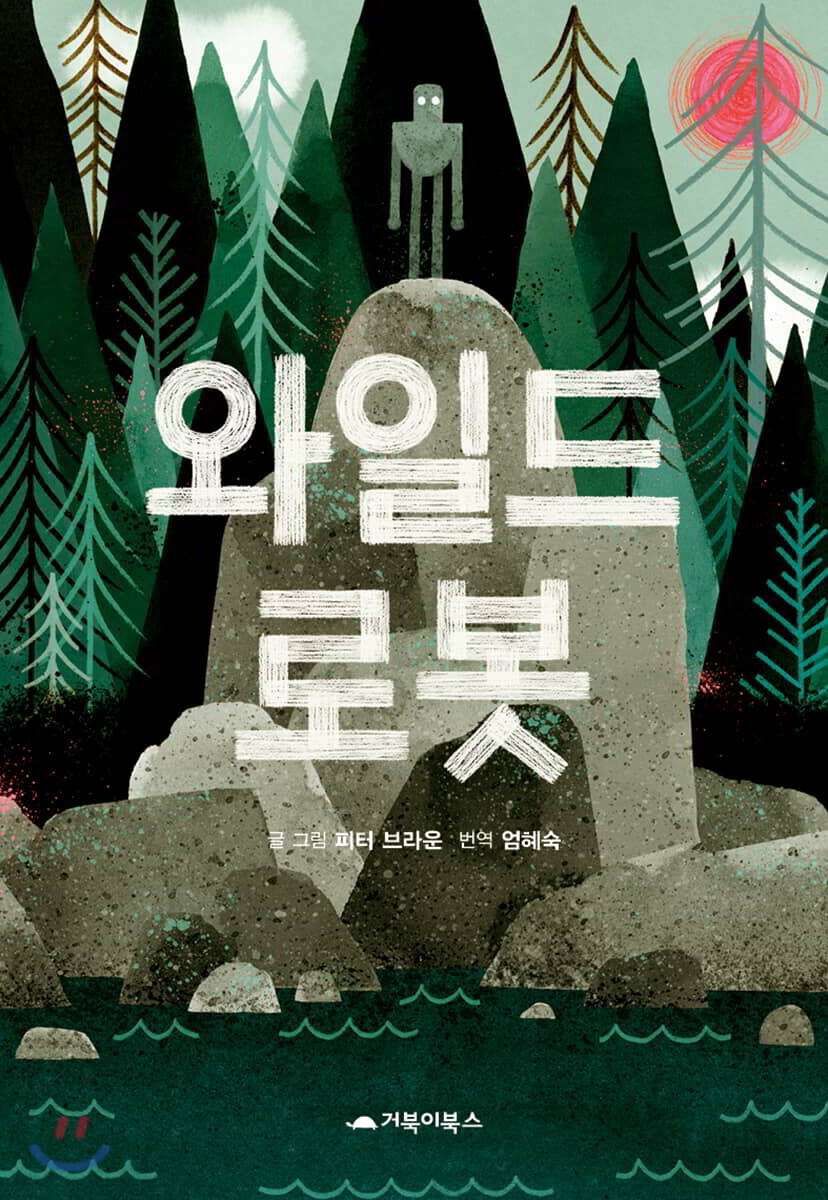
Can robots survive in the harsh wilderness?A cargo ship carrying robots sinks, and Rose, the only robot left to survive the rough waves, encounters animals on a wild island, encounters the robot for the first time, and a touching story unfolds as hatchling goslings come to believe in Rose as their mother.
A book that makes you think about friendship and love.
August 2, 2019. Children's PD Kim Soo-yeon
“Hello. My name is Rozum Unit 7134.
“You can call me Rose.”
A cargo ship carrying 500 robots has sunk!
The only robot that survived the rough waves was Rose!
How did Rose, who fell on a wild island, end up here?
I have no idea who I am.
All I know is that I have to survive!
Can robots survive in this harsh wilderness?
An exciting encounter between nature and cutting-edge technology! Amazing imagination!
Author Peter Brown has always been fascinated by robots.
From robots in use today to imaginary robots that only exist in books and movies.
Do we want robots that think and feel like humans? If robots replace us, what will humans do?
The author was also very interested in wild life.
From a young age, I explored rivers and forests and observed animal behavior.
Animals that follow their instincts and live routine lives sometimes seem like robots.
That's how we discover that robots and wild animals have similarities.
What if robots were released into the wild? Would they adapt to their surroundings? And how would nature accept them?
In "Wild Robot," the gender identity given to the robot is female.
The robot Rose, who barely survived, ends up incubating a goose egg that is about to hatch, and the gosling accepts Rose as its mother when it sees her for the first time as the egg breaks.
This is the moment when Rose's maternal instinct begins to blossom.
What does it mean to give robots gender, and can they ever develop maternal feelings?
This question-filled story unfolds against a backdrop of wild, beautiful, and wondrous scenery.
We cannot help but be captivated by the author's imagination, which depicts the familial love between a robot and a gosling, and the friendship between a robot and wild animals.
Peter Brown presents a moving narrative that addresses the issues that children should consider as they enter the age of robots.
Could there be a more heartwarming picture of a future where humans and robots coexist in the vastness of nature?
And Peter Brown's unique illustrations provide readers of "Wild Robot" with a wonderful imagination.
The drawings, rendered in black and white with varying concentrations, combine simplicity with meticulous detail, creating a beauty surpassing any other ornate illustration! The artist's unique style of depicting forest landscapes, wild animals, and wild robots disarms us and immerses us in a fantastical, wild island.
“You can call me Rose.”
A cargo ship carrying 500 robots has sunk!
The only robot that survived the rough waves was Rose!
How did Rose, who fell on a wild island, end up here?
I have no idea who I am.
All I know is that I have to survive!
Can robots survive in this harsh wilderness?
An exciting encounter between nature and cutting-edge technology! Amazing imagination!
Author Peter Brown has always been fascinated by robots.
From robots in use today to imaginary robots that only exist in books and movies.
Do we want robots that think and feel like humans? If robots replace us, what will humans do?
The author was also very interested in wild life.
From a young age, I explored rivers and forests and observed animal behavior.
Animals that follow their instincts and live routine lives sometimes seem like robots.
That's how we discover that robots and wild animals have similarities.
What if robots were released into the wild? Would they adapt to their surroundings? And how would nature accept them?
In "Wild Robot," the gender identity given to the robot is female.
The robot Rose, who barely survived, ends up incubating a goose egg that is about to hatch, and the gosling accepts Rose as its mother when it sees her for the first time as the egg breaks.
This is the moment when Rose's maternal instinct begins to blossom.
What does it mean to give robots gender, and can they ever develop maternal feelings?
This question-filled story unfolds against a backdrop of wild, beautiful, and wondrous scenery.
We cannot help but be captivated by the author's imagination, which depicts the familial love between a robot and a gosling, and the friendship between a robot and wild animals.
Peter Brown presents a moving narrative that addresses the issues that children should consider as they enter the age of robots.
Could there be a more heartwarming picture of a future where humans and robots coexist in the vastness of nature?
And Peter Brown's unique illustrations provide readers of "Wild Robot" with a wonderful imagination.
The drawings, rendered in black and white with varying concentrations, combine simplicity with meticulous detail, creating a beauty surpassing any other ornate illustration! The artist's unique style of depicting forest landscapes, wild animals, and wild robots disarms us and immerses us in a fantastical, wild island.
- You can preview some of the book's contents.
Preview
index
1.
ocean
2.
sea otter
3.
robot
4.
The Awakened Robot
5.
Robot Graveyard
6.
Cliff climbing
7.
wild
8.
pine cone
9.
mountain
10.
alarm
11.
fall asleep
12.
storm
13.
Where the storm has passed
14.
bear
15.
escape
16.
pine tree
17.
stomach bugs
18.
camouflage robot
19.
observation
20.
Animal language
21.
First greetings
22.
new words
23.
wounded fox
24.
accident
25.
egg
26.
actor
27.
goslings
28.
Grandma Goose
29.
beaver
30.
nest
31.
First night
32.
deer
33.
garden
34.
mom
35.
First swim
36.
The goslings grow
37.
squirrel
38.
new friendship
39.
first flight
40.
ship
41.
summer
42.
The Strange Family
43.
Flying goslings
44.
Runaway
45.
dead robots
46.
fight
47.
march
48.
new feet
49.
airman
50.
button
51.
autumn
52.
flock of geese
53.
movement
54.
winter
55.
hut
56.
new cabin
57.
fire
58.
conversation
59.
spring
60.
fish
61.
Robot Story
62.
homecoming
63.
travel
64.
Special robot
65.
invite
66.
celebration party
67.
sunrise
68.
Records
69.
rogue robot
70.
search
71.
Forest Attack
72.
Battle of the Mountain
73.
Pursuit
74.
Click
75.
The Last Rifle
76.
broken robot
77.
meeting
78.
farewell
79.
depart
80.
sky
ocean
2.
sea otter
3.
robot
4.
The Awakened Robot
5.
Robot Graveyard
6.
Cliff climbing
7.
wild
8.
pine cone
9.
mountain
10.
alarm
11.
fall asleep
12.
storm
13.
Where the storm has passed
14.
bear
15.
escape
16.
pine tree
17.
stomach bugs
18.
camouflage robot
19.
observation
20.
Animal language
21.
First greetings
22.
new words
23.
wounded fox
24.
accident
25.
egg
26.
actor
27.
goslings
28.
Grandma Goose
29.
beaver
30.
nest
31.
First night
32.
deer
33.
garden
34.
mom
35.
First swim
36.
The goslings grow
37.
squirrel
38.
new friendship
39.
first flight
40.
ship
41.
summer
42.
The Strange Family
43.
Flying goslings
44.
Runaway
45.
dead robots
46.
fight
47.
march
48.
new feet
49.
airman
50.
button
51.
autumn
52.
flock of geese
53.
movement
54.
winter
55.
hut
56.
new cabin
57.
fire
58.
conversation
59.
spring
60.
fish
61.
Robot Story
62.
homecoming
63.
travel
64.
Special robot
65.
invite
66.
celebration party
67.
sunrise
68.
Records
69.
rogue robot
70.
search
71.
Forest Attack
72.
Battle of the Mountain
73.
Pursuit
74.
Click
75.
The Last Rifle
76.
broken robot
77.
meeting
78.
farewell
79.
depart
80.
sky
Detailed image

Into the book
Rose felt her survival instinct.
That instinct was set up in the computer brain to escape danger.
--- p.23
“You taught me something very important.
The fact is that camouflage is a huge help in survival.
“It will definitely help me survive.”
--- p.51
“Last night, I saw a strange creature here on the plains.
“I couldn’t see it clearly because it was covered in grass, but I think it was a monster.”
--- p.59
“My hometown is here.
“I’ve spent my whole life on this island.”
--- p.61
“I don’t eat anyone.
“I don’t need to eat.”
--- p.62
"that's right.
Pretending to be dead is my specialty.
But my acting range is incredibly broad.
“Really.”
--- p.77.
“Maybe I’ll stop working.
But if you press the button one more time, it will work again.”
--- p.148
“That’s your instinct.
All animals have instincts.
“That’s what helps you survive.”
--- p.179
“All you island animals! Don’t freeze in the cold. Come to my nest.
“My nest, my little cabin, is safe and warm!”
--- p.191
“It’s true.
Your friendship is enough.
Because friends help each other."
--- p.205
“Maybe my purpose is to help other friends.”
--- p.207
"Of course! Everyone loves Mom! Mom is the coolest robot I've ever seen.
It's true.
“I’ve seen a lot of robots.”
That instinct was set up in the computer brain to escape danger.
--- p.23
“You taught me something very important.
The fact is that camouflage is a huge help in survival.
“It will definitely help me survive.”
--- p.51
“Last night, I saw a strange creature here on the plains.
“I couldn’t see it clearly because it was covered in grass, but I think it was a monster.”
--- p.59
“My hometown is here.
“I’ve spent my whole life on this island.”
--- p.61
“I don’t eat anyone.
“I don’t need to eat.”
--- p.62
"that's right.
Pretending to be dead is my specialty.
But my acting range is incredibly broad.
“Really.”
--- p.77.
“Maybe I’ll stop working.
But if you press the button one more time, it will work again.”
--- p.148
“That’s your instinct.
All animals have instincts.
“That’s what helps you survive.”
--- p.179
“All you island animals! Don’t freeze in the cold. Come to my nest.
“My nest, my little cabin, is safe and warm!”
--- p.191
“It’s true.
Your friendship is enough.
Because friends help each other."
--- p.205
“Maybe my purpose is to help other friends.”
--- p.207
"Of course! Everyone loves Mom! Mom is the coolest robot I've ever seen.
It's true.
“I’ve seen a lot of robots.”
--- p.228
Publisher's Review
A fierce and touching survival story of a robot lost in the wild!
There is a robot that first opened its eyes on a wild island.
Rose Unit 7134, that's Rose! Stranded alone on a remote island, Rose embarks on an adventure to survive.
Enduring a violent storm and being attacked by a ferocious bear, he realizes that he must adapt to his surroundings to survive.
Rose, who has never seen a robot before, is mistaken for a monster by the island's animals! She learns to camouflage herself with a stomach bug and begins observing the animals.
Rose, who has observed day and night and has come to understand the language of animals, no longer hears the animals' squeaks and growls as noise.
Eventually, Rose discovers that the wilder she acts, the more the animals like her, and she barks with foxes, sings with birds, and even sunbathes with lizards.
The cute sight of a robot trying to communicate with wild animals is hilarious.
Then one day, while Rose was climbing down a cliff, an accident occurred.
As Rose slipped, the goose nest fell down with her.
Two dead geese and four broken eggs.
Rose realizes that she caused the death of a family of geese.
Then, a squeaking sound is heard in Rose's sensitive ears.
There was one unbroken egg! And so begins the fateful encounter between the robot mother and her goose son.
The story of Rose, who meets a very weak gosling and learns the role of a mother, draws unexpected emotions and captures the hearts of children and adult readers alike.
A brilliant storyteller, Peter Brown's Wild Robots leaves a lasting impression long after you've closed the book.
The dramatic ending also makes it impossible to resist watching the next story.
Peter Brown's website (peterbrownstudio.com) also offers a wealth of information about his unique work.
A heartwarming story of family love and heartfelt friendship blossoming on a breathtaking journey for survival! A gem-like tale discovered on a wild island!
There is a robot that first opened its eyes on a wild island.
Rose Unit 7134, that's Rose! Stranded alone on a remote island, Rose embarks on an adventure to survive.
Enduring a violent storm and being attacked by a ferocious bear, he realizes that he must adapt to his surroundings to survive.
Rose, who has never seen a robot before, is mistaken for a monster by the island's animals! She learns to camouflage herself with a stomach bug and begins observing the animals.
Rose, who has observed day and night and has come to understand the language of animals, no longer hears the animals' squeaks and growls as noise.
Eventually, Rose discovers that the wilder she acts, the more the animals like her, and she barks with foxes, sings with birds, and even sunbathes with lizards.
The cute sight of a robot trying to communicate with wild animals is hilarious.
Then one day, while Rose was climbing down a cliff, an accident occurred.
As Rose slipped, the goose nest fell down with her.
Two dead geese and four broken eggs.
Rose realizes that she caused the death of a family of geese.
Then, a squeaking sound is heard in Rose's sensitive ears.
There was one unbroken egg! And so begins the fateful encounter between the robot mother and her goose son.
The story of Rose, who meets a very weak gosling and learns the role of a mother, draws unexpected emotions and captures the hearts of children and adult readers alike.
A brilliant storyteller, Peter Brown's Wild Robots leaves a lasting impression long after you've closed the book.
The dramatic ending also makes it impossible to resist watching the next story.
Peter Brown's website (peterbrownstudio.com) also offers a wealth of information about his unique work.
A heartwarming story of family love and heartfelt friendship blossoming on a breathtaking journey for survival! A gem-like tale discovered on a wild island!
GOODS SPECIFICS
- Date of issue: July 15, 2019
- Format: Hardcover book binding method guide
- Page count, weight, size: 288 pages | 414g | 134*194*20mm
- ISBN13: 9788966072057
- ISBN10: 8966072054
- KC Certification: Certification Type: Conformity Confirmation
You may also like
카테고리
korean


korean

![ELLE 엘르 스페셜 에디션 A형 : 12월 [2025]](http://librairie.coreenne.fr/cdn/shop/files/b8e27a3de6c9538896439686c6b0e8fb.jpg?v=1766436872&width=3840)


