

Beaker Gun and After School Science Lab
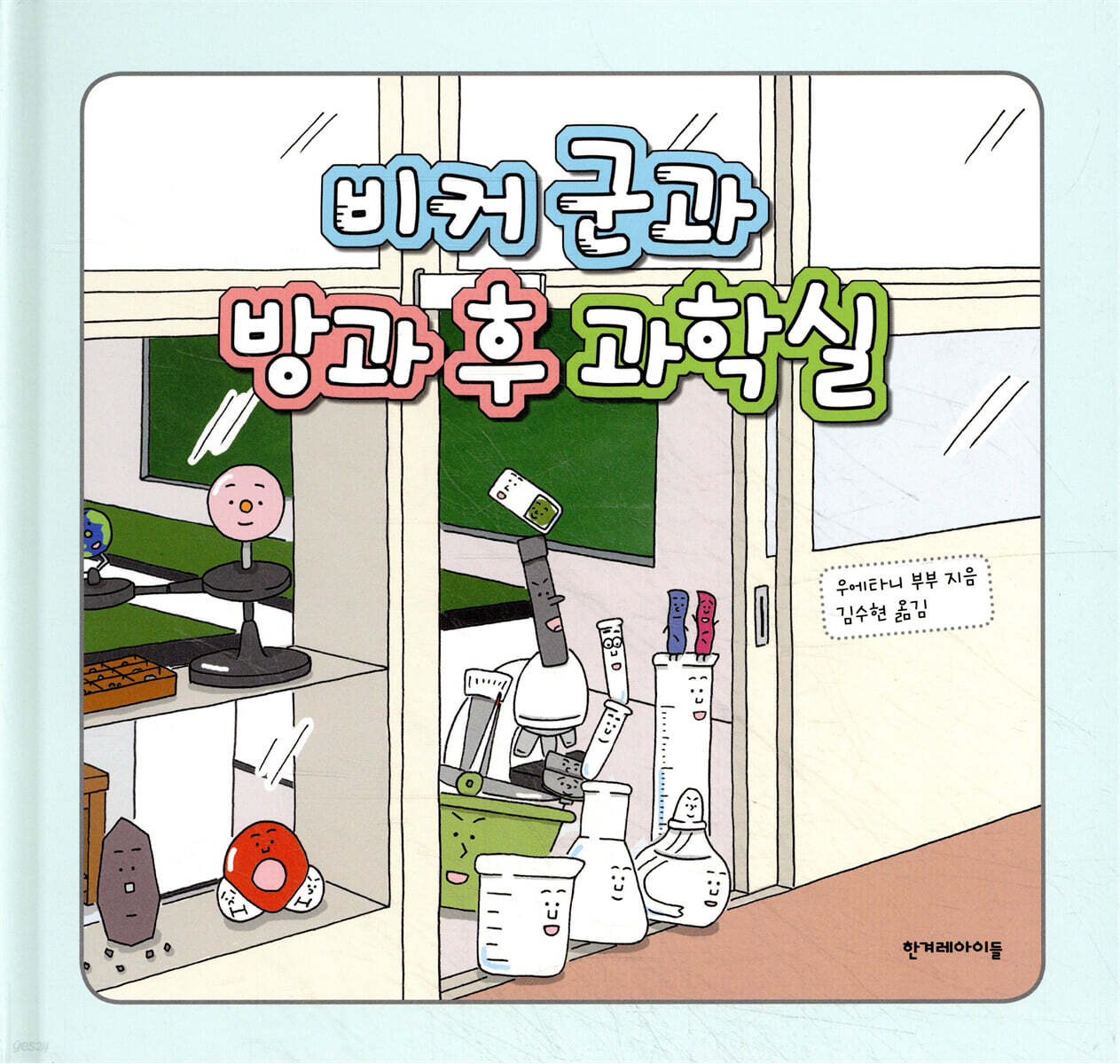 |
Description
Book Introduction
- A word from MD
-
A fun first step into science! Enter the world of Beaker's experiments.The story begins in an empty science lab after the teacher has finished preparing for the next day's class and has left work.
A lovely picture book that helps elementary school children become friends with science through the process of Beaker, who is depressed because he cannot participate in an experiment, asking and answering questions about how to use each experimental tool.
February 8, 2019. Children's PD Kim Soo-yeon
The Beaker Army has come to visit children with picture books!
A lovely picture book, "Beaker and the After-School Science Lab," has been newly published by Hankyoreh Kids, which helps elementary school children become familiar with science labs and experimental equipment, and further, become friends with science.
This is a friendly book that satisfies the curiosity of not only younger children but also children about to enter elementary school by examining the appearance of a school science lab and the uses of various experimental equipment, and introduces the concept of "one person, one role."
'Beaker-kun' is a character known to Korean readers through the same author's books for young adults, such as 'Beaker-kun and his Lab Friends' and 'Beaker-kun and his Friends' Fun Chemistry Experiments'.
The Uetani couple, who created interesting characters with names and appearances of complex and unfamiliar experimental equipment, including beakers, quickly drew young readers into the world of scientific experiments, and in Japan, not only the books but also various goods developed directly using the characters are receiving positive responses.
A lovely picture book, "Beaker and the After-School Science Lab," has been newly published by Hankyoreh Kids, which helps elementary school children become familiar with science labs and experimental equipment, and further, become friends with science.
This is a friendly book that satisfies the curiosity of not only younger children but also children about to enter elementary school by examining the appearance of a school science lab and the uses of various experimental equipment, and introduces the concept of "one person, one role."
'Beaker-kun' is a character known to Korean readers through the same author's books for young adults, such as 'Beaker-kun and his Lab Friends' and 'Beaker-kun and his Friends' Fun Chemistry Experiments'.
The Uetani couple, who created interesting characters with names and appearances of complex and unfamiliar experimental equipment, including beakers, quickly drew young readers into the world of scientific experiments, and in Japan, not only the books but also various goods developed directly using the characters are receiving positive responses.
- You can preview some of the book's contents.
Preview
Detailed image
Publisher's Review
Will Beaker-kun be able to successfully complete his first experiment?
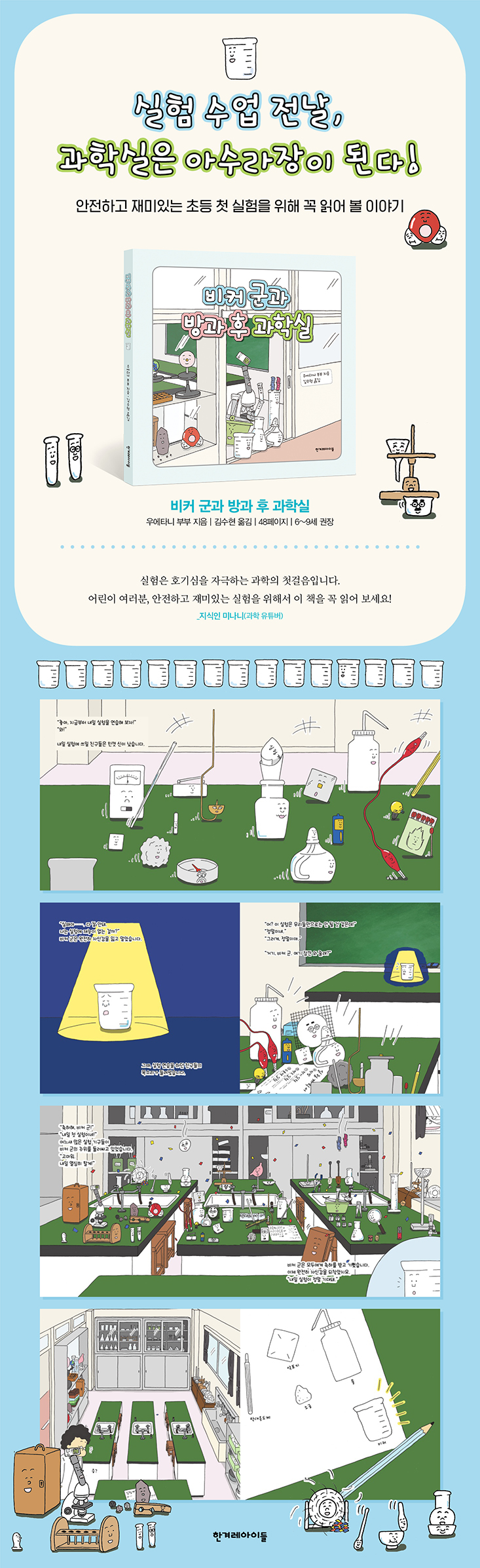
The story begins in an empty science lab after the teacher has finished preparing for the next day's class and has left work.
The experimental equipment that had been neatly placed in its place began to move little by little and gathered around the experimental plan written by the teacher.
The desk is bustling with people from the microscope group, the preparation group, the pestle group, the pestle and mortar group, the test tube brothers, and even the funnel group.
After confirming the planned experiment, the experimental equipment confirms its role and begins practicing the experiment. There is someone watching this with envy.
It's the Beaker Army.
The Beakers have never participated in an experiment before.
Beaker, whose name was never written on the experimental plan and whose role was not clear, began to seek out his friends and learn experimental methods.
The scale group learns how to measure weight, the microscope group learns how to see very small things, and the stick thermometer group learns how to measure temperature. Of course, all of them fail.
However, Beaker did not give up and went around looking for other friends to try their hand at experiments, but in the end, he was unable to do anything right.
But then his friends call Beaker.
For the last experiment, the 'water solution experiment', a beaker group was absolutely necessary.
The experiment involved mixing water and salt, heating or cooling it, and observing how the salt dissolved.
Finally, the Beaker group was able to properly perform their roles throughout the process and successfully complete the experiment.
Welcome to the world of experiments, a fun first step into science!
As the Beakers go about their adventures with various lab equipment friends, we naturally learn how each piece of equipment works and is used.
The microscope group only looks at their partner, the preparation group, but there is a world of microorganisms there that no one can see.
The stick thermometer simply dips into the liquid, but instead of saying it's a little cold or lukewarm, it tells you the exact temperature: 22.5 degrees.
The magnifying glass group has a magnification of 3x and is useful in observation experiments, and the funnel group can collect liquid in one place and is useful in filtration experiments.
Even though Brother Baek Yeop-sang just stands there, he plays a huge role in temperature measurement experiments.
The beaker, which the teacher forgets to mention when writing the experiment plan, is in fact the most common and important experimental equipment in the science lab.
Aren't there people who are so common and ordinary that we often forget their significance? Could that be me?
Hankyoreh Children's Picture Book "Beaker and the After-School Science Lab" invites children into the world of experimentation, the enjoyable first step toward science, while also providing great inspiration for discovering the existence of "me," who is responsible for an "important" mission at every stage of life.
The story begins in an empty science lab after the teacher has finished preparing for the next day's class and has left work.
The experimental equipment that had been neatly placed in its place began to move little by little and gathered around the experimental plan written by the teacher.
The desk is bustling with people from the microscope group, the preparation group, the pestle group, the pestle and mortar group, the test tube brothers, and even the funnel group.
After confirming the planned experiment, the experimental equipment confirms its role and begins practicing the experiment. There is someone watching this with envy.
It's the Beaker Army.
The Beakers have never participated in an experiment before.
Beaker, whose name was never written on the experimental plan and whose role was not clear, began to seek out his friends and learn experimental methods.
The scale group learns how to measure weight, the microscope group learns how to see very small things, and the stick thermometer group learns how to measure temperature. Of course, all of them fail.
However, Beaker did not give up and went around looking for other friends to try their hand at experiments, but in the end, he was unable to do anything right.
But then his friends call Beaker.
For the last experiment, the 'water solution experiment', a beaker group was absolutely necessary.
The experiment involved mixing water and salt, heating or cooling it, and observing how the salt dissolved.
Finally, the Beaker group was able to properly perform their roles throughout the process and successfully complete the experiment.
Welcome to the world of experiments, a fun first step into science!
As the Beakers go about their adventures with various lab equipment friends, we naturally learn how each piece of equipment works and is used.
The microscope group only looks at their partner, the preparation group, but there is a world of microorganisms there that no one can see.
The stick thermometer simply dips into the liquid, but instead of saying it's a little cold or lukewarm, it tells you the exact temperature: 22.5 degrees.
The magnifying glass group has a magnification of 3x and is useful in observation experiments, and the funnel group can collect liquid in one place and is useful in filtration experiments.
Even though Brother Baek Yeop-sang just stands there, he plays a huge role in temperature measurement experiments.
The beaker, which the teacher forgets to mention when writing the experiment plan, is in fact the most common and important experimental equipment in the science lab.
Aren't there people who are so common and ordinary that we often forget their significance? Could that be me?
Hankyoreh Children's Picture Book "Beaker and the After-School Science Lab" invites children into the world of experimentation, the enjoyable first step toward science, while also providing great inspiration for discovering the existence of "me," who is responsible for an "important" mission at every stage of life.
GOODS SPECIFICS
- Date of issue: January 21, 2019
- Format: Hardcover book binding method guide
- Page count, weight, size: 48 pages | 326g | 220*210*15mm
- ISBN13: 9791160402230
- ISBN10: 116040223X
- KC Certification: Certification Type: Conformity Confirmation
You may also like
카테고리
korean


korean

![ELLE 엘르 스페셜 에디션 A형 : 12월 [2025]](http://librairie.coreenne.fr/cdn/shop/files/b8e27a3de6c9538896439686c6b0e8fb.jpg?v=1766436872&width=3840)


