

The Prince of the Candy Shop
 |
Description
Book Introduction
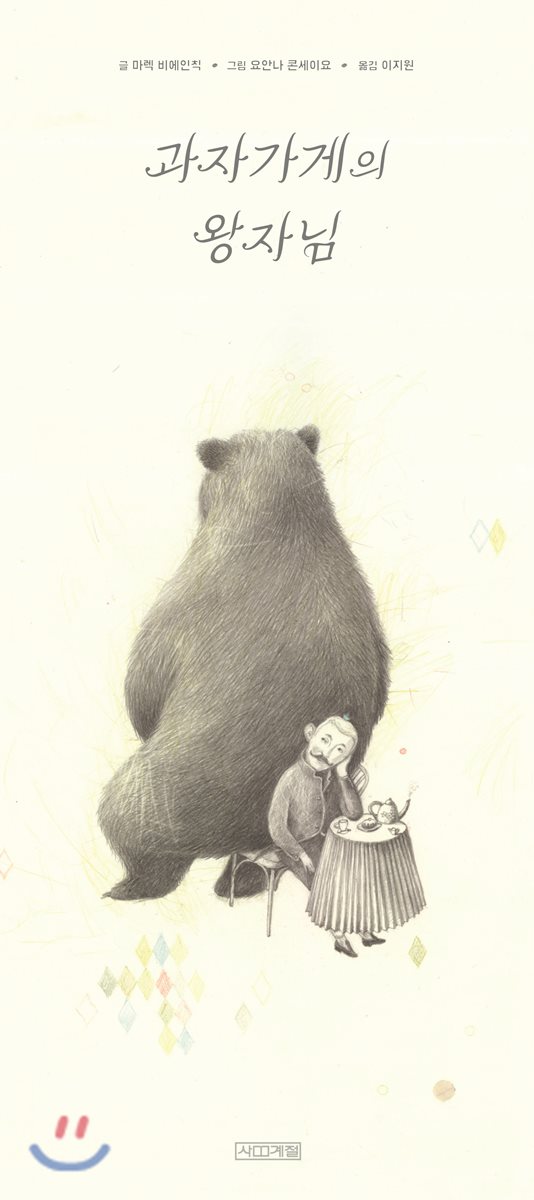
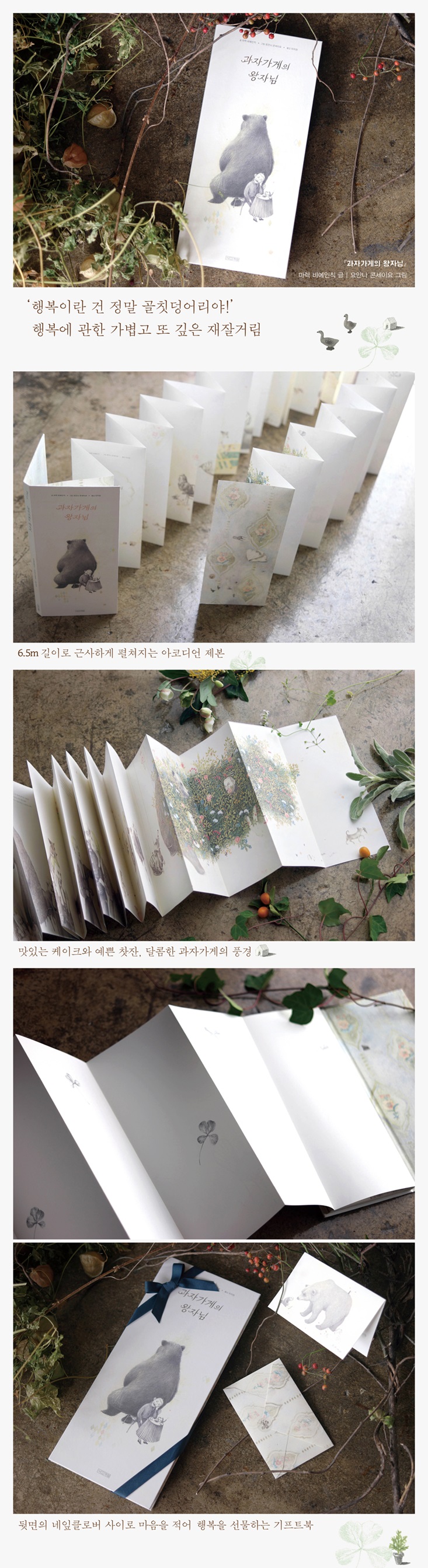
Joanna Conceillo's new work Loveliness densely stacked with pencil lines The new work, "The Prince of the Candy Shop," by Joanna Conceillo, a writer who always brings new things to life with her paintings that awaken emotions hidden deep within, has been published. This picture book, which opens up to 6.5 meters with an accordion binding, is a work that Joanna's fans, who have already encountered the original book through exhibitions and introductions in various media, have been waiting for. The scenes created by piling up thin pencil lines are very familiar, yet they always come across as something new that only Joanna can show. Although it has the commonality of being delicate, "The Prince of the Candy Shop" shows a distinctly different atmosphere from its predecessor, "Lost Soul," and its unique loveliness is evident in every corner of the work. Marek Biejncik, the author, treats the abstract subject of 'happiness' with as much specificity and sensitivity as the illustrations, taking us alongside him and her in the candy store. Now it's time to open the door to the candy store the two authors created together and watch their story. |
- You can preview some of the book's contents.
Preview
Detailed image
Publisher's Review
The moment when you sit in a sweet-smelling pastry shop and eat delicious donuts with your loved one.
Just thinking about it in your head makes you smile, it's such a happy moment.
But the prince in that situation takes a bite of a donut and says this.
“Happiness is just a headache.” Two words that don’t seem to go together at all: happiness and headache.
This bittersweet story begins like this.
Is happiness really happiness?
Each person's happiness is found through cute drawings.
The prince, who looks worried to everyone, with his chin resting on his hand, says that happiness is a headache.
Even if I say I want to be happy every day, it's not enough, so you call me a pain in the ass.
Just when he's pondering, "Is it because he's a prince that he's so happy?", his lover, Cactusia, casually blurts out, "Happiness is happiness, what's the problem?" But is that really true? The prince says that no matter how happy he is in a moment, he can't truly enjoy his current happiness, yearning for a better one.
Also, it is said that joy and sorrow are balanced, so it seems that we will have to pay a great price for our present happiness in the future.
Moreover, the moment when I am happy, even if someone else is not happy, it is a source of worry for the prince.
On the other hand, Cactusia, who is by the side of such a prince, only finds cake and donuts delicious.
Cactusia's response to the prince's heavy and long worries, sometimes lightly and simply, seems to be enjoying even that moment.
He makes no attempt to teach or persuade the prince.
It's really lovely to see the prince, who is depressed that the happiness of eating delicious sweets at a candy store will soon end, clearly tell her to order some more delicious sweets and stay a while longer.
The appearance of these two main characters is also cleverly expressed through the picture.
Unlike the prince who is always anxious and down, Cactusia playfully bites the prince's toes, pats his plate, and kisses his cheek as he sits listlessly.
The appearance of these two main characters is further enriched by being compared to the appearances of a bear and a dog.
The more the prince worries, the more fun it is to watch the bear grow bigger and the dogs playfully run around the candy store.
Ultimately, the author poses a question about happiness to us through the contrast between these two men and women.
But right and wrong don't exist in this candy store.
It's just an interesting conversation between two men and women with different approaches to happiness, and the most delicious donuts.
The small joys of everyday life that we had briefly forgotten
A sweet and bitter little story
The prince, who doesn't even realize he's happy and only worries while sitting in front of delicious donuts and cake, may seem foolish, but sometimes you can empathize with every word he says.
His appearance, so melancholic that the word 'prince' seems inappropriate, is somehow not unfamiliar.
As the prince said, I wonder if we have been so caught up in our daily lives, vaguely waiting for the happiness that will come in the future, that we have failed to notice the small happinesses that are close by, and perhaps even forgotten the very word happiness.
It's like eating sweet and bitter chocolate.
The story of the prince and Cactusia, which unfolds into one long scene, brings to mind the thoughts of 'happiness' that everyone has in their hearts.
And on the other side, four-leaf clovers are engraved.
I feel like I've discovered the happiness and good fortune I had forgotten.
I think that's why the happy ending of the story, where the main characters simply enjoy the present moment in a green and bright flower garden, resonates so deeply with us.
Why not give this happiness to someone struggling with too many worries? A picture book has been published that awakens us to the small joys we often forget about in our daily lives.
Just thinking about it in your head makes you smile, it's such a happy moment.
But the prince in that situation takes a bite of a donut and says this.
“Happiness is just a headache.” Two words that don’t seem to go together at all: happiness and headache.
This bittersweet story begins like this.
Is happiness really happiness?
Each person's happiness is found through cute drawings.
The prince, who looks worried to everyone, with his chin resting on his hand, says that happiness is a headache.
Even if I say I want to be happy every day, it's not enough, so you call me a pain in the ass.
Just when he's pondering, "Is it because he's a prince that he's so happy?", his lover, Cactusia, casually blurts out, "Happiness is happiness, what's the problem?" But is that really true? The prince says that no matter how happy he is in a moment, he can't truly enjoy his current happiness, yearning for a better one.
Also, it is said that joy and sorrow are balanced, so it seems that we will have to pay a great price for our present happiness in the future.
Moreover, the moment when I am happy, even if someone else is not happy, it is a source of worry for the prince.
On the other hand, Cactusia, who is by the side of such a prince, only finds cake and donuts delicious.
Cactusia's response to the prince's heavy and long worries, sometimes lightly and simply, seems to be enjoying even that moment.
He makes no attempt to teach or persuade the prince.
It's really lovely to see the prince, who is depressed that the happiness of eating delicious sweets at a candy store will soon end, clearly tell her to order some more delicious sweets and stay a while longer.
The appearance of these two main characters is also cleverly expressed through the picture.
Unlike the prince who is always anxious and down, Cactusia playfully bites the prince's toes, pats his plate, and kisses his cheek as he sits listlessly.
The appearance of these two main characters is further enriched by being compared to the appearances of a bear and a dog.
The more the prince worries, the more fun it is to watch the bear grow bigger and the dogs playfully run around the candy store.
Ultimately, the author poses a question about happiness to us through the contrast between these two men and women.
But right and wrong don't exist in this candy store.
It's just an interesting conversation between two men and women with different approaches to happiness, and the most delicious donuts.
The small joys of everyday life that we had briefly forgotten
A sweet and bitter little story
The prince, who doesn't even realize he's happy and only worries while sitting in front of delicious donuts and cake, may seem foolish, but sometimes you can empathize with every word he says.
His appearance, so melancholic that the word 'prince' seems inappropriate, is somehow not unfamiliar.
As the prince said, I wonder if we have been so caught up in our daily lives, vaguely waiting for the happiness that will come in the future, that we have failed to notice the small happinesses that are close by, and perhaps even forgotten the very word happiness.
It's like eating sweet and bitter chocolate.
The story of the prince and Cactusia, which unfolds into one long scene, brings to mind the thoughts of 'happiness' that everyone has in their hearts.
And on the other side, four-leaf clovers are engraved.
I feel like I've discovered the happiness and good fortune I had forgotten.
I think that's why the happy ending of the story, where the main characters simply enjoy the present moment in a green and bright flower garden, resonates so deeply with us.
Why not give this happiness to someone struggling with too many worries? A picture book has been published that awakens us to the small joys we often forget about in our daily lives.
GOODS SPECIFICS
- Date of publication: December 21, 2018
- Format: Hardcover book binding method guide
- Page count, weight, size: 92 pages | 510g | 140*235*15mm
- ISBN13: 9791160944136
- ISBN10: 116094413X
- KC Certification: Certification Type: Conformity Confirmation
You may also like
카테고리
korean


korean

![ELLE 엘르 스페셜 에디션 A형 : 12월 [2025]](http://librairie.coreenne.fr/cdn/shop/files/b8e27a3de6c9538896439686c6b0e8fb.jpg?v=1766436872&width=3840)


