

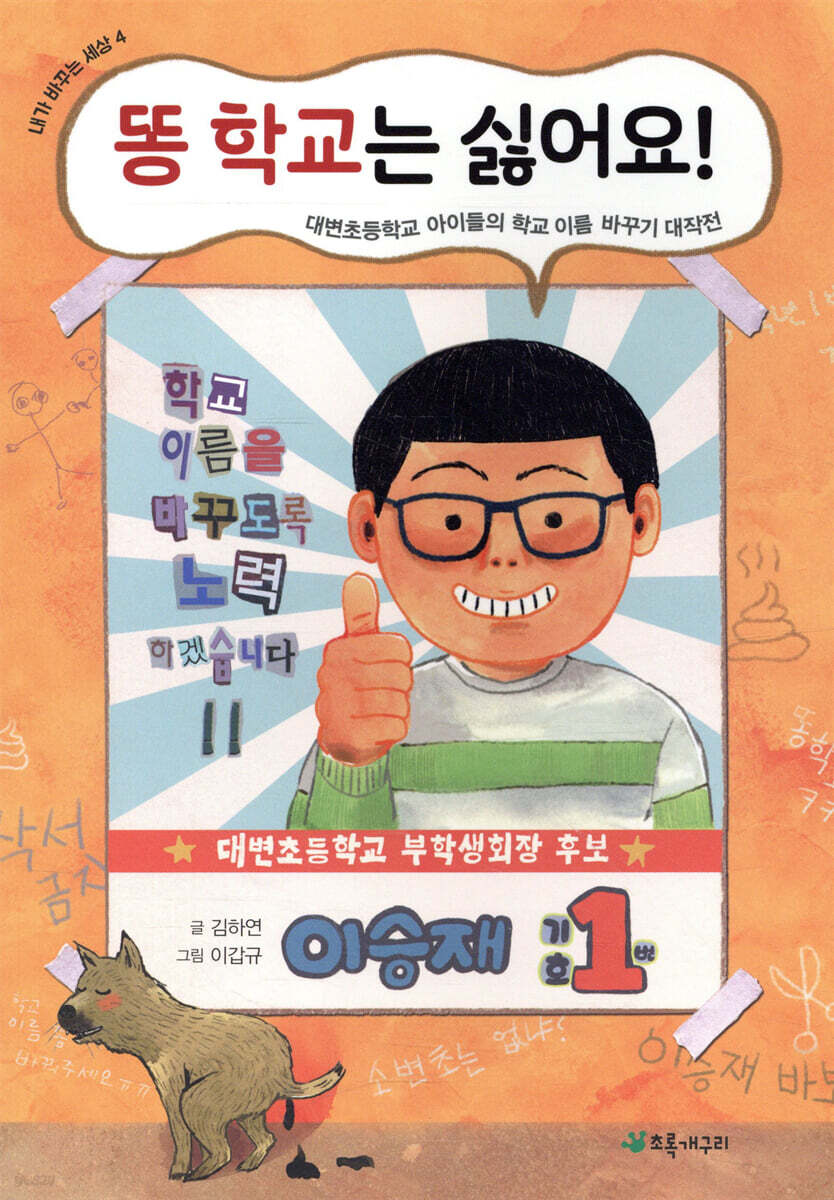
I hate shit school!
 |
Description
Book Introduction
Daebyeon Elementary School, which was once synonymous with funny school names! The anger and resentment of students who have been teased as a ‘shit school’ for 54 years A single bold promise from a vice-presidential candidate brought me to the surface! Set in a small seaside town A democratic scene as cool as the vast ocean and vibrant as freshly caught anchovies. An earnest and refreshing pledge made by a candidate for vice-president of an elementary school “I will try to change the name of the school!” If you type 'funny school names' into an internet search bar, several names will be listed. Yadong Elementary School, Baeksu Middle School, Jeongja High School, etc. Among them, the school that is always mentioned is ‘Daebyeon Elementary School.’ It is located in Daebyeon-ri, Gijang-gun, Busan, so ironically, it is called 'Daebyeon'. The name is a bit embarrassing, but it is a small and pretty school with about 70 students and the sea spread out in front of the school. It is also known as the ‘Little Poet School’ due to its active poetry writing activities. Its history spans over 50 years. In February 2017, an incident occurred that shook the quiet school. A student who ran for the 5th grade vice-president of the student body made 'changing the school name' one of his pledges. Many children who had been suffering because of the school name have come together around this promise. The movement to change the school name, which surfaced during the election, gained momentum from then on, and after a signature campaign and various administrative procedures, the name 'Yongam Elementary School' was finally allowed to be used in March 2018. This book is a fairy tale that tells the story of the name change of Daebyeon Elementary School. Although some characters were created to make the story more interesting, we interviewed real children and people involved to ensure that key facts were not distorted. From bottom to top, from children to adults! A small but vibrant experiment in democracy set in a school setting The name of your school is an essential adjective that you can never leave out when introducing yourself to elementary school students. The humiliating teasing of the 'Daebyeop Elementary School' that followed them wherever they went deeply damaged the children's self-esteem. Whenever the host revealed the children's affiliations at an external event, there was always an outburst of laughter. During the Gijang-gun Elementary School soccer tournament, the Daebyeon Elementary School players, who had been doing well, were helplessly defeated by the opposing team's jeers, shouting "Shit school!", and during the Busan City English musical recital, the children were intimidated by the teasing and were unable to show their skills. There were many cases where people did not answer the question “which school do you go to” or gave the name of a different school. Even in a collection of nonsense quizzes, 'Daebyun Elementary School' appeared as the answer to the quiz 'What is the dirtiest school in the world?' The promise, “We will work to change the school name,” was shocking to the children who had been hurt by the school name and had silently endured the teasing with the thought that “the school name cannot be changed.” Although there have been cautious discussions among students and parents about changing the school name for several months now. The vice president of the student body, who was elected on the strength of his pledge, worked hard to gain support for the school name change from the student body president and other senior students. Starting with the Gijang Anchovy Festival held in front of the school, we held signature drives at various events, and during a public hearing to gather opinions on changing the school name, we spoke to the graduates about the joys and sorrows and thoughts of the current students. He even wrote letters directly to the graduates who opposed it. The children's sincerity moved the hearts of adults. There are several schools that changed their names with the goal of eliminating remnants of Japanese colonial rule. However, it is difficult to find cases where children raised their voices and made changes. This book shows that if there's something in our daily lives that feels unfair, we can change it, even if it's the name of our school, and if it lowers students' self-esteem, we can change it. The process is captured in interesting text and pictures, allowing you to naturally experience the democracy that is stirring in your life. Adults who view children as the owners of the school and members of the local community Changing a school name is something that children alone can never do. Daebyeon-ri is a clan village, so many of the parents and relatives of Daebyeon Elementary School students are graduates of Daebyeon Elementary School. So there were many adults who sympathized with the children's voices. However, there were many graduates and villagers who opposed the change, saying that the school name, which was derived from the name of a historic village, could not be changed simply because it was unpleasant to hear. Since the school's name belongs not only to the 70 or so current students but also to the thousands of alumni, persuading the alumni was a very important task. The class president, who had been teased countless times as a child for being a "shit school," tried to persuade the children from their perspective. The village head, who was a student at Daebyeon Elementary School decades ago, also took the lead in persuading the residents. Parents who realized that their children's wounds were too deep to be dismissed as childish tantrums also actively participated. Adults viewed children as the owners of the school and members of the local community. After the name change was approved, the students' opinions were actively sought when deciding on the new school name. The new name was decided through a process of public voting and sharing opinions among current students, alumni, and local residents. The story of Daebyeon Elementary School's name change is a rare case in which students, teachers, parents, alumni, and local residents worked together to achieve it. This book is one that allows you to read such cases as fairy tales. Promises are not made, they are kept. The vice president of the student body, the main character of this book, struggles to keep his promises after being elected. I never forget that the position of 'Vice President of the Student Council' is not a fancy title, but a position to relieve students' inconveniences and put their wishes into practice. I'm very shy, so it's not easy to get signatures from people I've never met before, but I find the courage to do it because it's something I have to do to make my promise come true. The protagonist's struggle to revive the aspirations of the students who believed in him and elected him will serve as a harsh example to politicians who ignore their promises once they are elected. |
- You can preview some of the book's contents.
Preview
index
1.
The number one funniest school name?
2.
Football Tournament of Humiliation
3.
Election Day
4.
Memories of the Principal
5.
Children's inner thoughts
6.
Strong support
7.
For! Against!
8.
Gijang Anchovy Festival
9.
Cameras flocking in
10.
Find a new name
11.
A miracle after 54 years
The number one funniest school name?
2.
Football Tournament of Humiliation
3.
Election Day
4.
Memories of the Principal
5.
Children's inner thoughts
6.
Strong support
7.
For! Against!
8.
Gijang Anchovy Festival
9.
Cameras flocking in
10.
Find a new name
11.
A miracle after 54 years
Detailed image
Publisher's Review
Daebyeon Elementary School, which was once synonymous with funny school names!
The anger and resentment of students who have been teased as a ‘shit school’ for 54 years
A single bold promise from a vice-presidential candidate brought me to the surface!
*A heartfelt and refreshing pledge made by a candidate for vice-president of an elementary school
“I will try to change the name of the school!”
If you type 'funny school names' into an internet search bar, several names will be listed.
Yadong Elementary School, Baeksu Middle School, Jeongja High School, etc.
Among them, the school that is always mentioned is ‘Daebyeon Elementary School.’
It is located in Daebyeon-ri, Gijang-gun, Busan, so ironically, it is called 'Daebyeon'.
The name is a bit embarrassing, but it is a small and pretty school with about 70 students and the sea spread out in front of the school. It is also known as the ‘Little Poet School’ due to its active poetry writing activities.
Its history spans over 50 years.
In February 2017, an incident occurred that shook the quiet school.
A student who ran for the 5th grade vice-president of the student body made 'changing the school name' one of his pledges.
Many children who had been suffering because of the school's name became united around this promise.
The school name change, which surfaced due to the election, gained momentum from then on, and after a signature campaign and various administrative procedures, the name 'Yongam Elementary School' was finally allowed to be used in March 2018.
This book is a fairy tale that tells the story of the name change of Daebyeon Elementary School.
Although some characters were created to make the story more interesting, we interviewed real children and people involved to ensure that key facts were not distorted.
*From bottom to top, from children to adults!
A vivid scene where democracy is realized in children's lives.
The name of your school is an essential adjective that you can never leave out when introducing yourself to elementary school students.
The humiliating teasing of the 'Daebyeop Elementary School' that followed them wherever they went deeply damaged the children's self-esteem.
Whenever the host revealed the children's affiliations at an external event, there was always an outburst of laughter.
During the Gijang-gun Elementary School soccer tournament, the Daebyeon Elementary School players, who had been doing well, were helplessly defeated by the opposing team's jeers, shouting "Shit school!", and during the Busan City English musical recital, the children were intimidated by the teasing and were unable to show their skills.
There were many cases where people did not answer the question, “What school do you go to?” or gave the name of a different school.
Even in a collection of nonsense quizzes, 'Daebyun Elementary School' appeared as the answer to the quiz 'What is the dirtiest school in the world?'
The promise, “We will work to change the school name,” was shocking to the children who had been hurt by the school name and had silently endured the teasing with the thought that “the school name cannot be changed.”
Although there have been cautious discussions among students and parents about changing the school name for several months now.
The vice president of the student body, who was elected on the strength of his pledge, worked hard to gain support for the school name change from the student body president and other senior students.
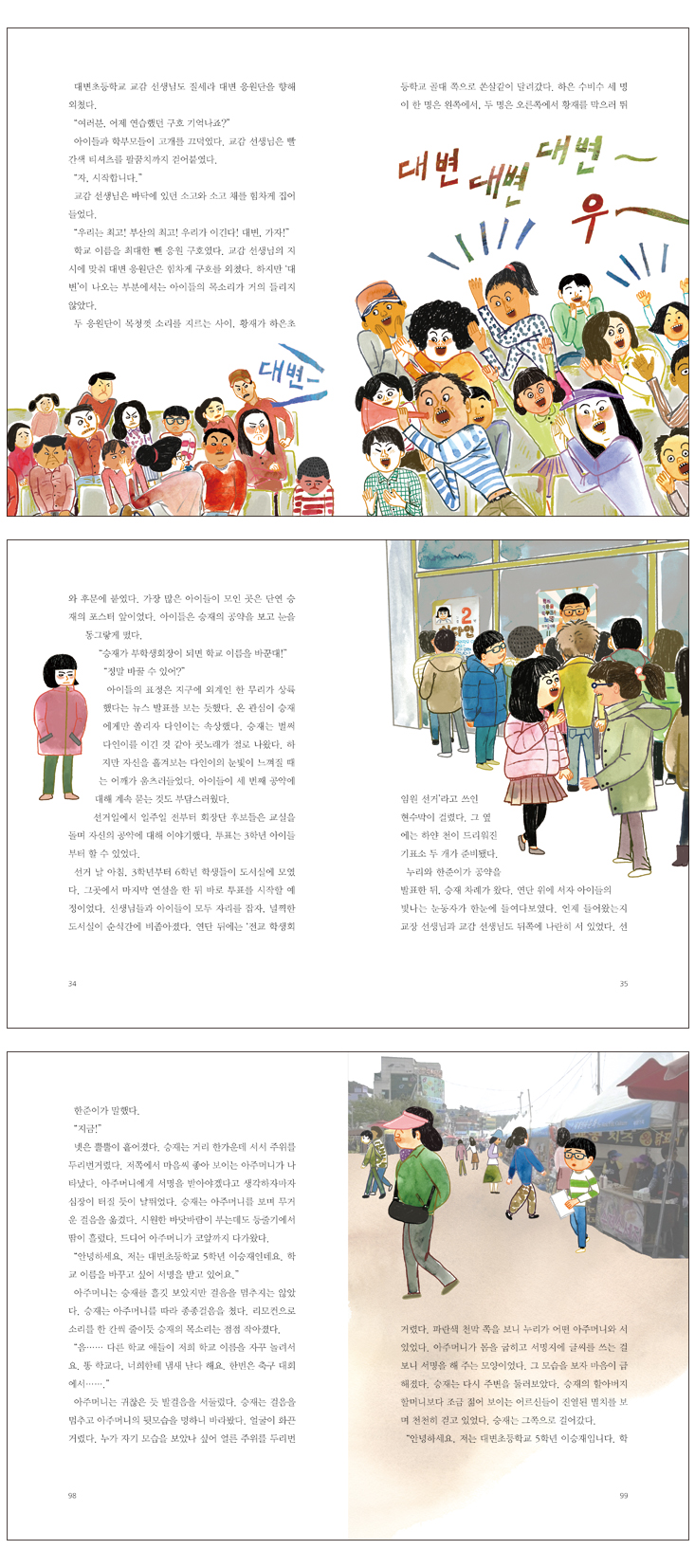
Starting with the Gijang Anchovy Festival held in front of the school, we held a petition drive to change the school name at various events, and during a public hearing to collect opinions on the name change, we spoke to the graduates about the joys and sorrows and thoughts of the current students.
He even wrote letters directly to the graduates who opposed it.
The children's sincerity moved the hearts of adults.
There are several schools that changed their names with the goal of eliminating remnants of Japanese colonial rule.
However, it is difficult to find cases where children raised their voices and made changes.
This book shows that if there's something in our daily lives that feels unfair, we can change it, even if it's the name of our school, and if it lowers students' self-esteem, we can change it.
The process is captured in interesting text and pictures, allowing you to naturally experience the democracy that is stirring in your life.
*Adults who view children as the owners of the school and members of the local community
Changing a school name is something that children alone can never do.
Daebyeon-ri is a clan village, so many of the parents and relatives of Daebyeon Elementary School students are graduates of Daebyeon Elementary School.
So there were many adults who sympathized with the children's voices.
However, there were many graduates and village elders who opposed the change, saying that the school name, which was derived from the name of a historic village, could not be changed simply because it was unpleasant to hear.
Since the school's name belongs not only to the 76 current students but also to the thousands of graduates, persuading the graduates was a very important task.
The class president, who had been teased countless times as a child for being a "shit school," tried to persuade the children from their perspective.
The village head, who was a student at Daebyeon Elementary School decades ago, also took the lead in persuading the elders.
Parents who realized that their children's wounds were too deep to be dismissed as childish tantrums also actively participated.
Adults viewed children as the owners of the school and members of the local community.
After the school name change was approved, the children's opinions were actively sought when deciding on the new school name.
The new name was decided through a process of public voting and sharing opinions among current students, alumni, and local residents.
The story of Daebyeon Elementary School's name change is a rare case in which students, teachers, parents, alumni, and local residents worked together to achieve it.
This book is one that allows you to read such cases as fairy tales.
*Efforts to keep promises that put adults to shame
The vice president of the student body, the main character of this book, struggles to keep his promises after being elected.
I never forget that the position of 'Vice President of the Student Council' is not a fancy title, but a position to relieve students' inconveniences and put their wishes into practice.
I'm very shy, so it's not easy to get signatures from people I've just met, but I find the courage to do it because it's something I have to do to make my promise come true.
The protagonist's struggle to revive the aspirations of the students who believed in him and elected him will serve as a harsh example to politicians who ignore their promises once they are elected.
GOODS SPECIFICS
- Date of publication: April 13, 2018
- Format: Paperback book binding method guide
- Page count, weight, size: 148 pages | 282g | 150*215*20mm
- ISBN13: 9791157820641
- ISBN10: 1157820646
- KC Certification: Certification Type: Conformity Confirmation
You may also like
카테고리
korean


korean

![ELLE 엘르 스페셜 에디션 A형 : 12월 [2025]](http://librairie.coreenne.fr/cdn/shop/files/b8e27a3de6c9538896439686c6b0e8fb.jpg?v=1766436872&width=3840)


