

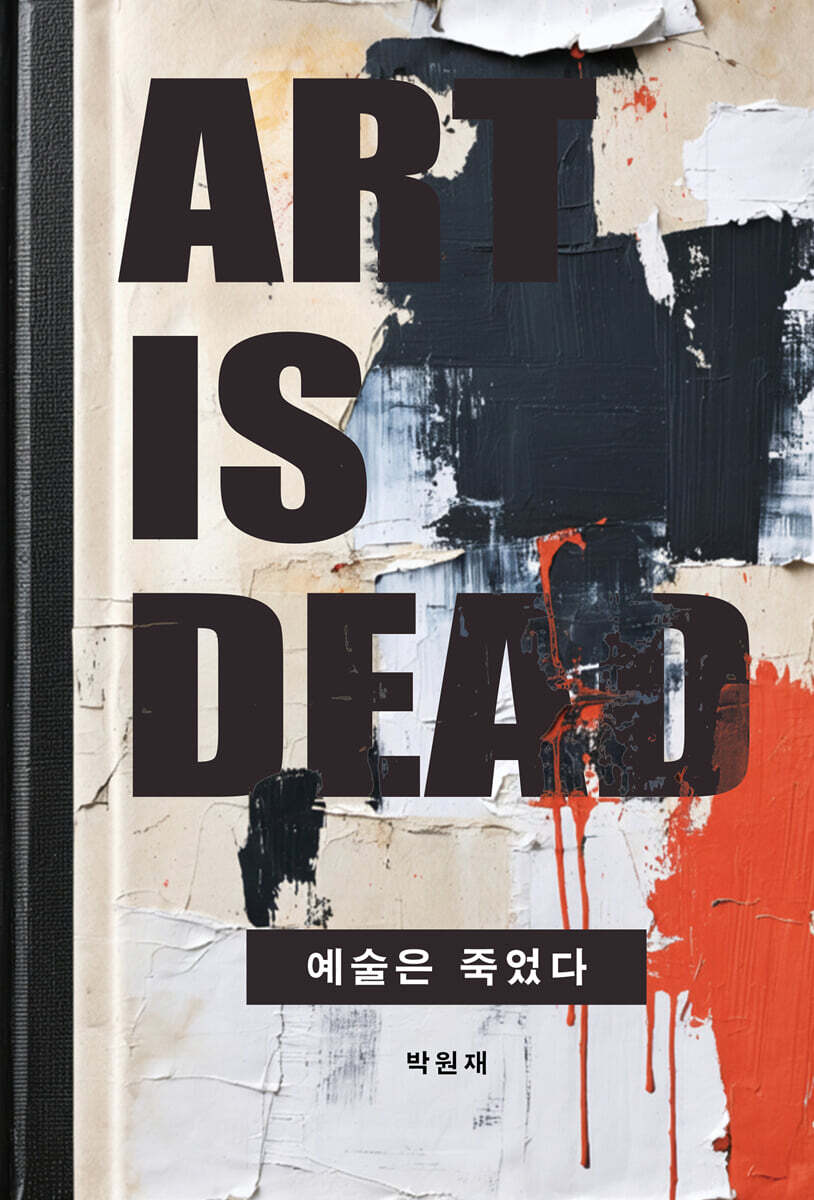
Art is dead
 |
Description
Book Introduction
“Art is dead! Art is dead!”
We killed him!
We are all his murderers!”
Philosophical reflections on the definition, role, and direction of art
Author Wonjae Park, who founded the One & J Gallery in 2005 and has introduced talented Korean artists to the world stage, declares in this book that “art is dead.”
Why does the man who led the only Asian gallery to win the Baloise Prize at Art Basel, the world's premier art fair, in 2018 say art is dead? The author diagnoses that contemporary art has become swayed by capitalism and goal-oriented thinking, disconnected from our lives.
Art museums have become graveyards that separate art from its contemporaneity, and in the digital age, NFTs have reduced art to an object of ownership.
However, the author emphasizes that art is originally an act of exploring the essence of life through the human body and senses, and that art must return to life.
This book traces the historical evolution of art and analyzes how capitalism and technology have hollowed out art.
Art has long been closely linked to the lives of the masses, as seen in the Lascaux cave paintings, Shakespearean public performances, and Renaissance works, but modern art has become the preserve of a select few.
However, the essence of art still lies in the creator's senses and the audience's experience.
This book goes beyond a philosophical discussion of art, presenting examples of contemporary artists such as Marina Abramović, Antoni Gormley, Olafur Eliasson, Ai Weiwei, Alighiero Boetti, Tracey Emin, and Rukritt Tirawanit, and suggesting specific ways for art to return to life.
You will feel that art can go beyond personal creation and become a platform for social connection and healing.
We killed him!
We are all his murderers!”
Philosophical reflections on the definition, role, and direction of art
Author Wonjae Park, who founded the One & J Gallery in 2005 and has introduced talented Korean artists to the world stage, declares in this book that “art is dead.”
Why does the man who led the only Asian gallery to win the Baloise Prize at Art Basel, the world's premier art fair, in 2018 say art is dead? The author diagnoses that contemporary art has become swayed by capitalism and goal-oriented thinking, disconnected from our lives.
Art museums have become graveyards that separate art from its contemporaneity, and in the digital age, NFTs have reduced art to an object of ownership.
However, the author emphasizes that art is originally an act of exploring the essence of life through the human body and senses, and that art must return to life.
This book traces the historical evolution of art and analyzes how capitalism and technology have hollowed out art.
Art has long been closely linked to the lives of the masses, as seen in the Lascaux cave paintings, Shakespearean public performances, and Renaissance works, but modern art has become the preserve of a select few.
However, the essence of art still lies in the creator's senses and the audience's experience.
This book goes beyond a philosophical discussion of art, presenting examples of contemporary artists such as Marina Abramović, Antoni Gormley, Olafur Eliasson, Ai Weiwei, Alighiero Boetti, Tracey Emin, and Rukritt Tirawanit, and suggesting specific ways for art to return to life.
You will feel that art can go beyond personal creation and become a platform for social connection and healing.
- You can preview some of the book's contents.
Preview
index
Prologue - Art is Dead
Part 1: Why has art become distant?
1.
Who Killed Art?
2.
Art Museums: Where Art Goes to Die
Art for art's sake
Art out of context
3.
Is art dead?
4.
Why has industry distanced itself from art?
How did art become a commodity?
Is the work art?
The right to pardon was also a commodity
5.
The Traps of Capitalism and Goal-Orientedness
The rule of the invisible hand
The problematic reality resulting from the combination of goal-orientation and elitism.
negative impact on art
Negative impact on society
Art as a Platform for Diversity
Part 2: Art was originally life
1.
Humanities before the humanities
2.
Restoration of body and senses
Why we need to restore our bodies and senses
Marina Abramović: The Communion of Silence and the Body
Antony Gormley: A Life of Body and Sense
Olafur Eliasson: Expansion of Environment and Senses
Truth revealed through the senses
The only language that understands difference
3.
Reconstruction of the community
The Purpose of Art: For Living Together
Conflicting Values and the Role of Art
4.
Restoring diversity
Diversity frees identity from non-identity.
5.
Restoring the subjectivity of life
How did mankind come to make art?
6.
The Age of Creators
Social Media: Pros and Cons
What questions does the advent of AI raise about art?
The Invention of the Camera and AI: Technology That's Pushing the Boundaries of Art
7.
Without life, there is no connection to reality.
8.
It's not the result, it's the reason
Part 3: What will art look like when it returns to everyday life?
1.
Moments when art, reduced to a work of art, returns to life.
2.
Art that changes society
3.
Art that allows communication between the artist and the audience
4.
It's art because it's everyday life
The legitimacy of art through everyday life
The feeling of feeling again, reconnecting, and living again
5.
From knowledge to life, from image to experience
Inviting people to participate and experience beyond observation and appreciation.
Subject-object relationship in art: from object to opponent
Artwork is not an object of ownership, but a starting point for sharing.
What does an experiential exhibition look like?
From collection to experience
6.
Collaboration with other industries
Epilogue - The Resurrection of Art
Part 1: Why has art become distant?
1.
Who Killed Art?
2.
Art Museums: Where Art Goes to Die
Art for art's sake
Art out of context
3.
Is art dead?
4.
Why has industry distanced itself from art?
How did art become a commodity?
Is the work art?
The right to pardon was also a commodity
5.
The Traps of Capitalism and Goal-Orientedness
The rule of the invisible hand
The problematic reality resulting from the combination of goal-orientation and elitism.
negative impact on art
Negative impact on society
Art as a Platform for Diversity
Part 2: Art was originally life
1.
Humanities before the humanities
2.
Restoration of body and senses
Why we need to restore our bodies and senses
Marina Abramović: The Communion of Silence and the Body
Antony Gormley: A Life of Body and Sense
Olafur Eliasson: Expansion of Environment and Senses
Truth revealed through the senses
The only language that understands difference
3.
Reconstruction of the community
The Purpose of Art: For Living Together
Conflicting Values and the Role of Art
4.
Restoring diversity
Diversity frees identity from non-identity.
5.
Restoring the subjectivity of life
How did mankind come to make art?
6.
The Age of Creators
Social Media: Pros and Cons
What questions does the advent of AI raise about art?
The Invention of the Camera and AI: Technology That's Pushing the Boundaries of Art
7.
Without life, there is no connection to reality.
8.
It's not the result, it's the reason
Part 3: What will art look like when it returns to everyday life?
1.
Moments when art, reduced to a work of art, returns to life.
2.
Art that changes society
3.
Art that allows communication between the artist and the audience
4.
It's art because it's everyday life
The legitimacy of art through everyday life
The feeling of feeling again, reconnecting, and living again
5.
From knowledge to life, from image to experience
Inviting people to participate and experience beyond observation and appreciation.
Subject-object relationship in art: from object to opponent
Artwork is not an object of ownership, but a starting point for sharing.
What does an experiential exhibition look like?
From collection to experience
6.
Collaboration with other industries
Epilogue - The Resurrection of Art
Detailed image

Into the book
Art that enters an art museum no longer moves.
There, art becomes separate from the lives of its viewers and transforms into an untouchable relic.
This is contrary to the essence of art.
Art was originally born in the midst of life, consumed there, stimulating emotions and triggering thoughts.
However, art that enters an art museum stops this process and becomes a ‘record.’
--- p.22
The commercialization of art became fully systematized during the Industrial Revolution in the 18th and 19th centuries.
As capitalism matured, the art market was structurally formed.
The rise of the middle class increased the demand for art, and with the emergence of galleries and auction houses, art became an object of private ownership.
The founding of Christie's auction house in 1766 is symbolic of this trend.
The irony that a genius like Vincent van Gogh in the late 19th century did not sell a single piece during his lifetime, yet his works were sold for billions after his death, shows that art was beginning to be swayed by the logic of the market.
--- p.41~43
The artist is here, presented at the Museum of Modern Art in New York in 2010, is the pinnacle of sensory recovery.
For three months, Abramović sat at a table for more than seven hours every day, making eye contact with each audience member.
They were connected only through silence and gaze, without words or gestures.
This simple act evoked a deep emotional response.
Some audience members shed tears, some smiled, and others recalled long-buried memories.
One audience member said, “I saw the faces of my family in her eyes I had forgotten,” while another said, “In the silence, I heard my own heartbeat for the first time.”
--- p.88~89
The ancient world suppressed the body as a source of sin and desire, while the Middle Ages completely subjugated the body before the will of God.
Modernity has made humans the subject, but paradoxically, it has strengthened the domination of the mind rather than the liberation of the body.
The rational-centered view of humanity assumes that everyone has the same rationality and erases the need for ‘difference.’
This has led to humans developing the illusion of being a 'universal being', which has ultimately led to egocentrism, where the world is judged based on oneself.
Ultimately, it created the myth of self-complete beings rather than living together.
--- p.106
Art has also been a means for us to live together, despite our intense individuality.
Through art, we empathize and strengthen the communal nature of life.
As individualism becomes rampant in modern society, we become increasingly isolated and unable to understand one another. Art is the most powerful tool we can use to open a space of empathy and reestablish ourselves as a community.
--- p.116
Frida Kahlo's masterpiece, "The Two Fridas," is a work that symbolically expresses her dual identity.
This painting, which shows Frida in traditional Mexican dress and Frida in European dress holding hands, expresses her multicultural background and the conflicts of her identity.
However, this work does not simply reveal conflict; it suggests that these identities can coexist, emphasizing the possibility of diversity.
Through her work, Frida opened a new chapter in embracing diverse identities and voices beyond the confines of standardized art.
--- p.133
The greatest advantage of social media is that it lowers the threshold for creation and democratizes art.
In the past, one had to overcome institutional barriers such as galleries, museums, and curators to be recognized as an artist.
But now, you can showcase your work to the world with just one photo or a short video.
This opens up opportunities, especially for creators who have been marginalized from the mainstream art world.
--- p.151
If photography gave birth to Picasso and Van Gogh, what kind of artists will AI create? I believe AI isn't simply a tool that replaces art, but rather a catalyst for rethinking the very essence of art.
If photography has made artists ask, “What is truth?”, AI asks, “What is humanity beyond machines?”
For example, even if an AI-generated image boasts perfect composition, can it truly capture human suffering, hope, or contradiction? --- p.170
A work of art is the trace of the artist's self-imposed collision with the world, and it is evidence of his emotions, bodily memories, and existence.
We must not just 'see' it with our eyes, but 'enter' into it.
It's an experience.
If appreciation is an act of maintaining a certain distance, then experience is breaking down that distance and going inward.
In it, I meet the writer, look back at myself, and think again about our existence.
--- p.230
Tom Sachs' collaboration with Nike created an unprecedented case where "art can become sneakers."
His work does not simply remain within the framework of ‘collaboration with brands.’
Rather, he established a new aesthetic politics by clashing his DIY aesthetic and critique of consumer culture with the popular system called Nike.
His studio functions like a factory, with shoes becoming objects of experimentation and a medium for critique.
This collaboration goes beyond the question of “Can art become a commodity?” to ask “How can a commodity become art?”
The moment consumers purchase shoes, they experience the experience of 'walking on a work of art,' which creates an opportunity to transform everyday consumption into an artistic practice.
There, art becomes separate from the lives of its viewers and transforms into an untouchable relic.
This is contrary to the essence of art.
Art was originally born in the midst of life, consumed there, stimulating emotions and triggering thoughts.
However, art that enters an art museum stops this process and becomes a ‘record.’
--- p.22
The commercialization of art became fully systematized during the Industrial Revolution in the 18th and 19th centuries.
As capitalism matured, the art market was structurally formed.
The rise of the middle class increased the demand for art, and with the emergence of galleries and auction houses, art became an object of private ownership.
The founding of Christie's auction house in 1766 is symbolic of this trend.
The irony that a genius like Vincent van Gogh in the late 19th century did not sell a single piece during his lifetime, yet his works were sold for billions after his death, shows that art was beginning to be swayed by the logic of the market.
--- p.41~43
The artist is here, presented at the Museum of Modern Art in New York in 2010, is the pinnacle of sensory recovery.
For three months, Abramović sat at a table for more than seven hours every day, making eye contact with each audience member.
They were connected only through silence and gaze, without words or gestures.
This simple act evoked a deep emotional response.
Some audience members shed tears, some smiled, and others recalled long-buried memories.
One audience member said, “I saw the faces of my family in her eyes I had forgotten,” while another said, “In the silence, I heard my own heartbeat for the first time.”
--- p.88~89
The ancient world suppressed the body as a source of sin and desire, while the Middle Ages completely subjugated the body before the will of God.
Modernity has made humans the subject, but paradoxically, it has strengthened the domination of the mind rather than the liberation of the body.
The rational-centered view of humanity assumes that everyone has the same rationality and erases the need for ‘difference.’
This has led to humans developing the illusion of being a 'universal being', which has ultimately led to egocentrism, where the world is judged based on oneself.
Ultimately, it created the myth of self-complete beings rather than living together.
--- p.106
Art has also been a means for us to live together, despite our intense individuality.
Through art, we empathize and strengthen the communal nature of life.
As individualism becomes rampant in modern society, we become increasingly isolated and unable to understand one another. Art is the most powerful tool we can use to open a space of empathy and reestablish ourselves as a community.
--- p.116
Frida Kahlo's masterpiece, "The Two Fridas," is a work that symbolically expresses her dual identity.
This painting, which shows Frida in traditional Mexican dress and Frida in European dress holding hands, expresses her multicultural background and the conflicts of her identity.
However, this work does not simply reveal conflict; it suggests that these identities can coexist, emphasizing the possibility of diversity.
Through her work, Frida opened a new chapter in embracing diverse identities and voices beyond the confines of standardized art.
--- p.133
The greatest advantage of social media is that it lowers the threshold for creation and democratizes art.
In the past, one had to overcome institutional barriers such as galleries, museums, and curators to be recognized as an artist.
But now, you can showcase your work to the world with just one photo or a short video.
This opens up opportunities, especially for creators who have been marginalized from the mainstream art world.
--- p.151
If photography gave birth to Picasso and Van Gogh, what kind of artists will AI create? I believe AI isn't simply a tool that replaces art, but rather a catalyst for rethinking the very essence of art.
If photography has made artists ask, “What is truth?”, AI asks, “What is humanity beyond machines?”
For example, even if an AI-generated image boasts perfect composition, can it truly capture human suffering, hope, or contradiction? --- p.170
A work of art is the trace of the artist's self-imposed collision with the world, and it is evidence of his emotions, bodily memories, and existence.
We must not just 'see' it with our eyes, but 'enter' into it.
It's an experience.
If appreciation is an act of maintaining a certain distance, then experience is breaking down that distance and going inward.
In it, I meet the writer, look back at myself, and think again about our existence.
--- p.230
Tom Sachs' collaboration with Nike created an unprecedented case where "art can become sneakers."
His work does not simply remain within the framework of ‘collaboration with brands.’
Rather, he established a new aesthetic politics by clashing his DIY aesthetic and critique of consumer culture with the popular system called Nike.
His studio functions like a factory, with shoes becoming objects of experimentation and a medium for critique.
This collaboration goes beyond the question of “Can art become a commodity?” to ask “How can a commodity become art?”
The moment consumers purchase shoes, they experience the experience of 'walking on a work of art,' which creates an opportunity to transform everyday consumption into an artistic practice.
--- p.251
Publisher's Review
How can we, so different from one another, live together?
Art: A Platform for Answering Humanity's Fundamental Questions
The author, who had gained attention by winning the Baloise Prize at Art Basel, ran into an unexpected wall.
After running for a long time to gain recognition in the art world, I realized that it is a small elite group that determines the direction of art.
He studied religious philosophy to reflect on the meaning of life beyond art, and discovered something surprising.
The history of religion is filled with those who seek to monopolize the truth they claim to have received from God, and the world of art operates by a similar mechanism.
It was often a small group of authorities who determined what was 'good' art, what was 'valuable' art, and they confined art within a certain framework and distanced it from the public.
"Is art really meant to be defined by such a small number of people? Wasn't art originally meant to connect people's lives and emotions, to unite those who are different?" _Page 6
But art has a nature that embraces newness and difference.
It holds the potential to open a space for empathy and sharing the experiences and feelings of different people.
The author says that art is the platform that can answer humanity's fundamental question: "How can we, who are so different from one another, live together?"
Art is not simply a painting hanging on the wall of an art gallery or a commodity at an auction house; it is a force that enriches our lives and connects us with others.
Art is a tool that helps us understand each other, embrace our differences, and find ways to live together.
In this book, the author explores how art can reconnect with our lives and become a bridge that connects us with one another.
The Death, Essence, and Resurrection of Art
Part 1, "Why Did Art Disappear?", addresses why art was said to be dead and who killed it.
We examine various examples and works to understand the problems and causes of art in our time.
Leonardo da Vinci's "Madonna of the Rocks" was created according to the client's request, and even Shakespeare's plays were transformed by the audience's reaction and came to life.
However, the concept of 'art for art's sake', which emerged in the 19th century, expanded the boundaries of art, but sometimes lost connection with the audience and led to elitism in the art world.
Moreover, with the development of capitalism, art has become increasingly commodified, and the intrinsic value of art has been diluted by a combination of goal-oriented thinking and elitism.
Part 2, ‘Art was originally life,’ examines the essence of art, or in other words, what art is.
Art today is conceptual and metaphysical, and can only be approached by understanding certain knowledge or logic.
Art has become something that must be studied, separated from life.
But art was originally life.
It started from the body, and it was our life itself.
The author presents the works of Marina Abramović, Antoni Gormley, and Olafur Eliasson and argues for the need for restoration of the body and senses.
We also examine the changes and possibilities in art brought about by the development of technologies such as social media and AI.
Part 3, "What will art look like when it returns to everyday life?" explores the revival of art, or what needs to be done to bring it back into our lives.
For art to be revived, the process, not the result, and the experience, not the possession, are important.
Art should be a space for communication created together by the artist and the audience.
What we need now is not new technologies or more information, but a sense of re-feeling, re-connecting, and re-living.
The author says that in the future, the art industry must move toward realizing experiences.
We also explore collaborations with other industries as a way for art to connect with more people and in more diverse contexts.
The book begins with the declaration that art is dead, but it does not stop at a negative critique of art today.
Because recognizing the death of art can be the first step toward exploring the possibilities of new art.
This book diagnoses the problems of art in this era, reflects on what art is, what role it plays, and in what direction it should move, and suggests the possibility that we, who are so different from one another, can share our lives, communicate, and coexist through art.
“Art is dead.
But if we want, we can bring it back to life.
And in the process, we too can be reborn.” _Page 12
Art: A Platform for Answering Humanity's Fundamental Questions
The author, who had gained attention by winning the Baloise Prize at Art Basel, ran into an unexpected wall.
After running for a long time to gain recognition in the art world, I realized that it is a small elite group that determines the direction of art.
He studied religious philosophy to reflect on the meaning of life beyond art, and discovered something surprising.
The history of religion is filled with those who seek to monopolize the truth they claim to have received from God, and the world of art operates by a similar mechanism.
It was often a small group of authorities who determined what was 'good' art, what was 'valuable' art, and they confined art within a certain framework and distanced it from the public.
"Is art really meant to be defined by such a small number of people? Wasn't art originally meant to connect people's lives and emotions, to unite those who are different?" _Page 6
But art has a nature that embraces newness and difference.
It holds the potential to open a space for empathy and sharing the experiences and feelings of different people.
The author says that art is the platform that can answer humanity's fundamental question: "How can we, who are so different from one another, live together?"
Art is not simply a painting hanging on the wall of an art gallery or a commodity at an auction house; it is a force that enriches our lives and connects us with others.
Art is a tool that helps us understand each other, embrace our differences, and find ways to live together.
In this book, the author explores how art can reconnect with our lives and become a bridge that connects us with one another.
The Death, Essence, and Resurrection of Art
Part 1, "Why Did Art Disappear?", addresses why art was said to be dead and who killed it.
We examine various examples and works to understand the problems and causes of art in our time.
Leonardo da Vinci's "Madonna of the Rocks" was created according to the client's request, and even Shakespeare's plays were transformed by the audience's reaction and came to life.
However, the concept of 'art for art's sake', which emerged in the 19th century, expanded the boundaries of art, but sometimes lost connection with the audience and led to elitism in the art world.
Moreover, with the development of capitalism, art has become increasingly commodified, and the intrinsic value of art has been diluted by a combination of goal-oriented thinking and elitism.
Part 2, ‘Art was originally life,’ examines the essence of art, or in other words, what art is.
Art today is conceptual and metaphysical, and can only be approached by understanding certain knowledge or logic.
Art has become something that must be studied, separated from life.
But art was originally life.
It started from the body, and it was our life itself.
The author presents the works of Marina Abramović, Antoni Gormley, and Olafur Eliasson and argues for the need for restoration of the body and senses.
We also examine the changes and possibilities in art brought about by the development of technologies such as social media and AI.
Part 3, "What will art look like when it returns to everyday life?" explores the revival of art, or what needs to be done to bring it back into our lives.
For art to be revived, the process, not the result, and the experience, not the possession, are important.
Art should be a space for communication created together by the artist and the audience.
What we need now is not new technologies or more information, but a sense of re-feeling, re-connecting, and re-living.
The author says that in the future, the art industry must move toward realizing experiences.
We also explore collaborations with other industries as a way for art to connect with more people and in more diverse contexts.
The book begins with the declaration that art is dead, but it does not stop at a negative critique of art today.
Because recognizing the death of art can be the first step toward exploring the possibilities of new art.
This book diagnoses the problems of art in this era, reflects on what art is, what role it plays, and in what direction it should move, and suggests the possibility that we, who are so different from one another, can share our lives, communicate, and coexist through art.
“Art is dead.
But if we want, we can bring it back to life.
And in the process, we too can be reborn.” _Page 12
GOODS SPECIFICS
- Date of issue: October 20, 2025
- Page count, weight, size: 260 pages | 478g | 152*224*16mm
- ISBN13: 9788946423152
- ISBN10: 8946423153
You may also like
카테고리
korean


korean

![GQ KOREA Mark (Monthly): December [2025]](http://librairie.coreenne.fr/cdn/shop/files/8ef265dbbfbf186523ed75ba7319009d.jpg?v=1765340328&width=3840)


