

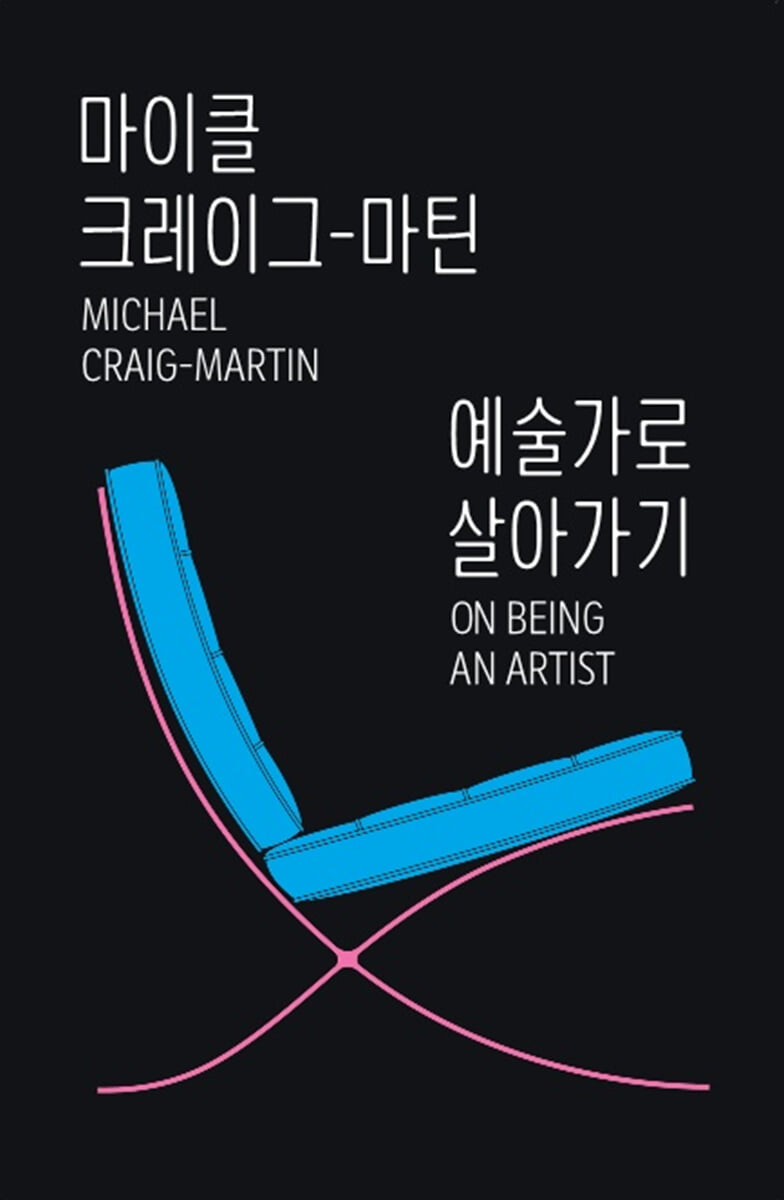
Living as an artist
 |
Description
Book Introduction
- A word from MD
-
The gaze of a contemporary artistA representative book by Michael Craig Martin, a master of modern art.
It honestly and humorously explores the artist's identity, struggles with creation, and the institutions of the art market.
You can see the conversation between an artist who does not stay still and contemplates and the times.
October 17, 2025. Art PD Ahn Hyun-jae
Michael Craig-Martin, a master of modern art, has finally published his representative work, On Being an Artist, in Korean.
This publication will be an important opportunity to vividly convey the meaning and concerns of 'living as an artist' through the eyes of a contemporary artist.
The book honestly and humorously explores ▲the artist's identity and attitude ▲the creative process and difficulties ▲education and mentorship ▲survival strategies within the art market and system.
Through this, readers can experience that the life of an artist is not simply about creating works, but is a dialogue with the entire attitude and network of relationships and the times.
The publication of this Korean edition will not only serve as a catalyst for introducing contemporary art discourse to Korea, but will also serve as a valuable guide for creators, art students, cultural planners, and others contemplating artistic life.
This publication will be an important opportunity to vividly convey the meaning and concerns of 'living as an artist' through the eyes of a contemporary artist.
The book honestly and humorously explores ▲the artist's identity and attitude ▲the creative process and difficulties ▲education and mentorship ▲survival strategies within the art market and system.
Through this, readers can experience that the life of an artist is not simply about creating works, but is a dialogue with the entire attitude and network of relationships and the times.
The publication of this Korean edition will not only serve as a catalyst for introducing contemporary art discourse to Korea, but will also serve as a valuable guide for creators, art students, cultural planners, and others contemplating artistic life.
- You can preview some of the book's contents.
Preview
index
Prologue 9
I, Michael Craig-Martin, 13
Art Criticism 14
Artist: The Weakest and Most Powerful Being 16
Childhood 17
Opening Your Eyes to Art 22
Art Book 25
My friend, Richard 27
Mentor 30
Decision to Become an Artist 32
Ingmar Bergman 35
Bohemian Summer in Paris 37
Drawing Lesson 39
First Class at Art College 41
Yale University Art Student 43
Yale University non-major student 45
Artists and Freedom 46
Josef Albers 49
Albers's Influence on Modern American Art 57
Albers's Color Theory 60
Albus's Influence on Me 62
Immortal Artist 65
Marcel Duchamp 67
Avant-garde Artist 73
The Rise of Pop Art 74
Philippe Guston 76
Explosion of New Art 77
Filming 79
Marriage 81
Summer Vacation with Christine Keeler 83
Again, Yale University 89
Minimalism 91
Distinguishing between minimalists and 96
Form and Usefulness 97
Taking risks 98
Migration to the UK 99
Instructor Activities 101 at Cosham
Fairness 104
Britain in Turmoil 105
Life in Cosham 108
Austerity Policy 109
Special Lecture 110
London 112
Mark Lancaster 114
Surviving as a British Artist 116
Four identical boxes with their lids turned over 118
The Life of Writers and Their Work 122
Living as a Foreigner 123
King's College Art Residency 124
Perspectives on Art and Science 133
Max Gordon 135
Andy Warhol's Opening Party 137
Conceptual Art 138
Conceptualist Work 140
Early Work 141
An Oak Tree 143
Art and Metaphor 148
The Autonomy of Art 149
Trilogy 150: The Evolution of 20th-Century Art
London in the 1970s: The Lost Decade 155
Goldsmiths College 156
First Photo Project 162
Public Art Project 166
Teachers of the YBA Artists 168
Learning the Art Scene 170
Coming Out 173
James Lee Byers' Perfect 175
Humor 178
Importing Oak Trees to Australia 179
John Cage 180
John Cage's Lecture: "Nothing" 182
Thinking in Pictures 183
Drawing 185
Accepting Objects as Pictures 186
Mural work 189
Directness 195
Line Drawing 196
Moment of Things 197
Controversy 200
Art is 200
Becoming Your Own Best Advocate 202
Art Outsider 203
Art Knowledge 204
205 You Don't Have to Like It
Discovering Good Art 206
Conversations with Past Art 209
Renaissance 211
Artist's Studio 214
My Studio 215
Turning Point 218
Andrew Flaud 220
The Front Line of Art 222
Keeping Promises 223
Becoming an Artist 224
The Difference Between Art and Academics 225
Providing tutorials 226
John Thompson and Me 228
Teaching students individually 229
Learning How to Learn 231
The impact of arts education on self-confidence
Positive Influence 232
Mentoring 233
Permission 234
First Encounter with Luxury 236
Artist Community 238
Passion over Talent 240
Student Damien Hirst 241
Life as a Teacher 245
The Damage to British Art Education 248
Opportunity Doesn't Wait 251
Having Two Jobs 252
Attitudes Toward Contemporary British Art 253
Art Trend 256
The Death of Conversation 258
The turning point of conversation 262
Color 264
Color as Material 267
Living as an Artist 269
Sculptor 270
Irish maternal grandfather 272
Catholic Religion 273
My daughter Jessica 274
Thinking Conceptually 275
Author: Maker 276
Computers and Digital Work 277
The Uncertainty of Art 281
Relationship with work 282
Works and Ideas 284
About your own work
Becoming an Expert 286
Thinking About Your Audience 287
Becoming an Abstract Artist 288
The Language of Contemporary Art 289
American Accent 290
Outsider 291
Tate Modern Architecture 292
Working with Architects 300
Living with Art 302
After the artist's death 304
The Subjectivity of Criticism 305
Frustration 306
Criticism of Me by Some Media 307
Criticism of my work in some media outlets 309
Status and Power in the Art World 311
Networking 314
Commercial Gallery 316
My Dealers 318
Unknown Masterpiece 321
Change (but keep the essence the same) 322
Growing Old 325
Continuing 327
Advice for Aspiring Artists 328
Acknowledgements 330
I, Michael Craig-Martin, 13
Art Criticism 14
Artist: The Weakest and Most Powerful Being 16
Childhood 17
Opening Your Eyes to Art 22
Art Book 25
My friend, Richard 27
Mentor 30
Decision to Become an Artist 32
Ingmar Bergman 35
Bohemian Summer in Paris 37
Drawing Lesson 39
First Class at Art College 41
Yale University Art Student 43
Yale University non-major student 45
Artists and Freedom 46
Josef Albers 49
Albers's Influence on Modern American Art 57
Albers's Color Theory 60
Albus's Influence on Me 62
Immortal Artist 65
Marcel Duchamp 67
Avant-garde Artist 73
The Rise of Pop Art 74
Philippe Guston 76
Explosion of New Art 77
Filming 79
Marriage 81
Summer Vacation with Christine Keeler 83
Again, Yale University 89
Minimalism 91
Distinguishing between minimalists and 96
Form and Usefulness 97
Taking risks 98
Migration to the UK 99
Instructor Activities 101 at Cosham
Fairness 104
Britain in Turmoil 105
Life in Cosham 108
Austerity Policy 109
Special Lecture 110
London 112
Mark Lancaster 114
Surviving as a British Artist 116
Four identical boxes with their lids turned over 118
The Life of Writers and Their Work 122
Living as a Foreigner 123
King's College Art Residency 124
Perspectives on Art and Science 133
Max Gordon 135
Andy Warhol's Opening Party 137
Conceptual Art 138
Conceptualist Work 140
Early Work 141
An Oak Tree 143
Art and Metaphor 148
The Autonomy of Art 149
Trilogy 150: The Evolution of 20th-Century Art
London in the 1970s: The Lost Decade 155
Goldsmiths College 156
First Photo Project 162
Public Art Project 166
Teachers of the YBA Artists 168
Learning the Art Scene 170
Coming Out 173
James Lee Byers' Perfect 175
Humor 178
Importing Oak Trees to Australia 179
John Cage 180
John Cage's Lecture: "Nothing" 182
Thinking in Pictures 183
Drawing 185
Accepting Objects as Pictures 186
Mural work 189
Directness 195
Line Drawing 196
Moment of Things 197
Controversy 200
Art is 200
Becoming Your Own Best Advocate 202
Art Outsider 203
Art Knowledge 204
205 You Don't Have to Like It
Discovering Good Art 206
Conversations with Past Art 209
Renaissance 211
Artist's Studio 214
My Studio 215
Turning Point 218
Andrew Flaud 220
The Front Line of Art 222
Keeping Promises 223
Becoming an Artist 224
The Difference Between Art and Academics 225
Providing tutorials 226
John Thompson and Me 228
Teaching students individually 229
Learning How to Learn 231
The impact of arts education on self-confidence
Positive Influence 232
Mentoring 233
Permission 234
First Encounter with Luxury 236
Artist Community 238
Passion over Talent 240
Student Damien Hirst 241
Life as a Teacher 245
The Damage to British Art Education 248
Opportunity Doesn't Wait 251
Having Two Jobs 252
Attitudes Toward Contemporary British Art 253
Art Trend 256
The Death of Conversation 258
The turning point of conversation 262
Color 264
Color as Material 267
Living as an Artist 269
Sculptor 270
Irish maternal grandfather 272
Catholic Religion 273
My daughter Jessica 274
Thinking Conceptually 275
Author: Maker 276
Computers and Digital Work 277
The Uncertainty of Art 281
Relationship with work 282
Works and Ideas 284
About your own work
Becoming an Expert 286
Thinking About Your Audience 287
Becoming an Abstract Artist 288
The Language of Contemporary Art 289
American Accent 290
Outsider 291
Tate Modern Architecture 292
Working with Architects 300
Living with Art 302
After the artist's death 304
The Subjectivity of Criticism 305
Frustration 306
Criticism of Me by Some Media 307
Criticism of my work in some media outlets 309
Status and Power in the Art World 311
Networking 314
Commercial Gallery 316
My Dealers 318
Unknown Masterpiece 321
Change (but keep the essence the same) 322
Growing Old 325
Continuing 327
Advice for Aspiring Artists 328
Acknowledgements 330
Into the book
Even when I was accepted to Yale, I didn't realize that the school I was attending was one of the most important art schools in the United States.
Moreover, when I entered, it was the golden age of Yale University's School of Art.
There I realized that all my artistic views and values were wrong.
There was a marked difference between the clichéd art I'd encountered in high school and evening drawing classes and the elevated art that Yale University art students envisioned. Their approach to art, their values, and their creative methods were all different.
I realized that creating art requires much more than simply 'good intentions'.
Art is made up of a keen sense, a pursuit of immaterial values, an exploration of the artist's self, and remarkable talent.
--- p.43, from “Yale University Art Students”
Describing something in detail is like expressing a drawing in words.
When we first encounter a work of art, especially if it is unfamiliar and we don't know how to approach it, we start to describe it to ourselves.
Description is the simplest 'way of seeing'.
By describing my work, I try to answer simple but important questions.
Ask questions like: what is there, what does it look like, how big is it, what is it made of, what does it not do, what other works of art are similar to it, etc.
All works of art are like this.
That is, it is the answer to the question, 'What is this?'
--- p.63, from "Josef Albers"
The artists I most admire are those who have developed a unique and consistent aesthetic, sensibility, approach, attitude, and way of looking at the world.
This is more fundamental than simply an identifiable visual style, and is evident not only in the artist's work but also in his writing, curating, collecting, and other activities beyond art.
Artists, thinking and working in their own unique way, seek to embrace as much of the human experience as possible and attempt to reconstruct the entire world from their own perspective.
--- p.
65, from "The Immortal Artist"
When I was a student, Philip Guston visited Yale.
He conducted large group critiques attended by most teachers and students.
He was calm and generous with our work.
The teachers, most of whom were second-generation abstract expressionist artists, encouraged their students to work in the same style.
At the time, some saw the emerging pop art as undermining not only the fundamental principles of expressionism but also the fundamental principles of art itself.
An enthusiastic student asked Guston the following question:
“How can we save sublime art from pop art?”
Gustung replied as follows:
“Beware of those who see ‘true’ art as threatened and plan to save it.
And don't worry, art saves itself.”
--- p.76, from “Philippe Guston”
Detachment; irony; the use of everyday and commonplace objects and images; the use of secondary images, repeated units, mechanical processes; linguistic and conceptual concerns; an interest in the psychology of perception and the role of the viewer; a fascination with reductionism and the work of Duchamp; an acceptance of the meanings inherent in a variety of materials and production processes; an openness to the use of all materials; a blurring of the line between high and low culture; a blurred distinction between abstraction and representation; a rejection of class; a rejection of absolute values; a commitment to a radicalism born of a constant questioning of fundamental premises or assumptions; a primacy of simplicity, clarity, directness, and immediacy; an insistence on the physical over the metaphysical or metaphorical—these characteristics are present in the key art of the 1960s: Pop Art, Minimalism, and Conceptual art.
To borrow McLuhan's term, the 1950s marked the end of 'hot art' and the beginning of 'cool art.'
--- p.92, from “Minimalism”
One of the lesser-known facts about Conceptualism is that it brought the focus back to the forefront of contemporary art through philosophical inquiry, a shift from pure art, which had traditionally focused on form, materials, and process for decades.
Conceptualism expanded the realm of modern art by addressing entirely new topics, from the detailed observation of everyday life to bold philosophical and linguistic speculations, from socio-political issues to the emerging concerns of feminism and sexual politics.
In this new order, works can take any form the artist deems appropriate to their subject matter, and can be made of any material.
--- p.138, from “Conceptual Art”
Art is metaphor? It is poetry, not prose.
Art presents truth through devices.
The greatest crisis today is the reliance on principle everywhere.
Principleism fails to understand and appreciate poetry and its meaning.
Because fundamentalists do not understand art, they instinctively fear it and always reject it.
--- p.148, from “Art and Metaphor”
One of the most exciting things about art is its diversity.
People always make the mistake of trying to define 'what art is' and narrowing the definition to a limited scope.
The diversity of art is its charm.
Art is the sum total of all that goes by its name, a clear and easily identifiable category, yet an abstract concept that is very difficult to grasp.
A work of art is an attempt and product of the artist to construct a form of expression of his or her personal world and experiences and convey it to others.
Every work of art reveals its own important values.
Each work clearly states that these things are important above all else.
Different works appear different because they suggest different values.
Art continues to change as long as people perceive different values.
--- p.201, from “What is Art”
In the arts, talent is often confused with potential.
But in my experience, people who have talent but lack passion have limitations.
On the other hand, people who lack distinct talent compared to their passion have the potential to discover, develop, and invent something of their own.
This is what we often call 'creativity'.
People with passion are more likely to achieve greater success.
--- p.240, from “Passion over Talent”
Over the years, my work has been described by critics as:
It was described as:
Cold
It's mechanical
lacking emotions
Not personal
British look
waste of space
waste of money
A waste of beautiful galleries
Caulfield and Adami's blatant plagiarism
Not particularly interesting to look at or think about
boring
unpleasant
A dizzying cacophony of bright and intentional colors.
vulgar
decorative
A confusing mix of didactic and commercial
Spending too much money on something that doesn't happen
eyewash
Pretending to be attractive
intellectual
Too intelligent
fake intellectual
meaningless
featureless
threadbare
half empty
free
dead
Still old
Moreover, when I entered, it was the golden age of Yale University's School of Art.
There I realized that all my artistic views and values were wrong.
There was a marked difference between the clichéd art I'd encountered in high school and evening drawing classes and the elevated art that Yale University art students envisioned. Their approach to art, their values, and their creative methods were all different.
I realized that creating art requires much more than simply 'good intentions'.
Art is made up of a keen sense, a pursuit of immaterial values, an exploration of the artist's self, and remarkable talent.
--- p.43, from “Yale University Art Students”
Describing something in detail is like expressing a drawing in words.
When we first encounter a work of art, especially if it is unfamiliar and we don't know how to approach it, we start to describe it to ourselves.
Description is the simplest 'way of seeing'.
By describing my work, I try to answer simple but important questions.
Ask questions like: what is there, what does it look like, how big is it, what is it made of, what does it not do, what other works of art are similar to it, etc.
All works of art are like this.
That is, it is the answer to the question, 'What is this?'
--- p.63, from "Josef Albers"
The artists I most admire are those who have developed a unique and consistent aesthetic, sensibility, approach, attitude, and way of looking at the world.
This is more fundamental than simply an identifiable visual style, and is evident not only in the artist's work but also in his writing, curating, collecting, and other activities beyond art.
Artists, thinking and working in their own unique way, seek to embrace as much of the human experience as possible and attempt to reconstruct the entire world from their own perspective.
--- p.
65, from "The Immortal Artist"
When I was a student, Philip Guston visited Yale.
He conducted large group critiques attended by most teachers and students.
He was calm and generous with our work.
The teachers, most of whom were second-generation abstract expressionist artists, encouraged their students to work in the same style.
At the time, some saw the emerging pop art as undermining not only the fundamental principles of expressionism but also the fundamental principles of art itself.
An enthusiastic student asked Guston the following question:
“How can we save sublime art from pop art?”
Gustung replied as follows:
“Beware of those who see ‘true’ art as threatened and plan to save it.
And don't worry, art saves itself.”
--- p.76, from “Philippe Guston”
Detachment; irony; the use of everyday and commonplace objects and images; the use of secondary images, repeated units, mechanical processes; linguistic and conceptual concerns; an interest in the psychology of perception and the role of the viewer; a fascination with reductionism and the work of Duchamp; an acceptance of the meanings inherent in a variety of materials and production processes; an openness to the use of all materials; a blurring of the line between high and low culture; a blurred distinction between abstraction and representation; a rejection of class; a rejection of absolute values; a commitment to a radicalism born of a constant questioning of fundamental premises or assumptions; a primacy of simplicity, clarity, directness, and immediacy; an insistence on the physical over the metaphysical or metaphorical—these characteristics are present in the key art of the 1960s: Pop Art, Minimalism, and Conceptual art.
To borrow McLuhan's term, the 1950s marked the end of 'hot art' and the beginning of 'cool art.'
--- p.92, from “Minimalism”
One of the lesser-known facts about Conceptualism is that it brought the focus back to the forefront of contemporary art through philosophical inquiry, a shift from pure art, which had traditionally focused on form, materials, and process for decades.
Conceptualism expanded the realm of modern art by addressing entirely new topics, from the detailed observation of everyday life to bold philosophical and linguistic speculations, from socio-political issues to the emerging concerns of feminism and sexual politics.
In this new order, works can take any form the artist deems appropriate to their subject matter, and can be made of any material.
--- p.138, from “Conceptual Art”
Art is metaphor? It is poetry, not prose.
Art presents truth through devices.
The greatest crisis today is the reliance on principle everywhere.
Principleism fails to understand and appreciate poetry and its meaning.
Because fundamentalists do not understand art, they instinctively fear it and always reject it.
--- p.148, from “Art and Metaphor”
One of the most exciting things about art is its diversity.
People always make the mistake of trying to define 'what art is' and narrowing the definition to a limited scope.
The diversity of art is its charm.
Art is the sum total of all that goes by its name, a clear and easily identifiable category, yet an abstract concept that is very difficult to grasp.
A work of art is an attempt and product of the artist to construct a form of expression of his or her personal world and experiences and convey it to others.
Every work of art reveals its own important values.
Each work clearly states that these things are important above all else.
Different works appear different because they suggest different values.
Art continues to change as long as people perceive different values.
--- p.201, from “What is Art”
In the arts, talent is often confused with potential.
But in my experience, people who have talent but lack passion have limitations.
On the other hand, people who lack distinct talent compared to their passion have the potential to discover, develop, and invent something of their own.
This is what we often call 'creativity'.
People with passion are more likely to achieve greater success.
--- p.240, from “Passion over Talent”
Over the years, my work has been described by critics as:
It was described as:
Cold
It's mechanical
lacking emotions
Not personal
British look
waste of space
waste of money
A waste of beautiful galleries
Caulfield and Adami's blatant plagiarism
Not particularly interesting to look at or think about
boring
unpleasant
A dizzying cacophony of bright and intentional colors.
vulgar
decorative
A confusing mix of didactic and commercial
Spending too much money on something that doesn't happen
eyewash
Pretending to be attractive
intellectual
Too intelligent
fake intellectual
meaningless
featureless
threadbare
half empty
free
dead
Still old
--- p.309-310, from “Some media criticism of my work”
GOODS SPECIFICS
- Date of issue: August 31, 2025
- Page count, weight, size: 332 pages | 900g | 152*230*29mm
- ISBN13: 9791199432307
- ISBN10: 119943230X
You may also like
카테고리
korean


korean

![GQ KOREA Mark (Monthly): December [2025]](http://librairie.coreenne.fr/cdn/shop/files/8ef265dbbfbf186523ed75ba7319009d.jpg?v=1765340328&width=3840)


