

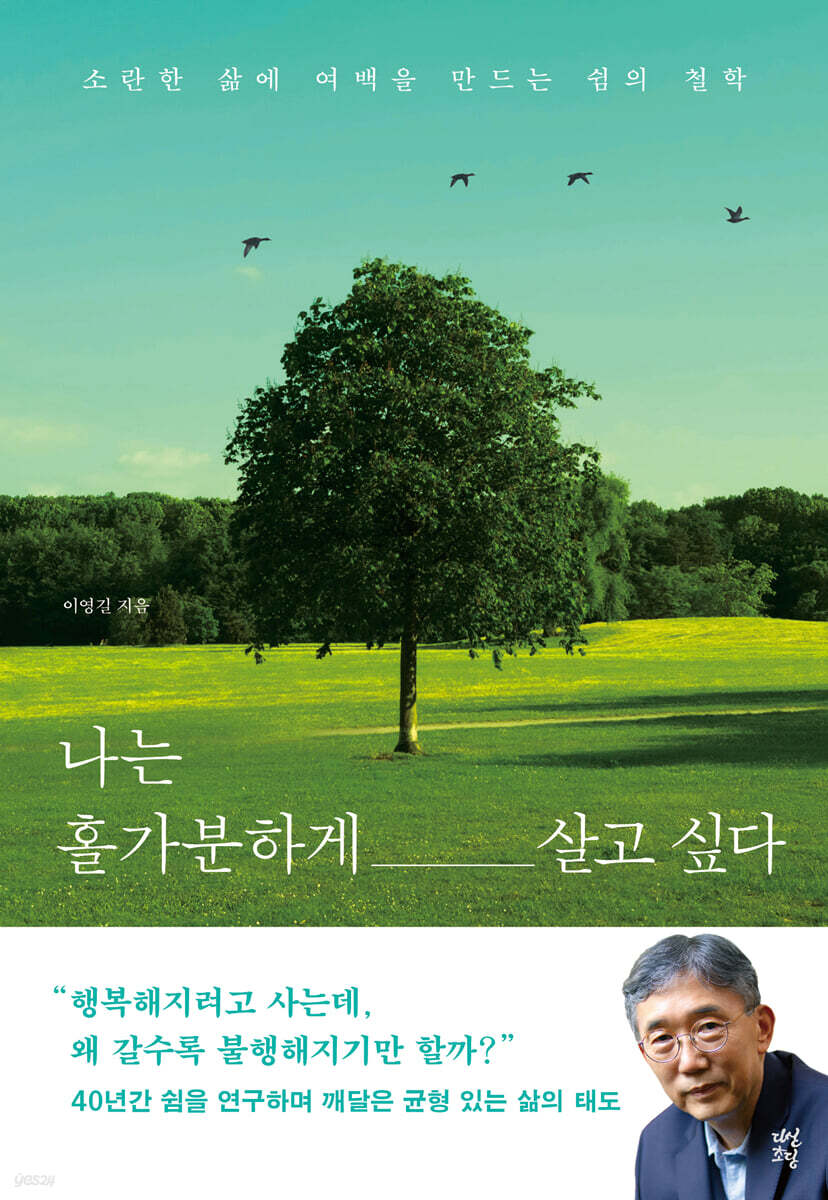
I want to live comfortably
 |
Description
Book Introduction
- A word from MD
-
It's time to stop this fatigue societyA work by Professor Lee Young-gil, who has studied rest for 40 years.
It analyzes the busy modern society and emphasizes the need for rest.
Modern people are losing control of their lives as they are consumed by work and smartphones.
Rest is also considered a means to work.
If you don't rest, you will collapse.
Let's open this book and start with self-diagnosis.
August 22, 2025. Humanities PD Son Min-gyu
“I live to be happy,
Why do I become more and more unhappy?
A balanced lifestyle, learned through 40 years of research on rest.
You have lived more fiercely than anyone else.
I tried to be a good child, a good student, a good colleague, and a good parent.
I ran like that every day until I was out of breath.
But then one day, this thought suddenly occurred to me.
“Ah, I want to live a carefree life.” I believed that if I worked hard, I would eventually be able to put down the burdens of life and enjoy life with peace of mind.
But the burden only gets heavier.
You think, 'If I just take care of this,' but then something else comes up that needs to be done.
In the process, you become more and more worn out.
Why is it? I try so hard to be happy, but why does life only get harder?
Professor Lee Young-gil, a leisure scholar who has been studying leisure and rest since he came to the United States to study, fascinated by the unfamiliar field of study called 'leisure studies' about 40 years ago, says that the reason we become tired and exhausted is 'rest deficiency syndrome.'
Rest deprivation syndrome is a dysfunctional state caused by a lack of rest in daily life, which causes not only physical fatigue but also mental problems such as burnout and depression.
Professor Lee Young-gil diagnoses that the social atmosphere, represented by the 'hurry hurry culture', is causing rest deprivation syndrome, and that this is causing individual lives to be exhausted.
This book examines the aspects of society that have driven rest from our lives, and introduces rest that allows us to live carefree lives without being swayed by the competitive atmosphere of society.
Rest is not something like a summer vacation of 3 to 5 days a year.
To be precise, it is a change of heart.
It is a process of asking, “Why do I keep running so tirelessly?” in an attempt to live up to the world’s standards, and finding a new direction for my life.
If you accept the six types of rest introduced in this book, from the ‘rest of stopping’ where you stop thinking that you have to run without stopping and look back at yourself, to the ‘rest of not working’ where you realize that even you, who are not working, are valuable beings, to the ‘rest of readjusting desires’ where you correct the disordered desires within you, to the ‘rest of joy’ where you find joys big and small in your surroundings, to the ‘restful rest’ where you live at your own pace against the speed of the world, to the ‘rest of love’ where you connect deeply with those you care about, your life will become much more carefree.
If you want to rediscover the meaning and purpose of life that you've lost while simply trying to survive, and look to the future with a clearer perspective, I encourage you to open this book.
Why do I become more and more unhappy?
A balanced lifestyle, learned through 40 years of research on rest.
You have lived more fiercely than anyone else.
I tried to be a good child, a good student, a good colleague, and a good parent.
I ran like that every day until I was out of breath.
But then one day, this thought suddenly occurred to me.
“Ah, I want to live a carefree life.” I believed that if I worked hard, I would eventually be able to put down the burdens of life and enjoy life with peace of mind.
But the burden only gets heavier.
You think, 'If I just take care of this,' but then something else comes up that needs to be done.
In the process, you become more and more worn out.
Why is it? I try so hard to be happy, but why does life only get harder?
Professor Lee Young-gil, a leisure scholar who has been studying leisure and rest since he came to the United States to study, fascinated by the unfamiliar field of study called 'leisure studies' about 40 years ago, says that the reason we become tired and exhausted is 'rest deficiency syndrome.'
Rest deprivation syndrome is a dysfunctional state caused by a lack of rest in daily life, which causes not only physical fatigue but also mental problems such as burnout and depression.
Professor Lee Young-gil diagnoses that the social atmosphere, represented by the 'hurry hurry culture', is causing rest deprivation syndrome, and that this is causing individual lives to be exhausted.
This book examines the aspects of society that have driven rest from our lives, and introduces rest that allows us to live carefree lives without being swayed by the competitive atmosphere of society.
Rest is not something like a summer vacation of 3 to 5 days a year.
To be precise, it is a change of heart.
It is a process of asking, “Why do I keep running so tirelessly?” in an attempt to live up to the world’s standards, and finding a new direction for my life.
If you accept the six types of rest introduced in this book, from the ‘rest of stopping’ where you stop thinking that you have to run without stopping and look back at yourself, to the ‘rest of not working’ where you realize that even you, who are not working, are valuable beings, to the ‘rest of readjusting desires’ where you correct the disordered desires within you, to the ‘rest of joy’ where you find joys big and small in your surroundings, to the ‘restful rest’ where you live at your own pace against the speed of the world, to the ‘rest of love’ where you connect deeply with those you care about, your life will become much more carefree.
If you want to rediscover the meaning and purpose of life that you've lost while simply trying to survive, and look to the future with a clearer perspective, I encourage you to open this book.
- You can preview some of the book's contents.
Preview
index
Prologue If I could be free from the life that urges me
Chapter 1.
Signs of a Rest-Deprived Life
What is Rest Deficiency Syndrome?
What Happens When We Lack Rest in Our Lives
Rest Deficiency Symptoms 1.
stress
Rest Deficiency Symptom 2.
Burnout
Rest Deficiency Symptoms 3.
Boreout
Rest Deficiency Symptoms 4.
awe
Rest Deficiency Symptoms 5.
loneliness
How Performance-Based Society Steals Rest
A Portrait of the Superficial Network on Instagram
The era of the nuclear individual has arrived.
Isolated individuals
*Rest Deficiency Syndrome Self-Diagnosis Checklist
Chapter 2.
About Life-Changing Rest
Even rest needs innovation
A change of heart that cannot be created through technology
Resist the false narratives created by society.
Innovative Rest, Rebellious Rest
Chapter 3.
You have to know how to stop before you can move forward - The Pause of Pause
Rest begins with stopping.
The illusion that you can get everything done
Cut off the insatiable desires
How to Reclaim Your Media-Stolen Eyes
Practice not caring about what others think
It's okay if it's not perfect
Turn off your everyday power and stop overloading
If you feel guilty every time you rest
Accept boredom in life
The Science of Boredom: The Default Mode Network
It's okay to stop and do nothing
Chapter 4.
Work isn't everything in life - a break from work
Work, what defines our identity
A society that sacrifices today for tomorrow's work
Rebelling against work-centered values
How to increase the value of rest
You who don't work are you too
Rest is a goal, not a tool.
When we need to find the ethics of rest
Chapter 5.
Is That Desire Really Yours? - A Rest to Recalibrate Desire
What is desire
Disordered desire vs.
Orderly desires
A sinkhole in the mind created by disordered desires
Rest is the rearrangement of disordered desires.
The power to set life priorities straight: moderation
What makes your heart beat?
Dream big enough to be scary
Chapter 6.
When did you lose your smile? - A pause for joy
We were born with joy
Moments of Joy: What Happens in Your Body
100 people, 100 joys
About the 'small joys' that brighten everyday life.
About the 'special joy' that lasts a long time
About the 'deep joy' that affirms my life
Joy blossoms even in the midst of hardship and suffering.
Practice being happy more often
Joy Deficiency Syndrome Self-Assessment Checklist
Chapter 7.
Don't surrender to the pace of the world - take your time
No one runs a marathon at full speed.
Deficiency mindset and laid-back mindset
Another word for laziness, bad laziness
A good leisure time allows you to focus on the present.
The more relaxed I am, the more I become myself.
Productivity, interpreted a little differently
For you who dream of a luxurious life
The speed of love, the speed of leisure
Speeding should be eliminated brutally.
Relaxation Self-Assessment Checklist
Chapter 8.
Life is filled with people - A rest from love
We are not connected
An attempt to regain warmth and affection
Homo symbius, the value of symbiosis
Relationships are a prerequisite for a happy life.
Another name for rest, love
Community becomes a source of rest
Your family always wants you for who you are
The meaning of sharing and giving with neighbors
The deeper the rest, the deeper the love.
Rest is loving yourself
Beyond Isolation to Connection
Epilogue: For a carefree life unswayed by the world's standards
Appendix: Questions That Make Me Reflect on My Life
main
Chapter 1.
Signs of a Rest-Deprived Life
What is Rest Deficiency Syndrome?
What Happens When We Lack Rest in Our Lives
Rest Deficiency Symptoms 1.
stress
Rest Deficiency Symptom 2.
Burnout
Rest Deficiency Symptoms 3.
Boreout
Rest Deficiency Symptoms 4.
awe
Rest Deficiency Symptoms 5.
loneliness
How Performance-Based Society Steals Rest
A Portrait of the Superficial Network on Instagram
The era of the nuclear individual has arrived.
Isolated individuals
*Rest Deficiency Syndrome Self-Diagnosis Checklist
Chapter 2.
About Life-Changing Rest
Even rest needs innovation
A change of heart that cannot be created through technology
Resist the false narratives created by society.
Innovative Rest, Rebellious Rest
Chapter 3.
You have to know how to stop before you can move forward - The Pause of Pause
Rest begins with stopping.
The illusion that you can get everything done
Cut off the insatiable desires
How to Reclaim Your Media-Stolen Eyes
Practice not caring about what others think
It's okay if it's not perfect
Turn off your everyday power and stop overloading
If you feel guilty every time you rest
Accept boredom in life
The Science of Boredom: The Default Mode Network
It's okay to stop and do nothing
Chapter 4.
Work isn't everything in life - a break from work
Work, what defines our identity
A society that sacrifices today for tomorrow's work
Rebelling against work-centered values
How to increase the value of rest
You who don't work are you too
Rest is a goal, not a tool.
When we need to find the ethics of rest
Chapter 5.
Is That Desire Really Yours? - A Rest to Recalibrate Desire
What is desire
Disordered desire vs.
Orderly desires
A sinkhole in the mind created by disordered desires
Rest is the rearrangement of disordered desires.
The power to set life priorities straight: moderation
What makes your heart beat?
Dream big enough to be scary
Chapter 6.
When did you lose your smile? - A pause for joy
We were born with joy
Moments of Joy: What Happens in Your Body
100 people, 100 joys
About the 'small joys' that brighten everyday life.
About the 'special joy' that lasts a long time
About the 'deep joy' that affirms my life
Joy blossoms even in the midst of hardship and suffering.
Practice being happy more often
Joy Deficiency Syndrome Self-Assessment Checklist
Chapter 7.
Don't surrender to the pace of the world - take your time
No one runs a marathon at full speed.
Deficiency mindset and laid-back mindset
Another word for laziness, bad laziness
A good leisure time allows you to focus on the present.
The more relaxed I am, the more I become myself.
Productivity, interpreted a little differently
For you who dream of a luxurious life
The speed of love, the speed of leisure
Speeding should be eliminated brutally.
Relaxation Self-Assessment Checklist
Chapter 8.
Life is filled with people - A rest from love
We are not connected
An attempt to regain warmth and affection
Homo symbius, the value of symbiosis
Relationships are a prerequisite for a happy life.
Another name for rest, love
Community becomes a source of rest
Your family always wants you for who you are
The meaning of sharing and giving with neighbors
The deeper the rest, the deeper the love.
Rest is loving yourself
Beyond Isolation to Connection
Epilogue: For a carefree life unswayed by the world's standards
Appendix: Questions That Make Me Reflect on My Life
main
Detailed image
.jpg)
Into the book
Rest Deficiency Syndrome occurs not simply when there is not enough time, but when rest time is perceived as a waste.
Even if you want to rest without realizing it, you feel like you don't have time.
I know I'm tired and need to exercise, but I feel like I don't have time.
I think I want to meet my close friends, but I don't have time to do so.
I read books on time management and try to reset my priorities to use my time more efficiently, but I still don't have time to rest.
--- 「Chapter 1.
From “Signals from a Life Lacking Rest”
Pausing helps you break free from over-commitment and schedules and focus on what really matters.
By stopping, you can reconnect with your inner self and restore balance to your life.
Pausing is an essential tool for resisting the pace and pressures of modern society and maintaining mental and physical health.
--- 「Chapter 3.
You have to know how to stop to move forward - from "The Pause of Stopping"
Our identity is closely tied to work and productivity, but it's not everything.
Work is just one indicator of who I am.
There's more to it than just work.
There is another me other than the working me.
I need to be able to express my identity not just through work, but through other things that I enjoy.
This is possible when rest is also a 'gap' in our lives.
--- Chapter 4.
Work is not everything in life - from "Rest without Work"
Sinkhole syndrome refers to a phenomenon in which a person's life, which has been gradually eroded by their inability to control their disordered desires, collapses all at once one day.
It is a state of experiencing the breakdown of health, relationships, and self.
What we call desire is not a negative trait, but when it is unbalanced and persists unreasonably, it can have destructive consequences.
Disordered desires corrode life, and the resulting sinkhole continues to grow because of uncontrolled desires.
--- 「Chapter 5.
Is that desire really yours? - From "A Rest to Recalibrate Desire"
The concept of the joy gap shows us how to recognize moments of joy in our daily lives.
How often do your joys come to you? Have you ever taken a closer look? If the gap is too wide, you need to work on narrowing it to increase your emotional resilience.
Our job is to intentionally attract various joys into our lives.
We must continue to fill the canvas of life with bright colors of joy.
--- Chapter 6.
When did you lose your smile? - From "The Rest of Joy"
Leisure is an act of saving time.
It helps you find leisure even in your busy daily life and makes your breathing deep and calm.
This altered breathing allows us to fully embrace the present moment, strengthen our connection with ourselves, and connect authentically with others.
That is, it makes you 'fully experience' this moment.
Therefore, leisurely rest is excellent self-care.
--- Chapter 7.
Don't surrender to the pace of the world - from "A Relaxing Rest"
I can't take care of others without taking care of myself.
A person who has fully accepted rest has a good relationship with himself and is ready to share and extend this love to others.
The common misconception that self-love is narcissism and selfishness is misleading.
Because self-love soon leads to altruistic acts.
Rest breaks the vicious cycle of inconsideration created by fatigue and opens up the possibility of true love.
Even if you want to rest without realizing it, you feel like you don't have time.
I know I'm tired and need to exercise, but I feel like I don't have time.
I think I want to meet my close friends, but I don't have time to do so.
I read books on time management and try to reset my priorities to use my time more efficiently, but I still don't have time to rest.
--- 「Chapter 1.
From “Signals from a Life Lacking Rest”
Pausing helps you break free from over-commitment and schedules and focus on what really matters.
By stopping, you can reconnect with your inner self and restore balance to your life.
Pausing is an essential tool for resisting the pace and pressures of modern society and maintaining mental and physical health.
--- 「Chapter 3.
You have to know how to stop to move forward - from "The Pause of Stopping"
Our identity is closely tied to work and productivity, but it's not everything.
Work is just one indicator of who I am.
There's more to it than just work.
There is another me other than the working me.
I need to be able to express my identity not just through work, but through other things that I enjoy.
This is possible when rest is also a 'gap' in our lives.
--- Chapter 4.
Work is not everything in life - from "Rest without Work"
Sinkhole syndrome refers to a phenomenon in which a person's life, which has been gradually eroded by their inability to control their disordered desires, collapses all at once one day.
It is a state of experiencing the breakdown of health, relationships, and self.
What we call desire is not a negative trait, but when it is unbalanced and persists unreasonably, it can have destructive consequences.
Disordered desires corrode life, and the resulting sinkhole continues to grow because of uncontrolled desires.
--- 「Chapter 5.
Is that desire really yours? - From "A Rest to Recalibrate Desire"
The concept of the joy gap shows us how to recognize moments of joy in our daily lives.
How often do your joys come to you? Have you ever taken a closer look? If the gap is too wide, you need to work on narrowing it to increase your emotional resilience.
Our job is to intentionally attract various joys into our lives.
We must continue to fill the canvas of life with bright colors of joy.
--- Chapter 6.
When did you lose your smile? - From "The Rest of Joy"
Leisure is an act of saving time.
It helps you find leisure even in your busy daily life and makes your breathing deep and calm.
This altered breathing allows us to fully embrace the present moment, strengthen our connection with ourselves, and connect authentically with others.
That is, it makes you 'fully experience' this moment.
Therefore, leisurely rest is excellent self-care.
--- Chapter 7.
Don't surrender to the pace of the world - from "A Relaxing Rest"
I can't take care of others without taking care of myself.
A person who has fully accepted rest has a good relationship with himself and is ready to share and extend this love to others.
The common misconception that self-love is narcissism and selfishness is misleading.
Because self-love soon leads to altruistic acts.
Rest breaks the vicious cycle of inconsideration created by fatigue and opens up the possibility of true love.
--- Chapter 8.
Life is filled with people - from "The Rest of Love"
Life is filled with people - from "The Rest of Love"
Publisher's Review
“I know I need to rest, but I don’t have time to rest, and when I do, I feel even more anxious.”
A Portrait of Modern People Painted by 'Rest Deprivation Syndrome'
I'm taking a vacation for the first time in a long time and going on a trip, but I feel uneasy for no reason.
'Performance evaluation season is coming up, so I'm worried I'll be at a disadvantage because of my vacation, right?' 'That client said they'll contact me, so I'm sure my successor will handle it well, right?' These thoughts are swirling around in my head.
In the end, you end up spending the entire trip holding your phone.
When I return home like that, I feel as tired as if I had worked.
Why? Why doesn't our rest function properly? Professor Lee Young-gil explains that this is also one of the symptoms of "rest deficiency syndrome."
Rest Deprivation Syndrome is a new concept created by Professor Lee Young-gil, and refers to various physical and mental symptoms that occur when rest is pushed to the margins of life.
These symptoms include fatigue, depression, anxiety, and burnout.
Rest Deprivation Syndrome isn't just about not having enough time to rest.
It comes when you feel like your break is a waste of time.
Without realizing this, even if you want to rest, you think you don't have time, and even if you do manage to make time to rest, you feel guilty.
There are various factors that cause rest deprivation syndrome, but the biggest cause is the structure of our society.
This is a world where people envy busy lives and consider those who rest to be lazy or lack the desire to develop.
In Korea, where rapid economic growth has led to a "hurry hurry" culture and strict life standards such as getting married on time and buying a house, the rest deficiency syndrome is observed more prominently.
We often see people around us working overtime every day, going to work at the crack of dawn, struggling with fatigue, but gritting their teeth and working hard because they feel like they will fall behind the moment they rest.
We keep pushing rest out of life as we strive to have more, faster.
You run and run like that, and only then are you forced to stop when your health starts to deteriorate.
This book portrays the modern person's addiction to busyness, sharply analyzing the social structural pressures behind it, and the psychological reactions of individuals to it.
If rest leads to anxiety, it's time to examine what role rest plays in your life.
This book will help you identify the causes of the restlessness syndrome you are experiencing and revise your life plans for the future.
To this end, we have included a number of 'self-diagnosis checklists' that can be used to check psychological conditions such as rest deprivation syndrome.
Of course work is important.
However, rest should also be respected on an equal footing with work.
Through this book, I hope you will realize that even you, who are not working and who are resting with peace of mind, are precious.
“I want to live comfortably!”
6 Relaxation Prescriptions for a Life Overloaded with Tension and Anxiety
This book consists of a total of 8 chapters.
Chapters 1 and 2 diagnose the rest deficiency syndrome prevalent in our society and explore what kind of rest is truly life-changing.
Beginning in Chapter 3, we will explore six types of rest that will help you regain your lost purpose in life and enrich your daily life.
Chapter 3, “You must know how to stop to move forward,” talks about the “rest of stopping.”
We examine the things that keep us endlessly busy—the overwhelming workload, unfulfilled desires, the overflow of media information, the gaze of others—and examine how to part ways with them.
Chapter 4, “Work is not everything in life,” deals with “rest without work.”
We live in a society where individual identity is defined by work.
Even when introducing myself, I mention my title, and I have experienced a drop in self-esteem when I don't have a proper job.
But 'I' am not a being that can be explained only by work.
In this chapter, I will learn how to correct my identity that is absorbed in work.
In Chapter 5, “Is That Desire Really Yours?” we explore “the pause that readjusts desire.”
There are disordered desires within us.
Excessive possessiveness, attachment to others, unrestrained pursuit of power, obsession with fame and promotion, and a competitive spirit that forces sacrifice on others.
If you fill your life with unfulfilled desires like this, one day your heart may collapse like a sinkhole.
This chapter will teach you how to prevent this.
Chapter 6, “When Did You Lose Your Smile?” introduces “The Rest of Joy.”
Social success, money, and fame are not the only things that bring joy.
Life becomes more colorful when we find joy in the small, everyday moments and increase the frequency of these moments.
This chapter talks about how to find and enjoy the joys you may have overlooked.
Chapter 7, “Don’t Surrender to the Speed of the World,” shows what “relaxed rest” is.
Relaxation is the practice of finding our own pace against the world's whipping pace.
So that I can live my life the way I want to.
The last 8 chapters, 'Life is filled with people', deal with 'the rest of love'.
It talks about the happiness that can be found in the process of connecting and forming solidarity with the precious people around you.
These six pauses are an antidote to a life filled with tension and anxiety.
Through rest, you become more yourself and can live in balance without being swayed by the world's standards.
That is the 'carefree life'.
Ultimately, the confession that “I want to live carefreely” does not mean that I want to live lightly.
It is a declaration that “I will live my life the way I want” and an expression of my will to “live as myself.”
“You have lived fiercely, you have done well.
“You can put it down now.”
A self-care class for those who try to do everything well but end up being hard on themselves.
What makes our lives so heavy? Could it be a sense of responsibility? If you think about it, we've always lived with a specific purpose in mind.
I had to be a good child who studied hard and got into a high-achieving school.
After graduating, I had to get a good job and earn a stable income.
I heard that you are good at your job.
After marriage, you had to become a loving and supportive spouse.
And I had to become a parent who gave everything to my child without any lack.
All these purposes naturally come with responsibilities, duties, and sacrifices.
This book is not simply about telling you to rest.
This book gives you time to ask yourself and answer whether you, who have always tried to be a good person to others, have been a good person to yourself.
This book gives you an opportunity to reflect on whether the life you lived, even through the hardships of collapse and wear and tear, was truly for you.
To you who don't know how to rest, are afraid of resting, and think you don't deserve to rest, "It's okay.
It is also a book that says, “It’s okay to rest.”
There is no clear answer to the question, 'How can I rest well?'
Because each person has their own rest period.
I just want to tell you this.
“You can let it go!” You’ve done well enough.
I think it will continue to do well in the future.
So, it's okay to stop when you feel overwhelmed.
There is no life that moves forward without ever stopping.
If you are still hesitant to embark on a journey to find rest, open this book.
This book will give you a push at the starting line and provide direction whenever you lose your way.
A Portrait of Modern People Painted by 'Rest Deprivation Syndrome'
I'm taking a vacation for the first time in a long time and going on a trip, but I feel uneasy for no reason.
'Performance evaluation season is coming up, so I'm worried I'll be at a disadvantage because of my vacation, right?' 'That client said they'll contact me, so I'm sure my successor will handle it well, right?' These thoughts are swirling around in my head.
In the end, you end up spending the entire trip holding your phone.
When I return home like that, I feel as tired as if I had worked.
Why? Why doesn't our rest function properly? Professor Lee Young-gil explains that this is also one of the symptoms of "rest deficiency syndrome."
Rest Deprivation Syndrome is a new concept created by Professor Lee Young-gil, and refers to various physical and mental symptoms that occur when rest is pushed to the margins of life.
These symptoms include fatigue, depression, anxiety, and burnout.
Rest Deprivation Syndrome isn't just about not having enough time to rest.
It comes when you feel like your break is a waste of time.
Without realizing this, even if you want to rest, you think you don't have time, and even if you do manage to make time to rest, you feel guilty.
There are various factors that cause rest deprivation syndrome, but the biggest cause is the structure of our society.
This is a world where people envy busy lives and consider those who rest to be lazy or lack the desire to develop.
In Korea, where rapid economic growth has led to a "hurry hurry" culture and strict life standards such as getting married on time and buying a house, the rest deficiency syndrome is observed more prominently.
We often see people around us working overtime every day, going to work at the crack of dawn, struggling with fatigue, but gritting their teeth and working hard because they feel like they will fall behind the moment they rest.
We keep pushing rest out of life as we strive to have more, faster.
You run and run like that, and only then are you forced to stop when your health starts to deteriorate.
This book portrays the modern person's addiction to busyness, sharply analyzing the social structural pressures behind it, and the psychological reactions of individuals to it.
If rest leads to anxiety, it's time to examine what role rest plays in your life.
This book will help you identify the causes of the restlessness syndrome you are experiencing and revise your life plans for the future.
To this end, we have included a number of 'self-diagnosis checklists' that can be used to check psychological conditions such as rest deprivation syndrome.
Of course work is important.
However, rest should also be respected on an equal footing with work.
Through this book, I hope you will realize that even you, who are not working and who are resting with peace of mind, are precious.
“I want to live comfortably!”
6 Relaxation Prescriptions for a Life Overloaded with Tension and Anxiety
This book consists of a total of 8 chapters.
Chapters 1 and 2 diagnose the rest deficiency syndrome prevalent in our society and explore what kind of rest is truly life-changing.
Beginning in Chapter 3, we will explore six types of rest that will help you regain your lost purpose in life and enrich your daily life.
Chapter 3, “You must know how to stop to move forward,” talks about the “rest of stopping.”
We examine the things that keep us endlessly busy—the overwhelming workload, unfulfilled desires, the overflow of media information, the gaze of others—and examine how to part ways with them.
Chapter 4, “Work is not everything in life,” deals with “rest without work.”
We live in a society where individual identity is defined by work.
Even when introducing myself, I mention my title, and I have experienced a drop in self-esteem when I don't have a proper job.
But 'I' am not a being that can be explained only by work.
In this chapter, I will learn how to correct my identity that is absorbed in work.
In Chapter 5, “Is That Desire Really Yours?” we explore “the pause that readjusts desire.”
There are disordered desires within us.
Excessive possessiveness, attachment to others, unrestrained pursuit of power, obsession with fame and promotion, and a competitive spirit that forces sacrifice on others.
If you fill your life with unfulfilled desires like this, one day your heart may collapse like a sinkhole.
This chapter will teach you how to prevent this.
Chapter 6, “When Did You Lose Your Smile?” introduces “The Rest of Joy.”
Social success, money, and fame are not the only things that bring joy.
Life becomes more colorful when we find joy in the small, everyday moments and increase the frequency of these moments.
This chapter talks about how to find and enjoy the joys you may have overlooked.
Chapter 7, “Don’t Surrender to the Speed of the World,” shows what “relaxed rest” is.
Relaxation is the practice of finding our own pace against the world's whipping pace.
So that I can live my life the way I want to.
The last 8 chapters, 'Life is filled with people', deal with 'the rest of love'.
It talks about the happiness that can be found in the process of connecting and forming solidarity with the precious people around you.
These six pauses are an antidote to a life filled with tension and anxiety.
Through rest, you become more yourself and can live in balance without being swayed by the world's standards.
That is the 'carefree life'.
Ultimately, the confession that “I want to live carefreely” does not mean that I want to live lightly.
It is a declaration that “I will live my life the way I want” and an expression of my will to “live as myself.”
“You have lived fiercely, you have done well.
“You can put it down now.”
A self-care class for those who try to do everything well but end up being hard on themselves.
What makes our lives so heavy? Could it be a sense of responsibility? If you think about it, we've always lived with a specific purpose in mind.
I had to be a good child who studied hard and got into a high-achieving school.
After graduating, I had to get a good job and earn a stable income.
I heard that you are good at your job.
After marriage, you had to become a loving and supportive spouse.
And I had to become a parent who gave everything to my child without any lack.
All these purposes naturally come with responsibilities, duties, and sacrifices.
This book is not simply about telling you to rest.
This book gives you time to ask yourself and answer whether you, who have always tried to be a good person to others, have been a good person to yourself.
This book gives you an opportunity to reflect on whether the life you lived, even through the hardships of collapse and wear and tear, was truly for you.
To you who don't know how to rest, are afraid of resting, and think you don't deserve to rest, "It's okay.
It is also a book that says, “It’s okay to rest.”
There is no clear answer to the question, 'How can I rest well?'
Because each person has their own rest period.
I just want to tell you this.
“You can let it go!” You’ve done well enough.
I think it will continue to do well in the future.
So, it's okay to stop when you feel overwhelmed.
There is no life that moves forward without ever stopping.
If you are still hesitant to embark on a journey to find rest, open this book.
This book will give you a push at the starting line and provide direction whenever you lose your way.
GOODS SPECIFICS
- Date of issue: July 23, 2025
- Page count, weight, size: 272 pages | 380g | 145*210*20mm
- ISBN13: 9791130668772
- ISBN10: 1130668770
You may also like
카테고리
korean


korean

![ELLE 엘르 스페셜 에디션 A형 : 12월 [2025]](http://librairie.coreenne.fr/cdn/shop/files/b8e27a3de6c9538896439686c6b0e8fb.jpg?v=1766436872&width=3840)


