

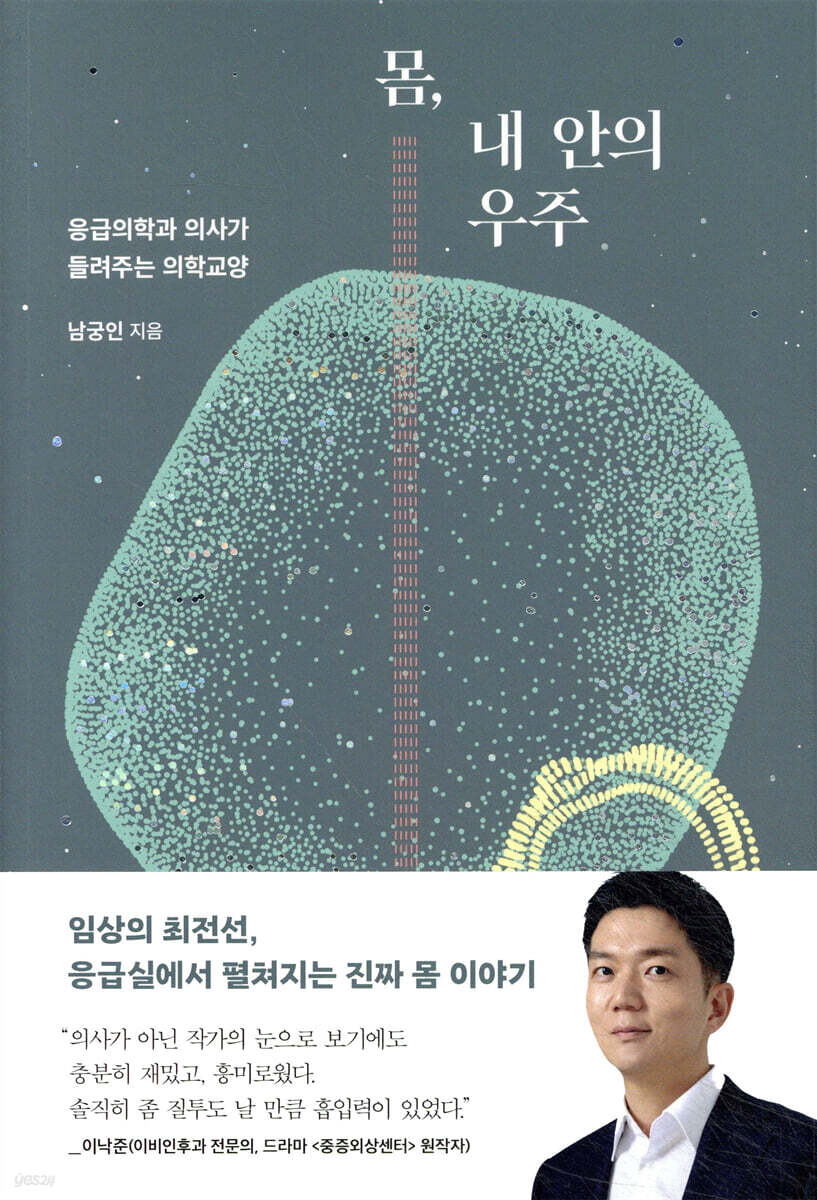
Body, the universe within me
 |
Description
Book Introduction
Namgung In, an emergency medicine specialist and writer who has resonated deeply with readers with his vivid medical stories and human insight, has returned with a new work after five years.
Having met with readers through an average of over 100 lectures a year at broadcasting stations, schools, libraries, and public institutions, and having treated countless patients and received countless questions, he has felt a deep sense of regret and regret that readers still find doctors scary and medicine difficult.
Accordingly, the author decided to guide readers into the practical and intuitive world of medicine, and "Body, the Universe Within Me" is the product of that determination and effort.
The author begins to tell a full-fledged story about our organs while following the diagnosis and treatment process of patients who come to the emergency room.
The author closely examines every nook and cranny of our body, from the digestive system, which houses various organs in the center of the abdomen, to the heart, which is the driving force of circulation, to the central nervous system, which controls higher-level human thinking abilities, by unraveling the structure, function, operating principles, and related diseases.
In today's world, where interest in the body and health is growing more than ever, this book, which explains in detail and in an easy-to-understand manner how medical knowledge is applied in real life, will establish itself as a single, readable medical textbook for readers.
Having met with readers through an average of over 100 lectures a year at broadcasting stations, schools, libraries, and public institutions, and having treated countless patients and received countless questions, he has felt a deep sense of regret and regret that readers still find doctors scary and medicine difficult.
Accordingly, the author decided to guide readers into the practical and intuitive world of medicine, and "Body, the Universe Within Me" is the product of that determination and effort.
The author begins to tell a full-fledged story about our organs while following the diagnosis and treatment process of patients who come to the emergency room.
The author closely examines every nook and cranny of our body, from the digestive system, which houses various organs in the center of the abdomen, to the heart, which is the driving force of circulation, to the central nervous system, which controls higher-level human thinking abilities, by unraveling the structure, function, operating principles, and related diseases.
In today's world, where interest in the body and health is growing more than ever, this book, which explains in detail and in an easy-to-understand manner how medical knowledge is applied in real life, will establish itself as a single, readable medical textbook for readers.
- You can preview some of the book's contents.
Preview
index
ㆍOpening the book
1.
Our Body's Pipeline_Digestion
2.
A semi-permanent motor made of living tissue_the heart
3.
Oxygen exchange_breathing in a wide open ventilation duct
4.
Ambassador's garbage funnel device_Kidney
5.
Hormones and neurotransmitters, the work that regulates 37 trillion cells_Endocrine
6.
Freedom from Disease_Immunity
7.
The human body's protective barrier, the skin, which maintains its function until the very end
8.
The basis for the shape and movement of our body_musculoskeletal
9.
The Secret to Sustaining the Human Species: Reproduction
10.
The central nervous system, the function of humanity, is directed by a massive bundle of nerve tissue.
11.
Senses that travel through the nerves to the brain_Senses
12.
What is 'irreversible' death?_Life and Death
References
1.
Our Body's Pipeline_Digestion
2.
A semi-permanent motor made of living tissue_the heart
3.
Oxygen exchange_breathing in a wide open ventilation duct
4.
Ambassador's garbage funnel device_Kidney
5.
Hormones and neurotransmitters, the work that regulates 37 trillion cells_Endocrine
6.
Freedom from Disease_Immunity
7.
The human body's protective barrier, the skin, which maintains its function until the very end
8.
The basis for the shape and movement of our body_musculoskeletal
9.
The Secret to Sustaining the Human Species: Reproduction
10.
The central nervous system, the function of humanity, is directed by a massive bundle of nerve tissue.
11.
Senses that travel through the nerves to the brain_Senses
12.
What is 'irreversible' death?_Life and Death
References
Detailed image
.jpg)
Into the book
Saliva is secreted from six salivary glands distributed near the jaw.
When saliva first comes out, it is a clear liquid that is 99.5% water.
However, when it comes into contact with mucus and mixes with the air in the mouth, it easily forms bubbles.
If you continue to speak without swallowing, more saliva and air will mix, causing more foam.
When you feel very wronged or angry, you may start to 'foam' like this.
Even when you are startled, you cannot swallow your saliva, so foam forms.
When a patient plays, their guardians describe it as "foaming and falling."
Since we salivate even when we eat nothing, we must swallow our saliva periodically to avoid foaming at the mouth.
--- p.26 From “Our Body’s Pipeline: Digestion”
I was so focused that I forgot about the state of my stomach.
Suddenly, it seemed like things had gotten better.
Now that the patient is alive, I wanted to get off work today and eat something delicious.
It reminded me of chicken with protein, carbohydrates, and fried in fat.
Ah, why do I always want to eat chicken?
I wanted to put it in my mouth all day long, even if it meant shouting “Please take care of me” to my overworked stomach and colon.
When you put heavily seasoned chicken in your mouth, your digestive system will physically break it down, chemically break it down, and then work with bacteria to absorb the nutrients.
Although we often lose weight, the digestive system gives us energy to breathe, exercise, talk, and make love.
In the end, people have to eat to live.
It's all about eating and living.
--- p.55 From “Our Body’s Pipeline: Digestion”
The heart is the first organ to function in the human body.
That is, everything starts from a cycle.
A beating heart can be detected in a fetus as early as three weeks after conception.
The first true sign of life is the circulation of blood.
All living organisms higher than the single-celled amoeba begin their lives by developing a heart.
Even a thrips measuring only 0.2 mm in length has a tiny heart when viewed under a microscope.
--- p.63 From “A Semi-Permanent Motor Made of Living Tissue: The Heart”
Before the isolation of insulin, congenital diabetes was synonymous with death until the 1900s.
If insulin is not produced, sugar cannot be used as energy, so high blood sugar levels are maintained.
Then, fat must be broken down to create energy and supply it to the muscles, and ketones are created as a metabolite.
Ketones are acidic substances that disrupt the acid-base balance of the blood.
Without insulin, there is no way to block this mechanism.
This is called type 1 diabetes, and it begins to develop in earnest in the teenage years.
Before the discovery of insulin, patients were put into fasting centers and their carbohydrates and calories were restricted to prevent their blood sugar levels from rising.
If the patient ate secretly, he died of metabolic acidosis, and if he did not eat, he died of malnutrition.
--- p.176 From “Hormone and Neurotransmitters, Controlling 37 Trillion Cells: Endocrine”
Muscles and bones themselves demonstrate the strength of the human body.
When the body is damaged, blood vessels burst and blood flows out, but cells in the blood rush in and do their best to stop the bleeding.
Even if blood vessels are blocked or damaged, they can bypass them and grow back again.
Even if the skin is torn and exposed, skin grows over it.
Muscles are parts that can be torn and rebuilt, so they don't even need suturing in most cases.
When a bone breaks, it creates bone tissue between the two sides, gradually connecting them like a bridge.
Even if the bone reattaches, it does not become scarred and instead becomes stronger.
Tendons and ligaments, when torn, try to return to their original state, as if reaching out to each other.
(...) Damage to bones and muscles can be said to be recovered by human healing power rather than being treated by doctors.
The human body's ability to recover is amazing.
--- p.264~265 From “The basis for creating the shape and movement of our body: musculoskeletal”
All senses are ultimately the result of interpreting electrical signals.
Although it is an inhumane act that should never be performed, if you conduct an experiment that sends electrical impulses to the eyes, ears, and nose, you will see, hear, or smell something.
It's not for nothing that science fiction movies feature the brain placed in a dark place and electrical stimulation to create all senses and reality.
In this way, sensations are converted into electrical signals and must go through an interpretation process before they can be perceived.
The world we perceive has all gone through this process.
--- p.396~397 From “The Function of Humanity Directed by a Huge Cluster of Nervous Tissue: The Central Nervous System”
The patient stabbed the left side of the heart with his right hand.
Squeezing the heart manually maintains the patient's blood circulation.
If possible, hold the left side of the heart to minimize bleeding due to the laceration.
Although cardiac arrest may have occurred due to damage to the left ventricle, the left ventricle must be squeezed to secure circulation anyway.
I squeezed my heart with my fist.
I grasped the area around the left ventricle of the heart in my hand and massaged it by rolling my hand as if I were squeezing an egg.
We need to get to the operating room as soon as possible.
You have to hold on until the thoracic surgeon sews up the hole in your heart.
All the medical staff in the operating room will be on high alert.
I felt like my hands were going numb.
But at this moment, I literally 'hold' the patient's life in my hands.
I can't move from here anymore.
I shout loudly.
“Now we are preparing to move you to the operating room.
Please control the number of people in the hallway.
“We have to hold the elevator too.” A phone call comes from the operating room.
“Come up as soon as you’re ready,” I shout again.
“Take off the ventilator and who will hold the embouchure?”
Once the hallway is cleared, let's go straight to the operating room.
“As soon as it is ready.” (...) The resuscitation room door opens and the bed begins to roll.
The white sheets on the bed I'm sitting on are stained red with the dripping blood.
Finally, a blue cloth covers my hand to prevent infection and exposure to people.
I still can't let go.
--- p.498~499 From “What is ‘irreversible’ death: Life and Death”
We all die someday.
Even if this statement is ultimately true, as medicine and engineering continue to advance, there will come a time when a different clue will be added to the equation than there is now.
Simultaneously, methods are being developed to make human cells immortal, prevent physical aging, permanently preserve organs and then revive them at will, and upload consciousness into the digital world.
One or all of these will come true in the near future.
All deaths are irreversible.
No one has ever come back from the dead.
As of now, that is the case.
But the day will come when this sentence must be revised.
It's a question of when.
When saliva first comes out, it is a clear liquid that is 99.5% water.
However, when it comes into contact with mucus and mixes with the air in the mouth, it easily forms bubbles.
If you continue to speak without swallowing, more saliva and air will mix, causing more foam.
When you feel very wronged or angry, you may start to 'foam' like this.
Even when you are startled, you cannot swallow your saliva, so foam forms.
When a patient plays, their guardians describe it as "foaming and falling."
Since we salivate even when we eat nothing, we must swallow our saliva periodically to avoid foaming at the mouth.
--- p.26 From “Our Body’s Pipeline: Digestion”
I was so focused that I forgot about the state of my stomach.
Suddenly, it seemed like things had gotten better.
Now that the patient is alive, I wanted to get off work today and eat something delicious.
It reminded me of chicken with protein, carbohydrates, and fried in fat.
Ah, why do I always want to eat chicken?
I wanted to put it in my mouth all day long, even if it meant shouting “Please take care of me” to my overworked stomach and colon.
When you put heavily seasoned chicken in your mouth, your digestive system will physically break it down, chemically break it down, and then work with bacteria to absorb the nutrients.
Although we often lose weight, the digestive system gives us energy to breathe, exercise, talk, and make love.
In the end, people have to eat to live.
It's all about eating and living.
--- p.55 From “Our Body’s Pipeline: Digestion”
The heart is the first organ to function in the human body.
That is, everything starts from a cycle.
A beating heart can be detected in a fetus as early as three weeks after conception.
The first true sign of life is the circulation of blood.
All living organisms higher than the single-celled amoeba begin their lives by developing a heart.
Even a thrips measuring only 0.2 mm in length has a tiny heart when viewed under a microscope.
--- p.63 From “A Semi-Permanent Motor Made of Living Tissue: The Heart”
Before the isolation of insulin, congenital diabetes was synonymous with death until the 1900s.
If insulin is not produced, sugar cannot be used as energy, so high blood sugar levels are maintained.
Then, fat must be broken down to create energy and supply it to the muscles, and ketones are created as a metabolite.
Ketones are acidic substances that disrupt the acid-base balance of the blood.
Without insulin, there is no way to block this mechanism.
This is called type 1 diabetes, and it begins to develop in earnest in the teenage years.
Before the discovery of insulin, patients were put into fasting centers and their carbohydrates and calories were restricted to prevent their blood sugar levels from rising.
If the patient ate secretly, he died of metabolic acidosis, and if he did not eat, he died of malnutrition.
--- p.176 From “Hormone and Neurotransmitters, Controlling 37 Trillion Cells: Endocrine”
Muscles and bones themselves demonstrate the strength of the human body.
When the body is damaged, blood vessels burst and blood flows out, but cells in the blood rush in and do their best to stop the bleeding.
Even if blood vessels are blocked or damaged, they can bypass them and grow back again.
Even if the skin is torn and exposed, skin grows over it.
Muscles are parts that can be torn and rebuilt, so they don't even need suturing in most cases.
When a bone breaks, it creates bone tissue between the two sides, gradually connecting them like a bridge.
Even if the bone reattaches, it does not become scarred and instead becomes stronger.
Tendons and ligaments, when torn, try to return to their original state, as if reaching out to each other.
(...) Damage to bones and muscles can be said to be recovered by human healing power rather than being treated by doctors.
The human body's ability to recover is amazing.
--- p.264~265 From “The basis for creating the shape and movement of our body: musculoskeletal”
All senses are ultimately the result of interpreting electrical signals.
Although it is an inhumane act that should never be performed, if you conduct an experiment that sends electrical impulses to the eyes, ears, and nose, you will see, hear, or smell something.
It's not for nothing that science fiction movies feature the brain placed in a dark place and electrical stimulation to create all senses and reality.
In this way, sensations are converted into electrical signals and must go through an interpretation process before they can be perceived.
The world we perceive has all gone through this process.
--- p.396~397 From “The Function of Humanity Directed by a Huge Cluster of Nervous Tissue: The Central Nervous System”
The patient stabbed the left side of the heart with his right hand.
Squeezing the heart manually maintains the patient's blood circulation.
If possible, hold the left side of the heart to minimize bleeding due to the laceration.
Although cardiac arrest may have occurred due to damage to the left ventricle, the left ventricle must be squeezed to secure circulation anyway.
I squeezed my heart with my fist.
I grasped the area around the left ventricle of the heart in my hand and massaged it by rolling my hand as if I were squeezing an egg.
We need to get to the operating room as soon as possible.
You have to hold on until the thoracic surgeon sews up the hole in your heart.
All the medical staff in the operating room will be on high alert.
I felt like my hands were going numb.
But at this moment, I literally 'hold' the patient's life in my hands.
I can't move from here anymore.
I shout loudly.
“Now we are preparing to move you to the operating room.
Please control the number of people in the hallway.
“We have to hold the elevator too.” A phone call comes from the operating room.
“Come up as soon as you’re ready,” I shout again.
“Take off the ventilator and who will hold the embouchure?”
Once the hallway is cleared, let's go straight to the operating room.
“As soon as it is ready.” (...) The resuscitation room door opens and the bed begins to roll.
The white sheets on the bed I'm sitting on are stained red with the dripping blood.
Finally, a blue cloth covers my hand to prevent infection and exposure to people.
I still can't let go.
--- p.498~499 From “What is ‘irreversible’ death: Life and Death”
We all die someday.
Even if this statement is ultimately true, as medicine and engineering continue to advance, there will come a time when a different clue will be added to the equation than there is now.
Simultaneously, methods are being developed to make human cells immortal, prevent physical aging, permanently preserve organs and then revive them at will, and upload consciousness into the digital world.
One or all of these will come true in the near future.
All deaths are irreversible.
No one has ever come back from the dead.
As of now, that is the case.
But the day will come when this sentence must be revised.
It's a question of when.
--- p.508 From “What is ‘irreversible’ death: Life and Death”
Publisher's Review
Namgung In, the emergency physician who has documented life and death scenes, presents a new work after five years.
★A lifelong medical textbook that will captivate both liberal arts students and science nerds★
Highly recommended by Lee Nak-jun (YouTube's "Doctor Friends," original author of the drama "Trauma Center")
Namgung In, the emergency physician who has been recording life and death scenes, presents a new work after five years.
Real stories unfolding on the front lines of clinical practice, the emergency room.
Basic knowledge about the body, from the digestive system to the central nervous system
“Medicine is more practical and intuitive than any other knowledge.”
Namgung In, an emergency medicine specialist and writer who has resonated deeply with readers with his vivid medical stories and human insight, has returned with a new work after five years.
Having met with readers through an average of over 100 lectures a year at broadcasting stations, schools, libraries, and public institutions, and having treated countless patients and received countless questions, he has felt a deep sense of regret and regret that readers still find doctors scary and medicine difficult.
Accordingly, the author decided to guide readers into the practical and intuitive world of medicine, and "Body, the Universe Within Me" is the product of that determination and effort.
The author begins to tell a full-fledged story about our organs while following the diagnosis and treatment process of patients who come to the emergency room.
The author closely examines every nook and cranny of our body, from the digestive system, which houses various organs in the center of the abdomen, to the heart, which is the driving force of circulation, to the central nervous system, which controls higher-level human thinking abilities, by unraveling the structure, function, operating principles, and related diseases.
This book covers not only the characteristics of each organ, but also the process through which the human body evolved as a living organism over a long period of time to acquire its current functions. It also provides a three-dimensional view of the human body from diachronic and synchronic perspectives by comparing the same organ with those of other species.
Above all, Namgung In's unique writing style, which captures the urgent medical situation with tangible descriptions, is also at its best in this book, instantly drawing readers into the heart of the medical field.
This is why Lee Nak-jun, the original author of the drama [Severe Trauma Center] and an ENT specialist, exclaimed, "The power of a story can be shown like this," and why Korean language teacher Song Seung-hoon confidently recommends it to students dreaming of a career in the healthcare field.
In today's world, where interest in the body and health is growing more than ever, this book, which explains in detail and in an easy-to-understand manner how medical knowledge is applied in real life, will establish itself as a single, readable medical textbook for readers.
“I always had a label in front of me that said expert or healer.
And my seat just so happened to be in the emergency room.
People pointed to different parts of their bodies and asked questions covering all areas of medicine.
There were many common questions like “Why am I sick? How can I get better?”, but questions like “I swallowed a fly. What should I do?” “Will I die if I sleep with the fan on?” “Can I control diabetes if I drink boiled Jerusalem artichoke and bellflower root water?” also had to be answered with medical evidence from a medical standpoint (questions sometimes provide greater insight to the person who has to answer than to the person asking them).
After being questioned for a long time on the spot, I was able to witness almost every possible case in which a person could become ill.
And naturally, a system for the body took shape in my head.
(...) I suddenly wanted to lead people who were sitting in the galaxy called Patient to the other side of the universe.
“I wanted to show that medicine is not that complicated, that doctors have a few simple reasons for their decisions, and that if you just learn the context, there is no world more interesting than this.” - From “Opening the Book”
This is such an amazing exploration of our bodies!
Through the structure and function of various organs, as well as the evolutionary process and comparison with other species,
Examine the characteristics of the human body
How much do you know about your own body? As the author cites as an example, you might know that "I like French toast, I can't sleep at night if I drink more than two cups of coffee, and it takes me about an hour to run a 10km."
But when you start pushing modern medicine, people usually give up after just a few questions.
For example, it is difficult to readily explain the process that is occurring in the body at this very moment, in which ATP (adenosine triphosphate) within cells releases energy and changes into ADP (adenosine diphosphate) to create energy, or the mechanism by which depolarization occurs in nerves and signals are transmitted.
Even if it's not quite textbook-level, can't we truly understand the daily bodily processes we experience? Why do we feel the need to poop after breakfast? Why do we feel dizzy when we gasp for breath? Why do salty foods taste so delicious? Why do we experience irregular periods when we're too thin? Can't we prevent and more wisely manage common ailments like high blood pressure, diabetes, kidney failure, urinary stones, cerebral hemorrhage, and alcohol dependence?
To find the answer, 『Body, the Universe Within Me』 is composed of 11 chapters that explore various organs and the various systems that affect them.
First, we will explain the major organs that are crucial for life and death, such as the digestive system, heart, lungs, and kidneys, and then we will cover the endocrine and immune systems that are invisible to the eye.
It also moves on to the brain and senses that make up the world we perceive, passing through the skin and musculoskeletal systems, which are of interest to modern people, and the fundamental human interest, sex (the last 12 chapters are about life and death).
First, let's look at 'digestion', which is essential for human survival.
The digestive tract is a flexible pipe about 6.5 meters long and is responsible for digesting food and absorbing nutrients. Inside the digestive tract, the body breaks down food and the outside of the body into small pieces, turns them into digestive juices, and processes them into digestive juices to absorb nutrients.
At this time, the small intestine maximizes its surface area with villi to efficiently absorb nutrients, and the total area of the small intestine is about 30m2, which is almost the size of a studio apartment.
So what about animals with short digestive tracts that can't fully absorb nutrients? Dogs, cats, and rats, for example, exhibit coprophagia, eating and re-digesting their own feces. This is due to their short esophagus.
Meanwhile, what process does a living organism undergo to excrete metabolic waste through the kidneys? While humans and common fish excrete ammonia, a byproduct of protein metabolism, through urine, cartilaginous fish like salmon and shark deliberately store urea in their bodies to regulate osmotic pressure (this is why we enjoy the tart flavor of salmon and shark).
In this way, 『Body, the Universe Within Me』 covers not only the structure, function, and operating principles of the human body, but also the evolutionary process of organs and comparisons with other species, allowing for a concrete understanding of the unique characteristics of the human species.
The aids include 40 cuts of the human body structure, 50 tip boxes containing terms requiring further explanation, and 10 prints of 18th- and 19th-century anatomy.
Furthermore, it covers not only the history of correcting misunderstandings about the body, but also the development of pharmaceuticals such as anti-inflammatories and vaccines, as well as advancements such as ventilators and surgical techniques that have dramatically extended human lifespan, providing an experience similar to taking a medical history class spanning from ancient times to the present.
As captivating as "Trauma Center" and as insightful as "Grey's Anatomy."
If you read it like a novel, you will quickly understand the body!
“The body is a perfect universe with amazing healing powers.”
Rather than simply listing dry medical knowledge, this book begins each chapter with a clinical story to help readers enjoy and understand.
As urgent moments based on actual clinical experiences such as cardiopulmonary resuscitation and surgery unfold, patients suffering from diseases related to the relevant organs continue to complain of pain, and as the diagnosis is gradually revealed, treatment continues.
As you follow the structure that feels like watching a medical drama, you will soon come to understand the human body, which is made up of 37 trillion cells.
What is noteworthy is the author Namgung In's perspective on the body.
While citing the various perspectives on the body that modern medicine has, he emphasizes the exquisite healing power of our bodies, saying, "The body is close to a perfect universe that has already been completed."
Humans have had a winding history of millions of years of evolution, with the brain learning to understand its own body and become a healer. Whether we are conscious of it or not, our bodies have already accomplished many things.
Most patients overlook the fact that they possess exquisite healing powers.
The body is close to a perfect universe that has already been completed.
As much as patients trust their doctors, doctors trust their patients' 'bodies' even more.
(...) Ultimately, doctors' prescriptions are based on their belief in the universe called 'body'.
_From "Opening the Book"
Interestingly, the last chapter of the book deals with the topic of 'death'.
Of course, there is no section on death in the medical curriculum, but the author reminds us of the stark fact that death exists on the other side of life, saying that 'death' is something that he had to fiercely witness and deal with in the field.
Just as the author's previous work evoked empathy by making us reflect on the inherent meaning and value of humanity through honest confessions, "Body, the Universe Within Me" also broadens our understanding of death by directly addressing the subject of death, which seems to lie at the opposite end of all life activities.
In that sense, this book provides a starting point for feeling not only the wonders of our bodies but also the wonders of life from a scientific perspective, and as the recommender, Song Seung-hoon, said, “It has the power to make us look back on our past lives and live lovingly in the present.”
Let's meet this life-saving medical textbook that will not only unravel the mysteries surrounding the body, which is so familiar yet so unknown, but will also help us finally realize the wonders of our own bodies.
■ Key contents by chapter
Digestion: Our Body's Pipeline
The digestive tract is a flexible pipe about 6.5 meters long that is responsible for digesting food and absorbing nutrients.
The inside of the digestive tract is a process where the body's external food is broken down into small pieces, converted into digestive juices, and then spread throughout the small intestine, which is the size of a studio apartment, to absorb nutrients.
At this time, the small intestine maximizes its surface area to efficiently absorb nutrients, and the liver plays a role in processing and storing the nutrients absorbed from the small intestine.
●Heart: A semi-permanent motor made of living tissue
The heart, the first organ to function in the human body (a beating heart can be found in a fetus just three weeks after conception), enables the circulation of blood, which is essential for sustaining life, and through this, supplies oxygen and nutrients to the 37 trillion cells in our body.
The heart muscle, which combines the characteristics of skeletal and visceral muscles, beats continuously and controls the direction of blood flow through valves.
This chapter discusses not only the function of the heart but also modern medical approaches such as heart transplantation and stent placement to show the possibility of overcoming the disease.
The heart is more than just a pump; it is a living organism, a complex web of specialized myocardium, non-powered valves, electrical circuits, and electrolytes that work together to create a highly fluid dynamic system.
●Breathing: Oxygen exchange in open airways
Oxygen in the air dissolves into the blood through breathing, and our body regulates its metabolism through breathing.
In order to efficiently dissolve gaseous oxygen into liquid blood by inhaling, a physical and chemical device is required.
The lungs have 8 million branching structures in the bronchi to secure maximum surface area, and the lung area of one person is about the size of a tennis court.
Additionally, to dissolve oxygen gas in the blood, pressure must be applied, and this is done by the thoracic cavity (the space enclosed by the ribs and diaphragm).
The thoracic cavity is a physical shield that protects the lungs while they function. The thoracic cavity and lungs are tightly connected and slide 25,000 times a day to enable breathing.
●Kidney: Funnel for metabolic waste
The kidneys excrete waste products through urine and filter the blood.
In other words, the kidney's job is to filter 1500 L of blood to create 130 L of raw urine, and then filter this again to create 1.5 L of final urine.
Normal kidney function is essential for survival, and when the kidneys do not function properly, related conditions such as chronic kidney failure may occur.
Various diseases that have a negative effect on blood vessels (diabetes, high blood pressure, hyperlipidemia, etc.) can damage nephrons, which are clusters of microscopic blood vessels in the kidneys.
Additionally, if renal function worsens, alternative treatments such as dialysis or kidney transplantation are required, but since the effectiveness of these treatments is limited, appropriate prevention and management are important.
●Endocrine: Hormones, neurotransmitters, and the regulation of 37 trillion cells
37 trillion cells use secretion as a way to transmit signals to distant cells.
The substances used in this remote transmission are hormones.
There are about 80 types of hormones known to date, and the organs that secrete these hormones include the brain, thyroid gland, thymus, adrenal glands, pancreas, ovaries, and testes.
Steroids secreted from the adrenal cortex respond to stress and help suppress blood sugar levels and inflammatory responses, growth hormones contribute to bone and tissue development, and insulin is responsible for blood sugar control.
Hormones such as leptin have been implicated in appetite regulation and obesity, while thyroid hormones regulate metabolic rate and body weight.
Additionally, dysfunction of the adrenal glands, pituitary gland, and pancreas causes hormonal imbalances, which can be problematic.
Immunity: Freedom from disease
When you become infected with a pathogen, your body must fight it off.
In other words, it gathers cells involved in immunity and fights, and during this process, our body reacts to the pathogen by becoming tired or having a fever.
When you recover from an infection, your body remembers this fact.
Soon you will acquire immunity and be free from the threat of that pathogen.
This chapter focuses on the process by which the human immune system fights pathogens, covering the roles of innate and adaptive immunity, the body's various responses to external pathogens such as viruses, and the types of immune cells.
It explores the complexity of the immune system and the coevolution of pathogens and immune responses, and also explains vaccines and antibiotics.
●Skin: The body's protective barrier that maintains its function until the very end.
The skin is composed of three layers: the epidermis, dermis, and subcutaneous tissue, each of which performs different physiological roles.
The epidermis is made up of dead cells that protect our body, while the dermis, which contains blood vessels, lymph, and nerve fibers, is made up of living cells that carry out vital activities.
The subcutaneous tissue beneath absorbs shock, provides protection, and performs various chemical functions.
Although the skin has a remarkable ability to regenerate itself, significant damage can leave scars.
Additionally, it demonstrates the flexibility and healing potential of the skin through examples such as tattoos and wound suturing.
In addition, the eccrine and apocrine glands, which are organs responsible for sweat secretion, which play an important role in the skin, melanocytes that determine skin color, and sensory receptors related to skin stimulation (Meissner corpuscles, Ruffini corpuscles, etc.) are also covered.
●Musculoskeletal: The foundation that creates the shape and movement of our body
The musculoskeletal system is a system that enables human movement and survival, and complex body movements are achieved through the interaction of muscles, bones, joints, ligaments, and tendons.
Joints are lubricated with viscous synovial fluid to facilitate movement, and muscles use the nitrogen compound ATP (adenosine triphosphate) to generate energy and enable movement.
Through the process of environmental adaptation and evolution, humans developed abilities such as upright walking and delicate hand use, thereby creating civilization.
Reproduction: The Secret to Sustaining the Human Species
Because mixing genes to create different individuals is more advantageous for survival in response to external environments and changes, sexes emerged in living things.
Tens of millions of sperm are produced in a man's testes every day, and when a sperm enters an egg, the egg is called a zygote.
The cells that become the zygote divide slowly and swim to the uterine wall.
These are the first pluripotent stem cells ever assembled to become human.
Sexual differentiation occurs during the sixth week of pregnancy, and sex chromosomes and various hormones are involved in this process.
While the developmental process and characteristics of male and female reproductive organs are described, the fact that human reproductive strategies and sexual behavior patterns have diversified over the course of evolution and that social and cultural factors have had a significant impact on reproduction is also discussed from a sociocultural historical perspective.
●Central nervous system: A huge bundle of nerve tissue directs the functions of humanity.
It provides an overview of how the central nervous system, which consists of the brain and spinal cord, works, and how neurons and neurotransmission work.
The cerebrum controls human thinking, the cerebellum controls fine motor coordination, and the brainstem controls breathing, heartbeat, and other functions necessary to maintain life.
Each of these is uniquely important and organically connected, not only determining a person's thoughts, movements, sensations, and memories, but also forming the whole of personality and consciousness.
It explains not only the functions of the hippocampus, which is responsible for memory, but also the types of memory, such as short-term memory, long-term memory, and recognition memory, and emphasizes that the brain has played a crucial role in human development and the unique behavioral patterns of humans.
●Senses: sensations that travel through the nerves to the brain
How do the sensory organs responsible for taste, smell, sight, and hearing work? Gustatory power uses receptors to determine the flavor and toxicity of food. Olfaction, a powerful sense that even controls taste, has approximately 400 different types of receptor genes. (Studies suggest that humans can distinguish over a trillion odors.)
Vision recognizes light, shape, movement, color, and perspective through rod and cone cells, and visual objects are analyzed in the occipital lobe through the thalamus.
Meanwhile, the cochlea is an organ that converts physical vibrations into electrical signals that can be interpreted by the brain.
These senses help us perceive the world more richly through the cooperation of specific cells and organs and processing in the brain.
Life and Death: What is 'Irreversible' Death?
The meaning of death is examined from various perspectives, including cardiac arrest, brain death, cell death, and death at the atomic or DNA level.
It explores how fluid the boundary between life and death is, citing advances in medical technology such as cardiopulmonary resuscitation, artificial respiration, heart transplantation, and cell proliferation, and even the future possibility of preserving or digitalizing the brain or consciousness.
The meaning of death and immortality is connected not only to science and medicine, but also to philosophy, and it is predicted that the meaning of death will continue to change as medicine advances.
★A lifelong medical textbook that will captivate both liberal arts students and science nerds★
Highly recommended by Lee Nak-jun (YouTube's "Doctor Friends," original author of the drama "Trauma Center")
Namgung In, the emergency physician who has been recording life and death scenes, presents a new work after five years.
Real stories unfolding on the front lines of clinical practice, the emergency room.
Basic knowledge about the body, from the digestive system to the central nervous system
“Medicine is more practical and intuitive than any other knowledge.”
Namgung In, an emergency medicine specialist and writer who has resonated deeply with readers with his vivid medical stories and human insight, has returned with a new work after five years.
Having met with readers through an average of over 100 lectures a year at broadcasting stations, schools, libraries, and public institutions, and having treated countless patients and received countless questions, he has felt a deep sense of regret and regret that readers still find doctors scary and medicine difficult.
Accordingly, the author decided to guide readers into the practical and intuitive world of medicine, and "Body, the Universe Within Me" is the product of that determination and effort.
The author begins to tell a full-fledged story about our organs while following the diagnosis and treatment process of patients who come to the emergency room.
The author closely examines every nook and cranny of our body, from the digestive system, which houses various organs in the center of the abdomen, to the heart, which is the driving force of circulation, to the central nervous system, which controls higher-level human thinking abilities, by unraveling the structure, function, operating principles, and related diseases.
This book covers not only the characteristics of each organ, but also the process through which the human body evolved as a living organism over a long period of time to acquire its current functions. It also provides a three-dimensional view of the human body from diachronic and synchronic perspectives by comparing the same organ with those of other species.
Above all, Namgung In's unique writing style, which captures the urgent medical situation with tangible descriptions, is also at its best in this book, instantly drawing readers into the heart of the medical field.
This is why Lee Nak-jun, the original author of the drama [Severe Trauma Center] and an ENT specialist, exclaimed, "The power of a story can be shown like this," and why Korean language teacher Song Seung-hoon confidently recommends it to students dreaming of a career in the healthcare field.
In today's world, where interest in the body and health is growing more than ever, this book, which explains in detail and in an easy-to-understand manner how medical knowledge is applied in real life, will establish itself as a single, readable medical textbook for readers.
“I always had a label in front of me that said expert or healer.
And my seat just so happened to be in the emergency room.
People pointed to different parts of their bodies and asked questions covering all areas of medicine.
There were many common questions like “Why am I sick? How can I get better?”, but questions like “I swallowed a fly. What should I do?” “Will I die if I sleep with the fan on?” “Can I control diabetes if I drink boiled Jerusalem artichoke and bellflower root water?” also had to be answered with medical evidence from a medical standpoint (questions sometimes provide greater insight to the person who has to answer than to the person asking them).
After being questioned for a long time on the spot, I was able to witness almost every possible case in which a person could become ill.
And naturally, a system for the body took shape in my head.
(...) I suddenly wanted to lead people who were sitting in the galaxy called Patient to the other side of the universe.
“I wanted to show that medicine is not that complicated, that doctors have a few simple reasons for their decisions, and that if you just learn the context, there is no world more interesting than this.” - From “Opening the Book”
This is such an amazing exploration of our bodies!
Through the structure and function of various organs, as well as the evolutionary process and comparison with other species,
Examine the characteristics of the human body
How much do you know about your own body? As the author cites as an example, you might know that "I like French toast, I can't sleep at night if I drink more than two cups of coffee, and it takes me about an hour to run a 10km."
But when you start pushing modern medicine, people usually give up after just a few questions.
For example, it is difficult to readily explain the process that is occurring in the body at this very moment, in which ATP (adenosine triphosphate) within cells releases energy and changes into ADP (adenosine diphosphate) to create energy, or the mechanism by which depolarization occurs in nerves and signals are transmitted.
Even if it's not quite textbook-level, can't we truly understand the daily bodily processes we experience? Why do we feel the need to poop after breakfast? Why do we feel dizzy when we gasp for breath? Why do salty foods taste so delicious? Why do we experience irregular periods when we're too thin? Can't we prevent and more wisely manage common ailments like high blood pressure, diabetes, kidney failure, urinary stones, cerebral hemorrhage, and alcohol dependence?
To find the answer, 『Body, the Universe Within Me』 is composed of 11 chapters that explore various organs and the various systems that affect them.
First, we will explain the major organs that are crucial for life and death, such as the digestive system, heart, lungs, and kidneys, and then we will cover the endocrine and immune systems that are invisible to the eye.
It also moves on to the brain and senses that make up the world we perceive, passing through the skin and musculoskeletal systems, which are of interest to modern people, and the fundamental human interest, sex (the last 12 chapters are about life and death).
First, let's look at 'digestion', which is essential for human survival.
The digestive tract is a flexible pipe about 6.5 meters long and is responsible for digesting food and absorbing nutrients. Inside the digestive tract, the body breaks down food and the outside of the body into small pieces, turns them into digestive juices, and processes them into digestive juices to absorb nutrients.
At this time, the small intestine maximizes its surface area with villi to efficiently absorb nutrients, and the total area of the small intestine is about 30m2, which is almost the size of a studio apartment.
So what about animals with short digestive tracts that can't fully absorb nutrients? Dogs, cats, and rats, for example, exhibit coprophagia, eating and re-digesting their own feces. This is due to their short esophagus.
Meanwhile, what process does a living organism undergo to excrete metabolic waste through the kidneys? While humans and common fish excrete ammonia, a byproduct of protein metabolism, through urine, cartilaginous fish like salmon and shark deliberately store urea in their bodies to regulate osmotic pressure (this is why we enjoy the tart flavor of salmon and shark).
In this way, 『Body, the Universe Within Me』 covers not only the structure, function, and operating principles of the human body, but also the evolutionary process of organs and comparisons with other species, allowing for a concrete understanding of the unique characteristics of the human species.
The aids include 40 cuts of the human body structure, 50 tip boxes containing terms requiring further explanation, and 10 prints of 18th- and 19th-century anatomy.
Furthermore, it covers not only the history of correcting misunderstandings about the body, but also the development of pharmaceuticals such as anti-inflammatories and vaccines, as well as advancements such as ventilators and surgical techniques that have dramatically extended human lifespan, providing an experience similar to taking a medical history class spanning from ancient times to the present.
As captivating as "Trauma Center" and as insightful as "Grey's Anatomy."
If you read it like a novel, you will quickly understand the body!
“The body is a perfect universe with amazing healing powers.”
Rather than simply listing dry medical knowledge, this book begins each chapter with a clinical story to help readers enjoy and understand.
As urgent moments based on actual clinical experiences such as cardiopulmonary resuscitation and surgery unfold, patients suffering from diseases related to the relevant organs continue to complain of pain, and as the diagnosis is gradually revealed, treatment continues.
As you follow the structure that feels like watching a medical drama, you will soon come to understand the human body, which is made up of 37 trillion cells.
What is noteworthy is the author Namgung In's perspective on the body.
While citing the various perspectives on the body that modern medicine has, he emphasizes the exquisite healing power of our bodies, saying, "The body is close to a perfect universe that has already been completed."
Humans have had a winding history of millions of years of evolution, with the brain learning to understand its own body and become a healer. Whether we are conscious of it or not, our bodies have already accomplished many things.
Most patients overlook the fact that they possess exquisite healing powers.
The body is close to a perfect universe that has already been completed.
As much as patients trust their doctors, doctors trust their patients' 'bodies' even more.
(...) Ultimately, doctors' prescriptions are based on their belief in the universe called 'body'.
_From "Opening the Book"
Interestingly, the last chapter of the book deals with the topic of 'death'.
Of course, there is no section on death in the medical curriculum, but the author reminds us of the stark fact that death exists on the other side of life, saying that 'death' is something that he had to fiercely witness and deal with in the field.
Just as the author's previous work evoked empathy by making us reflect on the inherent meaning and value of humanity through honest confessions, "Body, the Universe Within Me" also broadens our understanding of death by directly addressing the subject of death, which seems to lie at the opposite end of all life activities.
In that sense, this book provides a starting point for feeling not only the wonders of our bodies but also the wonders of life from a scientific perspective, and as the recommender, Song Seung-hoon, said, “It has the power to make us look back on our past lives and live lovingly in the present.”
Let's meet this life-saving medical textbook that will not only unravel the mysteries surrounding the body, which is so familiar yet so unknown, but will also help us finally realize the wonders of our own bodies.
■ Key contents by chapter
Digestion: Our Body's Pipeline
The digestive tract is a flexible pipe about 6.5 meters long that is responsible for digesting food and absorbing nutrients.
The inside of the digestive tract is a process where the body's external food is broken down into small pieces, converted into digestive juices, and then spread throughout the small intestine, which is the size of a studio apartment, to absorb nutrients.
At this time, the small intestine maximizes its surface area to efficiently absorb nutrients, and the liver plays a role in processing and storing the nutrients absorbed from the small intestine.
●Heart: A semi-permanent motor made of living tissue
The heart, the first organ to function in the human body (a beating heart can be found in a fetus just three weeks after conception), enables the circulation of blood, which is essential for sustaining life, and through this, supplies oxygen and nutrients to the 37 trillion cells in our body.
The heart muscle, which combines the characteristics of skeletal and visceral muscles, beats continuously and controls the direction of blood flow through valves.
This chapter discusses not only the function of the heart but also modern medical approaches such as heart transplantation and stent placement to show the possibility of overcoming the disease.
The heart is more than just a pump; it is a living organism, a complex web of specialized myocardium, non-powered valves, electrical circuits, and electrolytes that work together to create a highly fluid dynamic system.
●Breathing: Oxygen exchange in open airways
Oxygen in the air dissolves into the blood through breathing, and our body regulates its metabolism through breathing.
In order to efficiently dissolve gaseous oxygen into liquid blood by inhaling, a physical and chemical device is required.
The lungs have 8 million branching structures in the bronchi to secure maximum surface area, and the lung area of one person is about the size of a tennis court.
Additionally, to dissolve oxygen gas in the blood, pressure must be applied, and this is done by the thoracic cavity (the space enclosed by the ribs and diaphragm).
The thoracic cavity is a physical shield that protects the lungs while they function. The thoracic cavity and lungs are tightly connected and slide 25,000 times a day to enable breathing.
●Kidney: Funnel for metabolic waste
The kidneys excrete waste products through urine and filter the blood.
In other words, the kidney's job is to filter 1500 L of blood to create 130 L of raw urine, and then filter this again to create 1.5 L of final urine.
Normal kidney function is essential for survival, and when the kidneys do not function properly, related conditions such as chronic kidney failure may occur.
Various diseases that have a negative effect on blood vessels (diabetes, high blood pressure, hyperlipidemia, etc.) can damage nephrons, which are clusters of microscopic blood vessels in the kidneys.
Additionally, if renal function worsens, alternative treatments such as dialysis or kidney transplantation are required, but since the effectiveness of these treatments is limited, appropriate prevention and management are important.
●Endocrine: Hormones, neurotransmitters, and the regulation of 37 trillion cells
37 trillion cells use secretion as a way to transmit signals to distant cells.
The substances used in this remote transmission are hormones.
There are about 80 types of hormones known to date, and the organs that secrete these hormones include the brain, thyroid gland, thymus, adrenal glands, pancreas, ovaries, and testes.
Steroids secreted from the adrenal cortex respond to stress and help suppress blood sugar levels and inflammatory responses, growth hormones contribute to bone and tissue development, and insulin is responsible for blood sugar control.
Hormones such as leptin have been implicated in appetite regulation and obesity, while thyroid hormones regulate metabolic rate and body weight.
Additionally, dysfunction of the adrenal glands, pituitary gland, and pancreas causes hormonal imbalances, which can be problematic.
Immunity: Freedom from disease
When you become infected with a pathogen, your body must fight it off.
In other words, it gathers cells involved in immunity and fights, and during this process, our body reacts to the pathogen by becoming tired or having a fever.
When you recover from an infection, your body remembers this fact.
Soon you will acquire immunity and be free from the threat of that pathogen.
This chapter focuses on the process by which the human immune system fights pathogens, covering the roles of innate and adaptive immunity, the body's various responses to external pathogens such as viruses, and the types of immune cells.
It explores the complexity of the immune system and the coevolution of pathogens and immune responses, and also explains vaccines and antibiotics.
●Skin: The body's protective barrier that maintains its function until the very end.
The skin is composed of three layers: the epidermis, dermis, and subcutaneous tissue, each of which performs different physiological roles.
The epidermis is made up of dead cells that protect our body, while the dermis, which contains blood vessels, lymph, and nerve fibers, is made up of living cells that carry out vital activities.
The subcutaneous tissue beneath absorbs shock, provides protection, and performs various chemical functions.
Although the skin has a remarkable ability to regenerate itself, significant damage can leave scars.
Additionally, it demonstrates the flexibility and healing potential of the skin through examples such as tattoos and wound suturing.
In addition, the eccrine and apocrine glands, which are organs responsible for sweat secretion, which play an important role in the skin, melanocytes that determine skin color, and sensory receptors related to skin stimulation (Meissner corpuscles, Ruffini corpuscles, etc.) are also covered.
●Musculoskeletal: The foundation that creates the shape and movement of our body
The musculoskeletal system is a system that enables human movement and survival, and complex body movements are achieved through the interaction of muscles, bones, joints, ligaments, and tendons.
Joints are lubricated with viscous synovial fluid to facilitate movement, and muscles use the nitrogen compound ATP (adenosine triphosphate) to generate energy and enable movement.
Through the process of environmental adaptation and evolution, humans developed abilities such as upright walking and delicate hand use, thereby creating civilization.
Reproduction: The Secret to Sustaining the Human Species
Because mixing genes to create different individuals is more advantageous for survival in response to external environments and changes, sexes emerged in living things.
Tens of millions of sperm are produced in a man's testes every day, and when a sperm enters an egg, the egg is called a zygote.
The cells that become the zygote divide slowly and swim to the uterine wall.
These are the first pluripotent stem cells ever assembled to become human.
Sexual differentiation occurs during the sixth week of pregnancy, and sex chromosomes and various hormones are involved in this process.
While the developmental process and characteristics of male and female reproductive organs are described, the fact that human reproductive strategies and sexual behavior patterns have diversified over the course of evolution and that social and cultural factors have had a significant impact on reproduction is also discussed from a sociocultural historical perspective.
●Central nervous system: A huge bundle of nerve tissue directs the functions of humanity.
It provides an overview of how the central nervous system, which consists of the brain and spinal cord, works, and how neurons and neurotransmission work.
The cerebrum controls human thinking, the cerebellum controls fine motor coordination, and the brainstem controls breathing, heartbeat, and other functions necessary to maintain life.
Each of these is uniquely important and organically connected, not only determining a person's thoughts, movements, sensations, and memories, but also forming the whole of personality and consciousness.
It explains not only the functions of the hippocampus, which is responsible for memory, but also the types of memory, such as short-term memory, long-term memory, and recognition memory, and emphasizes that the brain has played a crucial role in human development and the unique behavioral patterns of humans.
●Senses: sensations that travel through the nerves to the brain
How do the sensory organs responsible for taste, smell, sight, and hearing work? Gustatory power uses receptors to determine the flavor and toxicity of food. Olfaction, a powerful sense that even controls taste, has approximately 400 different types of receptor genes. (Studies suggest that humans can distinguish over a trillion odors.)
Vision recognizes light, shape, movement, color, and perspective through rod and cone cells, and visual objects are analyzed in the occipital lobe through the thalamus.
Meanwhile, the cochlea is an organ that converts physical vibrations into electrical signals that can be interpreted by the brain.
These senses help us perceive the world more richly through the cooperation of specific cells and organs and processing in the brain.
Life and Death: What is 'Irreversible' Death?
The meaning of death is examined from various perspectives, including cardiac arrest, brain death, cell death, and death at the atomic or DNA level.
It explores how fluid the boundary between life and death is, citing advances in medical technology such as cardiopulmonary resuscitation, artificial respiration, heart transplantation, and cell proliferation, and even the future possibility of preserving or digitalizing the brain or consciousness.
The meaning of death and immortality is connected not only to science and medicine, but also to philosophy, and it is predicted that the meaning of death will continue to change as medicine advances.
GOODS SPECIFICS
- Date of issue: June 18, 2025
- Page count, weight, size: 516 pages | 758g | 153*224*25mm
- ISBN13: 9791141609597
- ISBN10: 1141609592
You may also like
카테고리
korean


korean

![GQ KOREA Mark (Monthly): December [2025]](http://librairie.coreenne.fr/cdn/shop/files/8ef265dbbfbf186523ed75ba7319009d.jpg?v=1765340328&width=3840)


