

A T-shirt you can't throw away
 |
Description
Book Introduction
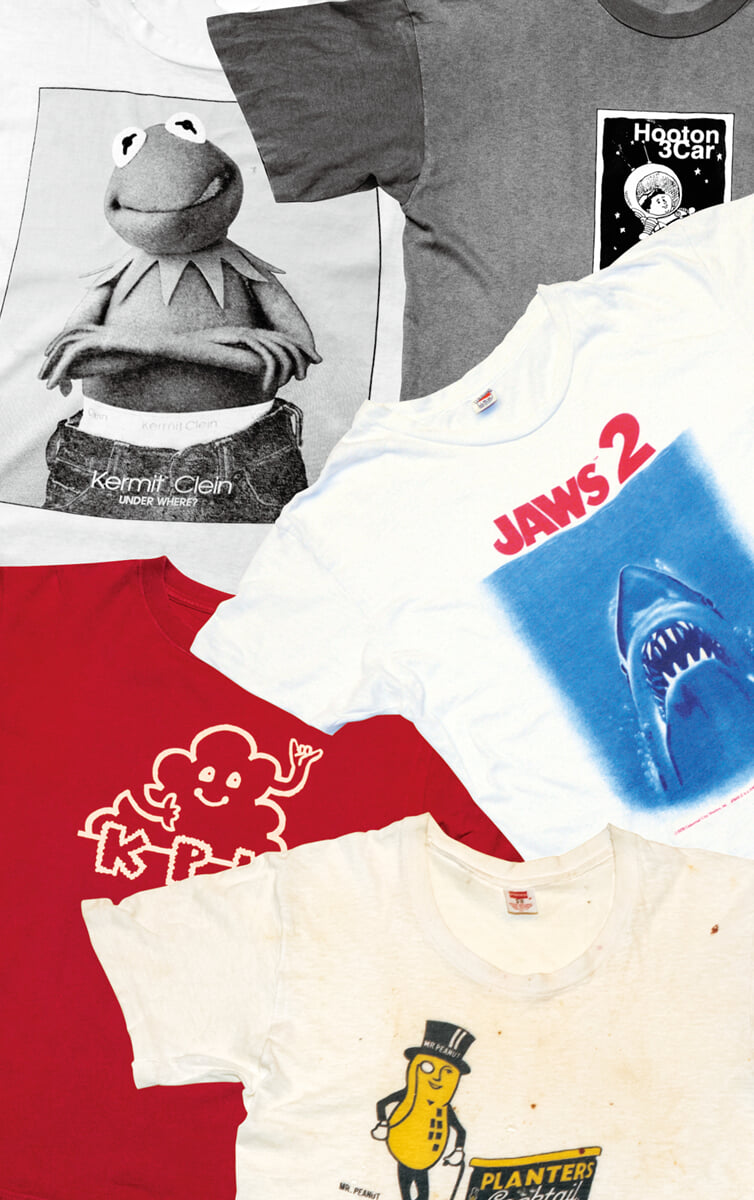
Editor and journalist Kyoichi Tsuzuki, who roams the streets of the world collecting diverse lives, has carefully compiled seventy unforgettable T-shirts and seventy stories related to them.
A t-shirt that you swapped with the vocalist at a punk concert, a t-shirt with a picture you drew on it yourself, a t-shirt that smells like an ex-lover, a t-shirt that you inherited from your father and wore every day until it was worn out, a t-shirt that you bought on impulse and never wore, but still take out and look at again…
We get a glimpse into the lives and joys and sorrows of seventy people, each of whom reveals nothing other than their age, gender, occupation, and place of origin, through their own unique, unforgettable T-shirts.
As you smell the various scents that permeate the universal object of a T-shirt, you will soon find yourself thinking of something of your own that you cannot throw away.
A t-shirt that you swapped with the vocalist at a punk concert, a t-shirt with a picture you drew on it yourself, a t-shirt that smells like an ex-lover, a t-shirt that you inherited from your father and wore every day until it was worn out, a t-shirt that you bought on impulse and never wore, but still take out and look at again…
We get a glimpse into the lives and joys and sorrows of seventy people, each of whom reveals nothing other than their age, gender, occupation, and place of origin, through their own unique, unforgettable T-shirts.
As you smell the various scents that permeate the universal object of a T-shirt, you will soon find yourself thinking of something of your own that you cannot throw away.
- You can preview some of the book's contents.
Preview
index
On the publication of the Korean edition
Every T-shirt tells a story
The Cass
Phuket Dive Shop
Duran Duran
Rey Mysterio
gap
Shirakawago
Snoopy
Joey Ramone
Katsu Shintaro
table cloth
retirement gift
Directly drawn by Erog
Chloe
Kendo
Fake I Love New York
David Lynch
WWF's panda
Moscow Metro Map
Jaws 2
pig
Haines V
PPFM
Ralph Lauren's Wingfoot
Wings
Dolce & Gabbana
Mickey Mouse
Rufus
Chanel N°5
Dover Street Market
unicorn
PR-y
Linus / Kurt Cobain
Berlin
Borehams
grandma
Siamese cat
Destroyer
Tony Soba
moderator
McDonald's
Meguro Parasitological Museum
SUMICHAN OKAERI!!!
Skeleton Atom
Kermit Klein
Moog
Aloha Hawaii
Vivienne Westwood
Mr. Nail
Takehiro Irokawa / Tetsuya Asada
Katsuo Kawai
Kiss ME qUIck
Iowa
Graffiti
Emily Temple Cute
Ran Issei
Takeo Kikuchi
Karuizawa bone treatment
KPM
A Basing Ape
Abercrombie
multi-level
Mr. Peanut
Velvet Underground
Arakawa Galaxy Baseball Team
Kyushu Institute of Technology Semi-hardball Baseball Club
Russell
Huton 3 car
Yukio Kawasaki's "Imperial Empire of Children"
From the Eye to the Hand (Kojima Dokkanko)
Honolulu Marathon
Reviews
Every T-shirt tells a story
The Cass
Phuket Dive Shop
Duran Duran
Rey Mysterio
gap
Shirakawago
Snoopy
Joey Ramone
Katsu Shintaro
table cloth
retirement gift
Directly drawn by Erog
Chloe
Kendo
Fake I Love New York
David Lynch
WWF's panda
Moscow Metro Map
Jaws 2
pig
Haines V
PPFM
Ralph Lauren's Wingfoot
Wings
Dolce & Gabbana
Mickey Mouse
Rufus
Chanel N°5
Dover Street Market
unicorn
PR-y
Linus / Kurt Cobain
Berlin
Borehams
grandma
Siamese cat
Destroyer
Tony Soba
moderator
McDonald's
Meguro Parasitological Museum
SUMICHAN OKAERI!!!
Skeleton Atom
Kermit Klein
Moog
Aloha Hawaii
Vivienne Westwood
Mr. Nail
Takehiro Irokawa / Tetsuya Asada
Katsuo Kawai
Kiss ME qUIck
Iowa
Graffiti
Emily Temple Cute
Ran Issei
Takeo Kikuchi
Karuizawa bone treatment
KPM
A Basing Ape
Abercrombie
multi-level
Mr. Peanut
Velvet Underground
Arakawa Galaxy Baseball Team
Kyushu Institute of Technology Semi-hardball Baseball Club
Russell
Huton 3 car
Yukio Kawasaki's "Imperial Empire of Children"
From the Eye to the Hand (Kojima Dokkanko)
Honolulu Marathon
Reviews
Detailed image

Into the book
Every time I publish a book, I get a variety of reactions.
During the "I Can't Throw Away T-Shirt" campaign, there were angry comments like, "I thought it was a cool T-shirt catalog, but it was completely different!" But even more common were messages from friends asking, "Why didn't you contact me?"
“We have one at home too!” “I wanted to wear it too!” Every time I heard that, I realized once again that there really are t-shirts that no one can throw away.
---From “On the Publication of the Korean Edition”
But even a T-shirt, which is usually just a 'throwaway' piece of underwear, has so many stories embedded in it that it becomes a unique part of you.
A sentence you come across in a book you picked up by chance, a scene from a cartoon, a line from a song on the radio can change or sustain your life, or it can be like pressing a switch that brings back forgotten memories.
I was so happy to be able to confirm that there are clothes that can move the heart like this.
---From "Every T-shirt Tells a Story"
When I was in college, I had the illusion that if I just wore band t-shirts or hobby t-shirts, people with the same hobby would talk to me and maybe I'd become popular.
But that never happened.
This t-shirt is also ineffective.
It was only recently that I realized that I couldn't become popular with just a t-shirt.
---From "David Lynch"
It's been eight years since I moved from Kobe to Tokyo.
My grandmother, who was born on November 11, 1911, is now 93 years old, and whenever she returns to her hometown, she asks me my age about once every ten minutes.
Still, he clearly remembers the story of the old Yamaguchi-gumi struggle and tells it in detail.
Next time I wear this and go to see you, will you remember me like Yamaguchi-gumi?
---From "SUMICHAN OKAERI!!!"
“You are smart, but it seems you are destined to only learn from today’s experience.
“I guess it’s a life of daily labor, earning a living?” If I think about it, my grandfather also did manual labor, and his daughter is my mother, so it may be inevitable that I was born this way.
My most pressing wish right now is that this mountain I'm climbing will be a success this time, and that my daughter won't follow in my footsteps.
By the way, my daughter, who doesn't know anything about this, wears this t-shirt to bed as pajamas.
---From "Aloha Hawaii"
The woman I met at the west exit of the subway station, Ms. Mot, was a very cute woman.
I took the money in a hurry and handed over the T-shirt.
If this developed into love and we called each other by the nickname 'Mr. Mot', it would be a little confusing, but somehow fun, and I couldn't even continue with the fantasy that the deal was over in an instant.
More than ten years have already passed since that day.
Is he still wearing his T-shirt? I'm still wearing mine.
And there's still a lot of stock left.
---From "Mr. Mot"
From the moment I first saw it, I felt like I was being drawn to America, a country that had given me the feeling of being old and had made me a foreigner, a young man who had lived a decent life up until then.
I still like it quite a bit and I usually wear it when I go out.
I think I leaned against a tree at some festival and got some pine resin on my back.
I'm a laundry fanatic, so I can remove everything from wine stains to armpit sweat that's stuck in old clothes.
But I couldn't get rid of the pine resin.
That was the first time I realized that there were things in this world that I couldn't solve on my own.
---From "Iowa"
This is the t-shirt my first boyfriend left behind when he came to my house to sleep over.
Every time I clean out my closet, I try to throw it away, but the memories are too strong to let go.
Looking at this, I try not to forget the heartbreaking memories of my first love.
I don't wear it, but I smell it sometimes.
---From "Abercrombie"
I haven't worn it once in thirty-four years.
But I can't throw it away.
Because this is the first full marathon race I've ever run since I was born.
It was also my first time going to Hawaii.
… Honolulu finisher t-shirts have gotten a lot smarter lately.
As I dig out a T-shirt from thirty-four years ago and look at it, I am overcome with nostalgia, thinking, "Those old days were so innocent."
So if you ask me if I'm going to wear it, I won't.
---From the Honolulu Marathon
I don't always think that reckless things are the best.
But if no amount of sincere advice changes my mind, and if I can take the risk on my own, this T-shirt still teaches me that it's better to fail than to quit and regret it.
It also raises the question of whether the same dreamless mind of that time is still present.
Lastly, I can't wait to make a commemorative t-shirt for this "Unthrowable T-shirt."
During the "I Can't Throw Away T-Shirt" campaign, there were angry comments like, "I thought it was a cool T-shirt catalog, but it was completely different!" But even more common were messages from friends asking, "Why didn't you contact me?"
“We have one at home too!” “I wanted to wear it too!” Every time I heard that, I realized once again that there really are t-shirts that no one can throw away.
---From “On the Publication of the Korean Edition”
But even a T-shirt, which is usually just a 'throwaway' piece of underwear, has so many stories embedded in it that it becomes a unique part of you.
A sentence you come across in a book you picked up by chance, a scene from a cartoon, a line from a song on the radio can change or sustain your life, or it can be like pressing a switch that brings back forgotten memories.
I was so happy to be able to confirm that there are clothes that can move the heart like this.
---From "Every T-shirt Tells a Story"
When I was in college, I had the illusion that if I just wore band t-shirts or hobby t-shirts, people with the same hobby would talk to me and maybe I'd become popular.
But that never happened.
This t-shirt is also ineffective.
It was only recently that I realized that I couldn't become popular with just a t-shirt.
---From "David Lynch"
It's been eight years since I moved from Kobe to Tokyo.
My grandmother, who was born on November 11, 1911, is now 93 years old, and whenever she returns to her hometown, she asks me my age about once every ten minutes.
Still, he clearly remembers the story of the old Yamaguchi-gumi struggle and tells it in detail.
Next time I wear this and go to see you, will you remember me like Yamaguchi-gumi?
---From "SUMICHAN OKAERI!!!"
“You are smart, but it seems you are destined to only learn from today’s experience.
“I guess it’s a life of daily labor, earning a living?” If I think about it, my grandfather also did manual labor, and his daughter is my mother, so it may be inevitable that I was born this way.
My most pressing wish right now is that this mountain I'm climbing will be a success this time, and that my daughter won't follow in my footsteps.
By the way, my daughter, who doesn't know anything about this, wears this t-shirt to bed as pajamas.
---From "Aloha Hawaii"
The woman I met at the west exit of the subway station, Ms. Mot, was a very cute woman.
I took the money in a hurry and handed over the T-shirt.
If this developed into love and we called each other by the nickname 'Mr. Mot', it would be a little confusing, but somehow fun, and I couldn't even continue with the fantasy that the deal was over in an instant.
More than ten years have already passed since that day.
Is he still wearing his T-shirt? I'm still wearing mine.
And there's still a lot of stock left.
---From "Mr. Mot"
From the moment I first saw it, I felt like I was being drawn to America, a country that had given me the feeling of being old and had made me a foreigner, a young man who had lived a decent life up until then.
I still like it quite a bit and I usually wear it when I go out.
I think I leaned against a tree at some festival and got some pine resin on my back.
I'm a laundry fanatic, so I can remove everything from wine stains to armpit sweat that's stuck in old clothes.
But I couldn't get rid of the pine resin.
That was the first time I realized that there were things in this world that I couldn't solve on my own.
---From "Iowa"
This is the t-shirt my first boyfriend left behind when he came to my house to sleep over.
Every time I clean out my closet, I try to throw it away, but the memories are too strong to let go.
Looking at this, I try not to forget the heartbreaking memories of my first love.
I don't wear it, but I smell it sometimes.
---From "Abercrombie"
I haven't worn it once in thirty-four years.
But I can't throw it away.
Because this is the first full marathon race I've ever run since I was born.
It was also my first time going to Hawaii.
… Honolulu finisher t-shirts have gotten a lot smarter lately.
As I dig out a T-shirt from thirty-four years ago and look at it, I am overcome with nostalgia, thinking, "Those old days were so innocent."
So if you ask me if I'm going to wear it, I won't.
---From the Honolulu Marathon
I don't always think that reckless things are the best.
But if no amount of sincere advice changes my mind, and if I can take the risk on my own, this T-shirt still teaches me that it's better to fail than to quit and regret it.
It also raises the question of whether the same dreamless mind of that time is still present.
Lastly, I can't wait to make a commemorative t-shirt for this "Unthrowable T-shirt."
---From the "Review"
Publisher's Review
The most personal dress code, a T-shirt
A seventy-page, carefully ironed anthology of life
Veteran editor and journalist Kyoichi Tsuzuki, who uncovers the unsung in various fields such as modern art, architecture, design, and urban life and depicts modern society, has published a story titled "A T-shirt You Can't Throw Away," which adds a T-shirt to the 69 articles he serialized every week from the July 8, 2015, issue to the December 28, 2016 issue of his paid weekly mail magazine "ROADSIDERS' weekly."
The project, which began with the same name, was initially intended simply to collect memories related to T-shirts.
But as the story progresses, it becomes deeper and longer, and eventually the T-shirt becomes the key and excuse to open up a person's life.
From its origins as underwear to an icon of rebellion worn by James Dean and Marlon Brando, the T-shirt has evolved into an everyday piece that everyone owns and a fashion item worn on important occasions.
However, most of the T-shirts that this book says you can't throw away are not obviously cool or expensive branded items.
They are shabby and odd, stained and faded, out of style, or even have tacky phrases on them.
That is precisely why the trivial obsessions that are difficult to understand from the perspective of others reveal the intimate trajectory of life more clearly.
Songs you enjoyed as a child, happy times with an ex-lover, encounters that changed your life, anecdotes that bring out laughter, and irreversible mistakes are all imbued in each of the seventy pages.
"The Unthrowable T-Shirt" is comprised of texts that have been minimally polished, with the hope that they will be delivered to readers in their raw form, ranging from the elegant prose of a renowned author whose name everyone knows to the rough, hastily written text of an amateur.
Thanks to this simple sincerity, the diverse writing styles that reveal each writer's unique personality also add to the enjoyment of reading.
When you encounter a panorama of unique memories unfolding through the medium of a universal object, a T-shirt, you will once again realize the power of life's diversity.
Additionally, all seventy writers only listed their age, gender, occupation, and hometown, without revealing their names or faces.
Another fun thing is to imagine the owner of the T-shirt while listening to their honest life stories.
There are not only anecdotes related to T-shirts, but also quite a few articles that tell the story from birth to the present in detail.
Through this, you can discover unexpected sides of celebrities or listen to the inside story of marginalized outsiders.
Through the layered life histories of individuals, you will be able to get a bird's eye view of modern Japanese society from the Showa era to the Heisei and Reiwa eras.
Another interesting aspect of this book is that you can get a glimpse into the owner's personal taste reflected in each T-shirt.
Let's browse through an archive of memories and tastes that vividly captures the dynamic flow of subcultures, including music, fashion, and art, as if shopping.
Although it may not be a fancy T-shirt catalog, the vividness of the T-shirt photos, personally ironed and photographed by Kyoichi Tsuzuki, a 50-year veteran editor who has made his mark on the cult archives with the magazines POPEYE and BRUTUS and the photo book TOKYO STYLE, is comparable to that of a fashion magazine.
Each and every photo is imbued with the atmosphere of an era when quilted T-shirts were worn.
They unfold in a layout that changes and permeates the text as they move across the pages.
The composition of text and photos, as if they were a living, breathing organism, will give you the experience of visiting a museum of memories called T-shirts.
Before you close the book, I want you to search for the hashtag #捨てられないTシャツ (#CannotThrowAwayT-Shirt) on Instagram.
Beyond the book, countless people are sharing their own T-shirts and the lives they embody.
This is an ongoing project that anyone can be a part of, so why not join us? There might be a memory you can't throw away right now, folded in your drawer.
A seventy-page, carefully ironed anthology of life
Veteran editor and journalist Kyoichi Tsuzuki, who uncovers the unsung in various fields such as modern art, architecture, design, and urban life and depicts modern society, has published a story titled "A T-shirt You Can't Throw Away," which adds a T-shirt to the 69 articles he serialized every week from the July 8, 2015, issue to the December 28, 2016 issue of his paid weekly mail magazine "ROADSIDERS' weekly."
The project, which began with the same name, was initially intended simply to collect memories related to T-shirts.
But as the story progresses, it becomes deeper and longer, and eventually the T-shirt becomes the key and excuse to open up a person's life.
From its origins as underwear to an icon of rebellion worn by James Dean and Marlon Brando, the T-shirt has evolved into an everyday piece that everyone owns and a fashion item worn on important occasions.
However, most of the T-shirts that this book says you can't throw away are not obviously cool or expensive branded items.
They are shabby and odd, stained and faded, out of style, or even have tacky phrases on them.
That is precisely why the trivial obsessions that are difficult to understand from the perspective of others reveal the intimate trajectory of life more clearly.
Songs you enjoyed as a child, happy times with an ex-lover, encounters that changed your life, anecdotes that bring out laughter, and irreversible mistakes are all imbued in each of the seventy pages.
"The Unthrowable T-Shirt" is comprised of texts that have been minimally polished, with the hope that they will be delivered to readers in their raw form, ranging from the elegant prose of a renowned author whose name everyone knows to the rough, hastily written text of an amateur.
Thanks to this simple sincerity, the diverse writing styles that reveal each writer's unique personality also add to the enjoyment of reading.
When you encounter a panorama of unique memories unfolding through the medium of a universal object, a T-shirt, you will once again realize the power of life's diversity.
Additionally, all seventy writers only listed their age, gender, occupation, and hometown, without revealing their names or faces.
Another fun thing is to imagine the owner of the T-shirt while listening to their honest life stories.
There are not only anecdotes related to T-shirts, but also quite a few articles that tell the story from birth to the present in detail.
Through this, you can discover unexpected sides of celebrities or listen to the inside story of marginalized outsiders.
Through the layered life histories of individuals, you will be able to get a bird's eye view of modern Japanese society from the Showa era to the Heisei and Reiwa eras.
Another interesting aspect of this book is that you can get a glimpse into the owner's personal taste reflected in each T-shirt.
Let's browse through an archive of memories and tastes that vividly captures the dynamic flow of subcultures, including music, fashion, and art, as if shopping.
Although it may not be a fancy T-shirt catalog, the vividness of the T-shirt photos, personally ironed and photographed by Kyoichi Tsuzuki, a 50-year veteran editor who has made his mark on the cult archives with the magazines POPEYE and BRUTUS and the photo book TOKYO STYLE, is comparable to that of a fashion magazine.
Each and every photo is imbued with the atmosphere of an era when quilted T-shirts were worn.
They unfold in a layout that changes and permeates the text as they move across the pages.
The composition of text and photos, as if they were a living, breathing organism, will give you the experience of visiting a museum of memories called T-shirts.
Before you close the book, I want you to search for the hashtag #捨てられないTシャツ (#CannotThrowAwayT-Shirt) on Instagram.
Beyond the book, countless people are sharing their own T-shirts and the lives they embody.
This is an ongoing project that anyone can be a part of, so why not join us? There might be a memory you can't throw away right now, folded in your drawer.
GOODS SPECIFICS
- Date of issue: June 26, 2025
- Page count, weight, size: 364 pages | 384g | 112*177*22mm
- ISBN13: 9791168230989
You may also like
카테고리
korean


korean

![GQ KOREA Mark (Monthly): December [2025]](http://librairie.coreenne.fr/cdn/shop/files/8ef265dbbfbf186523ed75ba7319009d.jpg?v=1765340328&width=3840)


