

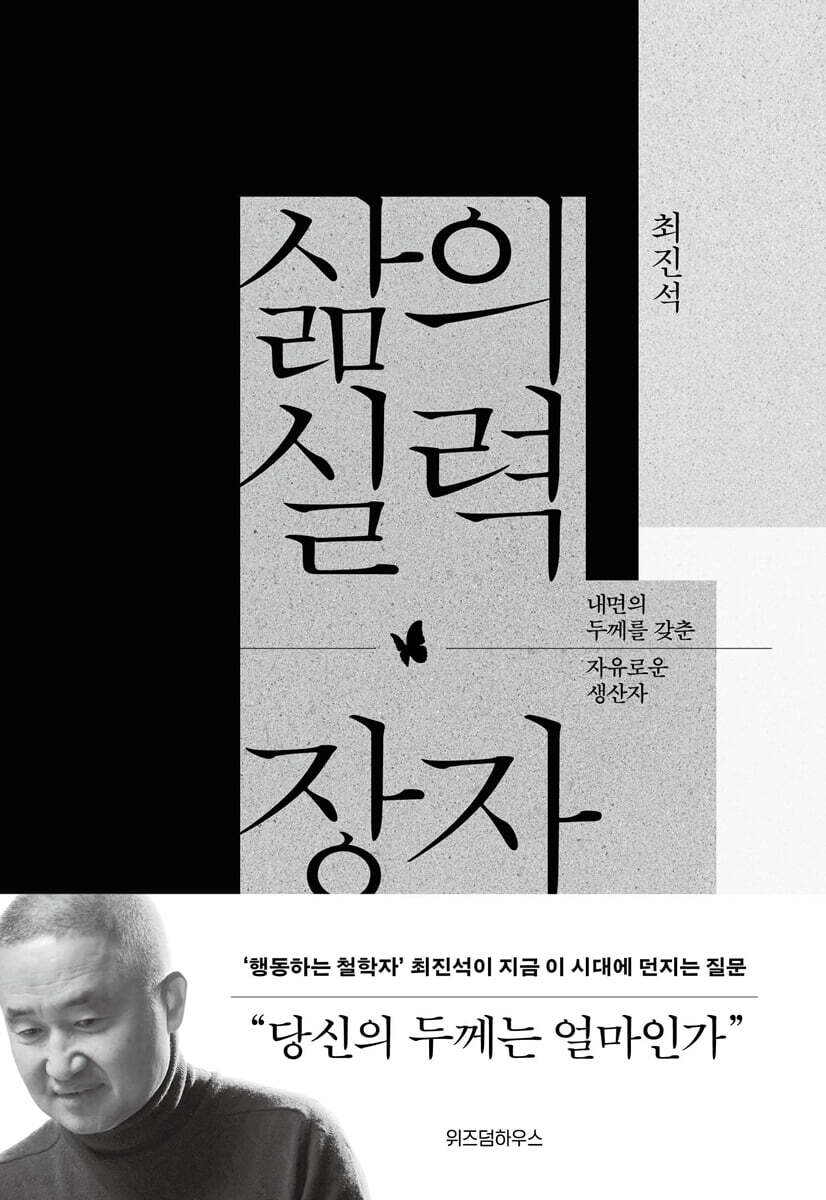
The skill of life, Zhuangzi
 |
Description
Book Introduction
- A word from MD
- The eldest son lived diligentlyThe first reading of 『Zhuangzi』 by philosopher Jinseok Choi, who is familiar with Laozi's 『Tao Te Ching』.
Although Zhuangzi is known for distancing himself from the world and pursuing absolute freedom, his worldview is three-dimensional.
This book points out the limitations and errors in existing interpretations of Zhuangzi and focuses on the human figure who works harder than anyone else.
April 15, 2025. Humanities PD Son Min-gyu
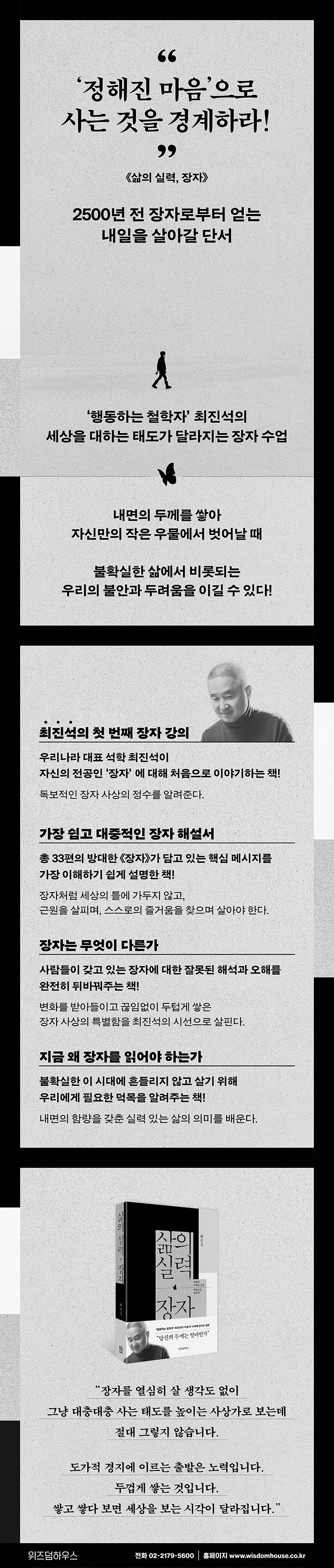
“Get out of your fixed mind,
“Grow the inner depth to see the world as it is.”
The first lecture on Zhuangzi by Choi Jin-seok, a leading figure in Eastern philosophy and a philosopher of action.
Many people misunderstand the eldest son.
Zhuangzi is often thought of as a thinker who lived in a transcendental other world, away from reality, and who held in high regard the attitude of living a haphazard life without any thought of success or hard work.
But that's absolutely not the case.
Zhuangzi was a philosopher who actively engaged with life and reality, emphasized personal growth, and encouraged people to live a life of competence.
『The Power of Life, Zhuangzi』 is a book that closely examines Zhuangzi, a subject previously unknown.
Choi Jin-seok, a leading scholar of Eastern philosophy in Korea, is a 'Zhuangzi expert' who received a doctorate in philosophy from Peking University in China for his study of Zhuangzi's interpretation.
In this book, he talks about Zhuangzi for the first time.
As befitting a 'master of Zhuangzi,' the author provides comprehensive insight and explains Zhuangzi, a subject that many find particularly difficult, in an easy-to-understand manner.
The key phrases and meanings of 『Zhuangzi』, as explained by Jinseok Choi, not only correct the misconceptions we have had about Zhuangzi, but also help us internalize Zhuangzi's philosophy as our own.
For modern people who have lost their dignity and uniqueness and feel anxious and fearful due to comparisons with others, Zhuangzi's philosophy that we must not neglect reflection and awakening, but rather deepen our inner content and live as ourselves is truly necessary advice and study.
There are books that have not disappeared for thousands of years and are still read by people.
This is probably because these books, which are called 'classics', contain principles between the world and humans that do not change over time.
What message does the great classic 『Zhuangzi』 convey to us today?
No, what should we read from the 『Zhuangzi』 now?
The answer can be found in 『The Power of Life, Zhuangzi』.
“Grow the inner depth to see the world as it is.”
The first lecture on Zhuangzi by Choi Jin-seok, a leading figure in Eastern philosophy and a philosopher of action.
Many people misunderstand the eldest son.
Zhuangzi is often thought of as a thinker who lived in a transcendental other world, away from reality, and who held in high regard the attitude of living a haphazard life without any thought of success or hard work.
But that's absolutely not the case.
Zhuangzi was a philosopher who actively engaged with life and reality, emphasized personal growth, and encouraged people to live a life of competence.
『The Power of Life, Zhuangzi』 is a book that closely examines Zhuangzi, a subject previously unknown.
Choi Jin-seok, a leading scholar of Eastern philosophy in Korea, is a 'Zhuangzi expert' who received a doctorate in philosophy from Peking University in China for his study of Zhuangzi's interpretation.
In this book, he talks about Zhuangzi for the first time.
As befitting a 'master of Zhuangzi,' the author provides comprehensive insight and explains Zhuangzi, a subject that many find particularly difficult, in an easy-to-understand manner.
The key phrases and meanings of 『Zhuangzi』, as explained by Jinseok Choi, not only correct the misconceptions we have had about Zhuangzi, but also help us internalize Zhuangzi's philosophy as our own.
For modern people who have lost their dignity and uniqueness and feel anxious and fearful due to comparisons with others, Zhuangzi's philosophy that we must not neglect reflection and awakening, but rather deepen our inner content and live as ourselves is truly necessary advice and study.
There are books that have not disappeared for thousands of years and are still read by people.
This is probably because these books, which are called 'classics', contain principles between the world and humans that do not change over time.
What message does the great classic 『Zhuangzi』 convey to us today?
No, what should we read from the 『Zhuangzi』 now?
The answer can be found in 『The Power of Life, Zhuangzi』.
- You can preview some of the book's contents.
Preview
index
Entering
Chapter 1: The World Driven by Human Thought: The Background of Zhuangzi's Thought
Chapter 2: Beings Born with Completeness: The Philosophical Significance of Zhuangzi's Thought
Chapter 3: The Dignity and Uniqueness of the 'I': The Inner Self of the Human Being
Chapter 4: The Story, Gaps and Spaces of Permission: The Narrative Style of the Zhuangzi
Chapter 5: Thinking Unbound by Ideas: "Fables"
Chapter 6: Realizing You're a Frog in a Well: Part 1 of "Harvest"
Chapter 7: Transforming Yourself Without Losing Yourself: Part 2 of "Harvest"
Chapter 8: Examining the Source and Moving On: Part 3 of "Harvest"
Chapter 9: Building a Thicker Heart: "Soyoyou"
Chapter 10: Discovering Your Own Joy: The Virtues of Zhuangzi's Thought
Chapter 11: A Life of Flexibility: Part 1 of "Jemunryun"
Chapter 12: The Effort to Break the Settled Mind: Part 2 of "Jemullonui"
Chapter 13: Going Forward in the Gliding Light: The Special Realm of the Zhuangzi
Going out
Chapter 1: The World Driven by Human Thought: The Background of Zhuangzi's Thought
Chapter 2: Beings Born with Completeness: The Philosophical Significance of Zhuangzi's Thought
Chapter 3: The Dignity and Uniqueness of the 'I': The Inner Self of the Human Being
Chapter 4: The Story, Gaps and Spaces of Permission: The Narrative Style of the Zhuangzi
Chapter 5: Thinking Unbound by Ideas: "Fables"
Chapter 6: Realizing You're a Frog in a Well: Part 1 of "Harvest"
Chapter 7: Transforming Yourself Without Losing Yourself: Part 2 of "Harvest"
Chapter 8: Examining the Source and Moving On: Part 3 of "Harvest"
Chapter 9: Building a Thicker Heart: "Soyoyou"
Chapter 10: Discovering Your Own Joy: The Virtues of Zhuangzi's Thought
Chapter 11: A Life of Flexibility: Part 1 of "Jemunryun"
Chapter 12: The Effort to Break the Settled Mind: Part 2 of "Jemullonui"
Chapter 13: Going Forward in the Gliding Light: The Special Realm of the Zhuangzi
Going out
Detailed image
Into the book
The master of the world is not the one who answers, but the one who asks questions, and the leader of the world is not the one who stops, but the one who crosses over.
If a person who lives a competent life is a questioner and a passerby, then the competence of life is nothing more than the display of 'virtue'.
--- p.10
Zhuangzi's philosophy is a three-dimensional philosophy.
The word three-dimensional means that the concept of time is dealt with.
The concept that supports three-dimensionality is movement and change that operate over time, and the category that explains movement and change is ‘Qi (氣)’.
--- p.29
If you want to become a person of the same level as Zhuangzi, it is better to observe the attitude and perspective of Zhuangzi rather than imitating his actions.
That is a closer look at the source or foundation.
In short, it is about cultivating an attitude of looking closely, examining closely, and thinking deeply.
--- p.76
“You can’t tell a frog in a well about the ocean.
Because we are confined by the limitations of space.
You can't tell ice to a bug that lives only in the summer.
Because we are trapped by the limitations of time.
I cannot teach the way to a petty scholar.
“Because we are confined by the limitations of what we have been taught.”
--- p.127
'Adults are always indifferent' means 'they have no mind of their own', which means 'they do not have a mind of their own' or 'they do not have a set mind'.
If you don't have a set mind, you can see the world as it appears to you, not as it should be seen.
Rather, he takes the people's hearts as his own.
The people are in the world, not in theory.
--- p.142
What is an active subject? It is one who becomes one's own legislator.
I speak of my beauty and I claim my beauty.
I am the one who sets the standards for my actions, I am the one who decides my political attitude through my own reasoning.
The concept of ‘self-gratification’ in the Zhuangzi and the modern concept of ‘freedom’ are both related to the active subject.
--- p.200
If you don't have the depth to match what you want to do, what you dream, and what you plan to do, you won't be able to achieve it.
If you have high standards, you need to build up a thick internal energy to match them.
Those who have high expectations but are lazy in building up the necessary internal energy cannot be saved by even the gods.
--- p.228
It is very difficult and ambiguous to implement the life of an adult, an acquaintance, or a newcomer in everyday life.
If there's a way to do it in everyday life, it's to have a purpose and not be stuck on a goal.
--- p.246
The starting point for reaching the Taoist realm is effort.
It's about piling it up thickly.
What happens to people who pile on thickly? As they pile on thickly, the fish undergoes a qualitative change and their position changes to that of a large fish.
--- p.251
Zhuangzi sets breaking free from fixed thoughts as the most important task to be accomplished in order to live a free life.
This is the reason why the chapter “Jemulron” uses extreme expressions such as “Osanga (吾喪我)”, meaning “holding one’s own funeral” or “killing oneself.”
--- p.258
Anything done without self-awareness has no meaning not only for oneself, but also for society, for the country, and for the universe.
… In reflection, the most fundamental thing is to ask yourself questions about yourself.
So, the starting point of all greatness must always be oneself.
--- p.306
Even if you give it your all until you die, you won't see success, and even if you're tired and struggling, you don't know how it will end in the end.
How can one not be sad! … Is human life truly this foolish?
Am I the only one who is foolish, and are there people among us who are not foolish?
If a person who lives a competent life is a questioner and a passerby, then the competence of life is nothing more than the display of 'virtue'.
--- p.10
Zhuangzi's philosophy is a three-dimensional philosophy.
The word three-dimensional means that the concept of time is dealt with.
The concept that supports three-dimensionality is movement and change that operate over time, and the category that explains movement and change is ‘Qi (氣)’.
--- p.29
If you want to become a person of the same level as Zhuangzi, it is better to observe the attitude and perspective of Zhuangzi rather than imitating his actions.
That is a closer look at the source or foundation.
In short, it is about cultivating an attitude of looking closely, examining closely, and thinking deeply.
--- p.76
“You can’t tell a frog in a well about the ocean.
Because we are confined by the limitations of space.
You can't tell ice to a bug that lives only in the summer.
Because we are trapped by the limitations of time.
I cannot teach the way to a petty scholar.
“Because we are confined by the limitations of what we have been taught.”
--- p.127
'Adults are always indifferent' means 'they have no mind of their own', which means 'they do not have a mind of their own' or 'they do not have a set mind'.
If you don't have a set mind, you can see the world as it appears to you, not as it should be seen.
Rather, he takes the people's hearts as his own.
The people are in the world, not in theory.
--- p.142
What is an active subject? It is one who becomes one's own legislator.
I speak of my beauty and I claim my beauty.
I am the one who sets the standards for my actions, I am the one who decides my political attitude through my own reasoning.
The concept of ‘self-gratification’ in the Zhuangzi and the modern concept of ‘freedom’ are both related to the active subject.
--- p.200
If you don't have the depth to match what you want to do, what you dream, and what you plan to do, you won't be able to achieve it.
If you have high standards, you need to build up a thick internal energy to match them.
Those who have high expectations but are lazy in building up the necessary internal energy cannot be saved by even the gods.
--- p.228
It is very difficult and ambiguous to implement the life of an adult, an acquaintance, or a newcomer in everyday life.
If there's a way to do it in everyday life, it's to have a purpose and not be stuck on a goal.
--- p.246
The starting point for reaching the Taoist realm is effort.
It's about piling it up thickly.
What happens to people who pile on thickly? As they pile on thickly, the fish undergoes a qualitative change and their position changes to that of a large fish.
--- p.251
Zhuangzi sets breaking free from fixed thoughts as the most important task to be accomplished in order to live a free life.
This is the reason why the chapter “Jemulron” uses extreme expressions such as “Osanga (吾喪我)”, meaning “holding one’s own funeral” or “killing oneself.”
--- p.258
Anything done without self-awareness has no meaning not only for oneself, but also for society, for the country, and for the universe.
… In reflection, the most fundamental thing is to ask yourself questions about yourself.
So, the starting point of all greatness must always be oneself.
--- p.306
Even if you give it your all until you die, you won't see success, and even if you're tired and struggling, you don't know how it will end in the end.
How can one not be sad! … Is human life truly this foolish?
Am I the only one who is foolish, and are there people among us who are not foolish?
--- p.315
Publisher's Review
"Zhuangzi, who emphasized a life full of vitality and competence."
The unrivaled commentary on the eldest son by Choi Jin-seok, the nation's leading eldest son.
Choi Jin-seok, a master of Eastern philosophy, has interpreted the Tao Te Ching and the Heart Sutra based on his own unique insights, and has preached to many people the attitude of living life as a proper noun, and the attitude of thinking that does not stay in the present but moves on to the next.
He finally explains the essence of Zhuangzi's thought to readers in an easy-to-understand manner based on his deep understanding of Zhuangzi, his specialty.
When iron was introduced into industry, the world that depended on gods and heaven was completely turned upside down.
Humans became important, and human thoughts began to move the world.
To fully understand the philosopher Zhuangzi and his works, the author closely examines their historical context and background, their philosophical significance, and the human aspects of Zhuangzi that touch upon the core of his thought.
In particular, the author points out the differences between Confucius, Mencius, Laozi, and Zhuangzi, which many people confuse with when lumped together under the term 'Eastern philosophy', through the category of 'Qi (氣)'.
It explains the characteristics of Zhuangzi's thought, in which time and motion, and the changes they bring, are important concepts, and helps us understand the unique narrative style of Zhuangzi, which is different from other classics.
The author does not stop at simply interpreting the 『Zhuangzi』.
『The Power of Life, Zhuangzi』 is the most comprehensive commentary that approaches Zhuangzi's thought holistically.
The Power of Stories that Treat the World Obliquely
The intellectual and powerful style of Zhuangzi's philosophy
『Zhuangzi』 is a massive book consisting of 33 chapters, and its most notable feature is its ‘stories.’
In other words, in 90 percent of the book, Zhuangzi does not say what he wants to say directly, but rather metaphorically conveys it through stories.
Therefore, to understand the true meaning of 『Zhuangzi』, we must look inside it.
Author Jinseok Choi reads the key parts of Zhuangzi that explain the essence of Zhuangzi's philosophy along with the original text, and conveys Zhuangzi's true intentions hidden between the lines.
In the chapter "Xiaoyaoyou" at the very beginning of "Zhuangzi," there is a story about a small fish called "Gun" that grows to be thousands of li tall in the vast ocean, then rides a whirlwind and turns into a "big fish."
This story may sound like a wild imagination at first glance, but what Zhuangzi really wanted to say is the constant hard work and honest journey that a fish goes through to grow.
Also, in the episode titled “Harvest,” through a conversation between the god of the Yellow River, “Habaek,” and the god of the sea, “Bukhaeyak,” it is said that it is more important to realize that one is a small and insignificant being than to try to increase one’s own content after realizing this.
The most important concepts discussed in Zhuangzi's thought, such as 'self-pleasure' (自快), which means living by finding what you like and your own joy, 'inquiring into the origin' (察其始), which means looking into the root, and '吾喪我' (吾喪我), which means letting go of the self trapped in a specific ideology, are so profound that they cannot be easily summarized in a single sentence.
Even Zhuangzi secretly revealed this in several stories.
『The Power of Life, Zhuangzi』 selects the core parts that contain the message that runs through 『Zhuangzi』 and discusses its true meaning.
“All greatness begins with oneself.”
Zhuangzi, who advocated a first-person life that builds inner depth
These are times of uncertainty, where everything changes rapidly.
Meanwhile, our anxiety is amplified through comparison with others.
In addition, we are going through a more chaotic time than ever before, with war, environmental problems, and turbulent political situations.
Author Jinseok Choi asks in the preface of the book:
“What is it that is holding you back from dreaming?
“What on earth is it that makes you anxious?” In the Harvest section, there is a story about a one-legged hawk envying a multi-legged hawk, a hawk envying a legless snake that moves quickly, and a serpent envying an even faster wind.
Each of them does not know why he is envious.
There is also a story about a young man from the Yan country who went to the Zhao country to learn dancing, but ended up not being able to learn and even losing his way of walking.
The stories in Zhuangzi that warn us against being envious of others and imitating them without having what is truly our own are perhaps essential right now.
What we, who are experiencing such confusion and anxiety, should do is, as Zhuangzi taught, not to be trapped in a "fixed mind," but rather, as individuals, to cultivate our own independence, grow our inner size, and move forward without being swayed by the world.
The misunderstanding about the eldest son mentioned above may have arisen because of the dream of a tiger and a butterfly, which talks about the transience of life.
But in reality, Jangja's philosophy is very realistic.
It emphasizes personal reflection and awakening, and talks about growing inner content and moving forward without stopping.
Zhuangzi just happens to have the answers we need right now.
The reason we seek out and read the classics is to understand the unchanging laws of humanity and community, and furthermore, the ways of the world, and not stop there, to apply that understanding to our own lives and live better lives.
『Zhuangzi』 contains a story that will change the way we think in an age of anxiety and confusion.
『The Power of Life, Zhuangzi』 will be your guide.
The unrivaled commentary on the eldest son by Choi Jin-seok, the nation's leading eldest son.
Choi Jin-seok, a master of Eastern philosophy, has interpreted the Tao Te Ching and the Heart Sutra based on his own unique insights, and has preached to many people the attitude of living life as a proper noun, and the attitude of thinking that does not stay in the present but moves on to the next.
He finally explains the essence of Zhuangzi's thought to readers in an easy-to-understand manner based on his deep understanding of Zhuangzi, his specialty.
When iron was introduced into industry, the world that depended on gods and heaven was completely turned upside down.
Humans became important, and human thoughts began to move the world.
To fully understand the philosopher Zhuangzi and his works, the author closely examines their historical context and background, their philosophical significance, and the human aspects of Zhuangzi that touch upon the core of his thought.
In particular, the author points out the differences between Confucius, Mencius, Laozi, and Zhuangzi, which many people confuse with when lumped together under the term 'Eastern philosophy', through the category of 'Qi (氣)'.
It explains the characteristics of Zhuangzi's thought, in which time and motion, and the changes they bring, are important concepts, and helps us understand the unique narrative style of Zhuangzi, which is different from other classics.
The author does not stop at simply interpreting the 『Zhuangzi』.
『The Power of Life, Zhuangzi』 is the most comprehensive commentary that approaches Zhuangzi's thought holistically.
The Power of Stories that Treat the World Obliquely
The intellectual and powerful style of Zhuangzi's philosophy
『Zhuangzi』 is a massive book consisting of 33 chapters, and its most notable feature is its ‘stories.’
In other words, in 90 percent of the book, Zhuangzi does not say what he wants to say directly, but rather metaphorically conveys it through stories.
Therefore, to understand the true meaning of 『Zhuangzi』, we must look inside it.
Author Jinseok Choi reads the key parts of Zhuangzi that explain the essence of Zhuangzi's philosophy along with the original text, and conveys Zhuangzi's true intentions hidden between the lines.
In the chapter "Xiaoyaoyou" at the very beginning of "Zhuangzi," there is a story about a small fish called "Gun" that grows to be thousands of li tall in the vast ocean, then rides a whirlwind and turns into a "big fish."
This story may sound like a wild imagination at first glance, but what Zhuangzi really wanted to say is the constant hard work and honest journey that a fish goes through to grow.
Also, in the episode titled “Harvest,” through a conversation between the god of the Yellow River, “Habaek,” and the god of the sea, “Bukhaeyak,” it is said that it is more important to realize that one is a small and insignificant being than to try to increase one’s own content after realizing this.
The most important concepts discussed in Zhuangzi's thought, such as 'self-pleasure' (自快), which means living by finding what you like and your own joy, 'inquiring into the origin' (察其始), which means looking into the root, and '吾喪我' (吾喪我), which means letting go of the self trapped in a specific ideology, are so profound that they cannot be easily summarized in a single sentence.
Even Zhuangzi secretly revealed this in several stories.
『The Power of Life, Zhuangzi』 selects the core parts that contain the message that runs through 『Zhuangzi』 and discusses its true meaning.
“All greatness begins with oneself.”
Zhuangzi, who advocated a first-person life that builds inner depth
These are times of uncertainty, where everything changes rapidly.
Meanwhile, our anxiety is amplified through comparison with others.
In addition, we are going through a more chaotic time than ever before, with war, environmental problems, and turbulent political situations.
Author Jinseok Choi asks in the preface of the book:
“What is it that is holding you back from dreaming?
“What on earth is it that makes you anxious?” In the Harvest section, there is a story about a one-legged hawk envying a multi-legged hawk, a hawk envying a legless snake that moves quickly, and a serpent envying an even faster wind.
Each of them does not know why he is envious.
There is also a story about a young man from the Yan country who went to the Zhao country to learn dancing, but ended up not being able to learn and even losing his way of walking.
The stories in Zhuangzi that warn us against being envious of others and imitating them without having what is truly our own are perhaps essential right now.
What we, who are experiencing such confusion and anxiety, should do is, as Zhuangzi taught, not to be trapped in a "fixed mind," but rather, as individuals, to cultivate our own independence, grow our inner size, and move forward without being swayed by the world.
The misunderstanding about the eldest son mentioned above may have arisen because of the dream of a tiger and a butterfly, which talks about the transience of life.
But in reality, Jangja's philosophy is very realistic.
It emphasizes personal reflection and awakening, and talks about growing inner content and moving forward without stopping.
Zhuangzi just happens to have the answers we need right now.
The reason we seek out and read the classics is to understand the unchanging laws of humanity and community, and furthermore, the ways of the world, and not stop there, to apply that understanding to our own lives and live better lives.
『Zhuangzi』 contains a story that will change the way we think in an age of anxiety and confusion.
『The Power of Life, Zhuangzi』 will be your guide.
GOODS SPECIFICS
- Date of issue: March 28, 2025
- Page count, weight, size: 360 pages | 582g | 148*215*25mm
- ISBN13: 9791171713967
- ISBN10: 1171713967
You may also like
카테고리
korean


korean

![ELLE 엘르 스페셜 에디션 A형 : 12월 [2025]](http://librairie.coreenne.fr/cdn/shop/files/b8e27a3de6c9538896439686c6b0e8fb.jpg?v=1766436872&width=3840)


