

Genre Film Dictionary
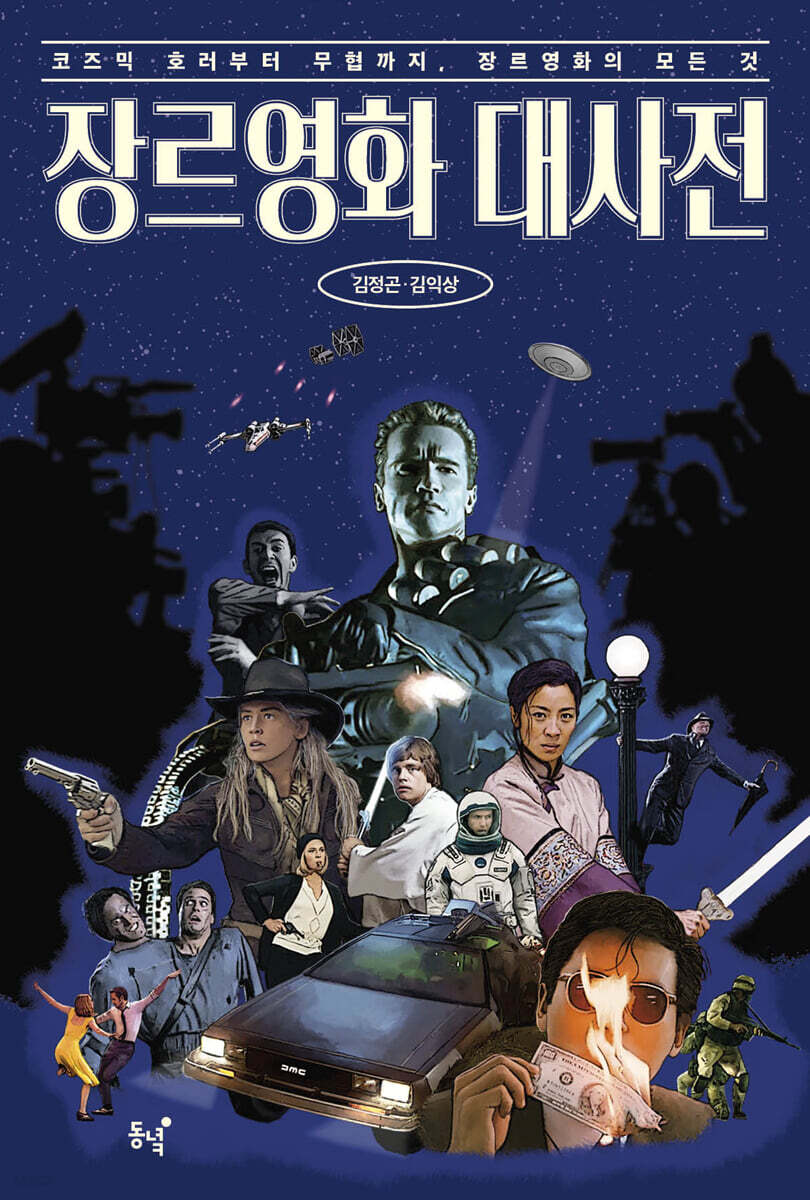 |
Description
Book Introduction
★ Why do zombies run? ★
★ How was the villain born? ★
★ How do Asian horror films deal with ghosts? ★
From space to dystopian worlds,
From the martial arts world to the gunfighters' stage in the West!
Covering the entire spectrum of genre film history!
When watching a film or even making a film, if you have a solid understanding of the genre and the fundamentals, you can open up the possibility of seeing the broad world the genre encompasses with new eyes.
This book is a good guide to help readers start their journey smoothly.
- Won Dong-yeon, producer of the film "Along with the Gods"
Unfortunately, the previous Korean film industry was practically a wasteland for genre films.
Nowadays, there is no genre film that cannot be made, from zombie horror like “Train to Busan” to space opera like “Space Sweepers.”
With the flood of films releasing today, including horror, fantasy, and action, I hope many people will experience the allure of genre films anew through this book.
- Shin Cheol, Executive Director of Bucheon International Fantastic Film Festival
Cinephile
Even the aspiring creators
A book for everyone who loves genre films!
When did zombies start running around? How did villains come into existence? How do Asian horror films deal with vengeful spirits? A book has been published that answers questions you've likely wondered about while watching genre films.
《Genre Film Dictionary》 broadly introduces film genres by dividing them into 12 categories (musical, space opera, heroes and villains, cosmic horror, western, zombie, apocalypse, Asian horror, war, martial arts, Hong Kong noir, and action).
Authors Kim Jeong-gon and Kim Ik-sang, who have been introducing various films to the public for over 10 years through the film-specialized YouTube channel [Film Factory Bad Taste], are true genre film experts who have watched and analyzed thousands of films.
While introducing films unknown in Korea, author Kim Jeong-gon, in particular, uncovers and reveals the value of works that have been neglected in criticism or have disappeared from the archives of film history, and author Kim Ik-sang has met audiences by planning and producing numerous genre films, including “The Exorcist” and “Scissors.”
Rather than focusing on the shining films that have made it into the pantheon of film history, they focus on films that general audiences with maniacal tastes have enjoyed or would like to see.
And then, by selecting a specific area that can reveal the uniqueness of the genre, we select films and directors that well show that background and its characteristics, and by encompassing their works in one book, we help readers better understand genre films.
When watching or making a film, a solid understanding of the genre and a solid foundation in the fundamentals opens up the possibility of seeing the broad world the genre encompasses with new eyes.
Ultimately, this book guides everyone who loves genre films, from film buffs to aspiring creators, into the long and splendid history of genre films.
★ How was the villain born? ★
★ How do Asian horror films deal with ghosts? ★
From space to dystopian worlds,
From the martial arts world to the gunfighters' stage in the West!
Covering the entire spectrum of genre film history!
When watching a film or even making a film, if you have a solid understanding of the genre and the fundamentals, you can open up the possibility of seeing the broad world the genre encompasses with new eyes.
This book is a good guide to help readers start their journey smoothly.
- Won Dong-yeon, producer of the film "Along with the Gods"
Unfortunately, the previous Korean film industry was practically a wasteland for genre films.
Nowadays, there is no genre film that cannot be made, from zombie horror like “Train to Busan” to space opera like “Space Sweepers.”
With the flood of films releasing today, including horror, fantasy, and action, I hope many people will experience the allure of genre films anew through this book.
- Shin Cheol, Executive Director of Bucheon International Fantastic Film Festival
Cinephile
Even the aspiring creators
A book for everyone who loves genre films!
When did zombies start running around? How did villains come into existence? How do Asian horror films deal with vengeful spirits? A book has been published that answers questions you've likely wondered about while watching genre films.
《Genre Film Dictionary》 broadly introduces film genres by dividing them into 12 categories (musical, space opera, heroes and villains, cosmic horror, western, zombie, apocalypse, Asian horror, war, martial arts, Hong Kong noir, and action).
Authors Kim Jeong-gon and Kim Ik-sang, who have been introducing various films to the public for over 10 years through the film-specialized YouTube channel [Film Factory Bad Taste], are true genre film experts who have watched and analyzed thousands of films.
While introducing films unknown in Korea, author Kim Jeong-gon, in particular, uncovers and reveals the value of works that have been neglected in criticism or have disappeared from the archives of film history, and author Kim Ik-sang has met audiences by planning and producing numerous genre films, including “The Exorcist” and “Scissors.”
Rather than focusing on the shining films that have made it into the pantheon of film history, they focus on films that general audiences with maniacal tastes have enjoyed or would like to see.
And then, by selecting a specific area that can reveal the uniqueness of the genre, we select films and directors that well show that background and its characteristics, and by encompassing their works in one book, we help readers better understand genre films.
When watching or making a film, a solid understanding of the genre and a solid foundation in the fundamentals opens up the possibility of seeing the broad world the genre encompasses with new eyes.
Ultimately, this book guides everyone who loves genre films, from film buffs to aspiring creators, into the long and splendid history of genre films.
- You can preview some of the book's contents.
Preview
index
Introduction
1.
A fantasy film, a musical film
A feast of dance and song
· Maestro of the musical genre, Vincente Minnelli
· Background explanation and terminology
2.
A space opera that roams the endless stages
· Singing Aria from space?
· Star Wars and the Revolutionary Changes in Space Opera
· Top 10 Space Opera Movies
· Background explanation and terminology
3.
Superheroes and Supervillains
· Children of myth and legend
Supervillains in movies
· Background explanation and terminology
4.
The World of Cosmic Horror 163
· The progenitor of the horror world, H.
Encounter the life and thought of P. Lovecraft
· Soulmates for 80s horror fanatics: Stuart Gordon and Brian Yuzna
A world created by strange stories
· Background explanation and terminology
5.
The first film genre, the Western
· Made in USA genre
Sam Peckinpah, the Hollywood heretic who rewrote the Bible of violence
· Background explanation and terminology
6.
Dead but always changing zombies
· Zombies are evolving! From the Walking Dead to the Running Dead
From classic zombies to modern zombies, Sam Raimi's cinematic world
· Top 10 Zombie Movies
· Background explanation and terminology
7.
Apocalypse and Post-Apocalypse
· Goodbye, gluttonous world
· Resetting the world, post-apocalyptic
· John Carpenter, a director who philosophically explores the abyss of fear
· Background explanation and terminology
8.
The most oriental film genre, Asian horror
· A world of monsters and curses
· The World of Han and Ghosts, Korean Film
· Lee Yong-min, the founder of Korean horror films
· Top 10 Northeast Asian Horror Movies
· Background explanation and terminology
9.
A spectacle dealing with tragedy, a war film
· A spectacle of tragedy and sorrow
· Modern war films after the Korean War
· Background explanation and terminology
10.
The prototype of Asian action films, martial arts
· When swords dance, a bloody wind blows.
· Jang Che, the master of martial arts films, with his sense of justice, chivalry, and blood
· Background explanation and terminology
11.
Hong Kong noir, a now-defunct film genre
· Fin-de-siècle cinema, Hong Kong noir
· John Woo, who created the legend of Hong Kong noir
· Top 10 Hong Kong Film Noir Films
· Background explanation and terminology
12.
Action, the most cinematic genre that satisfies the pleasure of motion pictures
· Action, the soul of cinema
· Shoot, run, and race with cars until the end of the movie
· Background explanation and terminology
Search
Movies and Videos List
References
1.
A fantasy film, a musical film
A feast of dance and song
· Maestro of the musical genre, Vincente Minnelli
· Background explanation and terminology
2.
A space opera that roams the endless stages
· Singing Aria from space?
· Star Wars and the Revolutionary Changes in Space Opera
· Top 10 Space Opera Movies
· Background explanation and terminology
3.
Superheroes and Supervillains
· Children of myth and legend
Supervillains in movies
· Background explanation and terminology
4.
The World of Cosmic Horror 163
· The progenitor of the horror world, H.
Encounter the life and thought of P. Lovecraft
· Soulmates for 80s horror fanatics: Stuart Gordon and Brian Yuzna
A world created by strange stories
· Background explanation and terminology
5.
The first film genre, the Western
· Made in USA genre
Sam Peckinpah, the Hollywood heretic who rewrote the Bible of violence
· Background explanation and terminology
6.
Dead but always changing zombies
· Zombies are evolving! From the Walking Dead to the Running Dead
From classic zombies to modern zombies, Sam Raimi's cinematic world
· Top 10 Zombie Movies
· Background explanation and terminology
7.
Apocalypse and Post-Apocalypse
· Goodbye, gluttonous world
· Resetting the world, post-apocalyptic
· John Carpenter, a director who philosophically explores the abyss of fear
· Background explanation and terminology
8.
The most oriental film genre, Asian horror
· A world of monsters and curses
· The World of Han and Ghosts, Korean Film
· Lee Yong-min, the founder of Korean horror films
· Top 10 Northeast Asian Horror Movies
· Background explanation and terminology
9.
A spectacle dealing with tragedy, a war film
· A spectacle of tragedy and sorrow
· Modern war films after the Korean War
· Background explanation and terminology
10.
The prototype of Asian action films, martial arts
· When swords dance, a bloody wind blows.
· Jang Che, the master of martial arts films, with his sense of justice, chivalry, and blood
· Background explanation and terminology
11.
Hong Kong noir, a now-defunct film genre
· Fin-de-siècle cinema, Hong Kong noir
· John Woo, who created the legend of Hong Kong noir
· Top 10 Hong Kong Film Noir Films
· Background explanation and terminology
12.
Action, the most cinematic genre that satisfies the pleasure of motion pictures
· Action, the soul of cinema
· Shoot, run, and race with cars until the end of the movie
· Background explanation and terminology
Search
Movies and Videos List
References
Detailed image

Into the book
The world of cosmic horror
The first film to show a strong Lovecraftian influence was the 1960 British film The City of the Dead.
"City of the Dead" is a film about the adventures of a brother who tries to find a student studying witches and magic who disappears after being sacrificed to a real witch.
Interestingly, the plot of City of the Dead is almost identical to Alfred Hitchcock's Psycho.
In the first part of "City of the Dead," the protagonist goes on an adventure and dies about 40 minutes into the film, which is half the running time. The remaining part of the film follows the protagonist's older brother's search for his younger brother, which is the same format as "Psycho."
Even the two works began production around the same time and had the same release date of September 1960.
Above all, "City of the Dead" is very similar in atmosphere to Lovecraft's work "Dreams in the Witch House," and the original author of "Psycho" is Robert Bloch, a self-proclaimed disciple of Lovecraft.
Unless it's a surprising coincidence, this is evidence that the British film industry at the time was already heavily influenced and inspired by Lovecraft's worldview.
And this inspiration also led to the masterpiece horror film Hellraiser by Clive Barker, a writer and director influenced by Lovecraft.
--- p.178
The first film genre, the Western
The climax of "The Wild Bunch" is a slow-motion mosaic of people being shot, flesh flying, and engulfed in explosions, all at varying speeds.
This slow motion, which extends the moment of death, gives the feeling of watching a beautiful dance performance, and is sometimes called the 'ballet of violence.'
No, actually, this scene is not pretty at all, showing too much blood splattering and flesh being torn in detail.
But it's not ugly either.
Thus, the final sequence of "The Wild Bunch" became a defining scene that redefined violence in Hollywood.
At the time of its release, The Wild Bunch received rave reviews, calling it "an American film that rivals or surpasses the films of Akira Kurosawa," but it was also heavily criticized for its excessive violence.
The expression "ballet of violence" is a modern-day viewpoint that has become desensitized to all kinds of violent scenes, but at the time, there had never been a film that depicted violent sequences so blatantly.
--- p.244
Hong Kong noir, a genre that has now disappeared
When A Better Tomorrow was released in Korea in May 1987, no one could have predicted that the film would become a landmark not only in Hong Kong but also in the Asian film industry.
“A Better Tomorrow” was not even shown in the core theaters in the city center, known as the “Three Main Lines,” and was barely able to open in the re-release theaters in the sub-city center, known as the “Hwayang-Myeonghwa-Daeji” line.
At that time, Hong Kong cinema was an era of comic action films like Drunken Master and Little Monster by Jackie Chan, which were discovered to fill the void left by Bruce Lee, as well as films by Jia Hua San Bo and zombie films produced by Sammo Hung.
Although A Better Tomorrow was a huge hit in Hong Kong, with one in five Hong Kong citizens watching it, it only received a modest 94,604 viewers when it was released in Korea.
A Better Tomorrow, a title that is synonymous with Hong Kong cinema today, was initially considered uninteresting when it was first released.
Then, “A Better Tomorrow” started to spread through word of mouth, starting with its re-release in theaters.
At that time, young people in our country followed Chow Yun-fat one by one, wearing long coats and holding a matchstick in their mouths.
This is the beginning of the 'Chow Yun-fat Syndrome'.
The first film to show a strong Lovecraftian influence was the 1960 British film The City of the Dead.
"City of the Dead" is a film about the adventures of a brother who tries to find a student studying witches and magic who disappears after being sacrificed to a real witch.
Interestingly, the plot of City of the Dead is almost identical to Alfred Hitchcock's Psycho.
In the first part of "City of the Dead," the protagonist goes on an adventure and dies about 40 minutes into the film, which is half the running time. The remaining part of the film follows the protagonist's older brother's search for his younger brother, which is the same format as "Psycho."
Even the two works began production around the same time and had the same release date of September 1960.
Above all, "City of the Dead" is very similar in atmosphere to Lovecraft's work "Dreams in the Witch House," and the original author of "Psycho" is Robert Bloch, a self-proclaimed disciple of Lovecraft.
Unless it's a surprising coincidence, this is evidence that the British film industry at the time was already heavily influenced and inspired by Lovecraft's worldview.
And this inspiration also led to the masterpiece horror film Hellraiser by Clive Barker, a writer and director influenced by Lovecraft.
--- p.178
The first film genre, the Western
The climax of "The Wild Bunch" is a slow-motion mosaic of people being shot, flesh flying, and engulfed in explosions, all at varying speeds.
This slow motion, which extends the moment of death, gives the feeling of watching a beautiful dance performance, and is sometimes called the 'ballet of violence.'
No, actually, this scene is not pretty at all, showing too much blood splattering and flesh being torn in detail.
But it's not ugly either.
Thus, the final sequence of "The Wild Bunch" became a defining scene that redefined violence in Hollywood.
At the time of its release, The Wild Bunch received rave reviews, calling it "an American film that rivals or surpasses the films of Akira Kurosawa," but it was also heavily criticized for its excessive violence.
The expression "ballet of violence" is a modern-day viewpoint that has become desensitized to all kinds of violent scenes, but at the time, there had never been a film that depicted violent sequences so blatantly.
--- p.244
Hong Kong noir, a genre that has now disappeared
When A Better Tomorrow was released in Korea in May 1987, no one could have predicted that the film would become a landmark not only in Hong Kong but also in the Asian film industry.
“A Better Tomorrow” was not even shown in the core theaters in the city center, known as the “Three Main Lines,” and was barely able to open in the re-release theaters in the sub-city center, known as the “Hwayang-Myeonghwa-Daeji” line.
At that time, Hong Kong cinema was an era of comic action films like Drunken Master and Little Monster by Jackie Chan, which were discovered to fill the void left by Bruce Lee, as well as films by Jia Hua San Bo and zombie films produced by Sammo Hung.
Although A Better Tomorrow was a huge hit in Hong Kong, with one in five Hong Kong citizens watching it, it only received a modest 94,604 viewers when it was released in Korea.
A Better Tomorrow, a title that is synonymous with Hong Kong cinema today, was initially considered uninteresting when it was first released.
Then, “A Better Tomorrow” started to spread through word of mouth, starting with its re-release in theaters.
At that time, young people in our country followed Chow Yun-fat one by one, wearing long coats and holding a matchstick in their mouths.
This is the beginning of the 'Chow Yun-fat Syndrome'.
--- p.599~600
Publisher's Review
From cosmic horror to martial arts,
From the martial arts world to the gunfighters' stage in the West—
An evolving and expanding film lineage
Genre films have evolved by influencing each other.
Sam Raimi's Evil Dead, a representative zombie horror film, continues the lineage of horror films by referencing various films.
The Haunting, Die, Monster, Die!, Equinox, and the beginning of cosmic horror, H.
It even cites H.P. Lovecraft's Cthulhu Mythos settings.
Evil Dead isn't the only film that follows in the footsteps of other films.
Sam Peckinpah's slow-motion gunfight scenes from "The Getaway" were carried over to John Woo's "A Better Tomorrow," and John Woo's flashy gunfight style was also used in the Wachowski sisters' "The Matrix."
A genre film doesn't just suddenly appear from a novel idea.
In this way, movies influence each other.
And in the process of that influence going back and forth, the representative settings that form the world of the genre gradually lay the foundation and give birth to a new film.
《Dictionary of Genre Films》 explores the history of film, a history of quotations, homages, evolutions, and variations, through over 900 diverse works.
The story of how the running zombies we know so well came into this world is a story that no one has ever told us.
It also reexamines the lineage of films like Stanley Kubrick's "2001: A Space Odyssey," which redefined the science fiction genre and influenced modern science fiction.
What new stories are contained in these films, built on countless foundations, and how do they expand further? The moment we understand this structure, perhaps we can rediscover the diverse contexts entangled in genre films.
Important but not treated as important
About the movies
《Genre Film Dictionary》 covers genre films, especially those that were loved by audiences but neglected by critics, as well as 'important but not given the critical acclaim.'
It tells the story of how these works developed and formed a genre worldview within the vast flow of 100 years of film history.
The 'masterpiece that will remain in the history of cinema' that many have mentioned is not an object of great reverence in this book.
H, who was a great inspiration for genre films.
In addition to introducing bizarre and unique writers like P. Lovecraft, the film also features Stuart Gordon and Brian Yuzna, who were inspired by Lovecraft and made films, as well as director John Carpenter, who reinterpreted Lovecraft's cosmic horror to create his own works.
Lovecraft's works, which are only now receiving attention more than 100 years after their publication, and the films that incorporated his world into film were revered by genre film enthusiasts at the time, but thoroughly disdained by mainstream critics.
In addition to musical films, now considered passé, space operas and superhero films widely perceived as childish, Asian horror films treated as abandoned children, and action films, the most basic yet excluded, the film meticulously examines genres and writers that have always been overlooked in serious approaches to film genres.
The 'Background and Glossary' section at the end of each chapter, which provides a deeper understanding of the genre, and the [Top 10 Genre Films] recommended by the authors are additional reading materials.
It's a lot of fun discovering movies that readers didn't know about.
Moreover, this book, which organizes the works in great detail, sheds light on the original genre films that have been gradually buried in the darkness of time, vividly showing, as if telling a story, how those films can be reconsidered today.
From the martial arts world to the gunfighters' stage in the West—
An evolving and expanding film lineage
Genre films have evolved by influencing each other.
Sam Raimi's Evil Dead, a representative zombie horror film, continues the lineage of horror films by referencing various films.
The Haunting, Die, Monster, Die!, Equinox, and the beginning of cosmic horror, H.
It even cites H.P. Lovecraft's Cthulhu Mythos settings.
Evil Dead isn't the only film that follows in the footsteps of other films.
Sam Peckinpah's slow-motion gunfight scenes from "The Getaway" were carried over to John Woo's "A Better Tomorrow," and John Woo's flashy gunfight style was also used in the Wachowski sisters' "The Matrix."
A genre film doesn't just suddenly appear from a novel idea.
In this way, movies influence each other.
And in the process of that influence going back and forth, the representative settings that form the world of the genre gradually lay the foundation and give birth to a new film.
《Dictionary of Genre Films》 explores the history of film, a history of quotations, homages, evolutions, and variations, through over 900 diverse works.
The story of how the running zombies we know so well came into this world is a story that no one has ever told us.
It also reexamines the lineage of films like Stanley Kubrick's "2001: A Space Odyssey," which redefined the science fiction genre and influenced modern science fiction.
What new stories are contained in these films, built on countless foundations, and how do they expand further? The moment we understand this structure, perhaps we can rediscover the diverse contexts entangled in genre films.
Important but not treated as important
About the movies
《Genre Film Dictionary》 covers genre films, especially those that were loved by audiences but neglected by critics, as well as 'important but not given the critical acclaim.'
It tells the story of how these works developed and formed a genre worldview within the vast flow of 100 years of film history.
The 'masterpiece that will remain in the history of cinema' that many have mentioned is not an object of great reverence in this book.
H, who was a great inspiration for genre films.
In addition to introducing bizarre and unique writers like P. Lovecraft, the film also features Stuart Gordon and Brian Yuzna, who were inspired by Lovecraft and made films, as well as director John Carpenter, who reinterpreted Lovecraft's cosmic horror to create his own works.
Lovecraft's works, which are only now receiving attention more than 100 years after their publication, and the films that incorporated his world into film were revered by genre film enthusiasts at the time, but thoroughly disdained by mainstream critics.
In addition to musical films, now considered passé, space operas and superhero films widely perceived as childish, Asian horror films treated as abandoned children, and action films, the most basic yet excluded, the film meticulously examines genres and writers that have always been overlooked in serious approaches to film genres.
The 'Background and Glossary' section at the end of each chapter, which provides a deeper understanding of the genre, and the [Top 10 Genre Films] recommended by the authors are additional reading materials.
It's a lot of fun discovering movies that readers didn't know about.
Moreover, this book, which organizes the works in great detail, sheds light on the original genre films that have been gradually buried in the darkness of time, vividly showing, as if telling a story, how those films can be reconsidered today.
GOODS SPECIFICS
- Date of issue: May 30, 2025
- Page count, weight, size: 696 pages | 990g | 153*225*34mm
- ISBN13: 9788972971597
- ISBN10: 8972971596
You may also like
카테고리
korean


korean

![GQ KOREA Mark (Monthly): December [2025]](http://librairie.coreenne.fr/cdn/shop/files/8ef265dbbfbf186523ed75ba7319009d.jpg?v=1765340328&width=3840)


