

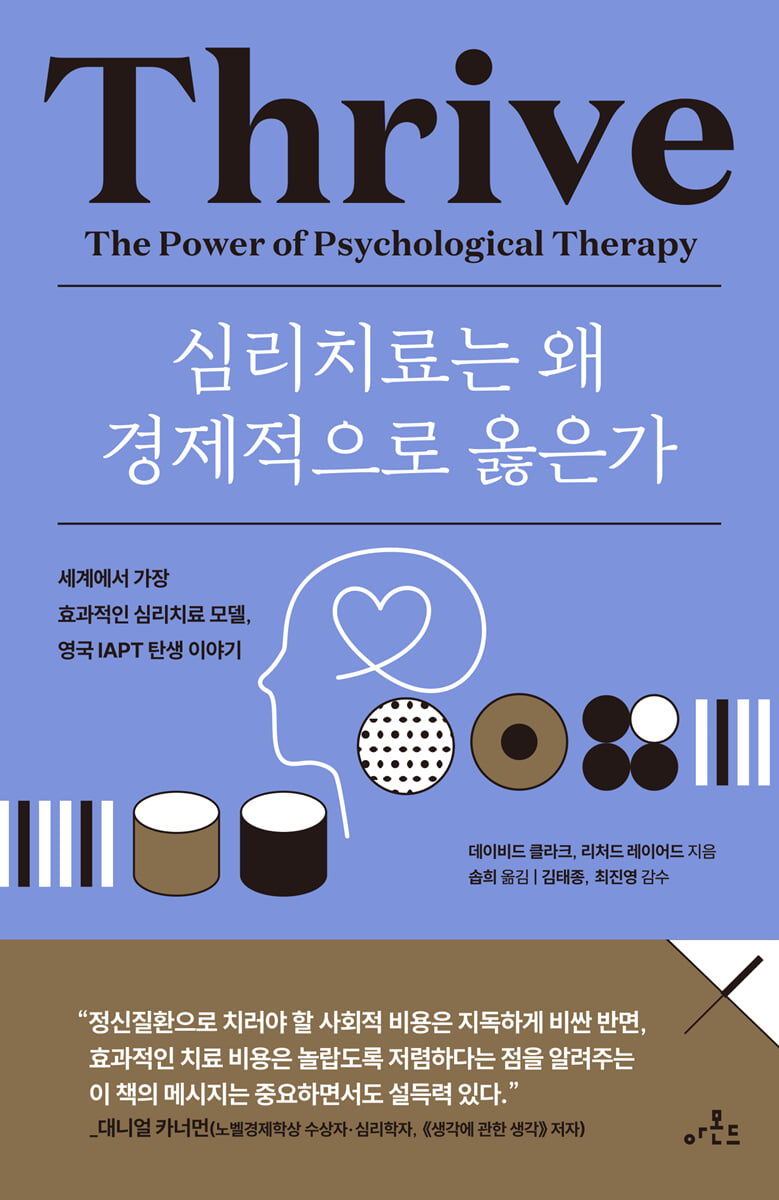
Why Psychotherapy Makes Economic Sense
 |
Description
Book Introduction
Recommended by world-renowned psychologists Daniel Kahneman, Martin Seligman, and Aaron Beck!
Mental health is not only morally sound, but also directly linked to economic growth.
Written by an economist and a psychologist
The Birth of IAPT, the World's Most Effective Psychotherapy Service Model
Launched in 2008, the UK's Improved Access to Psychological Therapy (IAPT) is a model of psychotherapy based on scientific and clinical evidence.
After starting as a pilot project and expanding across the UK, by 2013, five years later, 400,000 people had been treated, and by the end of treatment, nearly half of those treated had recovered.
How did IAPT, the prodigy of the treatment service industry that Nature praised as the "world's best," come about, and what kind of effects has it brought about?
This book fully captures not only the origins and foundation of IAPT, but also its economic and social achievements.
The book was co-written by Richard Layard, a leading British labor economist and professor emeritus at the London School of Economics, and David Clark, a professor of psychology at Oxford University.
The two men are the main characters who conceived IAPT and established it in the UK.
One particularly striking finding from the book is that policy investments in psychotherapy provide a double boost to the budget by increasing tax revenue and reducing welfare costs.
While psychotherapy has been recommended simply because it is "morally sound" or vaguely because it "helps people live healthier lives," this book focuses on the "social benefits and economic feasibility" of psychotherapy.
The story of IAPT, a successful national psychotherapy model, will serve as a much-needed and invaluable guide for Korean society today, which is facing a mental health crisis head-on.
Mental health is not only morally sound, but also directly linked to economic growth.
Written by an economist and a psychologist
The Birth of IAPT, the World's Most Effective Psychotherapy Service Model
Launched in 2008, the UK's Improved Access to Psychological Therapy (IAPT) is a model of psychotherapy based on scientific and clinical evidence.
After starting as a pilot project and expanding across the UK, by 2013, five years later, 400,000 people had been treated, and by the end of treatment, nearly half of those treated had recovered.
How did IAPT, the prodigy of the treatment service industry that Nature praised as the "world's best," come about, and what kind of effects has it brought about?
This book fully captures not only the origins and foundation of IAPT, but also its economic and social achievements.
The book was co-written by Richard Layard, a leading British labor economist and professor emeritus at the London School of Economics, and David Clark, a professor of psychology at Oxford University.
The two men are the main characters who conceived IAPT and established it in the UK.
One particularly striking finding from the book is that policy investments in psychotherapy provide a double boost to the budget by increasing tax revenue and reducing welfare costs.
While psychotherapy has been recommended simply because it is "morally sound" or vaguely because it "helps people live healthier lives," this book focuses on the "social benefits and economic feasibility" of psychotherapy.
The story of IAPT, a successful national psychotherapy model, will serve as a much-needed and invaluable guide for Korean society today, which is facing a mental health crisis head-on.
- You can preview some of the book's contents.
Preview
index
Reviewer's Note ①
Reviewer's Note ②
Preface | Unresolved Pain
Part 1: What's the Problem?
Chapter 1: What is the crux of the problem?
How many people suffer
Why don't you get help?
Is there an effective treatment?
Is the cost of treatment a problem?
Is early intervention necessary?
To create a better society
Chapter 2: Understanding Mental Illness
anxiety disorder
melancholia
schizophrenia
personality disorder
Alcohol dependence and drug addiction
Conduct disorder
We all fall somewhere on the mental health spectrum.
Chapter 3: How many people are suffering?
Is it really getting worse?
The degree and scale of pain
Suicide, the last scream of a person trapped in the trap of pain
Chapter 4: The Neglected
Only 10% receive treatment
Why so few people are receiving treatment
Stigma, the most fundamental enemy of treatment
Heroes
Chapter 5: How Mental Illness Affects Life
The biggest cause of unhappiness
Disease and Death
Incapable of working
low income and grades
Disorderly and antisocial behavior
Mental health affects all areas of life
Chapter 6: Socioeconomic Costs of Mental Illness
Declining employment and increasing dependence on welfare
Increase in crime
Increasing physical health care costs
How to reduce costs
Chapter 7: What Causes Mental Illness
Could it be genetic?
How Genes and Experience Interact
Personal experiences that impact mental health
Lessons from Statistics
Why does the problem persist?
Mental illness is influenced by sociocultural factors.
The problem of inequality
Part 2 What can you do?
Chapter 8: Are treatments effective and reliable?
scientific approach
drugs
cognitive behavioral therapy
Is it effective in the field?
Is it the treatment or the therapist that matters?
Chapter 9: How Treatments Were Developed
Activist Revolution
Beck and cognitive therapy
A successful combination of cognitive and behavioral therapy
Panic Disorder and Cognitive Behavioral Therapy
Various methods of cognitive behavioral therapy
Social Anxiety Disorder and Cognitive Behavioral Therapy
Why some treatments are more effective than others
Chapter 10: Which Treatments Work for Whom?
Depression and Treatments
Treatment of anxiety disorders
Treatment of eating disorders
Combining psychotherapy and medication
A new way to deliver care
Low-intensity treatment and stepwise management
Treatment of schizophrenia
Can personality disorders be treated?
Treatment of alcohol and drug addiction
There is no single cure
Why Therapist Competence Matters
Chapter 11: Will I Be Able to Handle More Treatment?
Successful treatment reduces welfare costs.
Physical medical costs are also reduced.
Treatment improves quality of life
Chapter 12: All About the Increasing Access to Psychotherapy (IAPT) Service
The Birth Story of IAPT
People who have recovered
The six core components of IAPT
Various criticisms of IAPT
The Future of IAPT
Chapter 13: What Treatments Are Effective for Children?
Anxiety and Depression Treatment for Children
destructive behavior
IAPT for Children
Chapter 14: Can Mental Illness Be Prevented?
The importance of early intervention
The Power of Social-Emotional Learning
New evidence-based experiments
resilience
mindfulness
Why School Discipline Matters
All environments should contribute to happiness.
Chapter 15: Will a Better Social Culture Help?
What goals should I set?
How to improve the quality of parenting
The strong fence called school
A workplace where workers are satisfied
Responsibilities of the Press and Advertising
Does the government serve to promote the happiness of its citizens?
Culture depends on what individuals believe.
Chapter 16 To Stop This Pain
Can mental health and physical health be treated equally?
One step toward prevention
A new way of looking at deficiency
Acknowledgements
Sources of tables and charts
supplement
References
Americas
Reviewer's Note ②
Preface | Unresolved Pain
Part 1: What's the Problem?
Chapter 1: What is the crux of the problem?
How many people suffer
Why don't you get help?
Is there an effective treatment?
Is the cost of treatment a problem?
Is early intervention necessary?
To create a better society
Chapter 2: Understanding Mental Illness
anxiety disorder
melancholia
schizophrenia
personality disorder
Alcohol dependence and drug addiction
Conduct disorder
We all fall somewhere on the mental health spectrum.
Chapter 3: How many people are suffering?
Is it really getting worse?
The degree and scale of pain
Suicide, the last scream of a person trapped in the trap of pain
Chapter 4: The Neglected
Only 10% receive treatment
Why so few people are receiving treatment
Stigma, the most fundamental enemy of treatment
Heroes
Chapter 5: How Mental Illness Affects Life
The biggest cause of unhappiness
Disease and Death
Incapable of working
low income and grades
Disorderly and antisocial behavior
Mental health affects all areas of life
Chapter 6: Socioeconomic Costs of Mental Illness
Declining employment and increasing dependence on welfare
Increase in crime
Increasing physical health care costs
How to reduce costs
Chapter 7: What Causes Mental Illness
Could it be genetic?
How Genes and Experience Interact
Personal experiences that impact mental health
Lessons from Statistics
Why does the problem persist?
Mental illness is influenced by sociocultural factors.
The problem of inequality
Part 2 What can you do?
Chapter 8: Are treatments effective and reliable?
scientific approach
drugs
cognitive behavioral therapy
Is it effective in the field?
Is it the treatment or the therapist that matters?
Chapter 9: How Treatments Were Developed
Activist Revolution
Beck and cognitive therapy
A successful combination of cognitive and behavioral therapy
Panic Disorder and Cognitive Behavioral Therapy
Various methods of cognitive behavioral therapy
Social Anxiety Disorder and Cognitive Behavioral Therapy
Why some treatments are more effective than others
Chapter 10: Which Treatments Work for Whom?
Depression and Treatments
Treatment of anxiety disorders
Treatment of eating disorders
Combining psychotherapy and medication
A new way to deliver care
Low-intensity treatment and stepwise management
Treatment of schizophrenia
Can personality disorders be treated?
Treatment of alcohol and drug addiction
There is no single cure
Why Therapist Competence Matters
Chapter 11: Will I Be Able to Handle More Treatment?
Successful treatment reduces welfare costs.
Physical medical costs are also reduced.
Treatment improves quality of life
Chapter 12: All About the Increasing Access to Psychotherapy (IAPT) Service
The Birth Story of IAPT
People who have recovered
The six core components of IAPT
Various criticisms of IAPT
The Future of IAPT
Chapter 13: What Treatments Are Effective for Children?
Anxiety and Depression Treatment for Children
destructive behavior
IAPT for Children
Chapter 14: Can Mental Illness Be Prevented?
The importance of early intervention
The Power of Social-Emotional Learning
New evidence-based experiments
resilience
mindfulness
Why School Discipline Matters
All environments should contribute to happiness.
Chapter 15: Will a Better Social Culture Help?
What goals should I set?
How to improve the quality of parenting
The strong fence called school
A workplace where workers are satisfied
Responsibilities of the Press and Advertising
Does the government serve to promote the happiness of its citizens?
Culture depends on what individuals believe.
Chapter 16 To Stop This Pain
Can mental health and physical health be treated equally?
One step toward prevention
A new way of looking at deficiency
Acknowledgements
Sources of tables and charts
supplement
References
Americas
Into the book
From an economist's perspective, the most surprising finding in this book was that government investment in evidence-based psychotherapy actually helped the government's finances by increasing tax revenue and reducing welfare costs.
It was also surprising that productivity and employment rates recovered simultaneously, and that all citizens enjoyed enormous net economic benefits through reduced medical costs.
As I read through the book, I could sense the two authors' earnest hope that many people suffering from mental illness will return to healthy lives and that the economy will be revitalized and more vibrant.
The Korean title, “Why Psychotherapy is Economically Sound,” which was decided on after much deliberation with the publisher, embodies this hope well.
--- p.7
This book outlines the nature and scale of the problem, the need for policy, and solutions.
Mental health issues require the same therapeutic approach as physical issues.
This is not only morally sound, but also essential for the well-functioning of our economy and society.
--- p.15
Treating mental illness can lead to enormous cost savings, including reducing the number of people who need to rely on welfare benefits and reducing the number of people receiving treatment for physical conditions made worse by their mental illness.
If we estimate this reasonably, treating mental illness is worth it.
From the perspective of society as a whole, there is nothing to lose.
Yet only one-third of those who need treatment receive it.
This is highly unfair and seriously inefficient.
A key purpose of this book is to highlight the seriousness of the suffering caused by untreated mental illness, while also demonstrating that treatment for such illnesses can be achieved at virtually no additional cost.
--- p.26~27
Symptoms of depression and anxiety increase the number of times you see your primary care physician or specialist throughout your life.
On the other hand, several controlled studies show that receiving psychotherapy significantly reduces the number of hospital visits for physical illness.
The money saved in this way is more than enough to cover psychotherapy.
From the health authorities' perspective, this is killing two birds with one stone.
By increasing investment in psychotherapy, not only can we treat mental illness, but we can also reduce the costs of treating physical illness, which will actually improve overall health care finances.
--- p.37
We have a treatment that people want and that isn't very expensive.
The success of this treatment has already been confirmed through rigorous clinical trials.
--- p.40
We must be careful when using the term 'mental illness'.
When treating patients in hospitals, this term is rarely used, and instead, it is said to be 'mental health problems' or 'difficulties'.
But when it comes to spending money alongside policies, we need to approach things a little differently.
We all experience mental health issues to some degree, but when physical illness and mental health issues collide, mental health often takes a back seat.
Using the concept of mental illness can be helpful in ensuring that people who need treatment receive it.
This does not mean at all that the cause of the problem is biological, but rather that it is a clinical condition that requires treatment.
--- p.69
Everyone has problems, and we all fall somewhere on the mental health spectrum.
So there is a question of where the line is drawn between those who are sick and those who are not.
This is no different from the case with many physical ailments.
An example is the definition of hypertension.
Doctors diagnose a patient with high blood pressure when they examine how their blood pressure affects their chances of having a heart attack and determine that it raises the risk to an unacceptable level.
The same goes for mental illness.
The standard is when the level of distress is unacceptably high or when the condition interferes with a person's life to an unacceptable degree.
--- p.70
While physical illnesses often occur in later life, mental illnesses account for more than half of all illnesses that can occur by age 45.
Therefore, mental illness can be said to be the most serious disease that attacks the working-age population.
--- p.81
What this means is that an unsuccessful suicide attempt is not just a cry for help.
Rather, it is closer to a scream from being caught in a trap of pain.
As Oxford University psychologist Mark Williams put it:
A bird that loses a fight with another bird in the forest will fly away if possible.
But a bird trapped in a cage has no choice but to curl up and languish.
In fact, people who attempt suicide often don't care whether they live or die.
They just leave the outcome to chance.
--- p.86
In the United States, 70% of people with social phobia have never received treatment for their first symptoms over 30 years ago, compared to 25% for depression.
Even with treatment, it typically took 16 years for social phobia, 9 years for generalized anxiety disorder, and 8 years for depression.
Bipolar disorder also took an average of six years to receive treatment.
Surprisingly, in the UK, only 28% of people who commit suicide have seen mental health services in the past year.
--- p.89~90
Mental ill-health accounts for a greater proportion of unhappiness than physical ill-health.
The same holds true for all age groups, including older adults, for whom physical health is a real concern.
Moreover, mental distress is a greater factor in unhappiness than poverty or unemployment.
--- p.104
Even though suicide is not the primary route, the impact of depression on life expectancy is comparable to that of smoking.
An example is a study of the entire population of the Norwegian county of North Trøndelag.
At the beginning of the study, all participants' mental status was first clinically diagnosed.
A follow-up study was conducted for six years to confirm death.
This means that people with pre-existing depressive symptoms, regardless of age, are 52% more likely to die than those without.
--- p.106
Mental health issues not only affect the work ability of families of people with mental illness, but also affect economic output through unemployment, absenteeism, and presenteeism.
Even a conservative analysis suggests that the combined effect would have reduced national income (GNP) by 4%, which is equivalent to the amount most countries spend on education.
--- p.127
How reliable is the 4% (4 out of 100) figure for the treatment effect on employment? The most rigorous evidence comes from the United States.
In one randomized controlled trial, patients with depression who received cognitive therapy were followed for two years.
By the end of that period, we found that 18% more people were working.
In contrast, patients prescribed antidepressants over the same two years did not experience a significant increase in employment, nor did patients given a placebo.
This is a huge difference.
Another randomized trial looking at the effect of 'improved mental health treatment' on depression found a 12-month effect of 5 percentage points.
This is a result that shows a larger number than we assumed in our calculations.
--- p.256
People with mental illness require about 60% more medical expenses than other patients with the same physical symptoms and severity.
Of course, addressing their mental health issues could save a ton of money.
--- p.260
Mental health is not only an axis of personal health, but is a critical factor that affects all aspects of life.
This affects school order, street safety, and family functioning.
Social welfare work mostly deals with problems that arise as a result of mental illness.
We need a new way of looking at deficiency.
If you can't live happily for whatever reason, it's a deficiency.
--- p.359
Future generations would be shocked if they knew how blind we were.
Our cruelty is equally surprising.
We look back on past generations and are shocked by the way we treated slaves, women working in mines, children, and people with disabilities.
Our descendants will be amazed at how we treat people with mental health problems today.
You would be shocked to learn that their desperate pleas for psychological support were routinely ignored.
It was also surprising that productivity and employment rates recovered simultaneously, and that all citizens enjoyed enormous net economic benefits through reduced medical costs.
As I read through the book, I could sense the two authors' earnest hope that many people suffering from mental illness will return to healthy lives and that the economy will be revitalized and more vibrant.
The Korean title, “Why Psychotherapy is Economically Sound,” which was decided on after much deliberation with the publisher, embodies this hope well.
--- p.7
This book outlines the nature and scale of the problem, the need for policy, and solutions.
Mental health issues require the same therapeutic approach as physical issues.
This is not only morally sound, but also essential for the well-functioning of our economy and society.
--- p.15
Treating mental illness can lead to enormous cost savings, including reducing the number of people who need to rely on welfare benefits and reducing the number of people receiving treatment for physical conditions made worse by their mental illness.
If we estimate this reasonably, treating mental illness is worth it.
From the perspective of society as a whole, there is nothing to lose.
Yet only one-third of those who need treatment receive it.
This is highly unfair and seriously inefficient.
A key purpose of this book is to highlight the seriousness of the suffering caused by untreated mental illness, while also demonstrating that treatment for such illnesses can be achieved at virtually no additional cost.
--- p.26~27
Symptoms of depression and anxiety increase the number of times you see your primary care physician or specialist throughout your life.
On the other hand, several controlled studies show that receiving psychotherapy significantly reduces the number of hospital visits for physical illness.
The money saved in this way is more than enough to cover psychotherapy.
From the health authorities' perspective, this is killing two birds with one stone.
By increasing investment in psychotherapy, not only can we treat mental illness, but we can also reduce the costs of treating physical illness, which will actually improve overall health care finances.
--- p.37
We have a treatment that people want and that isn't very expensive.
The success of this treatment has already been confirmed through rigorous clinical trials.
--- p.40
We must be careful when using the term 'mental illness'.
When treating patients in hospitals, this term is rarely used, and instead, it is said to be 'mental health problems' or 'difficulties'.
But when it comes to spending money alongside policies, we need to approach things a little differently.
We all experience mental health issues to some degree, but when physical illness and mental health issues collide, mental health often takes a back seat.
Using the concept of mental illness can be helpful in ensuring that people who need treatment receive it.
This does not mean at all that the cause of the problem is biological, but rather that it is a clinical condition that requires treatment.
--- p.69
Everyone has problems, and we all fall somewhere on the mental health spectrum.
So there is a question of where the line is drawn between those who are sick and those who are not.
This is no different from the case with many physical ailments.
An example is the definition of hypertension.
Doctors diagnose a patient with high blood pressure when they examine how their blood pressure affects their chances of having a heart attack and determine that it raises the risk to an unacceptable level.
The same goes for mental illness.
The standard is when the level of distress is unacceptably high or when the condition interferes with a person's life to an unacceptable degree.
--- p.70
While physical illnesses often occur in later life, mental illnesses account for more than half of all illnesses that can occur by age 45.
Therefore, mental illness can be said to be the most serious disease that attacks the working-age population.
--- p.81
What this means is that an unsuccessful suicide attempt is not just a cry for help.
Rather, it is closer to a scream from being caught in a trap of pain.
As Oxford University psychologist Mark Williams put it:
A bird that loses a fight with another bird in the forest will fly away if possible.
But a bird trapped in a cage has no choice but to curl up and languish.
In fact, people who attempt suicide often don't care whether they live or die.
They just leave the outcome to chance.
--- p.86
In the United States, 70% of people with social phobia have never received treatment for their first symptoms over 30 years ago, compared to 25% for depression.
Even with treatment, it typically took 16 years for social phobia, 9 years for generalized anxiety disorder, and 8 years for depression.
Bipolar disorder also took an average of six years to receive treatment.
Surprisingly, in the UK, only 28% of people who commit suicide have seen mental health services in the past year.
--- p.89~90
Mental ill-health accounts for a greater proportion of unhappiness than physical ill-health.
The same holds true for all age groups, including older adults, for whom physical health is a real concern.
Moreover, mental distress is a greater factor in unhappiness than poverty or unemployment.
--- p.104
Even though suicide is not the primary route, the impact of depression on life expectancy is comparable to that of smoking.
An example is a study of the entire population of the Norwegian county of North Trøndelag.
At the beginning of the study, all participants' mental status was first clinically diagnosed.
A follow-up study was conducted for six years to confirm death.
This means that people with pre-existing depressive symptoms, regardless of age, are 52% more likely to die than those without.
--- p.106
Mental health issues not only affect the work ability of families of people with mental illness, but also affect economic output through unemployment, absenteeism, and presenteeism.
Even a conservative analysis suggests that the combined effect would have reduced national income (GNP) by 4%, which is equivalent to the amount most countries spend on education.
--- p.127
How reliable is the 4% (4 out of 100) figure for the treatment effect on employment? The most rigorous evidence comes from the United States.
In one randomized controlled trial, patients with depression who received cognitive therapy were followed for two years.
By the end of that period, we found that 18% more people were working.
In contrast, patients prescribed antidepressants over the same two years did not experience a significant increase in employment, nor did patients given a placebo.
This is a huge difference.
Another randomized trial looking at the effect of 'improved mental health treatment' on depression found a 12-month effect of 5 percentage points.
This is a result that shows a larger number than we assumed in our calculations.
--- p.256
People with mental illness require about 60% more medical expenses than other patients with the same physical symptoms and severity.
Of course, addressing their mental health issues could save a ton of money.
--- p.260
Mental health is not only an axis of personal health, but is a critical factor that affects all aspects of life.
This affects school order, street safety, and family functioning.
Social welfare work mostly deals with problems that arise as a result of mental illness.
We need a new way of looking at deficiency.
If you can't live happily for whatever reason, it's a deficiency.
--- p.359
Future generations would be shocked if they knew how blind we were.
Our cruelty is equally surprising.
We look back on past generations and are shocked by the way we treated slaves, women working in mines, children, and people with disabilities.
Our descendants will be amazed at how we treat people with mental health problems today.
You would be shocked to learn that their desperate pleas for psychological support were routinely ignored.
--- p.360
Publisher's Review
“The social costs of mental illness are extremely high,
It tells us that effective treatment costs are surprisingly low.
“The message of this book is important and compelling.”
- Daniel Kahneman, Nobel Prize winner in economics, psychologist, and author of Thinking, Fast and Slow
Written by an economist and a psychologist
The Birth of IAPT, the World's Most Effective Psychotherapy Service Model
Launched in 2008, the UK's Improved Access to Psychological Therapy (IAPT) is a psychotherapy model based on scientific and clinical evidence.
After starting as a pilot project and expanding across the UK, by 2013, five years later, 400,000 people had been treated, and by the end of treatment, nearly half of those treated had recovered.
Many countries around the world, including Norway and Sweden, have adapted the system to their own circumstances.
How did IAPT, the prodigy of the therapeutic service industry, hailed by Nature as "the world's best," come about, and what impact has it had? A book detailing the background and rationale behind IAPT's creation, as well as its economic and social achievements, has been published, "Thrive: The Power of Psychological Therapy."
The book was written by Richard Layard, a leading British labor economist and professor emeritus at the London School of Economics, and David M. Clark, a professor of psychology at Oxford University.
Professor Clark co-wrote it.
These two individuals not only conceived IAPT, but also convinced policymakers to implement it.
Although the authors focus on the British case, it is no exaggeration to say that the book contains detailed scientific evidence on the active use of evidence-based psychological therapy in mental health promotion and suicide prevention policies in numerous developed countries.
One particularly striking finding from the book is that policy investments in psychotherapy have a double benefit for the budget: they increase tax revenue (by returning people to work after treatment) and reduce welfare costs (by removing people from disability benefits).
While psychotherapy has been recommended simply because it is "morally sound" or vaguely because it "helps people live healthier lives," this book focuses on the "social benefits and economic feasibility" of psychotherapy.
Mental pain is as real as physical pain, but while people with physical pain receive treatment, more than two-thirds of people with mental pain still do not receive treatment.
The IAPT story, created in the process of witnessing this serious discrimination, will serve as a much-needed and invaluable blueprint and guide for today's Korean society, which is facing a mental health crisis head-on.
So, what's the problem?
From the reality of various mental illnesses to their socioeconomic costs
Why People Who Suffer Don't Get Help
The UK has been a leading country in mental health, not only launching IAPT in 2008 but also establishing a ‘Ministry of Loneliness’ in 2018.
The efforts of the two authors of this book have contributed significantly to the UK's recognition of mental health issues and the establishment of policy systems to address them.
The book is divided into two parts.
Part 1, "What's the Problem?" examines how mental illness impacts the lives of patients and those around them, under the premise that "mental health issues require the same therapeutic approach as physical ones."
It also explains the reality of various mental illnesses and the socioeconomic costs and scale of suffering caused by mental illness in a way that even non-specialist readers can easily understand.
What is the scale of suffering caused by mental illness, and what level of effort is being made to address it? The authors point out that in developed countries, mental illness accounts for 40% of all illnesses (22% of all heart disease, stroke, cancer, lung disease, and diabetes combined), yet mental illness consistently receives a lower priority in global health institutions, both in terms of attention and investment.
Compared to some physical illnesses, mental illness is extremely difficult to adapt to, makes it difficult to take care of oneself, leads to situations where one cannot work, and ultimately incurs social costs. However, social interest and government support for mental illness are woefully inadequate.
Next, what impact does mental illness have on life, and what are the socioeconomic costs associated with it? The book synthesizes numerous research findings and surveys to reveal that mental illness is not only the "greatest cause of unhappiness," but also a direct cause of disease and death.
In addition, mental illness can make people unable to work, cause them to engage in disorderly and antisocial behavior, and lower their income and academic achievement.
Mental health affects literally every area of life.
Socioeconomic costs are manifested in a broader way as a direct impact on life.
As productive workers take time off work, the number of employed people decreases and dependence on welfare increases.
Crime is on the rise, and the physical health care costs associated with mental illness are also rising.
The authors repeatedly emphasize that action to address mental health issues is urgently needed, given the large number of people who are unhappy or suffering and the enormous socioeconomic costs associated with them.
Despite such a dire situation, why don't people seek treatment? Is it because effective treatments don't exist? Or is it because they're too expensive? The authors assert.
There are 'scientifically proven psychotherapies', and 'they are not expensive.'
So what can we do?
From the effectiveness of psychotherapy to its economic and social benefits and outcomes
Diverse scientific evidence on the necessity of treatment
Part 2, “What Can Be Done,” explores ways to combat the personal suffering and social harm caused by mental illness.
That is, it covers whether effective and reliable treatments exist, and if so, how they were developed, for which people they actually work, and how to afford them.
The authors first discuss treatments that are effective, reliable, and inexpensive, even saving money and even preserving the health of the body.
This treatment, called 'evidence-based psychotherapy', is 'cognitive behavioral therapy' developed by world-renowned psychologist Aaron Beck.
The authors emphasize that while there are certainly other excellent treatments out there, cognitive behavioral therapy has been validated by hundreds of randomized clinical trials, just as "medical treatments" are tested.
In the case of cognitive behavioral therapy, about 50% of patients treated for symptoms of depression or anxiety disorders recover during treatment, and it is as effective as drug treatment and more effective than drugs in preventing relapse of depression.
What about the cost of treatment? Can we afford to provide care to everyone in need? The authors speak out.
“Yes.”
He also criticizes the fact that questions about cost are not asked when treating physical ailments, and emphasizes that the same standards should be applied to people with depression and anxiety disorders, which sometimes lead to more serious illnesses.
So what are the economic benefits of psychotherapy? First, unlike physical illness, mental illness primarily occurs in economically active age groups. Investing in psychotherapy can save on social welfare costs and tax revenue lost due to these individuals' inability to work.
The most rigorous evidence on the impact of treatment on employment is provided by the US case.
A randomized controlled trial in the United States followed depressed patients who received cognitive therapy for two years, and at the end of that period, 18% more people were working.
The second economic benefit the authors cite is that improving mental health also reduces the cost of physical health care.
The book presents a discussion of its practical economic impact, drawing on a variety of studies and surveys.
For example, studies showing that cognitive behavioral therapy reduces hospital admissions and cardiovascular disease recurrence in patients with intractable angina are particularly interesting.
unresolved pain,
A book that opens the door to discussion about mental health issues
This book was published in the UK in 2014.
The reason why the contents of the book, which were introduced in Korea more than 10 years ago, are still relevant is because it has become a little easier to talk about mental illnesses such as depression, anxiety disorder, and ADHD, and awareness has improved a little due to the production and distribution of various contents dealing with mental health, but the level of interest is still low.
In fact, the spark of social and policy interest in mental health is only just beginning to bloom.
It was only in 2024 that full-scale financial investment in evidence-based psychotherapy began in Korea under the name of the "National Mental Investment Support Project."
Kim Tae-jong, an economist and professor at KDI School of Public Policy and Management who reviewed the book, said, “I sincerely hope that many people who have been living in pain without being able to reveal it until now will be able to receive help in the early stages of mental illness through this project that has just taken its first step.” He also recommended the book, saying, “The British experience introduced in this book is a blueprint that presents the direction in which mental illness-related systems should move in the future.”
Professor Jinyoung Choi of the Department of Psychology at Seoul National University, who worked hard to introduce this book to Korea for the first time, reviewed the content as a psychologist and said, “I sincerely hope that this book will open the door to discussions on mental health issues that have not yet been resolved, and serve as a concrete and practical reference book that can help find a clue to overcoming them, not only for those with mental illness and their families, but also for general readers interested in their own and their families’ mental health, those working to improve related policies and systems in the government and the National Assembly, and many people in academia such as psychology, psychiatry, public health, and economics.”
It tells us that effective treatment costs are surprisingly low.
“The message of this book is important and compelling.”
- Daniel Kahneman, Nobel Prize winner in economics, psychologist, and author of Thinking, Fast and Slow
Written by an economist and a psychologist
The Birth of IAPT, the World's Most Effective Psychotherapy Service Model
Launched in 2008, the UK's Improved Access to Psychological Therapy (IAPT) is a psychotherapy model based on scientific and clinical evidence.
After starting as a pilot project and expanding across the UK, by 2013, five years later, 400,000 people had been treated, and by the end of treatment, nearly half of those treated had recovered.
Many countries around the world, including Norway and Sweden, have adapted the system to their own circumstances.
How did IAPT, the prodigy of the therapeutic service industry, hailed by Nature as "the world's best," come about, and what impact has it had? A book detailing the background and rationale behind IAPT's creation, as well as its economic and social achievements, has been published, "Thrive: The Power of Psychological Therapy."
The book was written by Richard Layard, a leading British labor economist and professor emeritus at the London School of Economics, and David M. Clark, a professor of psychology at Oxford University.
Professor Clark co-wrote it.
These two individuals not only conceived IAPT, but also convinced policymakers to implement it.
Although the authors focus on the British case, it is no exaggeration to say that the book contains detailed scientific evidence on the active use of evidence-based psychological therapy in mental health promotion and suicide prevention policies in numerous developed countries.
One particularly striking finding from the book is that policy investments in psychotherapy have a double benefit for the budget: they increase tax revenue (by returning people to work after treatment) and reduce welfare costs (by removing people from disability benefits).
While psychotherapy has been recommended simply because it is "morally sound" or vaguely because it "helps people live healthier lives," this book focuses on the "social benefits and economic feasibility" of psychotherapy.
Mental pain is as real as physical pain, but while people with physical pain receive treatment, more than two-thirds of people with mental pain still do not receive treatment.
The IAPT story, created in the process of witnessing this serious discrimination, will serve as a much-needed and invaluable blueprint and guide for today's Korean society, which is facing a mental health crisis head-on.
So, what's the problem?
From the reality of various mental illnesses to their socioeconomic costs
Why People Who Suffer Don't Get Help
The UK has been a leading country in mental health, not only launching IAPT in 2008 but also establishing a ‘Ministry of Loneliness’ in 2018.
The efforts of the two authors of this book have contributed significantly to the UK's recognition of mental health issues and the establishment of policy systems to address them.
The book is divided into two parts.
Part 1, "What's the Problem?" examines how mental illness impacts the lives of patients and those around them, under the premise that "mental health issues require the same therapeutic approach as physical ones."
It also explains the reality of various mental illnesses and the socioeconomic costs and scale of suffering caused by mental illness in a way that even non-specialist readers can easily understand.
What is the scale of suffering caused by mental illness, and what level of effort is being made to address it? The authors point out that in developed countries, mental illness accounts for 40% of all illnesses (22% of all heart disease, stroke, cancer, lung disease, and diabetes combined), yet mental illness consistently receives a lower priority in global health institutions, both in terms of attention and investment.
Compared to some physical illnesses, mental illness is extremely difficult to adapt to, makes it difficult to take care of oneself, leads to situations where one cannot work, and ultimately incurs social costs. However, social interest and government support for mental illness are woefully inadequate.
Next, what impact does mental illness have on life, and what are the socioeconomic costs associated with it? The book synthesizes numerous research findings and surveys to reveal that mental illness is not only the "greatest cause of unhappiness," but also a direct cause of disease and death.
In addition, mental illness can make people unable to work, cause them to engage in disorderly and antisocial behavior, and lower their income and academic achievement.
Mental health affects literally every area of life.
Socioeconomic costs are manifested in a broader way as a direct impact on life.
As productive workers take time off work, the number of employed people decreases and dependence on welfare increases.
Crime is on the rise, and the physical health care costs associated with mental illness are also rising.
The authors repeatedly emphasize that action to address mental health issues is urgently needed, given the large number of people who are unhappy or suffering and the enormous socioeconomic costs associated with them.
Despite such a dire situation, why don't people seek treatment? Is it because effective treatments don't exist? Or is it because they're too expensive? The authors assert.
There are 'scientifically proven psychotherapies', and 'they are not expensive.'
So what can we do?
From the effectiveness of psychotherapy to its economic and social benefits and outcomes
Diverse scientific evidence on the necessity of treatment
Part 2, “What Can Be Done,” explores ways to combat the personal suffering and social harm caused by mental illness.
That is, it covers whether effective and reliable treatments exist, and if so, how they were developed, for which people they actually work, and how to afford them.
The authors first discuss treatments that are effective, reliable, and inexpensive, even saving money and even preserving the health of the body.
This treatment, called 'evidence-based psychotherapy', is 'cognitive behavioral therapy' developed by world-renowned psychologist Aaron Beck.
The authors emphasize that while there are certainly other excellent treatments out there, cognitive behavioral therapy has been validated by hundreds of randomized clinical trials, just as "medical treatments" are tested.
In the case of cognitive behavioral therapy, about 50% of patients treated for symptoms of depression or anxiety disorders recover during treatment, and it is as effective as drug treatment and more effective than drugs in preventing relapse of depression.
What about the cost of treatment? Can we afford to provide care to everyone in need? The authors speak out.
“Yes.”
He also criticizes the fact that questions about cost are not asked when treating physical ailments, and emphasizes that the same standards should be applied to people with depression and anxiety disorders, which sometimes lead to more serious illnesses.
So what are the economic benefits of psychotherapy? First, unlike physical illness, mental illness primarily occurs in economically active age groups. Investing in psychotherapy can save on social welfare costs and tax revenue lost due to these individuals' inability to work.
The most rigorous evidence on the impact of treatment on employment is provided by the US case.
A randomized controlled trial in the United States followed depressed patients who received cognitive therapy for two years, and at the end of that period, 18% more people were working.
The second economic benefit the authors cite is that improving mental health also reduces the cost of physical health care.
The book presents a discussion of its practical economic impact, drawing on a variety of studies and surveys.
For example, studies showing that cognitive behavioral therapy reduces hospital admissions and cardiovascular disease recurrence in patients with intractable angina are particularly interesting.
unresolved pain,
A book that opens the door to discussion about mental health issues
This book was published in the UK in 2014.
The reason why the contents of the book, which were introduced in Korea more than 10 years ago, are still relevant is because it has become a little easier to talk about mental illnesses such as depression, anxiety disorder, and ADHD, and awareness has improved a little due to the production and distribution of various contents dealing with mental health, but the level of interest is still low.
In fact, the spark of social and policy interest in mental health is only just beginning to bloom.
It was only in 2024 that full-scale financial investment in evidence-based psychotherapy began in Korea under the name of the "National Mental Investment Support Project."
Kim Tae-jong, an economist and professor at KDI School of Public Policy and Management who reviewed the book, said, “I sincerely hope that many people who have been living in pain without being able to reveal it until now will be able to receive help in the early stages of mental illness through this project that has just taken its first step.” He also recommended the book, saying, “The British experience introduced in this book is a blueprint that presents the direction in which mental illness-related systems should move in the future.”
Professor Jinyoung Choi of the Department of Psychology at Seoul National University, who worked hard to introduce this book to Korea for the first time, reviewed the content as a psychologist and said, “I sincerely hope that this book will open the door to discussions on mental health issues that have not yet been resolved, and serve as a concrete and practical reference book that can help find a clue to overcoming them, not only for those with mental illness and their families, but also for general readers interested in their own and their families’ mental health, those working to improve related policies and systems in the government and the National Assembly, and many people in academia such as psychology, psychiatry, public health, and economics.”
GOODS SPECIFICS
- Date of issue: February 25, 2025
- Page count, weight, size: 472 pages | 558g | 130*200*30mm
- ISBN13: 9791192465210
- ISBN10: 1192465210
You may also like
카테고리
korean


korean

![ELLE 엘르 스페셜 에디션 A형 : 12월 [2025]](http://librairie.coreenne.fr/cdn/shop/files/b8e27a3de6c9538896439686c6b0e8fb.jpg?v=1766436872&width=3840)


