

World Forest
 |
Description
Book Introduction
- A word from MD
- There are many books about trees and forests.
Few plant books are as mystical, scientific, and beautiful as Diana Beresford-Kroeger's Forests of the World.
It beautifully expresses the interplay between ancient and modern, science and literature, and the interplay between trees and living things.
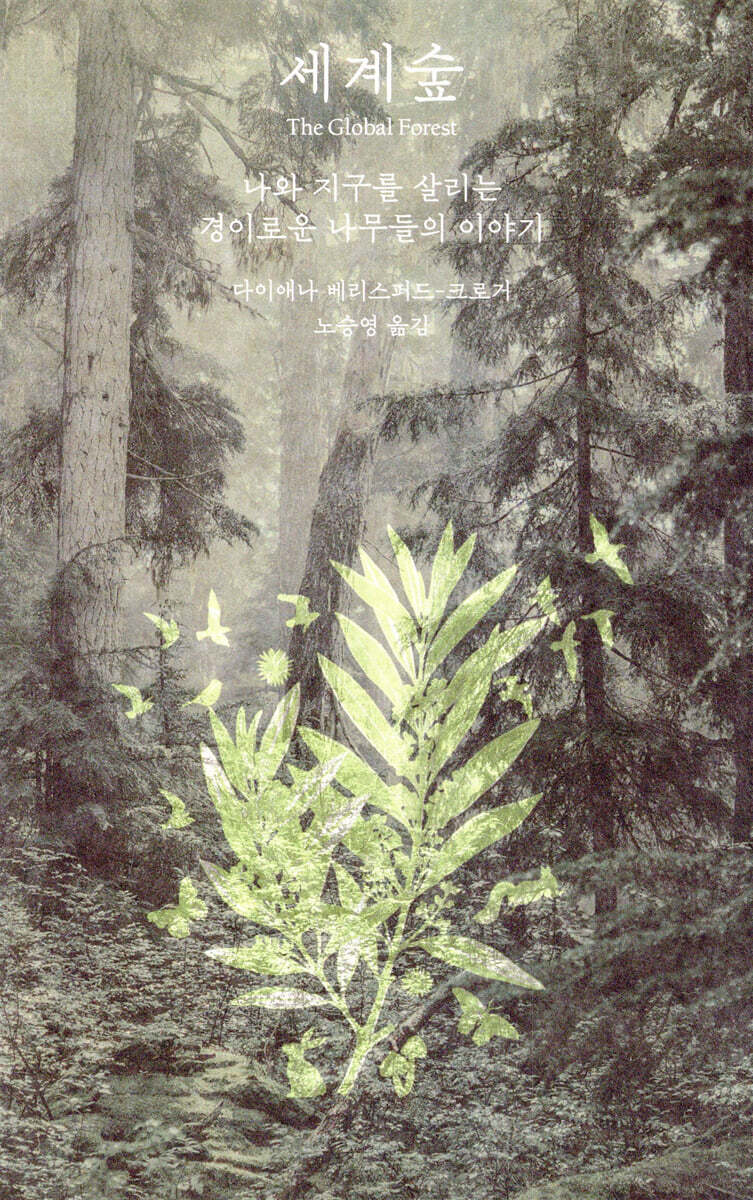
The detailed plant illustrations included only in the Korean edition enhance the value of this book.
- Son Min-gyu, natural science producer
Diana Beresford-Kroger, a world-renowned female botanist and expert on the medicinal, environmental, and nutritional properties of trees, weaves together scientific knowledge of forests and trees with the ecological wisdom of ancient humans in poetic prose.
The author has been studying the benefits of trees for all the surrounding plants and animals, including humans, and the planet Earth, utilizing knowledge from various fields such as tree physiology, geology, physics, chemistry, medicine, and food and nutrition.
Beresford-Kroger, a "scientist who speaks the language of poets," builds on a solid foundation of scientific rigor, seamlessly interweaving it with the prophetic insights of North American indigenous peoples and ancient Celtic traditions.
This unique narrative approach lowers the barriers to accessing detailed scientific knowledge about trees, and instead provides a bridge for an analytical yet intuitive immersion into the world of trees.
This book tells us that only the regeneration of the forest, which is "the whole that embraces the world and transcends it," can restore our broken lives and connect us healthily to one another.
By capturing the wonderful stories about trees we never knew about in beautiful sentences, it allows us to see the greatness of forests and trees with new eyes.
The food, healing, care, connection, and peace that trees generously provide to planet Earth are etched on every page like a 'scripture of the forest.'
The author has been studying the benefits of trees for all the surrounding plants and animals, including humans, and the planet Earth, utilizing knowledge from various fields such as tree physiology, geology, physics, chemistry, medicine, and food and nutrition.
Beresford-Kroger, a "scientist who speaks the language of poets," builds on a solid foundation of scientific rigor, seamlessly interweaving it with the prophetic insights of North American indigenous peoples and ancient Celtic traditions.
This unique narrative approach lowers the barriers to accessing detailed scientific knowledge about trees, and instead provides a bridge for an analytical yet intuitive immersion into the world of trees.
This book tells us that only the regeneration of the forest, which is "the whole that embraces the world and transcends it," can restore our broken lives and connect us healthily to one another.
By capturing the wonderful stories about trees we never knew about in beautiful sentences, it allows us to see the greatness of forests and trees with new eyes.
The food, healing, care, connection, and peace that trees generously provide to planet Earth are etched on every page like a 'scripture of the forest.'
- You can preview some of the book's contents.
Preview
index
preface
Color of Life
Beautiful Savannah
Magic Tree
Petition for Sustainability
supernatural
My Happy Home
Heroes and Hormones
a handful of nuts
Forest, Fairy, Child
indigenous people
Bioplan for Biodiversity
Smile, monkey, smile
Medicine for mammals
Dear Mom
Forest Flowers
About the forest and art
Dialogue on Climate Change
Paper Raid
fragrance
Mixing
“Let there be light”
sacred tree
Food of the Forest
Hedge Heaven
Forest Warning
The sound of silence
medicinal tree
sexual revolution
The Breath of a Tree
Nut oils and nut fats
Invisible Forest
global warming
The birds and the bees
Dream World
The marriage of lichens
Plant sex
dirty laundry
With passion
Finding herbs
Guardian of the Forest and Fire
Acknowledgements
References
Color of Life
Beautiful Savannah
Magic Tree
Petition for Sustainability
supernatural
My Happy Home
Heroes and Hormones
a handful of nuts
Forest, Fairy, Child
indigenous people
Bioplan for Biodiversity
Smile, monkey, smile
Medicine for mammals
Dear Mom
Forest Flowers
About the forest and art
Dialogue on Climate Change
Paper Raid
fragrance
Mixing
“Let there be light”
sacred tree
Food of the Forest
Hedge Heaven
Forest Warning
The sound of silence
medicinal tree
sexual revolution
The Breath of a Tree
Nut oils and nut fats
Invisible Forest
global warming
The birds and the bees
Dream World
The marriage of lichens
Plant sex
dirty laundry
With passion
Finding herbs
Guardian of the Forest and Fire
Acknowledgements
References
Detailed image
.jpg)
Into the book
The forest is a treasure trove.
Every forest in the World Gardens is a treasure trove of microorganisms, insects, birds, mammals, and plants.
This treasure is important to all life.
No species is better or worse than the rest.
Connected by a chain of connectivity, everyone is equal.
Every bee, every wolf has the right to dream or die, to live a wonderful life, a life of its own.
The right to a treasure is preserved until the end of time.
There is a rule of thumb in forests that amplifies diversity.
Each tree provides food for about 40 species of insects.
Insects are linked to the growth patterns of certain tree species.
Therefore, diverse forests realize biodiversity, exploding and amplifying diversity in all ranges from the visible to the invisible.
It embroiders the pattern of predator and prey.
Lay the foundation for health.
--- p.67
Many North American nuts have a hull that resembles an acorn.
The outer skin is easily visible, being green when mature but quickly turning black or brown when it falls to the ground.
There are fine wrinkles on the surface of the outer skin.
The wrinkles of black walnut and white walnut trees have another characteristic.
The spring hair contains explosive chemicals.
Some chemicals are iodine-based and release pungent iodine aerosols into the surrounding air.
This is a defensive biochemical.
Just holding a green black walnut can protect a child from childhood leukemia.
But science has not paid attention, even though all North American nut species have the same outer shell.
--- p.84
Logging the world's forests is pure madness from a child's perspective.
It is an indiscriminate and intentional act of destruction that takes the lives of forest trees.
It destroys birds' nests and steals their food.
The butterfly loses a place to show off its beauty.
It no longer shows the colors engraved on its silky wings.
Large forest animals will also disappear.
The little beasts have no place to hide.
There is no place to sleep or groom.
Snails and slugs will have to move their homes endlessly.
In the long childhood, when time has passed, the trees for the child to climb and the trees for the swing rope to be tied will disappear.
--- p.93
The holistic solution to pollution reversal and environmental stabilization is bioplanning.
Bioplan re-knits nature's worn-out elements into our thoughts.
Even if you can't put the genie back in the lamp, you can keep the misfortune out.
Time will also become a new safety net.
This is because the genetic code has its own buffering system.
It will take time for this system to work its magic by inducing and inhibiting enzymes to heal all mechanisms of all living things, from bees to humans.
--- p.109
On a hot and humid summer day, worker bees search for sap.
They use their large jaws to remove the sap from the tree and take it to the hive.
You can see the sap falling down where the bees have landed.
The bees carefully mix the sap with the beeswax in the hive, which they then use to seal the hive against intrusion and to regulate the temperature inside.
It is also used to trap outside insects that enter the hive.
By burying the intruder in the wax, the rest of the hive is safe from germs.
Pollinating insects may seem small and insignificant, but they multiply by the billions and are a vital link in the chain of life.
When these insects lose their health, pollination cannot occur.
Without pollen, seeds cannot be made.
Within each tiny seed of a good crop lies a kitchen that feeds a family and the promise of another spring on the farm.
--- p.123
No one ever thought that trees and plants had warm blood like mammals.
But it's warm blood.
As the spring sun rises on the southern horizon, the trees are warmed from the trunk up.
A passive blackbody effect is at work here, but above this passive state, some trees show a marked increase in metabolic activity.
Wildflower populations of tubers, rhizomes and corms that wrap around the apron of tree trunks utilize this heating effect.
This warm-up wakes the plants from dormancy.
Insects often help too.
It holds flower buds and flowers together, melting the winter sugar glue and allowing them to begin growing.
A large mother tree does this delicate spring warm-up more effectively than a small tree.
--- p.129
The World Gardens provide a whopping 80,000 species of plants for food.
But the industrial food conglomerate's gaze is fixed on 20 plants.
These plants have recently become our global food source.
As convenience food became popular, the variety of options decreased.
Out of 80,000 possibilities, only eight species of plants remain.
The entire world depends on just eight crops.
Oral knowledge about the remaining 79,992 species is rapidly disappearing.
Future generations will not know how to eat this plant.
The eight famous crops are wheat, rice, corn, potatoes, barley, cassava, sweet potatoes, and beans.
These are pressed and crushed.
Packaged and decorated for sale.
Colored and transformed.
It is designed for the claws of the industrial market.
It's being force-fed to people who crave added sugar, salt, and fat, stripped of all its true nutrients.
Altered foods are too easily digested and can cause toxic reactions in the body.
Food from the world's forests has been forgotten in the race to urbanization.
Trees that were once called the world's salvation trees are being ignored and, worse still, forgotten.
Many trees are being cut down and some are becoming extinct.
Every forest in the World Gardens is a treasure trove of microorganisms, insects, birds, mammals, and plants.
This treasure is important to all life.
No species is better or worse than the rest.
Connected by a chain of connectivity, everyone is equal.
Every bee, every wolf has the right to dream or die, to live a wonderful life, a life of its own.
The right to a treasure is preserved until the end of time.
There is a rule of thumb in forests that amplifies diversity.
Each tree provides food for about 40 species of insects.
Insects are linked to the growth patterns of certain tree species.
Therefore, diverse forests realize biodiversity, exploding and amplifying diversity in all ranges from the visible to the invisible.
It embroiders the pattern of predator and prey.
Lay the foundation for health.
--- p.67
Many North American nuts have a hull that resembles an acorn.
The outer skin is easily visible, being green when mature but quickly turning black or brown when it falls to the ground.
There are fine wrinkles on the surface of the outer skin.
The wrinkles of black walnut and white walnut trees have another characteristic.
The spring hair contains explosive chemicals.
Some chemicals are iodine-based and release pungent iodine aerosols into the surrounding air.
This is a defensive biochemical.
Just holding a green black walnut can protect a child from childhood leukemia.
But science has not paid attention, even though all North American nut species have the same outer shell.
--- p.84
Logging the world's forests is pure madness from a child's perspective.
It is an indiscriminate and intentional act of destruction that takes the lives of forest trees.
It destroys birds' nests and steals their food.
The butterfly loses a place to show off its beauty.
It no longer shows the colors engraved on its silky wings.
Large forest animals will also disappear.
The little beasts have no place to hide.
There is no place to sleep or groom.
Snails and slugs will have to move their homes endlessly.
In the long childhood, when time has passed, the trees for the child to climb and the trees for the swing rope to be tied will disappear.
--- p.93
The holistic solution to pollution reversal and environmental stabilization is bioplanning.
Bioplan re-knits nature's worn-out elements into our thoughts.
Even if you can't put the genie back in the lamp, you can keep the misfortune out.
Time will also become a new safety net.
This is because the genetic code has its own buffering system.
It will take time for this system to work its magic by inducing and inhibiting enzymes to heal all mechanisms of all living things, from bees to humans.
--- p.109
On a hot and humid summer day, worker bees search for sap.
They use their large jaws to remove the sap from the tree and take it to the hive.
You can see the sap falling down where the bees have landed.
The bees carefully mix the sap with the beeswax in the hive, which they then use to seal the hive against intrusion and to regulate the temperature inside.
It is also used to trap outside insects that enter the hive.
By burying the intruder in the wax, the rest of the hive is safe from germs.
Pollinating insects may seem small and insignificant, but they multiply by the billions and are a vital link in the chain of life.
When these insects lose their health, pollination cannot occur.
Without pollen, seeds cannot be made.
Within each tiny seed of a good crop lies a kitchen that feeds a family and the promise of another spring on the farm.
--- p.123
No one ever thought that trees and plants had warm blood like mammals.
But it's warm blood.
As the spring sun rises on the southern horizon, the trees are warmed from the trunk up.
A passive blackbody effect is at work here, but above this passive state, some trees show a marked increase in metabolic activity.
Wildflower populations of tubers, rhizomes and corms that wrap around the apron of tree trunks utilize this heating effect.
This warm-up wakes the plants from dormancy.
Insects often help too.
It holds flower buds and flowers together, melting the winter sugar glue and allowing them to begin growing.
A large mother tree does this delicate spring warm-up more effectively than a small tree.
--- p.129
The World Gardens provide a whopping 80,000 species of plants for food.
But the industrial food conglomerate's gaze is fixed on 20 plants.
These plants have recently become our global food source.
As convenience food became popular, the variety of options decreased.
Out of 80,000 possibilities, only eight species of plants remain.
The entire world depends on just eight crops.
Oral knowledge about the remaining 79,992 species is rapidly disappearing.
Future generations will not know how to eat this plant.
The eight famous crops are wheat, rice, corn, potatoes, barley, cassava, sweet potatoes, and beans.
These are pressed and crushed.
Packaged and decorated for sale.
Colored and transformed.
It is designed for the claws of the industrial market.
It's being force-fed to people who crave added sugar, salt, and fat, stripped of all its true nutrients.
Altered foods are too easily digested and can cause toxic reactions in the body.
Food from the world's forests has been forgotten in the race to urbanization.
Trees that were once called the world's salvation trees are being ignored and, worse still, forgotten.
Many trees are being cut down and some are becoming extinct.
--- p.190
Publisher's Review
How Trees Save Us
Trees provide nourishment, healing, care, connection, and peace for all living beings...
The tree's grace and comfort, woven with beautiful language and scientific insight, like poetry.
“It goes beyond simply imparting scientific knowledge, teaching us how to build a new relationship with nature, reconnecting us with the Earth and inspiring us to dream of a better future.”
Lee Jeong-mo (former director of the National Science Museum in Gwacheon, author of "Splendid Extinction")
“The wondrous vitality of trees unfolds on every page: they breathe, communicate, reproduce, heal, and even nurture.
This unique natural history will surely be an amazing gift to you.”
Lee Song-hee (film director, author of "Dance in the Age of Climate Crisis")
Diana Beresford-Kroger, a world-renowned female botanist who grew up in a rural Irish village surrounded by forests and fields, communing with trees, became a scientist to better understand trees, and dedicated her eighty years to caring for trees and restoring forests and the Earth, has published 『Forests of the World』.
Just as British zoologist and environmental activist Jane Goodall dedicated her life to chimpanzee research and protecting the Earth's ecosystem, Diana Beresford-Kroeger placed trees at the center of her life, and Edward O.
Wilson and other fellow scholars have nicknamed her “the Jane Goodall of the Trees,” saying, “What Jane Goodall did for chimpanzees and Rachel Carson did for the ancient mother ocean, Beresford-Kroeger has done for the world’s forests.”
"World Forest" weaves together Beresford-Kroger's lifelong scientific knowledge of forests and trees, along with the ecological wisdom of ancient humans, into poetic prose, unfolding the landscape of Ireland, where she grew up, at times grandly, at other times charmingly.
Beresford-Kroger has been working on a global project to restore the forests that have been disappearing from our lives for the past several decades by planting trees, cultivating gardens, and ultimately creating a "World Forest." Through the documentary "Voices of the Forest," Beresford-Kroger introduced the wondrous lives of trees and raised awareness of the need for a world forest.
In that respect, this book, "The World Forest," can be said to be an important work that Beresford-Kroger wrote with earnest sincerity as a science writer and a fellow citizen living on a planet in crisis.
The title of this book, 'World Forest', is a metaphor for the 'World Tree', a mythical tree that is the center of the world and supports it.
Just as every forest has a mother tree, there is a world forest or world garden on Earth that nurtures all living things.
Original storytelling that blends scientific discovery and mythical imagination.
A unique and wondrous book written with the perspective of a forest and the language of trees.
Beresford-Kroger is a botanist and expert on the medicinal, environmental, and nutritional properties of trees.
In other words, we have been studying the benefits of trees for all surrounding plants and animals, including humans, and the planet Earth, by utilizing knowledge from various fields, including not only the physiology of trees but also geology, physics, chemistry, medicine, and food and nutrition.
A scientist who speaks the language of a poet, Beresford-Kroger builds on a solid foundation of scientific rigor, seamlessly interweaving it with the prophetic insights of North American indigenous peoples and ancient Celtic traditions.
It may feel strange to encounter words like “God” or “prophecy” in the writings of scientists.
However, these expressions further stimulate the imagination of the world of trees and gently draw readers in.
In his view, the world in which trees live is a world of discovery and exploration, but at the same time, it is an unknown world that holds the invisible hand of God and the secrets of primordial life.
This unique narrative approach lowers the barrier to entry that can arise when approaching theoretical knowledge about trees, and rather serves as a stepping stone for intuitively immersing oneself deeply into the world of trees.
Trees breathe, communicate, and reproduce.
Trees provide shelter and shelter, and they are medicine and food.
Trees release beneficial chemicals that strengthen the human immune system and improve mental health.
Trees restore the ecological balance that has been disrupted both on land and in the sea, and purify the human body from various pollutants.
Trees are thus connected to all life on Earth and maintain biodiversity.
In this way, 『World Forest』 captures the fascinating characteristics of trees in forty beautiful essays.
From a tree that cures childhood leukemia, high blood pressure, and poor eyesight.
From the farmer's livelihood to trees that promote biodiversity
The author finds the reason why red and green have symbolized the sacred and human life since ancient times in human hemoglobin and tree chlorophyll.
These two have something in common: not only are they similar in color, they are housed in similarly shaped, soft sacs, and they each transport oxygen through similar mechanisms.
“As if God had planned it, these two twin sister molecules joined hands in the quantum cocoon and created life for the entire planet.” Humans are very much like trees, and trees are very much like humans.
Elderberry has been used as a precious cosmetic since ancient Egyptian times.
It has a skin-regenerating and restorative effect, and its flowers have been used as eye drops.
Birds eat elderberries, which contain the complex sugar rhamnose, to maintain their vision and fly in the dark.
Bathing your newborn with dried flower water acts as a gentle skin tonic, containing biochemicals that protect capillaries.
Biochemicals from hawthorn, a close relative of apples, help strengthen the heart and stabilize blood pressure.
Native North Americans maintained their heart health simply by eating hawthorn berries.
Walnuts release iodine-based defensive biochemicals from their wrinkles, and children can be protected against childhood leukemia simply by holding a green nut before it matures to brown.
Moreover, the nutritious content per pound of walnut flesh is comparable to that of grilled short ribs.
The scent of bergamot oil acts as a bronchodilator, cleansing and keeping the lungs healthy.
Biochemicals in aerosols sprayed from forest trees create an atmospheric barrier that blocks bacteria, pathogenic fungi, and various viruses, and even helps treat them.
It is the last line of defense to protect humans from severe air pollution.
Trees are also a great help in growing cash crops.
Planting native trees in agricultural areas can “purify surface water, control pollution, reduce nitrate contamination, and promote bird populations, mineral recycling, and windbreaks.”
It can also help to calm soaring temperatures and UV radiation.
And it's even more wonderful and beautiful." This applies to all temperate regions.
Trees also help with food cycles and increase aquatic biodiversity.
The sap of the tree is sweet.
The squirrel strips the bark off the tree.
When the temperature is cold, the sap turns to candy.
The squirrels taste it first, and the winter birds drink the exudate.
Then butterflies and ants come one after another.
A tree's wounds become calloused.
But the tree with the damaged bud now produces more fruit.
The waterside ash tree releases the sedative juglone into the water.
This stabilizes the metabolic rate of aquatic animals and helps them to hibernate during winter.
Coastal forests reduce the growth of toxic algae by inhibiting the flow of nutrients into the water.
In this way, “the forest extends its hand of blessing to the lives it cares for.”
Trees and plants even influence the surrounding vegetation, much like warm-blooded mammals.
The black body effect caused by the sun enhances the metabolic activity of trees.
The tree's heat awakens the wildflowers that surround its roots and trunks, and the buzz of pollinating insects kick-starts spring growth.
This 'warm blood behavior' is more often seen in mature individuals, such as mother trees.
Simple living, sustainability, and whole-heartedness
Hope conveyed by the green voice of the tree
Trees communicate in ultra-low tones.
The sound of a pine tree is sharp, and that of a red oak tree is round.
Some people feel as if their throats are being strangled or even suffocated when a forest is being cut down.
The author says:
“The voice of life is green.” In today’s ecological crisis, “trees, which should be a top priority, are being pushed to the back burner,” and as a result, the voice of life is withering from green to gray.
“The Earth is clothed in the mantle of life.
A cloak is coming down from Earth's shoulders.
It gets dragged down.
This nakedness will bring about the final stage of death, all death.
Then there will be eternal silence.”
"World Forest" emphasizes that only the regeneration of the forest, which is "a whole that embraces the world and transcends it," can restore our broken lives and connect us healthily to one another.
This is possible through simple living, sustainable thinking, and a healthy sense that everyone can play a part in this problem (which the author defines as simplicity, sustainability, and sanity).
If trees and forests continue to exist and become more abundant than they are now, we can have hope for tomorrow.
New Scientist wrote this in its review of The World Forest:
“I must say that as I walked to work this morning, I began to look at trees with a new respect and awe.
It can be said that the mission of this book has been accomplished.” In this way, 『World Forest』 allows us to see the greatness of forests and trees with new eyes by containing wonderful stories about trees that we had not known before in beautiful sentences.
The food, healing, care, connection, and peace that trees generously provide to planet Earth are etched on every page like a 'scripture of the forest.'
“We are at the end of the old way and the beginning of the new way.
...
At the dawn of a new day, the trees will smile again and breathe out oxygen.”
Trees provide nourishment, healing, care, connection, and peace for all living beings...
The tree's grace and comfort, woven with beautiful language and scientific insight, like poetry.
“It goes beyond simply imparting scientific knowledge, teaching us how to build a new relationship with nature, reconnecting us with the Earth and inspiring us to dream of a better future.”
Lee Jeong-mo (former director of the National Science Museum in Gwacheon, author of "Splendid Extinction")
“The wondrous vitality of trees unfolds on every page: they breathe, communicate, reproduce, heal, and even nurture.
This unique natural history will surely be an amazing gift to you.”
Lee Song-hee (film director, author of "Dance in the Age of Climate Crisis")
Diana Beresford-Kroger, a world-renowned female botanist who grew up in a rural Irish village surrounded by forests and fields, communing with trees, became a scientist to better understand trees, and dedicated her eighty years to caring for trees and restoring forests and the Earth, has published 『Forests of the World』.
Just as British zoologist and environmental activist Jane Goodall dedicated her life to chimpanzee research and protecting the Earth's ecosystem, Diana Beresford-Kroeger placed trees at the center of her life, and Edward O.
Wilson and other fellow scholars have nicknamed her “the Jane Goodall of the Trees,” saying, “What Jane Goodall did for chimpanzees and Rachel Carson did for the ancient mother ocean, Beresford-Kroeger has done for the world’s forests.”
"World Forest" weaves together Beresford-Kroger's lifelong scientific knowledge of forests and trees, along with the ecological wisdom of ancient humans, into poetic prose, unfolding the landscape of Ireland, where she grew up, at times grandly, at other times charmingly.
Beresford-Kroger has been working on a global project to restore the forests that have been disappearing from our lives for the past several decades by planting trees, cultivating gardens, and ultimately creating a "World Forest." Through the documentary "Voices of the Forest," Beresford-Kroger introduced the wondrous lives of trees and raised awareness of the need for a world forest.
In that respect, this book, "The World Forest," can be said to be an important work that Beresford-Kroger wrote with earnest sincerity as a science writer and a fellow citizen living on a planet in crisis.
The title of this book, 'World Forest', is a metaphor for the 'World Tree', a mythical tree that is the center of the world and supports it.
Just as every forest has a mother tree, there is a world forest or world garden on Earth that nurtures all living things.
Original storytelling that blends scientific discovery and mythical imagination.
A unique and wondrous book written with the perspective of a forest and the language of trees.
Beresford-Kroger is a botanist and expert on the medicinal, environmental, and nutritional properties of trees.
In other words, we have been studying the benefits of trees for all surrounding plants and animals, including humans, and the planet Earth, by utilizing knowledge from various fields, including not only the physiology of trees but also geology, physics, chemistry, medicine, and food and nutrition.
A scientist who speaks the language of a poet, Beresford-Kroger builds on a solid foundation of scientific rigor, seamlessly interweaving it with the prophetic insights of North American indigenous peoples and ancient Celtic traditions.
It may feel strange to encounter words like “God” or “prophecy” in the writings of scientists.
However, these expressions further stimulate the imagination of the world of trees and gently draw readers in.
In his view, the world in which trees live is a world of discovery and exploration, but at the same time, it is an unknown world that holds the invisible hand of God and the secrets of primordial life.
This unique narrative approach lowers the barrier to entry that can arise when approaching theoretical knowledge about trees, and rather serves as a stepping stone for intuitively immersing oneself deeply into the world of trees.
Trees breathe, communicate, and reproduce.
Trees provide shelter and shelter, and they are medicine and food.
Trees release beneficial chemicals that strengthen the human immune system and improve mental health.
Trees restore the ecological balance that has been disrupted both on land and in the sea, and purify the human body from various pollutants.
Trees are thus connected to all life on Earth and maintain biodiversity.
In this way, 『World Forest』 captures the fascinating characteristics of trees in forty beautiful essays.
From a tree that cures childhood leukemia, high blood pressure, and poor eyesight.
From the farmer's livelihood to trees that promote biodiversity
The author finds the reason why red and green have symbolized the sacred and human life since ancient times in human hemoglobin and tree chlorophyll.
These two have something in common: not only are they similar in color, they are housed in similarly shaped, soft sacs, and they each transport oxygen through similar mechanisms.
“As if God had planned it, these two twin sister molecules joined hands in the quantum cocoon and created life for the entire planet.” Humans are very much like trees, and trees are very much like humans.
Elderberry has been used as a precious cosmetic since ancient Egyptian times.
It has a skin-regenerating and restorative effect, and its flowers have been used as eye drops.
Birds eat elderberries, which contain the complex sugar rhamnose, to maintain their vision and fly in the dark.
Bathing your newborn with dried flower water acts as a gentle skin tonic, containing biochemicals that protect capillaries.
Biochemicals from hawthorn, a close relative of apples, help strengthen the heart and stabilize blood pressure.
Native North Americans maintained their heart health simply by eating hawthorn berries.
Walnuts release iodine-based defensive biochemicals from their wrinkles, and children can be protected against childhood leukemia simply by holding a green nut before it matures to brown.
Moreover, the nutritious content per pound of walnut flesh is comparable to that of grilled short ribs.
The scent of bergamot oil acts as a bronchodilator, cleansing and keeping the lungs healthy.
Biochemicals in aerosols sprayed from forest trees create an atmospheric barrier that blocks bacteria, pathogenic fungi, and various viruses, and even helps treat them.
It is the last line of defense to protect humans from severe air pollution.
Trees are also a great help in growing cash crops.
Planting native trees in agricultural areas can “purify surface water, control pollution, reduce nitrate contamination, and promote bird populations, mineral recycling, and windbreaks.”
It can also help to calm soaring temperatures and UV radiation.
And it's even more wonderful and beautiful." This applies to all temperate regions.
Trees also help with food cycles and increase aquatic biodiversity.
The sap of the tree is sweet.
The squirrel strips the bark off the tree.
When the temperature is cold, the sap turns to candy.
The squirrels taste it first, and the winter birds drink the exudate.
Then butterflies and ants come one after another.
A tree's wounds become calloused.
But the tree with the damaged bud now produces more fruit.
The waterside ash tree releases the sedative juglone into the water.
This stabilizes the metabolic rate of aquatic animals and helps them to hibernate during winter.
Coastal forests reduce the growth of toxic algae by inhibiting the flow of nutrients into the water.
In this way, “the forest extends its hand of blessing to the lives it cares for.”
Trees and plants even influence the surrounding vegetation, much like warm-blooded mammals.
The black body effect caused by the sun enhances the metabolic activity of trees.
The tree's heat awakens the wildflowers that surround its roots and trunks, and the buzz of pollinating insects kick-starts spring growth.
This 'warm blood behavior' is more often seen in mature individuals, such as mother trees.
Simple living, sustainability, and whole-heartedness
Hope conveyed by the green voice of the tree
Trees communicate in ultra-low tones.
The sound of a pine tree is sharp, and that of a red oak tree is round.
Some people feel as if their throats are being strangled or even suffocated when a forest is being cut down.
The author says:
“The voice of life is green.” In today’s ecological crisis, “trees, which should be a top priority, are being pushed to the back burner,” and as a result, the voice of life is withering from green to gray.
“The Earth is clothed in the mantle of life.
A cloak is coming down from Earth's shoulders.
It gets dragged down.
This nakedness will bring about the final stage of death, all death.
Then there will be eternal silence.”
"World Forest" emphasizes that only the regeneration of the forest, which is "a whole that embraces the world and transcends it," can restore our broken lives and connect us healthily to one another.
This is possible through simple living, sustainable thinking, and a healthy sense that everyone can play a part in this problem (which the author defines as simplicity, sustainability, and sanity).
If trees and forests continue to exist and become more abundant than they are now, we can have hope for tomorrow.
New Scientist wrote this in its review of The World Forest:
“I must say that as I walked to work this morning, I began to look at trees with a new respect and awe.
It can be said that the mission of this book has been accomplished.” In this way, 『World Forest』 allows us to see the greatness of forests and trees with new eyes by containing wonderful stories about trees that we had not known before in beautiful sentences.
The food, healing, care, connection, and peace that trees generously provide to planet Earth are etched on every page like a 'scripture of the forest.'
“We are at the end of the old way and the beginning of the new way.
...
At the dawn of a new day, the trees will smile again and breathe out oxygen.”
GOODS SPECIFICS
- Date of issue: January 24, 2025
- Page count, weight, size: 320 pages | 426g | 125*200*23mm
- ISBN13: 9791193955079
- ISBN10: 1193955076
You may also like
카테고리
korean


korean

![GQ KOREA Mark (Monthly): December [2025]](http://librairie.coreenne.fr/cdn/shop/files/8ef265dbbfbf186523ed75ba7319009d.jpg?v=1765340328&width=3840)


