

The discovery of a masterpiece, that person at that time
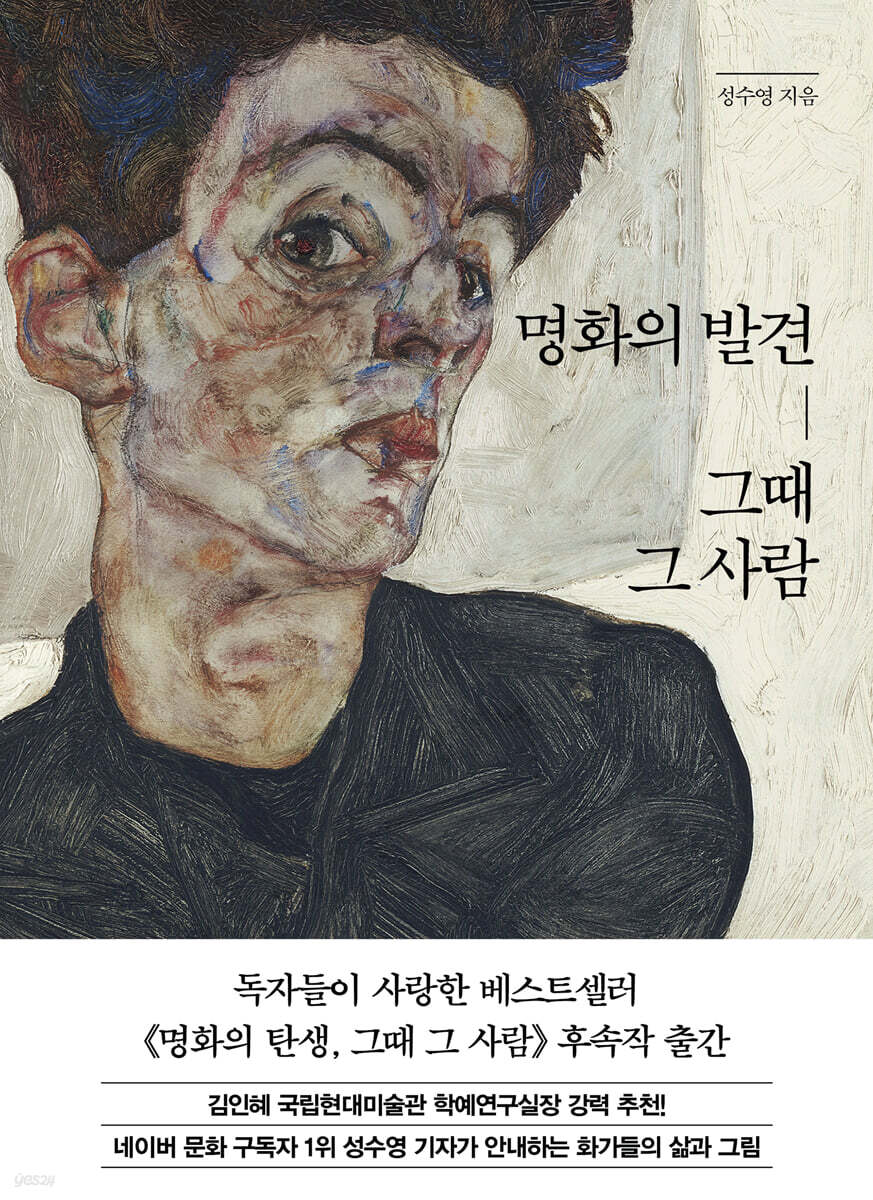 |
Description
Book Introduction
- A word from MD
-
That work, that author, that eraReporter Seong Su-yeong returns with a more colorful story of famous paintings.
It seamlessly weaves together the commentary on the work and the author's life, and even vividly portrays the times.
The story of 'those people back then' who silently walked their own path, sometimes losing confidence and sometimes being overcome by an inferiority complex, is fully captured in the work, leaving a deep impression.
November 15, 2024. Art PD Ahn Hyun-jae
*Highly recommended by Kim In-hye, Director of the National Museum of Modern and Contemporary Art's Research Office*
Even more deeply moving than the previous work!
The sequel to the best-selling art book, "The Birth of a Masterpiece: That Person at That Time," has been published.
Meet the genius painters of distant lands in one book.
Presenting a richer story
Stories of painters' lives and famous paintings
Following the success of "The Birth of a Masterpiece, That Person at That Time," which was beloved for its elegant storytelling and became a bestseller in the art field and is now a steady seller, we present the sequel, "The Discovery of a Masterpiece, That Person at That Time."
This book goes one step deeper than its predecessor.
If 《The Birth of a Masterpiece, That Person at That Time》 mainly explained the works by focusing on the passionate love of the painters and their unwavering will for art, this book features complex characters whose good and evil are difficult to distinguish, such as a reckless young man (Egon Schiele), a father who was obsessed with art but neglected his family (Paul Gauguin, Paul Cézanne), and an eccentric who crossed the line between genius and madness (Salvador Dali).
And just like the previous work, we revised the serialized text to improve its completeness, and added unpublished manuscripts featuring the stories of authors that are not easily accessible, such as Kojima Dorajiro and Juan de Pareja.
Additionally, the book's richness of life and art has been enhanced by the addition of articles on the rivalries between prominent artists, including the "Three Great Geniuses of the Renaissance": Leonardo da Vinci, Michelangelo, and Raphael.
Through the drama created by their competition and friendship, readers will be able to enjoy the work in a more three-dimensional way.
The author says that some pictures leave a stronger impression than a thousand words.
From the artist's life to the trends in the art world and the current state of affairs, a single good painting contains more information and deeper reflections than a single book.
So, works of art can be appreciated in a more unique way when accompanied by friendly commentary.
This is why this book tells a story about the author's life and times in an easy and fun way.
As you explore the artist's work along with the author's story of going one step further, art, which previously seemed difficult, will soon become more approachable.
- You can preview some of the book's contents.
Preview
index
Prologue_Let's go one step further
PART 1: Belief: The Beginning of a Journey to Not Lose Myself
Gustav Klimt - A man of contradictions who forgot through art that life is suffering.
Egon Schiele: An icon of youth who captured the fundamental loneliness of humanity in sharp lines.
Oskar Kokoschka - A man of extraordinary obsession who captured the love and madness swirling within him on canvas.
Richard Gerstl - A genius painter known as the Austrian Van Gogh who lost his career early.
Jean-Honoré Fragonard - A master who showed the essence of Rococo art, which was beautiful to the point of ruin.
John Singer Sargent: A problematic painter who captured the inner workings of a person and the times in a single painting.
PART 2: A tangled web of emotions, love and hate
Leonardo da Vinci and Michelangelo—Supreme Geniuses and Creators Akin to God—Masters of the Renaissance 1
Michelangelo: The Language of the Gods, Born in Pain - Renaissance Master 2
Michelangelo and Raphael: A Battle of Sublimity and Beauty - The Three Masters of the Renaissance
Peter Paul Rubens and Antony van Dyck: The God of Painting and His Genius Apprentice, Their Subtle Relationship
Thomas Gainsborough and Joshua Reynolds—a bubbly free spirit meets a strict model student.
Auguste Rodin and Camille Claudel: The End of a Twisted Love Between Master and Student, Descending into Madness and Ruin
Jean-Auguste-Dominique Ingres and Eugène Delacroix: A duel between lines of cold reason and colors of passionate emotion.
PART 3: Overcoming Difficulties and Gaining Insights
Frida Kahlo - The tragic heroine of a life that loved the way she overcame pain.
Paul Gauguin - A master of symbolic color who created great works that transcended his own personality.
Diego Velázquez—the "painter's painter" who dedicated his life to proving the nobility of art.
Juan de Pareja: A dramatic life of hard work and talent that transformed his destiny from slave to painter.
Alphonse Mucha - The lucky man of Art Nouveau who taught that good days come when you work hard.
El Greco - From a life gone awry to a life gone awry, the indomitable painter who overcame frustration and ignited his artistic spirit.
Camille Pissarro - The father of Impressionism, who protected his paintings and his family with unwavering determination.
Berthe Morisot - The most impressionistic impressionist who tried to capture the moment in her paintings.
PART 4 Forgiveness, Moving Beyond Hurt Towards a New Beginning
Niko Pirosmani - The protagonist of A Million Roses, which touches the depths of the human heart.
Paul Cézanne - The founder of modern art who sought to portray the world as he saw it.
Salvador Dali - A master of surrealism who combined genius and madness.
Georges Seurat - the founder of pointillism, who created an orderly world of light with dots.
Odilon Redon - Symbolist painter who created a colorful garden in a desolate black-and-white life
Kojima Dorajiro - A model student who devoted his life to art but never achieved mastery.
References
Detailed image

Into the book
Klimt's work has a unique atmosphere that is difficult to describe in words.
The decadent elements are strongly incorporated, and the atmosphere is quite subdued compared to the Impressionist painters of the same era.
This style, sometimes described as 'fin-de-siècle', was in fact a direct reflection of the atmosphere of Vienna in the late 19th century, when he lived.
---From "Gustav Klimt - A Man of Contradictions Who Forgot Through Art That Life Is Pain"
Sille's case was a bit special.
He was a real genius.
All his thoughts, which he thought were narcissistic, turned out to be true.
In his life of only 28 years, he only worked on his art for about 10 years.
But in this short period of time, he left behind powerful images that will never be forgotten in art history.
How did he come to draw such pictures?
Why are people drawn to Schiele's work?
---From "Egon Schiele - An Icon of Youth Who Captured the Fundamental Loneliness of Man in Sharp Lines"
It was in 1912 that Alma met the painter Kokoschka, who was seven years younger than her.
At that time, Alma was thirty-three years old and Kokoschka was twenty-six.
Kokoschka was a man of extraordinary talent.
Klimt displayed Kokoschka's work in his 1908 exhibition, when he was only twenty-two, and praised him as "the greatest talent of the young generation."
Kokoschka was particularly famous for his portraits of Viennese upper-class people, painted in his own bizarre style.
People at the time considered him a revolutionary, a provocative eccentric, and an incomprehensible genius.
---From "Oskar Kokoschka - A man of extraordinary obsession who captured the love and madness swirling inside him on canvas"
“Your painting is very good.
He has the talent of an outstanding painter.
But there are also some parts that could be improved with a little bit of modification.” The Museum of Art History in Vienna, the capital of the Austro-Hungarian Empire in the early 1900s.
An elegant older gentleman spoke to Gerstl, a young artist in his early twenties, who was practicing by copying the paintings of the masters collected by the Habsburgs for hundreds of years.
Just as the smiling old gentleman was about to continue speaking, Gerstl blurted out with a crumpled expression.
"Did I ask you to teach me how to draw? Just go on your way."
---From "Richard Gerstl - A genius painter called the Austrian Van Gogh who lost early"
Publisher's Review
The painters' beliefs, love and hate, overcoming and forgiveness contained in their works
Enjoy world-famous masterpieces in one volume, full of collection value.
Reporter Seong Su-yeong, who shares stories about art through her weekly column, helps people approach art in an easy and fun way, rather than feeling it is difficult or rigid.
The first book, "The Birth of a Masterpiece, That Person at That Time," was published in response to readers' requests to compile the serialized articles into a single book, and it was well-received and became a hot topic.
The sequel, 《Discovery of a Masterpiece, That Person at That Time》, added even more depth to the story that had been told so far.
By calmly listening to reporter Seong Su-yeong's account of the artists' lives, you can naturally learn about the background and characteristics of their works, the people and works that influenced them, and the meaning they convey.
Additionally, this book will be a valuable gift for those who want to easily appreciate famous paintings, as it allows them to enjoy the collections of world-renowned art museums such as the Leopold Museum, the Louvre, the Metropolitan Museum of Art, and the Museum of Modern Art in New York in one volume.
《Discovery of Masterpieces, That Person at That Time》 is composed of four chapters.
It introduces the lives and representative works of 31 artists, including Diego Velázquez, the painter of painters, Jean-Honoré Fragonard, who showed the essence of Rococo art, Paul Gauguin, the master of color, Georges Seurat, the founder of pointillism, and Richard Gerstl, called the Austrian Van Gogh.
Chapter 1 is about 'belief' and covers various stories and their works, such as a painter who captures the inner self of a person and the times in a single painting, and an icon of youth who captures the fundamental loneliness of humanity in sharp lines.
Chapter 2, titled 'Love and Hate', tells the story of rivals who compete with each other in good faith, including teachers and students, as well as seniors and juniors.
Chapter 3, titled “Overcoming,” introduces the works and lives of artists who, despite mental and physical adversity and pain, did not give up and silently continued to paint.
Finally, Chapter 4, titled “Forgiveness,” introduces the paintings and lives of artists who have strived to move forward toward a new beginning by overcoming the wounds they each harbor in their hearts.
After learning the background of the famous paintings that the author interestingly introduces through this book, paintings that were familiar to you will appear new, and paintings that were unfamiliar to you will appear familiar.
Klimt, a man of contradictions who forgot through art that life is suffering
Berthe Morisot, an impressionist who tried to capture a moment in her paintings…
Hidden Stories in Famous Paintings We Never Knew
One work contains one person's life.
Therefore, the closer you get to art, the more you can understand the values and lives of various people through numerous works, and expand your life experience.
For example, Klimt, known as the 'Golden Painter', was a famous painter at the time, so famous that even people who were not interested in art knew his name.
It is said that people lined up to buy his gorgeous paintings, even though each one sold for the price of a house.
Looking at this, it seems like Klimt's life was glamorous and happy, but in reality it wasn't.
Born into a poor family, he had to support his large family from a young age, and even as he grew older, he had to take care of his mentally unstable mother and younger sister alone.
Artistically, he was also something of a loner.
Klimt's unique and radical paintings were criticized by many, and some of those who hurled stones at him were his close artistic comrades.
Just as the symbols of decline and death in his work suggest, Klimt's life was filled with layers of misfortune.
For Klimt, life and the world were always a mass of contradictions, a mixture of opposing elements.
Despite this, he lived a life dedicated to art and never stopped taking on challenges.
Until his death, Klimt continued to paint and pursue greater beauty.
Just like Klimt's life philosophy that 'only beautiful art can give meaning to the fleeting moment of life in the eternal space and time', he is gone, but the paintings he left behind are passed down to us.
Berthe Morisot, also known as 'the most impressionistic impressionist'.
In the 19th century, when she lived, marrying a man from a good family, having children, and building a happy family was the natural life and goal given to upper-class women.
But deep in Morisot's heart, there was a dream to become a great painter.
To this end, she silently painted despite much oppression and persecution. As times changed and restrictions on women became less stringent, she was able to make a name for herself in the art world and blossom her career as a painter.
Morisot's compositions and colors had a profound influence on the works of Monet, Degas, Mary Cassatt, and Renoir, and today she is re-evaluated as a key Impressionist painter.
They sometimes lost their way, lost confidence and self-assurance, and were plagued by feelings of inferiority.
But instead of being discouraged, he whipped himself and silently pushed forward with his strength and potential to the end.
If you're going through a tough time right now, but lack the courage to find the answers, why not listen to reporter Seong Su-yeong's stories about the lives and paintings of artists?
You will be able to receive comfort and encouragement from artists who have set their own direction and pushed forward steadfastly, even if they have made mistakes and gone back a bit.
GOODS SPECIFICS
- Date of issue: November 7, 2024
- Format: Hardcover book binding method guide
- Page count, weight, size: 396 pages | 738g | 155*209*25mm
- ISBN13: 9788947549813
- ISBN10: 8947549819
You may also like
카테고리
korean


korean


