

If only you had listened to me then
 |
Description
Book Introduction
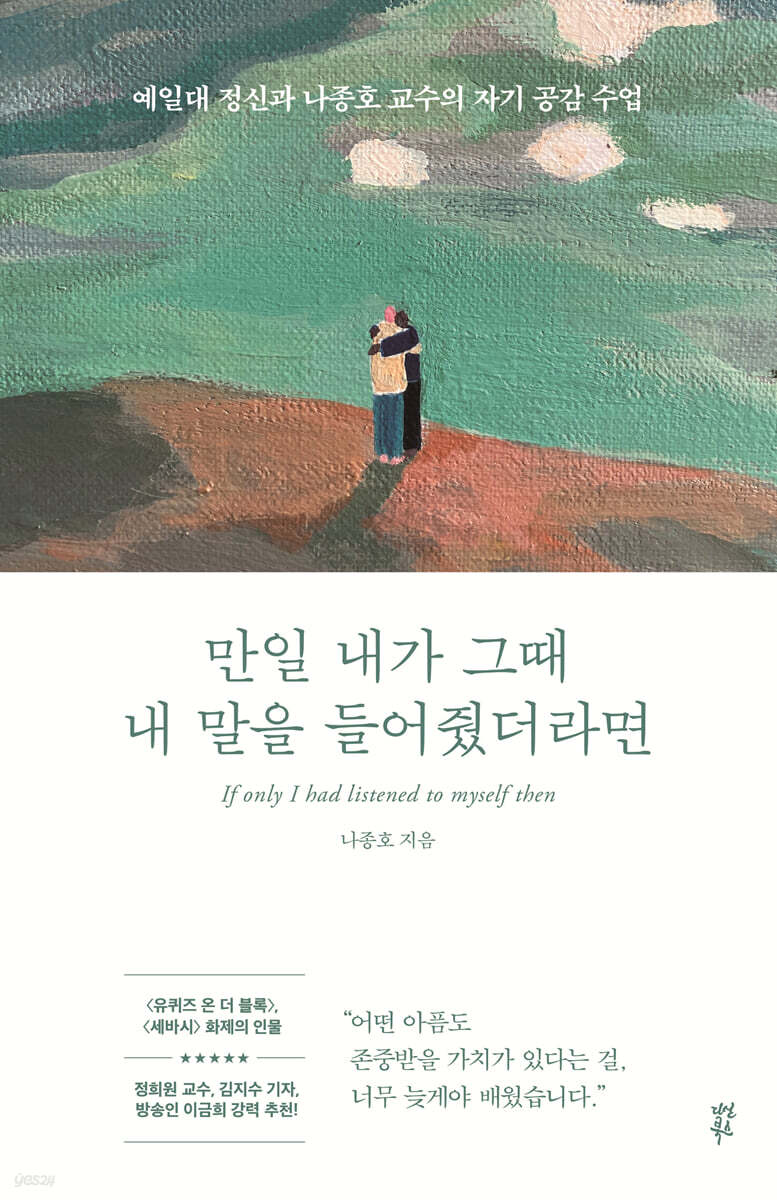
“That any pain deserves respect, “I learned it too late.” If you say it's hard, you become a weak person. In a society where showing weakness can actually lead to being exploited To those who cannot call pain pain Warm words of empathy from Na Jong-ho A book in which Professor Jong-ho Na of the Department of Psychiatry at Yale University confesses his honest life story for the first time, offering comfort and empathy to readers. Professor Jong-ho Na, who graduated from Seoul National University and is currently at Yale University, appears to have had a smooth ride without a single worry. But in fact, he was just an ordinary student who experienced the same worries and pains as today's young people. The anxiety caused by the vague future came on without warning and broke down my entire body, and soon depression set in, making daily life impossible. Even so, he was unable to ask for help from anyone, feeling guilty that he was the only one suffering like this while everyone else was living similar lives, and that it was ultimately because he was weak or lacked effort. He ran away to the United States. However, after coming to the United States and meeting numerous patients, Professor Na Jong-ho was finally able to break free from the proposition that "effort is always rewarded" and free himself from self-reproach. This book is a comforting message from Professor Na Jong-ho, who sees many modern people suffering from the same pain as their younger selves, yet still whipping themselves, saying, "Stop blaming yourself now." In this book, he accurately diagnoses, from the perspective of a psychiatrist, why we have to suffer so much and how many elements that strangle our minds lurk throughout society. In a society where saying something is hard is considered weak, and showing weakness is exploited, we have no choice but to pretend to be perfect, and we become exhausted together by demanding perfection from each other. Professor Na Jong-ho emphasizes that any pain must be respected, and only then can we become more tolerant of ourselves and each other in a society where we can freely reveal our weaknesses. |
- You can preview some of the book's contents.
Preview
index
Recommendation
Prologue | To You, Standing on a High-Speed Treadmill
Chapter 1.
The steering wheel of my mind stolen by anxiety
One day, my heart suddenly started pounding like it was going to burst.
A psychiatrist aspirant clutching his chest and trembling
My mind is occupied with anxiety
A brief moment of peace, if only I had asked for help then.
Can I go back to my old self?
Everyone deserves to be sick
Chapter 2.
Things you only see when you get off the treadmill
“If I were you, I would do the same.”
Who should I become a doctor for?
If you could walk in someone else's shoes
Sharing an umbrella with someone who is getting wet
About the effort to betray
Pay it forward
Chapter 3.
How can we be generous?
Sitting in the chair on the opposite side of the examination room
Just one word: “I need help.”
A story about diversity learned from children
The obvious fact that we are all unique beings
The moment we lower our shields, we connect.
Attitude toward accepting mistakes
If you could listen to my heart
Chapter 4.
To live in the 'present moment'
“Why do you live, teacher?”
There is no sorrow to hide
If we could be books to each other
We become stronger by being connected
Epilogue | What You Need for the Best Comfort
References
Prologue | To You, Standing on a High-Speed Treadmill
Chapter 1.
The steering wheel of my mind stolen by anxiety
One day, my heart suddenly started pounding like it was going to burst.
A psychiatrist aspirant clutching his chest and trembling
My mind is occupied with anxiety
A brief moment of peace, if only I had asked for help then.
Can I go back to my old self?
Everyone deserves to be sick
Chapter 2.
Things you only see when you get off the treadmill
“If I were you, I would do the same.”
Who should I become a doctor for?
If you could walk in someone else's shoes
Sharing an umbrella with someone who is getting wet
About the effort to betray
Pay it forward
Chapter 3.
How can we be generous?
Sitting in the chair on the opposite side of the examination room
Just one word: “I need help.”
A story about diversity learned from children
The obvious fact that we are all unique beings
The moment we lower our shields, we connect.
Attitude toward accepting mistakes
If you could listen to my heart
Chapter 4.
To live in the 'present moment'
“Why do you live, teacher?”
There is no sorrow to hide
If we could be books to each other
We become stronger by being connected
Epilogue | What You Need for the Best Comfort
References
Detailed image

Into the book
It wasn't until a few years after I started working as a psychiatrist that I realized this.
It means that comfort doesn't necessarily have to be expressed in words; it starts with simply feeling the sadness and being there for the other person.
When you stand in front of someone who is grieving, you may feel like you have to say something, but comfort actually doesn't have to be expressed in words.
Sometimes, being there silently and watching over someone is better than a thousand words.
Even if someone's life seems like a well-written script, a closer look reveals that it may actually be a patchwork of rags, stitched together with thread and needle of chance and luck.
Even I, who now seems to be living a pretty decent life with the prestigious title of "Yale University psychiatrist," was just an ordinary student who had slipped off the path of my dreams and was floundering, and who was always worried that the monster called anxiety might appear and devour me at any moment.
There is a scene that still comes to mind vividly.
It was a drinking party with my classmates, and when a story came up about a classmate who had failed a grade and was struggling with depression, conversations started going on like, "Oh, that guy seemed mentally strong, but maybe he wasn't."
When I heard that, all the desire to confide in my colleagues about my difficulties disappeared.
Most of my classmates were much younger than me, and while these young friends were doing well and doing well, I didn't want to admit or reveal that I was suffering so much inside.
But even then, I actually knew very well.
My condition is very serious and I desperately need help from a mental health professional.
--- From "The Steering Wheel of My Heart Stolen by Anxiety"
I like the saying, "Walk a mile in one's shoes."
As a psychiatrist, I always strive to walk in the shoes of my patients without prejudice, without judging others' experiences, perspectives, or lives. I believe that such an attitude can make our society a warmer place.
But how many people, living in a society that relentlessly spins at a fast pace like a treadmill at full speed, so that their own shoes often come off, can afford to try on other people's shoes?
A person's life is something you never know what will happen.
Our lives can be completely changed by a single stroke of luck or misfortune that happens to us one day.
Regardless of whether you try or not.
The social achievements I have made could be seen as a product of a series of great fortunes, or as a product of misfortunes that have eluded me.
This is a lesson I learned from experiencing patients' lives firsthand.
--- From "Things You Only See When You Get Off the Treadmill"
To move from "Are you the only one having a hard time? I'm dying from this hardship" to "I thought I was the only one having a hard time, but you've had a hard time too," perhaps the first thing we need is a culture of sharing vulnerability.
Only when I can first confess my struggles and pain can the other person have a chance to empathize.
The moment we let down our shields, we connect.
Ultimately, I believe that vulnerability is the key to empathizing with ourselves and others, and it is the starting point for us to move toward compassion.
Depression is often referred to as a 'cold of the mind'.
I know this is a metaphor for how common depression is, but I find this expression somewhat unsettling because it can be misleading.
A cold gets better if left alone, but depression doesn't.
Depression, especially severe depression, is more like having a broken bone somewhere in your body than a cold.
Just as you can't expect your broken arm to grow back together no matter how many times you watch orthopedic surgeons' YouTube videos, the same goes for mental illness.
If you suspect you have depression or anxiety disorder, it is best to get diagnosed and treated as soon as possible.
--- From "How Can We Be Generous?"
Couldn't we put the effort we put into watching a movie or reading a book into someone we don't even want to be humbled by?
If only we could devote just as much will to understanding each other as it takes to read a book, if only someone who has read my book with that same will could be curious about the story of someone completely different from me.
If we could be books to each other.
--- From "To Live in This Moment"
At some point, we became accustomed to living with masks on.
For various reasons, such as the fear that if I show my true self, I won't be understood, or the fear that if I show vulnerability, I'll be exploited.
However, if you go through each day with perfect makeup on to avoid showing your weaknesses, your confidence will actually decrease.
Perhaps the reason Koreans like to spend time alone is because they struggle to hide their weaknesses throughout the day, and only when they are alone can they truly be themselves.
It means that comfort doesn't necessarily have to be expressed in words; it starts with simply feeling the sadness and being there for the other person.
When you stand in front of someone who is grieving, you may feel like you have to say something, but comfort actually doesn't have to be expressed in words.
Sometimes, being there silently and watching over someone is better than a thousand words.
Even if someone's life seems like a well-written script, a closer look reveals that it may actually be a patchwork of rags, stitched together with thread and needle of chance and luck.
Even I, who now seems to be living a pretty decent life with the prestigious title of "Yale University psychiatrist," was just an ordinary student who had slipped off the path of my dreams and was floundering, and who was always worried that the monster called anxiety might appear and devour me at any moment.
There is a scene that still comes to mind vividly.
It was a drinking party with my classmates, and when a story came up about a classmate who had failed a grade and was struggling with depression, conversations started going on like, "Oh, that guy seemed mentally strong, but maybe he wasn't."
When I heard that, all the desire to confide in my colleagues about my difficulties disappeared.
Most of my classmates were much younger than me, and while these young friends were doing well and doing well, I didn't want to admit or reveal that I was suffering so much inside.
But even then, I actually knew very well.
My condition is very serious and I desperately need help from a mental health professional.
--- From "The Steering Wheel of My Heart Stolen by Anxiety"
I like the saying, "Walk a mile in one's shoes."
As a psychiatrist, I always strive to walk in the shoes of my patients without prejudice, without judging others' experiences, perspectives, or lives. I believe that such an attitude can make our society a warmer place.
But how many people, living in a society that relentlessly spins at a fast pace like a treadmill at full speed, so that their own shoes often come off, can afford to try on other people's shoes?
A person's life is something you never know what will happen.
Our lives can be completely changed by a single stroke of luck or misfortune that happens to us one day.
Regardless of whether you try or not.
The social achievements I have made could be seen as a product of a series of great fortunes, or as a product of misfortunes that have eluded me.
This is a lesson I learned from experiencing patients' lives firsthand.
--- From "Things You Only See When You Get Off the Treadmill"
To move from "Are you the only one having a hard time? I'm dying from this hardship" to "I thought I was the only one having a hard time, but you've had a hard time too," perhaps the first thing we need is a culture of sharing vulnerability.
Only when I can first confess my struggles and pain can the other person have a chance to empathize.
The moment we let down our shields, we connect.
Ultimately, I believe that vulnerability is the key to empathizing with ourselves and others, and it is the starting point for us to move toward compassion.
Depression is often referred to as a 'cold of the mind'.
I know this is a metaphor for how common depression is, but I find this expression somewhat unsettling because it can be misleading.
A cold gets better if left alone, but depression doesn't.
Depression, especially severe depression, is more like having a broken bone somewhere in your body than a cold.
Just as you can't expect your broken arm to grow back together no matter how many times you watch orthopedic surgeons' YouTube videos, the same goes for mental illness.
If you suspect you have depression or anxiety disorder, it is best to get diagnosed and treated as soon as possible.
--- From "How Can We Be Generous?"
Couldn't we put the effort we put into watching a movie or reading a book into someone we don't even want to be humbled by?
If only we could devote just as much will to understanding each other as it takes to read a book, if only someone who has read my book with that same will could be curious about the story of someone completely different from me.
If we could be books to each other.
--- From "To Live in This Moment"
At some point, we became accustomed to living with masks on.
For various reasons, such as the fear that if I show my true self, I won't be understood, or the fear that if I show vulnerability, I'll be exploited.
However, if you go through each day with perfect makeup on to avoid showing your weaknesses, your confidence will actually decrease.
Perhaps the reason Koreans like to spend time alone is because they struggle to hide their weaknesses throughout the day, and only when they are alone can they truly be themselves.
--- From "Epilogue"
Publisher's Review
The first record of vulnerability revealed by Professor Na Jong-ho of Yale University,
Days filled with anxiety and depression
“One day, my heart suddenly started pounding like it was going to burst.”
After being discharged from the military, he returned to school and was attending school more diligently than anyone else.
I sat in the front row, took notes diligently, and listened to the lecture. Whenever there was free time or class was over, I would run straight to the library and take a seat.
It was a bit difficult, but thankfully I had friends by my side, and I also had a clear goal of ‘studying clinical psychology in the US.’
I thought I was having a smooth day without any problems.
Until that day, when I suddenly felt a tremendous heartbeat.
As usual, I was studying in the library when I felt a sudden sensation and my heart started beating faster.
At first, I tried to ignore it and focus on studying, but my heart rate seemed to be increasing.
A thought crossed my mind without me realizing it.
'Why am I so anxious?' I realized it only then.
That a rapid heart rate is not simply a temporary phenomenon, but stems from an unexplained sense of anxiety.
The feeling of anxiety about the vague future was taking over not only my mind but also my body, like a large speaker blasting through the entire campus during a university festival.
Living with this pervasive anxiety felt like there was always an unidentifiable monster sitting in a corner of the bus I was driving called "my mind."
The monster was a scary creature that sometimes dozed off quietly in a corner, but it could wake up at any moment and torment me by shaking the bus.
So, I was always nervous when I was driving the bus, afraid that the monster would wake up, or that the monster would even exist.
- From the text
The shadow of anxiety began to break down my body one by one.
My pulse was routinely over 100 beats per minute, the standard for 'tachycardia', which puts a strain on the heart, and when I spoke, my lips would tremble so much that I had to bite them.
When my dream of studying clinical psychology abroad was dashed and I entered medical school to pursue my new goal of becoming a psychiatrist, I started to feel anxious and depressed.
I couldn't concentrate on the lecture or the book, and my mind went blank whenever I was asked a question.
The first time I had that thought was when I started to feel pessimistic that my brain would never function properly again.
'I want to start a new life somewhere where no one knows me.'
Let go of self-reproach, self-censorship, and prejudice.
Na Jong-ho's warm words that embrace us with empathy!
“Everyone has the right to be sick.”
Professor Jong-ho Na of the Department of Psychiatry at Yale University diagnosed himself in his 20s with 'generalized anxiety disorder', 'social anxiety disorder', and 'adjustment disorder with depression'.
Yet, he confesses that he has not sought help from anyone around him, let alone a mental health professional.
Even for him, a medical student who majored in psychology and was on the path to becoming a psychiatrist, the social prejudice against mental illness was firmly entrenched.
The worry that "everyone else is living similar lives, and there are many people who are in even more difficult situations than me, so if I say I'm having a hard time, won't I be seen as weak?" made me keep quiet even to my friends, and the prejudice that "mental illness is a matter of will and can be easily solved on your own" led to self-blame for not being able to overcome the pain.
While everyone else was running without stopping, panting, he seemed to be the only one who was exhausted.
Professor Na Jong-ho, feeling that he could no longer endure this ultra-fast treadmill society, left for the United States with such self-reproach.
“The weight of my suffering felt infinitely lighter, and at some point I found myself constantly asking myself:
"Is this really something worth including in a book? Won't it seem too trivial to those who have had much harder times than I have?" But I quickly pulled myself together.
Because as a psychiatrist, I've learned one thing: 'Comparing someone's subjective suffering is meaningless.'
(…) all suffering is subjective.”
- From the text
In the United States, a country where countless people live intertwined, he was finally able to realize this while meeting patients from diverse backgrounds.
All pain is subjective, and things that seem trivial to some can be so painful for others that they can no longer live their daily lives. And since mental issues are not a matter of willpower, there was no need to blame myself so much in my twenties.
Everyone has the 'right to be sick'.
To ourselves and to each other
To be generous
“When we can reveal our true selves, we can understand and be healed.”
Professor Jeong Hee-won of the Department of Geriatrics at Seoul Asan Medical Center praised the book, saying it combines her expertise as a psychiatrist with her honesty as a human being, and called it “a precious gift that delivers a message of empathy and connection that is so desperately needed in our times.”
This is probably because Professor Na Jong-ho confesses his own difficult times and embraces the hearts of readers who are experiencing similar pain, while maintaining his keen perspective as a psychiatrist and accurately diagnosing the reasons why we Koreans cannot help but be sick.
As can be seen in the lyrics of the famous animation theme song, "Even if I'm lonely or sad, I don't cry," in our country, "suppressing emotions inside" has long been considered a virtue.
Even if you are having a hard time, you shouldn't show it, and it is a mature thing to do to solve it on your own without asking for help.
In a society where confessing our emotional problems immediately leads to being labeled as weak, or showing weakness leads to being exploited, we have suffered under the pressure to be perfect.
That is why Professor Na Jong-ho points out that we cannot be generous to ourselves or to others.
We are quick to impose destructive shame on others for their mistakes or wrongdoings.
But everyone makes mistakes in life.
We may all be aware of this fact, but when we see the indiscriminate criticism and ridicule directed at others, it seems as if we are precariously standing on the premise that 'people must be perfect.'
A New York Times column commemorating Matthew Perry's death also pointed this out, saying, "We often view someone's mistake as a moral failure."
If we let go of that suffocating premise, wouldn't we be able to honestly reveal our own vulnerabilities and be more generous in accepting the vulnerabilities of others?
- From the text
He says that in order to accept ourselves as we are, whether strong or weak, and to create a society that embraces each other's weaknesses, what is ultimately needed is to 'reveal vulnerability.'
Only when I can first open up about my struggles can the other person have a chance to empathize, and when I let down my guard like that, we can connect.
Ultimately, vulnerability is the key to being able to empathize with yourself and others.
Professor Na Jong-ho conveys empathy and inspiration through his personal account of his vulnerabilities, and goes a step further to suggest why personal pain is so prevalent in our society and how to resolve it.
His message that “any pain deserves respect” allows us to reflect on our own suppressed feelings and empathize with them.
By doing so, we can gain the courage to accept ourselves as we are, and even the generosity to accept others as they are.
Days filled with anxiety and depression
“One day, my heart suddenly started pounding like it was going to burst.”
After being discharged from the military, he returned to school and was attending school more diligently than anyone else.
I sat in the front row, took notes diligently, and listened to the lecture. Whenever there was free time or class was over, I would run straight to the library and take a seat.
It was a bit difficult, but thankfully I had friends by my side, and I also had a clear goal of ‘studying clinical psychology in the US.’
I thought I was having a smooth day without any problems.
Until that day, when I suddenly felt a tremendous heartbeat.
As usual, I was studying in the library when I felt a sudden sensation and my heart started beating faster.
At first, I tried to ignore it and focus on studying, but my heart rate seemed to be increasing.
A thought crossed my mind without me realizing it.
'Why am I so anxious?' I realized it only then.
That a rapid heart rate is not simply a temporary phenomenon, but stems from an unexplained sense of anxiety.
The feeling of anxiety about the vague future was taking over not only my mind but also my body, like a large speaker blasting through the entire campus during a university festival.
Living with this pervasive anxiety felt like there was always an unidentifiable monster sitting in a corner of the bus I was driving called "my mind."
The monster was a scary creature that sometimes dozed off quietly in a corner, but it could wake up at any moment and torment me by shaking the bus.
So, I was always nervous when I was driving the bus, afraid that the monster would wake up, or that the monster would even exist.
- From the text
The shadow of anxiety began to break down my body one by one.
My pulse was routinely over 100 beats per minute, the standard for 'tachycardia', which puts a strain on the heart, and when I spoke, my lips would tremble so much that I had to bite them.
When my dream of studying clinical psychology abroad was dashed and I entered medical school to pursue my new goal of becoming a psychiatrist, I started to feel anxious and depressed.
I couldn't concentrate on the lecture or the book, and my mind went blank whenever I was asked a question.
The first time I had that thought was when I started to feel pessimistic that my brain would never function properly again.
'I want to start a new life somewhere where no one knows me.'
Let go of self-reproach, self-censorship, and prejudice.
Na Jong-ho's warm words that embrace us with empathy!
“Everyone has the right to be sick.”
Professor Jong-ho Na of the Department of Psychiatry at Yale University diagnosed himself in his 20s with 'generalized anxiety disorder', 'social anxiety disorder', and 'adjustment disorder with depression'.
Yet, he confesses that he has not sought help from anyone around him, let alone a mental health professional.
Even for him, a medical student who majored in psychology and was on the path to becoming a psychiatrist, the social prejudice against mental illness was firmly entrenched.
The worry that "everyone else is living similar lives, and there are many people who are in even more difficult situations than me, so if I say I'm having a hard time, won't I be seen as weak?" made me keep quiet even to my friends, and the prejudice that "mental illness is a matter of will and can be easily solved on your own" led to self-blame for not being able to overcome the pain.
While everyone else was running without stopping, panting, he seemed to be the only one who was exhausted.
Professor Na Jong-ho, feeling that he could no longer endure this ultra-fast treadmill society, left for the United States with such self-reproach.
“The weight of my suffering felt infinitely lighter, and at some point I found myself constantly asking myself:
"Is this really something worth including in a book? Won't it seem too trivial to those who have had much harder times than I have?" But I quickly pulled myself together.
Because as a psychiatrist, I've learned one thing: 'Comparing someone's subjective suffering is meaningless.'
(…) all suffering is subjective.”
- From the text
In the United States, a country where countless people live intertwined, he was finally able to realize this while meeting patients from diverse backgrounds.
All pain is subjective, and things that seem trivial to some can be so painful for others that they can no longer live their daily lives. And since mental issues are not a matter of willpower, there was no need to blame myself so much in my twenties.
Everyone has the 'right to be sick'.
To ourselves and to each other
To be generous
“When we can reveal our true selves, we can understand and be healed.”
Professor Jeong Hee-won of the Department of Geriatrics at Seoul Asan Medical Center praised the book, saying it combines her expertise as a psychiatrist with her honesty as a human being, and called it “a precious gift that delivers a message of empathy and connection that is so desperately needed in our times.”
This is probably because Professor Na Jong-ho confesses his own difficult times and embraces the hearts of readers who are experiencing similar pain, while maintaining his keen perspective as a psychiatrist and accurately diagnosing the reasons why we Koreans cannot help but be sick.
As can be seen in the lyrics of the famous animation theme song, "Even if I'm lonely or sad, I don't cry," in our country, "suppressing emotions inside" has long been considered a virtue.
Even if you are having a hard time, you shouldn't show it, and it is a mature thing to do to solve it on your own without asking for help.
In a society where confessing our emotional problems immediately leads to being labeled as weak, or showing weakness leads to being exploited, we have suffered under the pressure to be perfect.
That is why Professor Na Jong-ho points out that we cannot be generous to ourselves or to others.
We are quick to impose destructive shame on others for their mistakes or wrongdoings.
But everyone makes mistakes in life.
We may all be aware of this fact, but when we see the indiscriminate criticism and ridicule directed at others, it seems as if we are precariously standing on the premise that 'people must be perfect.'
A New York Times column commemorating Matthew Perry's death also pointed this out, saying, "We often view someone's mistake as a moral failure."
If we let go of that suffocating premise, wouldn't we be able to honestly reveal our own vulnerabilities and be more generous in accepting the vulnerabilities of others?
- From the text
He says that in order to accept ourselves as we are, whether strong or weak, and to create a society that embraces each other's weaknesses, what is ultimately needed is to 'reveal vulnerability.'
Only when I can first open up about my struggles can the other person have a chance to empathize, and when I let down my guard like that, we can connect.
Ultimately, vulnerability is the key to being able to empathize with yourself and others.
Professor Na Jong-ho conveys empathy and inspiration through his personal account of his vulnerabilities, and goes a step further to suggest why personal pain is so prevalent in our society and how to resolve it.
His message that “any pain deserves respect” allows us to reflect on our own suppressed feelings and empathize with them.
By doing so, we can gain the courage to accept ourselves as we are, and even the generosity to accept others as they are.
GOODS SPECIFICS
- Date of issue: July 25, 2024
- Format: Paperback book binding method guide
- Page count, weight, size: 288 pages | 432g | 132*204*17mm
- ISBN13: 9791130655376
- ISBN10: 1130655377
You may also like
카테고리
korean


korean

![GQ KOREA Mark (Monthly): December [2025]](http://librairie.coreenne.fr/cdn/shop/files/8ef265dbbfbf186523ed75ba7319009d.jpg?v=1765340328&width=3840)


