

Song of the Cells
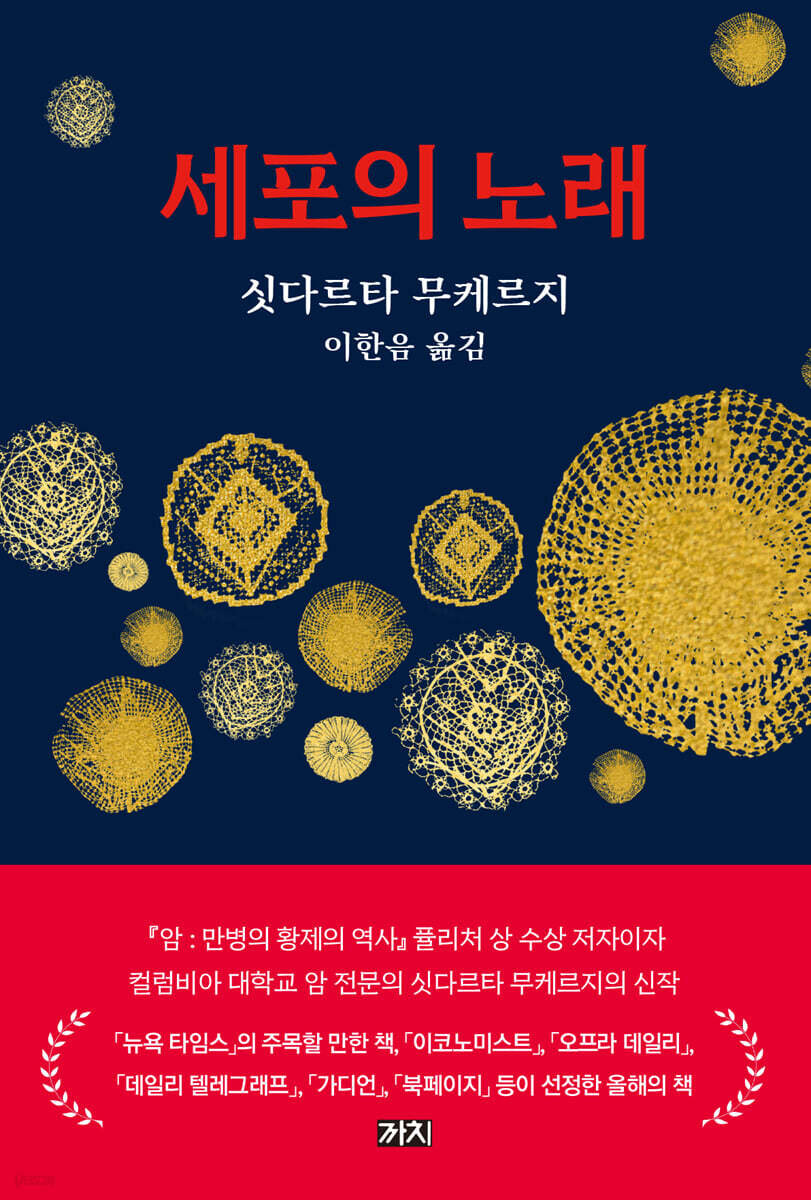 |
Description
Book Introduction
- A word from MD
- Understanding Life Through CellsA new book by Pulitzer Prize-winning physician and author Siddhartha Mukherjee.
Covers everything about cells, from the discovery of cells that transformed biology and medicine to the latest cell therapies.
The story of cells, written with exceptional writing skills, does not stop at predicting the future of cellular medicine, but also presents meaningful content that encompasses life and living.
March 5, 2024. Natural Science PD Ahn Hyun-jae
A new book by Pulitzer Prize-winning author and cancer specialist Siddhartha Mukherjee
The meaning of human existence from the perspective of cells, the basic unit of life
The physiology and pathology of cells are our life and living!
Physician and author Siddhartha Mukherjee, who won the Pulitzer Prize for “Cancer: A Brief History of the Emperor of Maladies” and whose “Intimate History of the Gene” became a New York Times bestseller upon publication, has now turned his attention to the “cell,” the most basic unit of life and everything else.
Beginning with the discovery of cells that forever changed the fields of biology and medicine, the author unfolds the fundamental functions of cells and the latest cell therapies, all in his signature, exceptional writing style.
These diverse and disparate stories merge and harmonize to create a coherent whole, intertwining history and personal history, physiology and pathology, past and future, and the author's own intimate history of growth as a cytologist and physician.
Furthermore, the author's stories of patients he encountered in the medical field are interwoven with scientific explanations of cell physiology and pathology, vividly conveying stories of miraculous recoveries, sometimes heartbreaking separations, and the difficult realities of treatment.
It also contains stories of experiences with the coronavirus, which has dealt a fatal blow to the world.
Siddhartha Mukherjee weaves together a moving panorama rarely found in scientific texts, encompassing the history of biology, the evolution of medicine, the sacrifices doctors and patients have had to make to achieve successful treatments, and the desperate situations patients face.
The author's story, which introduces the world of cells that we did not know about in an interesting, informative, and sometimes heartwarming way, resonates with readers as a grand song of cells.
This powerful and engaging book takes readers into the world of cells, examining human existence from a cellular perspective and anticipating the unfolding future of cellular medicine.
The meaning of human existence from the perspective of cells, the basic unit of life
The physiology and pathology of cells are our life and living!
Physician and author Siddhartha Mukherjee, who won the Pulitzer Prize for “Cancer: A Brief History of the Emperor of Maladies” and whose “Intimate History of the Gene” became a New York Times bestseller upon publication, has now turned his attention to the “cell,” the most basic unit of life and everything else.
Beginning with the discovery of cells that forever changed the fields of biology and medicine, the author unfolds the fundamental functions of cells and the latest cell therapies, all in his signature, exceptional writing style.
These diverse and disparate stories merge and harmonize to create a coherent whole, intertwining history and personal history, physiology and pathology, past and future, and the author's own intimate history of growth as a cytologist and physician.
Furthermore, the author's stories of patients he encountered in the medical field are interwoven with scientific explanations of cell physiology and pathology, vividly conveying stories of miraculous recoveries, sometimes heartbreaking separations, and the difficult realities of treatment.
It also contains stories of experiences with the coronavirus, which has dealt a fatal blow to the world.
Siddhartha Mukherjee weaves together a moving panorama rarely found in scientific texts, encompassing the history of biology, the evolution of medicine, the sacrifices doctors and patients have had to make to achieve successful treatments, and the desperate situations patients face.
The author's story, which introduces the world of cells that we did not know about in an interesting, informative, and sometimes heartwarming way, resonates with readers as a grand song of cells.
This powerful and engaging book takes readers into the world of cells, examining human existence from a cellular perspective and anticipating the unfolding future of cellular medicine.
- You can preview some of the book's contents.
Preview
index
Introduction _ “Elementary Particles of Life”
introduction
Part 1: Discovery
Origin Cell _ The Invisible World
Visible Cells _ “A novel-like story about small animals”
The Universal Cell _ “The Smallest Particle in This Tiny World”
Pathogenic Cells - Microorganisms, Infections, and the Antibiotic Revolution
Part 2 One and Many
Organized Cells _ Internal Structure of Cells
Dividing Cells - The Birth of Cell Reproduction and IVF
Cells That Kneaded Themselves _ Lulu, Nana, and the Breach of Trust
Cells that develop _ Cells become living things
Part 3 Blood
Cells that don't rest _ Blood circulation
Healing Cells - Platelets, Coagulation, and "Modern Epidemics"
Guardian Cells - Neutrophils and the Fight Against Pathogens
Defensive Cells _ When Body Meets Body
The Discerning Cell: The Subtle Intelligence of T Cells
Tolerant Cells - Self, Autotoxicity, and Immunotherapy
Part 4 Knowledge
pandemic
Part 5 Institutions
Citizen Cell _ Benefits of Membership
The Deliberative Cell _ Multipurpose Neuron
Cells that direct _ homeostasis, stability, balance
Part 6: Rebirth
Regenerative Cells: The Birth of Stem Cells and Transplantation
Repairing Cells - Wounds, Death, and Homeostasis
The Selfish Cell: The Ecological Equation and Cancer
Song of the Cells
Epilogue _ "A Better Version of Me"
Acknowledgements
main
References
Image source
Translator's Note
Biographical Index
introduction
Part 1: Discovery
Origin Cell _ The Invisible World
Visible Cells _ “A novel-like story about small animals”
The Universal Cell _ “The Smallest Particle in This Tiny World”
Pathogenic Cells - Microorganisms, Infections, and the Antibiotic Revolution
Part 2 One and Many
Organized Cells _ Internal Structure of Cells
Dividing Cells - The Birth of Cell Reproduction and IVF
Cells That Kneaded Themselves _ Lulu, Nana, and the Breach of Trust
Cells that develop _ Cells become living things
Part 3 Blood
Cells that don't rest _ Blood circulation
Healing Cells - Platelets, Coagulation, and "Modern Epidemics"
Guardian Cells - Neutrophils and the Fight Against Pathogens
Defensive Cells _ When Body Meets Body
The Discerning Cell: The Subtle Intelligence of T Cells
Tolerant Cells - Self, Autotoxicity, and Immunotherapy
Part 4 Knowledge
pandemic
Part 5 Institutions
Citizen Cell _ Benefits of Membership
The Deliberative Cell _ Multipurpose Neuron
Cells that direct _ homeostasis, stability, balance
Part 6: Rebirth
Regenerative Cells: The Birth of Stem Cells and Transplantation
Repairing Cells - Wounds, Death, and Homeostasis
The Selfish Cell: The Ecological Equation and Cancer
Song of the Cells
Epilogue _ "A Better Version of Me"
Acknowledgements
main
References
Image source
Translator's Note
Biographical Index
Detailed image

Publisher's Review
Notable Books from The New York Times, The Economist, The Oprah Daley, Bookpage,
Book of the Year selected by numerous media outlets including The Daily Telegraph and The Guardian
In the world of “microscopic animals” discovered under a microscope
Finally confirming the existence of cells
In the 17th century, the eccentric Dutch textile merchant Anton van Leeuwenhoek built his own microscope and observed the microscopic world for the first time, and the English polymath Robert Hooke named the basic unit of life “cell.”
The realization that cells are the most fundamental units of life and that humans are complexes of living, independent units ultimately changed our perception of life and disease forever.
Rudolf Virchow, who dreamed of becoming a pastor but ended up studying cells, changed our view of disease by proving that cell dysfunction could be the key to understanding our illnesses.
Koch and Pasteur also proved that germs were the cause of disease and decay, leading to a close connection between cell theory and medicine.
Autonomy, reproduction, and development
The first and most fundamental characteristic of a cell
Autonomy, organization, cell division, reproduction, and development are fundamental properties of cells.
First, we will take a close look at the subunits of the cell, such as the cell membrane, cytoplasm, cytoskeleton, and endoplasmic reticulum, which enable the cell to function as an autonomous unit.
Next, stories about cell division, especially in vitro fertilization, unfold.
“Medically assisted” reproduction was initially considered radical, prohibitive, and even disgusting, but over time it has come to be seen as a normal process.
And as Russian biologists move forward with gene editing in the embryos of a deaf couple, we're on the verge of even newer ways to manipulate reproduction.
However, the anecdote of thalidomide, prescribed to pregnant women to relieve morning sickness, is a clear warning about the dangers of (unknowingly) stroking a developing fetus.
Pregnant women who were prescribed this drug gave birth to children with deformed hands and feet, and the drug was permanently discontinued.
The debate about manipulating embryos to change their genes continues.
Circulate ceaselessly throughout the cellular world
A new birth in cellular medicine
In Part 3, we will look at blood, which circulates continuously among the countless cells that make up the body, enabling each cell to perform numerous functions.
Blood circulates throughout the body, transporting cells, namely red blood cells, to supply oxygen.
Not only that, blood can be transferred from one person's body to another.
Research on blood transfusions has saved countless soldiers' lives on the battlefield and greatly improved the success rates of surgical procedures.
Next, we'll look at how blood clots in the coronary arteries cause heart attacks, as well as platelets that stop bleeding when there's a cut in the blood, and why aspirin reduces the risk of heart attacks.
Next, we meet the cells in our blood that protect us from invaders.
Such cells include macrophages, monocytes, which eat up bacteria, and neutrophils, which are the first to respond to wounds and infections, and the immune response carried out by these cells is called the “innate immune system.”
This is because these are the immunity we have from birth, without any adaptation or learning.
Because of this, the innate immune system is difficult to manipulate medically, but we have already manipulated the innate immune system.
Representative examples include vaccinations such as mama and smallpox.
Next, he meets Paul Ehrlich, who came up with the concept of antibodies while treating snakebite patients in Egypt.
The immune response that produces antibodies in response to an antigen is called adaptive immunity. Each B cell has a variety of antibodies, and when a B cell encounters an antigen with a receptor that matches it, it multiplies and responds to the antigen.
And when they encounter the antigen again while retaining the memory of the antigen, they regenerate the immune memory and resume activity.
Another type of immune cell is the T cell, which is secreted by the thymus gland.
T cells have an uncanny ability to distinguish their own altered cells, those hijacked by the flu virus and turned into virus factories, from normal cells.
This ability allows it to only process mutated cells.
So how do cells distinguish between self and foreign substances? Why do transplanted tissues from other people trigger rejection reactions, causing necrosis? Here, too, T cells come into play.
T cells that recognize altered self also detect foreign invaders.
Unfortunately, T cells can lose their function and attack the body's own body, causing autoimmune diseases.
So the medical community is currently researching ways to modify T cells and use them as weapons to attack cancer cells.
Cells as “Citizens”
Cells that make the heart beat, generate thoughts, and direct the body
First, let's look at the cells that make our hearts beat.
The secret to heart muscle cell contraction is that proteins called actin and myosin combine to form a cord, much like a person hanging from a rope, reaching out with one hand to grab the other rope, pulling themselves up, and then grabbing the next rope.
Each cell acts as one by contracting in harmony.
If the heart is an organ with a single purpose of pumping, the brain is a multipurpose organ.
Spanish pathologist Santiago Ramón y Cajal drew detailed drawings of the brain's structures, including the dendrites, axons, and the gaps between axons, called synapses, in neurons, the brain's nerve cells.
This has become the foundation for studying how cells in the brain communicate and perform various brain functions through this communication.
Meanwhile, “hormones” are used to maintain homeostasis and balance of the entire body, not just the cells next to it.
A representative example is insulin, which is secreted from the pancreas and maintains blood sugar levels.
Additionally, our body contains cells that regulate homeostasis, such as cells that excrete sodium and cells that break down alcohol.
Cells that regenerate and repair
Selfish cancer cells that only care about themselves
Stem cells produced in bone marrow form various types of cells.
Based on this, a new breakthrough in treating leukemia was made.
This is a method of transplanting bone marrow from identical twins who have the same genes.
Although the patient who received this transplant was cured, there was a need for a way to transplant bone marrow to other patients who did not have a twin.
Thanks to the suffering and sacrifice of patients and the dedication of medical staff, the success rate of bone marrow transplant surgeries has finally increased significantly.
Next, we encounter the surprising story of bones, the most neglected organ in academia.
Bones contain chondrocytes, osteoblasts, and osteoclasts.
Osteoblasts maintain bone integrity by building bone and osteoclasts eat bone.
During the growth period, it helps bones grow longer, and when they are broken or injured, it connects and regenerates the broken parts.
And it deals with cancer cells, selfish cells that pose a great challenge to humanity.
In fact, cancer cells are not one cell, but a collection of various mutant cells.
This is why cancer is difficult to treat.
Finally, the author says that rather than focusing on the structure and function of cells, we should also listen to the song of cells, the connections between cells.
This book is a journey to understand life through the cell, the simplest unit of life.
We seek to understand life by understanding the anatomy, physiology, behavior, and interactions of cells with surrounding cells.
I'm talking about the song of cells.
Through this book, readers will be able to envision a future where they will become a new human race with cells transformed from their original cells through cell therapy by focusing their attention on the whole song of cells.
* Praise for this book
If I had been able to read this book when I was a student, I would have fallen in love with biology much earlier.
It brilliantly explains, in clear and accessible language, not only how cells work, but why they are the foundation of all life.
_ Bill Gates
It is surprisingly ambitious… …Cytology is a complex and large subject, as big as life itself.
I doubt if there is any author who can write better than this.
_ The Times
A masterpiece that confidently, timely, and above all, biologically accurate explores the nature of humanity.
_ 「Observer」
Through poetic and expansive explanations, the author tells the story of how human understanding evolved.
The story unfolds from the 17th-century discovery that humans are made of cells to cutting-edge technologies that manipulate and utilize cells for therapeutic purposes.
_ The New Yorker
If you're not ready to feel the wonders of biology, this book will make you feel that way.
It's a masterpiece.
_ "Guardian"
The author is a passionate and knowledgeable guide… …weaving together the fascinating history of scientists and the sometimes heartbreaking stories of patients and friends who have died from disease, with the complex science that explains how cells work.
_ The Financial Times
This is a must-read for anyone who wants to understand the basic components of their body.
It provides a lot of information and is also fun to read.
_ The Economist
Book of the Year selected by numerous media outlets including The Daily Telegraph and The Guardian
In the world of “microscopic animals” discovered under a microscope
Finally confirming the existence of cells
In the 17th century, the eccentric Dutch textile merchant Anton van Leeuwenhoek built his own microscope and observed the microscopic world for the first time, and the English polymath Robert Hooke named the basic unit of life “cell.”
The realization that cells are the most fundamental units of life and that humans are complexes of living, independent units ultimately changed our perception of life and disease forever.
Rudolf Virchow, who dreamed of becoming a pastor but ended up studying cells, changed our view of disease by proving that cell dysfunction could be the key to understanding our illnesses.
Koch and Pasteur also proved that germs were the cause of disease and decay, leading to a close connection between cell theory and medicine.
Autonomy, reproduction, and development
The first and most fundamental characteristic of a cell
Autonomy, organization, cell division, reproduction, and development are fundamental properties of cells.
First, we will take a close look at the subunits of the cell, such as the cell membrane, cytoplasm, cytoskeleton, and endoplasmic reticulum, which enable the cell to function as an autonomous unit.
Next, stories about cell division, especially in vitro fertilization, unfold.
“Medically assisted” reproduction was initially considered radical, prohibitive, and even disgusting, but over time it has come to be seen as a normal process.
And as Russian biologists move forward with gene editing in the embryos of a deaf couple, we're on the verge of even newer ways to manipulate reproduction.
However, the anecdote of thalidomide, prescribed to pregnant women to relieve morning sickness, is a clear warning about the dangers of (unknowingly) stroking a developing fetus.
Pregnant women who were prescribed this drug gave birth to children with deformed hands and feet, and the drug was permanently discontinued.
The debate about manipulating embryos to change their genes continues.
Circulate ceaselessly throughout the cellular world
A new birth in cellular medicine
In Part 3, we will look at blood, which circulates continuously among the countless cells that make up the body, enabling each cell to perform numerous functions.
Blood circulates throughout the body, transporting cells, namely red blood cells, to supply oxygen.
Not only that, blood can be transferred from one person's body to another.
Research on blood transfusions has saved countless soldiers' lives on the battlefield and greatly improved the success rates of surgical procedures.
Next, we'll look at how blood clots in the coronary arteries cause heart attacks, as well as platelets that stop bleeding when there's a cut in the blood, and why aspirin reduces the risk of heart attacks.
Next, we meet the cells in our blood that protect us from invaders.
Such cells include macrophages, monocytes, which eat up bacteria, and neutrophils, which are the first to respond to wounds and infections, and the immune response carried out by these cells is called the “innate immune system.”
This is because these are the immunity we have from birth, without any adaptation or learning.
Because of this, the innate immune system is difficult to manipulate medically, but we have already manipulated the innate immune system.
Representative examples include vaccinations such as mama and smallpox.
Next, he meets Paul Ehrlich, who came up with the concept of antibodies while treating snakebite patients in Egypt.
The immune response that produces antibodies in response to an antigen is called adaptive immunity. Each B cell has a variety of antibodies, and when a B cell encounters an antigen with a receptor that matches it, it multiplies and responds to the antigen.
And when they encounter the antigen again while retaining the memory of the antigen, they regenerate the immune memory and resume activity.
Another type of immune cell is the T cell, which is secreted by the thymus gland.
T cells have an uncanny ability to distinguish their own altered cells, those hijacked by the flu virus and turned into virus factories, from normal cells.
This ability allows it to only process mutated cells.
So how do cells distinguish between self and foreign substances? Why do transplanted tissues from other people trigger rejection reactions, causing necrosis? Here, too, T cells come into play.
T cells that recognize altered self also detect foreign invaders.
Unfortunately, T cells can lose their function and attack the body's own body, causing autoimmune diseases.
So the medical community is currently researching ways to modify T cells and use them as weapons to attack cancer cells.
Cells as “Citizens”
Cells that make the heart beat, generate thoughts, and direct the body
First, let's look at the cells that make our hearts beat.
The secret to heart muscle cell contraction is that proteins called actin and myosin combine to form a cord, much like a person hanging from a rope, reaching out with one hand to grab the other rope, pulling themselves up, and then grabbing the next rope.
Each cell acts as one by contracting in harmony.
If the heart is an organ with a single purpose of pumping, the brain is a multipurpose organ.
Spanish pathologist Santiago Ramón y Cajal drew detailed drawings of the brain's structures, including the dendrites, axons, and the gaps between axons, called synapses, in neurons, the brain's nerve cells.
This has become the foundation for studying how cells in the brain communicate and perform various brain functions through this communication.
Meanwhile, “hormones” are used to maintain homeostasis and balance of the entire body, not just the cells next to it.
A representative example is insulin, which is secreted from the pancreas and maintains blood sugar levels.
Additionally, our body contains cells that regulate homeostasis, such as cells that excrete sodium and cells that break down alcohol.
Cells that regenerate and repair
Selfish cancer cells that only care about themselves
Stem cells produced in bone marrow form various types of cells.
Based on this, a new breakthrough in treating leukemia was made.
This is a method of transplanting bone marrow from identical twins who have the same genes.
Although the patient who received this transplant was cured, there was a need for a way to transplant bone marrow to other patients who did not have a twin.
Thanks to the suffering and sacrifice of patients and the dedication of medical staff, the success rate of bone marrow transplant surgeries has finally increased significantly.
Next, we encounter the surprising story of bones, the most neglected organ in academia.
Bones contain chondrocytes, osteoblasts, and osteoclasts.
Osteoblasts maintain bone integrity by building bone and osteoclasts eat bone.
During the growth period, it helps bones grow longer, and when they are broken or injured, it connects and regenerates the broken parts.
And it deals with cancer cells, selfish cells that pose a great challenge to humanity.
In fact, cancer cells are not one cell, but a collection of various mutant cells.
This is why cancer is difficult to treat.
Finally, the author says that rather than focusing on the structure and function of cells, we should also listen to the song of cells, the connections between cells.
This book is a journey to understand life through the cell, the simplest unit of life.
We seek to understand life by understanding the anatomy, physiology, behavior, and interactions of cells with surrounding cells.
I'm talking about the song of cells.
Through this book, readers will be able to envision a future where they will become a new human race with cells transformed from their original cells through cell therapy by focusing their attention on the whole song of cells.
* Praise for this book
If I had been able to read this book when I was a student, I would have fallen in love with biology much earlier.
It brilliantly explains, in clear and accessible language, not only how cells work, but why they are the foundation of all life.
_ Bill Gates
It is surprisingly ambitious… …Cytology is a complex and large subject, as big as life itself.
I doubt if there is any author who can write better than this.
_ The Times
A masterpiece that confidently, timely, and above all, biologically accurate explores the nature of humanity.
_ 「Observer」
Through poetic and expansive explanations, the author tells the story of how human understanding evolved.
The story unfolds from the 17th-century discovery that humans are made of cells to cutting-edge technologies that manipulate and utilize cells for therapeutic purposes.
_ The New Yorker
If you're not ready to feel the wonders of biology, this book will make you feel that way.
It's a masterpiece.
_ "Guardian"
The author is a passionate and knowledgeable guide… …weaving together the fascinating history of scientists and the sometimes heartbreaking stories of patients and friends who have died from disease, with the complex science that explains how cells work.
_ The Financial Times
This is a must-read for anyone who wants to understand the basic components of their body.
It provides a lot of information and is also fun to read.
_ The Economist
GOODS SPECIFICS
- Date of issue: February 26, 2024
- Page count, weight, size: 588 pages | 872g | 152*225*35mm
- ISBN13: 9788972918189
- ISBN10: 8972918180
You may also like
카테고리
korean


korean

![GQ KOREA Mark (Monthly): December [2025]](http://librairie.coreenne.fr/cdn/shop/files/8ef265dbbfbf186523ed75ba7319009d.jpg?v=1765340328&width=3840)


