

temperance class
 |
Description
Book Introduction
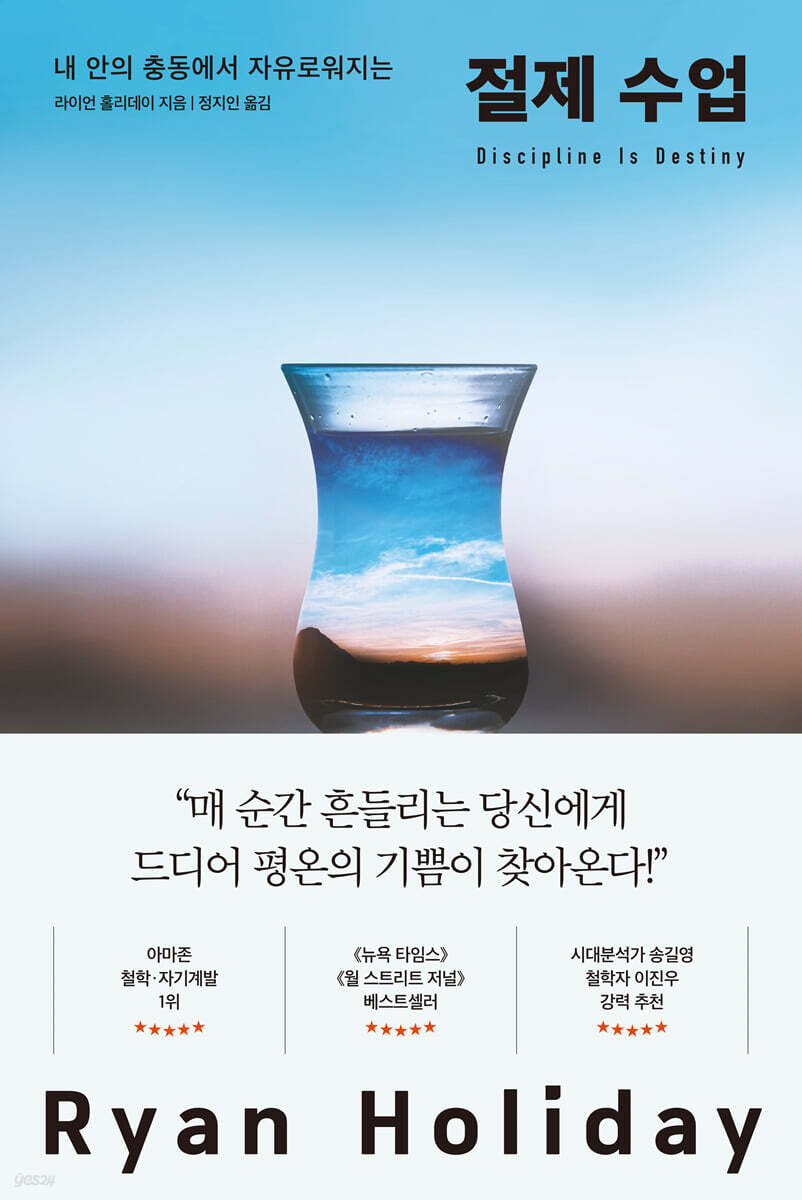
“The joy of peace has finally come to you, who is shaken every moment! Mind Minor author Song Gil-young and philosopher Lee Jin-woo strongly recommend Amazon's #1 Philosophy and Self-Improvement Book, now available in 19 countries worldwide [New York Times], [Wall Street Journal] bestseller Ryan Holiday, a thinker who is receiving worldwide attention 54 Laws of Moderation to Regain Control of Your Life Ryan Holiday, beloved by 5 million readers in 40 countries worldwide, presents a new book! Ryan Holiday, whose books like "The Stoic Lessons," "The Daily Philosophy," and "Brave" all appear on the New York Times bestseller list, presents "The Temperance Lessons," the second in a four-part series on Stoic philosophy. Although we live in an age of abundance where we can have what we want, whenever we want, and how we want, we are constantly shaken by desires and impulses. "The Lesson of Moderation" teaches us the laws of moderation, which will help us to control ourselves and regain the joy of peace, as we are shaken by the overwhelming number of choices. The book divides the unique characteristics of humans into three parts: body, temperament, and soul, and introduces 54 methods for achieving 'moderation' in each area. As soon as this book was published locally, it rose to number one in the philosophy and self-improvement category on Amazon, and became a bestseller in the New York Times, Wall Street Journal, and USA Today. Over 10,000 readers have already left reviews on Amazon and Goodreads calling it a "life-changing book," and the testimonials continue thanks to the enthusiastic support of readers. Mind Minor author Song Gil-young strongly recommends this book, saying, “This is a book for everyone who is struggling to live a good life,” and philosopher Lee Jin-woo says, “This is a book that provides encouragement and inspiration to those who want to become the master of their lives.” Through this book, you will be able to find ways to live as a true master of your life by developing the inner strength and perseverance to not lose your center in the face of any storm. |
- You can preview some of the book's contents.
Preview
index
Recommendation
Preface to the Four-Part Series on Stoic Philosophy: Four Virtues for the Unsettled Modern Man
Opening Remarks: A Lesson in Moderation for Becoming the Master of Your Life
Part 1: The Body
An era where patience was stolen
The less you have, the more powerful you are
The Virtue of Refusal
Dawn is your time alone
Train your body like steel
The price of greed
When pleasure becomes a nightmare
The only way to break the addiction
Organizing your surroundings will help you manage your life.
The compounding effect of repetition
Small habits determine the outcome of a game.
rush in without delay
Take it slow
A second nature that has been developed over a long period of time
People who are engaged don't calculate their performance.
How successful people dress
Something more important than one victory
Sleep also requires training
Opportunity belongs to those who wait.
Every choice is engraved in the body
Part 2 temperament
The Blessing of Immersion
Reject the opportunity to take revenge
How to become the master of money
The principles by which the queen governed herself
How to calm your anger
The reward of patience
The trap of perfectionism
Start with the hardest task
How to avoid being a loser
The difference between addiction and immersion
Putting the emergency brakes on passion
The strong speak little
Wait until the decisive moment comes
Beware of ambition
How to Build the Welfare of Growth
Why You Should Delegate Work
How to Make Time Your Ally
Drawing the Line with Energy Vampires
The question that led Jimmy Carter to the presidency
When body and mind are in balance, potential is realized.
Part 3 Soul
Moderation is contagious
Why I was able to endure the grief of losing my son
Breaking free from self-centeredness
The ripple effects of moderation
With privilege comes responsibility
When you are generous, you grow.
Reject the temptation of power
Nonviolence is more powerful than violence.
When retreating, be like Socrates
What to Hold on to at the End of Life
When you perfect your character, success will follow.
Flexibility is strength
Moderation demands more moderation
The only way to peace
Concluding remarks: Liberation and moderation of joy
Preface to the Four-Part Series on Stoic Philosophy: Four Virtues for the Unsettled Modern Man
Opening Remarks: A Lesson in Moderation for Becoming the Master of Your Life
Part 1: The Body
An era where patience was stolen
The less you have, the more powerful you are
The Virtue of Refusal
Dawn is your time alone
Train your body like steel
The price of greed
When pleasure becomes a nightmare
The only way to break the addiction
Organizing your surroundings will help you manage your life.
The compounding effect of repetition
Small habits determine the outcome of a game.
rush in without delay
Take it slow
A second nature that has been developed over a long period of time
People who are engaged don't calculate their performance.
How successful people dress
Something more important than one victory
Sleep also requires training
Opportunity belongs to those who wait.
Every choice is engraved in the body
Part 2 temperament
The Blessing of Immersion
Reject the opportunity to take revenge
How to become the master of money
The principles by which the queen governed herself
How to calm your anger
The reward of patience
The trap of perfectionism
Start with the hardest task
How to avoid being a loser
The difference between addiction and immersion
Putting the emergency brakes on passion
The strong speak little
Wait until the decisive moment comes
Beware of ambition
How to Build the Welfare of Growth
Why You Should Delegate Work
How to Make Time Your Ally
Drawing the Line with Energy Vampires
The question that led Jimmy Carter to the presidency
When body and mind are in balance, potential is realized.
Part 3 Soul
Moderation is contagious
Why I was able to endure the grief of losing my son
Breaking free from self-centeredness
The ripple effects of moderation
With privilege comes responsibility
When you are generous, you grow.
Reject the temptation of power
Nonviolence is more powerful than violence.
When retreating, be like Socrates
What to Hold on to at the End of Life
When you perfect your character, success will follow.
Flexibility is strength
Moderation demands more moderation
The only way to peace
Concluding remarks: Liberation and moderation of joy
Detailed image

Into the book
Self-discipline is about pouring everything out and also knowing what to hold back.
Does this sound contradictory? Absolutely not.
You just have to know how to balance it.
Self-control is not deprivation, but mastery of your body, mind, and soul, demanding the best of yourself even when no one is watching, even when it's okay not to.
---From "Opening Remarks, A Lesson in Moderation to Become the Master of Your Life"
“If you don’t know where you’re sailing, no wind will make you sail.” This means that we need to take a step back and think about it with moderation.
"What am I doing? What should be my priorities? What is the most important role I have in my work, in my family, in this world?" Then comes the discipline to ignore everything else.
---From "Chapter 1 - The Body, the Virtue of Rejection"
If we look at Marcus Aurelius's Meditations, a record of his serious reflections on himself, we see that even the most powerful man in the world constantly persuaded himself to wake up at dawn, instinctively and desperately wanting to stay in bed.
Aurelius asks himself, who is reluctant to get up:
“Is this what I was created for? To curl up under a blanket and stay warm?”
---From "Chapter 1 - Body, Dawn is Your Only Time"
As I said before, there is a higher self and a lower self.
These two selves correspond to two types of mental processes that psychologists call "fast thinking" and "slow thinking."
Quick thinking is usually a lower ego.
The sensual instinct is the lower self.
Slow thinking, on the other hand, is the higher self, the rational, philosophical, and principled self.
It's about thinking really, really well about something, really thinking about who you want to be.
---From "Chapter 2 - Temperament, How to Calm Down Anger"
That's the great thing about doing your best work.
Even if I succeed, I don't get cocky because I know that I can do more.
The reason why you don't fail is because you have the confidence that you did everything you could.
You can always control whether you do your best or not.
No one can stop us from doing our best.
---From "Chapter 2 - Temperament, the Questions That Led Jimmy Carter to the Presidency"
We must recognize that moderation is not simply about remaining calm and composed in stressful situations.
It doesn't stop at just tolerating occasional criticism or controlling impulses.
Sometimes moderation is about having the fortitude to not do something you desperately want to do.
---From "Chapter 3 - The Soul, the Reason I Was Able to Endure the Grief of Losing My Son"
The only way is self-discipline.
It is the power to control all impulses.
Cicero said:
“Complement courage with self-control.
Then all the ingredients for a happy life will be yours.
Then courage will keep you from suffering and fear, and self-control will free you from pleasure and inordinate cravings.”
---From "Chapter 3 - The Soul, the Only Way to Peace"
Self-discipline not only makes us great at what we do, but it also makes us 'best' in the fullest sense of the word.
Aristotle, who wrote extensively on moderation, reminds us that the essence of virtue is not acquiring power, fame, wealth, or success.
What virtue gives us is a full and meaningful life as human beings.
What could be more important than that?
Does this sound contradictory? Absolutely not.
You just have to know how to balance it.
Self-control is not deprivation, but mastery of your body, mind, and soul, demanding the best of yourself even when no one is watching, even when it's okay not to.
---From "Opening Remarks, A Lesson in Moderation to Become the Master of Your Life"
“If you don’t know where you’re sailing, no wind will make you sail.” This means that we need to take a step back and think about it with moderation.
"What am I doing? What should be my priorities? What is the most important role I have in my work, in my family, in this world?" Then comes the discipline to ignore everything else.
---From "Chapter 1 - The Body, the Virtue of Rejection"
If we look at Marcus Aurelius's Meditations, a record of his serious reflections on himself, we see that even the most powerful man in the world constantly persuaded himself to wake up at dawn, instinctively and desperately wanting to stay in bed.
Aurelius asks himself, who is reluctant to get up:
“Is this what I was created for? To curl up under a blanket and stay warm?”
---From "Chapter 1 - Body, Dawn is Your Only Time"
As I said before, there is a higher self and a lower self.
These two selves correspond to two types of mental processes that psychologists call "fast thinking" and "slow thinking."
Quick thinking is usually a lower ego.
The sensual instinct is the lower self.
Slow thinking, on the other hand, is the higher self, the rational, philosophical, and principled self.
It's about thinking really, really well about something, really thinking about who you want to be.
---From "Chapter 2 - Temperament, How to Calm Down Anger"
That's the great thing about doing your best work.
Even if I succeed, I don't get cocky because I know that I can do more.
The reason why you don't fail is because you have the confidence that you did everything you could.
You can always control whether you do your best or not.
No one can stop us from doing our best.
---From "Chapter 2 - Temperament, the Questions That Led Jimmy Carter to the Presidency"
We must recognize that moderation is not simply about remaining calm and composed in stressful situations.
It doesn't stop at just tolerating occasional criticism or controlling impulses.
Sometimes moderation is about having the fortitude to not do something you desperately want to do.
---From "Chapter 3 - The Soul, the Reason I Was Able to Endure the Grief of Losing My Son"
The only way is self-discipline.
It is the power to control all impulses.
Cicero said:
“Complement courage with self-control.
Then all the ingredients for a happy life will be yours.
Then courage will keep you from suffering and fear, and self-control will free you from pleasure and inordinate cravings.”
---From "Chapter 3 - The Soul, the Only Way to Peace"
Self-discipline not only makes us great at what we do, but it also makes us 'best' in the fullest sense of the word.
Aristotle, who wrote extensively on moderation, reminds us that the essence of virtue is not acquiring power, fame, wealth, or success.
What virtue gives us is a full and meaningful life as human beings.
What could be more important than that?
---From "The Closing Words, Liberation and Moderation of Joy"
Publisher's Review
“Moderation is now an unavoidable attitude toward life!”
The One Virtue That Will Break Through the Age of Over-Temptation
We live in an age of over-temptation.
"Is this good? Is that good?" "Isn't it a loss if I don't do it now?" "I didn't know! I've been falling behind!" When you have an important task ahead of you, your attention is drawn to notifications on your phone, and you feel an urgent desire to get your hands on everything everyone around you says is good.
When we fail to control our inner desires and impulses, we gradually lose our way.
This is why the power to govern oneself is more important than ever.
The wisdom that has been common for thousands of years, from the Upanishads to the Bible to the Iliad, is that we can achieve true happiness through self-control.
That is why Ryan Holiday, who is considered the 'most innovative thinker' for his modern interpretation of Stoic philosophy, chose the age-old wisdom of 'moderation' as his topic.
From the ancient Greek philosophers to the great figures who changed the world, they practiced moderation to gain power, achieve success in their endeavors, and ultimately live happy lives.
Marcus Aurelius, who had the greatest power in the world, constantly persuaded himself to live in this moment that would never return, and Seneca, the philosophical mentor of Emperor Nero, threw himself into a life of hunger and hardship to warn against the comforts that power offered.
Not only that, but even legendary professional baseball player Lou Gehrig, who was wary of laziness and overcame his limits, and Winston Churchill, who controlled his mind and emotions and waited for the decisive moment even in the face of a dire situation where the Nazis might take over the country, also led their lives with moderation.
"The Lesson of Moderation," rich in historical examples, will deliver a powerful message that will change our lives as we waver at every moment.
From Socrates to Steve Jobs
A dignified way of life that has lasted for thousands of years
So how can we discover an inner calm unshaken by external stimuli? If we can break free from the temptation to demand "now" and "more"—the very things that enslave us to pleasure—and willingly endure what seems unbearable, our lives will be elevated to a higher level of quality.
"The Lessons of Temperance" divides the unique characteristics of human beings into three parts: body, temperament, and soul, and explains 54 behaviors and attitudes for practicing temperance in each area.
The author states that without the habit of "going only as far as is appropriate and not going any further" and "self-discipline to focus on the one thing you want to achieve now and ignore the rest," you will live a dry life chasing only results, and introduces practical guidelines for developing the habit of self-discipline.
For example, the genius physicist Stephen Hawking was confined to a wheelchair for 40 years due to amyotrophic lateral sclerosis, but he overcame his physical limitations and opened new horizons in modern physics with his original theories.
In this way, moderation is the power to prove to yourself that you are greater than others even in the face of unspeakable adversity.
Mind Minor's Song Gil-young, who strongly recommended "The Lesson of Moderation," saying that it is a book that is absolutely necessary in this day and age, commented, "It reminds us that work can become the main center of our lives when we regain control over ourselves." Philosopher Lee Jin-woo explained the reason for his recommendation, saying, "This book provides encouragement and inspiration to those who want to become the masters of their own lives."
All readers of this book will discover the secret to leading a dignified life of self-control and patience, rather than a life of pursuit of pleasure, through the laws of moderation introduced in the book.
A thinker who is receiving worldwide attention
Ryan Holiday tells
54 Rules for Taking Back Control of Your Life
Ryan Holiday, author of "The Temperance Lesson," is a bestselling author loved by 5 million readers in 40 countries around the world.
His books, including Stoic Lessons, Daily Philosophy, The Enemy of Ego, and Brave, have all made it to the Amazon and New York Times bestseller lists.
While writing the book, the author also practiced Marcus Aurelius's adage, “Let moderation sustain you.”
I made a rule to not check my phone for the first hour after waking up, to write in my morning journal, and to finish difficult and creative tasks in the morning when I am most focused, and I committed myself to that rule.
This habit helped him break free from distracting anxieties and worries and achieve his goals.
That's how I realized that moderation is a powerful discipline to protect myself and the best way to grow in life.
This book rose to number one on Amazon's Philosophy and Self-Help category immediately after its release, thanks to overwhelming support from readers eager to learn the powerful force that leads to absolute peace.
Over 10,000 readers have already left reviews on Amazon and Goodreads calling it a "life-changing book," and readers are still testifying that they are applying the book's messages to their lives.
If you restructure your life according to the 54 laws introduced in the book, such as “The less you have, the more powerful you are,” “Opportunity belongs to those who wait,” “Start with the hardest thing first,” “How to accumulate the benefits of growth,” and “Flexibility is strength,” you will be able to escape the hedonistic hamster wheel and find a way to become the true master of your life.
The One Virtue That Will Break Through the Age of Over-Temptation
We live in an age of over-temptation.
"Is this good? Is that good?" "Isn't it a loss if I don't do it now?" "I didn't know! I've been falling behind!" When you have an important task ahead of you, your attention is drawn to notifications on your phone, and you feel an urgent desire to get your hands on everything everyone around you says is good.
When we fail to control our inner desires and impulses, we gradually lose our way.
This is why the power to govern oneself is more important than ever.
The wisdom that has been common for thousands of years, from the Upanishads to the Bible to the Iliad, is that we can achieve true happiness through self-control.
That is why Ryan Holiday, who is considered the 'most innovative thinker' for his modern interpretation of Stoic philosophy, chose the age-old wisdom of 'moderation' as his topic.
From the ancient Greek philosophers to the great figures who changed the world, they practiced moderation to gain power, achieve success in their endeavors, and ultimately live happy lives.
Marcus Aurelius, who had the greatest power in the world, constantly persuaded himself to live in this moment that would never return, and Seneca, the philosophical mentor of Emperor Nero, threw himself into a life of hunger and hardship to warn against the comforts that power offered.
Not only that, but even legendary professional baseball player Lou Gehrig, who was wary of laziness and overcame his limits, and Winston Churchill, who controlled his mind and emotions and waited for the decisive moment even in the face of a dire situation where the Nazis might take over the country, also led their lives with moderation.
"The Lesson of Moderation," rich in historical examples, will deliver a powerful message that will change our lives as we waver at every moment.
From Socrates to Steve Jobs
A dignified way of life that has lasted for thousands of years
So how can we discover an inner calm unshaken by external stimuli? If we can break free from the temptation to demand "now" and "more"—the very things that enslave us to pleasure—and willingly endure what seems unbearable, our lives will be elevated to a higher level of quality.
"The Lessons of Temperance" divides the unique characteristics of human beings into three parts: body, temperament, and soul, and explains 54 behaviors and attitudes for practicing temperance in each area.
The author states that without the habit of "going only as far as is appropriate and not going any further" and "self-discipline to focus on the one thing you want to achieve now and ignore the rest," you will live a dry life chasing only results, and introduces practical guidelines for developing the habit of self-discipline.
For example, the genius physicist Stephen Hawking was confined to a wheelchair for 40 years due to amyotrophic lateral sclerosis, but he overcame his physical limitations and opened new horizons in modern physics with his original theories.
In this way, moderation is the power to prove to yourself that you are greater than others even in the face of unspeakable adversity.
Mind Minor's Song Gil-young, who strongly recommended "The Lesson of Moderation," saying that it is a book that is absolutely necessary in this day and age, commented, "It reminds us that work can become the main center of our lives when we regain control over ourselves." Philosopher Lee Jin-woo explained the reason for his recommendation, saying, "This book provides encouragement and inspiration to those who want to become the masters of their own lives."
All readers of this book will discover the secret to leading a dignified life of self-control and patience, rather than a life of pursuit of pleasure, through the laws of moderation introduced in the book.
A thinker who is receiving worldwide attention
Ryan Holiday tells
54 Rules for Taking Back Control of Your Life
Ryan Holiday, author of "The Temperance Lesson," is a bestselling author loved by 5 million readers in 40 countries around the world.
His books, including Stoic Lessons, Daily Philosophy, The Enemy of Ego, and Brave, have all made it to the Amazon and New York Times bestseller lists.
While writing the book, the author also practiced Marcus Aurelius's adage, “Let moderation sustain you.”
I made a rule to not check my phone for the first hour after waking up, to write in my morning journal, and to finish difficult and creative tasks in the morning when I am most focused, and I committed myself to that rule.
This habit helped him break free from distracting anxieties and worries and achieve his goals.
That's how I realized that moderation is a powerful discipline to protect myself and the best way to grow in life.
This book rose to number one on Amazon's Philosophy and Self-Help category immediately after its release, thanks to overwhelming support from readers eager to learn the powerful force that leads to absolute peace.
Over 10,000 readers have already left reviews on Amazon and Goodreads calling it a "life-changing book," and readers are still testifying that they are applying the book's messages to their lives.
If you restructure your life according to the 54 laws introduced in the book, such as “The less you have, the more powerful you are,” “Opportunity belongs to those who wait,” “Start with the hardest thing first,” “How to accumulate the benefits of growth,” and “Flexibility is strength,” you will be able to escape the hedonistic hamster wheel and find a way to become the true master of your life.
GOODS SPECIFICS
- Date of issue: December 6, 2023
- Page count, weight, size: 408 pages | 658g | 145*217*25mm
- ISBN13: 9791130649207
- ISBN10: 1130649202
You may also like
카테고리
korean


korean

![ELLE 엘르 스페셜 에디션 A형 : 12월 [2025]](http://librairie.coreenne.fr/cdn/shop/files/b8e27a3de6c9538896439686c6b0e8fb.jpg?v=1766436872&width=3840)


