

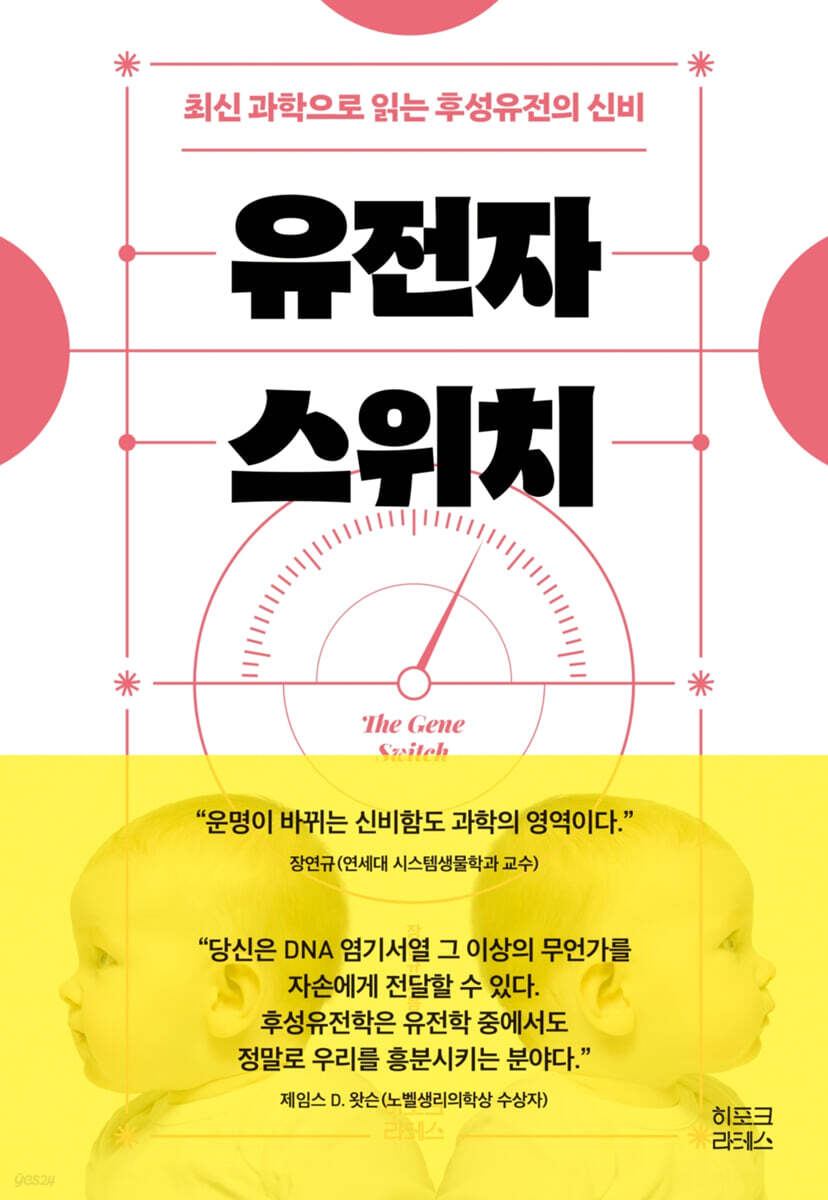
genetic switch
 |
Description
Book Introduction
Epigenetics: The Principle of Changing Destiny Beyond Genes
“The mystery of changing fate is also a realm of science.”
The era of treating cancer by modulating the epigenetic system is coming.
Professor Jang Yeon-gyu, Korea's leading expert, presents the latest epigenetic research in one volume.
“You can pass on to your offspring something more than just a DNA sequence.
“Epigenetics is a really exciting area of genetics.” -James Watson
Can we change the destiny engraved in our genes? And if so, how? Epigenetics is a branch of genetics that elucidates the systems in our bodies that regulate gene expression.
It mainly studies the phenomenon in which traits change and are inherited depending on the environment and experience without changes in innate genes.
Since the full-scale development of epigenetics research, the landscape of biology and genetics has been transformed. Dr. James Watson, who won the Nobel Prize for deciphering the structure of DNA, said of epigenetics, "You can pass on something more than just the DNA sequence to your offspring.
“Epigenetics is a field within genetics that really excites us,” he exclaimed.
How far has epigenetics research come, a switch that regulates genes and can change our destiny?
Author Jang Yeon-gyu, a professor of systems biology at Yonsei University who has lectured on epigenetics for a long time, explains the basic principles of epigenetics in detail through this book, while also introducing the trends and prospects of the latest research results.
Epigenetics is a biological phenomenon that intervenes in numerous processes in our bodies, such as birth, growth, and leaving behind offspring.
So, readers of 『Gene Switch』 can approach not only epigenetics but also the various principles and mysteries of how our bodies work.
Above all, this book is written in an easy-to-read manner.
It explains everything from the fundamental concepts of biology, such as the principles of genes, to the complex molecular-level epigenetic processes, in a sequential manner that everyone can enjoy.
The form and structure of genes and the processes and operations affected by epigenetics are also illustrated to aid understanding.
If you want to understand epigenetics in just one book, "The Gene Switch" will be the easiest and most thorough guide.
“The mystery of changing fate is also a realm of science.”
The era of treating cancer by modulating the epigenetic system is coming.
Professor Jang Yeon-gyu, Korea's leading expert, presents the latest epigenetic research in one volume.
“You can pass on to your offspring something more than just a DNA sequence.
“Epigenetics is a really exciting area of genetics.” -James Watson
Can we change the destiny engraved in our genes? And if so, how? Epigenetics is a branch of genetics that elucidates the systems in our bodies that regulate gene expression.
It mainly studies the phenomenon in which traits change and are inherited depending on the environment and experience without changes in innate genes.
Since the full-scale development of epigenetics research, the landscape of biology and genetics has been transformed. Dr. James Watson, who won the Nobel Prize for deciphering the structure of DNA, said of epigenetics, "You can pass on something more than just the DNA sequence to your offspring.
“Epigenetics is a field within genetics that really excites us,” he exclaimed.
How far has epigenetics research come, a switch that regulates genes and can change our destiny?
Author Jang Yeon-gyu, a professor of systems biology at Yonsei University who has lectured on epigenetics for a long time, explains the basic principles of epigenetics in detail through this book, while also introducing the trends and prospects of the latest research results.
Epigenetics is a biological phenomenon that intervenes in numerous processes in our bodies, such as birth, growth, and leaving behind offspring.
So, readers of 『Gene Switch』 can approach not only epigenetics but also the various principles and mysteries of how our bodies work.
Above all, this book is written in an easy-to-read manner.
It explains everything from the fundamental concepts of biology, such as the principles of genes, to the complex molecular-level epigenetic processes, in a sequential manner that everyone can enjoy.
The form and structure of genes and the processes and operations affected by epigenetics are also illustrated to aid understanding.
If you want to understand epigenetics in just one book, "The Gene Switch" will be the easiest and most thorough guide.
- You can preview some of the book's contents.
Preview
index
Recommendation · 005
Introduction · 008
Part 1 What is epigenetics?
Chapter 1: The Return of Lamarck: Epigenetics · 017
Lamarckians, Lamarck's Successors | The Emergence of Epigenetics | Evidence for the Inheritance of Acquired Traits
Chapter 2: Genetic Information in Digitally Encoded DNA · 040
The process of reading genetic information in DNA | How genetic information is stored in DNA | The principle of making proteins from DNA genetic information
Chapter 3: DNA Packaging Systems · 057
Part 2: Same DNA, Different Fate
Chapter 4: Are Identical Twins Exactly Identical? · 069
Chapter 5: The Secret of the Birth of the Cells That Make Up Our Bodies · 077
Chapter 6: The General Relationship Between Genes and Traits · 088
A Diagram of Genes and Traits Based on Butterfly Wing Color | Traits That Highlight the Presence of Genes
Chapter 7: Mysteries That Break the Equation That DNA Is Our Destiny · 102
The curious phenotypes created by the interaction of genes and the environment | Phenotypes associated with the epigenetic operating system | Mysterious phenotypes that cannot be explained by epigenetics
Part 3: Life Phenomena Unraveled by Epigenetics
Chapter 8: Special Instructions for Use of the DNA Packaging System · 123
The Beginning and Greatest Turning Point in Heterochromatin Research | Types and Roles of Heterochromatin, the Result of Compression Packaging | Principles of Compression Packaging Technology for Creating Heterochromatin
Chapter 9: Molecular Balances for Species Preservation · 154
The relationship between sex determination systems and molecular balances | Various molecular balance systems found in biological species | The discovery and significance of compressed sex chromosomes in mammals | Principles of mammalian molecular balance systems
Part 4: Epigenetic Errors, the Cause of Newly Discovered Diseases
Chapter 10: Preventing Parthenogenesis · 177
Imprinting in a Mouse Model | Human Genetic Diseases Associated with Imprinting
Chapter 11: The Miracle of the Cellular Memory System · 197
The Drosophila Model of Individual Development | The Cellular Memory System That Brought About the Miracle of Ontogenesis
Chapter 12: Finding Cancer Cells in Our Bodies · 211
The basic characteristics and causes of cancer cells | Mutations caused by epigenetic errors | New paths to cancer treatment discovered in epigenetics | New strategies to improve cancer patient survival rates
Leaving: Epigenetics, the Blue Ocean of Biological Research · 234
Epilogue · 242
The secret of plants that bloom only when they endure the cold | Errors in the cellular memory system and the development of cancer | Common sense about aging and diet explained through epigenetics | Epigenetics, which manages the biological clock | Interactions between gut microbes and host cells are also accompanied by epigenetic changes | Epigenetics: Noncoding RNA that lights up the red carpet of the theater
Acknowledgments · 266
References · 268
Introduction · 008
Part 1 What is epigenetics?
Chapter 1: The Return of Lamarck: Epigenetics · 017
Lamarckians, Lamarck's Successors | The Emergence of Epigenetics | Evidence for the Inheritance of Acquired Traits
Chapter 2: Genetic Information in Digitally Encoded DNA · 040
The process of reading genetic information in DNA | How genetic information is stored in DNA | The principle of making proteins from DNA genetic information
Chapter 3: DNA Packaging Systems · 057
Part 2: Same DNA, Different Fate
Chapter 4: Are Identical Twins Exactly Identical? · 069
Chapter 5: The Secret of the Birth of the Cells That Make Up Our Bodies · 077
Chapter 6: The General Relationship Between Genes and Traits · 088
A Diagram of Genes and Traits Based on Butterfly Wing Color | Traits That Highlight the Presence of Genes
Chapter 7: Mysteries That Break the Equation That DNA Is Our Destiny · 102
The curious phenotypes created by the interaction of genes and the environment | Phenotypes associated with the epigenetic operating system | Mysterious phenotypes that cannot be explained by epigenetics
Part 3: Life Phenomena Unraveled by Epigenetics
Chapter 8: Special Instructions for Use of the DNA Packaging System · 123
The Beginning and Greatest Turning Point in Heterochromatin Research | Types and Roles of Heterochromatin, the Result of Compression Packaging | Principles of Compression Packaging Technology for Creating Heterochromatin
Chapter 9: Molecular Balances for Species Preservation · 154
The relationship between sex determination systems and molecular balances | Various molecular balance systems found in biological species | The discovery and significance of compressed sex chromosomes in mammals | Principles of mammalian molecular balance systems
Part 4: Epigenetic Errors, the Cause of Newly Discovered Diseases
Chapter 10: Preventing Parthenogenesis · 177
Imprinting in a Mouse Model | Human Genetic Diseases Associated with Imprinting
Chapter 11: The Miracle of the Cellular Memory System · 197
The Drosophila Model of Individual Development | The Cellular Memory System That Brought About the Miracle of Ontogenesis
Chapter 12: Finding Cancer Cells in Our Bodies · 211
The basic characteristics and causes of cancer cells | Mutations caused by epigenetic errors | New paths to cancer treatment discovered in epigenetics | New strategies to improve cancer patient survival rates
Leaving: Epigenetics, the Blue Ocean of Biological Research · 234
Epilogue · 242
The secret of plants that bloom only when they endure the cold | Errors in the cellular memory system and the development of cancer | Common sense about aging and diet explained through epigenetics | Epigenetics, which manages the biological clock | Interactions between gut microbes and host cells are also accompanied by epigenetic changes | Epigenetics: Noncoding RNA that lights up the red carpet of the theater
Acknowledgments · 266
References · 268
Detailed image
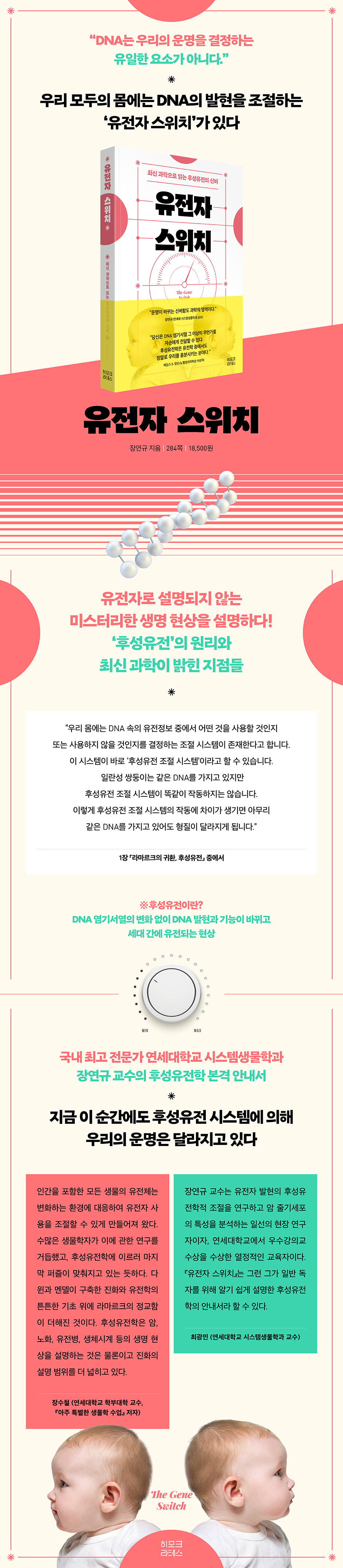
Into the book
The traits of an organism are determined by the genetic material called DNA inherited from its parents.
Therefore, since identical twins are born with the same DNA, it is expected that they will have the same traits.
Let's say that twins who were adopted to different countries at birth and grew up in completely different environments meet again as adults.
The two people will find that they have similarities in facial features, body types, eating habits, hobbies, etc.
We know very well why twins raised in different environments have similar traits.
Because we know that identical twins have the same DNA.
However, we also know from experience that even identical twins raised in the same family are not completely identical and have slight differences.
Why do people with the same DNA develop different traits? Thanks to the long-standing search for an answer, the concept of epigenetics was established.
--- p.17-18, from “Part 1, Chapter 1: The Return of Lamarck, Epigenetics”
So, are genes truly the sole factor determining an individual's traits? Is Lamarck's claim completely wrong? The claim that genes are the sole factor determining traits has been accepted as established theory since Mendel published his laws of heredity.
However, as evidence emerged that traits were determined by factors other than genes, a new field called epigenetics emerged.
The principles and concepts of epigenetics have provided new insights into solving mysteries that could not be explained by Mendel's laws of inheritance, and have made us revisit Lamarck's claims.
--- p.72, from “Part 2, Chapter 4, Are Identical Twins Completely Alike?, Epigenetics”
All types of cells turn on the transcription switches for only the genes they need, and completely turn off the transcription switches for unnecessary genes.
However, if the cell type is different, there is a difference in the transcription ON/OFF switch of each gene, and the state of the transcription ON/OFF switch according to the cell type should never change.
If the transcription switch of a necessary gene is turned off or the transcription switch of an unnecessary gene is turned on, the cell's identity is destroyed.
Any change in cellular identity in a living organism is a very serious event that can alter the fate of the organism.
Therefore, the state of the transcription switch determined during the differentiation process must never change until the organism dies.
The epigenetic actuator system plays a crucial role in establishing and stably maintaining the transcriptional switch state of a cell.
--- p.80, from “Part 2, Chapter 5: The Secret of the Birth of Cells That Make Up Our Body”
Mutant alleles that determine traits such as polydactyly, in which a person has more than five fingers or toes, and cleft palate, in which the philtrum of the lip is split, are dominant over the wild-type allele.
Therefore, if a person inherits a mutant allele from either parent, polydactyly or cleft lip and palate should appear.
Assuming that Mendel's law of dominance is faithfully applied, the trait is determined by the dominant allele in the case of heterozygotes.
However, in people who are heterozygous for the polydactyly or cleft lip and palate alleles, the trait is not expressed more often than expected.
Studies using epidemiological surveys have shown that about 80% of people with the gene that causes polydactyly exhibit the trait.
People with polydactyly may have polydactyly in all four limbs, or only in some, or may have six hands or seven hands, but the reason for these differences has not yet been discovered.
--- p.113, from “Part 2, Chapter 7: Mysteries that Break the Equation That DNA is Our Destiny”
There is more than one way in which the packing system that creates heterochromatin works.
Compression packaging techniques vary across species and are used in different ways depending on the type and purpose of heterochromatin.
In general, higher organisms use a variety of compression packaging techniques.
Although basic compression packaging techniques are common to many species, higher organisms possess additional, more advanced compression packaging techniques.
For example, 'DNA methylation' is the most advanced compression technology used in mammals.
Although yeast and fruit flies also contain genes similar to those that make DNA methylation enzymes, they cannot make 'DNA methylation' enzymes and thus cannot use this technique.
In any case, it is very exceptional and unique that a single-celled organism, bread mold, uses a compression packaging technique called 'DNA methylation'.
--- p.146, from “Part 3, Chapter 8 Special Instructions for Use of the DNA Packaging System”
In species that reproduce sexually, the sex chromosomes used to distinguish gender vary depending on the species.
Mammals, including humans, use X and Y chromosomes, with males having a degenerate sex chromosome called the Y.
Some birds, including chickens, use W and Z chromosomes, with females having the W chromosome as a degenerate sex chromosome.
In this case, too, because one of the sex chromosomes has degenerated, a difference in the amount of genes between males and females occurs, and a system that balances the amount of genes operates to compensate for this.
Since the molecular balance system that compensates for genetic load varies slightly depending on the species, it is necessary to learn about the operating principles of various molecular balance systems.
--- p.160, from “Part 3, Chapter 9, Molecular Balances for Species Preservation”
The fertilized egg develops into various cells through the process of cell differentiation.
At this time, the epigenetic regulatory system uses a transcriptional ON/OFF switch to determine the fate of each cell.
The state of the transcriptional ON/OFF switch established by the epigenetic regulatory system can be seen to vary depending on the cell type.
During the process of cell differentiation, each cell acquires a unique epigenome according to its type, and this epigenome remains unchanged even after repeated cell divisions.
In other words, the epigenome created for each cell type from the time an individual is born until death is maintained in the same state as when it was first formed, and this phenomenon is called cellular memory.
The miracle of a single cell, a fertilized egg, developing into an organism with tissues and organs composed of various cell types is possible thanks to the epigenetic regulatory system.
--- p.198, from “The Miracle of the Cell Memory System, Part 4, Chapter 11”
If a tumor is caused by a loss of function of a tumor suppressor gene, it can be inferred that the growth of cancer cells will be stopped if only the function of the tumor suppressor gene that has malfunctioned is restored.
One drug that uses this strategy is an epigenetic drug called vorinostat.
Most existing anticancer drugs have the side effect of destroying not only cancer cells but also normal cells.
Furthermore, even if customized anticancer drugs are used against targets known to be the cause of cancer, the reality is that it is difficult to expect a therapeutic effect on cancers caused by other causes.
If a patient's cancer is caused by an epigenetic error, this error may not be correctable except with an epigenetic drug like vorinostat.
Correcting epigenetic errors in this way could restore the function of tumor suppressor genes and even induce cancer cell death, making it possible to treat cancers that were previously unresponsive to anticancer drugs.
The clinical results of vorinostat are a very important example showing that cancer can be treated with epigenetics.
--- p.224-225, from “Part 4, Chapter 12: Finding Cancer Cells in Our Body”
Why should we focus on epigenetics? I dare say it's because epigenetics scientifically explains the phenomenon whereby even with identical genes, our lives can change based on our choices and efforts.
Of course, depending on the choices we make and the efforts we make, the impact on our destiny can be positive or negative.
Of course, there are pros and cons to research on epigenetic phenomena.
But if you ask us which side we should believe, I would answer like this.
With wise choices and proper effort, you can leave traces and records in your DNA through epigenetics.
Furthermore, it can act as a force that changes our nature, so that our lives can also move in a good direction.
I just want to share a message of hope.
Therefore, since identical twins are born with the same DNA, it is expected that they will have the same traits.
Let's say that twins who were adopted to different countries at birth and grew up in completely different environments meet again as adults.
The two people will find that they have similarities in facial features, body types, eating habits, hobbies, etc.
We know very well why twins raised in different environments have similar traits.
Because we know that identical twins have the same DNA.
However, we also know from experience that even identical twins raised in the same family are not completely identical and have slight differences.
Why do people with the same DNA develop different traits? Thanks to the long-standing search for an answer, the concept of epigenetics was established.
--- p.17-18, from “Part 1, Chapter 1: The Return of Lamarck, Epigenetics”
So, are genes truly the sole factor determining an individual's traits? Is Lamarck's claim completely wrong? The claim that genes are the sole factor determining traits has been accepted as established theory since Mendel published his laws of heredity.
However, as evidence emerged that traits were determined by factors other than genes, a new field called epigenetics emerged.
The principles and concepts of epigenetics have provided new insights into solving mysteries that could not be explained by Mendel's laws of inheritance, and have made us revisit Lamarck's claims.
--- p.72, from “Part 2, Chapter 4, Are Identical Twins Completely Alike?, Epigenetics”
All types of cells turn on the transcription switches for only the genes they need, and completely turn off the transcription switches for unnecessary genes.
However, if the cell type is different, there is a difference in the transcription ON/OFF switch of each gene, and the state of the transcription ON/OFF switch according to the cell type should never change.
If the transcription switch of a necessary gene is turned off or the transcription switch of an unnecessary gene is turned on, the cell's identity is destroyed.
Any change in cellular identity in a living organism is a very serious event that can alter the fate of the organism.
Therefore, the state of the transcription switch determined during the differentiation process must never change until the organism dies.
The epigenetic actuator system plays a crucial role in establishing and stably maintaining the transcriptional switch state of a cell.
--- p.80, from “Part 2, Chapter 5: The Secret of the Birth of Cells That Make Up Our Body”
Mutant alleles that determine traits such as polydactyly, in which a person has more than five fingers or toes, and cleft palate, in which the philtrum of the lip is split, are dominant over the wild-type allele.
Therefore, if a person inherits a mutant allele from either parent, polydactyly or cleft lip and palate should appear.
Assuming that Mendel's law of dominance is faithfully applied, the trait is determined by the dominant allele in the case of heterozygotes.
However, in people who are heterozygous for the polydactyly or cleft lip and palate alleles, the trait is not expressed more often than expected.
Studies using epidemiological surveys have shown that about 80% of people with the gene that causes polydactyly exhibit the trait.
People with polydactyly may have polydactyly in all four limbs, or only in some, or may have six hands or seven hands, but the reason for these differences has not yet been discovered.
--- p.113, from “Part 2, Chapter 7: Mysteries that Break the Equation That DNA is Our Destiny”
There is more than one way in which the packing system that creates heterochromatin works.
Compression packaging techniques vary across species and are used in different ways depending on the type and purpose of heterochromatin.
In general, higher organisms use a variety of compression packaging techniques.
Although basic compression packaging techniques are common to many species, higher organisms possess additional, more advanced compression packaging techniques.
For example, 'DNA methylation' is the most advanced compression technology used in mammals.
Although yeast and fruit flies also contain genes similar to those that make DNA methylation enzymes, they cannot make 'DNA methylation' enzymes and thus cannot use this technique.
In any case, it is very exceptional and unique that a single-celled organism, bread mold, uses a compression packaging technique called 'DNA methylation'.
--- p.146, from “Part 3, Chapter 8 Special Instructions for Use of the DNA Packaging System”
In species that reproduce sexually, the sex chromosomes used to distinguish gender vary depending on the species.
Mammals, including humans, use X and Y chromosomes, with males having a degenerate sex chromosome called the Y.
Some birds, including chickens, use W and Z chromosomes, with females having the W chromosome as a degenerate sex chromosome.
In this case, too, because one of the sex chromosomes has degenerated, a difference in the amount of genes between males and females occurs, and a system that balances the amount of genes operates to compensate for this.
Since the molecular balance system that compensates for genetic load varies slightly depending on the species, it is necessary to learn about the operating principles of various molecular balance systems.
--- p.160, from “Part 3, Chapter 9, Molecular Balances for Species Preservation”
The fertilized egg develops into various cells through the process of cell differentiation.
At this time, the epigenetic regulatory system uses a transcriptional ON/OFF switch to determine the fate of each cell.
The state of the transcriptional ON/OFF switch established by the epigenetic regulatory system can be seen to vary depending on the cell type.
During the process of cell differentiation, each cell acquires a unique epigenome according to its type, and this epigenome remains unchanged even after repeated cell divisions.
In other words, the epigenome created for each cell type from the time an individual is born until death is maintained in the same state as when it was first formed, and this phenomenon is called cellular memory.
The miracle of a single cell, a fertilized egg, developing into an organism with tissues and organs composed of various cell types is possible thanks to the epigenetic regulatory system.
--- p.198, from “The Miracle of the Cell Memory System, Part 4, Chapter 11”
If a tumor is caused by a loss of function of a tumor suppressor gene, it can be inferred that the growth of cancer cells will be stopped if only the function of the tumor suppressor gene that has malfunctioned is restored.
One drug that uses this strategy is an epigenetic drug called vorinostat.
Most existing anticancer drugs have the side effect of destroying not only cancer cells but also normal cells.
Furthermore, even if customized anticancer drugs are used against targets known to be the cause of cancer, the reality is that it is difficult to expect a therapeutic effect on cancers caused by other causes.
If a patient's cancer is caused by an epigenetic error, this error may not be correctable except with an epigenetic drug like vorinostat.
Correcting epigenetic errors in this way could restore the function of tumor suppressor genes and even induce cancer cell death, making it possible to treat cancers that were previously unresponsive to anticancer drugs.
The clinical results of vorinostat are a very important example showing that cancer can be treated with epigenetics.
--- p.224-225, from “Part 4, Chapter 12: Finding Cancer Cells in Our Body”
Why should we focus on epigenetics? I dare say it's because epigenetics scientifically explains the phenomenon whereby even with identical genes, our lives can change based on our choices and efforts.
Of course, depending on the choices we make and the efforts we make, the impact on our destiny can be positive or negative.
Of course, there are pros and cons to research on epigenetic phenomena.
But if you ask us which side we should believe, I would answer like this.
With wise choices and proper effort, you can leave traces and records in your DNA through epigenetics.
Furthermore, it can act as a force that changes our nature, so that our lives can also move in a good direction.
I just want to share a message of hope.
--- p.234, from “Going Out: Epigenetics, the Blue Ocean of Biological Research”
Publisher's Review
Why Lives Are Different Even When Genes Are Same
Epigenetic systems that operate as genetic switches
Are our genes or our efforts what determine our destiny? Can the abilities we acquire throughout life influence future generations? If genes determine everything, is there nothing we can do to change our lives and those of future generations? The question of the inheritance of acquired traits, initiated by Darwin and Lamarck, has long been a central debate in biology and evolutionary genetics.
However, in the mid-20th century, when the structure of DNA was discovered and genetic determinism, which states that everything is determined by genes, became dominant, the argument for influences other than genetics seemed to lose its power.
Epigenetics is what changed the landscape of the debate.
Epigenetics refers to the phenomenon in which DNA expression and function change and are inherited from generation to generation without changing the DNA base sequence.
Even people born with the same genes can have their traits changed depending on their environment and experiences.
Epigenetic research, which began in earnest in the late 20th century, discovered that there is a system in our body that regulates gene expression.
Genetic information is recorded in the form of base sequences in the DNA present in the nucleus of human cells.
However, our body does not use all the information in our genes, but rather activates/deactivates certain information as needed.
The system that turns information in certain sections of DNA on and off at this time is the epigenetic system.
Our innate genes do not change, but our habits, the food we eat, and our environment affect how our genetic switches work.
Additionally, the phenomenon of the on/off decision of this switch being inherited is continuously being discovered.
Genes cannot be changed, but their expression and variation can be inherited.
Now, related research is expanding to a wide range of topics, including disease treatment and prevention, parenting and education, habits and eating habits, and the interaction of the body with the surrounding environment.
Epigenetics is emerging as a central focus in biology and genetics.
Epigenetics explained by Korea's top experts
The latest epigenetic research in one volume
Professor Yeon-Gyu Jang of Yonsei University's Department of Systems Biology, who has been teaching epigenetics for many years, wrote "Gene Switch" to introduce the concept and latest trends in epigenetics in an easy-to-understand way.
Epigenetics is not simply a tool used to induce genetic changes in DNA.
Epigenetics is one of the mysterious phenomena of life that tells us how our bodies are made and how they work.
For this reason, by reading the book, you can understand not only the specific processes of the epigenetic system, but also various phenomena in our body.
The influence of epigenetics is truly enormous.
Epigenetics is related to various mysteries that occur in our bodies, such as the developmental process in which a fertilized egg differentiates and forms an organism when a sperm and an egg unite, the body's immune response to external viruses, imprinted genes that block the expression of either paternal or maternal genes, and the expression process of genes that cause or suppress specific diseases.
Through the author's comprehensive perspective encompassing biology and genetics, readers will gain a clearer understanding of the mysteries of the human body, including epigenetics.
『Gene Switch』 is composed of a total of 12 chapters.
Chapter 1 explains how conventional genetics differs from epigenetics and provides examples of Lamarck's confirmed inheritance of acquired traits.
Chapters 2 and 3 cover the structure of genes and the process by which genes are condensed and packaged to explain the epigenetic system.
Chapter 4 explains in detail why identical twins have different gene expressions, in relation to epigenetics.
Chapter 5 explains the role of the epigenetic system in the process of cell differentiation for the creation of life.
Chapters 6 and 7 introduce life phenomena that break the traditional framework of heredity, such as Mendel's laws of inheritance that explain the relationship between genotypes and traits, and cases in which the epigenetic system intervenes.
Chapter 8 examines in detail the DNA packaging system, one of the major mechanisms by which epigenetic inheritance occurs, and identifies the various phenomena that constitute the most highly compressed and packaged heterochromatin. Chapter 9 covers the X chromosome inactivation phenomenon that occurs through the molecular balance system and the activity of Xist RNA, which uses a differentiated compressed packaging method for this.
Chapter 10 examines the phenomenon of imprinting in more detail, along with some genetic disorders, and Chapter 11 explains how the same cell can become each organ through epigenetics, as life progresses from fertilized egg to adult, in relation to the cellular memory system.
Finally, Chapter 12 examines the principles of epigenetics for treating cancer and trends in related drug development.
Acquired traits can be inherited
How experiences are passed on to the next generation
To explain the concept of epigenetics, the author first reexamines Lamarck's argument for the inheritance of acquired traits.
Lamarck's 'use-and-disuse theory', which states that traits that are frequently used develop and traits that are not used degenerate, was widely accepted at the time.
However, the claim that acquired traits are inherited was ridiculed by scholars and has not been accepted to this day.
If the phenomenon in which the base sequence of a gene does not change but its expression changes and the resulting trait is inherited can be called the inheritance of acquired traits, then Lamarck's claim must be reconsidered after the emergence of epigenetics.
The author introduces two ways in which epigenetic changes are inherited, with experimental examples.
First, there is the case where it is inherited through germ cells.
A research team led by Dr. Abel Ernest and Georges Tholey found that when male rats were exposed to alcohol for a period of time and then bred with wild-type female rats, the male offspring showed weight loss, cognitive dysfunction, behavioral disorders, and increased mortality.
These trait changes were also passed on to third-generation male offspring.
Studies in male mouse models have made it clear that phenotypic changes that occur through epigenetic systems rather than mutations are passed on to offspring through the germline.
Inheritance also occurs in an experience-dependent manner.
A study using rodents as a model confirmed that the behavioral characteristics of offspring are determined by the way they are cared for during the first week after birth, and that these characteristics remain unchanged even after they become adults.
Chicks that receive good care during the lactation period develop phenotypic changes that make them better at caring for their offspring when they grow up and have offspring.
This result shows that traits acquired through experience can also be passed on to the next generation.
Germline and experience-dependent inheritance both offer us important insights.
Not only does it demonstrate that epigenetic changes can influence biological evolution, but it also reminds us that individuals, not just carriers of genes, have the power and influence to change their own destiny and society.
The principles of life beyond genes
The technology of DNA packaging and condensation that changes destiny
How does the epigenetic system, which regulates gene expression, work? To explain the epigenetic system, the author begins with DNA and its structure.
The DNA within our cells is several meters long, but the nucleus, which contains the DNA, is only 5 to 8 micrometers in diameter.
To solve this conundrum, our bodies have developed a compaction system: DNA strands are wrapped 1.75 times around spheres called histone proteins, packaging them into chromatin.
When these thread-like chromatins clump together during cell division, they form the X-shaped chromosomes we are familiar with.
Our bodies must constantly utilize the genetic information in our DNA to perform various activities in order to sustain life.
During growth phase cell division, skin cell regeneration, antibody production, etc., information is read from DNA and proteins are created.
What is needed at this time is RNA, which reads DNA information and creates proteins.
However, RNA is only produced from necessary genes and used for protein production, and RNA is not produced from unnecessary genes.
All cells in our body share the same genome, but changes in phenotype occur by selectively transcribing necessary and unnecessary genes.
The epigenetic system is the manager that determines whether or not genes are transcribed.
To block transcription, the histone spheres that wrap around DNA are compressed and spaced closer together.
The severe compression prevents the regulatory factors required for RNA synthesis from accessing them.
There are several mechanisms for this.
Some of the various histone methylations code for methyl groups on specific histone tails, causing them to condense and disable transcription.
Conversely, histone acetylation decondenses histones, enabling transcription. DNA methylation, which tags gene promoter regions with methyl groups to prevent specific regions from being read, completes the packaging or condensation process along with histone methylation.
In addition to this, the actions of various genetic switches that activate and deactivate transcription from the original DNA can all be considered part of the realm of epigenetics.
The era of epigenetics is coming.
Treating cancer by modulating the epigenetic system
Regulation of gene expression explains numerous phenomena occurring in living organisms.
The changes in traits of identical twins raised in different environments, the reason why we can develop into different body organs even though our DNA is all the same, the reason why humans cannot reproduce asexually even though all the information is in the genes, the reason why mice and cats are born with mosaic fur colors that are not the same as their parents, the reason why Fred Willi Syndrome (PWS) and Angelman Syndrome (AS) occur, and the reason why tumor suppressor genes are not expressed are all related to epigenetics.
Through these examples, the author explains in simple and detailed terms how the epigenetic system works and the extent to which contemporary science has elucidated related phenomena.
In particular, a lot of space is devoted to explaining the cancer treatment drug Vorinostat, which has recently received a lot of attention, and the process of cancer development.
Cancer, which proliferates infinitely like a zombie and destroys cells in our body, can be divided into those caused by genetic mutations and those caused by errors in the epigenetic system.
The author basically explains the principles of cell proliferation and suppression of proto-oncogenes and tumor suppressor genes that cause cancer, and specifically reveals the process of cancer development caused by epigenetic errors, i.e., epimutations.
In addition, it introduces the development process, strategies, and principles of various drugs related to epigenetics, and examines the prospects for how epigenetics can contribute to cancer treatment.
Epigenetic systems that operate as genetic switches
Are our genes or our efforts what determine our destiny? Can the abilities we acquire throughout life influence future generations? If genes determine everything, is there nothing we can do to change our lives and those of future generations? The question of the inheritance of acquired traits, initiated by Darwin and Lamarck, has long been a central debate in biology and evolutionary genetics.
However, in the mid-20th century, when the structure of DNA was discovered and genetic determinism, which states that everything is determined by genes, became dominant, the argument for influences other than genetics seemed to lose its power.
Epigenetics is what changed the landscape of the debate.
Epigenetics refers to the phenomenon in which DNA expression and function change and are inherited from generation to generation without changing the DNA base sequence.
Even people born with the same genes can have their traits changed depending on their environment and experiences.
Epigenetic research, which began in earnest in the late 20th century, discovered that there is a system in our body that regulates gene expression.
Genetic information is recorded in the form of base sequences in the DNA present in the nucleus of human cells.
However, our body does not use all the information in our genes, but rather activates/deactivates certain information as needed.
The system that turns information in certain sections of DNA on and off at this time is the epigenetic system.
Our innate genes do not change, but our habits, the food we eat, and our environment affect how our genetic switches work.
Additionally, the phenomenon of the on/off decision of this switch being inherited is continuously being discovered.
Genes cannot be changed, but their expression and variation can be inherited.
Now, related research is expanding to a wide range of topics, including disease treatment and prevention, parenting and education, habits and eating habits, and the interaction of the body with the surrounding environment.
Epigenetics is emerging as a central focus in biology and genetics.
Epigenetics explained by Korea's top experts
The latest epigenetic research in one volume
Professor Yeon-Gyu Jang of Yonsei University's Department of Systems Biology, who has been teaching epigenetics for many years, wrote "Gene Switch" to introduce the concept and latest trends in epigenetics in an easy-to-understand way.
Epigenetics is not simply a tool used to induce genetic changes in DNA.
Epigenetics is one of the mysterious phenomena of life that tells us how our bodies are made and how they work.
For this reason, by reading the book, you can understand not only the specific processes of the epigenetic system, but also various phenomena in our body.
The influence of epigenetics is truly enormous.
Epigenetics is related to various mysteries that occur in our bodies, such as the developmental process in which a fertilized egg differentiates and forms an organism when a sperm and an egg unite, the body's immune response to external viruses, imprinted genes that block the expression of either paternal or maternal genes, and the expression process of genes that cause or suppress specific diseases.
Through the author's comprehensive perspective encompassing biology and genetics, readers will gain a clearer understanding of the mysteries of the human body, including epigenetics.
『Gene Switch』 is composed of a total of 12 chapters.
Chapter 1 explains how conventional genetics differs from epigenetics and provides examples of Lamarck's confirmed inheritance of acquired traits.
Chapters 2 and 3 cover the structure of genes and the process by which genes are condensed and packaged to explain the epigenetic system.
Chapter 4 explains in detail why identical twins have different gene expressions, in relation to epigenetics.
Chapter 5 explains the role of the epigenetic system in the process of cell differentiation for the creation of life.
Chapters 6 and 7 introduce life phenomena that break the traditional framework of heredity, such as Mendel's laws of inheritance that explain the relationship between genotypes and traits, and cases in which the epigenetic system intervenes.
Chapter 8 examines in detail the DNA packaging system, one of the major mechanisms by which epigenetic inheritance occurs, and identifies the various phenomena that constitute the most highly compressed and packaged heterochromatin. Chapter 9 covers the X chromosome inactivation phenomenon that occurs through the molecular balance system and the activity of Xist RNA, which uses a differentiated compressed packaging method for this.
Chapter 10 examines the phenomenon of imprinting in more detail, along with some genetic disorders, and Chapter 11 explains how the same cell can become each organ through epigenetics, as life progresses from fertilized egg to adult, in relation to the cellular memory system.
Finally, Chapter 12 examines the principles of epigenetics for treating cancer and trends in related drug development.
Acquired traits can be inherited
How experiences are passed on to the next generation
To explain the concept of epigenetics, the author first reexamines Lamarck's argument for the inheritance of acquired traits.
Lamarck's 'use-and-disuse theory', which states that traits that are frequently used develop and traits that are not used degenerate, was widely accepted at the time.
However, the claim that acquired traits are inherited was ridiculed by scholars and has not been accepted to this day.
If the phenomenon in which the base sequence of a gene does not change but its expression changes and the resulting trait is inherited can be called the inheritance of acquired traits, then Lamarck's claim must be reconsidered after the emergence of epigenetics.
The author introduces two ways in which epigenetic changes are inherited, with experimental examples.
First, there is the case where it is inherited through germ cells.
A research team led by Dr. Abel Ernest and Georges Tholey found that when male rats were exposed to alcohol for a period of time and then bred with wild-type female rats, the male offspring showed weight loss, cognitive dysfunction, behavioral disorders, and increased mortality.
These trait changes were also passed on to third-generation male offspring.
Studies in male mouse models have made it clear that phenotypic changes that occur through epigenetic systems rather than mutations are passed on to offspring through the germline.
Inheritance also occurs in an experience-dependent manner.
A study using rodents as a model confirmed that the behavioral characteristics of offspring are determined by the way they are cared for during the first week after birth, and that these characteristics remain unchanged even after they become adults.
Chicks that receive good care during the lactation period develop phenotypic changes that make them better at caring for their offspring when they grow up and have offspring.
This result shows that traits acquired through experience can also be passed on to the next generation.
Germline and experience-dependent inheritance both offer us important insights.
Not only does it demonstrate that epigenetic changes can influence biological evolution, but it also reminds us that individuals, not just carriers of genes, have the power and influence to change their own destiny and society.
The principles of life beyond genes
The technology of DNA packaging and condensation that changes destiny
How does the epigenetic system, which regulates gene expression, work? To explain the epigenetic system, the author begins with DNA and its structure.
The DNA within our cells is several meters long, but the nucleus, which contains the DNA, is only 5 to 8 micrometers in diameter.
To solve this conundrum, our bodies have developed a compaction system: DNA strands are wrapped 1.75 times around spheres called histone proteins, packaging them into chromatin.
When these thread-like chromatins clump together during cell division, they form the X-shaped chromosomes we are familiar with.
Our bodies must constantly utilize the genetic information in our DNA to perform various activities in order to sustain life.
During growth phase cell division, skin cell regeneration, antibody production, etc., information is read from DNA and proteins are created.
What is needed at this time is RNA, which reads DNA information and creates proteins.
However, RNA is only produced from necessary genes and used for protein production, and RNA is not produced from unnecessary genes.
All cells in our body share the same genome, but changes in phenotype occur by selectively transcribing necessary and unnecessary genes.
The epigenetic system is the manager that determines whether or not genes are transcribed.
To block transcription, the histone spheres that wrap around DNA are compressed and spaced closer together.
The severe compression prevents the regulatory factors required for RNA synthesis from accessing them.
There are several mechanisms for this.
Some of the various histone methylations code for methyl groups on specific histone tails, causing them to condense and disable transcription.
Conversely, histone acetylation decondenses histones, enabling transcription. DNA methylation, which tags gene promoter regions with methyl groups to prevent specific regions from being read, completes the packaging or condensation process along with histone methylation.
In addition to this, the actions of various genetic switches that activate and deactivate transcription from the original DNA can all be considered part of the realm of epigenetics.
The era of epigenetics is coming.
Treating cancer by modulating the epigenetic system
Regulation of gene expression explains numerous phenomena occurring in living organisms.
The changes in traits of identical twins raised in different environments, the reason why we can develop into different body organs even though our DNA is all the same, the reason why humans cannot reproduce asexually even though all the information is in the genes, the reason why mice and cats are born with mosaic fur colors that are not the same as their parents, the reason why Fred Willi Syndrome (PWS) and Angelman Syndrome (AS) occur, and the reason why tumor suppressor genes are not expressed are all related to epigenetics.
Through these examples, the author explains in simple and detailed terms how the epigenetic system works and the extent to which contemporary science has elucidated related phenomena.
In particular, a lot of space is devoted to explaining the cancer treatment drug Vorinostat, which has recently received a lot of attention, and the process of cancer development.
Cancer, which proliferates infinitely like a zombie and destroys cells in our body, can be divided into those caused by genetic mutations and those caused by errors in the epigenetic system.
The author basically explains the principles of cell proliferation and suppression of proto-oncogenes and tumor suppressor genes that cause cancer, and specifically reveals the process of cancer development caused by epigenetic errors, i.e., epimutations.
In addition, it introduces the development process, strategies, and principles of various drugs related to epigenetics, and examines the prospects for how epigenetics can contribute to cancer treatment.
GOODS SPECIFICS
- Date of issue: October 25, 2023
- Page count, weight, size: 284 pages | 476g | 145*210*17mm
- ISBN13: 9791198356642
You may also like
카테고리
korean


korean

![GQ KOREA Mark (Monthly): December [2025]](http://librairie.coreenne.fr/cdn/shop/files/8ef265dbbfbf186523ed75ba7319009d.jpg?v=1765340328&width=3840)


