

Kang Shin-ju's long-term training set
 |
Description
Book Introduction
This product is a product made by YES24. (Individual returns are not possible.)
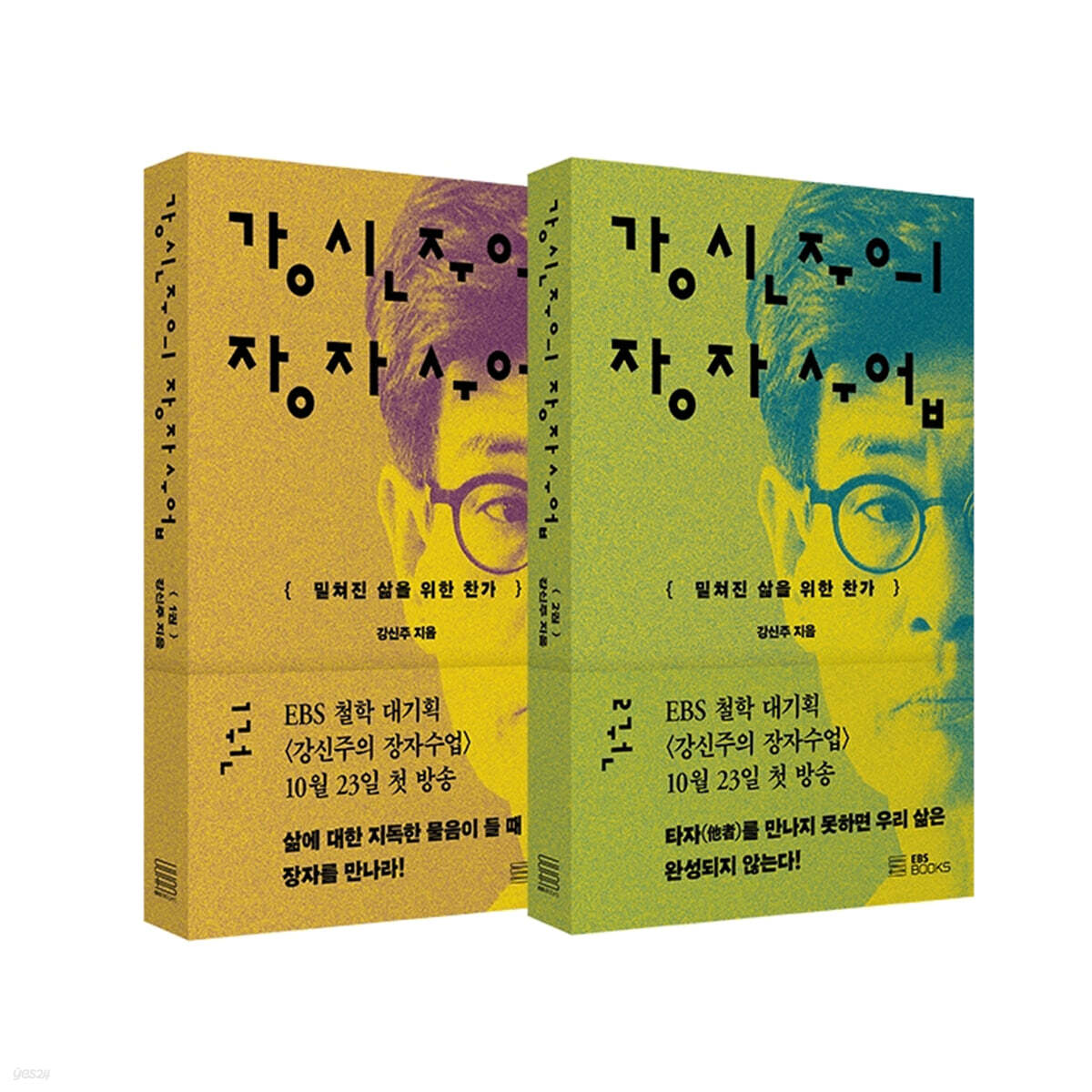
[Book] Kang Shin-ju's Jangja Lesson 1: A Hymn for a Pushed-Away Life Simultaneous publication and broadcast of EBS's philosophy project "Kang Shin-ju's Jangja Lessons" The last book by Kang Shin-ju, the most beloved philosopher of our time The most powerful interpretation of Zhuangzi in 2,500 years “When you have a serious question about life, meet Zhuangzi!” In an age of overuse and competition, the 2,500-year-old teachings of Zhuangzi are offered to a Korean society weary of competition. Philosopher Kang Shin-ju received his doctorate in 『Zhuangzi』 in his youth, and after contemplating Zhuangzi's thoughts for over 20 years, he published several books on Zhuangzi. The reason he once again chose 『Zhuangzi』 as a philosophical book that is absolutely necessary for our times is because 『Zhuangzi』 is the most powerful text that can help all of us living in an age of excess use regain positivity and self-esteem in life. Philosopher Kang Shin-ju defines Zhuangzi from three main perspectives. Zhuangzi is the 'philosopher of uselessness'. 2,500 years ago, China's Warring States Period (403 BC - 221 BC) was a time when everyone proved their usefulness and existence under the slogan of enriching the country and strengthening the military. [Book] Kang Shin-ju's Jangja Lesson 2: A Hymn for a Pushed-Away Life Simultaneous publication and broadcast of EBS's philosophy project "Kang Shin-ju's Jangja Lessons" The last book by Kang Shin-ju, the most beloved philosopher of our time The most powerful interpretation of Zhuangzi in 2,500 years “When you have a serious question about life, meet Zhuangzi!” In an age of overuse and competition, the 2,500-year-old teachings of Zhuangzi are offered to a Korean society weary of competition. Philosopher Kang Shin-ju received his doctorate in 『Zhuangzi』 in his youth, and after contemplating Zhuangzi's thoughts for over 20 years, he published several books on Zhuangzi. The reason he once again chose 『Zhuangzi』 as a philosophical book that is absolutely necessary for our times is because 『Zhuangzi』 is the most powerful text that can help all of us living in an age of excess use regain positivity and self-esteem in life. Philosopher Kang Shin-ju defines Zhuangzi from three main perspectives. Zhuangzi is the 'philosopher of uselessness'. 2,500 years ago, China's Warring States Period (403 BC - 221 BC) was a time when everyone proved their usefulness and existence under the slogan of enriching the country and strengthening the military. |
- You can preview some of the book's contents.
Preview
index
[Book] Kang Shin-ju's Jangja Lesson 1: A Hymn for a Pushed-Away Life
In publishing the book
Prologue_ The wind is blowing, it's time to ride on the back of the great eagle.
Part 1 Jumping over the ground
1 Hymn to Philosophy - Tales of the Underworld
2 How to Prevent Love Tragedy - The Seabird Story
3. Take your life! - The Empty Ship Story
The Wind Blows, So I Must Live! - The Tale of the Great Bong
5 The Power of the Small Man, the Authority of the Small Man - The Story of Yunpyeon
6 Useless Good Day - The Story of a Giant Tree
7 Vanity, Too Fatal to Be Loved - A Beauty Story
8 The World is Not One - The Story of Son Yak
Dancing with the 9th Batters - The Story of Pojeong
10 The Sound of the Wind in the Empty Sky - The Story of the Wind
11 Dreaming of a Free Community - The Story of Your Teacher
12 Nothing is Universal - A Poem
Part 2: Going Against the Wave
13 Beyond Good and Evil - A Story of Hypocrisy
14 What a Colorful World! - A Story of the Heart
15 Secrets to Leisure and Confidence - Private Life Stories
16 Crossing the Law of Causality - Shadow Stories
17 Living a Life of Freedom - A Story of Jiriso
18 A Longing for God and the Soul - Jinjae's Story
19 What the Elder Sees in the Wilderness - The Story of the Holy Spirit
20 A New Life Where Body and Mind Intersect - A Drunkard's Story
21 Right here, don't go any further! - One Story
Tune in to the 22nd batter - Sim Jae's story
23 The Deep Swamp of Metaphysics - A Story of Argument
24. This is how Yeolja lived! - The Story of Yeolja
[Book] Kang Shin-ju's Jangja Lesson 2: A Hymn for a Pushed-Away Life
Blow out the third lamp
25 Ehi pasiko! No, just pasiko! - A Story of Wisdom
26 A Nightmare That's Hard to Wake Up From - Yeohee's Story
27 The Day Zhang Zhu Was Reborn as Zhang Zi - The Story of Zhao Ling
28 From a World of Vanity to a Community of Joy - The Story of the Piglet
29 The Epic of Life and Death - The Story of the Sea
30 The Health of Oblivion - The Story of Airborne
31 Roads and Horses, Their Possibilities and Limitations - Road Stories
32 Beside the Wheel - The Story of Tangrang
33 Things You Can't See Without Comparison - Wish Story
34 Why the Great Bong Flies to the Southern Sea - The Story of Mr. Sinam
35 Salto Mortale! - The Wings Story
36 Dialectics of Two Legs - The Tale of the Laggard Sheep
Part 4: Where the Wind Blows
37 Looking at the Road from the Threshold - The Story of Dochu
In Search of the 38th Arrow - A Bug's Tale
39 Death, Dismantling That Obsessive Idea - The Story of Meng Sunzhai
40 The Moment Art is Barely Born - Jae-kyung's Story
41. Against the Temptation of the Fence! - The Pheasant Story
42 A Sad World and the Solitude of Zhuangzi - A Story of Three People
43 The Heart of a Warrior Who Protects Freedom - The Fox's Story
44 The Secret Duality of a Loving Heart - The Monkey Story
45 The Irresistible Charm of a Free Man - The Story of Ae-tae-ta
46 Where Two Worlds Meet - Swimming Stories
47 The Great Death with a Narrow Coffin - A Story of the End
48 Who Will Wake the Dream of the Elder? - The Butterfly Dream Story
Epilogue_ For the freedom and strength to leave
In publishing the book
Prologue_ The wind is blowing, it's time to ride on the back of the great eagle.
Part 1 Jumping over the ground
1 Hymn to Philosophy - Tales of the Underworld
2 How to Prevent Love Tragedy - The Seabird Story
3. Take your life! - The Empty Ship Story
The Wind Blows, So I Must Live! - The Tale of the Great Bong
5 The Power of the Small Man, the Authority of the Small Man - The Story of Yunpyeon
6 Useless Good Day - The Story of a Giant Tree
7 Vanity, Too Fatal to Be Loved - A Beauty Story
8 The World is Not One - The Story of Son Yak
Dancing with the 9th Batters - The Story of Pojeong
10 The Sound of the Wind in the Empty Sky - The Story of the Wind
11 Dreaming of a Free Community - The Story of Your Teacher
12 Nothing is Universal - A Poem
Part 2: Going Against the Wave
13 Beyond Good and Evil - A Story of Hypocrisy
14 What a Colorful World! - A Story of the Heart
15 Secrets to Leisure and Confidence - Private Life Stories
16 Crossing the Law of Causality - Shadow Stories
17 Living a Life of Freedom - A Story of Jiriso
18 A Longing for God and the Soul - Jinjae's Story
19 What the Elder Sees in the Wilderness - The Story of the Holy Spirit
20 A New Life Where Body and Mind Intersect - A Drunkard's Story
21 Right here, don't go any further! - One Story
Tune in to the 22nd batter - Sim Jae's story
23 The Deep Swamp of Metaphysics - A Story of Argument
24. This is how Yeolja lived! - The Story of Yeolja
[Book] Kang Shin-ju's Jangja Lesson 2: A Hymn for a Pushed-Away Life
Blow out the third lamp
25 Ehi pasiko! No, just pasiko! - A Story of Wisdom
26 A Nightmare That's Hard to Wake Up From - Yeohee's Story
27 The Day Zhang Zhu Was Reborn as Zhang Zi - The Story of Zhao Ling
28 From a World of Vanity to a Community of Joy - The Story of the Piglet
29 The Epic of Life and Death - The Story of the Sea
30 The Health of Oblivion - The Story of Airborne
31 Roads and Horses, Their Possibilities and Limitations - Road Stories
32 Beside the Wheel - The Story of Tangrang
33 Things You Can't See Without Comparison - Wish Story
34 Why the Great Bong Flies to the Southern Sea - The Story of Mr. Sinam
35 Salto Mortale! - The Wings Story
36 Dialectics of Two Legs - The Tale of the Laggard Sheep
Part 4: Where the Wind Blows
37 Looking at the Road from the Threshold - The Story of Dochu
In Search of the 38th Arrow - A Bug's Tale
39 Death, Dismantling That Obsessive Idea - The Story of Meng Sunzhai
40 The Moment Art is Barely Born - Jae-kyung's Story
41. Against the Temptation of the Fence! - The Pheasant Story
42 A Sad World and the Solitude of Zhuangzi - A Story of Three People
43 The Heart of a Warrior Who Protects Freedom - The Fox's Story
44 The Secret Duality of a Loving Heart - The Monkey Story
45 The Irresistible Charm of a Free Man - The Story of Ae-tae-ta
46 Where Two Worlds Meet - Swimming Stories
47 The Great Death with a Narrow Coffin - A Story of the End
48 Who Will Wake the Dream of the Elder? - The Butterfly Dream Story
Epilogue_ For the freedom and strength to leave
Publisher's Review
Will I take the path that is useful to others, or will I take the path that is useful to myself?
The Warring States Period, in which Zhang Zi lived, was a time of fierce competition.
To win the competition, monarchs were obsessed with recruiting talented people, promising honor, power, and wealth to those who would become their talents.
In such a situation, the disciples of the Hundred Schools of Thought argued that if one followed their own teachings, one could survive the fierce competition for survival.
This book says that the word 'road' or 'Tao' appeared right here.
If we look at the logic of talent from 2,500 years ago, it is similar to our lives as we enter the competitive logic of the 21st century.
The author says that the 'logic of competition and talent' is a powerful ideology that is still valid in both the era of Zhangzi and the present.
No, the author points out that during the Warring States period, the logic was limited to the ruling class, but today it has expanded to apply to everyone.
Zhuangzi was a philosopher who questioned the logic of usefulness and talent in the Warring States period and tried to overcome it.
He argued that usefulness can actually destroy our lives, while uselessness can enrich our lives.
Above all, the author says that useful reason is nothing more than reason demanded by the state or capital.
The reason why we can earn more money and rise to a higher position is because it is for the country and capital, and it cannot be truly for me or for humanity.
The author poses the question to us through the thoughts of Zhuangzi from 2,500 years ago: "Should I take the path that is useful to others?" or "Should I take the path that is useful to myself?"
This book selects 48 stories from the original text of Zhuangzi that are essential for our times and, through powerful interpretations, brings Zhuangzi face-to-face with our lives in the 21st century.
This book helps those who go out every day to prove their worth, driven by the compulsion that they will lose their value if they cannot prove their worth to the company, the country, capital, and even their family, regain their positivity and self-esteem.
Our lives are incomplete without meeting others.
Zhuangzi was a philosopher who pondered over others and relationships with others.
The author defines such a person in one word as a ‘philosopher of others.’
Through the concept of 'others', Zhuangzi also directly criticizes Confucius, the idol of the time.
Regarding Confucius' famous saying, "Do not do to others what you do not want done to yourself (己所不欲 勿施於人)", Zhuangzi asks, "But can what I want be the same as what others want?"
We know very well that there are very few relationships in which the other person wants what we want and the other person does not want what we do not want.
Rather, there are countless cases where the other person does not want what I want, and I do not want what the other person wants.
So, Zhuangzi says that if you love someone, true love is giving them what they want.
And the author says that if we take Zhuangzi's advice, our lives can be completely changed.
All the relationships surrounding me, such as mother, father, husband, wife, daughter, son, senior, junior, etc., can move toward love rather than destruction.
What does it mean to encounter another? Does it mean we meet physically? This book borrows from Spinoza's Ethics to explain that encountering another evokes two emotions: joy and sorrow.
If you don't feel joy or sorrow when you meet someone, then you can't really say that you've 'met' them.
We meet countless people on the subway, at work, and in restaurants, but we don't meet them.
But what if, when we return home and see our husbands, wives, and children, we feel no emotion? Then perhaps we're not truly connecting.
When I empty myself, I can encounter others.
So how can we encounter others? The author uses Zhuangzi's famous line, "I have lost myself," to discuss the possibility of encountering others.
To empty oneself, to lose oneself, means to eliminate the possessiveness and self-consciousness within oneself.
For example, when the thoughts and self-consciousness that fill my mind, such as 'I am smart', 'I am a man (woman)', 'I have a lot of money', 'I am sexy', etc. disappear, the possibility arises that others can take their place.
The author explains the vague concept of Osang-ah using the metaphor of the sound of the wind.
The sounds we hear, such as ‘the sound of the wind,’ ‘the sound of flowing water,’ and ‘the sound of breathing,’ arise from the encounter with something.
A sound is made when a ‘certain hole’ and a ‘certain wind’ meet.
So, who came from this sound of encounter? Was it the wind? Or the hole? The answer is both.
If the hole is blocked, the wind cannot blow and if the hole is empty, the wind cannot blow and the sound cannot be heard.
It is only when these two meet that a sound is made.
The author says:
All birth and change, including ours, are the result of this encounter.
But if I were like a bamboo shoot, full of possessiveness and self-consciousness, what kind of wind, what kind of other could possibly pass me by? That's why I'm Osang-ah.
Sometimes we become an empty hole, and sometimes we become the wind. We must put the other person in that hole or enter the other person's hole in order to meet and communicate.
Context is not just one thing
The author lists two key words for viewing the book: ‘other’ and ‘context.’
The world that Jang-ja sees is not singular but plural, and rather than an all-ism that says, "This is the only principle," he thinks, "The world is full of diverse and complex contexts."
On the contrary, all attention was paid to the day.
Because all attention only destroys our singularity and closes the hole of the other that was opened to us.
In the book, the author describes the unification of context as 'context singularism' and the diversity of context as 'context pluralism'.
Just as the Warring States period 2,500 years ago, when wealth, military power, and personal success were absolute principles, and personal achievement and personal fame have become absolute beliefs in the 21st century capitalist era, our lives are also far from the contextual pluralism that Zhuangzi spoke of.
The author has felt the seriousness of this issue vividly while living as a philosopher.
If we believe that the world where the logic of usefulness prevails is the only world, then the moment we consider ourselves useless in that world, we cannot help but despair.
Therefore, the contextual pluralism of Jangja can give us hope.
If you feel useless in your current context, it is wise to tell yourself to create another context in which you can be useful.
The author says:
It's not that usefulness is important, nor is it that dance is important.
It is more important to affirm our lives and find a context for a better direction.
The Warring States Period, in which Zhang Zi lived, was a time of fierce competition.
To win the competition, monarchs were obsessed with recruiting talented people, promising honor, power, and wealth to those who would become their talents.
In such a situation, the disciples of the Hundred Schools of Thought argued that if one followed their own teachings, one could survive the fierce competition for survival.
This book says that the word 'road' or 'Tao' appeared right here.
If we look at the logic of talent from 2,500 years ago, it is similar to our lives as we enter the competitive logic of the 21st century.
The author says that the 'logic of competition and talent' is a powerful ideology that is still valid in both the era of Zhangzi and the present.
No, the author points out that during the Warring States period, the logic was limited to the ruling class, but today it has expanded to apply to everyone.
Zhuangzi was a philosopher who questioned the logic of usefulness and talent in the Warring States period and tried to overcome it.
He argued that usefulness can actually destroy our lives, while uselessness can enrich our lives.
Above all, the author says that useful reason is nothing more than reason demanded by the state or capital.
The reason why we can earn more money and rise to a higher position is because it is for the country and capital, and it cannot be truly for me or for humanity.
The author poses the question to us through the thoughts of Zhuangzi from 2,500 years ago: "Should I take the path that is useful to others?" or "Should I take the path that is useful to myself?"
This book selects 48 stories from the original text of Zhuangzi that are essential for our times and, through powerful interpretations, brings Zhuangzi face-to-face with our lives in the 21st century.
This book helps those who go out every day to prove their worth, driven by the compulsion that they will lose their value if they cannot prove their worth to the company, the country, capital, and even their family, regain their positivity and self-esteem.
Our lives are incomplete without meeting others.
Zhuangzi was a philosopher who pondered over others and relationships with others.
The author defines such a person in one word as a ‘philosopher of others.’
Through the concept of 'others', Zhuangzi also directly criticizes Confucius, the idol of the time.
Regarding Confucius' famous saying, "Do not do to others what you do not want done to yourself (己所不欲 勿施於人)", Zhuangzi asks, "But can what I want be the same as what others want?"
We know very well that there are very few relationships in which the other person wants what we want and the other person does not want what we do not want.
Rather, there are countless cases where the other person does not want what I want, and I do not want what the other person wants.
So, Zhuangzi says that if you love someone, true love is giving them what they want.
And the author says that if we take Zhuangzi's advice, our lives can be completely changed.
All the relationships surrounding me, such as mother, father, husband, wife, daughter, son, senior, junior, etc., can move toward love rather than destruction.
What does it mean to encounter another? Does it mean we meet physically? This book borrows from Spinoza's Ethics to explain that encountering another evokes two emotions: joy and sorrow.
If you don't feel joy or sorrow when you meet someone, then you can't really say that you've 'met' them.
We meet countless people on the subway, at work, and in restaurants, but we don't meet them.
But what if, when we return home and see our husbands, wives, and children, we feel no emotion? Then perhaps we're not truly connecting.
When I empty myself, I can encounter others.
So how can we encounter others? The author uses Zhuangzi's famous line, "I have lost myself," to discuss the possibility of encountering others.
To empty oneself, to lose oneself, means to eliminate the possessiveness and self-consciousness within oneself.
For example, when the thoughts and self-consciousness that fill my mind, such as 'I am smart', 'I am a man (woman)', 'I have a lot of money', 'I am sexy', etc. disappear, the possibility arises that others can take their place.
The author explains the vague concept of Osang-ah using the metaphor of the sound of the wind.
The sounds we hear, such as ‘the sound of the wind,’ ‘the sound of flowing water,’ and ‘the sound of breathing,’ arise from the encounter with something.
A sound is made when a ‘certain hole’ and a ‘certain wind’ meet.
So, who came from this sound of encounter? Was it the wind? Or the hole? The answer is both.
If the hole is blocked, the wind cannot blow and if the hole is empty, the wind cannot blow and the sound cannot be heard.
It is only when these two meet that a sound is made.
The author says:
All birth and change, including ours, are the result of this encounter.
But if I were like a bamboo shoot, full of possessiveness and self-consciousness, what kind of wind, what kind of other could possibly pass me by? That's why I'm Osang-ah.
Sometimes we become an empty hole, and sometimes we become the wind. We must put the other person in that hole or enter the other person's hole in order to meet and communicate.
Context is not just one thing
The author lists two key words for viewing the book: ‘other’ and ‘context.’
The world that Jang-ja sees is not singular but plural, and rather than an all-ism that says, "This is the only principle," he thinks, "The world is full of diverse and complex contexts."
On the contrary, all attention was paid to the day.
Because all attention only destroys our singularity and closes the hole of the other that was opened to us.
In the book, the author describes the unification of context as 'context singularism' and the diversity of context as 'context pluralism'.
Just as the Warring States period 2,500 years ago, when wealth, military power, and personal success were absolute principles, and personal achievement and personal fame have become absolute beliefs in the 21st century capitalist era, our lives are also far from the contextual pluralism that Zhuangzi spoke of.
The author has felt the seriousness of this issue vividly while living as a philosopher.
If we believe that the world where the logic of usefulness prevails is the only world, then the moment we consider ourselves useless in that world, we cannot help but despair.
Therefore, the contextual pluralism of Jangja can give us hope.
If you feel useless in your current context, it is wise to tell yourself to create another context in which you can be useful.
The author says:
It's not that usefulness is important, nor is it that dance is important.
It is more important to affirm our lives and find a context for a better direction.
GOODS SPECIFICS
- Date of issue: October 20, 2023
- Page count, weight, size: 736 pages | 146*217*60mm
You may also like
카테고리
korean


korean

![ELLE 엘르 스페셜 에디션 A형 : 12월 [2025]](http://librairie.coreenne.fr/cdn/shop/files/b8e27a3de6c9538896439686c6b0e8fb.jpg?v=1766436872&width=3840)


