

human evolution
 |
Description
Book Introduction
- A word from MD
-
It's still evolvingA new book by paleoanthropologist Professor Lee Sang-hee.
It compares human evolution to a river that branches off and reconnects, and introduces various cutting-edge research.
In particular, the fascinating story of the previously unstudied Korean archaeoanthropologists presents a new milestone in the history of anthropology and humanity that only paleoanthropology can provide, not to mention our origins.
July 7, 2023. Natural Science PD Ahn Hyun-jae
Where did the ancient humans of Northeast Asia and the Korean Peninsula come from?
Professor Lee Sang-hee, the first Korean to hold a doctorate in paleoanthropology
Answering questions about our roots with cutting-edge science!
The first Korean to receive a doctorate in paleoanthropology and a giant in anthropology,
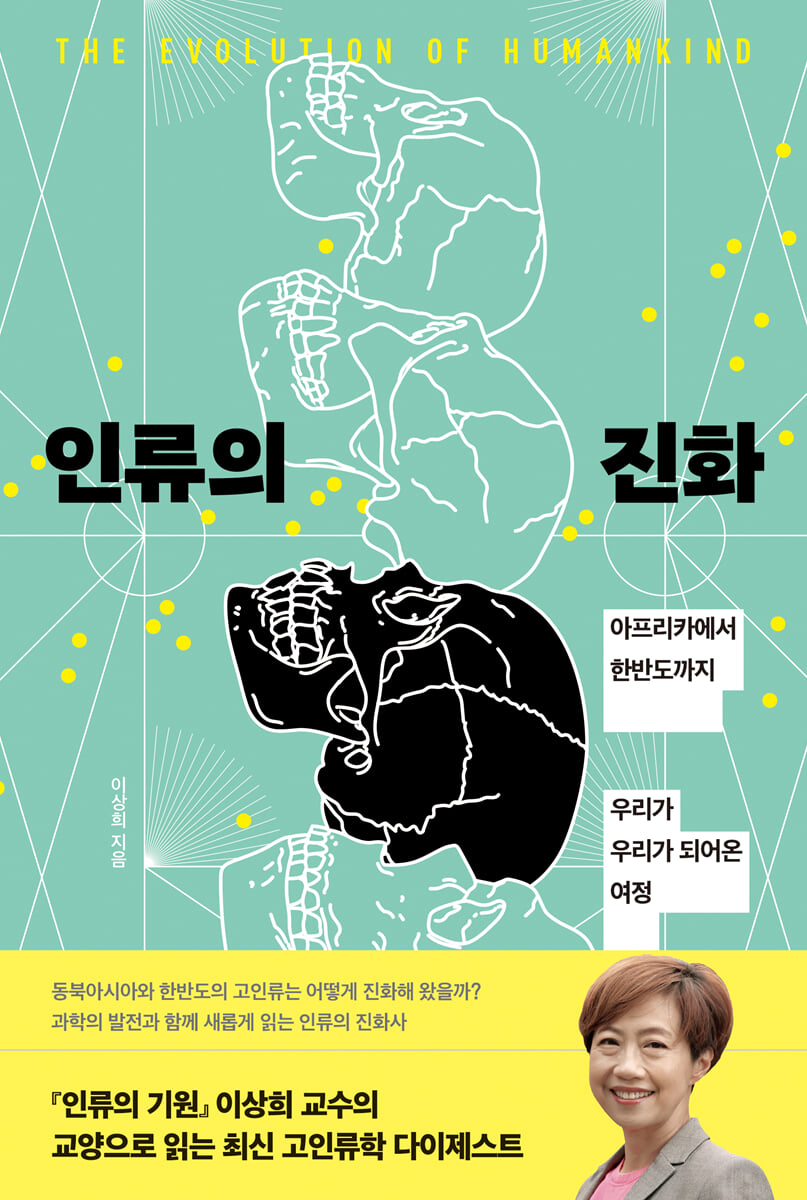
Professor Lee Sang-hee's new book, "The Evolution of Humanity"
A new look at human evolution through cutting-edge science and paleoanthropology.
Where did our origins begin? And when did we first take our form? Paleoanthropology is the study of the origins of humanity and the process that led to the appearance of modern humans.
To uncover the origins of modern humans, Homo sapiens, we go back 5 million years and explore the appearance and characteristics of ancient humans.
Advances in genomics technology, through ongoing excavations and DNA analysis of fossils and relics, constantly ask us what "human" and "humanity" are.
Therefore, paleoanthropology is not simply a task of uncovering human history; it is a dynamic process that changes according to current discoveries and research, and it can be said to be a study that changes our perception of humans and humanity.
Professor Lee Sang-hee, the first Korean to receive a doctorate in paleoanthropology, is a recognized master of paleoanthropology.
He is currently a professor in the Department of Anthropology at the University of California, Riverside, and continues to actively research and write in the field of paleoanthropology.
His first book, 『The Origin of Humanity』, published in 2015, became a huge hit and was a bestseller that sparked interest in paleoanthropology in Korea, and was exported overseas in eight languages.
His new book, "Human Evolution: From Africa to the Korean Peninsula, Our Journey to Becoming Who We Are," delves into the origins and evolution of humanity through the latest paleoanthropological research and discoveries.
This book introduces new research and hypotheses as past hypotheses are challenged, helping us view human history and evolution from various perspectives.
The author examines the existence and characteristics of ancient humans such as Australopithecus, Homo erectus, and Homo naledi, and introduces the most innovative knowledge about human evolution based on the latest research that is continuously updated.
In particular, it traces the footsteps of human evolution from Africa to the Korean Peninsula, revealing fascinating stories about previously unstudied paleoanthropes on the Korean Peninsula.
This will be an unmissable book for those seeking to trace their roots.
This book covers a wide range of topics, including human origins, environmental change, racial diversity, cultural and linguistic development, and the future of humanity, providing readers with a comprehensive understanding of human evolution.
He compares the evolution of mankind to a river.
Humanity has gone through various evolutionary streams, like rivers that divide and reunite.
He also said, “Since research on paleoanthropology is still ongoing, it is impossible to know when and how the latest research results will change,” adding, “However, what is clear is that not only paleoanthropological research, but also our perspective on paleoanthropology is changing.”
Let's embark on a journey to discover humanity's newest past with Professor Lee Sang-hee right now.
Professor Lee Sang-hee, the first Korean to hold a doctorate in paleoanthropology
Answering questions about our roots with cutting-edge science!
The first Korean to receive a doctorate in paleoanthropology and a giant in anthropology,
Professor Lee Sang-hee's new book, "The Evolution of Humanity"
A new look at human evolution through cutting-edge science and paleoanthropology.
Where did our origins begin? And when did we first take our form? Paleoanthropology is the study of the origins of humanity and the process that led to the appearance of modern humans.
To uncover the origins of modern humans, Homo sapiens, we go back 5 million years and explore the appearance and characteristics of ancient humans.
Advances in genomics technology, through ongoing excavations and DNA analysis of fossils and relics, constantly ask us what "human" and "humanity" are.
Therefore, paleoanthropology is not simply a task of uncovering human history; it is a dynamic process that changes according to current discoveries and research, and it can be said to be a study that changes our perception of humans and humanity.
Professor Lee Sang-hee, the first Korean to receive a doctorate in paleoanthropology, is a recognized master of paleoanthropology.
He is currently a professor in the Department of Anthropology at the University of California, Riverside, and continues to actively research and write in the field of paleoanthropology.
His first book, 『The Origin of Humanity』, published in 2015, became a huge hit and was a bestseller that sparked interest in paleoanthropology in Korea, and was exported overseas in eight languages.
His new book, "Human Evolution: From Africa to the Korean Peninsula, Our Journey to Becoming Who We Are," delves into the origins and evolution of humanity through the latest paleoanthropological research and discoveries.
This book introduces new research and hypotheses as past hypotheses are challenged, helping us view human history and evolution from various perspectives.
The author examines the existence and characteristics of ancient humans such as Australopithecus, Homo erectus, and Homo naledi, and introduces the most innovative knowledge about human evolution based on the latest research that is continuously updated.
In particular, it traces the footsteps of human evolution from Africa to the Korean Peninsula, revealing fascinating stories about previously unstudied paleoanthropes on the Korean Peninsula.
This will be an unmissable book for those seeking to trace their roots.
This book covers a wide range of topics, including human origins, environmental change, racial diversity, cultural and linguistic development, and the future of humanity, providing readers with a comprehensive understanding of human evolution.
He compares the evolution of mankind to a river.
Humanity has gone through various evolutionary streams, like rivers that divide and reunite.
He also said, “Since research on paleoanthropology is still ongoing, it is impossible to know when and how the latest research results will change,” adding, “However, what is clear is that not only paleoanthropological research, but also our perspective on paleoanthropology is changing.”
Let's embark on a journey to discover humanity's newest past with Professor Lee Sang-hee right now.
- You can preview some of the book's contents.
Preview
index
Entering: Like a flowing river
Chapter 1 Your Name is Hominin
Chapter 2: Walking on Your Own
Chapter 3: Equipment is important
Chapter 4: Human Evolution as Told by the Body
Chapter 5: In Search of the Giant
Chapter 6: No meat
Chapter 7: Once you taste the fire
Chapter 8: Wings of Imagination
Chapter 9: Killer Apes
Chapter 10: Knife marks on bones
Chapter 11 It's okay to have a small head
Chapter 12: Neanderthals Again!
Chapter 13: Denisovans, the Imaginary Archaic Humans
Chapter 14: The Origin of Sapiens
Chapter 15: Asian Origins
Chapter 16: If the Korean Peninsula Was Not a Peninsula
Chapter 17: Archaic Humans of the Korean Peninsula (1)
Chapter 18: Archaic Humans of the Korean Peninsula (2)
Chapter 19 Descendants of Dangun
Conclusion: The Present and Future of Paleoanthropology
References
Photo copyright
Chapter 1 Your Name is Hominin
Chapter 2: Walking on Your Own
Chapter 3: Equipment is important
Chapter 4: Human Evolution as Told by the Body
Chapter 5: In Search of the Giant
Chapter 6: No meat
Chapter 7: Once you taste the fire
Chapter 8: Wings of Imagination
Chapter 9: Killer Apes
Chapter 10: Knife marks on bones
Chapter 11 It's okay to have a small head
Chapter 12: Neanderthals Again!
Chapter 13: Denisovans, the Imaginary Archaic Humans
Chapter 14: The Origin of Sapiens
Chapter 15: Asian Origins
Chapter 16: If the Korean Peninsula Was Not a Peninsula
Chapter 17: Archaic Humans of the Korean Peninsula (1)
Chapter 18: Archaic Humans of the Korean Peninsula (2)
Chapter 19 Descendants of Dangun
Conclusion: The Present and Future of Paleoanthropology
References
Photo copyright
Detailed image

Into the book
A single line of evolution from Australopithecus africanus through Homo habilis, Homo erectus, Neanderthals, and finally Homo sapiens was accepted as the established theory until the mid-20th century.
The fact that the last humans to appear have evolved into a superior form than previous humans, a form closer to the present human, implies the idea that the present human race is the most superior.
(…) However, if we look at the history of mankind, the period in which such a single human lineage existed was by no means long.
Conversely, over millions of years of human evolutionary history, there have often been multiple human lineages that existed simultaneously.
(…) More important than the debate over whether Homo erectus and Homo heidelbergensis are different species, or whether Neanderthals are different from Denisovans, is that the human lineage was much more diverse than we thought.
---From "Entering: Like a Flowing River"
It took 20 to 30 years for the hypothesis that archaic humans began with a confident two-legged walk to become accepted as the mainstream hypothesis.
And now, a surprising hypothesis has been put forward that a hominid, like Ardi, who walked confidently on two feet and could climb trees 4.4 million years ago, walked the same area as afarensis in East Africa 3.66 million years ago.
This hypothesis will require further verification with more data in the future.
For now, we can only imagine Lucy and other Australopithecus afarensis walking along with other hominids, strutting through warm volcanic ash.
---From "Walking Freely"
Did ancient humans light a bonfire, sit around it, and trim hides to make fur clothing? Did they gather around the fire and begin to share stories? Did their stories encompass a virtual world beyond this present one? Did they share experiences that could inform future environmental changes? We have the experience of "fire drowsiness," where we lose ourselves in the glow of a blazing flame.
The shadows created by the fire dance.
You may have started drawing on the cave walls while watching the dancing shadows created by the blazing flames.
---From "Human Evolution as Told by the Body"
So when did humans begin to consume fire? In fact, even clear evidence that humans were able to control fire, let alone consume it, is only evident in archaeological evidence from the Upper Paleolithic period.
There is no clear evidence that fire was freely used before the Upper Paleolithic period.
Numerous animal bones have been found in sites from the Lower and Middle Paleolithic, but none of them were burned.
No stone tools that were hit by fire have been found.
The evidence that humans practiced carnivore is actually only circumstantial and logical.
Archaic humans advanced as far as the Xiangchen region of China about 2 million years ago.
But it is unlikely that they could have survived on the Eurasian continent during the Ice Age without even being able to use fire.
(…) The body of the genus Homo, which appeared 2 million years ago, has too weak teeth, jawbones, and digestive organs to support itself through reproduction alone.
As mentioned earlier, Homo sapiens of the Upper Paleolithic would have relied on carnivory.
But did Homo erectus, an ancient human before Homo sapiens, also rely on carnivory?
---From "Once You Taste the Fire"
When did cannibalism begin to appear in human evolutionary history? Was it for survival or ritual? While knife marks on ancient human bones often suggest cannibalism, the precise evidence of cannibalism remains difficult to pinpoint.
A representative example that was presumed to be a trace of cannibalism is the fossil of Homo erectus, an ancient human, discovered in Zhoukoudian, China, in the early 20th century.
The Homo erectus fossil bones from Zhoukoudian, dubbed 'Beijing Man', consisted of only the upper part of the skull, with almost no facial bones remaining.
(…) Did Homo erectus eat the brains of its fellow species through a large hole?
---「The knife marks left on the bone
The small size and small head of archaic humans makes us rethink the diversity of humanity that we have thought about so far.
Could small heads have made and used stone tools, buried the dead, and painted murals? The 20th century's answer to these questions was a resounding "no."
According to the established theory accepted by most paleoanthropologists, behaviors such as mural painting, which require advanced cognitive abilities, were unique and peculiar to Homo sapiens, and therefore naturally required a "body and head at the level of Homo sapiens."
But, you know.
If abstract thinking, creativity, the creation of complex tools, and art, which were once thought to require a large head, are possible with a small head, then what exactly is the role of a large head?
---From "It's Okay to Have a Small Head"
The number of ancient humans discovered on the Korean Peninsula is extremely small.
There is no clear evidence that it is old.
Why did archaic humans, who arrived in neighboring regions 2 million years ago, live in Asia for 1.9 million years, never set foot on the Korean Peninsula until 100,000 years ago? Or is it simply that no fossils have been discovered yet? If we assume the earliest traces of humans discovered on the Korean Peninsula date from 100,000 to 700,000 years ago, we can imagine the appearance of archaic humans living there through the archaic fossils discovered in the surrounding areas.
---From "Ancient Humans of the Korean Peninsula"
Asia occupies a very important position in ancient human history.
Asia is not only a large landmass with a large population, but also the people who entered the new continents of Australia and America came from Asia.
Despite its important position, Asia has received less attention in paleoanthropology than Europe or Africa.
In the global paleoanthropological community, which revolves around Europeans and Euro-Americans, there is a keen interest in the evolutionary history of Europeans.
In the history of paleoanthropology, the most important and crucial task is how research on the relationship between Neanderthals and modern humans in Europe has progressed.
After World War II, Africa began to attract attention as the origin of mankind.
Therefore, compared to Africa, the origin of mankind, and Europe, the home of Neanderthals, Asia was thought to be the place where Homo erectus lived quietly for hundreds of thousands of years and then disappeared.
As research has accumulated since the beginning of the 21st century, it is becoming increasingly clear that the history of human evolution in Asia is just as dynamic and complex as that in Europe or Africa.
I've selected interesting and important topics from across the history of human evolution and organized them based on recent research findings, so I find the abundance of Asian data particularly interesting.
The fact that the last humans to appear have evolved into a superior form than previous humans, a form closer to the present human, implies the idea that the present human race is the most superior.
(…) However, if we look at the history of mankind, the period in which such a single human lineage existed was by no means long.
Conversely, over millions of years of human evolutionary history, there have often been multiple human lineages that existed simultaneously.
(…) More important than the debate over whether Homo erectus and Homo heidelbergensis are different species, or whether Neanderthals are different from Denisovans, is that the human lineage was much more diverse than we thought.
---From "Entering: Like a Flowing River"
It took 20 to 30 years for the hypothesis that archaic humans began with a confident two-legged walk to become accepted as the mainstream hypothesis.
And now, a surprising hypothesis has been put forward that a hominid, like Ardi, who walked confidently on two feet and could climb trees 4.4 million years ago, walked the same area as afarensis in East Africa 3.66 million years ago.
This hypothesis will require further verification with more data in the future.
For now, we can only imagine Lucy and other Australopithecus afarensis walking along with other hominids, strutting through warm volcanic ash.
---From "Walking Freely"
Did ancient humans light a bonfire, sit around it, and trim hides to make fur clothing? Did they gather around the fire and begin to share stories? Did their stories encompass a virtual world beyond this present one? Did they share experiences that could inform future environmental changes? We have the experience of "fire drowsiness," where we lose ourselves in the glow of a blazing flame.
The shadows created by the fire dance.
You may have started drawing on the cave walls while watching the dancing shadows created by the blazing flames.
---From "Human Evolution as Told by the Body"
So when did humans begin to consume fire? In fact, even clear evidence that humans were able to control fire, let alone consume it, is only evident in archaeological evidence from the Upper Paleolithic period.
There is no clear evidence that fire was freely used before the Upper Paleolithic period.
Numerous animal bones have been found in sites from the Lower and Middle Paleolithic, but none of them were burned.
No stone tools that were hit by fire have been found.
The evidence that humans practiced carnivore is actually only circumstantial and logical.
Archaic humans advanced as far as the Xiangchen region of China about 2 million years ago.
But it is unlikely that they could have survived on the Eurasian continent during the Ice Age without even being able to use fire.
(…) The body of the genus Homo, which appeared 2 million years ago, has too weak teeth, jawbones, and digestive organs to support itself through reproduction alone.
As mentioned earlier, Homo sapiens of the Upper Paleolithic would have relied on carnivory.
But did Homo erectus, an ancient human before Homo sapiens, also rely on carnivory?
---From "Once You Taste the Fire"
When did cannibalism begin to appear in human evolutionary history? Was it for survival or ritual? While knife marks on ancient human bones often suggest cannibalism, the precise evidence of cannibalism remains difficult to pinpoint.
A representative example that was presumed to be a trace of cannibalism is the fossil of Homo erectus, an ancient human, discovered in Zhoukoudian, China, in the early 20th century.
The Homo erectus fossil bones from Zhoukoudian, dubbed 'Beijing Man', consisted of only the upper part of the skull, with almost no facial bones remaining.
(…) Did Homo erectus eat the brains of its fellow species through a large hole?
---「The knife marks left on the bone
The small size and small head of archaic humans makes us rethink the diversity of humanity that we have thought about so far.
Could small heads have made and used stone tools, buried the dead, and painted murals? The 20th century's answer to these questions was a resounding "no."
According to the established theory accepted by most paleoanthropologists, behaviors such as mural painting, which require advanced cognitive abilities, were unique and peculiar to Homo sapiens, and therefore naturally required a "body and head at the level of Homo sapiens."
But, you know.
If abstract thinking, creativity, the creation of complex tools, and art, which were once thought to require a large head, are possible with a small head, then what exactly is the role of a large head?
---From "It's Okay to Have a Small Head"
The number of ancient humans discovered on the Korean Peninsula is extremely small.
There is no clear evidence that it is old.
Why did archaic humans, who arrived in neighboring regions 2 million years ago, live in Asia for 1.9 million years, never set foot on the Korean Peninsula until 100,000 years ago? Or is it simply that no fossils have been discovered yet? If we assume the earliest traces of humans discovered on the Korean Peninsula date from 100,000 to 700,000 years ago, we can imagine the appearance of archaic humans living there through the archaic fossils discovered in the surrounding areas.
---From "Ancient Humans of the Korean Peninsula"
Asia occupies a very important position in ancient human history.
Asia is not only a large landmass with a large population, but also the people who entered the new continents of Australia and America came from Asia.
Despite its important position, Asia has received less attention in paleoanthropology than Europe or Africa.
In the global paleoanthropological community, which revolves around Europeans and Euro-Americans, there is a keen interest in the evolutionary history of Europeans.
In the history of paleoanthropology, the most important and crucial task is how research on the relationship between Neanderthals and modern humans in Europe has progressed.
After World War II, Africa began to attract attention as the origin of mankind.
Therefore, compared to Africa, the origin of mankind, and Europe, the home of Neanderthals, Asia was thought to be the place where Homo erectus lived quietly for hundreds of thousands of years and then disappeared.
As research has accumulated since the beginning of the 21st century, it is becoming increasingly clear that the history of human evolution in Asia is just as dynamic and complex as that in Europe or Africa.
I've selected interesting and important topics from across the history of human evolution and organized them based on recent research findings, so I find the abundance of Asian data particularly interesting.
---From "Going Out: The Present and Future of Paleoanthropology"
Publisher's Review
When did the 'Korean people' begin to live on the Korean Peninsula?
Descendants of Dangun and those who buy and sell dragons
New Faces of Archaic Humans Discovered in Northeast Asia
“Dragon bones for sale.” Until the early 20th century, this was a phrase that could easily be found in herbal medicine shops in southern China.
Of course, there is no way that the dragon was actually bought and sold.
What was sold here as dragon bone was actually the bone of a fossil ape species called Gigantopithecus blacki.
It is estimated that it was more than twice the size of a gorilla.
However, there was a time when scholars from all over the world flocked to China in search of the origins of mankind, even though they knew that these were not dragon bones.
This is the influence of the 'Asiatic origin theory' that was popular in paleoanthropology in the early 20th century.
But this trend was short-lived, and Asia was once again pushed to the margins of paleoanthropology.
This is because the world's academic world, which revolves around Europeans and European Americans, is primarily interested in the evolutionary history of Europeans, and research on Asian humans has not received much attention.
But despite this, there were people who studied and searched for ancient humans in Asia.
In June 2021, a new paleohuman fossil species was announced in Harbin, China.
Homo longi, a name meaning 'dragon' in Chinese.
The fossils of Homo longi were discovered at a construction site in 1933, but it took nearly 100 years for them to truly come to light.
And as a result of scientific analysis of the soil remaining on the fossil and dating it, it was revealed that it was an old fossil species of ancient humans between 140,000 and 300,000 years ago, preparing to reignite research on ancient Asian humans.
In addition, Denisovan fossils have been discovered in the Altai Mountains of Siberia, and traces of ancient humans from 2.1 million years ago have been discovered in Xiangchen, China.
This is nothing new.
The Asian continent is not only a large landmass with a large population, but also a continent where people had to pass through to get to Australia and the Americas.
Considering its geographical location, it is hard to believe that Asia has received so little attention in paleoanthropology until now.
As more and more research accumulates in the 21st century, it is becoming clear that the history of human evolution in Asia was no less dynamic than that in Europe or Africa.
Could the giant apes, the owners of the "dragon bones," have been the ancestors of modern humans? Did the ancient humans of Asia undergo the same evolutionary process as the ancient humans we know today? What evolutionary process did the ancient humans of the Korean Peninsula undergo to become "us"?
In 2000, while road paving work was in progress on a low mountain in Seokseong-ri, Hwadae County, North Hamgyong Province, an incident occurred where the construction was completely halted.
Because the bones of three people were discovered.
This is the 'Hwadae Man', said to be the oldest fossil of a human discovered on the Korean Peninsula.
In North Korea, the age of this Hwadae person was estimated to be 300,000 years ago.
The Middle Pleistocene, the period when Homo erectus evolved in China.
If archaic humans were already established on the Korean Peninsula at that time, how did these "archaic Koreans" evolve thereafter? While we still don't know, advances in science and technology are opening up new possibilities for knowledge as new data continues to emerge.
Studying the ancient humans of this land is not simply about exploring the past, but also about finding our roots in the present.
Through this arduous work, we will be able to clearly understand who we are, beyond simply being 'descendants of Dangun.'
A new look at human evolution through cutting-edge technology and research
Paleoanthropology is by no means a discipline that delves into the past alone.
Dynamic anthropology and fluid human beings
Paleoanthropology, paleontology, archaeology… there is always an unfair perception that follows these academic fields like a label.
It is a misconception that it is a discipline that only digs up the past rather than building something new.
Professor Lee Sang-hee directly refutes such tedious perceptions through his book, “The Evolution of Humanity.”
This process does not require heated debate, rebuttals, or counter-arguments.
He conveys this truth silently, yet extremely effectively, by presenting the latest research findings and overturning theories.
What image do many people have of ancient humans? Images of men covering their private parts with animal skins and hunting with stone knives and spears? Images of women gathering fruit, making pottery, or caring for children? These perceptions aren't limited to mere imaginings of ancient humans.
The gender division of labor, which was believed to have existed since the time of ancient humans, was also used as a tool to explain gender differences in modern society.
However, the latest paleoanthropology, as described by the author, suggests new possibilities.
One of them is Julie Lesnik's 'insect diet hypothesis'.
If it is true that many of the calories that ancient humans needed depended on 'insect food', many scenarios that were previously explained by the mainstream 'hunting hypothesis' will be overturned.
This represents a major change beyond simply changing archaic humans from 'hunting humans' to 'insect-eating humans'.
The economic division of labor hypothesis, which states that men were responsible for hunting to obtain animal food, and women were responsible for gathering and raising plant foods such as fruits, is completely collapsing.
In other words, the shaking of the hypothesis about paleohumans does not end with a simple change in perception of the past.
This means that the foundation that created us, Homo sapiens, the modern human species, is changing.
The author calmly presents the possibility of this remarkable transformation while introducing the latest research findings.
It's not just Julie Resnick's insectivore hypothesis.
The hypothesis that humans' large heads and corresponding brains established their status as 'superior' and 'kings of creation' also runs into difficulties.
This is because traces of fossil species that engaged in various creative activities with small brains of about 500 cc are being discovered.
The horizons of paleoanthropology are expanding in line with the advancement of science and technology, allowing us to discover previously undiscoverable specimens and to decipher previously incomprehensible facts from past specimens.
The author presents implications by traversing the latest research in paleoanthropology, guiding readers comfortably and naturally into the core of paleoanthropology.
Through this, readers can more easily understand the paleoanthropological research conducted so far and encounter a new framework for humanity and humankind that it provides.
What 『The Evolution of Humankind』 presents is precisely this vibrant process of paleoanthropological research.
Even the 'archaic humans' we know are still changing, and as a result, our species and human history itself are constantly shaken.
Even if these intriguing imaginings are discarded, paleoanthropology will continue to evolve through constant abstraction.
Through the stories of ancient humans, which are incomplete and therefore subject to renewal at any time, we can get a little closer to the origins and evolution of humanity.
Descendants of Dangun and those who buy and sell dragons
New Faces of Archaic Humans Discovered in Northeast Asia
“Dragon bones for sale.” Until the early 20th century, this was a phrase that could easily be found in herbal medicine shops in southern China.
Of course, there is no way that the dragon was actually bought and sold.
What was sold here as dragon bone was actually the bone of a fossil ape species called Gigantopithecus blacki.
It is estimated that it was more than twice the size of a gorilla.
However, there was a time when scholars from all over the world flocked to China in search of the origins of mankind, even though they knew that these were not dragon bones.
This is the influence of the 'Asiatic origin theory' that was popular in paleoanthropology in the early 20th century.
But this trend was short-lived, and Asia was once again pushed to the margins of paleoanthropology.
This is because the world's academic world, which revolves around Europeans and European Americans, is primarily interested in the evolutionary history of Europeans, and research on Asian humans has not received much attention.
But despite this, there were people who studied and searched for ancient humans in Asia.
In June 2021, a new paleohuman fossil species was announced in Harbin, China.
Homo longi, a name meaning 'dragon' in Chinese.
The fossils of Homo longi were discovered at a construction site in 1933, but it took nearly 100 years for them to truly come to light.
And as a result of scientific analysis of the soil remaining on the fossil and dating it, it was revealed that it was an old fossil species of ancient humans between 140,000 and 300,000 years ago, preparing to reignite research on ancient Asian humans.
In addition, Denisovan fossils have been discovered in the Altai Mountains of Siberia, and traces of ancient humans from 2.1 million years ago have been discovered in Xiangchen, China.
This is nothing new.
The Asian continent is not only a large landmass with a large population, but also a continent where people had to pass through to get to Australia and the Americas.
Considering its geographical location, it is hard to believe that Asia has received so little attention in paleoanthropology until now.
As more and more research accumulates in the 21st century, it is becoming clear that the history of human evolution in Asia was no less dynamic than that in Europe or Africa.
Could the giant apes, the owners of the "dragon bones," have been the ancestors of modern humans? Did the ancient humans of Asia undergo the same evolutionary process as the ancient humans we know today? What evolutionary process did the ancient humans of the Korean Peninsula undergo to become "us"?
In 2000, while road paving work was in progress on a low mountain in Seokseong-ri, Hwadae County, North Hamgyong Province, an incident occurred where the construction was completely halted.
Because the bones of three people were discovered.
This is the 'Hwadae Man', said to be the oldest fossil of a human discovered on the Korean Peninsula.
In North Korea, the age of this Hwadae person was estimated to be 300,000 years ago.
The Middle Pleistocene, the period when Homo erectus evolved in China.
If archaic humans were already established on the Korean Peninsula at that time, how did these "archaic Koreans" evolve thereafter? While we still don't know, advances in science and technology are opening up new possibilities for knowledge as new data continues to emerge.
Studying the ancient humans of this land is not simply about exploring the past, but also about finding our roots in the present.
Through this arduous work, we will be able to clearly understand who we are, beyond simply being 'descendants of Dangun.'
A new look at human evolution through cutting-edge technology and research
Paleoanthropology is by no means a discipline that delves into the past alone.
Dynamic anthropology and fluid human beings
Paleoanthropology, paleontology, archaeology… there is always an unfair perception that follows these academic fields like a label.
It is a misconception that it is a discipline that only digs up the past rather than building something new.
Professor Lee Sang-hee directly refutes such tedious perceptions through his book, “The Evolution of Humanity.”
This process does not require heated debate, rebuttals, or counter-arguments.
He conveys this truth silently, yet extremely effectively, by presenting the latest research findings and overturning theories.
What image do many people have of ancient humans? Images of men covering their private parts with animal skins and hunting with stone knives and spears? Images of women gathering fruit, making pottery, or caring for children? These perceptions aren't limited to mere imaginings of ancient humans.
The gender division of labor, which was believed to have existed since the time of ancient humans, was also used as a tool to explain gender differences in modern society.
However, the latest paleoanthropology, as described by the author, suggests new possibilities.
One of them is Julie Lesnik's 'insect diet hypothesis'.
If it is true that many of the calories that ancient humans needed depended on 'insect food', many scenarios that were previously explained by the mainstream 'hunting hypothesis' will be overturned.
This represents a major change beyond simply changing archaic humans from 'hunting humans' to 'insect-eating humans'.
The economic division of labor hypothesis, which states that men were responsible for hunting to obtain animal food, and women were responsible for gathering and raising plant foods such as fruits, is completely collapsing.
In other words, the shaking of the hypothesis about paleohumans does not end with a simple change in perception of the past.
This means that the foundation that created us, Homo sapiens, the modern human species, is changing.
The author calmly presents the possibility of this remarkable transformation while introducing the latest research findings.
It's not just Julie Resnick's insectivore hypothesis.
The hypothesis that humans' large heads and corresponding brains established their status as 'superior' and 'kings of creation' also runs into difficulties.
This is because traces of fossil species that engaged in various creative activities with small brains of about 500 cc are being discovered.
The horizons of paleoanthropology are expanding in line with the advancement of science and technology, allowing us to discover previously undiscoverable specimens and to decipher previously incomprehensible facts from past specimens.
The author presents implications by traversing the latest research in paleoanthropology, guiding readers comfortably and naturally into the core of paleoanthropology.
Through this, readers can more easily understand the paleoanthropological research conducted so far and encounter a new framework for humanity and humankind that it provides.
What 『The Evolution of Humankind』 presents is precisely this vibrant process of paleoanthropological research.
Even the 'archaic humans' we know are still changing, and as a result, our species and human history itself are constantly shaken.
Even if these intriguing imaginings are discarded, paleoanthropology will continue to evolve through constant abstraction.
Through the stories of ancient humans, which are incomplete and therefore subject to renewal at any time, we can get a little closer to the origins and evolution of humanity.
GOODS SPECIFICS
- Date of issue: June 30, 2023
- Page count, weight, size: 276 pages | 492g | 148*220*18mm
- ISBN13: 9788962625684
- ISBN10: 8962625687
You may also like
카테고리
korean


korean

![GQ KOREA Mark (Monthly): December [2025]](http://librairie.coreenne.fr/cdn/shop/files/8ef265dbbfbf186523ed75ba7319009d.jpg?v=1765340328&width=3840)


