

The Usefulness of Biology
 |
Description
Book Introduction
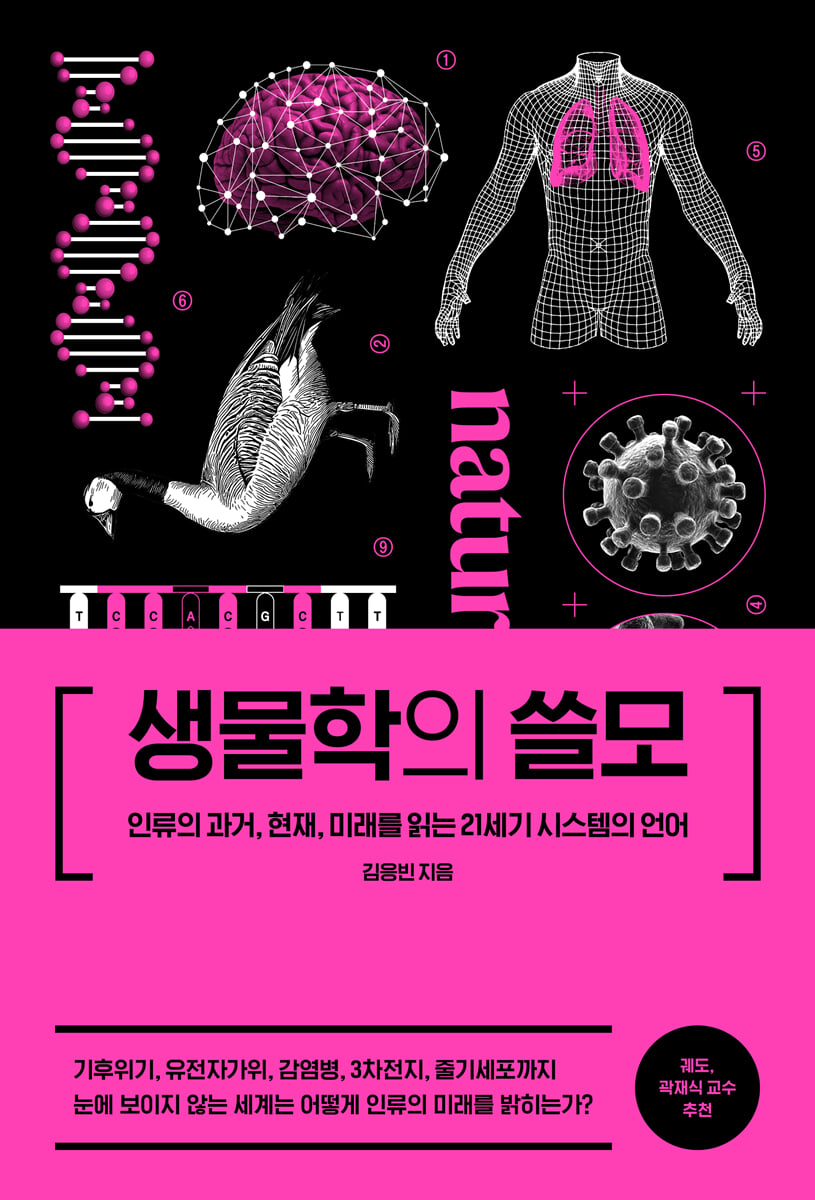
"A biology class that brings utility to the soul." -Orbit (science communicator, author of "Orbit's Science Bluff") The fun of learning both the basics and cutting-edge technologies simultaneously. -Kwak Jae-sik (Doctor of Engineering, science fiction novelist, author of "The Earth is Okay, We're the Problem") Basic knowledge that will change the future × Latest research at a glance! The third volume of the bestselling science series is finally out. Following the bestsellers 『The Usefulness of Mathematics』 and 『The Usefulness of Calculus』, 『The Usefulness of Biology』 was published. This series is much loved for not only providing easy-to-understand mathematical concepts, but also showing how each concept moves the present and shapes the future, in other words, how useful it is. "The Usefulness of Biology" goes beyond simply explaining the functions of living organisms. It also studies the individual systems where these functions are connected and easily explains the latest research in biology, utilizing that knowledge. The author of this book, Professor Kim Eung-bin of Yonsei University, has published over 70 papers on microbiology in international SCI journals over a period of over 30 years. He also received the Best Professor Award at the same university and served as the Dean of Admissions and Dean of the College of Life Sciences. Through Professor Kim Eung-bin's expertly crafted, accessible storytelling, we learn how the invisible world drives the global ecosystem, including humans, and glimpse the efforts of scientists to transform the future in areas such as aging, infectious diseases, and the climate crisis. This book provides a comprehensive overview of the cutting edge of biology along with basic knowledge, ultimately helping readers understand the practical utility of science in the real world. |
- You can preview some of the book's contents.
Preview
index
Preface | The Language of 21st-Century Systems: Unraveling Humanity's Origins and Shaping Our Future
I.
Turn back the clock on the life system · Cells
Unraveling the Identity of Brain Cells│The Connectome: The Human Brain's Network System│Biological Prime Cells│Pluripotency and Genetic Switches│Cells That Turn Back Time
[Useful Biology Concepts] From Magic to Science: Microbial Causation
II.
The science of breathing that sustains all living things on Earth.
Alchemy: Unexpected Uses│Breath: Create Energy Using Oxygen│Creatures That Breathe Without Oxygen│The Difference Between Respiration and Fermentation
How to coexist with creatures that breathe differently from us
[Useful Biology Concepts] The Secrets of Diet Hidden in Cellular Respiration
III.
The Human Genome Project and DNA: A Map of Human Origins
DNA, the Icon of Modern Biology│The First DNA Sequencing Method│From the Beginning of DNA Sequencing to the Birth of Genetic Engineering│The Chronology of the Human Genome Project│The End of the Beginning: The Advent of the Post-Genome Era│Life Systems Research Does Not End with DNA
[The Future Created by Biology] Microbes Shape Us: The Human Microbiome Project
IV.
From a target of eradication to survival knowledge in the pandemic era · Microorganisms
The war against microbes ushered in a golden age│From target of eradication to object of research│The birth of molecular biology, the cornerstone of advanced bio research│Cells have efficient switches│The beginning of a revolution discovered in the bacterial immune system: gene scissors│Will a future come in which humans conquer all infectious diseases?
[The Future Created by Biology] The Infinite Uses of the Invisible World: Microbial Magnets
V.
Can Biotechnology Turn Back the Environmental Clock? · Ecosystem
The Principles of the Earth's Vast Ecosystem│We Must Restore the Balance of the Carbon Cycle│Efforts for Climate-Resilient Development: Biofuels│Prepare for the Next Generation of Secondary Batteries│Ultimately, Our Lives Depend on Microorganisms│The Plastic Era, a Challenge Even for Microorganisms: Change Your Thinking
[Useful Biology Concepts] Unexpected Survival Skills
Find references
I.
Turn back the clock on the life system · Cells
Unraveling the Identity of Brain Cells│The Connectome: The Human Brain's Network System│Biological Prime Cells│Pluripotency and Genetic Switches│Cells That Turn Back Time
[Useful Biology Concepts] From Magic to Science: Microbial Causation
II.
The science of breathing that sustains all living things on Earth.
Alchemy: Unexpected Uses│Breath: Create Energy Using Oxygen│Creatures That Breathe Without Oxygen│The Difference Between Respiration and Fermentation
How to coexist with creatures that breathe differently from us
[Useful Biology Concepts] The Secrets of Diet Hidden in Cellular Respiration
III.
The Human Genome Project and DNA: A Map of Human Origins
DNA, the Icon of Modern Biology│The First DNA Sequencing Method│From the Beginning of DNA Sequencing to the Birth of Genetic Engineering│The Chronology of the Human Genome Project│The End of the Beginning: The Advent of the Post-Genome Era│Life Systems Research Does Not End with DNA
[The Future Created by Biology] Microbes Shape Us: The Human Microbiome Project
IV.
From a target of eradication to survival knowledge in the pandemic era · Microorganisms
The war against microbes ushered in a golden age│From target of eradication to object of research│The birth of molecular biology, the cornerstone of advanced bio research│Cells have efficient switches│The beginning of a revolution discovered in the bacterial immune system: gene scissors│Will a future come in which humans conquer all infectious diseases?
[The Future Created by Biology] The Infinite Uses of the Invisible World: Microbial Magnets
V.
Can Biotechnology Turn Back the Environmental Clock? · Ecosystem
The Principles of the Earth's Vast Ecosystem│We Must Restore the Balance of the Carbon Cycle│Efforts for Climate-Resilient Development: Biofuels│Prepare for the Next Generation of Secondary Batteries│Ultimately, Our Lives Depend on Microorganisms│The Plastic Era, a Challenge Even for Microorganisms: Change Your Thinking
[Useful Biology Concepts] Unexpected Survival Skills
Find references
Detailed image
.jpg)
Into the book
Just because differentiated cells lack pluripotency does not mean they have lost their genetic information.
Every human cell still contains approximately 20,000 genes intact.
However, each individual only expresses the genes necessary for their own situation.
Simply put, most of the genes, except for a few, are switched off.
So, wouldn't it be possible to restore pluripotency by turning the off switch back on and resetting the differentiated cells?
---「Ⅰ.
From “Turn back the time of the life system (P.34)”
In 2006, Professor Shinya Yamanaka and his research team at Kyoto University in Japan succeeded in injecting regulatory genes into mouse skin cells, giving them the differentiation ability of embryonic stem cells.
First, the research team selected 24 genes specifically expressed only in embryonic stem cells as candidates based on information disclosed in public databases.
Then, each gene was injected one by one into the skin cells of laboratory mice.
But contrary to expectations, no cells were able to turn back time.
This time, we injected 24 genes at once, thinking that multiple genes could act in combination, and our prediction was right.
After a series of experiments in which they injected the remaining 24 genes, excluding one, they finally succeeded in discovering four genes that could turn back time.
---「Ⅰ.
From “Turn back the time of the life system (pp. 39-40)”
The secondary treatment process, which relies entirely on the respiratory capacity of microorganisms, essentially involves cultivating microorganisms.
This means that microorganisms grow rapidly by eating up contaminants in sewage water.
In fact, in the secondary treatment tank, air is blown in or the tank's sludge is stirred to allow such microorganisms to breathe easily.
When you do this, the microorganisms grow rapidly and many of them clump together and sink to the bottom, which is called activated sludge.
The reason the word 'active' is added here is because the decomposing microorganisms make up the majority of the sludge.
---「Ⅱ.
From “The Science of Breathing that Saves All Beings on Earth (P.73)”
Ligase and restriction enzymes can be thought of as the gene pool and genetic scissors, respectively.
It's like having scissors and glue that can manipulate DNA, just like you use glue and scissors for paper crafts.
Then, in 1978, he isolated a DNA fragment containing the human insulin gene, linked it to a vector, and inserted it into E. coli, successfully producing insulin.
---「Ⅲ..Information Map for Reading the Origin of Humanity, Human Genome Project (P.99)」
Now, gene cloning can be performed innovatively, quickly, accurately, and economically based on the polymerase chain reaction (PCR) developed in 1983. PCR is a technology that artificially copies the desired target gene from a very small amount of genetic material and then amplifies it hundreds of thousands of times.
Rapid and accurate COVID-19 diagnostic testing is also possible thanks to PCR.
---「Ⅲ..Information Map for Reading the Origin of Humanity, Human Genome Project (P.102)」
On April 14, 2003, the National Human Genome Research Institute in the United States, in collaboration with a multinational HGP research team, officially declared the completion of the HGP by releasing the complete base sequence. Just half a century after the discovery of the structure of DNA, the project achieved the feat of sequencing all 3 billion base pairs that make up human DNA.
It can be likened to reading a book consisting of 23 chapters written in 3 billion alphabets, and it was an event that opened the curtain on the post-genomic era.
---「Ⅲ.
From "The Human Genome Project: A Map of Information on the Origin of Humanity (pp. 108-109)"
Thanks to the Koch principles for identifying the causes of infectious diseases, numerous pathogens causing infectious diseases have been identified since then.
Even today, the pure culture technique developed by Koch is still used in microbiology laboratories around the world, and some of the Koch principles have been modified and supplemented.
(Omitted) The achievements in microbiological research made in the late 19th century also produced ironic results.
Each of these achievements served as a driving force for the development of microbiology, but also as a major cause of fostering a vague hostility toward microorganisms, which was seen as pathogens, and highlighting a negative image of microorganisms.
---「Ⅵ.
From "From a Target of Eradication to Survival Knowledge in the Pandemic Era (P.135)"
Microorganisms, especially bacteria, are very good at eating things that we find disgusting.
A significant number of bacteria gain strength by feeding on our urine.
Scientists who saw this came up with an ingenious idea.
The idea was to use these bacteria to generate electricity from urine.
It may sound absurd, but it's true.
Technology has already been developed to charge cell phones and light up lights using urine.
In 2015, a research team at the University of the West of England in Bristol, UK, installed a microbial fuel cell in a urinal and produced enough electricity to light a bathroom stall.
And a year later, it was also successful in charging a cell phone.
Every human cell still contains approximately 20,000 genes intact.
However, each individual only expresses the genes necessary for their own situation.
Simply put, most of the genes, except for a few, are switched off.
So, wouldn't it be possible to restore pluripotency by turning the off switch back on and resetting the differentiated cells?
---「Ⅰ.
From “Turn back the time of the life system (P.34)”
In 2006, Professor Shinya Yamanaka and his research team at Kyoto University in Japan succeeded in injecting regulatory genes into mouse skin cells, giving them the differentiation ability of embryonic stem cells.
First, the research team selected 24 genes specifically expressed only in embryonic stem cells as candidates based on information disclosed in public databases.
Then, each gene was injected one by one into the skin cells of laboratory mice.
But contrary to expectations, no cells were able to turn back time.
This time, we injected 24 genes at once, thinking that multiple genes could act in combination, and our prediction was right.
After a series of experiments in which they injected the remaining 24 genes, excluding one, they finally succeeded in discovering four genes that could turn back time.
---「Ⅰ.
From “Turn back the time of the life system (pp. 39-40)”
The secondary treatment process, which relies entirely on the respiratory capacity of microorganisms, essentially involves cultivating microorganisms.
This means that microorganisms grow rapidly by eating up contaminants in sewage water.
In fact, in the secondary treatment tank, air is blown in or the tank's sludge is stirred to allow such microorganisms to breathe easily.
When you do this, the microorganisms grow rapidly and many of them clump together and sink to the bottom, which is called activated sludge.
The reason the word 'active' is added here is because the decomposing microorganisms make up the majority of the sludge.
---「Ⅱ.
From “The Science of Breathing that Saves All Beings on Earth (P.73)”
Ligase and restriction enzymes can be thought of as the gene pool and genetic scissors, respectively.
It's like having scissors and glue that can manipulate DNA, just like you use glue and scissors for paper crafts.
Then, in 1978, he isolated a DNA fragment containing the human insulin gene, linked it to a vector, and inserted it into E. coli, successfully producing insulin.
---「Ⅲ..Information Map for Reading the Origin of Humanity, Human Genome Project (P.99)」
Now, gene cloning can be performed innovatively, quickly, accurately, and economically based on the polymerase chain reaction (PCR) developed in 1983. PCR is a technology that artificially copies the desired target gene from a very small amount of genetic material and then amplifies it hundreds of thousands of times.
Rapid and accurate COVID-19 diagnostic testing is also possible thanks to PCR.
---「Ⅲ..Information Map for Reading the Origin of Humanity, Human Genome Project (P.102)」
On April 14, 2003, the National Human Genome Research Institute in the United States, in collaboration with a multinational HGP research team, officially declared the completion of the HGP by releasing the complete base sequence. Just half a century after the discovery of the structure of DNA, the project achieved the feat of sequencing all 3 billion base pairs that make up human DNA.
It can be likened to reading a book consisting of 23 chapters written in 3 billion alphabets, and it was an event that opened the curtain on the post-genomic era.
---「Ⅲ.
From "The Human Genome Project: A Map of Information on the Origin of Humanity (pp. 108-109)"
Thanks to the Koch principles for identifying the causes of infectious diseases, numerous pathogens causing infectious diseases have been identified since then.
Even today, the pure culture technique developed by Koch is still used in microbiology laboratories around the world, and some of the Koch principles have been modified and supplemented.
(Omitted) The achievements in microbiological research made in the late 19th century also produced ironic results.
Each of these achievements served as a driving force for the development of microbiology, but also as a major cause of fostering a vague hostility toward microorganisms, which was seen as pathogens, and highlighting a negative image of microorganisms.
---「Ⅵ.
From "From a Target of Eradication to Survival Knowledge in the Pandemic Era (P.135)"
Microorganisms, especially bacteria, are very good at eating things that we find disgusting.
A significant number of bacteria gain strength by feeding on our urine.
Scientists who saw this came up with an ingenious idea.
The idea was to use these bacteria to generate electricity from urine.
It may sound absurd, but it's true.
Technology has already been developed to charge cell phones and light up lights using urine.
In 2015, a research team at the University of the West of England in Bristol, UK, installed a microbial fuel cell in a urinal and produced enough electricity to light a bathroom stall.
And a year later, it was also successful in charging a cell phone.
---「Ⅴ.
Can Bio Turn Back the Environmental Crisis Clock? (P.197)
Can Bio Turn Back the Environmental Crisis Clock? (P.197)
Publisher's Review
Now the language of the system takes the lead!
The emergence of systems biology that sees the forest, not the trees.
How did you study biology? Didn't you learn about the structures of the nucleus, cell membrane, and cytoplasm, and the differences between animal and plant cells? Or did you memorize the structure of DNA? It's true that these reductive analytical methods have significantly contributed to explaining life phenomena.
But living things are not simply a collection of parts.
Life is a system in which components are interconnected and function according to established rules at all levels, from cells to individuals.
If any one of these components behaves out of order, the entire system will immediately malfunction.
21st-century biology seeks to understand life phenomena by elucidating the networks of interactions between countless genes, proteins, and chemicals.
This methodology is systems biology.
And 『The Usefulness of Biology』 was written based on systems biology.
We will examine each system, from the smallest living system cell to the respiratory system, DNA, and single-celled organisms, and explain the latest research related to each system.
Biology has taken a leap forward by introducing the language of systems.
The existing perspective, which provides an easy and fun way to explain the components and functions of living things, cannot understand the flow of biology, or even the changes in the world driven by biology.
Through 『The Usefulness of Biology』, let's meet the new biology that is moving the world at the forefront.
Beyond understanding life, birth is possible
The beginning of a revolution unfolding from the smallest unit of life, the cell.
The coronavirus vaccine, which has become an excellent self-defense tool for humanity in the pandemic era, began by elucidating the relationship between microorganisms, including viruses, and infectious diseases.
Diabetes treatment, a lifeline for approximately 4 million people in Korea, has also become possible to mass-produce thanks to research on E. coli, and the human blueprint revealed through the completion of the Human Genome Project is creating new possibilities in medicine and pharmacy by identifying the causes of various diseases caused by genetic abnormalities, such as cancer, Alzheimer's, and AIDS.
And we have also set foot in the field of ‘design and manufacturing of living organisms’, which was thought to be the domain of God.
The new organism created in this way, 'Mycoplasma mycoides JCVI-syn1.0', performed normal organism functions such as metabolism and self-replication, and was no different from the original genome, Mycoplasma mycoides, in all aspects.
Although the cytoplasm was not synthesized, the researchers referred to JCVI-syn1.0 as a synthetic cell.
The genome was transplanted to change the species of bacteria.
The path has now opened to creating customized life forms by designing and synthesizing a desired genome and transplanting it into another organism.
_Ⅲ.
The Human Genome Project: A Map of Information on Human Origins
Beyond the transformation and replication of living organisms, 21st-century biology, which explores design and manufacturing, is it the wings of Icarus or the beginning of a revolution that will open up new possibilities for humanity? Cells, DNA.
The future of humanity is revealed in cutting-edge research on individual systems, such as microorganisms and ecosystems.
A top lecturer at Yonsei University, a biologist with 30 years of research experience, tells us:
The power of biological thinking to change the predetermined future
A predetermined future of 'disease and aging' awaits humans.
On the one hand, a future scenario of the Earth being destroyed by natural disasters is also predicted.
Scientists are working hard to change this predetermined future.
And their movement begins with an effort to understand life.
As cell division continues, the functional aging of the apical cells accelerates and they eventually die.
If you think about it again, the qualitative asymmetry of bacterial cell division cannot help but be an amazing survival technique.
If the defective biomaterial were to be shared equally, aging would occur at the population level and eventually the population would die out.
(Omitted) It is expected that the bacterial aging phenomenon will provide important clues to research on the treatment of degenerative brain diseases, which are increasing worldwide in conjunction with the aging population.
_Ⅴ.
An unexpected survival technique: bacterial aging
Algae is the main player in the third-generation biofuels being developed to solve the challenges of the first and second-generation biofuels.
(Omitted) Bird breeding does not require wide, fertile land.
All you need is plenty of sunlight and natural water.
Plus, you can harvest almost every day.
Some pilot algae production facilities use carbon dioxide released into the atmosphere from nearby power plants to stimulate photosynthesis and grow algae faster.
It is a win-win situation as it produces biofuel raw materials and reduces carbon dioxide emissions.
_Ⅴ.
Can biotechnology turn back the clock on environmental crisis?
DNA is also used to study memory and nanostructure synthesis, which may not seem related to biology.
Can we even discuss the "science" that will transform humanity's future without mentioning biology? Incurable diseases and infectious diseases that threaten human life continue to emerge, and the environmental doomsday clock has long since passed 9:01, signaling that the Earth is in dire straits.
Biology is at the center of scientific efforts to address all these issues.
Like the previous Usefulness series, 『Usefulness of Biology』 does not focus on knowing all biological concepts in detail and accurately.
Reading about the goals of those who study cell function, the extremes of single-celled organism research that seems to have nothing more to study, and the exploration of biology that leads to development in the energy industry that seems completely unrelated, makes me think that biology is a subject that humanity must know.
Professor Kim Eung-bin of the Department of Systems Biology at Yonsei University, who has been active as a science communicator for a long time through YouTube appearances such as “Science That Won’t Work” and “Biology That Will Work” and through consistent writing, vividly depicts where biology, which has remained only as an old memory, is currently headed, making us feel the power of biological thinking even more deeply.
Carl Woods, the world's leading microbiologist who discovered archaea and proposed a new classification system for organisms, said:
“The primary role of biology is to teach us.
If we realize this, we will learn how to live harmoniously on this planet." Just as microbes, once targets of extermination, have now become a source of survival knowledge, what other biological knowledge will guide us? The answer lies in this book.
The emergence of systems biology that sees the forest, not the trees.
How did you study biology? Didn't you learn about the structures of the nucleus, cell membrane, and cytoplasm, and the differences between animal and plant cells? Or did you memorize the structure of DNA? It's true that these reductive analytical methods have significantly contributed to explaining life phenomena.
But living things are not simply a collection of parts.
Life is a system in which components are interconnected and function according to established rules at all levels, from cells to individuals.
If any one of these components behaves out of order, the entire system will immediately malfunction.
21st-century biology seeks to understand life phenomena by elucidating the networks of interactions between countless genes, proteins, and chemicals.
This methodology is systems biology.
And 『The Usefulness of Biology』 was written based on systems biology.
We will examine each system, from the smallest living system cell to the respiratory system, DNA, and single-celled organisms, and explain the latest research related to each system.
Biology has taken a leap forward by introducing the language of systems.
The existing perspective, which provides an easy and fun way to explain the components and functions of living things, cannot understand the flow of biology, or even the changes in the world driven by biology.
Through 『The Usefulness of Biology』, let's meet the new biology that is moving the world at the forefront.
Beyond understanding life, birth is possible
The beginning of a revolution unfolding from the smallest unit of life, the cell.
The coronavirus vaccine, which has become an excellent self-defense tool for humanity in the pandemic era, began by elucidating the relationship between microorganisms, including viruses, and infectious diseases.
Diabetes treatment, a lifeline for approximately 4 million people in Korea, has also become possible to mass-produce thanks to research on E. coli, and the human blueprint revealed through the completion of the Human Genome Project is creating new possibilities in medicine and pharmacy by identifying the causes of various diseases caused by genetic abnormalities, such as cancer, Alzheimer's, and AIDS.
And we have also set foot in the field of ‘design and manufacturing of living organisms’, which was thought to be the domain of God.
The new organism created in this way, 'Mycoplasma mycoides JCVI-syn1.0', performed normal organism functions such as metabolism and self-replication, and was no different from the original genome, Mycoplasma mycoides, in all aspects.
Although the cytoplasm was not synthesized, the researchers referred to JCVI-syn1.0 as a synthetic cell.
The genome was transplanted to change the species of bacteria.
The path has now opened to creating customized life forms by designing and synthesizing a desired genome and transplanting it into another organism.
_Ⅲ.
The Human Genome Project: A Map of Information on Human Origins
Beyond the transformation and replication of living organisms, 21st-century biology, which explores design and manufacturing, is it the wings of Icarus or the beginning of a revolution that will open up new possibilities for humanity? Cells, DNA.
The future of humanity is revealed in cutting-edge research on individual systems, such as microorganisms and ecosystems.
A top lecturer at Yonsei University, a biologist with 30 years of research experience, tells us:
The power of biological thinking to change the predetermined future
A predetermined future of 'disease and aging' awaits humans.
On the one hand, a future scenario of the Earth being destroyed by natural disasters is also predicted.
Scientists are working hard to change this predetermined future.
And their movement begins with an effort to understand life.
As cell division continues, the functional aging of the apical cells accelerates and they eventually die.
If you think about it again, the qualitative asymmetry of bacterial cell division cannot help but be an amazing survival technique.
If the defective biomaterial were to be shared equally, aging would occur at the population level and eventually the population would die out.
(Omitted) It is expected that the bacterial aging phenomenon will provide important clues to research on the treatment of degenerative brain diseases, which are increasing worldwide in conjunction with the aging population.
_Ⅴ.
An unexpected survival technique: bacterial aging
Algae is the main player in the third-generation biofuels being developed to solve the challenges of the first and second-generation biofuels.
(Omitted) Bird breeding does not require wide, fertile land.
All you need is plenty of sunlight and natural water.
Plus, you can harvest almost every day.
Some pilot algae production facilities use carbon dioxide released into the atmosphere from nearby power plants to stimulate photosynthesis and grow algae faster.
It is a win-win situation as it produces biofuel raw materials and reduces carbon dioxide emissions.
_Ⅴ.
Can biotechnology turn back the clock on environmental crisis?
DNA is also used to study memory and nanostructure synthesis, which may not seem related to biology.
Can we even discuss the "science" that will transform humanity's future without mentioning biology? Incurable diseases and infectious diseases that threaten human life continue to emerge, and the environmental doomsday clock has long since passed 9:01, signaling that the Earth is in dire straits.
Biology is at the center of scientific efforts to address all these issues.
Like the previous Usefulness series, 『Usefulness of Biology』 does not focus on knowing all biological concepts in detail and accurately.
Reading about the goals of those who study cell function, the extremes of single-celled organism research that seems to have nothing more to study, and the exploration of biology that leads to development in the energy industry that seems completely unrelated, makes me think that biology is a subject that humanity must know.
Professor Kim Eung-bin of the Department of Systems Biology at Yonsei University, who has been active as a science communicator for a long time through YouTube appearances such as “Science That Won’t Work” and “Biology That Will Work” and through consistent writing, vividly depicts where biology, which has remained only as an old memory, is currently headed, making us feel the power of biological thinking even more deeply.
Carl Woods, the world's leading microbiologist who discovered archaea and proposed a new classification system for organisms, said:
“The primary role of biology is to teach us.
If we realize this, we will learn how to live harmoniously on this planet." Just as microbes, once targets of extermination, have now become a source of survival knowledge, what other biological knowledge will guide us? The answer lies in this book.
GOODS SPECIFICS
- Date of issue: June 30, 2023
- Format: Hardcover book binding method guide
- Page count, weight, size: 240 pages | 518g | 158*230*20mm
- ISBN13: 9791140704705
- ISBN10: 1140704702
You may also like
카테고리
korean


korean

![GQ KOREA Mark (Monthly): December [2025]](http://librairie.coreenne.fr/cdn/shop/files/8ef265dbbfbf186523ed75ba7319009d.jpg?v=1765340328&width=3840)


