

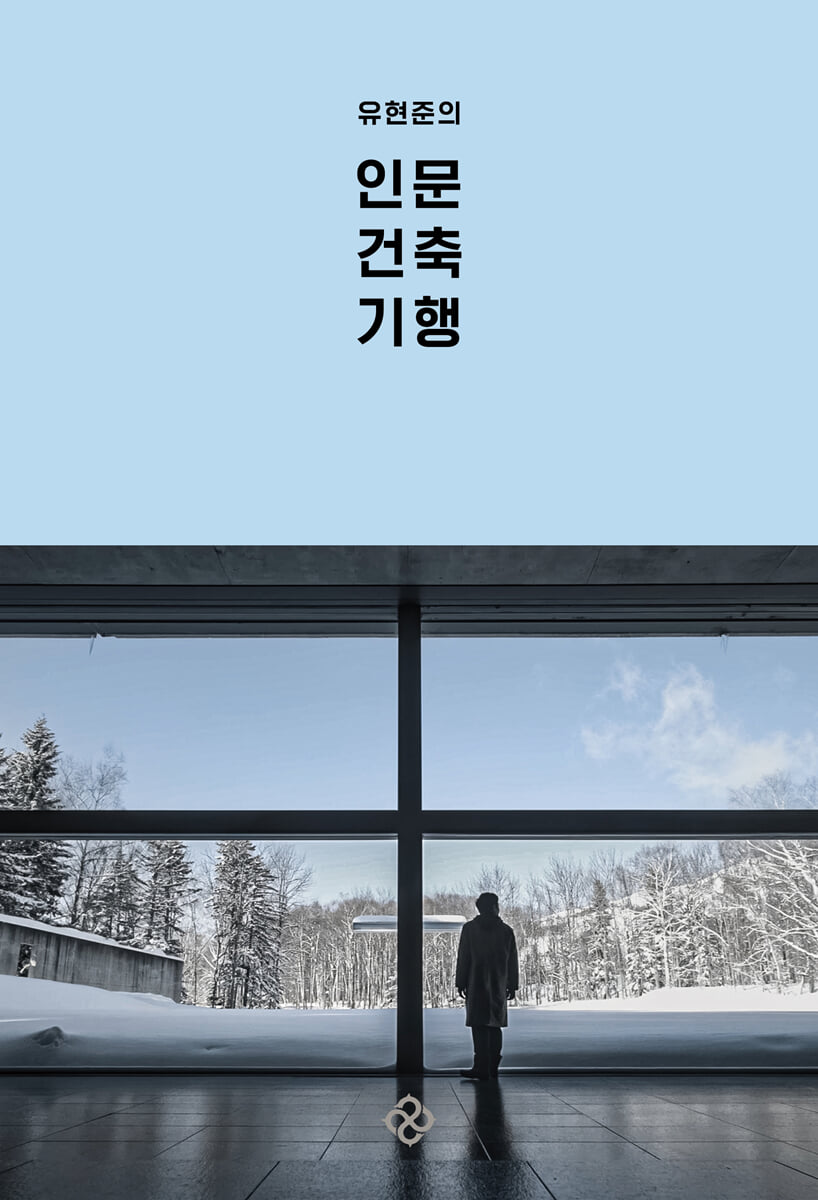
Yoo Hyun-jun's Humanistic Architecture Journey
 |
Description
Book Introduction
Buildings are a crystallization of human thought and the world's materials. As they require a lot of capital, they are a reflection and cross-section of society that is completed only when many people agree on their opinions.
Therefore, when we look at architecture, we see the perspectives of the people of the time in reading the world, the level of technology in handling materials, the socio-economic system, their understanding of humanity, their dream utopia, and their struggles for survival. This book introduces 30 buildings that impressed or inspired architect Hyunjun Yoo. The architects who designed these works ushered in a new era in architecture with revolutionary ideas that overturned or twisted centuries-old traditions. The author says that it is no exaggeration to say that he learned what architectural design is through these buildings, and introduces them with the words, “I hope that these buildings will help readers create another perspective on the world.” |
- You can preview some of the book's contents.
Preview
index
Opening remarks
1.
europe
Chapter 1.
Villa Savoye: Architecture is a machine
Chapter 2.
Centre Pompidou: What is the essence of architecture?
Chapter 3.
The Louvre Glass Pyramid: Dabotap and Seokgatap Pagodas in Paris
Chapter 4.
Longchamp Cathedral: Finally Returning to Nature
Chapter 5.
La Tourette Monastery: The Secret Book of the Greatest Secrets in the Martial Arts World
Chapter 6.
Firminia Cathedral: The pinnacle of cathedral evolution
Chapter 7.
Unite d'Habitation: The ambition to create a city within a building
Chapter 8.
German Parliament: Members of Parliament are subordinate to the people.
Chapter 9.
Bruder Klaus Field Chapel: Creating a Cave of Light
Chapter 10.
Vals Spa: A Temple-Like Bathhouse Hidden Underground
Chapter 11.
Querini Stampalia: A Space for Conversation with Nature
Chapter 12.
Guggenheim Museum Bilbao: An Architect's Dream of Fish
2.
North America
Chapter 13.
Beinecke Library: The Light-Transmitting Stone
Chapter 14.
Guggenheim Museum in New York: A museum doesn't have to be a room.
Chapter 15.
Citigroup Center: Good design is the answer to problems.
Chapter 16.
Hearst Tower: What to Preserve?
Chapter 17.
Fallingwater: Can architecture become nature?
Chapter 18.
The Vietnam Veterans Memorial: A Film Made of Space
Chapter 19.
Douglas House: A Home You'd Want to Live In
Chapter 20.
Kimbell Art Museum: Architecture Between Silence and Light
Chapter 21.
Salk Institute for Biological Studies: Emptiness Greater Than Fullness
Chapter 22.
Dominus Winery: What is Beauty?
Chapter 23.
Habitat 67: Building a Greek Hill in Canada
3.
Asia
Chapter 24.
Wind Towers: What Are They?
Chapter 25.
Church of Light: A Breakthrough Reinterpretation of Traditional Architecture
Chapter 26.
Azuma House: How a Boxer-Former Architect Engages Nature
Chapter 27.
Teshima Art Museum: Toad House Museum
Chapter 28. CCTV Headquarters Building: A 21st-Century Dolmen, the Ultimate in Show-Off Architecture
Chapter 29.
HSBC Building in Hong Kong: Constraints are the mother of new creations.
Chapter 30.
Louvre Abu Dhabi: An Oasis Made of Iron
Closing remarks
annotation
Source of the illustration
1.
europe
Chapter 1.
Villa Savoye: Architecture is a machine
Chapter 2.
Centre Pompidou: What is the essence of architecture?
Chapter 3.
The Louvre Glass Pyramid: Dabotap and Seokgatap Pagodas in Paris
Chapter 4.
Longchamp Cathedral: Finally Returning to Nature
Chapter 5.
La Tourette Monastery: The Secret Book of the Greatest Secrets in the Martial Arts World
Chapter 6.
Firminia Cathedral: The pinnacle of cathedral evolution
Chapter 7.
Unite d'Habitation: The ambition to create a city within a building
Chapter 8.
German Parliament: Members of Parliament are subordinate to the people.
Chapter 9.
Bruder Klaus Field Chapel: Creating a Cave of Light
Chapter 10.
Vals Spa: A Temple-Like Bathhouse Hidden Underground
Chapter 11.
Querini Stampalia: A Space for Conversation with Nature
Chapter 12.
Guggenheim Museum Bilbao: An Architect's Dream of Fish
2.
North America
Chapter 13.
Beinecke Library: The Light-Transmitting Stone
Chapter 14.
Guggenheim Museum in New York: A museum doesn't have to be a room.
Chapter 15.
Citigroup Center: Good design is the answer to problems.
Chapter 16.
Hearst Tower: What to Preserve?
Chapter 17.
Fallingwater: Can architecture become nature?
Chapter 18.
The Vietnam Veterans Memorial: A Film Made of Space
Chapter 19.
Douglas House: A Home You'd Want to Live In
Chapter 20.
Kimbell Art Museum: Architecture Between Silence and Light
Chapter 21.
Salk Institute for Biological Studies: Emptiness Greater Than Fullness
Chapter 22.
Dominus Winery: What is Beauty?
Chapter 23.
Habitat 67: Building a Greek Hill in Canada
3.
Asia
Chapter 24.
Wind Towers: What Are They?
Chapter 25.
Church of Light: A Breakthrough Reinterpretation of Traditional Architecture
Chapter 26.
Azuma House: How a Boxer-Former Architect Engages Nature
Chapter 27.
Teshima Art Museum: Toad House Museum
Chapter 28. CCTV Headquarters Building: A 21st-Century Dolmen, the Ultimate in Show-Off Architecture
Chapter 29.
HSBC Building in Hong Kong: Constraints are the mother of new creations.
Chapter 30.
Louvre Abu Dhabi: An Oasis Made of Iron
Closing remarks
annotation
Source of the illustration
Detailed image

Into the book
The bathhouse is the human-made structure that uses and handles water the most.
So, in a bathroom, how you express water is important.
Water is the source of life.
(…) The ‘Bals Spa’ of the dance studio seems to be an architecture that says, ‘I will teach you what water is to humans.’
At 'Bals Spa', you can experience the various aspects of water beyond simply bathing.
As you enter the cold bath, blue petals swirl within the bath water illuminated underwater.
The blue petals also visually evoke the feeling of cold water.
Conversely, red petals swirl around in the hot spring.
(…) ‘Balls Spa’ is the ultimate sensory space that creates a dark space like a cave, allowing the five senses to be hyper-sensitive and feel the sensation of restrained light and water to the fullest extent.
It is a building that makes me feel alive with my whole body.
---「Pages 183-184 (Chapter 10.
Among the "Balse Spa"
Even now, the water level of the Han River continues to rise and fall, but we cannot tell the change in height when looking from a distance.
But there are times when you notice the water level of the Han River changing, and that is when the 'Jamsugyo Bridge' is submerged.
Unlike other bridges, the low 'submerged bridge' becomes submerged even when the water level of the Han River rises slightly, making it impossible to cross.
At this time, the 'submerged bridge' is a device that allows us to notice subtle changes in nature by replacing them with changes in space.
If the 'submersible bridge' had been built with very high piers, it would not have been able to perform that role.
The low-height pier design creates a spatial transformation of nature's changes.
I call this type of 'submerged bridge' architecture 'architecture that allows us to communicate with nature through architectural space.'
It is a kind of 'spatial interpreter'.
'Querini Stampalia' is also that type of architecture.
The water level in Venice was always changing.
The building that allows us to feel these changes more sensitively through changes in space is 'Querini Stampalia'.
---「Pages 189-190 (Chapter 11.
From "Querini Stampalia"
I personally think that Citigroup Center is the best office building ever built.
This is because the design of a single building is a synthesis of countless strengths, including social understanding, economic foresight, the ability to compromise and mediate, creative thinking, structural engineering, ingenious use of regulations, and environmentally friendly thinking.
As mentioned earlier, the peak design of this building is unique.
But if this building had been of similar height to other buildings, its peak would not have been visible because it would have been obscured by the other buildings.
Citigroup Center is nearly 20 stories taller than the surrounding buildings.
The reason why you can't build a tall building even if you want to is because the land is small and the floor area that can be built is small, or it may be because of the height limit of the land.
For this project, the development company also wanted to purchase a lot of land in the surrounding area and build a large building.
But there was one problem.
It was an old little church right next door.
Small churches are usually visited by people from nearby areas.
If the church is moved to another location, it could put all the believers in a difficult situation.
So this church refused to sell the land and leave.
From the development company's perspective, the result was a 'fake news'.
If he had been a bad developer, he might have called in gangsters in this case.
However, in this difficult situation, the architect discovered a building method called 'air right'.
Air rights are the right to develop the space above land and buildings, and even the right to sell the floor area on which one can build to others.
---「Pages 244-246 (Chapter 15.
(Citigroup Center)
Kahn left a wonderful saying: 'Light did not know how great it was until it touched a building.'
Light is not perceived without shadow.
Shadows, too, cannot be perceived without light.
Light and shadow need each other to be perceived.
When a building receives light, it casts a shadow behind the building.
It is said that only then does light realize its own greatness.
For Kahn, architecture was a great being that made light into light by creating shadows.
His thoughts are also in line with the Eastern yin-yang philosophy.
These words of Khan seem to be the most wonderful of the stories that weave together light and architecture.
If we were to summarize Khan's architecture in one word, it would be 'a device for making light into light.'
---「Page 321 (Chapter 20.
From the Kimbell Art Museum
This church catches the architect's eye in two main ways.
The first is the shape of the wall.
Earlier, I explained that East Asian architecture is a pillar-based structure due to material reasons, and that walls are built to enhance security.
For thousands of years, buildings have had walls, and these two were built at a certain distance from each other.
The 'Church of Light' is also composed of a concrete box and a 'ㄱ' shaped wall, like traditional East Asian architecture. However, uniquely, the wall starts off separate from the building and then bends at an acute angle in the middle, entering the concrete box and penetrating through it.
A wall that meets a building! For a long time, buildings and walls existed separately, but this wall was designed to create a dramatic encounter, penetrating the building.
So, in a bathroom, how you express water is important.
Water is the source of life.
(…) The ‘Bals Spa’ of the dance studio seems to be an architecture that says, ‘I will teach you what water is to humans.’
At 'Bals Spa', you can experience the various aspects of water beyond simply bathing.
As you enter the cold bath, blue petals swirl within the bath water illuminated underwater.
The blue petals also visually evoke the feeling of cold water.
Conversely, red petals swirl around in the hot spring.
(…) ‘Balls Spa’ is the ultimate sensory space that creates a dark space like a cave, allowing the five senses to be hyper-sensitive and feel the sensation of restrained light and water to the fullest extent.
It is a building that makes me feel alive with my whole body.
---「Pages 183-184 (Chapter 10.
Among the "Balse Spa"
Even now, the water level of the Han River continues to rise and fall, but we cannot tell the change in height when looking from a distance.
But there are times when you notice the water level of the Han River changing, and that is when the 'Jamsugyo Bridge' is submerged.
Unlike other bridges, the low 'submerged bridge' becomes submerged even when the water level of the Han River rises slightly, making it impossible to cross.
At this time, the 'submerged bridge' is a device that allows us to notice subtle changes in nature by replacing them with changes in space.
If the 'submersible bridge' had been built with very high piers, it would not have been able to perform that role.
The low-height pier design creates a spatial transformation of nature's changes.
I call this type of 'submerged bridge' architecture 'architecture that allows us to communicate with nature through architectural space.'
It is a kind of 'spatial interpreter'.
'Querini Stampalia' is also that type of architecture.
The water level in Venice was always changing.
The building that allows us to feel these changes more sensitively through changes in space is 'Querini Stampalia'.
---「Pages 189-190 (Chapter 11.
From "Querini Stampalia"
I personally think that Citigroup Center is the best office building ever built.
This is because the design of a single building is a synthesis of countless strengths, including social understanding, economic foresight, the ability to compromise and mediate, creative thinking, structural engineering, ingenious use of regulations, and environmentally friendly thinking.
As mentioned earlier, the peak design of this building is unique.
But if this building had been of similar height to other buildings, its peak would not have been visible because it would have been obscured by the other buildings.
Citigroup Center is nearly 20 stories taller than the surrounding buildings.
The reason why you can't build a tall building even if you want to is because the land is small and the floor area that can be built is small, or it may be because of the height limit of the land.
For this project, the development company also wanted to purchase a lot of land in the surrounding area and build a large building.
But there was one problem.
It was an old little church right next door.
Small churches are usually visited by people from nearby areas.
If the church is moved to another location, it could put all the believers in a difficult situation.
So this church refused to sell the land and leave.
From the development company's perspective, the result was a 'fake news'.
If he had been a bad developer, he might have called in gangsters in this case.
However, in this difficult situation, the architect discovered a building method called 'air right'.
Air rights are the right to develop the space above land and buildings, and even the right to sell the floor area on which one can build to others.
---「Pages 244-246 (Chapter 15.
(Citigroup Center)
Kahn left a wonderful saying: 'Light did not know how great it was until it touched a building.'
Light is not perceived without shadow.
Shadows, too, cannot be perceived without light.
Light and shadow need each other to be perceived.
When a building receives light, it casts a shadow behind the building.
It is said that only then does light realize its own greatness.
For Kahn, architecture was a great being that made light into light by creating shadows.
His thoughts are also in line with the Eastern yin-yang philosophy.
These words of Khan seem to be the most wonderful of the stories that weave together light and architecture.
If we were to summarize Khan's architecture in one word, it would be 'a device for making light into light.'
---「Page 321 (Chapter 20.
From the Kimbell Art Museum
This church catches the architect's eye in two main ways.
The first is the shape of the wall.
Earlier, I explained that East Asian architecture is a pillar-based structure due to material reasons, and that walls are built to enhance security.
For thousands of years, buildings have had walls, and these two were built at a certain distance from each other.
The 'Church of Light' is also composed of a concrete box and a 'ㄱ' shaped wall, like traditional East Asian architecture. However, uniquely, the wall starts off separate from the building and then bends at an acute angle in the middle, entering the concrete box and penetrating through it.
A wall that meets a building! For a long time, buildings and walls existed separately, but this wall was designed to create a dramatic encounter, penetrating the building.
---「Pages 400-401 (Chapter 25.
From "Church of Light"
From "Church of Light"
Publisher's Review
The architect's heart toward humanity contained in the building
Buildings are a crystallization of human thought and the world's materials. As they require a lot of capital, they are a reflection and cross-section of society that is completed only when many people agree on their opinions.
Therefore, when we look at architecture, we can see the perspectives of the people of the time in reading the world, the level of technology in handling materials, the socio-economic system, their understanding of humanity, their dream utopia, and their struggles for survival.
This book introduces 30 buildings that impressed or inspired architect Hyunjun Yoo.
The architects who designed these works ushered in a new era in architecture with revolutionary ideas that overturned or twisted centuries-old traditions.
The author says it is no exaggeration to say that he learned what architectural design is through these buildings, and introduces these treasured works, saying, “I hope that these buildings will help readers create another perspective on the world.”
The German Reichstag, which shouts “members of the National Assembly are inferior to the people” through its building structure; the Kimbell Art Museum, which shows what a “device for making light become light” is; the Citigroup Center and the HSBC Building, which have become places of communication by creating public spaces that transcend restrictions; the Guggenheim Museum in New York, which broke the stereotype of art museum spaces with its continuous structure; and the Ajuma House, which allows humans to directly encounter nature, are examples of buildings imbued with the wisdom to solve problems and an understanding of humanity.
Thirty Thought-Provoking Architectural Journeys
When we travel, we usually go see the landmarks of that place.
I'm already on an architectural tour.
However, we only admire the exterior appearance without seeing the true value of the building.
This book introduces 30 buildings by 20 architects in three parts, in line with the concept of ‘architectural travel.’
Part 1 Europe introduces buildings from five countries, including the Villa Savoye in France, the Bruder Claus Field Chapel in Germany, the Vals Spa in Switzerland, the Querini Stampalia in Italy, and the Guggenheim Museum Bilbao in Spain. Part 2 begins with the Beinecke Library in the eastern United States, and moves on to the Kimbell Art Museum in southern Texas, the Dominus Winery in San Francisco, and Habitat 67 in Canada.
And Part 3 introduces the 'Wind Tower' in Yokohama, Japan, the 'CCTV Headquarters Building' in Beijing, China, the 'HSBC Building' in Hong Kong, and the 'Louvre Abu Dhabi' in Abu Dhabi, United Arab Emirates.
Of course, it doesn't just cover 30 buildings.
This is because the chapter on the 'Balse Spa', which makes you feel alive with your whole body, introduces the 'Chapel of St. Benedict', where you can hear the sound of the earth, and introduces other buildings by the same architect or the architects and works that influenced that building.
The author says that selecting the buildings featured in this book was like competing in the 'Ideal World Cup'.
As the works introduced in this book were carefully selected from over a hundred strong candidates, they are, as the author puts it, architectural treasures.
The author says, “Architects must find ways to create spaces that provide the best experience under various conditions.” The architects introduced in this book are people who have created spaces that provide the best experience in their own unique ways.
And they are revolutionaries who changed the world using walls, windows, doors, stairs, etc., and philosophers who gave new enlightenment to the public.
Among the 30 buildings, there are those already mentioned in the author's previous works, such as the 'Salk Biological Laboratory', 'Fallingwater', and 'Church of Light', as well as those being introduced for the first time, such as the 'La Tourette Abbey', 'Brudder Claus Field Chapel', and 'Louvre Abu Dhabi'.
Whether it's a building you already know or a building you're seeing for the first time, it's a fun and interesting read as you learn about it in a new way through the author's eyes.
The author says that he introduced these buildings with the feeling of “watching an interesting drama or movie and wanting to introduce it to my friends,” and perhaps because of that introduction, I found myself falling in love with the buildings without even realizing it as I read.
The buildings that we come to know and see first like this are no longer just landmarks or unique buildings.
Here, you can encounter bold and creative architecture that confronts the limitations of its time and circumstances, deeply utilizes nature and history, and creates unprecedented new materials to realize its ideas.
- [Kookmin Ilbo]
It provides a rich insight into the technical innovations of works that have made their mark on architectural history, as well as their historical, cultural, and philosophical significance.
- [Segye Ilbo]
This book is like an architectural tour, a journey of thought, that you can take with your eyes and head without any physical effort.
- [JoongAng Sunday]
It reveals the behind-the-scenes story of the building, including the architect's intentions and the social atmosphere at the time.
- [Dong-A Ilbo]
We introduce architects who have created unique spaces in their own way, and present another perspective on the world through the humanities of architecture.
- [Korea Daily]
The author sought to convey the architect's thoughts and the spirit of the times through famous buildings and to introduce a new perspective.
- [Korea Economic Daily]
These are buildings that truly embody the author's belief that space provides experiences that can change people's thoughts.
- [Cine21]
Through these works, the author touches on the core of architectural design and provides readers with a new perspective on the world.
- [Maeil Business Newspaper]
See revolutionary architecture that overturns tradition and turns it on its head.
- [Busan Ilbo]
Storyteller Yoo Hyun-jun, who connects architecture and the public, has carefully selected 30 buildings and has explained their history, culture, and philosophical significance.
- [Yonhap News TV]
Buildings are a crystallization of human thought and the world's materials. As they require a lot of capital, they are a reflection and cross-section of society that is completed only when many people agree on their opinions.
Therefore, when we look at architecture, we can see the perspectives of the people of the time in reading the world, the level of technology in handling materials, the socio-economic system, their understanding of humanity, their dream utopia, and their struggles for survival.
This book introduces 30 buildings that impressed or inspired architect Hyunjun Yoo.
The architects who designed these works ushered in a new era in architecture with revolutionary ideas that overturned or twisted centuries-old traditions.
The author says it is no exaggeration to say that he learned what architectural design is through these buildings, and introduces these treasured works, saying, “I hope that these buildings will help readers create another perspective on the world.”
The German Reichstag, which shouts “members of the National Assembly are inferior to the people” through its building structure; the Kimbell Art Museum, which shows what a “device for making light become light” is; the Citigroup Center and the HSBC Building, which have become places of communication by creating public spaces that transcend restrictions; the Guggenheim Museum in New York, which broke the stereotype of art museum spaces with its continuous structure; and the Ajuma House, which allows humans to directly encounter nature, are examples of buildings imbued with the wisdom to solve problems and an understanding of humanity.
Thirty Thought-Provoking Architectural Journeys
When we travel, we usually go see the landmarks of that place.
I'm already on an architectural tour.
However, we only admire the exterior appearance without seeing the true value of the building.
This book introduces 30 buildings by 20 architects in three parts, in line with the concept of ‘architectural travel.’
Part 1 Europe introduces buildings from five countries, including the Villa Savoye in France, the Bruder Claus Field Chapel in Germany, the Vals Spa in Switzerland, the Querini Stampalia in Italy, and the Guggenheim Museum Bilbao in Spain. Part 2 begins with the Beinecke Library in the eastern United States, and moves on to the Kimbell Art Museum in southern Texas, the Dominus Winery in San Francisco, and Habitat 67 in Canada.
And Part 3 introduces the 'Wind Tower' in Yokohama, Japan, the 'CCTV Headquarters Building' in Beijing, China, the 'HSBC Building' in Hong Kong, and the 'Louvre Abu Dhabi' in Abu Dhabi, United Arab Emirates.
Of course, it doesn't just cover 30 buildings.
This is because the chapter on the 'Balse Spa', which makes you feel alive with your whole body, introduces the 'Chapel of St. Benedict', where you can hear the sound of the earth, and introduces other buildings by the same architect or the architects and works that influenced that building.
The author says that selecting the buildings featured in this book was like competing in the 'Ideal World Cup'.
As the works introduced in this book were carefully selected from over a hundred strong candidates, they are, as the author puts it, architectural treasures.
The author says, “Architects must find ways to create spaces that provide the best experience under various conditions.” The architects introduced in this book are people who have created spaces that provide the best experience in their own unique ways.
And they are revolutionaries who changed the world using walls, windows, doors, stairs, etc., and philosophers who gave new enlightenment to the public.
Among the 30 buildings, there are those already mentioned in the author's previous works, such as the 'Salk Biological Laboratory', 'Fallingwater', and 'Church of Light', as well as those being introduced for the first time, such as the 'La Tourette Abbey', 'Brudder Claus Field Chapel', and 'Louvre Abu Dhabi'.
Whether it's a building you already know or a building you're seeing for the first time, it's a fun and interesting read as you learn about it in a new way through the author's eyes.
The author says that he introduced these buildings with the feeling of “watching an interesting drama or movie and wanting to introduce it to my friends,” and perhaps because of that introduction, I found myself falling in love with the buildings without even realizing it as I read.
The buildings that we come to know and see first like this are no longer just landmarks or unique buildings.
Here, you can encounter bold and creative architecture that confronts the limitations of its time and circumstances, deeply utilizes nature and history, and creates unprecedented new materials to realize its ideas.
- [Kookmin Ilbo]
It provides a rich insight into the technical innovations of works that have made their mark on architectural history, as well as their historical, cultural, and philosophical significance.
- [Segye Ilbo]
This book is like an architectural tour, a journey of thought, that you can take with your eyes and head without any physical effort.
- [JoongAng Sunday]
It reveals the behind-the-scenes story of the building, including the architect's intentions and the social atmosphere at the time.
- [Dong-A Ilbo]
We introduce architects who have created unique spaces in their own way, and present another perspective on the world through the humanities of architecture.
- [Korea Daily]
The author sought to convey the architect's thoughts and the spirit of the times through famous buildings and to introduce a new perspective.
- [Korea Economic Daily]
These are buildings that truly embody the author's belief that space provides experiences that can change people's thoughts.
- [Cine21]
Through these works, the author touches on the core of architectural design and provides readers with a new perspective on the world.
- [Maeil Business Newspaper]
See revolutionary architecture that overturns tradition and turns it on its head.
- [Busan Ilbo]
Storyteller Yoo Hyun-jun, who connects architecture and the public, has carefully selected 30 buildings and has explained their history, culture, and philosophical significance.
- [Yonhap News TV]
GOODS SPECIFICS
- Date of issue: May 30, 2023
- Page count, weight, size: 492 pages | 700g | 142*212*30mm
- ISBN13: 9788932474892
- ISBN10: 8932474893
You may also like
카테고리
korean


korean

![ELLE 엘르 스페셜 에디션 A형 : 12월 [2025]](http://librairie.coreenne.fr/cdn/shop/files/b8e27a3de6c9538896439686c6b0e8fb.jpg?v=1766436872&width=3840)


