

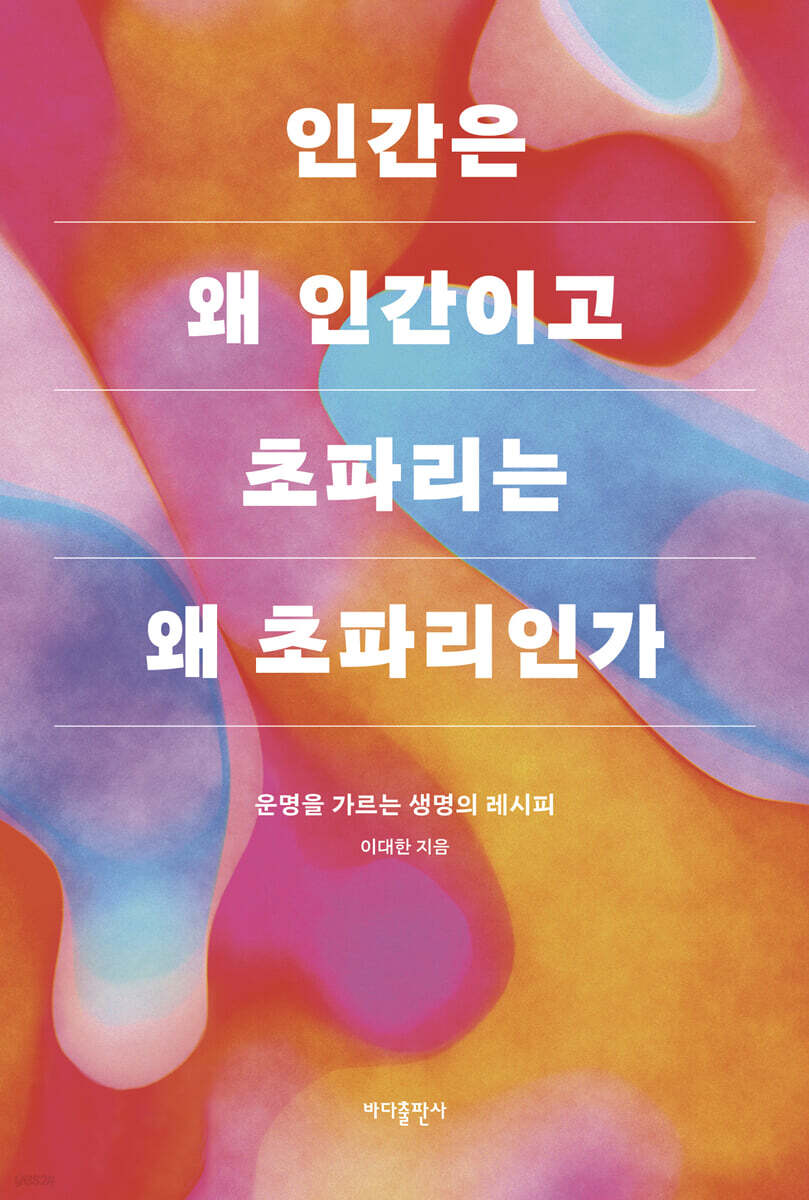
Why are humans humans and why are fruit flies fruit flies?
 |
Description
Book Introduction
Same ingredients, different fates
The coincidences and inevitabilities of evolution created by the recipe for 4 billion years of life.
Modern genetics is doing things that no one but cells could do before.
It is about interpreting DNA, the overwhelming text of life created by evolution through natural selection over 4 billion years.
This text contains recipes for creating various bodies, regulating the movements and chemical reactions of various organs, and causing behavior.
Thanks to this recipe, humans fulfill their destiny as humans, and fruit flies fulfill their destiny as fruit flies.
Today, humans, created by recipes, have reached the point where they can only peer into their own recipes and experiment with the fate of life.
Is the evolution of life an accident or an inevitable necessity?
Or is it an exquisite combination of coincidence and inevitability?
This is a step towards finding answers to very fundamental questions.
The answer to the question of the meaning of life: who we are, where we came from, and where we are going.
We invite you to hear the amazing questions and answers of Dr. Daehan Lee, an evolutionary geneticist who is at the forefront of modern evolutionary theory through his genetic research on the special animal called C. elegans and is considered a "next-generation writer in the field of evolutionary biology."
The coincidences and inevitabilities of evolution created by the recipe for 4 billion years of life.
Modern genetics is doing things that no one but cells could do before.
It is about interpreting DNA, the overwhelming text of life created by evolution through natural selection over 4 billion years.
This text contains recipes for creating various bodies, regulating the movements and chemical reactions of various organs, and causing behavior.
Thanks to this recipe, humans fulfill their destiny as humans, and fruit flies fulfill their destiny as fruit flies.
Today, humans, created by recipes, have reached the point where they can only peer into their own recipes and experiment with the fate of life.
Is the evolution of life an accident or an inevitable necessity?
Or is it an exquisite combination of coincidence and inevitability?
This is a step towards finding answers to very fundamental questions.
The answer to the question of the meaning of life: who we are, where we came from, and where we are going.
We invite you to hear the amazing questions and answers of Dr. Daehan Lee, an evolutionary geneticist who is at the forefront of modern evolutionary theory through his genetic research on the special animal called C. elegans and is considered a "next-generation writer in the field of evolutionary biology."
- You can preview some of the book's contents.
Preview
index
Introduction
Five Amazing Times Reading the Recipe for Life That Made Me Me
1 The material of all this grandeur and wonder 10
The nature of mutation and heredity
2 Find the Recipe for Life 34
Genetic Innovation and Gene Control
3 What is the power that creates the recipe for life? 54
The Natural Selection vs. Neutral Evolution Debate
4 Genes That Cause Disease and Intelligence 78
Human population genetics and gene editing
5 The Subversive 98 That Instincts Are Written in Your Genes
The Light and Darkness of Behavioral Genetics
6 Instincts Evolve 114
Changes in neural circuits and behavior
7 Why are humans human and why are fruit flies fruit flies? 134
Genetics of Development and Recipe Box
The Genealogy of 8 Cells, the Key to Soul Generation 154
Cell profiling and artificial brains
9 Time-Turning Gene 178
Advances in aging genetics and reverse aging
10 Evolution of Outlaw Cells 204
Genetics of Cancer and the War on Cancer
11 The Evolution of Sex and the Spectrum of Our Minds 222
Genetics of Sex Determination and Gender
12 Turning Back the Tape of Evolution 244
Genetics Experimenting with Evolution
13 The Necessity of Taming Chance 268
The genetics of adaptation
Week 286
Search 300
Five Amazing Times Reading the Recipe for Life That Made Me Me
1 The material of all this grandeur and wonder 10
The nature of mutation and heredity
2 Find the Recipe for Life 34
Genetic Innovation and Gene Control
3 What is the power that creates the recipe for life? 54
The Natural Selection vs. Neutral Evolution Debate
4 Genes That Cause Disease and Intelligence 78
Human population genetics and gene editing
5 The Subversive 98 That Instincts Are Written in Your Genes
The Light and Darkness of Behavioral Genetics
6 Instincts Evolve 114
Changes in neural circuits and behavior
7 Why are humans human and why are fruit flies fruit flies? 134
Genetics of Development and Recipe Box
The Genealogy of 8 Cells, the Key to Soul Generation 154
Cell profiling and artificial brains
9 Time-Turning Gene 178
Advances in aging genetics and reverse aging
10 Evolution of Outlaw Cells 204
Genetics of Cancer and the War on Cancer
11 The Evolution of Sex and the Spectrum of Our Minds 222
Genetics of Sex Determination and Gender
12 Turning Back the Tape of Evolution 244
Genetics Experimenting with Evolution
13 The Necessity of Taming Chance 268
The genetics of adaptation
Week 286
Search 300
Detailed image
Into the book
Thanks to genetics, which discovered the world of genes, humans have come face to face with the overwhelming text of life that the universe has written in the mysterious method of 'evolution' over the past 4 billion years on Earth.
Just as even people who don't know how to cook ramen can enjoy delicious food, most living things live without knowing what life is or how it came to be.
Until recently, humans were one of them.
Having discovered the universal language of life in the past century, humans have become "readers" of life's evolution and are now being reborn as writers and editors who can even edit the recipe for life themselves.
---From “Introductory remarks, pages 6-7”
As the post-genomic era dawns, evolutionary geneticists have access to a diverse and vast collection of genomes (program codes) that allow them to examine how new life programs emerge at the intersection of heredity and evolution.
By comparing and analyzing the genomes (genotypes) and phenotypes of different individuals and species, we can deeply and broadly explore the principles of creation, such as, "How are certain genetic variations created?" and "How does evolution derive and maintain large and small phenotypic changes from the created genetic variations?"
If we understand the code that spontaneously changes or is created in living organisms, and the grammar of creation that handles mutations of that code to create new programs, wouldn't we be able to explain more deeply 'where we came from, what we are, and where we are going'?
---From "Chapter 1, The Material of All This Magnificence and Wonder, Page 30"
At the time when the foundation of the theory of evolution based on population genetics was being laid, genes were conceptual objects whose physical reality had not been revealed.
At that time, alleles were closer to 'information' that specified different phenotypes rather than different 'substances'.
Alleles that were not associated with phenotypic differences were not considered in the first place.
For early evolutionary geneticists, evolution meant the evolution of phenotypes, which are changes in the structure and function of organisms.
The molecular nature of the genetic code engraved in DNA was finally revealed in the mid-20th century, revealing the true nature of alleles.
It was discovered that the differences between alleles are due to variations in the base sequences present in specific parts of the DNA that make up the genes.
Likewise, the gene pool, which was close to a conceptual setting, can now be understood as the totality of DNA possessed by the individuals forming a group.
The molecular biology revolution opened a new chapter called molecular evolution by redefining evolution from the perspective of changes in 'molecules'.
---From "Chapter 3: What is the power that creates the recipe for life, page 60"
In genetic terms, each disease has its own unique genetic architecture.
Each person's DNA contains common mutations that are easily found in the population, as well as rare mutations that are very rare in the population or found only in one person.
Most of these have little effect on life expectancy, but some mutations have a significant effect on the prevalence or course of the disease under certain conditions.
The architecture of a disease can be described as the population genetic structure that represents the totality of mutations involved in a particular disease.
Factors such as how many mutations contribute to the genetic cause of a disease, whether those mutations are common or rare in the population, and whether each mutation has a large or small effect on the disease are key factors in determining the architecture of the disease.
---From "Chapter 4 Genes that Create Disease and Intelligence, p. 81"
Genetics and environment are not exclusive factors that explain behavior.
The dichotomy that behavior is determined by either genes or environment is no different from claiming that food is created solely by the recipe or the chef. Food (behavior) should be viewed as the recipe (gene) realized through the chef (environment).
For example, in order for chemotactic behavior to be carried out in response to an environmental factor such as 'smell', a neural circuit that recognizes the stimulus of smell, controls the movement of the individual, and moves toward the smell must be created and operated through the activity of genes.
---From "Chapter 6, Instinct Evolves, p. 123"
As the curious phenomenon of homeosis can now be explained by the activity of Hox genes, which are well preserved even in distantly related species, a genetic paradigm is established for how other forms could have evolved in the history of life's evolution.
Just as a 3D printer can create countless shapes using the same materials, given a variety of blueprints, shape diversity can evolve from new blueprints using old materials without the emergence of new materials (genes).
At this time, the creativity contained in the new blueprint ultimately comes from innovation in the spatiotemporal context of gene expression, which is about when and where old materials (preserved genes) are expressed.
These innovations can be achieved through mutations in various switches engraved in genes.
---From "Chapter 7: Why Are Humans Human and Why Are Fruit Flies Fruit Flies, Page 153"
Interestingly, studies of parabiosis and blood aging factors are providing similar insights to those of longevity genes.
The substance that flows through our blood and makes us young or old is a substance created from our DNA.
Perhaps the most important insight the genetics of youth can offer us is that the path to immortality lies not in some legendary elixir of life growing across the ocean in the land of immortals, but in the DNA of all of us.
---From "Chapter 9, The Gene That Turns Back Time, p. 199"
'Genetic sex determination (GSD)' is not nature's only method of sex determination.
Environmental sex determination (ESD), in which sex is determined not at the moment of fertilization but rather by the environment in which the embryo is placed, is another common sex determination mechanism that is very common in nature.
Some reptiles have sex determined by temperature, and some marine amphipod species have sex determined by day length.
Among the fish species that live on coral reefs, the sex of many species is determined by social factors.
Temperature-dependent sex determination (TSD) in reptiles, in which the sex of an embryo changes depending on the temperature to which it is exposed during embryonic development in the egg, is a well-known example of ESD.
For example, when exposed to high temperatures, red-eared sliders develop as females, while American alligators develop as males.
---From "Chapter 11: The Evolution of Sex and the Spectrum of Our Minds, p. 234"
The view that specific genetic changes mediate specific adaptations, just as specific enzymes mediate specific chemical reactions, not only emphasizes the necessity of evolution but also provides a conceptual framework for analyzing the phenomenon of evolution at a very specific, molecular level.
Lenski's LTEE allows us to examine whether targets of natural selection actually exist in evolutionary processes and how many genes are targeted by specific adaptive processes.
The replay experiment we looked at earlier is one such approach.
The evolution of citrate utilization clearly demonstrates the existence of a specific genetic 'target' (citT) favored by natural selection during the adaptive process.
---From "Chapter 12: Turning Back the Tape of Evolution, p. 262"
'Chance' and 'inevitability' are the warp and weft that create group-level adaptation.
The process by which genetic mutations that enable adaptive traits are created is 'chance'.
The process of natural selection, which selects and combines mutations suitable for the environment from among numerous genetic mutations to create an adaptive pattern, is 'inevitable.'
If the chance of mutation is the dough, the inevitability of natural selection is the cookie cutter that creates the pattern.
When you press the dough into a cookie cutter, the dough outside the cutter falls off, completing the shape.
Just as even people who don't know how to cook ramen can enjoy delicious food, most living things live without knowing what life is or how it came to be.
Until recently, humans were one of them.
Having discovered the universal language of life in the past century, humans have become "readers" of life's evolution and are now being reborn as writers and editors who can even edit the recipe for life themselves.
---From “Introductory remarks, pages 6-7”
As the post-genomic era dawns, evolutionary geneticists have access to a diverse and vast collection of genomes (program codes) that allow them to examine how new life programs emerge at the intersection of heredity and evolution.
By comparing and analyzing the genomes (genotypes) and phenotypes of different individuals and species, we can deeply and broadly explore the principles of creation, such as, "How are certain genetic variations created?" and "How does evolution derive and maintain large and small phenotypic changes from the created genetic variations?"
If we understand the code that spontaneously changes or is created in living organisms, and the grammar of creation that handles mutations of that code to create new programs, wouldn't we be able to explain more deeply 'where we came from, what we are, and where we are going'?
---From "Chapter 1, The Material of All This Magnificence and Wonder, Page 30"
At the time when the foundation of the theory of evolution based on population genetics was being laid, genes were conceptual objects whose physical reality had not been revealed.
At that time, alleles were closer to 'information' that specified different phenotypes rather than different 'substances'.
Alleles that were not associated with phenotypic differences were not considered in the first place.
For early evolutionary geneticists, evolution meant the evolution of phenotypes, which are changes in the structure and function of organisms.
The molecular nature of the genetic code engraved in DNA was finally revealed in the mid-20th century, revealing the true nature of alleles.
It was discovered that the differences between alleles are due to variations in the base sequences present in specific parts of the DNA that make up the genes.
Likewise, the gene pool, which was close to a conceptual setting, can now be understood as the totality of DNA possessed by the individuals forming a group.
The molecular biology revolution opened a new chapter called molecular evolution by redefining evolution from the perspective of changes in 'molecules'.
---From "Chapter 3: What is the power that creates the recipe for life, page 60"
In genetic terms, each disease has its own unique genetic architecture.
Each person's DNA contains common mutations that are easily found in the population, as well as rare mutations that are very rare in the population or found only in one person.
Most of these have little effect on life expectancy, but some mutations have a significant effect on the prevalence or course of the disease under certain conditions.
The architecture of a disease can be described as the population genetic structure that represents the totality of mutations involved in a particular disease.
Factors such as how many mutations contribute to the genetic cause of a disease, whether those mutations are common or rare in the population, and whether each mutation has a large or small effect on the disease are key factors in determining the architecture of the disease.
---From "Chapter 4 Genes that Create Disease and Intelligence, p. 81"
Genetics and environment are not exclusive factors that explain behavior.
The dichotomy that behavior is determined by either genes or environment is no different from claiming that food is created solely by the recipe or the chef. Food (behavior) should be viewed as the recipe (gene) realized through the chef (environment).
For example, in order for chemotactic behavior to be carried out in response to an environmental factor such as 'smell', a neural circuit that recognizes the stimulus of smell, controls the movement of the individual, and moves toward the smell must be created and operated through the activity of genes.
---From "Chapter 6, Instinct Evolves, p. 123"
As the curious phenomenon of homeosis can now be explained by the activity of Hox genes, which are well preserved even in distantly related species, a genetic paradigm is established for how other forms could have evolved in the history of life's evolution.
Just as a 3D printer can create countless shapes using the same materials, given a variety of blueprints, shape diversity can evolve from new blueprints using old materials without the emergence of new materials (genes).
At this time, the creativity contained in the new blueprint ultimately comes from innovation in the spatiotemporal context of gene expression, which is about when and where old materials (preserved genes) are expressed.
These innovations can be achieved through mutations in various switches engraved in genes.
---From "Chapter 7: Why Are Humans Human and Why Are Fruit Flies Fruit Flies, Page 153"
Interestingly, studies of parabiosis and blood aging factors are providing similar insights to those of longevity genes.
The substance that flows through our blood and makes us young or old is a substance created from our DNA.
Perhaps the most important insight the genetics of youth can offer us is that the path to immortality lies not in some legendary elixir of life growing across the ocean in the land of immortals, but in the DNA of all of us.
---From "Chapter 9, The Gene That Turns Back Time, p. 199"
'Genetic sex determination (GSD)' is not nature's only method of sex determination.
Environmental sex determination (ESD), in which sex is determined not at the moment of fertilization but rather by the environment in which the embryo is placed, is another common sex determination mechanism that is very common in nature.
Some reptiles have sex determined by temperature, and some marine amphipod species have sex determined by day length.
Among the fish species that live on coral reefs, the sex of many species is determined by social factors.
Temperature-dependent sex determination (TSD) in reptiles, in which the sex of an embryo changes depending on the temperature to which it is exposed during embryonic development in the egg, is a well-known example of ESD.
For example, when exposed to high temperatures, red-eared sliders develop as females, while American alligators develop as males.
---From "Chapter 11: The Evolution of Sex and the Spectrum of Our Minds, p. 234"
The view that specific genetic changes mediate specific adaptations, just as specific enzymes mediate specific chemical reactions, not only emphasizes the necessity of evolution but also provides a conceptual framework for analyzing the phenomenon of evolution at a very specific, molecular level.
Lenski's LTEE allows us to examine whether targets of natural selection actually exist in evolutionary processes and how many genes are targeted by specific adaptive processes.
The replay experiment we looked at earlier is one such approach.
The evolution of citrate utilization clearly demonstrates the existence of a specific genetic 'target' (citT) favored by natural selection during the adaptive process.
---From "Chapter 12: Turning Back the Tape of Evolution, p. 262"
'Chance' and 'inevitability' are the warp and weft that create group-level adaptation.
The process by which genetic mutations that enable adaptive traits are created is 'chance'.
The process of natural selection, which selects and combines mutations suitable for the environment from among numerous genetic mutations to create an adaptive pattern, is 'inevitable.'
If the chance of mutation is the dough, the inevitability of natural selection is the cookie cutter that creates the pattern.
When you press the dough into a cookie cutter, the dough outside the cutter falls off, completing the shape.
---From "Chapter 13: Taming Chance: Necessity, p. 280"
Publisher's Review
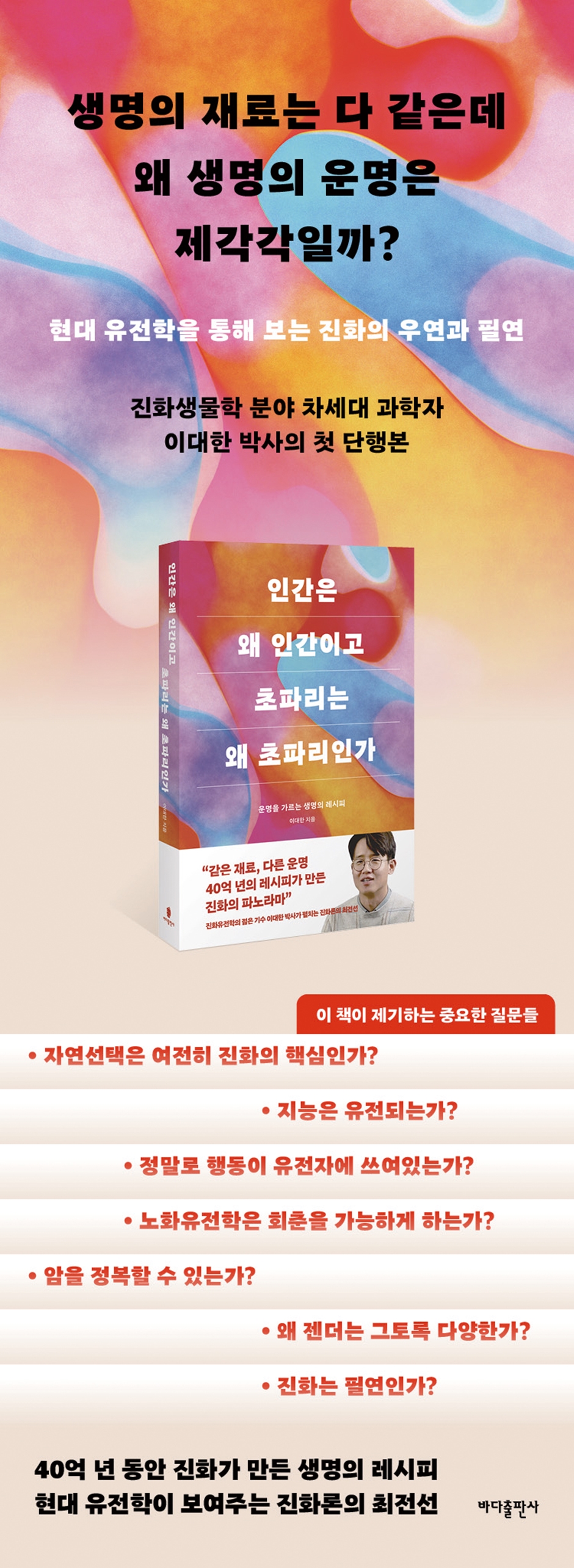
Why am I me, why is a fruit fly a fruit fly?
The recipe that made me who I am, and the coincidence and inevitability of evolution
Darwin feared that worker bees, willing to sacrifice their own reproduction for the group, were a threat to the theory of evolution.
Geneticists who discovered the existence of genes after Darwin fell into even deeper trouble.
How can so many different life forms arise from the same genes? How do humans become humans, and fruit flies become fruit flies? How does evolution produce so many phenotypes?
As the era of direct genetic control dawned, geneticists realized that the source of such creation was vast genetic variation.
In other words, even though the ingredients are the same, the recipes for cooking them are different, giving birth to countless lives.
And the life programmer called evolution has been creatively accumulating these recipes one by one.
At this point, this question arises:
Was it an inevitable process in this universe that humans were born human and fruit flies were born fly-like, or was it a coincidence or a trick of God?
Evolutionary biologist Stephen Jay Gould left behind an interesting thought experiment.
Suppose the long history of life's evolution were recorded on videotape.
If we were to rewind this tape and play it back, would history unfold exactly the same way? Would we, as humans, emerge again? Gould answered, "No."
There are too many random factors in the survival and extinction of all living things.
Even under the same conditions, evolution will produce different results.
Is evolution truly unrepeatable? Young biologist Richard Lenski set out to test the contingency and inevitability of evolution through experiments.
This is the 'long-term experimental evolution' that started in 1988 and continues to this day.
Experimenting with evolution? It sounds far-fetched, but it's possible using E. coli, where 20 years is equivalent to a million years for humans.
Lenski observed what happened when he divided E. coli into 12 groups and allowed them to evolve under identical conditions, and whether the evolution was repeated when he froze a specific group of E. coli and then revived it at a desired time.
The 12 tribes of E. coli provide important insights into the contingency and inevitability of evolution.
The most famous example is the evolution of strusan metabolism.
Among the E. coli tribes, a tribe called 'Ara-3' has developed an innovation that is not normally seen in E. coli, the ability to utilize citrate as a nutrient under aerobic conditions.
Why did this happen only to the Ara-3 tribe? If it was due to a lucky mutation, it was purely coincidental.
However, when Lenski's research team thawed and evolved the pre-innovation generation of E. coli from the Ara-3 tribe that had been frozen, citric acid innovation occurred frequently.
As if it were 'inevitable'.
Modern genetics has made it possible to analyze this exquisite combination of chance and necessity at the level of a single gene.
The 'recipe of life', created by evolution and readable only by cells, has become interpretable by humans, the product of the recipe, thanks to the advancement of DNA sequencing technology.
The innovation in citric acid utilization was due to natural selection for mutations in the citT gene, which produces the citrate transport protein.
In the Ara-3 tribe, the number of citT genes increased due to mutations, and a cascade of selection occurred for the regulatory modules involved in expressing these genes.
What is even more surprising is that in experiments where E. coli were frozen and the tape of evolution was reversed, when the citric acid innovation occurred repeatedly, the mutation in the citT gene was inevitably selected.
Of course, there were coincidences too.
The regulatory module that expresses the citT gene also allowed for other innovations.
But the important thing is that while there are many paths to the goal, the innovation of citT gene expression was inevitable.
Looking into the recipe for life created by evolution in this way allows us to transcend the conceptual dichotomies we hold about life.
We, and all life, are neither complete coincidences nor necessary creatures created by God.
It is a purposeful being dynamically created through an exquisite combination of chance and necessity.
What is the meaning of life as a purposeful being? Do the evolutionary and genetic conditions that make us human tell us something about the purpose of life? Why can't humans become fruit flies? Why are the destinies of life so diverse? What is the significance of these differences in destinies? Beyond the mere transmission of scientific information, "Why Are Humans Human and Why Are Fruit Flies Flies?" contains the humanistic reflections of a young scientist who contemplates the holistic meaning of human life, adding depth to the themes of evolution and human nature.
Editing the Recipe for Life
Towards a fundamental understanding of the origin and destiny of life
The dazzling world of expressions that we can see, hear, and touch is, so to speak, the world of food.
Genetics has revealed the surprising truth that this colorful food is made up of a recipe called a genotype, written with just four letters: A, G, C, and T.
All living things except humans live without knowing what life is or how it came into being.
But now we humans have discovered the universal language of life, have become readers of life's evolution, and have been reborn as writers and editors who can even edit the recipe for life.
Geneticists have figured out how embryos can develop into humans, fruit flies, C. elegans, and countless other multicellular organisms by directly controlling genes and regulating development.
The paradox of occurrence, ‘same DNA, different phenotypes,’ was explained by differences in recipes.
Geneticists noticed that there were switch genes that controlled the development of each organ when they induced mutations in fruit flies that caused them to grow legs from their antennae and two pairs of wings.
That was the discovery of the Hox gene, which creates body segments from head to tail, common to all vertebrates.
“The discovery of the Hox gene was a Copernican event for developmental geneticists.
(Omitted) A genetic paradigm is established for how different forms could evolve in the history of life evolution.
“Just as a 3D printer can create countless shapes using the same materials if it has a variety of blueprints, shape diversity can evolve from new blueprints using old materials without the emergence of new materials (genes).” (p. 153)
Today, we are experiencing a genetics renaissance. From next-generation sequencing to CRISPR genome editing, we are equipped with innovative tools to edit genes, unlocking the profound and wondrous question of how the same material can yield countless different destinies.
“Just as the pale blue dot captured by space probes gave us a new understanding of our planet, the genetics renaissance will give us a new understanding of life—what’s in our DNA and how it shapes us” (p. 53).
Reading the recipe of life is ultimately the progress of human life.
Genetics for a happier and more just life
Deciphering the recipe for life and recognizing the differences in destiny is ultimately about understanding the unique human condition on this planet, a time when we contemplate the universe and ourselves, and how we can live better lives.
Why do we get sick and age? Why do we vary so much in physique, appearance, personality, health, and intelligence? How do the mysterious phenomena of our complex brains and minds come to be? Why is human gender so diverse?
Modern genetics offers insights into the causes of these problems through population-scale genetic analysis and what considerations are needed to improve and improve human life.
Geneticists are working tirelessly to conquer the degenerative diseases that plague us as we age.
Aging and disease also depend to some extent on mutations in genes, which correspond to the world of recipes.
The field of aging genetics is exploring the possibility of "anti-aging," where a single gene can double lifespan and delay aging, through research on the "ageless worm" Caenorhabditis elegans.
Since humans and C. elegans share the same ingredients and only have different recipes, it has been discovered that the genes that control aging in C. elegans are related to the human insulin hormone system, and it has also been realized that the genes that control lifespan are already in our DNA.
The field of aging genetics has not stopped there, but has even discovered 'reverse aging' by successfully performing 'parabiosis', a procedure that involves exchanging blood between young and old mice.
Currently, the field of aging genetics is conducting more research to find signals that make cells younger and older, and to understand what aging is at the systemic level of the entire body, beyond individual cells.
This is all happening in our DNA.
Meanwhile, genetics is increasingly uncovering individual differences in humans, such as individual intelligence and the gender spectrum.
What should not be missed here is that genetics does not seek to justify discrimination by discovering such differences, but rather to limit discrimination by precisely understanding the conditions under which these differences arise.
For example, the genetics of intelligence has revealed the uncomfortable fact that intelligence is 'to some extent' inherited.
But more precisely, it also revealed that there are a large number of variants associated with intelligence, each with a very small effect.
There is no such thing as a "genius genetic mutation" that will unconditionally increase intelligence if inherited.
The heritability of intelligence is also not 100 percent.
Interaction with the environment played a major role in the development of intelligence.
Therefore, what we must carefully consider is to specifically understand the interaction between genes and the educational environment and to find a genetically just educational system.
Contrary to popular belief, the sex of life is not simply determined by a binary decision. The genetic switches involved in determining the fate of a single male or female are very diverse and are also influenced by the environment.
There are even some unusual cases, such as the red-eared slider, which becomes female at high temperatures and male at low temperatures.
The surname is not determined immediately after modification.
In many species, sex is the product of a complex system of genetic and environmental differences.
If that is the case, it is natural that the gender of the mind is not a system that is simply determined.
“If there is one universal conclusion we can draw from the biology of sex determination we have accumulated so far, it is that nature, life, and evolution, rather than defining life in a single way, have constantly demonstrated flexibility and creativity, enjoying the products of sexual reproduction, that is, ‘increased biodiversity.’” (p. 243)
The recipe that made me who I am, and the coincidence and inevitability of evolution
Darwin feared that worker bees, willing to sacrifice their own reproduction for the group, were a threat to the theory of evolution.
Geneticists who discovered the existence of genes after Darwin fell into even deeper trouble.
How can so many different life forms arise from the same genes? How do humans become humans, and fruit flies become fruit flies? How does evolution produce so many phenotypes?
As the era of direct genetic control dawned, geneticists realized that the source of such creation was vast genetic variation.
In other words, even though the ingredients are the same, the recipes for cooking them are different, giving birth to countless lives.
And the life programmer called evolution has been creatively accumulating these recipes one by one.
At this point, this question arises:
Was it an inevitable process in this universe that humans were born human and fruit flies were born fly-like, or was it a coincidence or a trick of God?
Evolutionary biologist Stephen Jay Gould left behind an interesting thought experiment.
Suppose the long history of life's evolution were recorded on videotape.
If we were to rewind this tape and play it back, would history unfold exactly the same way? Would we, as humans, emerge again? Gould answered, "No."
There are too many random factors in the survival and extinction of all living things.
Even under the same conditions, evolution will produce different results.
Is evolution truly unrepeatable? Young biologist Richard Lenski set out to test the contingency and inevitability of evolution through experiments.
This is the 'long-term experimental evolution' that started in 1988 and continues to this day.
Experimenting with evolution? It sounds far-fetched, but it's possible using E. coli, where 20 years is equivalent to a million years for humans.
Lenski observed what happened when he divided E. coli into 12 groups and allowed them to evolve under identical conditions, and whether the evolution was repeated when he froze a specific group of E. coli and then revived it at a desired time.
The 12 tribes of E. coli provide important insights into the contingency and inevitability of evolution.
The most famous example is the evolution of strusan metabolism.
Among the E. coli tribes, a tribe called 'Ara-3' has developed an innovation that is not normally seen in E. coli, the ability to utilize citrate as a nutrient under aerobic conditions.
Why did this happen only to the Ara-3 tribe? If it was due to a lucky mutation, it was purely coincidental.
However, when Lenski's research team thawed and evolved the pre-innovation generation of E. coli from the Ara-3 tribe that had been frozen, citric acid innovation occurred frequently.
As if it were 'inevitable'.
Modern genetics has made it possible to analyze this exquisite combination of chance and necessity at the level of a single gene.
The 'recipe of life', created by evolution and readable only by cells, has become interpretable by humans, the product of the recipe, thanks to the advancement of DNA sequencing technology.
The innovation in citric acid utilization was due to natural selection for mutations in the citT gene, which produces the citrate transport protein.
In the Ara-3 tribe, the number of citT genes increased due to mutations, and a cascade of selection occurred for the regulatory modules involved in expressing these genes.
What is even more surprising is that in experiments where E. coli were frozen and the tape of evolution was reversed, when the citric acid innovation occurred repeatedly, the mutation in the citT gene was inevitably selected.
Of course, there were coincidences too.
The regulatory module that expresses the citT gene also allowed for other innovations.
But the important thing is that while there are many paths to the goal, the innovation of citT gene expression was inevitable.
Looking into the recipe for life created by evolution in this way allows us to transcend the conceptual dichotomies we hold about life.
We, and all life, are neither complete coincidences nor necessary creatures created by God.
It is a purposeful being dynamically created through an exquisite combination of chance and necessity.
What is the meaning of life as a purposeful being? Do the evolutionary and genetic conditions that make us human tell us something about the purpose of life? Why can't humans become fruit flies? Why are the destinies of life so diverse? What is the significance of these differences in destinies? Beyond the mere transmission of scientific information, "Why Are Humans Human and Why Are Fruit Flies Flies?" contains the humanistic reflections of a young scientist who contemplates the holistic meaning of human life, adding depth to the themes of evolution and human nature.
Editing the Recipe for Life
Towards a fundamental understanding of the origin and destiny of life
The dazzling world of expressions that we can see, hear, and touch is, so to speak, the world of food.
Genetics has revealed the surprising truth that this colorful food is made up of a recipe called a genotype, written with just four letters: A, G, C, and T.
All living things except humans live without knowing what life is or how it came into being.
But now we humans have discovered the universal language of life, have become readers of life's evolution, and have been reborn as writers and editors who can even edit the recipe for life.
Geneticists have figured out how embryos can develop into humans, fruit flies, C. elegans, and countless other multicellular organisms by directly controlling genes and regulating development.
The paradox of occurrence, ‘same DNA, different phenotypes,’ was explained by differences in recipes.
Geneticists noticed that there were switch genes that controlled the development of each organ when they induced mutations in fruit flies that caused them to grow legs from their antennae and two pairs of wings.
That was the discovery of the Hox gene, which creates body segments from head to tail, common to all vertebrates.
“The discovery of the Hox gene was a Copernican event for developmental geneticists.
(Omitted) A genetic paradigm is established for how different forms could evolve in the history of life evolution.
“Just as a 3D printer can create countless shapes using the same materials if it has a variety of blueprints, shape diversity can evolve from new blueprints using old materials without the emergence of new materials (genes).” (p. 153)
Today, we are experiencing a genetics renaissance. From next-generation sequencing to CRISPR genome editing, we are equipped with innovative tools to edit genes, unlocking the profound and wondrous question of how the same material can yield countless different destinies.
“Just as the pale blue dot captured by space probes gave us a new understanding of our planet, the genetics renaissance will give us a new understanding of life—what’s in our DNA and how it shapes us” (p. 53).
Reading the recipe of life is ultimately the progress of human life.
Genetics for a happier and more just life
Deciphering the recipe for life and recognizing the differences in destiny is ultimately about understanding the unique human condition on this planet, a time when we contemplate the universe and ourselves, and how we can live better lives.
Why do we get sick and age? Why do we vary so much in physique, appearance, personality, health, and intelligence? How do the mysterious phenomena of our complex brains and minds come to be? Why is human gender so diverse?
Modern genetics offers insights into the causes of these problems through population-scale genetic analysis and what considerations are needed to improve and improve human life.
Geneticists are working tirelessly to conquer the degenerative diseases that plague us as we age.
Aging and disease also depend to some extent on mutations in genes, which correspond to the world of recipes.
The field of aging genetics is exploring the possibility of "anti-aging," where a single gene can double lifespan and delay aging, through research on the "ageless worm" Caenorhabditis elegans.
Since humans and C. elegans share the same ingredients and only have different recipes, it has been discovered that the genes that control aging in C. elegans are related to the human insulin hormone system, and it has also been realized that the genes that control lifespan are already in our DNA.
The field of aging genetics has not stopped there, but has even discovered 'reverse aging' by successfully performing 'parabiosis', a procedure that involves exchanging blood between young and old mice.
Currently, the field of aging genetics is conducting more research to find signals that make cells younger and older, and to understand what aging is at the systemic level of the entire body, beyond individual cells.
This is all happening in our DNA.
Meanwhile, genetics is increasingly uncovering individual differences in humans, such as individual intelligence and the gender spectrum.
What should not be missed here is that genetics does not seek to justify discrimination by discovering such differences, but rather to limit discrimination by precisely understanding the conditions under which these differences arise.
For example, the genetics of intelligence has revealed the uncomfortable fact that intelligence is 'to some extent' inherited.
But more precisely, it also revealed that there are a large number of variants associated with intelligence, each with a very small effect.
There is no such thing as a "genius genetic mutation" that will unconditionally increase intelligence if inherited.
The heritability of intelligence is also not 100 percent.
Interaction with the environment played a major role in the development of intelligence.
Therefore, what we must carefully consider is to specifically understand the interaction between genes and the educational environment and to find a genetically just educational system.
Contrary to popular belief, the sex of life is not simply determined by a binary decision. The genetic switches involved in determining the fate of a single male or female are very diverse and are also influenced by the environment.
There are even some unusual cases, such as the red-eared slider, which becomes female at high temperatures and male at low temperatures.
The surname is not determined immediately after modification.
In many species, sex is the product of a complex system of genetic and environmental differences.
If that is the case, it is natural that the gender of the mind is not a system that is simply determined.
“If there is one universal conclusion we can draw from the biology of sex determination we have accumulated so far, it is that nature, life, and evolution, rather than defining life in a single way, have constantly demonstrated flexibility and creativity, enjoying the products of sexual reproduction, that is, ‘increased biodiversity.’” (p. 243)
GOODS SPECIFICS
- Date of issue: March 30, 2023
- Page count, weight, size: 304 pages | 512g | 145*215*18mm
- ISBN13: 9791166891458
- ISBN10: 1166891453
You may also like
카테고리
korean


korean

![GQ KOREA Mark (Monthly): December [2025]](http://librairie.coreenne.fr/cdn/shop/files/8ef265dbbfbf186523ed75ba7319009d.jpg?v=1765340328&width=3840)


