

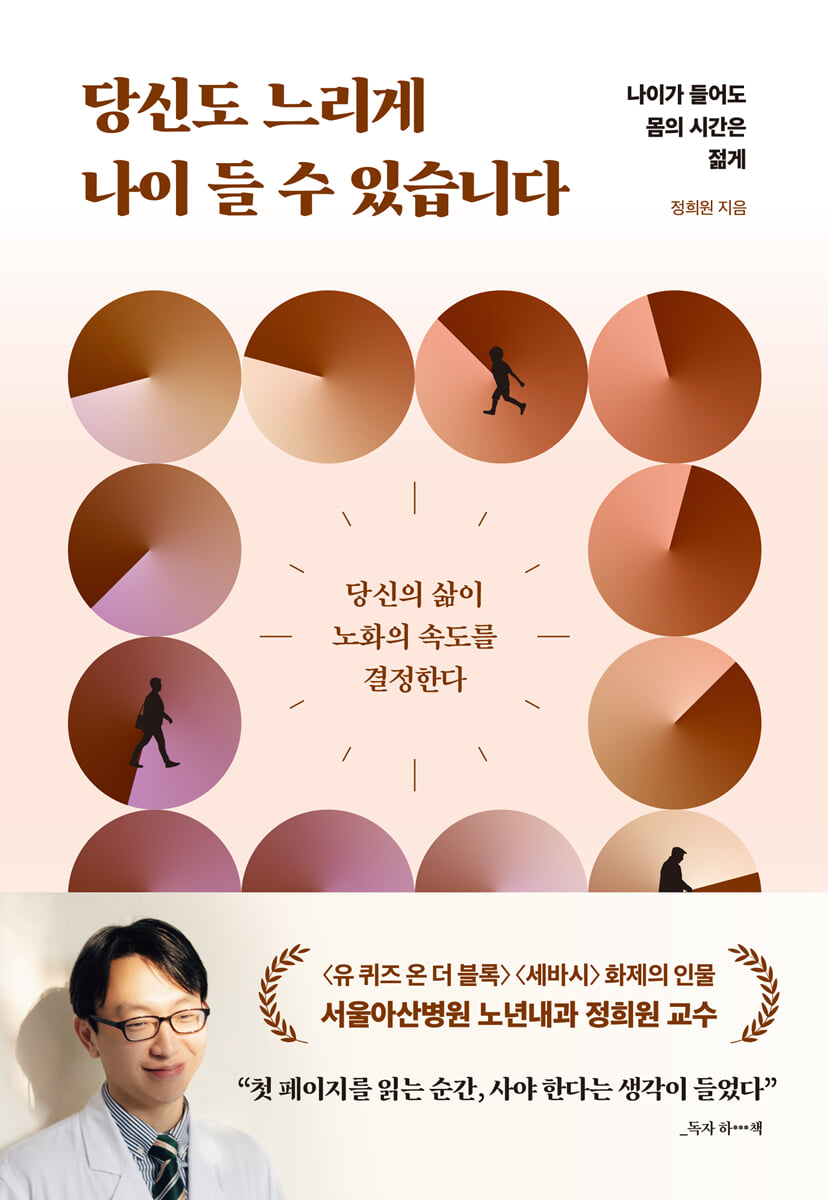
You too can age slowly
 |
Description
Book Introduction
What you need to prepare for now for a happy aging Four Pillars and Habits “Your life determines the speed of aging.” It can't be avoided, but it can be slowed! Professor Jeong Hee-won of the Department of Geriatrics at Seoul Asan Medical Center warns that accelerated aging is upon us in Korean society. He has published a book outlining four pillars and corresponding habits that will normalize the aging process. Statistics from South Korea show that health indicators for young adults, including body mass index and drinking, have been deteriorating significantly over the past few years. In fact, there are also younger patients visiting the clinic, such as a woman in her 30s who has pain everywhere, a man in his 40s who thinks he has dementia, and a man in his 50s who has been going from hospital to hospital due to a feeling of weakness of unknown cause. Geriatricians believe that we should remain economically active until age 77. People in their 60s, who are usually considered elderly, find it difficult to retire financially and mentally. Professor Jeong Hee-won, driven by this social need, developed the 4M Health Method for Sustainable Aging, drawing on his clinical experience as well as his expertise in clinical research, science, humanities, and economics. It is centered around four key factors that determine healthy and successful aging: ‘mobility’ that restores physical functions, ‘mental health’ that increases the resilience of cognitive functions, ‘health and disease’ that corrects misconceptions about health, and ‘what is important to me’ that prevents social isolation. It is not a health method that requires any special talent, the improvement is rapid enough to appear within a few days, and the effects are dramatic enough to extend lifespan by at least 12 years. When looking at the current population structure and welfare system of Korean society, health is the best financial investment. Don't think it's too late. Now is the earliest time. |
- You can preview some of the book's contents.
Preview
index
Preface: The Greatest Crisis in Korean Society: We Are Aging Rapidly
The Comfort of Capitalism Accelerates Aging│Managing Intrinsic Potential: A Starting Point for Breaking the Chain of Accelerated Aging│The Beginning of a Virtuous Cycle of Health
Part 1: Your Life Determines the Rate of Aging
Understanding the Body as a Complex Adaptive System
Our bodies are not optimized for aging.
The Rules of the Game Have Changed and Your Body Has Changed│The Vicious Cycle Created by High Blood Sugar Volatility
How 'Pleasure Addiction' Destroys the Body
Dopamine signals adapt quickly. The total amount of pleasure cannot be increased. Let's start remodeling dopamine.
The modern brain never gets a moment to rest.
The higher the entropy of the mind, the more restless it becomes. │ Stabilizing the Default Mode Network
We must overcome our instinct to avoid pain.
The Strange Relationship Between Reward and Pain Circuits│Fleeing from Small Pain Leads to Greater Pain
Redesigning Aging: Starting with Habits
Identify the rewards that reinforce bad habits. The process of making discomfort comfortable and creating good habits.
Higher intrinsic capacity for life reduces the rate of aging.
What Makes a Body Different in Responding to Stress? Even Low Endurance Can Be Boosted by Managing It
Four Pillars of Successful Aging
The elements and domains that make up life are all connected.│The four axes of multifaceted internal competency management.
Part 2: The Body that Beats Aging
_The first pillar to slowing down the aging process: mobility
The body is designed to move
Elements of Modern Society That Hinder Mobility│When Intrinsic Mobility Capacity Collapses│One Principle: Never Separate Movement from Movement
How should I exercise?
That kind of exercise is wrong. You need to learn to overcome the inertia of habit. The ripple effect of proper exercise.
The right direction for life begins with posture.
A vicious cycle that begins with bad posture│Posture habits that help fight aging
There's no retirement asset as solid as an exercise habit.
The Scientific Effects of Exercise│A Dementia Prevention Drug Without Side Effects
The weapon that turns back the clock, the mind
The second pillar of slowing down aging: mental health.
If you lose your heart, you lose your life.
What the Mind Does│The Scientific Effects of Mindfulness│How to Regain Health with Mindfulness
Immersion is a powerful slow-aging factor
In an era of disruptive immersion, the more you develop your immersion strength, the less you'll be swayed by it. Designing an immersive environment that's right for you.
If you don't get enough sleep, you can't solve any problems.
Sleep Deprivation: A Super-Strong Accelerated Aging Factor│How Can We Solve Our Sleep Problems?
Healthy old age is free from worldly desires.
Constant Comparison Threatens Your Future Self│Three Antidotes to Restore Peace of Mind
Part 4: The Illusion That Getting Sick Is Natural as You Age
The Third Pillar of Slowing Aging: Health and Disease
You are what you eat
Your Diet Is Wrong | Is It Natural Appetite or Artificial Gluttony? | Understand Carbohydrate Absorption Rate | Sustainable Anti-Aging Diet
Alcohol and cigarettes, no exceptions
It's best not to start smoking│Alcohol is scarier than cigarettes│Is a little alcohol really good for your health?
You can make better decisions
Humans Think as They See Them | A Thought Experiment That Understands the Speed of Aging at a Glance
The myth of anti-aging therapy
Fake Anti-Aging Therapies│Methods Proven Effective in Animals
Part 5: The Art of Letting Go for Wise Aging
The Fourth Pillar of Slowing Aging: What Matters to Me
Manage your inner strengths and you'll manage your life.
Inner strength is the only thing you can rely on in old age. A balance of inner strength prevents social isolation. A portfolio for a sustainable senior life.
The power to keep only what is important in life
Consumer Capitalism: Claiming Uselessness as Useful│What Is Important to Me?│Reassessing the Value of Goods
We must also prepare for social decline.
Social resources that have become luxuries│Virtualized relationships that deepen the polarization of the elderly│Finding a healthy relationship that suits me
In the 100-year lifespan, money is necessary.
Unavoidable Medical Expenses│The Problem Is Distorted Thinking About Money│True Wealth System Comes From Intrinsic Capacity
Conclusion: Aging is not about relying on luck.
A lifetime of multifaceted effort is needed│Now is the earliest time
References
The Comfort of Capitalism Accelerates Aging│Managing Intrinsic Potential: A Starting Point for Breaking the Chain of Accelerated Aging│The Beginning of a Virtuous Cycle of Health
Part 1: Your Life Determines the Rate of Aging
Understanding the Body as a Complex Adaptive System
Our bodies are not optimized for aging.
The Rules of the Game Have Changed and Your Body Has Changed│The Vicious Cycle Created by High Blood Sugar Volatility
How 'Pleasure Addiction' Destroys the Body
Dopamine signals adapt quickly. The total amount of pleasure cannot be increased. Let's start remodeling dopamine.
The modern brain never gets a moment to rest.
The higher the entropy of the mind, the more restless it becomes. │ Stabilizing the Default Mode Network
We must overcome our instinct to avoid pain.
The Strange Relationship Between Reward and Pain Circuits│Fleeing from Small Pain Leads to Greater Pain
Redesigning Aging: Starting with Habits
Identify the rewards that reinforce bad habits. The process of making discomfort comfortable and creating good habits.
Higher intrinsic capacity for life reduces the rate of aging.
What Makes a Body Different in Responding to Stress? Even Low Endurance Can Be Boosted by Managing It
Four Pillars of Successful Aging
The elements and domains that make up life are all connected.│The four axes of multifaceted internal competency management.
Part 2: The Body that Beats Aging
_The first pillar to slowing down the aging process: mobility
The body is designed to move
Elements of Modern Society That Hinder Mobility│When Intrinsic Mobility Capacity Collapses│One Principle: Never Separate Movement from Movement
How should I exercise?
That kind of exercise is wrong. You need to learn to overcome the inertia of habit. The ripple effect of proper exercise.
The right direction for life begins with posture.
A vicious cycle that begins with bad posture│Posture habits that help fight aging
There's no retirement asset as solid as an exercise habit.
The Scientific Effects of Exercise│A Dementia Prevention Drug Without Side Effects
The weapon that turns back the clock, the mind
The second pillar of slowing down aging: mental health.
If you lose your heart, you lose your life.
What the Mind Does│The Scientific Effects of Mindfulness│How to Regain Health with Mindfulness
Immersion is a powerful slow-aging factor
In an era of disruptive immersion, the more you develop your immersion strength, the less you'll be swayed by it. Designing an immersive environment that's right for you.
If you don't get enough sleep, you can't solve any problems.
Sleep Deprivation: A Super-Strong Accelerated Aging Factor│How Can We Solve Our Sleep Problems?
Healthy old age is free from worldly desires.
Constant Comparison Threatens Your Future Self│Three Antidotes to Restore Peace of Mind
Part 4: The Illusion That Getting Sick Is Natural as You Age
The Third Pillar of Slowing Aging: Health and Disease
You are what you eat
Your Diet Is Wrong | Is It Natural Appetite or Artificial Gluttony? | Understand Carbohydrate Absorption Rate | Sustainable Anti-Aging Diet
Alcohol and cigarettes, no exceptions
It's best not to start smoking│Alcohol is scarier than cigarettes│Is a little alcohol really good for your health?
You can make better decisions
Humans Think as They See Them | A Thought Experiment That Understands the Speed of Aging at a Glance
The myth of anti-aging therapy
Fake Anti-Aging Therapies│Methods Proven Effective in Animals
Part 5: The Art of Letting Go for Wise Aging
The Fourth Pillar of Slowing Aging: What Matters to Me
Manage your inner strengths and you'll manage your life.
Inner strength is the only thing you can rely on in old age. A balance of inner strength prevents social isolation. A portfolio for a sustainable senior life.
The power to keep only what is important in life
Consumer Capitalism: Claiming Uselessness as Useful│What Is Important to Me?│Reassessing the Value of Goods
We must also prepare for social decline.
Social resources that have become luxuries│Virtualized relationships that deepen the polarization of the elderly│Finding a healthy relationship that suits me
In the 100-year lifespan, money is necessary.
Unavoidable Medical Expenses│The Problem Is Distorted Thinking About Money│True Wealth System Comes From Intrinsic Capacity
Conclusion: Aging is not about relying on luck.
A lifetime of multifaceted effort is needed│Now is the earliest time
References
Detailed image
.jpg)
Into the book
Chronic diseases are usually the result of accumulated aging over a lifetime.
A person's values and lifestyle create patterns of chronic disease and pain and have a significant impact on their healthy life expectancy.
Because the body and mind are resilient, losing balance once or twice does not completely ruin your health.
But not everyone is trying to solve the problem fundamentally.
They simply try to cover up the discomfort that appears on the outside with medicine, health foods, or massage.
The more this happens, the more uncomfortable life becomes rather than improving.
What we must not overlook is that the cause and solution of a vicious cycle are not directly one-to-one.
Health problems caused by binge drinking will not improve immediately by removing alcohol from the home.
Just because you don't eat fat doesn't mean you can lose body fat, and just because you sit with good posture now doesn't mean you'll be able to continue sitting with good posture in the future.
Because the human body and mind are connected in two or three ways, if one element breaks down, the vicious cycle will not end.
In other words, understanding the principle of the vicious cycle and weakening its driving force through extensive efforts is a reasonable and effective solution.
The beginning is management of intrinsic capabilities.
--- 「Preface.
From "The Greatest Crisis in Korean Society: We Are Aging Rapidly"
The rewards we derive from pre-industrial methods of passing time no longer surpass the rewards offered by smartphones. The dopamine released when checking social media posts, receiving messenger notifications, or discovering new videos is far more powerful.
Eventually, the real world, excluding the smartphone screen, appears as a blurred black and white screen.
It's like the world is black and white through the eyes of a heroin addict.
When the sensors that sense the state of the body and mind become dull and incorrect tension sets in, this tension can become an unnecessary stressor, leading to depression, anxiety, sleep disorders, chronic inflammation, etc.
In other words, it increases the total amount of suffering.
Dopamine remodeling surprisingly doesn't take long.
Within a few days, you will feel the vicious cycle weakening, within two to three weeks, you will notice significant changes in your daily life, and within two to three months, you will see extensive changes in your cognition, emotions, and even your physical appearance.
Personally, I've been making a list of dopamine triggers, and as a result, I've been able to eliminate most of the pleasure-producing stimuli from my life, but I've still been able to enjoy everyday life, my stress hormones have decreased, my waist size has shrunk, and the various pains I feel at work have decreased.
--- 「Part 1.
From "How 'Pleasure Addiction' Destroys the Body"
Let's take patient D, a woman in her 30s, as an example.
D came to the clinic several months ago because the pain in his entire body, including his back and neck, had gotten worse to the point where he was having difficulty working.
She had a habit of consuming extremely few calories because she thought that drinking only water would make her gain weight.
As a result, the lordosis of the lumbar and cervical vertebrae was lost, and muscle strength was reduced to a level similar to that of a 70-year-old man.
The fundamental reason is that we are not aware of the need for hassle and pain in our daily lives, such as regular exercise, proper posture, and proper eating habits.
However, self-care activities, including exercise, were missing from my life.
--- 「Part 1.
“We must overcome the instinct to avoid pain”
Even the intrinsic capacity itself can be controlled by how you create your lifestyle habits.
Consistently performing appropriate strength training improves the inherent capacity of the metabolic system to tolerate glucose load.
In highly educated people who have been engaged in cognitive activities for a long time, even if brain atrophy has progressed considerably, there are often no significant problems found in cognitive function tests used to diagnose dementia.
--- 「Part 1.
“The higher the intrinsic capacity of life, the faster the aging process can be reduced.”
The human skeletal system has served as a means of locomotion and production for at least a million years.
However, with the spread of transportation such as elevators, railways, and automobiles, and machines such as internal combustion engines, electricity, and hydraulic devices, the human musculoskeletal system became free.
Modern industrial society and urban structures were established, and humans gained physical comfort.
However, the inherent capacity for mobility has been greatly reduced compared to primitive humans.
The price was musculoskeletal discomfort, physical and mental illness that lasted decades after adulthood, and even physical decline and disability in old age.
--- 「Part 2.
From “The body is designed to move”
Many people exercise out of habit.
Mountain climbing is a complex exercise that uses joints at various angles naturally, as long as the function of the entire body's muscles and the flexibility of the joints are adequate.
When you hike well, the load generated during the exercise acts as a beneficial stimulus to strengthen the muscles and connective tissue around the joints.
On the other hand, if a person who does no exercise other than walking, has poor muscle function around the hip joints and knees, and is overweight, and goes hiking for several hours every weekend, the joints will have to bear all the shock generated during the exercise.
When you consistently activate different muscles in the right way, you start to see changes in many areas that don't seem to be related to muscles.
In particular, if the elderly perform core exercises almost every day for six weeks, various symptoms such as gastroesophageal reflux, indigestion, constipation, and insomnia improve.
Appetite control disorders, depression, cognitive function, and body pain are also improved.
It only takes three months for your posture, body shape, and body composition to begin to change noticeably.
There are cases of improvement even in elderly people in their 90s, so we should not give up thinking that it is too late.
--- 「Part 2.
From "How to Exercise"
Among patients who come to the clinic complaining of sudden dementia within a few months, there are cases where not only cognitive changes but also sleep disturbances, mood changes, and abnormalities in the thought process exist simultaneously.
In most cases, the underlying chronic disease history or brain imaging cannot explain the rapid progression of the clinical course.
In this case, if the discomfort the patient initially felt was 'symptoms of not being able to sleep well' or 'symptoms of waking up frequently in the early morning,' it may be that other mental discomforts occurred while taking sleeping pills prescribed for a long period of time.
Sleep was the problem.
--- 「Part 3.
From "If you don't have enough sleep, you can't solve any problem"
In conclusion, it is unlikely that antioxidants mixed into sap will help delay aging.
A review of clinical research literature from the past 50 years reveals the same results.
Aging is a biological process in which long-term cumulative effects affect the structure and function of the body.
Therefore, it is unlikely that intermittent injections of antioxidants will significantly help delay aging.
SGLT2 inhibitors are diabetes medications that artificially excrete salt and glucose from the kidneys into urine.
It excretes up to 500 calories a day through urine, producing an effect similar to fasting.
Experiments on mice showed a lifespan extension effect of about 10 to 15 percent.
--- 「Part 4.
From “The False Myth of Anti-Aging Therapy”
the other side.
Based on Korea's population structure, the current model of young adults supporting the elderly population is expected to disappear within 20 years.
It is advisable for people in their 20s and 30s today not to expect that they will receive meaningful benefits from public transfer income in the future.
Let's imagine the situation 60 years from now.
Most of the current population aged 20-29 (6.7 million people) will live into their 80s, and the key age group that will provide public and commercial care services for them will be the current population aged 0-9 (3.6 million people).
In conclusion, the only thing that people in their 20s and 40s can trust and rely on today is their own inherent capabilities that will still function well in 40 to 50 years.
--- 「Part 5.
From “If you manage your inner capabilities, you can manage your life”
Realistically, it's easier for people with money and time to build strong bonds.
As socioeconomically vulnerable populations experience accelerated aging, it becomes more difficult to find recourse or invest resources in managing their inherent capabilities.
Following this mechanism, 'deaths of despair' occur.
Ability, health, and life in old age are seriously polarized.
This is why the more difficult the situation, the more we must strive to build strong social relationships.
A person's values and lifestyle create patterns of chronic disease and pain and have a significant impact on their healthy life expectancy.
Because the body and mind are resilient, losing balance once or twice does not completely ruin your health.
But not everyone is trying to solve the problem fundamentally.
They simply try to cover up the discomfort that appears on the outside with medicine, health foods, or massage.
The more this happens, the more uncomfortable life becomes rather than improving.
What we must not overlook is that the cause and solution of a vicious cycle are not directly one-to-one.
Health problems caused by binge drinking will not improve immediately by removing alcohol from the home.
Just because you don't eat fat doesn't mean you can lose body fat, and just because you sit with good posture now doesn't mean you'll be able to continue sitting with good posture in the future.
Because the human body and mind are connected in two or three ways, if one element breaks down, the vicious cycle will not end.
In other words, understanding the principle of the vicious cycle and weakening its driving force through extensive efforts is a reasonable and effective solution.
The beginning is management of intrinsic capabilities.
--- 「Preface.
From "The Greatest Crisis in Korean Society: We Are Aging Rapidly"
The rewards we derive from pre-industrial methods of passing time no longer surpass the rewards offered by smartphones. The dopamine released when checking social media posts, receiving messenger notifications, or discovering new videos is far more powerful.
Eventually, the real world, excluding the smartphone screen, appears as a blurred black and white screen.
It's like the world is black and white through the eyes of a heroin addict.
When the sensors that sense the state of the body and mind become dull and incorrect tension sets in, this tension can become an unnecessary stressor, leading to depression, anxiety, sleep disorders, chronic inflammation, etc.
In other words, it increases the total amount of suffering.
Dopamine remodeling surprisingly doesn't take long.
Within a few days, you will feel the vicious cycle weakening, within two to three weeks, you will notice significant changes in your daily life, and within two to three months, you will see extensive changes in your cognition, emotions, and even your physical appearance.
Personally, I've been making a list of dopamine triggers, and as a result, I've been able to eliminate most of the pleasure-producing stimuli from my life, but I've still been able to enjoy everyday life, my stress hormones have decreased, my waist size has shrunk, and the various pains I feel at work have decreased.
--- 「Part 1.
From "How 'Pleasure Addiction' Destroys the Body"
Let's take patient D, a woman in her 30s, as an example.
D came to the clinic several months ago because the pain in his entire body, including his back and neck, had gotten worse to the point where he was having difficulty working.
She had a habit of consuming extremely few calories because she thought that drinking only water would make her gain weight.
As a result, the lordosis of the lumbar and cervical vertebrae was lost, and muscle strength was reduced to a level similar to that of a 70-year-old man.
The fundamental reason is that we are not aware of the need for hassle and pain in our daily lives, such as regular exercise, proper posture, and proper eating habits.
However, self-care activities, including exercise, were missing from my life.
--- 「Part 1.
“We must overcome the instinct to avoid pain”
Even the intrinsic capacity itself can be controlled by how you create your lifestyle habits.
Consistently performing appropriate strength training improves the inherent capacity of the metabolic system to tolerate glucose load.
In highly educated people who have been engaged in cognitive activities for a long time, even if brain atrophy has progressed considerably, there are often no significant problems found in cognitive function tests used to diagnose dementia.
--- 「Part 1.
“The higher the intrinsic capacity of life, the faster the aging process can be reduced.”
The human skeletal system has served as a means of locomotion and production for at least a million years.
However, with the spread of transportation such as elevators, railways, and automobiles, and machines such as internal combustion engines, electricity, and hydraulic devices, the human musculoskeletal system became free.
Modern industrial society and urban structures were established, and humans gained physical comfort.
However, the inherent capacity for mobility has been greatly reduced compared to primitive humans.
The price was musculoskeletal discomfort, physical and mental illness that lasted decades after adulthood, and even physical decline and disability in old age.
--- 「Part 2.
From “The body is designed to move”
Many people exercise out of habit.
Mountain climbing is a complex exercise that uses joints at various angles naturally, as long as the function of the entire body's muscles and the flexibility of the joints are adequate.
When you hike well, the load generated during the exercise acts as a beneficial stimulus to strengthen the muscles and connective tissue around the joints.
On the other hand, if a person who does no exercise other than walking, has poor muscle function around the hip joints and knees, and is overweight, and goes hiking for several hours every weekend, the joints will have to bear all the shock generated during the exercise.
When you consistently activate different muscles in the right way, you start to see changes in many areas that don't seem to be related to muscles.
In particular, if the elderly perform core exercises almost every day for six weeks, various symptoms such as gastroesophageal reflux, indigestion, constipation, and insomnia improve.
Appetite control disorders, depression, cognitive function, and body pain are also improved.
It only takes three months for your posture, body shape, and body composition to begin to change noticeably.
There are cases of improvement even in elderly people in their 90s, so we should not give up thinking that it is too late.
--- 「Part 2.
From "How to Exercise"
Among patients who come to the clinic complaining of sudden dementia within a few months, there are cases where not only cognitive changes but also sleep disturbances, mood changes, and abnormalities in the thought process exist simultaneously.
In most cases, the underlying chronic disease history or brain imaging cannot explain the rapid progression of the clinical course.
In this case, if the discomfort the patient initially felt was 'symptoms of not being able to sleep well' or 'symptoms of waking up frequently in the early morning,' it may be that other mental discomforts occurred while taking sleeping pills prescribed for a long period of time.
Sleep was the problem.
--- 「Part 3.
From "If you don't have enough sleep, you can't solve any problem"
In conclusion, it is unlikely that antioxidants mixed into sap will help delay aging.
A review of clinical research literature from the past 50 years reveals the same results.
Aging is a biological process in which long-term cumulative effects affect the structure and function of the body.
Therefore, it is unlikely that intermittent injections of antioxidants will significantly help delay aging.
SGLT2 inhibitors are diabetes medications that artificially excrete salt and glucose from the kidneys into urine.
It excretes up to 500 calories a day through urine, producing an effect similar to fasting.
Experiments on mice showed a lifespan extension effect of about 10 to 15 percent.
--- 「Part 4.
From “The False Myth of Anti-Aging Therapy”
the other side.
Based on Korea's population structure, the current model of young adults supporting the elderly population is expected to disappear within 20 years.
It is advisable for people in their 20s and 30s today not to expect that they will receive meaningful benefits from public transfer income in the future.
Let's imagine the situation 60 years from now.
Most of the current population aged 20-29 (6.7 million people) will live into their 80s, and the key age group that will provide public and commercial care services for them will be the current population aged 0-9 (3.6 million people).
In conclusion, the only thing that people in their 20s and 40s can trust and rely on today is their own inherent capabilities that will still function well in 40 to 50 years.
--- 「Part 5.
From “If you manage your inner capabilities, you can manage your life”
Realistically, it's easier for people with money and time to build strong bonds.
As socioeconomically vulnerable populations experience accelerated aging, it becomes more difficult to find recourse or invest resources in managing their inherent capabilities.
Following this mechanism, 'deaths of despair' occur.
Ability, health, and life in old age are seriously polarized.
This is why the more difficult the situation, the more we must strive to build strong social relationships.
--- 「Part 5.
From “We must also prepare for social decline”
From “We must also prepare for social decline”
Publisher's Review
“Healthy life expectancy is decreasing.”
The advent of "accelerated aging": Korea's greatest future crisis, according to gerontologists.
There are truths about aging that everyone knows but ignores.
They say we've entered the age of centenarians, but can we truly live long, healthy lives? Professor Jeong Hee-won, a geriatrician at Seoul Asan Medical Center and a gerontologist who earned a doctorate in medical science from KAIST to study aging, offers his perspective.
If we continue to live the same way as we do now, it will be difficult to avoid painful old age even if life expectancy increases.
This isn't simply a question of whether or not you'll be hospitalized.
In Korean society, where complete retirement from economic activity is difficult to imagine due to demographic and institutional characteristics, and physical care is becoming increasingly difficult, survival and quality of life are at stake.
The main cause of accelerated aging is the comfort of capitalism, which aims to 'minimize pain and easily and maximally increase the amount of pleasure.'
Even though the human body is designed to move a lot, we prefer to use elevators, taxis, and private cars even for short distances.
You burn fewer calories, but you order spicy food with just one click.
Add to this the constant buzz of smartphone notifications and the stimulation of new content, and your brain becomes overloaded and seeks more stimulation.
Not only the body shape, but also the reward system and cognitive function are damaged.
If the capitalist premise that the less pain and discomfort the better was correct, everyone should be blissfully happy by now.
But we still look at our smartphones with a hunched posture, indulge in spicy foods, and lose the elasticity of our bodies and minds.
What remains then is a long and painful old age.
Accelerated aging has become even more severe in the COVID-19 era, with life expectancy worldwide actually declining.
We are now at a crossroads.
Would you choose a life that's "comfortable in the short term but more painful in the long term" or a life that's "inconvenient in the short term but more peaceful and less painful in the long term"? If you choose the former, I urge you to reconsider.
The life of a family that will have to care for you in your old age.
Wouldn't it be too much suffering for them as well as for yourself?
Discovered in the Department of Geriatrics at Seoul Asan Medical Center
What's different about the bodies of people who age slowly?
For the elderly, who are experiencing aging and its consequences, senility, the treatment should be different from that for younger people, even if they have the same disease.
In fact, the patient, who had undergone all kinds of tests due to symptoms of tremors and difficulty walking, but could not find the cause, was able to walk without a cane two weeks after Professor Jeong Hee-won prescribed medication.
A patient who had been in a coma woke up three days after stopping a specific drug.
A patient who came to us complaining of dementia showed improvement in not only his dementia symptoms but also his digestive and stress problems after his sleep problems were resolved.
Miraculous stories like this happen every day in the Department of Geriatrics at Seoul Asan Medical Center.
In these clinical settings, Professor Jeong Hee-won realized that most of the people who came to him lacked 'innate capacity.'
Intrinsic capacity is a concept proposed by the World Health Organization in 2015, and is a measure of how healthily one is aging by taking into account all physical, mental, and social functional factors.
It takes into account not only visible health indicators such as the presence of disease, blood pressure, and exercise time, but also invisible variables such as adequate rest, mindfulness, and life goals.
Failure to properly manage one's intrinsic potential can lead to a vicious cycle that accelerates biological aging.
Let's say you need about 50 strength of postural muscle to sit upright in a chair.
If your normal strength is only 51, then even just lying in bed for a few days will cause your strength to drop and you will have difficulty sitting in a chair.
When the strength of the muscles that maintain posture while sitting upright in a chair drops to 49, the natural strength maintenance activity is lost.
Because of this, you can't even sit on a chair, and this can be called a state of low intrinsic capacity.
On the other hand, if your normal muscle strength is 90, even if your muscle strength drops to 80 due to illness, it will not be to the point where you cannot sit on a chair.
Additionally, if you maintain your original lifestyle and exercise habits, you can quickly regain your original muscle strength.
---「Part 1.
Higher intrinsic capacity for life reduces the rate of aging.
Because our body and mind are connected in two or three ways, if one element breaks down, the vicious cycle will never end.
For example, when an office worker's mind is filled with important work-related issues, stress hormones are secreted in the body.
Stress hormones help us focus on important tasks in the short term, but when they accumulate beyond our capacity, we experience poor sleep quality, crave stimulating foods and alcohol, and reduce our ability to engage in relaxing activities like exercise, meditation, and reading.
In the long term, cognitive functions such as concentration and judgment decline, so work performance declines even when sitting for longer periods of time.
As a result, you end up working later and have less time to clear your head.
Eventually, the body begins to suffer from various chronic diseases.
It is experiencing accelerated aging.
Intrinsic capacity is the ability to overcome stress and recover when bodily functions are somewhat lost.
Above all, it is the fundamental force that slows down the rate of aging.
In fact, among Professor Jeong Hee-won's patients, the faster they improved, the more they recognized that they lacked this inherent capacity and made efforts to do so.
On the other hand, the slower the improvement, the more likely it was that people were trying to solve only the symptoms or focusing on improving only one element.
For us living in an age of accelerated aging, developing our inherent capabilities is an essential life skill.
“If you try to overcome your instinct to be comfortable,
“It will extend your life by at least 12 years.”
Scientific habits based on experiments, research, and clinical experience
There is a term called the 'French Paradox'.
It refers to the phenomenon in which the French suffer from less heart disease despite eating a high-fat diet similar to that of Americans and the British.
This is sometimes interpreted as meaning that you need to drink a lot of wine to consume the antioxidant resveratrol.
However, the French Paradox is not relevant because you would have to drink about 1,000 glasses of wine to get a biologically significant amount of resveratrol.
There are many other treatments that are advertised as having anti-aging effects.
However, the author, a geriatrician and aging biologist, says he is always surprised to hear that therapies that have little to do with the mechanisms of aging are being widely used.
So what exactly are the real anti-aging treatments according to experts?
A single principle can help you create habits that achieve lasting, long-term comfort while preserving your inherent mobility.
There is no need to separate exercise and movement.
By defaulting your horizontal and vertical movements to "use muscle," you can burn hundreds of extra calories per day.
You don't have to go to the gym and walk on the treadmill.
---「Part 2.
From “The body is designed to move”
Studies of young adults have shown that mindfulness improves concentration, working memory, problem-solving skills, and helps maintain a positive attitude during psychologically stressful situations, such as final exams.
There are also studies showing that it helps reduce inflammatory substances in the body.
Chronically elevated levels of inflammatory substances such as C-reactive protein and interleukin can be considered a state of accelerated aging that causes various cardiovascular diseases, and mindfulness can control this mechanism.
---「Part 3.
From "If you lose your heart, you lose your life"
The MIND diet is the most effective.
One study observed cognitive changes over a five-year period based on diet, and found that people on the MIND diet experienced a significant 7.5 years of delayed brain aging per decade compared to those with the worst eating habits.
While others age 10 years, they only age 2.5 years, meaning that the brain aging rate has slowed to a quarter.
---「Part 4.
From "You are what you eat"
"You Can Age Slowly Too" introduces the 4M health method developed by Professor Jeong Hee-won, crossing over medicine, science, sociology, psychology, economics, humanities, and religion.
All of these health tips are presented with research backed up by scientists.
These methods can be difficult to implement because they often go against our natural instinct to feel comfortable.
But taking these research results into account, your lifespan will be extended by at least 12 years.
If you consistently manage your inner strength for decades, you can maintain a body and mind that are considerably better than those of an average young person, no matter how old you get.
Even when brain atrophy is significantly advanced, they do not suffer from dementia and even in their 90s, they show better physical function than the average young adult.
In the world of money, you can sometimes get rich quick, but in the world of aging and disease, that doesn't happen.
The more we rely on luck, the more we create the opportunity for cancer and other acute and chronic diseases, which will accelerate aging.
If you want to age sustainably and successfully, it is best to start the 4M health method as early as possible and maintain it for a long time.
Now is the earliest time.
The advent of "accelerated aging": Korea's greatest future crisis, according to gerontologists.
There are truths about aging that everyone knows but ignores.
They say we've entered the age of centenarians, but can we truly live long, healthy lives? Professor Jeong Hee-won, a geriatrician at Seoul Asan Medical Center and a gerontologist who earned a doctorate in medical science from KAIST to study aging, offers his perspective.
If we continue to live the same way as we do now, it will be difficult to avoid painful old age even if life expectancy increases.
This isn't simply a question of whether or not you'll be hospitalized.
In Korean society, where complete retirement from economic activity is difficult to imagine due to demographic and institutional characteristics, and physical care is becoming increasingly difficult, survival and quality of life are at stake.
The main cause of accelerated aging is the comfort of capitalism, which aims to 'minimize pain and easily and maximally increase the amount of pleasure.'
Even though the human body is designed to move a lot, we prefer to use elevators, taxis, and private cars even for short distances.
You burn fewer calories, but you order spicy food with just one click.
Add to this the constant buzz of smartphone notifications and the stimulation of new content, and your brain becomes overloaded and seeks more stimulation.
Not only the body shape, but also the reward system and cognitive function are damaged.
If the capitalist premise that the less pain and discomfort the better was correct, everyone should be blissfully happy by now.
But we still look at our smartphones with a hunched posture, indulge in spicy foods, and lose the elasticity of our bodies and minds.
What remains then is a long and painful old age.
Accelerated aging has become even more severe in the COVID-19 era, with life expectancy worldwide actually declining.
We are now at a crossroads.
Would you choose a life that's "comfortable in the short term but more painful in the long term" or a life that's "inconvenient in the short term but more peaceful and less painful in the long term"? If you choose the former, I urge you to reconsider.
The life of a family that will have to care for you in your old age.
Wouldn't it be too much suffering for them as well as for yourself?
Discovered in the Department of Geriatrics at Seoul Asan Medical Center
What's different about the bodies of people who age slowly?
For the elderly, who are experiencing aging and its consequences, senility, the treatment should be different from that for younger people, even if they have the same disease.
In fact, the patient, who had undergone all kinds of tests due to symptoms of tremors and difficulty walking, but could not find the cause, was able to walk without a cane two weeks after Professor Jeong Hee-won prescribed medication.
A patient who had been in a coma woke up three days after stopping a specific drug.
A patient who came to us complaining of dementia showed improvement in not only his dementia symptoms but also his digestive and stress problems after his sleep problems were resolved.
Miraculous stories like this happen every day in the Department of Geriatrics at Seoul Asan Medical Center.
In these clinical settings, Professor Jeong Hee-won realized that most of the people who came to him lacked 'innate capacity.'
Intrinsic capacity is a concept proposed by the World Health Organization in 2015, and is a measure of how healthily one is aging by taking into account all physical, mental, and social functional factors.
It takes into account not only visible health indicators such as the presence of disease, blood pressure, and exercise time, but also invisible variables such as adequate rest, mindfulness, and life goals.
Failure to properly manage one's intrinsic potential can lead to a vicious cycle that accelerates biological aging.
Let's say you need about 50 strength of postural muscle to sit upright in a chair.
If your normal strength is only 51, then even just lying in bed for a few days will cause your strength to drop and you will have difficulty sitting in a chair.
When the strength of the muscles that maintain posture while sitting upright in a chair drops to 49, the natural strength maintenance activity is lost.
Because of this, you can't even sit on a chair, and this can be called a state of low intrinsic capacity.
On the other hand, if your normal muscle strength is 90, even if your muscle strength drops to 80 due to illness, it will not be to the point where you cannot sit on a chair.
Additionally, if you maintain your original lifestyle and exercise habits, you can quickly regain your original muscle strength.
---「Part 1.
Higher intrinsic capacity for life reduces the rate of aging.
Because our body and mind are connected in two or three ways, if one element breaks down, the vicious cycle will never end.
For example, when an office worker's mind is filled with important work-related issues, stress hormones are secreted in the body.
Stress hormones help us focus on important tasks in the short term, but when they accumulate beyond our capacity, we experience poor sleep quality, crave stimulating foods and alcohol, and reduce our ability to engage in relaxing activities like exercise, meditation, and reading.
In the long term, cognitive functions such as concentration and judgment decline, so work performance declines even when sitting for longer periods of time.
As a result, you end up working later and have less time to clear your head.
Eventually, the body begins to suffer from various chronic diseases.
It is experiencing accelerated aging.
Intrinsic capacity is the ability to overcome stress and recover when bodily functions are somewhat lost.
Above all, it is the fundamental force that slows down the rate of aging.
In fact, among Professor Jeong Hee-won's patients, the faster they improved, the more they recognized that they lacked this inherent capacity and made efforts to do so.
On the other hand, the slower the improvement, the more likely it was that people were trying to solve only the symptoms or focusing on improving only one element.
For us living in an age of accelerated aging, developing our inherent capabilities is an essential life skill.
“If you try to overcome your instinct to be comfortable,
“It will extend your life by at least 12 years.”
Scientific habits based on experiments, research, and clinical experience
There is a term called the 'French Paradox'.
It refers to the phenomenon in which the French suffer from less heart disease despite eating a high-fat diet similar to that of Americans and the British.
This is sometimes interpreted as meaning that you need to drink a lot of wine to consume the antioxidant resveratrol.
However, the French Paradox is not relevant because you would have to drink about 1,000 glasses of wine to get a biologically significant amount of resveratrol.
There are many other treatments that are advertised as having anti-aging effects.
However, the author, a geriatrician and aging biologist, says he is always surprised to hear that therapies that have little to do with the mechanisms of aging are being widely used.
So what exactly are the real anti-aging treatments according to experts?
A single principle can help you create habits that achieve lasting, long-term comfort while preserving your inherent mobility.
There is no need to separate exercise and movement.
By defaulting your horizontal and vertical movements to "use muscle," you can burn hundreds of extra calories per day.
You don't have to go to the gym and walk on the treadmill.
---「Part 2.
From “The body is designed to move”
Studies of young adults have shown that mindfulness improves concentration, working memory, problem-solving skills, and helps maintain a positive attitude during psychologically stressful situations, such as final exams.
There are also studies showing that it helps reduce inflammatory substances in the body.
Chronically elevated levels of inflammatory substances such as C-reactive protein and interleukin can be considered a state of accelerated aging that causes various cardiovascular diseases, and mindfulness can control this mechanism.
---「Part 3.
From "If you lose your heart, you lose your life"
The MIND diet is the most effective.
One study observed cognitive changes over a five-year period based on diet, and found that people on the MIND diet experienced a significant 7.5 years of delayed brain aging per decade compared to those with the worst eating habits.
While others age 10 years, they only age 2.5 years, meaning that the brain aging rate has slowed to a quarter.
---「Part 4.
From "You are what you eat"
"You Can Age Slowly Too" introduces the 4M health method developed by Professor Jeong Hee-won, crossing over medicine, science, sociology, psychology, economics, humanities, and religion.
All of these health tips are presented with research backed up by scientists.
These methods can be difficult to implement because they often go against our natural instinct to feel comfortable.
But taking these research results into account, your lifespan will be extended by at least 12 years.
If you consistently manage your inner strength for decades, you can maintain a body and mind that are considerably better than those of an average young person, no matter how old you get.
Even when brain atrophy is significantly advanced, they do not suffer from dementia and even in their 90s, they show better physical function than the average young adult.
In the world of money, you can sometimes get rich quick, but in the world of aging and disease, that doesn't happen.
The more we rely on luck, the more we create the opportunity for cancer and other acute and chronic diseases, which will accelerate aging.
If you want to age sustainably and successfully, it is best to start the 4M health method as early as possible and maintain it for a long time.
Now is the earliest time.
GOODS SPECIFICS
- Date of issue: January 17, 2023
- Page count, weight, size: 288 pages | 406g | 145*210*18mm
- ISBN13: 9791140702589
- ISBN10: 1140702580
You may also like
카테고리
korean


korean

![ELLE 엘르 스페셜 에디션 A형 : 12월 [2025]](http://librairie.coreenne.fr/cdn/shop/files/b8e27a3de6c9538896439686c6b0e8fb.jpg?v=1766436872&width=3840)


