

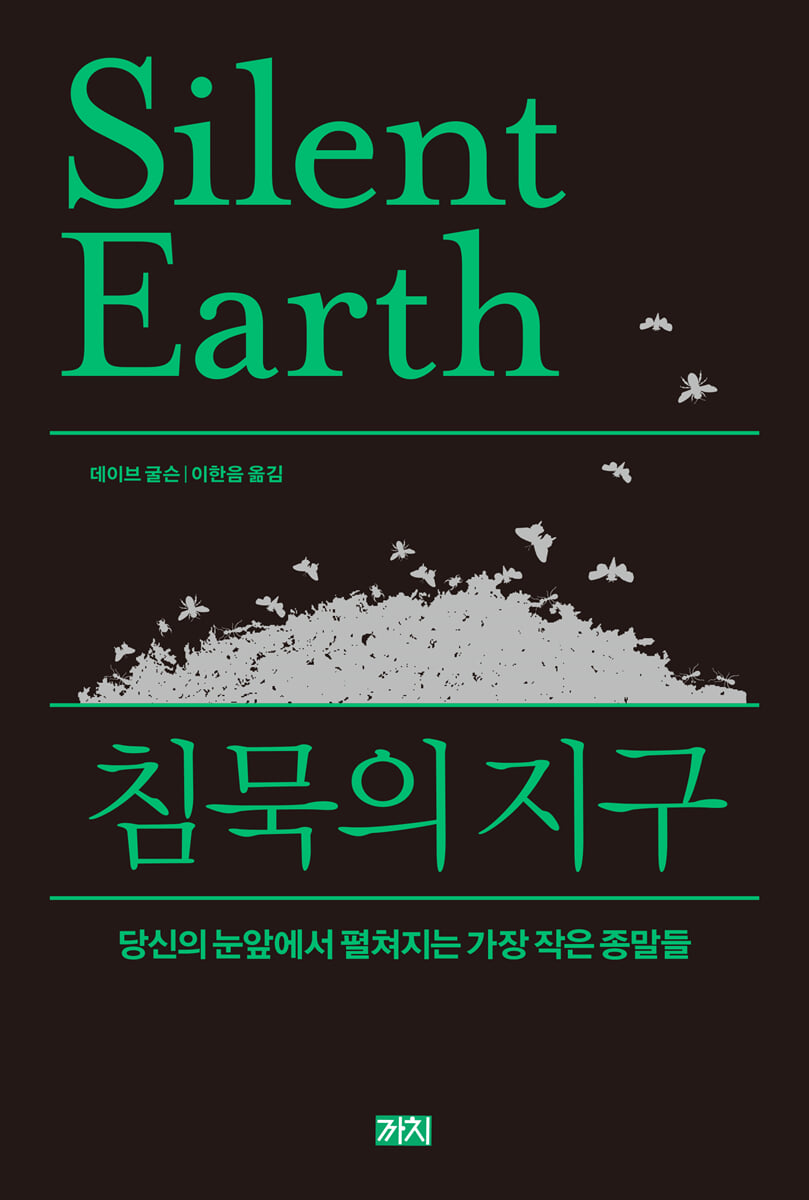
Earth of Silence
 |
Description
Book Introduction
- Sunday Times bestseller
In a future without insects, there would be no human civilization.
An entomologist's warning about the universe disappearing beneath our feet, and a desperate plea.
Environmental crises have become a familiar topic since Rachel Carson's Silent Spring, but discussions about extinction have often revolved around conspicuous animals.
However, the extinction of wild animals is happening every day right next to us.
Because insects that exist everywhere in the world are quietly disappearing from under our feet and before our eyes.
Dave Gulson, author of "The Silent Earth," draws attention to the rapidly disappearing extinction of insects, which we have neglected.
We often think of insects as objects of control, avoiding them and not even acknowledging their value.
However, insects are essential to maintaining the Earth's rich environment and are also members of the "home" we share with ourselves.
They provide ecosystem services, including pollination and decomposition of animal waste, and help organisms at the bottom of the food chain survive.
This book closely examines the decline of insects and its causes, pointing out that humans are responsible for their extinction.
It also delves into the controversies surrounding the impact of pesticide use on insects and wild grasses, and suggests what humanity must do today to coexist with life on Earth.
This book, which encompasses the latest research and environmentalists' practical approaches, will help readers understand why and how we should coexist with insects.
In a future without insects, there would be no human civilization.
An entomologist's warning about the universe disappearing beneath our feet, and a desperate plea.
Environmental crises have become a familiar topic since Rachel Carson's Silent Spring, but discussions about extinction have often revolved around conspicuous animals.
However, the extinction of wild animals is happening every day right next to us.
Because insects that exist everywhere in the world are quietly disappearing from under our feet and before our eyes.
Dave Gulson, author of "The Silent Earth," draws attention to the rapidly disappearing extinction of insects, which we have neglected.
We often think of insects as objects of control, avoiding them and not even acknowledging their value.
However, insects are essential to maintaining the Earth's rich environment and are also members of the "home" we share with ourselves.
They provide ecosystem services, including pollination and decomposition of animal waste, and help organisms at the bottom of the food chain survive.
This book closely examines the decline of insects and its causes, pointing out that humans are responsible for their extinction.
It also delves into the controversies surrounding the impact of pesticide use on insects and wild grasses, and suggests what humanity must do today to coexist with life on Earth.
This book, which encompasses the latest research and environmentalists' practical approaches, will help readers understand why and how we should coexist with insects.
- You can preview some of the book's contents.
Preview
index
Introduction: Life with Insects
Part 1: Why Insects Matter
Chapter 1: A Brief History of Insects
Chapter 2: The Importance of Insects
Chapter 3: The Wonders of Insects
Part 2: Decrease in Insects
Chapter 4: Evidence of Insect Decline
Chapter 5: Changing Reference Points
Part 3: Causes of Insect Decline
Chapter 6: Losing Your Home
Chapter 7: Toxic Land
Chapter 8 Weed Removal
Chapter 9: Green Desert
Chapter 10: Pandora's Box
Chapter 11 The Coming Storm
Chapter 12: The Sparkling Earth
Chapter 13 Invasion
Chapter 14: Known Unknowns and Unknown Unknowns
Chapter 15: Stabbed 1,000 Times and Died
Part 4 Where Are We Going?
Chapter 16: The Present as Seen from the Future
Part 5 What Can We Do?
Chapter 17: Talking about the Environment
Chapter 18: Greening the City
Chapter 19: The Future of Farming
Chapter 20: Nature Everywhere
Chapter 21: Action Advice for Everyone
Acknowledgements
Books or papers worth reading further
Translator's Note
Search
Part 1: Why Insects Matter
Chapter 1: A Brief History of Insects
Chapter 2: The Importance of Insects
Chapter 3: The Wonders of Insects
Part 2: Decrease in Insects
Chapter 4: Evidence of Insect Decline
Chapter 5: Changing Reference Points
Part 3: Causes of Insect Decline
Chapter 6: Losing Your Home
Chapter 7: Toxic Land
Chapter 8 Weed Removal
Chapter 9: Green Desert
Chapter 10: Pandora's Box
Chapter 11 The Coming Storm
Chapter 12: The Sparkling Earth
Chapter 13 Invasion
Chapter 14: Known Unknowns and Unknown Unknowns
Chapter 15: Stabbed 1,000 Times and Died
Part 4 Where Are We Going?
Chapter 16: The Present as Seen from the Future
Part 5 What Can We Do?
Chapter 17: Talking about the Environment
Chapter 18: Greening the City
Chapter 19: The Future of Farming
Chapter 20: Nature Everywhere
Chapter 21: Action Advice for Everyone
Acknowledgements
Books or papers worth reading further
Translator's Note
Search
Detailed image
Publisher's Review
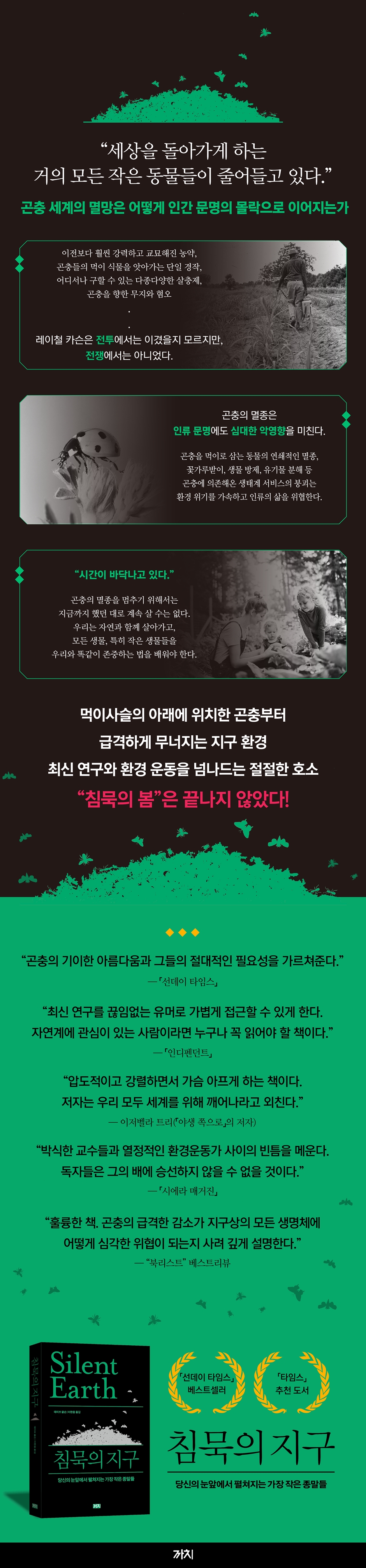
The extinction of insects, which has been covered up and ignored due to ignorance and hatred,
Silent Spring isn't over yet.
Since Rachel Carson's Silent Spring, which warned of the harmful effects of pesticide use, humanity has been given yet another weapon to dominate and manipulate the environment.
Pesticides, often touted as harmless to humans, pollute lands around the world and drive wild grasses and insects to a silent death.
Weed-free and single-crop farms deprive insects of food sources.
The wide variety of pesticides and insect repellents on the shelves of supermarkets and marts allows us to kill insects we need and those we don't at will.
However, we usually cannot tell the difference between beneficial and harmful insects, and we do not want to know about them.
Of the approximately 4 million species of insects estimated to exist worldwide, only 1 million have been identified by humans, and research personnel are severely lacking.
Ignorance and hatred towards insects are destroying the Earth's environment, driving them to extinction.
The extinction of insects, which are at the bottom of the food chain, will ultimately pose a serious threat to human civilization as it will lead to the death of the animals that prey on them.
In "The Silent Earth," Dave Goulson argues that humans are using indifference as a weapon to destroy insect habitats, and calls for greater attention to insects.
New introduction at the end of each chapter
The strange and beautiful life cycle of insects
The biggest reason we are indifferent to the extinction of insects is because we do not know them.
The author introduces the strange and beautiful life cycle of insects at the end of each chapter so that readers can see insects beautifully.
Honey pot ants, which fill their bodies with honey to become food storage containers, and suicide bomber ants, which explode their bodies to attack intruders when they get older, are representative examples of altruistic behavior that sacrifices themselves to maintain the colony.
The story of leafcutter ants cultivating mushrooms and orchid wasps collecting orchid pollen despite the absence of nectar to attract females shows us a unique way of coexisting with plants that we had never known before.
Also, the story of the bombardier beetle, which shoots toxic benzoquinone from its rear end to scare off predators, the “femme fatale” firefly that mimics the blinking of other species to prey on males, and the emerald wasp, which injects poison into the brains of cockroaches before laying eggs so that the young ones eat them from the inside out, gives a glimpse into the gritty and thrilling survival methods of the insect world.
“Time is running out.”
The easiest ways to protect insects and human civilization
The movement to prevent insect extinction is the minimum we can do to save all of us from the environmental crisis.
As the author says, if we can prevent the extinction unfolding before our eyes, we can also prevent an even greater crisis.
In this book, Dave Goulson offers a list of actionable strategies at the individual household, local, and national levels of government.
Households can influence the food supply system by voting for parties that promote environmental policies and purchasing locally grown, seasonal fruits and vegetables.
Local governments can reduce mowing in flowerbeds and parks to encourage wildflowers to bloom, and create weekend farms to help rewild land altered by human hands.
The central government should provide ecology classes for children and teachers and share eco-friendly farming methods with farmers.
Additionally, we can reduce pesticide spraying and artificial lighting use to create an environment where diverse life can coexist, and we can hold those responsible for pollution accountable by introducing pesticide and fertilizer taxes.
Each action is something you can do immediately, but the impact will be enormous.
The author encourages readers to participate by directly providing various information necessary for these activities, such as websites and purchasing locations.
This book addresses the crisis facing insects and makes a powerful argument that humans are negatively impacting the environment and must take responsibility for it.
Humans are never the masters of nature, and must coexist with other beings as a part of nature.
This book, which uses scientific evidence to explain the rapid decline of insect populations and its causes, will allow readers to discover a previously unseen wondrous universe of insects and realize that they must act now to protect them.
A wonderful book… …thoughtfully explains how the rapid decline of insects poses a serious threat to all life on Earth.
― “Book List” Best Reviews
Silent Spring isn't over yet.
Since Rachel Carson's Silent Spring, which warned of the harmful effects of pesticide use, humanity has been given yet another weapon to dominate and manipulate the environment.
Pesticides, often touted as harmless to humans, pollute lands around the world and drive wild grasses and insects to a silent death.
Weed-free and single-crop farms deprive insects of food sources.
The wide variety of pesticides and insect repellents on the shelves of supermarkets and marts allows us to kill insects we need and those we don't at will.
However, we usually cannot tell the difference between beneficial and harmful insects, and we do not want to know about them.
Of the approximately 4 million species of insects estimated to exist worldwide, only 1 million have been identified by humans, and research personnel are severely lacking.
Ignorance and hatred towards insects are destroying the Earth's environment, driving them to extinction.
The extinction of insects, which are at the bottom of the food chain, will ultimately pose a serious threat to human civilization as it will lead to the death of the animals that prey on them.
In "The Silent Earth," Dave Goulson argues that humans are using indifference as a weapon to destroy insect habitats, and calls for greater attention to insects.
New introduction at the end of each chapter
The strange and beautiful life cycle of insects
The biggest reason we are indifferent to the extinction of insects is because we do not know them.
The author introduces the strange and beautiful life cycle of insects at the end of each chapter so that readers can see insects beautifully.
Honey pot ants, which fill their bodies with honey to become food storage containers, and suicide bomber ants, which explode their bodies to attack intruders when they get older, are representative examples of altruistic behavior that sacrifices themselves to maintain the colony.
The story of leafcutter ants cultivating mushrooms and orchid wasps collecting orchid pollen despite the absence of nectar to attract females shows us a unique way of coexisting with plants that we had never known before.
Also, the story of the bombardier beetle, which shoots toxic benzoquinone from its rear end to scare off predators, the “femme fatale” firefly that mimics the blinking of other species to prey on males, and the emerald wasp, which injects poison into the brains of cockroaches before laying eggs so that the young ones eat them from the inside out, gives a glimpse into the gritty and thrilling survival methods of the insect world.
“Time is running out.”
The easiest ways to protect insects and human civilization
The movement to prevent insect extinction is the minimum we can do to save all of us from the environmental crisis.
As the author says, if we can prevent the extinction unfolding before our eyes, we can also prevent an even greater crisis.
In this book, Dave Goulson offers a list of actionable strategies at the individual household, local, and national levels of government.
Households can influence the food supply system by voting for parties that promote environmental policies and purchasing locally grown, seasonal fruits and vegetables.
Local governments can reduce mowing in flowerbeds and parks to encourage wildflowers to bloom, and create weekend farms to help rewild land altered by human hands.
The central government should provide ecology classes for children and teachers and share eco-friendly farming methods with farmers.
Additionally, we can reduce pesticide spraying and artificial lighting use to create an environment where diverse life can coexist, and we can hold those responsible for pollution accountable by introducing pesticide and fertilizer taxes.
Each action is something you can do immediately, but the impact will be enormous.
The author encourages readers to participate by directly providing various information necessary for these activities, such as websites and purchasing locations.
This book addresses the crisis facing insects and makes a powerful argument that humans are negatively impacting the environment and must take responsibility for it.
Humans are never the masters of nature, and must coexist with other beings as a part of nature.
This book, which uses scientific evidence to explain the rapid decline of insect populations and its causes, will allow readers to discover a previously unseen wondrous universe of insects and realize that they must act now to protect them.
A wonderful book… …thoughtfully explains how the rapid decline of insects poses a serious threat to all life on Earth.
― “Book List” Best Reviews
GOODS SPECIFICS
- Publication date: November 10, 2022
- Page count, weight, size: 416 pages | 564g | 145*215*24mm
- ISBN13: 9788972917830
- ISBN10: 8972917834
You may also like
카테고리
korean


korean

![GQ KOREA Mark (Monthly): December [2025]](http://librairie.coreenne.fr/cdn/shop/files/8ef265dbbfbf186523ed75ba7319009d.jpg?v=1765340328&width=3840)


