

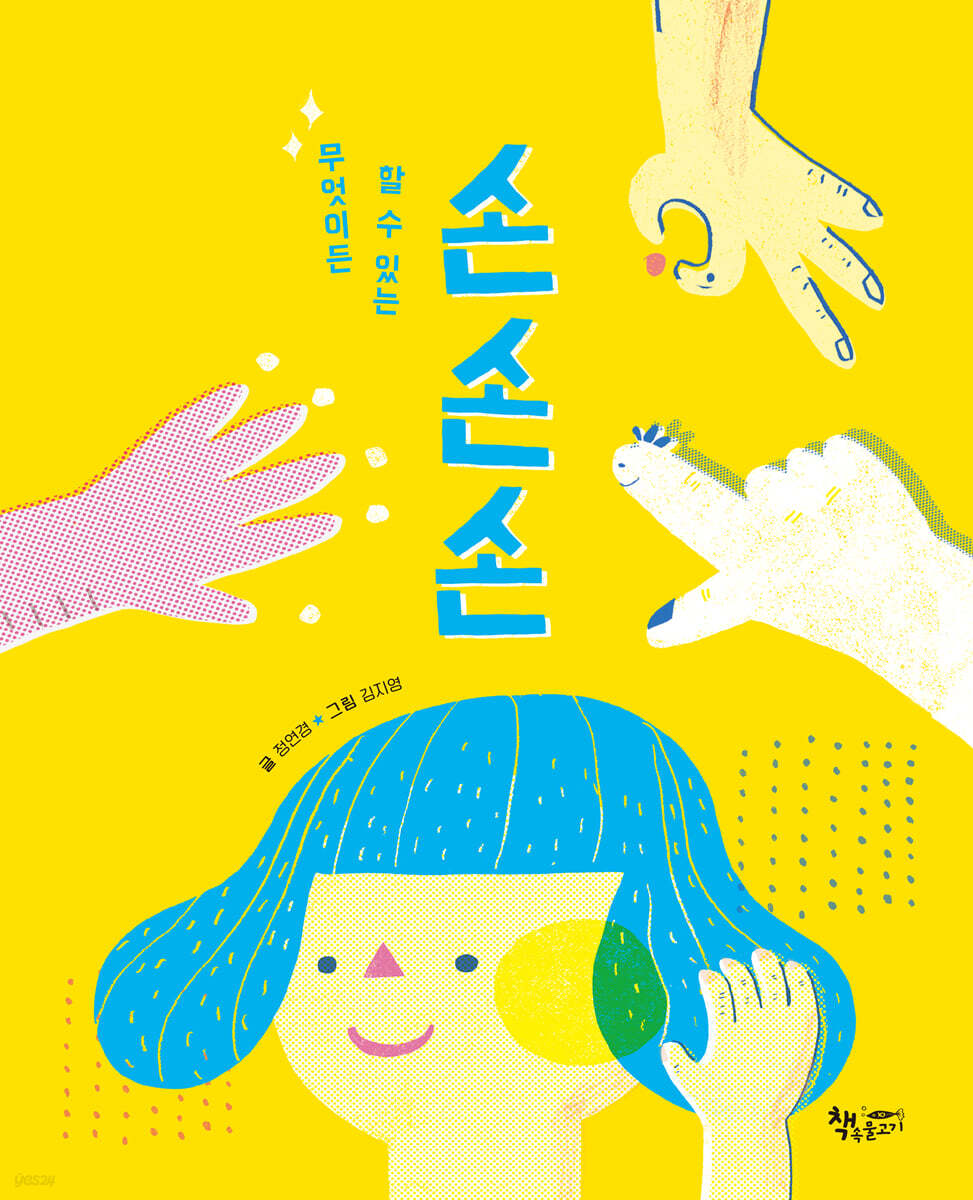
Hands that can do anything, hands, hands
 |
Description
Book Introduction
Hand-drawn picture books that stimulate children's interest, curiosity, and desire to explore.
Have fun learning through a 'sensory experience' that involves moving your hands!
Children are natural scientists.
I'm overflowing with interest and curiosity.
So I'm very interested in everything I see, hear, and feel for the first time.
The important thing here is that children's interests should naturally lead to observation, discovery, and knowledge acquisition.
For that to happen, the process must be enjoyable and not difficult.
"Hands that Can Do Anything" is a playful way to learn how hands are made, how they move, and how they function.
Children will be actively engaged with my hands as they focus on the fun and unique drawings.
And as you actively follow along scene by scene, you will realize how much your hands can do and how important a role they play.
This picture book encourages children to learn through 'sensory experiences'.
As you move your hands along with picture books, your sensory abilities will increase and you will begin to recognize the functions of your hands on your own.
Have fun learning through a 'sensory experience' that involves moving your hands!
Children are natural scientists.
I'm overflowing with interest and curiosity.
So I'm very interested in everything I see, hear, and feel for the first time.
The important thing here is that children's interests should naturally lead to observation, discovery, and knowledge acquisition.
For that to happen, the process must be enjoyable and not difficult.
"Hands that Can Do Anything" is a playful way to learn how hands are made, how they move, and how they function.
Children will be actively engaged with my hands as they focus on the fun and unique drawings.
And as you actively follow along scene by scene, you will realize how much your hands can do and how important a role they play.
This picture book encourages children to learn through 'sensory experiences'.
As you move your hands along with picture books, your sensory abilities will increase and you will begin to recognize the functions of your hands on your own.
- You can preview some of the book's contents.
Preview
Detailed image
Publisher's Review
“Science x Literacy”
An integrated picture book that teaches science and language.
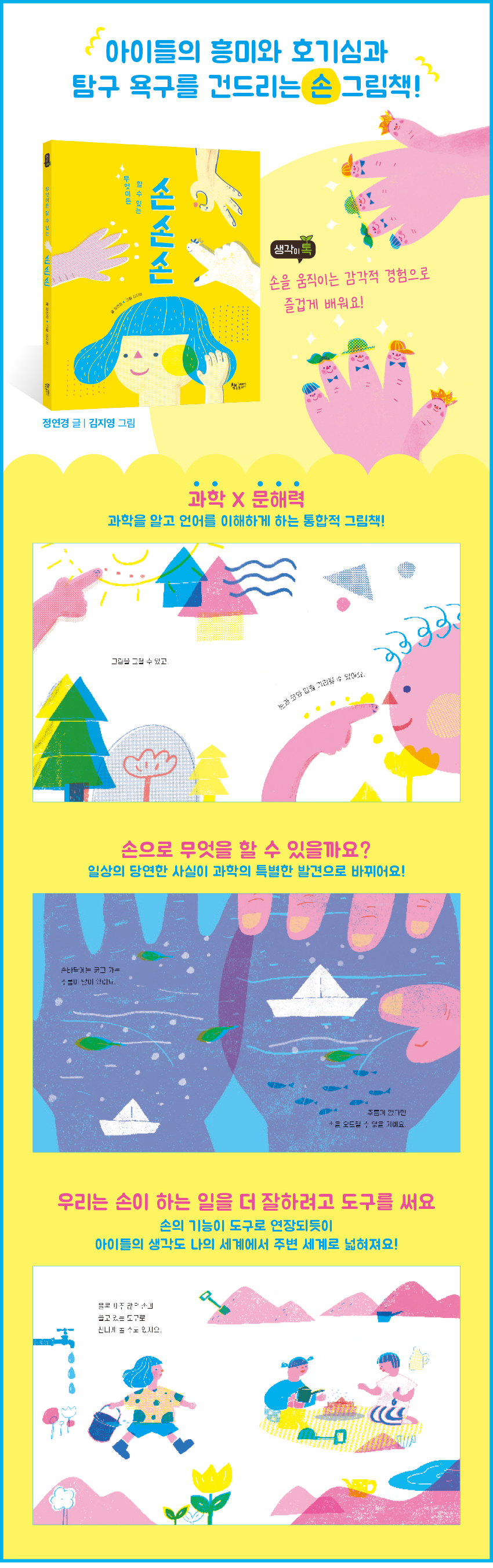
"Hands that Can Do Anything, Hands, Hands" is a picture book that teaches "scientific knowledge" about what hands do, while also fostering "literacy" so that children can express the various things their hands do.
In fact, literacy is necessary to acquire all academic knowledge, not just science.
Because to solve a problem, you need to have a good understanding of what the problem requires.
In this picture book, it says, 'Extend your index finger.'
Then tell them, 'You can draw a picture and point to the eyes, nose, and mouth.'
As children learn what they can do with their index fingers, they also come to understand the meaning of the words 'stretch, draw, and point.'
This time, say, 'If your thumb and index finger work together, you can pick grapes and catch dragonfly wings.'
As you learn the shape and method of pinching with your thumb and index finger, you will also understand the meaning of the words 'to pick' and 'to grab'.
This picture book encourages integrated thinking through stories.
Integrated thinking doesn't just allow you to acquire knowledge piecemeal; it helps you solve problems by utilizing knowledge from various fields and looking at them from various perspectives.
Tip 1.
Take a look at the last page! It's filled with words describing the work of hands.
Let's make another sentence using those words.
“What can you do with your hands?”
The obvious 'facts' of everyday life are transformed into special 'discoveries' of science!
Children would have taken for granted what their hands did.
Because you would have grabbed things with your hands and picked them up when necessary.
This picture book cultivates a scientific eye that allows children to make extraordinary discoveries.
So that you can realize, 'Ah! So that's why.'
Now, look at your hands again.
You'll realize that you can grasp or pick up objects with your hands thanks to the fact that 'the thumb, which is the shortest and thickest finger, can touch the other four fingers.'
'There are many thick and thin wrinkles on the palm.
You'll find that you can make a fist by closing your five fingers, thanks to the fact that 'if there were no wrinkles, you wouldn't be able to close your hand.'
Thanks to the fact that 'hands can move as they wish,' you will realize that your hands can do more than just hold a piano, they can also play it.
Tip 2.
Take a look at pages 30-31! Experiment with different hand movements by playing with shadows.
“We use tools to do better things with our hands.”
Just as the function of the hand is extended by tools,
Children's thoughts also expand from their own world to the world around them!
Hands are tools of our body.
Because when we need to do something, we can grab it, point to it, move it, and express it in a way that suits our needs.
People created tools to extend the functions of their hands for convenience.
This picture book intuitively shows the process of extending the function from hand to tool.
You can draw with your fingers, but you can draw better if you use a tool called a brush.
You can tear paper by hand, but using scissors allows you to cut it more precisely into the shape you want.
You can hold water by putting both hands together, but you can hold more water by using a container called a bucket.
People have been renewing their thinking and developing society through tools.
The connections between resourceful hands and useful tools demonstrated in this picture book will pave the way for children to explore beyond their own world and into the world around them.
The journey of exploration will be an opportunity for your thoughts and imagination to flow and your creativity to grow.
Tip 3.
Take a look at pages 40-41! Use the tools to create your own unique tool.
“I wrote it with this thought in mind and drew it with this feeling!”
Born from the intersection of the "writing hand" and the "drawing hand," "The Hand That Can Do Anything"
“I hope to feel a sense of accomplishment as I increase the number of things I can do with my own hands.
“I hope you experience joy as you realize one scientific fact after another.”
- From the author's words
“I hope that the joy I discovered while drawing can reach children as if it were play.
And I hope that by watching your hands cook and cooking, you will come up with even more wonderful ideas.”
- From the artist's words
The book "Hands that Can Do Anything" was born from the combination of Jeong Yeon-gyeong's writing, "Hands," which explains difficult and complex scientific knowledge in an easy and fun way, and Kim Ji-young's paintings, which express a unique and novel world of pictures with a woodcut feel.
This picture book started out as a smart take-out.
Because it is a ‘children’s science picture book.’
There is a lot to know about hands, but we had to first consider the perspective of children who would first encounter hands from a scientific perspective.
The author has been collecting information about hands for a long time, and has extracted information from it that is easy for young readers to access and understand, and created an interesting story.
And the illustrator has completed a picture book that will capture children's hearts by combining unique hand characters with simple yet strong colors.
Now, it's time to meet a special and interesting picture book about hands!
Tip 4.
Take a look at page 44 of the text! After sharing the author's thoughts and the artist's heart, you'll see this picture book in a new light.
Curriculum linkage
infant_
〉Enjoying the exploration process〉Continuously be curious about the surrounding world and nature.
〉Enjoying the process of exploring nature〉 Participate happily in the process of exploring what you are curious about.
〉Exploring Nature〉Exploring in Life〉Exploring the characteristics and changes of objects in various ways.
〈Exploring Nature〉 Exploring in Life〉 Interested in tools and machines.
An integrated picture book that teaches science and language.
"Hands that Can Do Anything, Hands, Hands" is a picture book that teaches "scientific knowledge" about what hands do, while also fostering "literacy" so that children can express the various things their hands do.
In fact, literacy is necessary to acquire all academic knowledge, not just science.
Because to solve a problem, you need to have a good understanding of what the problem requires.
In this picture book, it says, 'Extend your index finger.'
Then tell them, 'You can draw a picture and point to the eyes, nose, and mouth.'
As children learn what they can do with their index fingers, they also come to understand the meaning of the words 'stretch, draw, and point.'
This time, say, 'If your thumb and index finger work together, you can pick grapes and catch dragonfly wings.'
As you learn the shape and method of pinching with your thumb and index finger, you will also understand the meaning of the words 'to pick' and 'to grab'.
This picture book encourages integrated thinking through stories.
Integrated thinking doesn't just allow you to acquire knowledge piecemeal; it helps you solve problems by utilizing knowledge from various fields and looking at them from various perspectives.
Tip 1.
Take a look at the last page! It's filled with words describing the work of hands.
Let's make another sentence using those words.
“What can you do with your hands?”
The obvious 'facts' of everyday life are transformed into special 'discoveries' of science!
Children would have taken for granted what their hands did.
Because you would have grabbed things with your hands and picked them up when necessary.
This picture book cultivates a scientific eye that allows children to make extraordinary discoveries.
So that you can realize, 'Ah! So that's why.'
Now, look at your hands again.
You'll realize that you can grasp or pick up objects with your hands thanks to the fact that 'the thumb, which is the shortest and thickest finger, can touch the other four fingers.'
'There are many thick and thin wrinkles on the palm.
You'll find that you can make a fist by closing your five fingers, thanks to the fact that 'if there were no wrinkles, you wouldn't be able to close your hand.'
Thanks to the fact that 'hands can move as they wish,' you will realize that your hands can do more than just hold a piano, they can also play it.
Tip 2.
Take a look at pages 30-31! Experiment with different hand movements by playing with shadows.
“We use tools to do better things with our hands.”
Just as the function of the hand is extended by tools,
Children's thoughts also expand from their own world to the world around them!
Hands are tools of our body.
Because when we need to do something, we can grab it, point to it, move it, and express it in a way that suits our needs.
People created tools to extend the functions of their hands for convenience.
This picture book intuitively shows the process of extending the function from hand to tool.
You can draw with your fingers, but you can draw better if you use a tool called a brush.
You can tear paper by hand, but using scissors allows you to cut it more precisely into the shape you want.
You can hold water by putting both hands together, but you can hold more water by using a container called a bucket.
People have been renewing their thinking and developing society through tools.
The connections between resourceful hands and useful tools demonstrated in this picture book will pave the way for children to explore beyond their own world and into the world around them.
The journey of exploration will be an opportunity for your thoughts and imagination to flow and your creativity to grow.
Tip 3.
Take a look at pages 40-41! Use the tools to create your own unique tool.
“I wrote it with this thought in mind and drew it with this feeling!”
Born from the intersection of the "writing hand" and the "drawing hand," "The Hand That Can Do Anything"
“I hope to feel a sense of accomplishment as I increase the number of things I can do with my own hands.
“I hope you experience joy as you realize one scientific fact after another.”
- From the author's words
“I hope that the joy I discovered while drawing can reach children as if it were play.
And I hope that by watching your hands cook and cooking, you will come up with even more wonderful ideas.”
- From the artist's words
The book "Hands that Can Do Anything" was born from the combination of Jeong Yeon-gyeong's writing, "Hands," which explains difficult and complex scientific knowledge in an easy and fun way, and Kim Ji-young's paintings, which express a unique and novel world of pictures with a woodcut feel.
This picture book started out as a smart take-out.
Because it is a ‘children’s science picture book.’
There is a lot to know about hands, but we had to first consider the perspective of children who would first encounter hands from a scientific perspective.
The author has been collecting information about hands for a long time, and has extracted information from it that is easy for young readers to access and understand, and created an interesting story.
And the illustrator has completed a picture book that will capture children's hearts by combining unique hand characters with simple yet strong colors.
Now, it's time to meet a special and interesting picture book about hands!
Tip 4.
Take a look at page 44 of the text! After sharing the author's thoughts and the artist's heart, you'll see this picture book in a new light.
Curriculum linkage
infant_
〉Enjoying the exploration process〉Continuously be curious about the surrounding world and nature.
〉Enjoying the process of exploring nature〉 Participate happily in the process of exploring what you are curious about.
〉Exploring Nature〉Exploring in Life〉Exploring the characteristics and changes of objects in various ways.
〈Exploring Nature〉 Exploring in Life〉 Interested in tools and machines.
GOODS SPECIFICS
- Date of issue: March 15, 2023
- Format: Hardcover book binding method guide
- Page count, weight, size: 48 pages | 376g | 210*225*10mm
- ISBN13: 9791163271260
- ISBN10: 1163271268
- KC Certification: Certification Type: Conformity Confirmation
You may also like
카테고리
korean


korean

![GQ KOREA Mark (Monthly): December [2025]](http://librairie.coreenne.fr/cdn/shop/files/8ef265dbbfbf186523ed75ba7319009d.jpg?v=1765340328&width=3840)


