

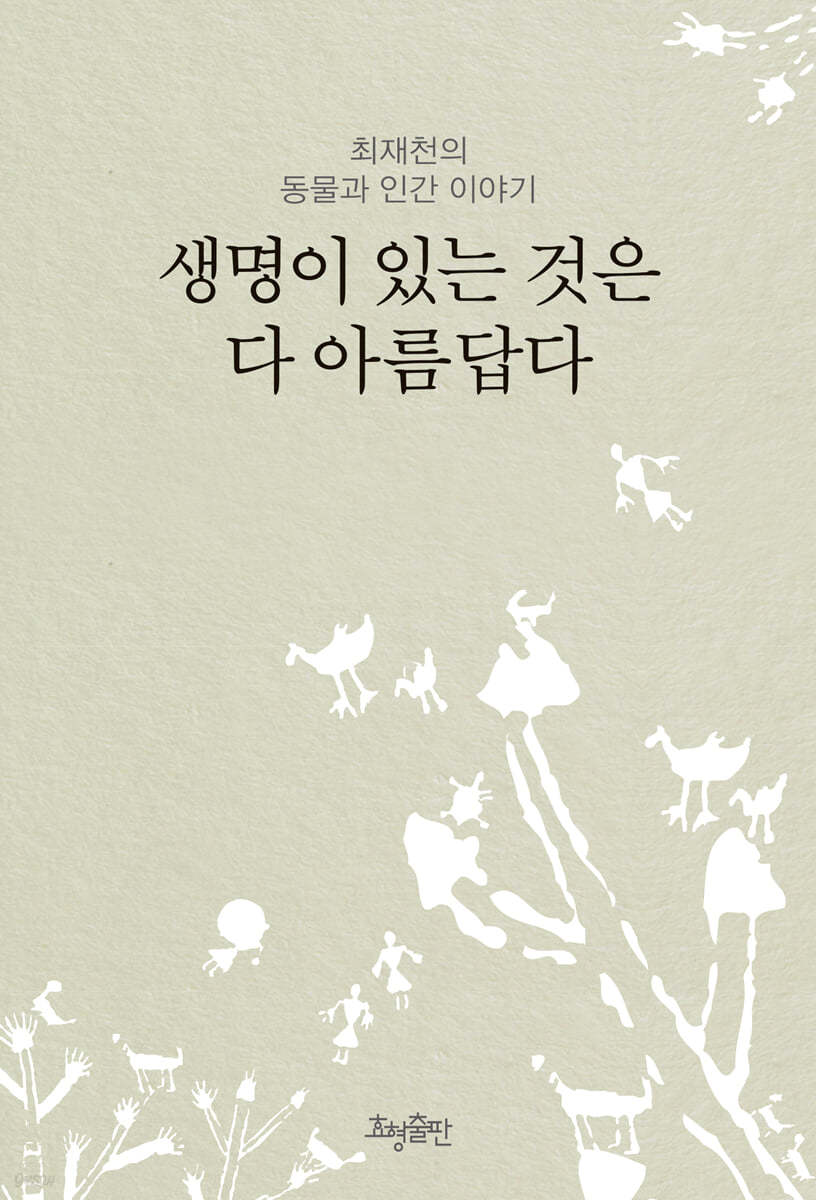
All living things are beautiful
 |
Description
Book Introduction
Choi Jae-cheon, a scientist who has observed nature his entire life
Calling for "the Path to Biodiversity" in the Endemic Era
A warm science book with a new look after 20 years
All living things are beautiful.
"Everything That Lives Is Beautiful," which has been consistently loved by readers for over 20 years since its first publication, has returned in a new guise.
The view of this book has always been warm and affectionate, so much so that it has been nicknamed the 'Book of Life'.
In 2002, the year after the book was published, 'Bullfrog and the Korean Language' was included in the first unit of the Korean language textbook for the 7th secondary education curriculum.
The ‘Book of Life’ was read by all the youth of this land at an early age.
The first readers of this book are now approaching middle age.
With the message of 'If you know, you love' deep in my heart.
The author's warm gaze toward life transcends time and generations, permeating society as a whole.
For the readers who have cherished and loved the 'Book of Life' for a long time, this revised edition includes a greeting from author Choi Jae-cheon, his first in 20 years.
The author expressed his love and gratitude for his readers in his characteristically simple and warm writing.
In addition, we added explanations for the subtle issues that the 'Life Book' raised and brought to light, such as the discussion on abolishing the Australian working system and the controversy over introducing a five-day workweek.
This book is intended to convey to readers encountering it for the first time how the message of "If you know, you love," which is now taken for granted, has advanced society and how much it can change.
The message that Choi Jae-cheon, an animal behaviorist and ecologist, delivers to society is quite different from that of 20 years ago.
We are now moving from the pandemic era to the endemic era.
Everyone dreams of returning to normal life.
The author, who until recently led the Daily Life Recovery Committee, suggests that the 'era of coexistence and symbiosis' has arrived.
We live in an age where ‘I love what I know’ is naturally replaced with ‘I love both animals and nature.’
The message the author, who was a young scientist some 20 years ago, put into this book paradoxically resonates even more deeply as it ages.
Calling for "the Path to Biodiversity" in the Endemic Era
A warm science book with a new look after 20 years
All living things are beautiful.
"Everything That Lives Is Beautiful," which has been consistently loved by readers for over 20 years since its first publication, has returned in a new guise.
The view of this book has always been warm and affectionate, so much so that it has been nicknamed the 'Book of Life'.
In 2002, the year after the book was published, 'Bullfrog and the Korean Language' was included in the first unit of the Korean language textbook for the 7th secondary education curriculum.
The ‘Book of Life’ was read by all the youth of this land at an early age.
The first readers of this book are now approaching middle age.
With the message of 'If you know, you love' deep in my heart.
The author's warm gaze toward life transcends time and generations, permeating society as a whole.
For the readers who have cherished and loved the 'Book of Life' for a long time, this revised edition includes a greeting from author Choi Jae-cheon, his first in 20 years.
The author expressed his love and gratitude for his readers in his characteristically simple and warm writing.
In addition, we added explanations for the subtle issues that the 'Life Book' raised and brought to light, such as the discussion on abolishing the Australian working system and the controversy over introducing a five-day workweek.
This book is intended to convey to readers encountering it for the first time how the message of "If you know, you love," which is now taken for granted, has advanced society and how much it can change.
The message that Choi Jae-cheon, an animal behaviorist and ecologist, delivers to society is quite different from that of 20 years ago.
We are now moving from the pandemic era to the endemic era.
Everyone dreams of returning to normal life.
The author, who until recently led the Daily Life Recovery Committee, suggests that the 'era of coexistence and symbiosis' has arrived.
We live in an age where ‘I love what I know’ is naturally replaced with ‘I love both animals and nature.’
The message the author, who was a young scientist some 20 years ago, put into this book paradoxically resonates even more deeply as it ages.
- You can preview some of the book's contents.
Preview
index
Starting the article 10
Greetings after 20 years, Part 14
If you know, you love
Animals also adopt other people's children 27
Why the Older Woman 34
Building the Great Wall of China by the Ant Colony, Part 39
Democracy in the Bee Society 45
Vampire Bat Blood Donation 50
Bullfrogs and Our Language 55
Homosexuality is also beautiful 59
The Warm Fellowship of Whales 64
Why Religion Wrestles with Science 69
Animals Mourn Death Too 74
Sleepyhead's Happiness 78
The Love of a Prickly Pear 83
88 Shortcuts to Success in the Animal World
Ants' "Romance of the Three Kingdoms" 92
The Folly of Eating Wild Animals 98
I see humans among animals
Open Competition in Animal Society 105
It can't get any more cruel than this 110
Dinosaur blood was warm 115
Spiders' Extreme Child Love 120
Women's Top Era 125
If only the grasshoppers were a little wiser 129
Seagull's Divorce 133
If only we could hibernate too 138
Humans Seen in Animals 142
The Magpie's Strange Fate 147
Mice and Humans: A Relationship of Love and Hate 151
Do Animals Do Math? 154
Parasites Rule the World 159
All animals are lyric poets 164
The Age of Open Sexuality 170
About life and its beauty
Animals Lie Too 177
The Temptation of Alcohol 182
Open Education in Bluegill Society 186
Female Wind 190
Ants do not inherit 195
The Truth About Ants and Grasshoppers 200
Australian, now take off those old clothes 205
The True Meaning of Children's Day 212
Dragonflies lived even in the dinosaur era. 216
Are Mandarin Ducks Really a Lovebird Couple? 221
The Firefly, the Magical Queen of the Animal Kingdom 225
Is Language a Human Privilege? 231
Time, the Aesthetics of Slowness and Speed 236
I miss the swallows 240
Animals also teach and learn from each other 243
Dreaming of a world where we live together
Even Ants Plant Trees 249
1-Day Ambulance Driving Experience 254
The Ant Empire's Struggle for Throneship 259
The Joys and Pains of Childbirth 264
The Cuckoo's Sense of Time 269
I like the sound of cicadas 273
Group Bullying in Animal Society 279
Human sexual customs are changing 285
Animals that Steal Other People's Children 290
Our bodies also have clocks 295
Laziness is Beautiful 298
Are You Afraid of Death? 303
If a man could become pregnant instead of his wife, 307
The Queen Bee's Odd Motherly Love 312
In closing, 316
319 creatures appearing in this book
Greetings after 20 years, Part 14
If you know, you love
Animals also adopt other people's children 27
Why the Older Woman 34
Building the Great Wall of China by the Ant Colony, Part 39
Democracy in the Bee Society 45
Vampire Bat Blood Donation 50
Bullfrogs and Our Language 55
Homosexuality is also beautiful 59
The Warm Fellowship of Whales 64
Why Religion Wrestles with Science 69
Animals Mourn Death Too 74
Sleepyhead's Happiness 78
The Love of a Prickly Pear 83
88 Shortcuts to Success in the Animal World
Ants' "Romance of the Three Kingdoms" 92
The Folly of Eating Wild Animals 98
I see humans among animals
Open Competition in Animal Society 105
It can't get any more cruel than this 110
Dinosaur blood was warm 115
Spiders' Extreme Child Love 120
Women's Top Era 125
If only the grasshoppers were a little wiser 129
Seagull's Divorce 133
If only we could hibernate too 138
Humans Seen in Animals 142
The Magpie's Strange Fate 147
Mice and Humans: A Relationship of Love and Hate 151
Do Animals Do Math? 154
Parasites Rule the World 159
All animals are lyric poets 164
The Age of Open Sexuality 170
About life and its beauty
Animals Lie Too 177
The Temptation of Alcohol 182
Open Education in Bluegill Society 186
Female Wind 190
Ants do not inherit 195
The Truth About Ants and Grasshoppers 200
Australian, now take off those old clothes 205
The True Meaning of Children's Day 212
Dragonflies lived even in the dinosaur era. 216
Are Mandarin Ducks Really a Lovebird Couple? 221
The Firefly, the Magical Queen of the Animal Kingdom 225
Is Language a Human Privilege? 231
Time, the Aesthetics of Slowness and Speed 236
I miss the swallows 240
Animals also teach and learn from each other 243
Dreaming of a world where we live together
Even Ants Plant Trees 249
1-Day Ambulance Driving Experience 254
The Ant Empire's Struggle for Throneship 259
The Joys and Pains of Childbirth 264
The Cuckoo's Sense of Time 269
I like the sound of cicadas 273
Group Bullying in Animal Society 279
Human sexual customs are changing 285
Animals that Steal Other People's Children 290
Our bodies also have clocks 295
Laziness is Beautiful 298
Are You Afraid of Death? 303
If a man could become pregnant instead of his wife, 307
The Queen Bee's Odd Motherly Love 312
In closing, 316
319 creatures appearing in this book
Detailed image
.jpg)
Into the book
Sometimes I can't help but think that humans are worse than animals.
Even if we took off the mask of hypocrisy as humans and lived in an extremely animalistic way, it would be better than this.
--- p.30
Is the natural world a cruel world ruled by the law of the survival of the fittest?
At least whales are different.
Never ignore a colleague who has difficulty moving.
--- p.67
The song of the insects is more like music, and more accurately, instrumental music, rather than poetry, but aren't music and poetry inseparable?
--- p.167
The more we learn about how animals live, the more we love them, and the more we love ourselves.
--- p.208
There are few things as beautiful as the signal of fireflies confirming their love for each other with their blinking lights in the dark night.
--- p.228
If we want to be moral, we must first assess how immoral we ourselves are.
This will save us from hatred and lead us to the path of love.
Even if we took off the mask of hypocrisy as humans and lived in an extremely animalistic way, it would be better than this.
--- p.30
Is the natural world a cruel world ruled by the law of the survival of the fittest?
At least whales are different.
Never ignore a colleague who has difficulty moving.
--- p.67
The song of the insects is more like music, and more accurately, instrumental music, rather than poetry, but aren't music and poetry inseparable?
--- p.167
The more we learn about how animals live, the more we love them, and the more we love ourselves.
--- p.208
There are few things as beautiful as the signal of fireflies confirming their love for each other with their blinking lights in the dark night.
--- p.228
If we want to be moral, we must first assess how immoral we ourselves are.
This will save us from hatred and lead us to the path of love.
--- p.281
Publisher's Review
Beyond the warm sentences, a fierce message approaches.
The Path to Biodiversity: A Giant Transformer
The author, who is considered one of the country's leading animal behaviorists specializing in ant research, depicts ant society in this book with great realism.
Although they are only tiny insects, their amazingly organized society dominates the Earth's ecosystem and provides a glimpse into our human society.
In addition, it contains interesting and fun facts about various animals that we were not aware of, and it also provides deep reflections on human nature and a lesson and warning for our society, sharply pointing out things in a very realistic, yet cool and metaphorical way.
Even animals adopt other people's children, so how can we explain the world where humans abandon their own children?
Seeing the extreme love of the spider for its child, it is heartbreaking to see our families carelessly losing the sacrifice and love between family members because of difficult circumstances.
The heartbreaking contrast between the desperate camaraderie of whales trying to save their fellow whales in danger and the human race's inability to show even the slightest consideration, let alone understanding, to the marginalized people around them is heartbreaking.
His gaze always turns first to animals and then to human society.
The message this book delivers is quite powerful: how much more progressive and scientific, how much warmer and more godly, animal societies, which are often considered relatively inferior to humans, are when you actually know them.
The author tells us:
All living things in this world are beautiful.
And this beauty is something that can only be seen, felt, and empathized with by those who know.
The harm caused by a complacent human society due to the development of post-industrial society has now gone beyond the limits of self-correction.
Warning lights have gone off in every sector across the globe.
The unprecedented pandemic has highlighted the possibility that human society could collapse.
If we don't love and care for nature and animals, and if we just ignore environmental pollution and serious climate change by blaming others, the Earth will inevitably fall off a cliff.
In this massive and catastrophic transformation, ecologist Choi Jae-cheon's "general premise of coexistence and companionship" is not only fierce but also solemn.
The message conveyed through Choi Jae-cheon's uniquely warm and affectionate sentences resonates deeply.
The Path to Biodiversity: A Giant Transformer
The author, who is considered one of the country's leading animal behaviorists specializing in ant research, depicts ant society in this book with great realism.
Although they are only tiny insects, their amazingly organized society dominates the Earth's ecosystem and provides a glimpse into our human society.
In addition, it contains interesting and fun facts about various animals that we were not aware of, and it also provides deep reflections on human nature and a lesson and warning for our society, sharply pointing out things in a very realistic, yet cool and metaphorical way.
Even animals adopt other people's children, so how can we explain the world where humans abandon their own children?
Seeing the extreme love of the spider for its child, it is heartbreaking to see our families carelessly losing the sacrifice and love between family members because of difficult circumstances.
The heartbreaking contrast between the desperate camaraderie of whales trying to save their fellow whales in danger and the human race's inability to show even the slightest consideration, let alone understanding, to the marginalized people around them is heartbreaking.
His gaze always turns first to animals and then to human society.
The message this book delivers is quite powerful: how much more progressive and scientific, how much warmer and more godly, animal societies, which are often considered relatively inferior to humans, are when you actually know them.
The author tells us:
All living things in this world are beautiful.
And this beauty is something that can only be seen, felt, and empathized with by those who know.
The harm caused by a complacent human society due to the development of post-industrial society has now gone beyond the limits of self-correction.
Warning lights have gone off in every sector across the globe.
The unprecedented pandemic has highlighted the possibility that human society could collapse.
If we don't love and care for nature and animals, and if we just ignore environmental pollution and serious climate change by blaming others, the Earth will inevitably fall off a cliff.
In this massive and catastrophic transformation, ecologist Choi Jae-cheon's "general premise of coexistence and companionship" is not only fierce but also solemn.
The message conveyed through Choi Jae-cheon's uniquely warm and affectionate sentences resonates deeply.
GOODS SPECIFICS
- Date of issue: June 1, 2022
- Page count, weight, size: 320 pages | 336g | 128*188*20mm
- ISBN13: 9788958722007
- ISBN10: 8958722002
You may also like
카테고리
korean


korean

![GQ KOREA Mark (Monthly): December [2025]](http://librairie.coreenne.fr/cdn/shop/files/8ef265dbbfbf186523ed75ba7319009d.jpg?v=1765340328&width=3840)


