

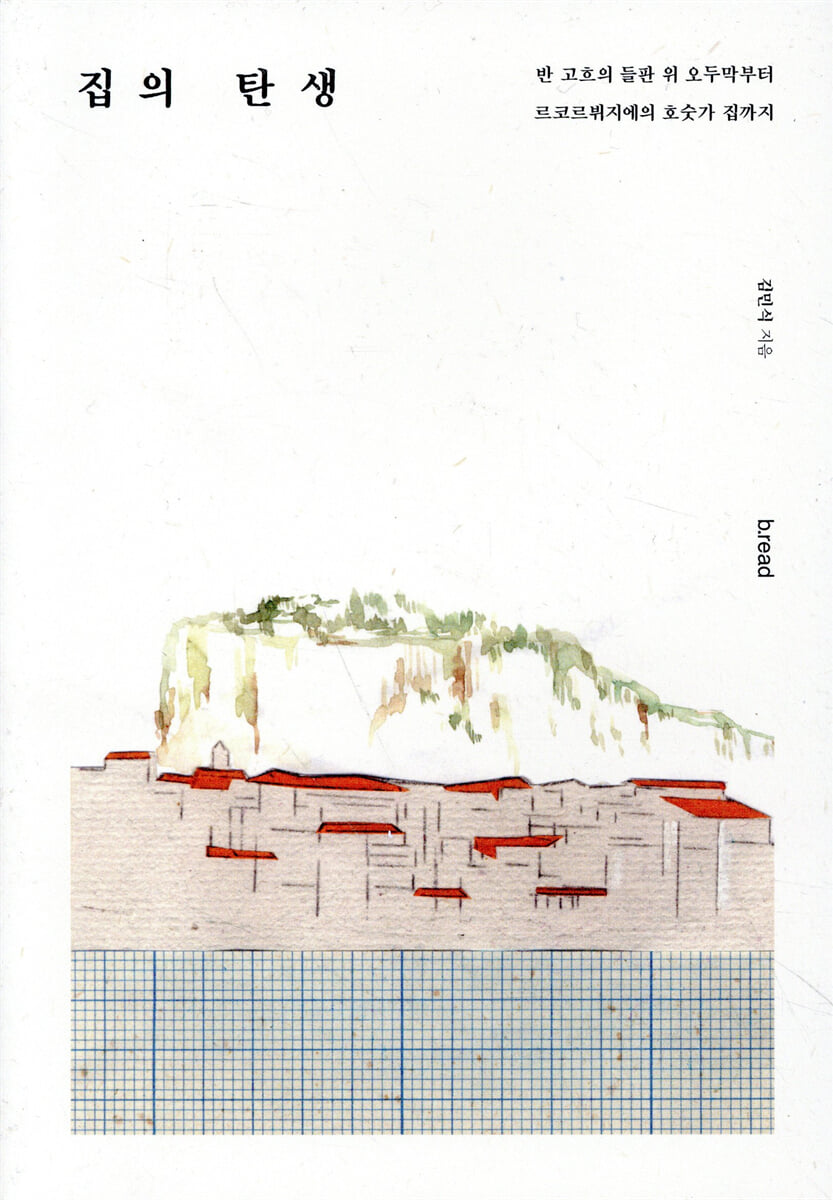
The birth of a house
 |
Description
Book Introduction
Van Gogh, Le Corbusier, the Queen of France, writers, philosophers…
Stories of all kinds of houses, filled with history, art, literature, philosophy, East and West.
Are there so many stories about homes? Are there so many different kinds of homes in the world? The cabin in the field where Van Gogh stayed, the lakeside house built by Le Corbusier, the apartments that originated in France, the humble thatched cottages of Tao Yuanming and Chusa, the village built by Marie Antoinette after abandoning her dazzling palace, the presidential mansion, and even the shacks and tin houses of a certain era in the alleyways.
A colorful story of a house filled with history, art, literature, and philosophy unfolds.
Stories of all kinds of houses, filled with history, art, literature, philosophy, East and West.
Are there so many stories about homes? Are there so many different kinds of homes in the world? The cabin in the field where Van Gogh stayed, the lakeside house built by Le Corbusier, the apartments that originated in France, the humble thatched cottages of Tao Yuanming and Chusa, the village built by Marie Antoinette after abandoning her dazzling palace, the presidential mansion, and even the shacks and tin houses of a certain era in the alleyways.
A colorful story of a house filled with history, art, literature, and philosophy unfolds.
- You can preview some of the book's contents.
Preview
index
PROLOGUE
Our Home Story
live in one house
My Happy Home
Home or House
Small and orphaned, shabby and shining
House with no name
The romance of an 8-pyeong house
Mother's House
inside a concrete box
See 2 houses
Honest and selfless
Van Gogh's Hut
A house where your knees touch, Yongseuljae
There is no Hanok
A small house that is not small
Heidegger's Hut
Live in a cave
Affectionate and tranquil architecture
3 Stay at home
A word that calls home
The house speaks of the person
luxury homes
Hall of Fame
When the space changes
My friend's London house
A Tale of Two Stations
Remember in poetry
EPILOGUE
The future of home
Our Home Story
live in one house
My Happy Home
Home or House
Small and orphaned, shabby and shining
House with no name
The romance of an 8-pyeong house
Mother's House
inside a concrete box
See 2 houses
Honest and selfless
Van Gogh's Hut
A house where your knees touch, Yongseuljae
There is no Hanok
A small house that is not small
Heidegger's Hut
Live in a cave
Affectionate and tranquil architecture
3 Stay at home
A word that calls home
The house speaks of the person
luxury homes
Hall of Fame
When the space changes
My friend's London house
A Tale of Two Stations
Remember in poetry
EPILOGUE
The future of home
Detailed image
Into the book
Dorothy's house, which was blown away by the tornado, is a typical American lightweight wooden house.
The film even shows the wooden structure of the house blown away by the storm.
--- p.16
Family and small house.
Munch, who had been working in France and Germany, returned to his hometown of Oslo in his later years and continued to paint on the same subject.
A family that never left Munch's mind, a happy home.
The world's saddest painting shows the inseparable love of family in a room of two or three square meters.
In contrast, Count Tolstoy of the Great Estates did not have such a warm family.
--- p.31
Marie Antoinette, who had never set foot on soil, soothed her depression and homesickness in a small country village rather than the Palace of Versailles.
Humans, originating from primitive nature, seek small homes and find spiritual solace there.
--- p.41
I can't take my eyes off Van Gogh's paintings of his Dutch home.
These are works that are imbued with the dreary light of the North before meeting the intense sun of France.
If you were standing next to Van Gogh right now and asked him, “Which painting is your best?” he would answer without hesitation.
“It is The Potato Eaters,” Van Gogh revealed in a letter to his sister, Wilhelmina.
--- p.114
The inscription on the pillars and walls of the Chusa House in Yesan reads, “The best side dishes are tofu, cucumber, ginger, and vegetables cooked in soybeans, melon, and ginger. The best gatherings are husband, wife, son, daughter, grandson, and granddaughter.” This was the state of mind of Chusa, who was called a child prodigy of the East by the great scholars of Beijing from his youth.
What is the difference between wealth, fame, and fame? Just living in a small house with your family and eating a side dish of vegetables is enough.
--- p.128
To the Zen monk Sen Rikyu, the nobility and lowliness of social status were nothing more than a fleeting cloud.
The entrance to the tea room is called 'nijiriguchi', which means a hole.
--- p.151
Before the master's work, I stand up straight, then bring my face closer to the warmth of this indifferent thing and gently raise my hand.
There is architecture that has the power to approach without detail.
A space where my five senses feel first before my eyes see and my reason judges.
Not a single name was left behind.
--- p.192
“I went into the forest to live a leisurely life with only the bare necessities.”
--- p.224
The Pantheon and the Louvre in France were the models for the construction of the new U.S. Capitol, and Rotunda came to Seoul via Rome, Paris, and Washington.
The shadow of Roman architecture lasts this long.
--- p.252
Eton, England, which has been considered one of the most prestigious schools in the English-speaking world for centuries, is a public school.
The family of Number 4 had been educated at Eton College for generations and had degrees from Cambridge University.
Really? Why are you making it public? My question was long.
Public refers to the general public, the common people, or things related to the public.
I didn't know that it contained the most precious value, honor.
--- p.276
The train station is the home of you and me, the place we all pass through on our way home and when we leave home.
The family's departure and farewell were extended to the train station.
As I left, I said goodbye to my family at home and once more said goodbye to them at the train station.
--- p.287
The poems and songs by Heine, Baudelaire, Jeong Ji-yong, and singers John Denver and Boney M. written here coincidentally all refer to places of memory.
We live in memory.
The film even shows the wooden structure of the house blown away by the storm.
--- p.16
Family and small house.
Munch, who had been working in France and Germany, returned to his hometown of Oslo in his later years and continued to paint on the same subject.
A family that never left Munch's mind, a happy home.
The world's saddest painting shows the inseparable love of family in a room of two or three square meters.
In contrast, Count Tolstoy of the Great Estates did not have such a warm family.
--- p.31
Marie Antoinette, who had never set foot on soil, soothed her depression and homesickness in a small country village rather than the Palace of Versailles.
Humans, originating from primitive nature, seek small homes and find spiritual solace there.
--- p.41
I can't take my eyes off Van Gogh's paintings of his Dutch home.
These are works that are imbued with the dreary light of the North before meeting the intense sun of France.
If you were standing next to Van Gogh right now and asked him, “Which painting is your best?” he would answer without hesitation.
“It is The Potato Eaters,” Van Gogh revealed in a letter to his sister, Wilhelmina.
--- p.114
The inscription on the pillars and walls of the Chusa House in Yesan reads, “The best side dishes are tofu, cucumber, ginger, and vegetables cooked in soybeans, melon, and ginger. The best gatherings are husband, wife, son, daughter, grandson, and granddaughter.” This was the state of mind of Chusa, who was called a child prodigy of the East by the great scholars of Beijing from his youth.
What is the difference between wealth, fame, and fame? Just living in a small house with your family and eating a side dish of vegetables is enough.
--- p.128
To the Zen monk Sen Rikyu, the nobility and lowliness of social status were nothing more than a fleeting cloud.
The entrance to the tea room is called 'nijiriguchi', which means a hole.
--- p.151
Before the master's work, I stand up straight, then bring my face closer to the warmth of this indifferent thing and gently raise my hand.
There is architecture that has the power to approach without detail.
A space where my five senses feel first before my eyes see and my reason judges.
Not a single name was left behind.
--- p.192
“I went into the forest to live a leisurely life with only the bare necessities.”
--- p.224
The Pantheon and the Louvre in France were the models for the construction of the new U.S. Capitol, and Rotunda came to Seoul via Rome, Paris, and Washington.
The shadow of Roman architecture lasts this long.
--- p.252
Eton, England, which has been considered one of the most prestigious schools in the English-speaking world for centuries, is a public school.
The family of Number 4 had been educated at Eton College for generations and had degrees from Cambridge University.
Really? Why are you making it public? My question was long.
Public refers to the general public, the common people, or things related to the public.
I didn't know that it contained the most precious value, honor.
--- p.276
The train station is the home of you and me, the place we all pass through on our way home and when we leave home.
The family's departure and farewell were extended to the train station.
As I left, I said goodbye to my family at home and once more said goodbye to them at the train station.
--- p.287
The poems and songs by Heine, Baudelaire, Jeong Ji-yong, and singers John Denver and Boney M. written here coincidentally all refer to places of memory.
We live in memory.
--- p.308
Publisher's Review
The second book by author Kim Min-sik, "The Time of Trees"
Humanities for Everyone Living at Home: Our Home Stories
George Sand, a renowned 19th-century French writer and one-time Chopin's mistress, once said, "Tell me, do you prefer a hut or a palace?
He left behind the famous saying, “Then I will discern what kind of person you are.”
In an age where homes are treated as property, what answer can we give?
A house built by an architect of the century, a philosopher's cabin in a remote forest, a splendid queen's palace, a poet's house where your knees touch when you sit across from him, a tin house that belonged to someone else that used to line the alley, and an apartment building.
As long as people do not give up living in houses, the story of the house will continue, and Sand's promise will be valid.
What should we start thinking about each day, the home that is like our skin, where we will stay until the last moment of our lives?
Van Gogh, Le Corbusier, the Queen of France, writers, philosophers…
Stories of all kinds of houses, filled with history, art, literature, philosophy, East and West.
Are there so many stories about homes? Are there so many different kinds of homes in the world? The cabin in the field where Van Gogh stayed, the lakeside house built by Le Corbusier, the apartments that originated in France, the humble thatched cottages of Tao Yuanming and Chusa, the village built by Marie Antoinette after abandoning her dazzling palace, the presidential mansion, and even the shacks and tin houses of a certain era in the alleyways.
A colorful story of a house filled with history, art, literature, and philosophy unfolds.
Knowledge and wisdom about architecture and homes from a tree storyteller
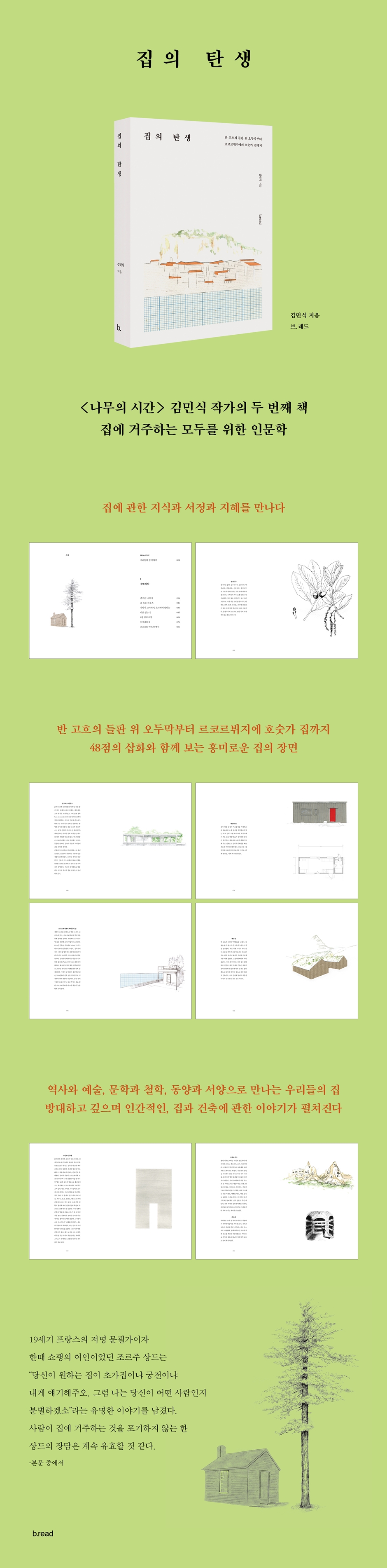
Interesting home scenes with 48 illustrations
How can an author who has worked in the wood industry for over 40 years tell the story of a house with such poignant intensity?
As the book states, the pillars and beams of the huts 10,000 years ago were made of oak, which would be in line with the 18th-century architectural philosopher's view of the origin of the house as a primitive hut.
The author's interest, which began with trees, naturally spread home, and the avid reader, brimming with intellectual curiosity, collected countless stories from the field and bookshelves.
The pictures of trees and houses that appear at the end of the story add to the lingering feeling of the text.
Van Gogh's cottage has a thatched roof, while Le Corbusier's mother's house is situated next to a calm lake.
The stories of houses and architecture written by the author are more extensive, deeper, and more human than those written by other architects or folklorists.
This is the charm of writing that is based on knowledge, experience, understanding, and writing.
The most intimate place for me, what kind of house would you like to live in?
Thinking about life begins with knowledge about home.
Psychologist Carl Jung felt a womb-like peace and coziness in a hut hewn and carried from stone.
The house, built by a renowned 21st-century modernist architect, is embroiled in litigation and is now uninhabited.
The thinker who went into the forest to live a leisurely life with only the bare minimum became ill in a poor house and died.
Are the shacks of ethnic minorities, tin houses by the railroad tracks, and huts built by residents really that insignificant?
As I close the book, in an age where homes are treated as both economic and property, I am forced to rethink the home, placing it at the center of life.
Humanities for Everyone Living at Home: Our Home Stories
George Sand, a renowned 19th-century French writer and one-time Chopin's mistress, once said, "Tell me, do you prefer a hut or a palace?
He left behind the famous saying, “Then I will discern what kind of person you are.”
In an age where homes are treated as property, what answer can we give?
A house built by an architect of the century, a philosopher's cabin in a remote forest, a splendid queen's palace, a poet's house where your knees touch when you sit across from him, a tin house that belonged to someone else that used to line the alley, and an apartment building.
As long as people do not give up living in houses, the story of the house will continue, and Sand's promise will be valid.
What should we start thinking about each day, the home that is like our skin, where we will stay until the last moment of our lives?
Van Gogh, Le Corbusier, the Queen of France, writers, philosophers…
Stories of all kinds of houses, filled with history, art, literature, philosophy, East and West.
Are there so many stories about homes? Are there so many different kinds of homes in the world? The cabin in the field where Van Gogh stayed, the lakeside house built by Le Corbusier, the apartments that originated in France, the humble thatched cottages of Tao Yuanming and Chusa, the village built by Marie Antoinette after abandoning her dazzling palace, the presidential mansion, and even the shacks and tin houses of a certain era in the alleyways.
A colorful story of a house filled with history, art, literature, and philosophy unfolds.
Knowledge and wisdom about architecture and homes from a tree storyteller
Interesting home scenes with 48 illustrations
How can an author who has worked in the wood industry for over 40 years tell the story of a house with such poignant intensity?
As the book states, the pillars and beams of the huts 10,000 years ago were made of oak, which would be in line with the 18th-century architectural philosopher's view of the origin of the house as a primitive hut.
The author's interest, which began with trees, naturally spread home, and the avid reader, brimming with intellectual curiosity, collected countless stories from the field and bookshelves.
The pictures of trees and houses that appear at the end of the story add to the lingering feeling of the text.
Van Gogh's cottage has a thatched roof, while Le Corbusier's mother's house is situated next to a calm lake.
The stories of houses and architecture written by the author are more extensive, deeper, and more human than those written by other architects or folklorists.
This is the charm of writing that is based on knowledge, experience, understanding, and writing.
The most intimate place for me, what kind of house would you like to live in?
Thinking about life begins with knowledge about home.
Psychologist Carl Jung felt a womb-like peace and coziness in a hut hewn and carried from stone.
The house, built by a renowned 21st-century modernist architect, is embroiled in litigation and is now uninhabited.
The thinker who went into the forest to live a leisurely life with only the bare minimum became ill in a poor house and died.
Are the shacks of ethnic minorities, tin houses by the railroad tracks, and huts built by residents really that insignificant?
As I close the book, in an age where homes are treated as both economic and property, I am forced to rethink the home, placing it at the center of life.
GOODS SPECIFICS
- Publication date: June 10, 2022
- Page count, weight, size: 316 pages | 406g | 140*200*30mm
- ISBN13: 9791190920216
- ISBN10: 1190920212
You may also like
카테고리
korean


korean

![GQ KOREA Mark (Monthly): December [2025]](http://librairie.coreenne.fr/cdn/shop/files/8ef265dbbfbf186523ed75ba7319009d.jpg?v=1765340328&width=3840)


