

Insight intelligence
 |
Description
Book Introduction
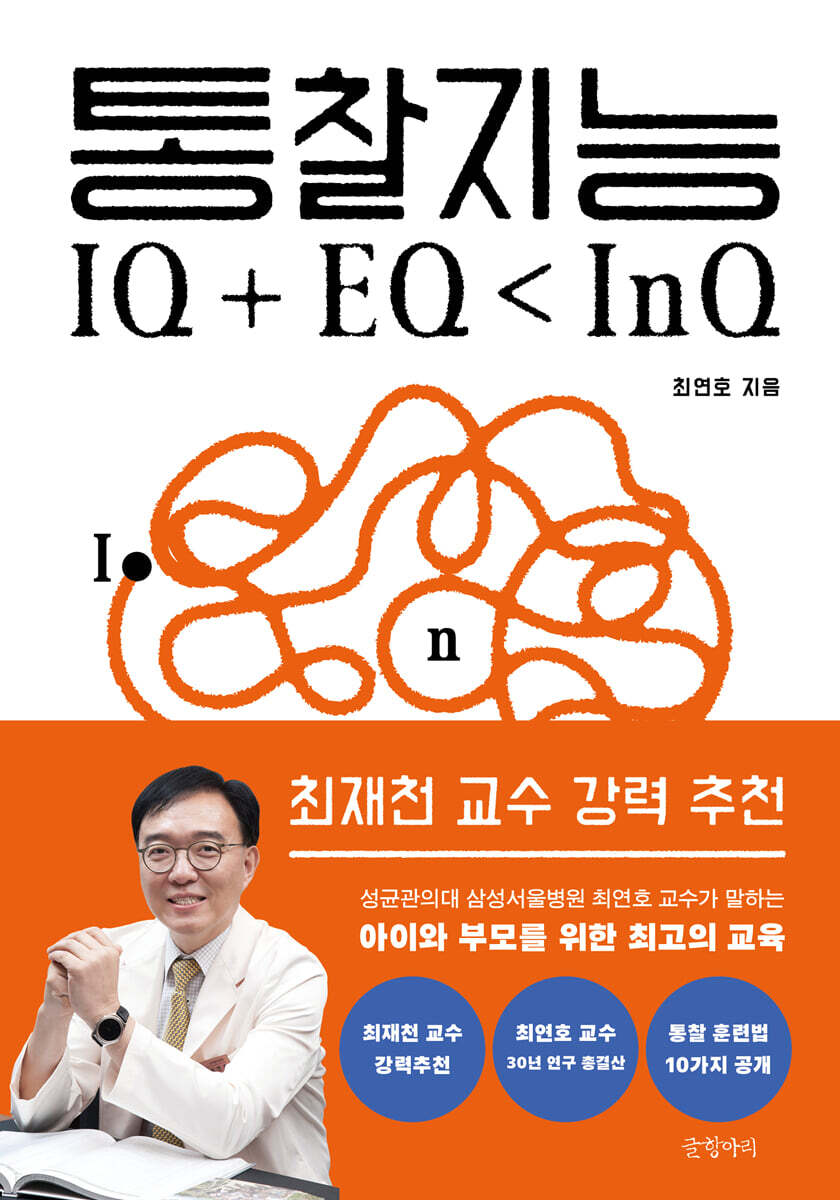
The power of 'insight' that sees through the world The culmination of 30 years of research by Professor Choi Yeon-ho of Sungkyunkwan University. Go beyond IQ and EQ to improve your worldly literacy with INQ. The power of observation and context to see the invisible What is 'Insight Intelligence'? The era of IQ and EQ is over. To be precise, it is no longer meaningful to distinguish intelligence by IQ and EQ. Let's look around. Do people who excel in their fields necessarily have incredibly high IQs and exceptional emotional intelligence? If you look closely, successful people have something else in common. Such a person naturally possesses a certain level of IQ and EQ, and in addition, possesses a charm that cannot be explained by these two intelligences alone. It is an 'insight' that sees through the world. If you want to be successful, you have to see the invisible. At that moment, the world is read. It's a simple truth, but fate is decided by this one little difference. A person who is good at reading other people's minds is someone who has already seen even the small parts of myself that I have been hiding. There are people who are good at mediation and compromise. He has a clear understanding of what the parties want. A person who plans well for the future knows which links to connect to make things easier. Those who see the invisible in this way are learning how to perceive the world. This is a quote from 『Insight Intelligence: The Power to See the Invisible』, published by Professor Yeonho Choi, former Dean of Sungkyunkwan University School of Medicine and a world authority on pediatric Crohn's disease. As a physician, the author has been exploring human intelligence and other mental abilities for decades, and this book is the result of that exploration. This is an 'Introduction to Insight Studies' that mobilizes not only extensive clinical medical data but also related neuroscience, psychology, and various humanities. This book can be summed up in one sentence: "IQ + EQ 〈 InQ." The point is that the sum of IQ and EQ falls short of InQ. InQ, a term coined by the author, stands for Insight Intelligence. While IQ and EQ are innate abilities, the author argues that "InQ" can be developed through practice. |
- You can preview some of the book's contents.
Preview
index
Recommendation
Choi Jae-cheon, Professor Emeritus of the Department of Eco-Science at Ewha Womans University
Jeong Kyung-mi, Professor of Psychology at Yonsei University
preface
prolog
Chapter 1 Insight Intelligence
IQ+EQ〈InQ
Chapter 2: The Visible and the Invisible
Observation, the eternal foundation ┃ A human who knows how to see the invisible 1: The confrontation between Han Seok-bong's mother and Van Gogh ┃ Seeing with imagination ┃ A human who knows how to see the invisible 2: The Phantom Tolbooth ┃ Seeing with Gestalt strategy ┃ Making it visible: Joseon's short-haired gisaeng Kang Hyang-ran
Chapter 3: Why Humans Are Vulnerable to the Invisible
A doctor who doesn't give medicine to a child with chronic diarrhea┃Vision thinking: Failed research results are not published┃Knowledge thinking: Who doesn't know the Happy Birthday song?┃Consent thinking: Why people go to fortune-telling┃The limitations of thinking that is vulnerable to the invisible: Clueless thinking
Chapter 4: Those Who Cannot See What Is Invisible
A child suspected of having gallstones and familial hypercholesterolemia was recommended for genetic testing. ┃Who is the better shortstop, Derek Jeter or Ozzie Smith? ┃The world is imagination, and in imagination there is order: Tantalus' punishment. ┃Anonymity.
Chapter 5: The Man Who Sees the Invisible
The Law of Invisibility Cloak | The Doctor Who Interpreted the Normal as Abnormal | Lee Deok-hyung, the Same Age as Bacon | BTS at Wembley Stadium in London
Chapter 6: Getting to the Essence
Inbee Park's Dignity┃Contextual Intelligence (CQ) = Insight Intelligence (InQ)┃The Showdown Between Insight Intelligence and Artificial Intelligence 1: Serendipity┃The Showdown Between Insight Intelligence and Artificial Intelligence 2: The 'Singularity' Is Still Far Away┃Process and Result: Why We Learn Mathematics┃The Essence of Chronic Disease Treatment: The Tragedy of Easter Island┃The Bad vs. the Ugly
Chapter 7: Justification and Practicality
The Woodcutter and Kim Shin-jo | Why Humans Seem to Be Only Pragmatic | The First Argument Monopoly Phenomenon | Rationalism and Empiricism | Marital Quarrels: A Life Lesson on Saving Both Justice and Pragmatism
Chapter 8: Ten Ways to See the Invisible
I am inside you. ┃Look at your true heart. ┃The unconscious leaks. ┃What are you afraid of? ┃Cui Bono: Who benefits? ┃Gossip and imagination. ┃Pattern recognition and big data. ┃Inference: What will it be? ┃The feeling that something is strange. ┃The miracle of everyday life.
Chapter 9 And Insight Appears as Intuition
The Wave(~) Curve: The Doctor's Error of Viewing Patient Symptoms Only from the Perspective of the Disease┃Experience, Imagination, and Intuition
Epilogue
Choi Jae-cheon, Professor Emeritus of the Department of Eco-Science at Ewha Womans University
Jeong Kyung-mi, Professor of Psychology at Yonsei University
preface
prolog
Chapter 1 Insight Intelligence
IQ+EQ〈InQ
Chapter 2: The Visible and the Invisible
Observation, the eternal foundation ┃ A human who knows how to see the invisible 1: The confrontation between Han Seok-bong's mother and Van Gogh ┃ Seeing with imagination ┃ A human who knows how to see the invisible 2: The Phantom Tolbooth ┃ Seeing with Gestalt strategy ┃ Making it visible: Joseon's short-haired gisaeng Kang Hyang-ran
Chapter 3: Why Humans Are Vulnerable to the Invisible
A doctor who doesn't give medicine to a child with chronic diarrhea┃Vision thinking: Failed research results are not published┃Knowledge thinking: Who doesn't know the Happy Birthday song?┃Consent thinking: Why people go to fortune-telling┃The limitations of thinking that is vulnerable to the invisible: Clueless thinking
Chapter 4: Those Who Cannot See What Is Invisible
A child suspected of having gallstones and familial hypercholesterolemia was recommended for genetic testing. ┃Who is the better shortstop, Derek Jeter or Ozzie Smith? ┃The world is imagination, and in imagination there is order: Tantalus' punishment. ┃Anonymity.
Chapter 5: The Man Who Sees the Invisible
The Law of Invisibility Cloak | The Doctor Who Interpreted the Normal as Abnormal | Lee Deok-hyung, the Same Age as Bacon | BTS at Wembley Stadium in London
Chapter 6: Getting to the Essence
Inbee Park's Dignity┃Contextual Intelligence (CQ) = Insight Intelligence (InQ)┃The Showdown Between Insight Intelligence and Artificial Intelligence 1: Serendipity┃The Showdown Between Insight Intelligence and Artificial Intelligence 2: The 'Singularity' Is Still Far Away┃Process and Result: Why We Learn Mathematics┃The Essence of Chronic Disease Treatment: The Tragedy of Easter Island┃The Bad vs. the Ugly
Chapter 7: Justification and Practicality
The Woodcutter and Kim Shin-jo | Why Humans Seem to Be Only Pragmatic | The First Argument Monopoly Phenomenon | Rationalism and Empiricism | Marital Quarrels: A Life Lesson on Saving Both Justice and Pragmatism
Chapter 8: Ten Ways to See the Invisible
I am inside you. ┃Look at your true heart. ┃The unconscious leaks. ┃What are you afraid of? ┃Cui Bono: Who benefits? ┃Gossip and imagination. ┃Pattern recognition and big data. ┃Inference: What will it be? ┃The feeling that something is strange. ┃The miracle of everyday life.
Chapter 9 And Insight Appears as Intuition
The Wave(~) Curve: The Doctor's Error of Viewing Patient Symptoms Only from the Perspective of the Disease┃Experience, Imagination, and Intuition
Epilogue
Into the book
Increasing your InQ is possible through brain training.
Could it be that the reason so many areas of the cerebral cortex remain unused is a divine design, reserved for the infinite potential of human beings to be gradually utilized?
--- p.37~38
If a patient has multiple symptoms and one diagnosis cannot explain them all, the doctor is wrong.
Doctors are trained, knowingly or unknowingly, to find concise clusters in a variety of symptoms.
"Dr. House" and our pediatric gastroenterology team examine patients based on their accumulated knowledge and experience, and identify the invisible links between symptoms to arrive at a correct diagnosis.
(…) We see context with our heart and head.
--- p.79
Insight is an experience.
If there is something I have to do from now on, it will happen in the future.
However, my mental judgment and decision to prepare for that task come from my past experiences.
In brain science research using fMRI, in addition to the prefrontal cortex, which is naturally activated when simulating the future, there is another area that is activated: the hippocampus, the brain responsible for memory.
The experiences I have accumulated over time remain as memories, and future plans are made based on these memories, so it will probably be difficult for someone with incorrect and bad memories to create a bright future.
And those who lack the knowledge to discern what is right and ignore the sincere advice of others, unable to break free from their stubbornness, are bound to be ostracized by others.
If you feel that many people, not just a few, are reluctant to get close to you, you need to do some self-reflection, and finding the problem in your own experiences should be your priority.
So, it is necessary to change the experience now, while it is not too late.
That's why it's important to have many good experiences from a young age.
--- p.9
In this case too, the problem was the doctor's perspective, knowledge, and satisfaction thinking that directly linked cholecystitis and abdominal pain to a causal relationship.
The loss ended up being borne by the patient.
Even for experts, it is very difficult to see what is invisible.
--- p.139
The family kept expressing their gratitude when they were told that there would be no need for surgery and that no special treatment was needed.
As I looked at the child and family, a thought suddenly occurred to me.
What if this child had been diagnosed with congenital megacolon and underwent surgery based solely on the first barium enema? In a population without adequate access to healthcare, it's quite possible that a single diagnostic test would have led to surgery at such a young age.
My team and I started with this question and began researching the past records of the hospital where I worked.
(…) If the medical system lacks diagnostic capabilities, the harm falls on the patients.
Of course, a medical system that over-tests to avoid misdiagnosis is also undesirable.
--- p.177~179
A 4-year-old boy came to my clinic with a 9-month history of liver dysfunction.
He said that he initially had a blood test for an upper respiratory infection, but coincidentally his liver function was found to be high. He then went to a university hospital and underwent several liver disease tests for several months, but was told that the cause was unknown.
Tests for congenital diseases, muscle diseases, and specific viral diseases all came back negative, and the ultrasound scan was normal except for a slightly enlarged liver.
At that university hospital, the liver function test results were high and no specific cause was identified, so the diagnosis was viral hepatitis of unknown cause.
However, our team noted that in addition to high liver enzymes and a slightly enlarged liver, other chemical blood tests were normal.
Normal findings were not considered normal.
--- p.179~180
It goes without saying that even if someone cunning says the right thing, we don't believe them.
Because we have already seen his unconsciousness, which is known to be cunning.
To be exact, it's not what we saw, it's what the person shed.
He is sensitive to profit.
I can't tolerate any loss.
If you only try to gain profit, you will inevitably end up causing harm to others.
Other people notice it.
--- p.213
Yet he displayed a confident conviction.
It was an insight.
Let's read Peter's mind at that time.
'It's the first time I've seen someone with a head wound hold a doctor's hand... ... I've never seen a head wound like this before.' Peter quickly recalled his clinical experience and organized the guardianship.
'We'd better get the surgery done quickly.' Peter must have imagined how and where to approach the head and perform the surgery to minimize brain damage.
His judgment on this optimal treatment is his foresight.
'Giffords will definitely survive.' That was the moment his insight turned into a confident prediction.
--- p.224~225
If I want to improve my abilities, even bad experiences can become teachers for me.
Through this experience, our insight develops.
--- p.241
Most doctors try step 1 treatment first and if it doesn't work, they move on to step 2 treatment.
The last resort when two-step treatment fails is the administration of biological antibodies.
I thought there were a lot of problems with this traditional treatment method.
Step-up therapy, which involves climbing stairs in sequence, is a very convenient method for doctors.
If treatment doesn't work, there's no problem moving on to the next step.
For example, drugs called steroids are very powerful anti-inflammatory drugs, so most patients get better when they use them.
However, steroids have such strong side effects that the goal is to stop taking them within a couple of months.
It was truly ironic that it was a drug whose purpose was to be discontinued rather than used as a maintenance treatment.
If you stop using steroids like this, Crohn's disease will relapse, and if you start using them again, it will get better right away, but if you stop, it is expected to relapse again, so doctors have no choice but to naturally move on to the second stage of immunomodulatory treatment.
Years pass quickly as you continue this type of treatment.
--- p.256~257
The human innate psychological immune system uses self-rationalization mechanisms to cultivate resilience. We curse at something bad, but when we realize that it was actually bad, we can confirm that we are better than them and regain psychological satisfaction.
The ugly essence hidden within the ugly thing signifies the context that connects the scenes that occurred in each situation.
To read the context, you need to put yourself in the other person's shoes and find the missing process, then piece it together like a puzzle.
Since the other person is always unconsciously leaking their actions, it is entirely up to me whether I read them or not.
Let's find the ugly in what looks ugly.
Now that I know the essence, I am much happier.
--- p.267
Doctors often make the mistake of trying to analyze all the symptoms of patients who come to the hospital into a pattern of a previously known 'disease'.
This is because I was educated to pay attention to diseases while attending medical school and completing my residency.
Perhaps because of this, there are a significant number of doctors who miss the essence and only react to the symptoms, and the damage inevitably falls on the patients.
I did not do anything particularly wrong because I diagnosed and treated within the scope of my knowledge and training.
However, if the patient is harmed by unnecessary tests and treatments, someone should point out the mistake and correct it.
That is the evolution of insight that human society has shown from the past to the present.
Could it be that the reason so many areas of the cerebral cortex remain unused is a divine design, reserved for the infinite potential of human beings to be gradually utilized?
--- p.37~38
If a patient has multiple symptoms and one diagnosis cannot explain them all, the doctor is wrong.
Doctors are trained, knowingly or unknowingly, to find concise clusters in a variety of symptoms.
"Dr. House" and our pediatric gastroenterology team examine patients based on their accumulated knowledge and experience, and identify the invisible links between symptoms to arrive at a correct diagnosis.
(…) We see context with our heart and head.
--- p.79
Insight is an experience.
If there is something I have to do from now on, it will happen in the future.
However, my mental judgment and decision to prepare for that task come from my past experiences.
In brain science research using fMRI, in addition to the prefrontal cortex, which is naturally activated when simulating the future, there is another area that is activated: the hippocampus, the brain responsible for memory.
The experiences I have accumulated over time remain as memories, and future plans are made based on these memories, so it will probably be difficult for someone with incorrect and bad memories to create a bright future.
And those who lack the knowledge to discern what is right and ignore the sincere advice of others, unable to break free from their stubbornness, are bound to be ostracized by others.
If you feel that many people, not just a few, are reluctant to get close to you, you need to do some self-reflection, and finding the problem in your own experiences should be your priority.
So, it is necessary to change the experience now, while it is not too late.
That's why it's important to have many good experiences from a young age.
--- p.9
In this case too, the problem was the doctor's perspective, knowledge, and satisfaction thinking that directly linked cholecystitis and abdominal pain to a causal relationship.
The loss ended up being borne by the patient.
Even for experts, it is very difficult to see what is invisible.
--- p.139
The family kept expressing their gratitude when they were told that there would be no need for surgery and that no special treatment was needed.
As I looked at the child and family, a thought suddenly occurred to me.
What if this child had been diagnosed with congenital megacolon and underwent surgery based solely on the first barium enema? In a population without adequate access to healthcare, it's quite possible that a single diagnostic test would have led to surgery at such a young age.
My team and I started with this question and began researching the past records of the hospital where I worked.
(…) If the medical system lacks diagnostic capabilities, the harm falls on the patients.
Of course, a medical system that over-tests to avoid misdiagnosis is also undesirable.
--- p.177~179
A 4-year-old boy came to my clinic with a 9-month history of liver dysfunction.
He said that he initially had a blood test for an upper respiratory infection, but coincidentally his liver function was found to be high. He then went to a university hospital and underwent several liver disease tests for several months, but was told that the cause was unknown.
Tests for congenital diseases, muscle diseases, and specific viral diseases all came back negative, and the ultrasound scan was normal except for a slightly enlarged liver.
At that university hospital, the liver function test results were high and no specific cause was identified, so the diagnosis was viral hepatitis of unknown cause.
However, our team noted that in addition to high liver enzymes and a slightly enlarged liver, other chemical blood tests were normal.
Normal findings were not considered normal.
--- p.179~180
It goes without saying that even if someone cunning says the right thing, we don't believe them.
Because we have already seen his unconsciousness, which is known to be cunning.
To be exact, it's not what we saw, it's what the person shed.
He is sensitive to profit.
I can't tolerate any loss.
If you only try to gain profit, you will inevitably end up causing harm to others.
Other people notice it.
--- p.213
Yet he displayed a confident conviction.
It was an insight.
Let's read Peter's mind at that time.
'It's the first time I've seen someone with a head wound hold a doctor's hand... ... I've never seen a head wound like this before.' Peter quickly recalled his clinical experience and organized the guardianship.
'We'd better get the surgery done quickly.' Peter must have imagined how and where to approach the head and perform the surgery to minimize brain damage.
His judgment on this optimal treatment is his foresight.
'Giffords will definitely survive.' That was the moment his insight turned into a confident prediction.
--- p.224~225
If I want to improve my abilities, even bad experiences can become teachers for me.
Through this experience, our insight develops.
--- p.241
Most doctors try step 1 treatment first and if it doesn't work, they move on to step 2 treatment.
The last resort when two-step treatment fails is the administration of biological antibodies.
I thought there were a lot of problems with this traditional treatment method.
Step-up therapy, which involves climbing stairs in sequence, is a very convenient method for doctors.
If treatment doesn't work, there's no problem moving on to the next step.
For example, drugs called steroids are very powerful anti-inflammatory drugs, so most patients get better when they use them.
However, steroids have such strong side effects that the goal is to stop taking them within a couple of months.
It was truly ironic that it was a drug whose purpose was to be discontinued rather than used as a maintenance treatment.
If you stop using steroids like this, Crohn's disease will relapse, and if you start using them again, it will get better right away, but if you stop, it is expected to relapse again, so doctors have no choice but to naturally move on to the second stage of immunomodulatory treatment.
Years pass quickly as you continue this type of treatment.
--- p.256~257
The human innate psychological immune system uses self-rationalization mechanisms to cultivate resilience. We curse at something bad, but when we realize that it was actually bad, we can confirm that we are better than them and regain psychological satisfaction.
The ugly essence hidden within the ugly thing signifies the context that connects the scenes that occurred in each situation.
To read the context, you need to put yourself in the other person's shoes and find the missing process, then piece it together like a puzzle.
Since the other person is always unconsciously leaking their actions, it is entirely up to me whether I read them or not.
Let's find the ugly in what looks ugly.
Now that I know the essence, I am much happier.
--- p.267
Doctors often make the mistake of trying to analyze all the symptoms of patients who come to the hospital into a pattern of a previously known 'disease'.
This is because I was educated to pay attention to diseases while attending medical school and completing my residency.
Perhaps because of this, there are a significant number of doctors who miss the essence and only react to the symptoms, and the damage inevitably falls on the patients.
I did not do anything particularly wrong because I diagnosed and treated within the scope of my knowledge and training.
However, if the patient is harmed by unnecessary tests and treatments, someone should point out the mistake and correct it.
That is the evolution of insight that human society has shown from the past to the present.
--- p.362
Publisher's Review
A routine to develop 'insight intelligence' in everyday life
This book is also a 'textbook of everyday life'.
Meeting people, laughing and chatting, working hard and then falling into worry, being lifted by a single word and then falling down, and smiling for a moment because of the abundance of love, each and every day is a life lesson.
You may also take tests and receive report cards in the middle of the semester.
Even though we aren't graded A, B, or C, we know our grades.
If you fail the midterm exam, you will have to wait for the final exam.
Life is the same.
Here's how I grow:
What is absolutely necessary for my growth is to know the world.
So this book focuses on insights that are always happening around us.
That's the lesson, and I wrote the book to make sure I realized the points I had to focus on and work on until the bell rang to end the lesson.
Let's look at what happens every day through this book and create our own routine.
People who are vulnerable to the invisible should start anew from the observation stage, and if they are good at seeing the invisible but have a weakness in putting it all together, they should develop the habit of looking for someone or something that can help them with their shortcomings.
If you continue to study like that, you will find yourself growing before you know it.
Lastly, this book is a 'medical textbook' and a medical textbook that can be read by the general public.
In healthcare, a system cannot function without just one provider.
Healthcare exists because there are consumers who receive services.
Therefore, if the general public could share the basics that doctors learn, it would be of great help in understanding and helping each other.
This book contains some medical episodes and a few tidbits.
The author emphasizes that it is okay to skim through slightly difficult knowledge, but he hopes that you do not miss the hidden implications.
The importance of finding context, something AI cannot do even if it dies.
This book begins with a story about IQ and EQ.
After understanding the new word InQ, which stands for insight intelligence, the book continues with examples of why observation is important, why we should use Gestalt strategies for observation, and how it is important not only to see the invisible but also to make it visible.
Next, the innate reasons why humans are so vulnerable to things that are invisible are introduced.
We look back at ourselves, who are satisfied with only what we see within the limits of our own knowledge, and introduce cases of incidents that occur because we cannot see what is invisible, and cases of success that are achieved by seeing what is invisible.
Then we begin to seriously search for the essence.
Here, essence means the truth that we seek to approach through insight.
To overcome the limitations of humans who often react only to superficial phenomena and miss the hidden essence, the author emphasizes finding the 'missing process' or 'context' and argues that we should strive to have a sense of balance between 'justification' and 'practicality' hidden in all things in the world.
And through several examples, it is demonstrated that insight intelligence is based on contextual intelligence, and that even if humans become immersed in so-called artificial intelligence (AI), human-specific insight that values context and process will inevitably surpass AI.
Rationalism and empiricism, the two major branches of modern philosophy, both aim for insight.
It is impossible to judge which way of thinking is more correct, and leaning to one side will take you away from the path to success, so you must take care of both the cause and the practical.
If you carefully examine the cause and practicality of things and events to get to the essence of them, you will realize that things that were previously invisible will suddenly come to light.
And the following are listed methods of training insight.
It may be helpful for readers to use a checklist of ten or so suggested methods.
This concludes our study of 'insight intelligence' through this book.
What follows next is practice.
As you practice insight training in your daily life, you will soon feel yourself developing and be surprised at how much more intuition you have.
Let's take this opportunity to make up for the lack of recognition we've received from others due to our frequent use of outlandish scenarios.
Consistent insight training will lead us to creative and correct intuition.
A case of not seeing what is invisible
Five-month-old Yumi had been eating and growing well until then, but one day she started showing signs of difficulty, so her parents took her to a nearby large hospital.
The doctor did blood tests, urine tests, and X-rays.
But a blood test a few hours later showed high levels of inflammation.
The evidence came from a urine test: a urinary tract infection.
The doctor said that Yumi had to be hospitalized and receive antibiotic injections.
A week later, an ultrasound was performed to determine if a new kidney disease had developed as a sequela of the urinary tract infection, but an unusual finding was found.
Gallstones were found in the gallbladder.
When I did another blood test, my liver enzymes were elevated, suggesting hepatitis, and my total cholesterol was 310, which was way above the highest level.
The doctor suddenly suggested that I get a genetic test since he suspected familial hypercholesterolemia.
The startled mother asked around and came to the author's hospital.
The author looked at the previous treatment records and found a familiar antibiotic.
Ceftriaxone. This third-generation antibiotic sometimes causes pseudogallstones in the gallbladder, but the stones soon disappear when the drug is stopped.
The author asked the mother if Yumi was still breastfeeding.
Mom said so.
“Sometimes, depending on the mother’s diet, the cholesterol level of breastfed babies can rise significantly.
And don't worry too much, the reason the liver function test went up is probably temporary hepatitis related to a urinary tract infection." The child later recovered.
Thirteen-year-old Woojin has been experiencing frequent pain in his upper abdomen and lower right abdomen for the past two months.
As the cause was not identified, the patient was taking symptomatic medication provided by a primary care institution and was observed for progression. However, as the abdominal pain persisted, the patient was referred to a university hospital.
All basic tests, including blood tests, were normal, so a CT scan was performed right away.
The results showed bile sludge in the gallbladder, but no signs of inflammation in the gallbladder wall.
The doctor recommended gallbladder removal surgery, as the cause of the abdominal pain seemed to be in the gallbladder, even though there was no inflammation.
The mother, who had been watching her child suffer, immediately agreed, and the gallbladder was removed the next day.
But the child still felt stomach pain and eventually came to see the author.
What the author felt when looking at Woojin was that he was a child who was very worried and sensitive.
This was a case where functional disorder rather than disease was suspected.
These children may experience stomachaches because their past experiences dominate their present.
In particular, Woojin had an unconscious fear of defecating at school and was always worried about getting carsick before riding in a car.
Treatment focused on this area and the child soon got better.
In both cases, we witness the narrow-minded thinking, knowledge-based thinking, and satisfaction-based thinking of doctors who directly link cholecystitis and abdominal pain to a causal relationship.
If a patient has multiple symptoms and one diagnosis cannot explain them all, the doctor is wrong.
Pathological theories that explain diagnoses and symptoms have context.
However, because this context is not readily apparent, the author emphasizes that doctors must develop insightful intelligence to see the invisible.
Don't get caught up in visual thinking
Many of the mistakes humans make arise from narrow perspectives.
This is commonly referred to as 'vision thinking'.
The author mainly observes whether there are cases in which the appropriate method or timing of treatment is missed due to visual accidents between doctors and patients in hospitals.
Observation is important in insight intelligence.
This is because you can observe and recognize situations that were previously invisible and then foresee the next step.
Cases where Crohn's disease is not properly treated can also be due to doctors' narrow-minded thinking, as well as patients' narrow-minded thinking when they obtain information about the disease from the Internet.
Usually, when patients become ill, they first access information through the Internet.
The problem is that the information that appears when searching the Internet often shows negative results.
The first thing the author's patients all said was, "I've always known that Crohn's disease is a disease that causes strictures in most cases, requires surgery in more than half of cases, and is not easily treated."
The author says that it never helps treatment if patients and their families despair from the beginning.
Negative information-driven visual thinking can have far more damaging effects than the side effects of medication, yet it spreads farther and faster.
A doctor who interpreted the normal as abnormal
Would it be wrong for a doctor to interpret a patient's "normal" test results as "abnormal"? Of course, this carries the risk of misdiagnosis and should be avoided by doctors. However, if we turn our perspective around, it can sometimes be the right thing to do.
The author examines two contrasting cases in the book, suggesting that interpreting the normal as abnormal may be correct.
One day, a one-month-old baby came to the outpatient clinic because he was bloated.
It's normal for babies to have a bloated stomach because their abdominal muscles aren't developed, but this baby was bloated.
If a baby is born with a full stomach, doctors suspect congenital megacolon.
The most basic diagnostic method is a barium enema, which involves injecting a contrast agent called barium into the anus to view the shape of the colon on an X-ray.
This child also underwent a barium enema at a secondary hospital, and was found to have a narrowed rectal diameter near the anus, so he was suspected of having congenital megacolon and visited a larger hospital to meet the author.
However, in the author's view, the child was breastfed, eating well, and growing well, so it was far from congenital megacolon.
The stool was also reported as loose stool.
I immediately performed a pressure test and a tissue biopsy, and they were all normal.
And tissue biopsy showed eosinophils that reacted with allergens.
This was the problem.
The diagnosis was allergic proctitis.
Originally, breast milk is non-allergenic, but proteins from the food the mother eats pass through the breast milk to the baby, causing an allergic reaction in the body.
If the rectum cannot be properly dilated due to this inflammation, the barium enema findings may be similar to those of congenital megacolon.
However, the author concluded that 'no surgery or special treatment is necessary.'
What if this child had been diagnosed with congenital megacolon and underwent surgery based solely on the first barium enema? This question prompted the author, along with his research team, to begin investigating the hospital's past records.
One hundred and five infants underwent barium enema within the first few months of life due to abdominal distension.
After reviewing all of these children's final diagnoses, 51 out of 105 were judged normal, and 54 were diagnosed with suspected congenital megacolon.
After performing anorectal pressure tests and biopsies on the 54 patients, 38 patients, or 70.4 percent of the 54 patients, were ultimately diagnosed with congenital megacolon.
So what happened to the remaining 30 percent? Twelve children were ultimately diagnosed as normal, four were diagnosed with allergic proctitis, and 16 children required no treatment at all.
The consequences of the limitations of knowledge thinking
Until the author completed his residency, it was generally accepted that there were no Type 9 party members in the country.
I learned that in Korea, only type 1a is found.
However, the author became interested in this problem after accidentally discovering type 9 diabetes in a patient.
In particular, even when the blood test came back normal, he persistently did not let go of his suspicious gaze.
This is because data from other countries commonly indicate that type 9 disease is the most common.
The author analyzed 12 patients with diabetes diagnosed at his hospital up to 2004 and announced the following.
“It has been known that type 1a is the most common type of diabetes in our country, but according to our research, there are 2 patients with type 1a, 1 patient with type 1b, 2 patients with type 3, 2 patients with type 9, and 5 patients who have not yet been identified.
“There is a possibility that there are many type 9 cases in our country as well.” The senior doctors at the academic society reacted coldly to this announcement.
Based on past clinical experience, this was unlikely.
But the author persisted until the end.
Ten years later, in 2014, the author's research team published the results of a study of 21 patients with diabetes diagnosed at a single hospital in an academic journal.
As expected, the main types of domestic party members were both Type 1a and Type 9, with 7 and 6 people, respectively.
The stereotypes of the past have been changed through long-term research.
The author emphasizes that we must always be vigilant against the possibility of misdiagnosis due to the limitations of knowledge thinking.
Guardianship and metacognition
In life, more important than IQ or EQ is the ability to see the big picture.
In a way, a higher level of intelligence is contextual intelligence.
In particular, humans gain insight by utilizing their own experiences.
If you can gain foresight based on this, you will have the insight to know what is influencing the present moment.
In other words, contextual intelligence refers to the intellectual ability to derive insight through the synergistic effect of hindsight and foresight.
The author believes that it would be good if contextual intelligence and insight intelligence, as discussed in psychology, were combined.
The essence of insight intelligence is ‘process’.
And the process is context.
The results come out accordingly.
If you only look at the results, you will only repeat the thoughts of vision, knowledge, and satisfaction.
Human insight intelligence blossoms from ‘metacognition.’
Metacognition is the ability to recognize what you know and what you do not know.
For example, in children's learning, children who are good at metacognition can distinguish between what they know and what they don't know, and focus on studying what they lack, achieving results. On the other hand, children who lack metacognition are confused about what to study, and their grades drop.
Metacognition, which is insight intelligence, is also known in many studies to be able to improve through training.
That is, insight develops.
The author emphasizes that, unlike intelligence, insight can be increased through training.
This book is also a 'textbook of everyday life'.
Meeting people, laughing and chatting, working hard and then falling into worry, being lifted by a single word and then falling down, and smiling for a moment because of the abundance of love, each and every day is a life lesson.
You may also take tests and receive report cards in the middle of the semester.
Even though we aren't graded A, B, or C, we know our grades.
If you fail the midterm exam, you will have to wait for the final exam.
Life is the same.
Here's how I grow:
What is absolutely necessary for my growth is to know the world.
So this book focuses on insights that are always happening around us.
That's the lesson, and I wrote the book to make sure I realized the points I had to focus on and work on until the bell rang to end the lesson.
Let's look at what happens every day through this book and create our own routine.
People who are vulnerable to the invisible should start anew from the observation stage, and if they are good at seeing the invisible but have a weakness in putting it all together, they should develop the habit of looking for someone or something that can help them with their shortcomings.
If you continue to study like that, you will find yourself growing before you know it.
Lastly, this book is a 'medical textbook' and a medical textbook that can be read by the general public.
In healthcare, a system cannot function without just one provider.
Healthcare exists because there are consumers who receive services.
Therefore, if the general public could share the basics that doctors learn, it would be of great help in understanding and helping each other.
This book contains some medical episodes and a few tidbits.
The author emphasizes that it is okay to skim through slightly difficult knowledge, but he hopes that you do not miss the hidden implications.
The importance of finding context, something AI cannot do even if it dies.
This book begins with a story about IQ and EQ.
After understanding the new word InQ, which stands for insight intelligence, the book continues with examples of why observation is important, why we should use Gestalt strategies for observation, and how it is important not only to see the invisible but also to make it visible.
Next, the innate reasons why humans are so vulnerable to things that are invisible are introduced.
We look back at ourselves, who are satisfied with only what we see within the limits of our own knowledge, and introduce cases of incidents that occur because we cannot see what is invisible, and cases of success that are achieved by seeing what is invisible.
Then we begin to seriously search for the essence.
Here, essence means the truth that we seek to approach through insight.
To overcome the limitations of humans who often react only to superficial phenomena and miss the hidden essence, the author emphasizes finding the 'missing process' or 'context' and argues that we should strive to have a sense of balance between 'justification' and 'practicality' hidden in all things in the world.
And through several examples, it is demonstrated that insight intelligence is based on contextual intelligence, and that even if humans become immersed in so-called artificial intelligence (AI), human-specific insight that values context and process will inevitably surpass AI.
Rationalism and empiricism, the two major branches of modern philosophy, both aim for insight.
It is impossible to judge which way of thinking is more correct, and leaning to one side will take you away from the path to success, so you must take care of both the cause and the practical.
If you carefully examine the cause and practicality of things and events to get to the essence of them, you will realize that things that were previously invisible will suddenly come to light.
And the following are listed methods of training insight.
It may be helpful for readers to use a checklist of ten or so suggested methods.
This concludes our study of 'insight intelligence' through this book.
What follows next is practice.
As you practice insight training in your daily life, you will soon feel yourself developing and be surprised at how much more intuition you have.
Let's take this opportunity to make up for the lack of recognition we've received from others due to our frequent use of outlandish scenarios.
Consistent insight training will lead us to creative and correct intuition.
A case of not seeing what is invisible
Five-month-old Yumi had been eating and growing well until then, but one day she started showing signs of difficulty, so her parents took her to a nearby large hospital.
The doctor did blood tests, urine tests, and X-rays.
But a blood test a few hours later showed high levels of inflammation.
The evidence came from a urine test: a urinary tract infection.
The doctor said that Yumi had to be hospitalized and receive antibiotic injections.
A week later, an ultrasound was performed to determine if a new kidney disease had developed as a sequela of the urinary tract infection, but an unusual finding was found.
Gallstones were found in the gallbladder.
When I did another blood test, my liver enzymes were elevated, suggesting hepatitis, and my total cholesterol was 310, which was way above the highest level.
The doctor suddenly suggested that I get a genetic test since he suspected familial hypercholesterolemia.
The startled mother asked around and came to the author's hospital.
The author looked at the previous treatment records and found a familiar antibiotic.
Ceftriaxone. This third-generation antibiotic sometimes causes pseudogallstones in the gallbladder, but the stones soon disappear when the drug is stopped.
The author asked the mother if Yumi was still breastfeeding.
Mom said so.
“Sometimes, depending on the mother’s diet, the cholesterol level of breastfed babies can rise significantly.
And don't worry too much, the reason the liver function test went up is probably temporary hepatitis related to a urinary tract infection." The child later recovered.
Thirteen-year-old Woojin has been experiencing frequent pain in his upper abdomen and lower right abdomen for the past two months.
As the cause was not identified, the patient was taking symptomatic medication provided by a primary care institution and was observed for progression. However, as the abdominal pain persisted, the patient was referred to a university hospital.
All basic tests, including blood tests, were normal, so a CT scan was performed right away.
The results showed bile sludge in the gallbladder, but no signs of inflammation in the gallbladder wall.
The doctor recommended gallbladder removal surgery, as the cause of the abdominal pain seemed to be in the gallbladder, even though there was no inflammation.
The mother, who had been watching her child suffer, immediately agreed, and the gallbladder was removed the next day.
But the child still felt stomach pain and eventually came to see the author.
What the author felt when looking at Woojin was that he was a child who was very worried and sensitive.
This was a case where functional disorder rather than disease was suspected.
These children may experience stomachaches because their past experiences dominate their present.
In particular, Woojin had an unconscious fear of defecating at school and was always worried about getting carsick before riding in a car.
Treatment focused on this area and the child soon got better.
In both cases, we witness the narrow-minded thinking, knowledge-based thinking, and satisfaction-based thinking of doctors who directly link cholecystitis and abdominal pain to a causal relationship.
If a patient has multiple symptoms and one diagnosis cannot explain them all, the doctor is wrong.
Pathological theories that explain diagnoses and symptoms have context.
However, because this context is not readily apparent, the author emphasizes that doctors must develop insightful intelligence to see the invisible.
Don't get caught up in visual thinking
Many of the mistakes humans make arise from narrow perspectives.
This is commonly referred to as 'vision thinking'.
The author mainly observes whether there are cases in which the appropriate method or timing of treatment is missed due to visual accidents between doctors and patients in hospitals.
Observation is important in insight intelligence.
This is because you can observe and recognize situations that were previously invisible and then foresee the next step.
Cases where Crohn's disease is not properly treated can also be due to doctors' narrow-minded thinking, as well as patients' narrow-minded thinking when they obtain information about the disease from the Internet.
Usually, when patients become ill, they first access information through the Internet.
The problem is that the information that appears when searching the Internet often shows negative results.
The first thing the author's patients all said was, "I've always known that Crohn's disease is a disease that causes strictures in most cases, requires surgery in more than half of cases, and is not easily treated."
The author says that it never helps treatment if patients and their families despair from the beginning.
Negative information-driven visual thinking can have far more damaging effects than the side effects of medication, yet it spreads farther and faster.
A doctor who interpreted the normal as abnormal
Would it be wrong for a doctor to interpret a patient's "normal" test results as "abnormal"? Of course, this carries the risk of misdiagnosis and should be avoided by doctors. However, if we turn our perspective around, it can sometimes be the right thing to do.
The author examines two contrasting cases in the book, suggesting that interpreting the normal as abnormal may be correct.
One day, a one-month-old baby came to the outpatient clinic because he was bloated.
It's normal for babies to have a bloated stomach because their abdominal muscles aren't developed, but this baby was bloated.
If a baby is born with a full stomach, doctors suspect congenital megacolon.
The most basic diagnostic method is a barium enema, which involves injecting a contrast agent called barium into the anus to view the shape of the colon on an X-ray.
This child also underwent a barium enema at a secondary hospital, and was found to have a narrowed rectal diameter near the anus, so he was suspected of having congenital megacolon and visited a larger hospital to meet the author.
However, in the author's view, the child was breastfed, eating well, and growing well, so it was far from congenital megacolon.
The stool was also reported as loose stool.
I immediately performed a pressure test and a tissue biopsy, and they were all normal.
And tissue biopsy showed eosinophils that reacted with allergens.
This was the problem.
The diagnosis was allergic proctitis.
Originally, breast milk is non-allergenic, but proteins from the food the mother eats pass through the breast milk to the baby, causing an allergic reaction in the body.
If the rectum cannot be properly dilated due to this inflammation, the barium enema findings may be similar to those of congenital megacolon.
However, the author concluded that 'no surgery or special treatment is necessary.'
What if this child had been diagnosed with congenital megacolon and underwent surgery based solely on the first barium enema? This question prompted the author, along with his research team, to begin investigating the hospital's past records.
One hundred and five infants underwent barium enema within the first few months of life due to abdominal distension.
After reviewing all of these children's final diagnoses, 51 out of 105 were judged normal, and 54 were diagnosed with suspected congenital megacolon.
After performing anorectal pressure tests and biopsies on the 54 patients, 38 patients, or 70.4 percent of the 54 patients, were ultimately diagnosed with congenital megacolon.
So what happened to the remaining 30 percent? Twelve children were ultimately diagnosed as normal, four were diagnosed with allergic proctitis, and 16 children required no treatment at all.
The consequences of the limitations of knowledge thinking
Until the author completed his residency, it was generally accepted that there were no Type 9 party members in the country.
I learned that in Korea, only type 1a is found.
However, the author became interested in this problem after accidentally discovering type 9 diabetes in a patient.
In particular, even when the blood test came back normal, he persistently did not let go of his suspicious gaze.
This is because data from other countries commonly indicate that type 9 disease is the most common.
The author analyzed 12 patients with diabetes diagnosed at his hospital up to 2004 and announced the following.
“It has been known that type 1a is the most common type of diabetes in our country, but according to our research, there are 2 patients with type 1a, 1 patient with type 1b, 2 patients with type 3, 2 patients with type 9, and 5 patients who have not yet been identified.
“There is a possibility that there are many type 9 cases in our country as well.” The senior doctors at the academic society reacted coldly to this announcement.
Based on past clinical experience, this was unlikely.
But the author persisted until the end.
Ten years later, in 2014, the author's research team published the results of a study of 21 patients with diabetes diagnosed at a single hospital in an academic journal.
As expected, the main types of domestic party members were both Type 1a and Type 9, with 7 and 6 people, respectively.
The stereotypes of the past have been changed through long-term research.
The author emphasizes that we must always be vigilant against the possibility of misdiagnosis due to the limitations of knowledge thinking.
Guardianship and metacognition
In life, more important than IQ or EQ is the ability to see the big picture.
In a way, a higher level of intelligence is contextual intelligence.
In particular, humans gain insight by utilizing their own experiences.
If you can gain foresight based on this, you will have the insight to know what is influencing the present moment.
In other words, contextual intelligence refers to the intellectual ability to derive insight through the synergistic effect of hindsight and foresight.
The author believes that it would be good if contextual intelligence and insight intelligence, as discussed in psychology, were combined.
The essence of insight intelligence is ‘process’.
And the process is context.
The results come out accordingly.
If you only look at the results, you will only repeat the thoughts of vision, knowledge, and satisfaction.
Human insight intelligence blossoms from ‘metacognition.’
Metacognition is the ability to recognize what you know and what you do not know.
For example, in children's learning, children who are good at metacognition can distinguish between what they know and what they don't know, and focus on studying what they lack, achieving results. On the other hand, children who lack metacognition are confused about what to study, and their grades drop.
Metacognition, which is insight intelligence, is also known in many studies to be able to improve through training.
That is, insight develops.
The author emphasizes that, unlike intelligence, insight can be increased through training.
GOODS SPECIFICS
- Publication date: June 10, 2022
- Page count, weight, size: 392 pages | 482g | 140*200*30mm
- ISBN13: 9791169090032
- ISBN10: 1169090036
You may also like
카테고리
korean


korean

![GQ KOREA Mark (Monthly): December [2025]](http://librairie.coreenne.fr/cdn/shop/files/8ef265dbbfbf186523ed75ba7319009d.jpg?v=1765340328&width=3840)


