

The end of aging
 |
Description
Book Introduction
|
The War on the Disease of Aging
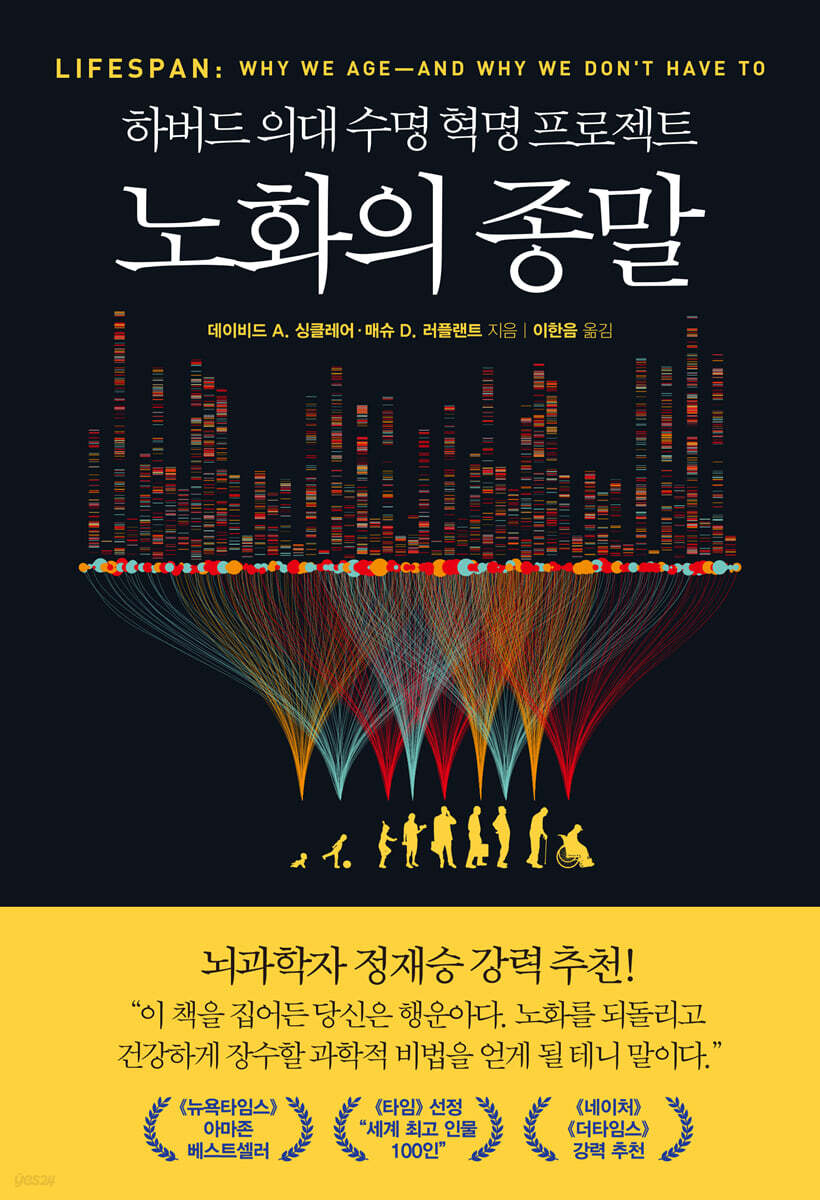
Aging can be slowed, halted, and reversed! The definitive edition of Harvard Medical School's 25-year longevity research. Dr. David Sinclair, the world's leading authority on aging and genetics, compiles 25 years of longevity research and releases it for the first time in this masterpiece. This book, which comprehensively summarizes the major latest achievements made not only in his own Harvard Medical School laboratory but also by researchers and laboratories around the world, contains shocking facts and secrets that overturn the paradigms of lifespan, longevity, humanity, and life itself. We accept aging as an inevitable part of life, a natural process. Therefore, denying the feeling of aging is considered to be an act that goes against nature, human nature, and morality. But the author says all these thoughts are wrong. “Aging is not normal, it is a disease, and this disease is treatable.” “It can be delayed, stopped, and reversed,” and “if only aging could be addressed, everyone could live a long and healthy life free from all disabilities and diseases.” Drawing on four billion years of evolutionary history and the latest genetics, epigenetics, medicine, and science, the author uncovers a single, fundamental cause of aging. It also reveals surprising and groundbreaking secrets to longevity that encompass both everyday habits and cutting-edge scientific medical technology, from longevity genes, anti-aging agents, and longevity drugs to anti-aging vaccines, cell reprogramming, biomarker tracking, and the latest medical techniques such as customized organ production, and lifestyle improvements such as a low-amino-acid diet, low-temperature exposure, and high-intensity interval training. And it presents various problems expected in the future and countermeasures in line with the life revolution. This book contains practical ways for all of us to live younger, healthier, longer, happier lives, and insights that will shape the future of humanity. |
- You can preview some of the book's contents.
Preview
index
time
Recommendation_ Jaeseung Jeong
Introduction: Grandmother's Prayer
Life is like that | There is no natural death | If you don't have to worry about the passage of time | An adventure to find the source of aging and longevity | The starting point of a new evolution
Part 1: What We Know (Past)
Chapter 1: Long Live the Primitive Creatures
The Great Survivor | Everything Happens for a Reason | Dying Old for the Species? | The Evolution of Aging Theory and Crisis Mode | The Single Cause That Makes Us Old | Sirtuin, the Source of Longevity and Vitality
Chapter 2: The Pianist in Confusion
There is no aging gene | In search of the yeast of Eden | A recital of the epigenome | The information theory of aging | Fruits of the same tree of life | The epigenetic landscape of our lives | The era of reversing aging is coming.
Chapter 3: Blind Practice
Aging itself is a disease | The law of human mortality | A breath of wind that brings death | Various treatments are futile efforts | This disease can be cured.
Part 2: What We're Learning (Current)
Chapter 4: How to Live a Long and Healthy Life
Aging isn't an inevitable part of life | Eat less | Intermittent or periodic fasting | Cut down on meat | Sweat | Cool down | Don't disturb the epigenetic landscape.
Chapter 5: Easy-to-Eat Pills
There's no law that says life must end | Rapamycin, the elixir of longevity discovered on Easter Island | Metformin, an anti-aging drug cheaper than a cup of coffee | Stacks: Substances responsible for a healthy lifespan | The ultimate stack: NAD | New hope for infertility | Father's Rebellion | The future unfolds before us.
Chapter 6: A Great Leap
Senescent Cells: Our Body's Zombies | Eliminating Freeloaders | Anti-Aging Vaccination: In Search of the Vaccine of the Future | Reprogramming Cells | Central Nervous System Regeneration: A Clue to Reversing Aging and Rejuvenation | Unanswered Questions
Chapter 7: The Age of Innovation
The Birth of Precision Medicine | The Importance of Knowing Your Condition | The Age of Personal Biosensors | Prepare for the Worst Pandemic | Who Will Trust Your Data? | Faster Testing | A New Era of Vaccine Development | The Dream of Custom Organ Production | The Old 50s Were Different from the New 50s
Part 3: Where We're Going (The Future)
Chapter 8: What Happens Next
How long will we live? | Is extending human lifespan justified? | Warnings of an impending human apocalypse? | The political problems longevity poses? | The precarious state of social security? | The growing polarization between wealth and longevity? | Adapt or perish? | A species without limits? | Is the world getting better or worse? | It's becoming harder to tell who's old? | The enormous benefits of anti-aging treatments? | When we no longer fear aging.
Chapter 9 The Path We Must Take
What kind of future do you want? | Who will invest the most quickly? | Eliminating ageism in healthcare? | Answering the question of how we will die? | Solving the problem of consumption with technology? | How to work in an age where age is just a number? | Prepare to meet your great-grandchildren.
Going Out: Towards the 22nd Century
People Fighting Aging | Beyond Prejudice and Misconceptions | What I Do for Myself | On the Bushwalk
Acknowledgments | Translator's Note
The Size of Everything | Character Introduction | Glossary
Week | Search
Recommendation_ Jaeseung Jeong
Introduction: Grandmother's Prayer
Life is like that | There is no natural death | If you don't have to worry about the passage of time | An adventure to find the source of aging and longevity | The starting point of a new evolution
Part 1: What We Know (Past)
Chapter 1: Long Live the Primitive Creatures
The Great Survivor | Everything Happens for a Reason | Dying Old for the Species? | The Evolution of Aging Theory and Crisis Mode | The Single Cause That Makes Us Old | Sirtuin, the Source of Longevity and Vitality
Chapter 2: The Pianist in Confusion
There is no aging gene | In search of the yeast of Eden | A recital of the epigenome | The information theory of aging | Fruits of the same tree of life | The epigenetic landscape of our lives | The era of reversing aging is coming.
Chapter 3: Blind Practice
Aging itself is a disease | The law of human mortality | A breath of wind that brings death | Various treatments are futile efforts | This disease can be cured.
Part 2: What We're Learning (Current)
Chapter 4: How to Live a Long and Healthy Life
Aging isn't an inevitable part of life | Eat less | Intermittent or periodic fasting | Cut down on meat | Sweat | Cool down | Don't disturb the epigenetic landscape.
Chapter 5: Easy-to-Eat Pills
There's no law that says life must end | Rapamycin, the elixir of longevity discovered on Easter Island | Metformin, an anti-aging drug cheaper than a cup of coffee | Stacks: Substances responsible for a healthy lifespan | The ultimate stack: NAD | New hope for infertility | Father's Rebellion | The future unfolds before us.
Chapter 6: A Great Leap
Senescent Cells: Our Body's Zombies | Eliminating Freeloaders | Anti-Aging Vaccination: In Search of the Vaccine of the Future | Reprogramming Cells | Central Nervous System Regeneration: A Clue to Reversing Aging and Rejuvenation | Unanswered Questions
Chapter 7: The Age of Innovation
The Birth of Precision Medicine | The Importance of Knowing Your Condition | The Age of Personal Biosensors | Prepare for the Worst Pandemic | Who Will Trust Your Data? | Faster Testing | A New Era of Vaccine Development | The Dream of Custom Organ Production | The Old 50s Were Different from the New 50s
Part 3: Where We're Going (The Future)
Chapter 8: What Happens Next
How long will we live? | Is extending human lifespan justified? | Warnings of an impending human apocalypse? | The political problems longevity poses? | The precarious state of social security? | The growing polarization between wealth and longevity? | Adapt or perish? | A species without limits? | Is the world getting better or worse? | It's becoming harder to tell who's old? | The enormous benefits of anti-aging treatments? | When we no longer fear aging.
Chapter 9 The Path We Must Take
What kind of future do you want? | Who will invest the most quickly? | Eliminating ageism in healthcare? | Answering the question of how we will die? | Solving the problem of consumption with technology? | How to work in an age where age is just a number? | Prepare to meet your great-grandchildren.
Going Out: Towards the 22nd Century
People Fighting Aging | Beyond Prejudice and Misconceptions | What I Do for Myself | On the Bushwalk
Acknowledgments | Translator's Note
The Size of Everything | Character Introduction | Glossary
Week | Search
Detailed image

Into the book
Introduction: Grandmother's Prayer
As a species, we are living much longer than we used to.
But it's not a much better life.
Never.
Over the past century, the number of years we live has increased, but the number of years we can call life has not increased.
In any case, the quality of life itself has not increased much.
So when most of us think about whether we'll live to be 100, we still think, "I hope not."
Because we've seen what those last few decades have been like, and for most people, most of the time, it doesn't look very appealing.
Oxygen respirators and all kinds of medications.
Hip fracture and diapers.
Chemotherapy and radiation therapy.
Surgery, surgery again.
And medical expenses.
Oh my gosh, those medical bills are outrageous.
We die slowly and painfully.
People in wealthy countries sometimes suffer from various diseases for more than a decade before dying.
We think this is normal.
(…)
But what if it didn't have to be that way? What if you could live younger and longer? What if you could live decades, not just years? What if your final years didn't seem so different from the years that came before? And what if, by saving yourself, you could also save the world?
I'll probably never be six again, but what about twenty-six or thirty-six?
What if we could play like children, living our lives more fully, without worrying that we'd soon have to move on to the things we "should" do as adults? What if we didn't have to compress all the things we're supposed to cram into our teens? What if we didn't have to stress so much in our twenties? What if we didn't feel middle-aged in our thirties or forties? What if we wanted to start anew in our fifties and couldn't find a single reason why we shouldn't? What if, instead of fretfully thinking about leaving a mark in our sixties, we started making new ones?
What if I told you that you wouldn't have to worry about time passing? And soon? In fact, very soon? You wouldn't have to worry about that anymore?
That's exactly what I'm trying to say.
--- pp.28~29
Chapter 1: Long Live the Primitive Creatures
The 'information theory of aging' starts from the primitive survival circuits we inherited from our distant ancestors.
As you might expect, this circuit has evolved over time.
For example, mammals do not have just two genes that constitute the survival circuitry that first emerged in Magna superstes.
Scientists have identified at least 22 such genes in our genome.
Most of my colleagues call these “longevity genes.”
Because in many organisms, these have been shown to increase average and maximum lifespan.
But these genes don't just make you live longer; they make you healthier.
So these can also be called “vitality genes.”
These genes form a kind of surveillance network within the body that monitors what we eat, how much we exercise, and what time of day it is, and responds by secreting proteins and chemicals into the bloodstream, communicating between cells and organs.
When things are going badly, it tells us to stay still and hold our breath, and when things are going well, it tells us to grow quickly and reproduce.
We now know these genes, and we have already identified what many of them do.
Therefore, there is an opportunity to explore and exploit these genes through scientific discovery.
There is also an opportunity to imagine what potential these might hold and leverage them in different ways.
By using molecules in natural and creative ways, by employing simple and complex technologies, and by drawing on new and existing wisdom, we can identify these genes, tweak them in different ways, and even change them entirely.
The longevity gene I'm studying makes a protein called "sirtuin."
It is named after the SIR2 gene first discovered in yeast.
Mammals have seven sirtuin genes, SIRT1 to SIRT7, and sirtuin proteins are produced in almost every cell in the body.
When I began my research, sirtuins were virtually unknown to the scientific community.
This group of genes is currently at the forefront of medical research and drug development.
--- pp.72~73
Chapter 2: The Pianist in Confusion
It's worth taking a moment to pause here and consider how remarkable it is that essentially the same longevity genes are present in every living thing on Earth: trees, yeast, worms, whales, and humans.
All living things evolved from the same primordial life form, and so do we.
If you look at them under a microscope, you can see that they are all made of the same raw materials.
They all have the same survival circuits, intracellular connections that protect them when things get tough.
But this network is also the cause of our downfall. There are types of damage we cannot avoid, like breaks in our DNA strands.
Such damage overtaxes survival circuits and alters the cell's identity.
According to the 'information theory of aging,' we all suffer from epigenetic noise that causes aging.
However, each living creature ages at a different rate.
And there are creatures that seem to never age.
How can bowhead whales maintain their survival circuits without disrupting their epigenetic symphony? If pianists' skills decline, how can jellyfish restore their abilities?
These questions have guided my thinking as I consider where our research should go.
It may seem like a wild idea or a concept straight out of science fiction, but it is firmly rooted in research.
Moreover, the fact that some of our close relatives have learned to avoid aging supports this notion.
And if they can do it, so can we.
--- pp.126~127
Chapter 3: Blind Practice
As we go further into the future, death is no longer attributed to old age.
No one dies “of old age” anymore.
Over the past century, Western medicine has come to believe that there are more immediate causes of death than aging, and that identifying them is a pressing need.
In fact, over the past few decades we have become more discerning about the causes of death.
The World Health Organization's International Classification of Diseases, a list of diseases, symptoms, and causes of injury, had 161 entries when it was first published in 1893.
But now there are over 14,000, and in most places where death records are kept, doctors and public health officials use these codes to record the direct and underlying causes of disability and death.
And health officials and policymakers around the world use that data to inform public health decisions.
Generally, the more frequently a cause is listed on death certificates, the more vigilant society is to address that cause.
That's why heart disease, type 2 diabetes, and dementia are major research and medical concerns, while aging, the biggest cause of all these diseases, receives little attention.
Although aging is sometimes considered a fundamental factor in ending life, doctors never say that it is the direct cause of death.
Saying something like that risks provoking the anger of the official in charge.
It is likely that the certificate will be returned to the doctor asking for more specifics.
Moreover, there is a high possibility of being ridiculed by colleagues.
“The idea that people die of old age alone, without any disease, is nonsense,” David Gems, associate director of the Institute of Healthy Ageing at University College London and author of a report for the Royal Society’s “New Science of Ageing” conference, told Medical Daily in 2015.
But that misses the point.
The perspective that separates aging from disease obscures the truth about how we reach the end of life.
It is obviously important to know why we fall off cliffs.
But it's equally important to know what brought us to that precipice in the first place.
It is aging that takes us to the edge of that cliff.
In about a hundred years, we will all be on the edge of that precipice, dragged along by the hand of aging.
--- pp.141~142
Chapter 4: How to Live a Long and Healthy Life
The diet isn't a bad starting point.
It's actually a very good starting point.
Even the world's leading nutritionists disagree on what constitutes the "best" diet for Homo sapiens.
The reason is most likely because there is no such thing as the best diet.
Because people are so diverse, their diets may vary subtly, sometimes significantly.
But on the other hand, we are all similar enough to have many things in common when viewed broadly.
Eat more vegetables and less meat.
Eat less processed foods and more fresh foods.
This is something everyone knows.
It may be difficult to put into practice, though.
Why do so many people find this challenge so difficult to accept? A large part of it is because we've always assumed aging is an inevitable part of life.
Because we've all heard that aging is something that will inevitably happen to all of us, whether it comes a little earlier or a little later.
In the past, this was said about pneumonia, flu, tuberculosis, and gastrointestinal diseases.
In 1900, these four diseases accounted for about half of all deaths in the United States. If you lived long enough to contract one of them, you were almost certain that one of them would eventually take your life.
Today, it is extremely rare for people to die from tuberculosis or gastrointestinal diseases.
Deaths from pneumonia and flu have fallen to less than 10 percent of what they were a century ago.
And the majority of those who die are people weakened by old age.
What's changed? The system itself hasn't changed at all.
Thanks to advances in medicine, technological innovations, and better information that helps us improve our lifestyles, we no longer need to accept the notion that such diseases are “just the way they are.”
Likewise, we don't have to accept aging that way.
But even for those most directly exposed to the drugs and technologies that will enable longer, healthier lives in the coming decades, reaching optimal lifespan and healthspan will not be as easy as flipping a light switch.
There will always be good choices and bad choices.
And that choice starts with what we put into our bodies.
Also in 'What not to put in'.
--- pp.173~174
Chapter 5: Easy-to-Eat Pills
When you understand how cells actually work, you realize how amazing it is.
The problem with trying to convey this wonder in the classroom is that cells exist in four dimensions of space and time, moving at speeds and scales we humans cannot perceive or even imagine.
Seconds and millimeters are units that divide time and space very briefly.
But for enzymes, which are about 10 nanometers in size and vibrate 1,000 trillion times a second, a millimeter is the size of a continent and a second is more than a year.
Consider catalase, a common enzyme of average size that can detoxify 10,000 hydrogen peroxide molecules per second.
One million of these enzymes will fit inside an E. coli, and one million E. coli can fit on the head of a pin.
These numbers are beyond imagination.
I can't even imagine it.
A single cell contains 75,000 enzymes, like catalase, all bouncing around in a slightly salty sea of cells.
At the nanoscale, water is gelatinous, and collisions between molecules are more violent than a Category 5 typhoon.
Molecules are pushed around at speeds of up to 1700 kilometers per hour.
Enzyme reactions are events that occur with a probability of one in a thousand, but at the nanoscale, this probability means that they can happen thousands of times in just one second.
Enough to sustain life.
I know it sounds chaotic when I say it like this, but chaos is necessary for order to emerge.
If there were no chaos, the molecules that need to come together to support life would not meet or merge.
(…)
If the chaos were to stop and our enzymes suddenly stopped doing what they were doing, we would die in seconds.
Life cannot exist without energy and cellular defense systems.
Magna Supertes could never have emerged from the dungeon, and would never have had descendants who could understand the words of this book.
So, at a fundamental level, life is pretty simple.
We exist by the grace of order created from chaos.
When we toast to life, we should actually toast to enzymes.
Studying life at this scale has taught us another important lesson.
Nobel Prize-winning physicist Richard Feynman expressed the lesson succinctly:
“Nothing has been discovered in biology so far that suggests the inevitability of death.
So I see death as never inevitable, and it's only a matter of time before biologists discover what brings us this misery.”
That's right.
There is no biological, chemical, or physical law that says life must end.
Of course, aging is the increase in entropy, the loss of information leading to disorder.
However, living things are not 'closed systems'.
Life can persist indefinitely as long as it can preserve vital biological information and absorb energy from somewhere in the universe.
This doesn't mean we can become immortal tomorrow.
Just as we couldn't fly straight to the moon on December 18, 1903.
Science advances by taking small steps and big steps, but always one step at a time.
Here's the amazing thing.
In fact, we have been taking the first steps since the days of Gilgamesh and Methuselah, or even since the days of Magna Supertes.
And over the past few hundred years, and perhaps even earlier, we have discovered ways to chemically control enzymes using molecules we call drugs.
We know how life works, and we have the tools to alter its operating patterns at the genetic and epigenetic levels, so we can build on this ancient wisdom.
And the easiest way to achieve the goal of extending healthy lifespan is to use a variety of drugs that are already known to affect human aging.
--- pp.218~221
Chapter 6: A Great Leap
When we first get the shot at age 30, there will be no change in the way our genes work.
However, when the aging effects begin to appear and be felt in your mid-40s, you will be given a safer switch, doxycycline, over a period of one month.
Then the reprogramming genes will be turned on.
In the meantime, you might want to drop a drop of blood into a home biomarker tracker or visit a doctor to make sure the system is working properly, but you don't have to.
After a month, your body will undergo a rejuvenation process as the Waddington Pebbles return to where they were when you were young.
Gray hair will disappear.
The wound will heal faster.
Wrinkles will disappear.
The organ will be regenerated.
Your brain will work faster, you will hear higher frequency sounds, and you will no longer need glasses to see menus.
You will feel young again.
You'll feel like you're 35 again, like the movie star Benjamin Button.
After that, you will feel like you are back to 30, and then 25.
But unlike Benjamin Button, you won't stop there.
Because I will stop administering the medication.
Then the adeno-associated virus will be turned off.
The Yamanakas will remain silent.
Biologically, physically and mentally you will be 20 years younger, but your knowledge, wisdom and memories will remain intact.
You will not just look younger, you will actually become younger again, and you will spend the next few decades without the aches and pains of middle age, and without worrying about cancer and heart disease.
After a few decades, when the gray hair starts to grow again, you will start taking medication again to start the rejuvenation process.
Moreover, given the pace at which biotechnology is advancing, and the speed at which we're learning how to manipulate the factors that reset our cells, we might be able to move beyond using viruses to simply taking a pill for a month.
Does this sound like science fiction? Like something from the distant future? Let me be clear: it's not.
--- pp.290~292
Chapter 7: The Age of Innovation
The barrier has fallen.
And it will continue to fall apart.
Next generations will inevitably see movie stars in their 60s and 70s speeding around on motorbikes, taking high-altitude jumps, and kicking high into the air.
Because 60 will be the new 40.
After that, 70 will become the new 40.
It will continue to die like that.
When will such a day come? It's no exaggeration to say that you, the reader of this book, are likely to benefit from this revolution.
You will look younger, act younger, and feel younger.
This is true for both body and mind.
You will live longer and be healthier during that extended period.
Of course, it is clear that any one technology can lead to a dead end.
However, not all technologies are likely to fail.
Each of these innovations in pharmaceuticals, precision medicine, emergency medicine, and public health will save lives, extending life by years.
By bringing all these technologies together, we are moving towards decades of healthier living.
Every new discovery opens up new possibilities.
Every minute we can shave off by making genetic sequencing faster and more accurate can help save lives.
Even if we don't extend our maximum lifespans by much, this era of innovation will undoubtedly allow us to live much longer and much healthier lives.
That doesn't mean that for many of us, that's generally the case.
It will be the same for all of us.
--- pp.356~357
Chapter 8: What Happens Next
Look around you.
What is truly “natural” about your current surroundings?
We have long since left behind a world in which Thomas Hobbes predicted in 1651 that the vast majority of mankind would have “no art, no writing, no society… and the worst of all, they would be in constant fear and danger of a violent death.”
If the kind of life Hobbes speaks of is truly natural, I have no interest in living a natural life, and I'd wager that you probably won't either.
So what is natural? To live a better life? To strive for a world with less fear, danger, and violence? We can certainly agree that the impulses that urge us are natural.
And it's clear that many of the adaptive traits that enable us to survive on Earth, including our wondrous survival circuits and the longevity genes that emerge from them, are the products of natural selection.
In other words, it is the result of billions of years of filtering out individuals who failed to stay silent when things were bad.
We have also accumulated a great deal of technology over the past 500,000 years.
It is natural for chimpanzees to poke termite nests with sticks, for birds to drop rocks to break mollusk shells, and for Japanese macaques to bathe in hot springs.
Humanity just happens to be better at learning technology and passing it on.
For the past 200 years, we have been inventing and utilizing a process called the scientific method.
It is a process that has promoted the development of learning.
So, according to this way of thinking, both culture and technology are “natural.”
Innovations that enable us to feed more people, control disease, and extend healthy lives are natural.
Cars and airplanes are like that.
Laptops and cell phones are like that.
Pets like dogs and cats are like that.
The bed we sleep in is like that.
That's what a hospital is like, where people take care of each other when they're sick.
All this is natural for creatures who have long since surpassed the human population that could barely survive in conditions that Hobbes described as “solitary, poor, miserable, brutish, and short.”
The only thing I see as unnatural—in the sense that it's something that has never happened in the history of our species—is accepting limitations on what we can and cannot do to improve our lives.
We have always pushed the boundaries of what we perceive.
In fact, biologically we are driven to do so.
Sustaining vitality is simply an extension of this process.
It is clear that there are consequences, challenges, and risks involved.
One of them is population growth.
But possibility is not inevitability.
As a species, we are pressured to innovate our responses.
So the question isn't whether our planet's natural or unnatural bounty can support 8 billion people, 16 billion people, or 20 billion people.
That point is irrelevant.
The question is whether humanity can continue to develop technologies that will keep us ahead of the growing population and make the Earth a better place for all living things.
Can we do it?
Absolutely.
And the 20th century is proof of that.
--- pp.404~406
Chapter 9 The Path We Must Take
If significantly extended vitality is a certainty in our future, what would you like the world to be like?
Would you be okay with a future where the rich live far longer than the poor, and thus become increasingly wealthy with each passing year? Would you want to live in a world where an ever-growing population drains the planet's last remaining resources, making the world increasingly uninhabitable?
Then there is nothing for you to do.
If you just keep doing what you're doing now, that future will come.
In fact, it probably doesn't matter whether it extends human lifespan or not.
All you have to do is sit back, relax, and watch the world burn.
But there is another possible future.
A future where increased youth becomes a beacon for universal prosperity, sustainability, and greater human dignity.
A future where vast resources are released from a medical industrial complex built on defeating diseases individually, creating enormous opportunities to address other challenges.
A future where those who have lived on this planet for a long time are respected for their knowledge and skilled craftsmanship.
It is a future where Good Samaritanism spreads throughout the world.
Again, this future is something we must fight for.
Because it is never guaranteed.
--- pp.437~438
Going Out: Towards the 22nd Century
There are those who believe that people in our lab—and those doing the same work in labs around the world—are engaging in unnatural, even immoral, acts that alter the very meaning of human existence.
Such a view is based on a concept of human nature that could be said to be subjective at best, but more precisely, it is based on a concept of human nature that could be said to be blindly faithless.
I think that force was also at work behind the report Beyond Therapy: Biotechnology and the Pursuit of Happiness, submitted to the White House by the President's Commission on Bioethics in 2003.
The report issued an ominous warning about aging research, saying it goes against the "human grain" and the so-called ordered cycle of birth, marriage and death.
The committee raised the following question:
“If the average life expectancy at marriage were 80 or even 100 years old, rather than 50 as it is now, would we be less or more inclined to make the vow of ‘until death do us part’?” I would ask, conversely, this question.
What kind of unhappy marriage do you imagine you're supposed to have that prompts people to ask such questions? I'd gladly spend another 50 years with my wife.
The committee argued that:
“Aging is a process that mediates the course of our lives and shapes our sense of time,” he said, warning that without it, “our lives could be thrown into chaos.”
Of course, our so-called natural lifespan means that most of our ancestors never lived to the age of graying hair or wrinkles, and being eaten by carnivores was a perfectly normal way to end their lives.
If you want to stick to that life, I won't stop you.
The committee asked:
“Are we not deluding ourselves by breaking free from the natural contours and constraints of life (our frailty and finitude) that serve as a lens through which to view the broader landscape that can give life all its coherence and enduring meaning?”
If we truly believed that aging was a prerequisite for a meaningful life, we would never treat broken bones, give polio vaccinations, or advise women to get enough calcium and exercise to prevent osteoporosis.
Of course, I know very well that I shouldn't get upset and bring up these issues unnecessarily.
After all, it's a lesson as old as the history of science.
Ask Galileo what happens when you “disturb the natural order of things.”
(…) In the years since the report came out, aging research has been stigmatized as a fight against humanity rather than a fight against disease.
That's nonsense, and in my view, it's rather fatal nonsense.
(…) Try volunteering for a day at a nursing home.
Feed those who cannot chew.
Take their urine and feces.
Try giving him a bath.
Watch those who have difficulty remembering who they are and where they are.
After experiencing these things, you will agree with me that not fighting the problems of aging when you can is irresponsible and cruel.
As a species, we are living much longer than we used to.
But it's not a much better life.
Never.
Over the past century, the number of years we live has increased, but the number of years we can call life has not increased.
In any case, the quality of life itself has not increased much.
So when most of us think about whether we'll live to be 100, we still think, "I hope not."
Because we've seen what those last few decades have been like, and for most people, most of the time, it doesn't look very appealing.
Oxygen respirators and all kinds of medications.
Hip fracture and diapers.
Chemotherapy and radiation therapy.
Surgery, surgery again.
And medical expenses.
Oh my gosh, those medical bills are outrageous.
We die slowly and painfully.
People in wealthy countries sometimes suffer from various diseases for more than a decade before dying.
We think this is normal.
(…)
But what if it didn't have to be that way? What if you could live younger and longer? What if you could live decades, not just years? What if your final years didn't seem so different from the years that came before? And what if, by saving yourself, you could also save the world?
I'll probably never be six again, but what about twenty-six or thirty-six?
What if we could play like children, living our lives more fully, without worrying that we'd soon have to move on to the things we "should" do as adults? What if we didn't have to compress all the things we're supposed to cram into our teens? What if we didn't have to stress so much in our twenties? What if we didn't feel middle-aged in our thirties or forties? What if we wanted to start anew in our fifties and couldn't find a single reason why we shouldn't? What if, instead of fretfully thinking about leaving a mark in our sixties, we started making new ones?
What if I told you that you wouldn't have to worry about time passing? And soon? In fact, very soon? You wouldn't have to worry about that anymore?
That's exactly what I'm trying to say.
--- pp.28~29
Chapter 1: Long Live the Primitive Creatures
The 'information theory of aging' starts from the primitive survival circuits we inherited from our distant ancestors.
As you might expect, this circuit has evolved over time.
For example, mammals do not have just two genes that constitute the survival circuitry that first emerged in Magna superstes.
Scientists have identified at least 22 such genes in our genome.
Most of my colleagues call these “longevity genes.”
Because in many organisms, these have been shown to increase average and maximum lifespan.
But these genes don't just make you live longer; they make you healthier.
So these can also be called “vitality genes.”
These genes form a kind of surveillance network within the body that monitors what we eat, how much we exercise, and what time of day it is, and responds by secreting proteins and chemicals into the bloodstream, communicating between cells and organs.
When things are going badly, it tells us to stay still and hold our breath, and when things are going well, it tells us to grow quickly and reproduce.
We now know these genes, and we have already identified what many of them do.
Therefore, there is an opportunity to explore and exploit these genes through scientific discovery.
There is also an opportunity to imagine what potential these might hold and leverage them in different ways.
By using molecules in natural and creative ways, by employing simple and complex technologies, and by drawing on new and existing wisdom, we can identify these genes, tweak them in different ways, and even change them entirely.
The longevity gene I'm studying makes a protein called "sirtuin."
It is named after the SIR2 gene first discovered in yeast.
Mammals have seven sirtuin genes, SIRT1 to SIRT7, and sirtuin proteins are produced in almost every cell in the body.
When I began my research, sirtuins were virtually unknown to the scientific community.
This group of genes is currently at the forefront of medical research and drug development.
--- pp.72~73
Chapter 2: The Pianist in Confusion
It's worth taking a moment to pause here and consider how remarkable it is that essentially the same longevity genes are present in every living thing on Earth: trees, yeast, worms, whales, and humans.
All living things evolved from the same primordial life form, and so do we.
If you look at them under a microscope, you can see that they are all made of the same raw materials.
They all have the same survival circuits, intracellular connections that protect them when things get tough.
But this network is also the cause of our downfall. There are types of damage we cannot avoid, like breaks in our DNA strands.
Such damage overtaxes survival circuits and alters the cell's identity.
According to the 'information theory of aging,' we all suffer from epigenetic noise that causes aging.
However, each living creature ages at a different rate.
And there are creatures that seem to never age.
How can bowhead whales maintain their survival circuits without disrupting their epigenetic symphony? If pianists' skills decline, how can jellyfish restore their abilities?
These questions have guided my thinking as I consider where our research should go.
It may seem like a wild idea or a concept straight out of science fiction, but it is firmly rooted in research.
Moreover, the fact that some of our close relatives have learned to avoid aging supports this notion.
And if they can do it, so can we.
--- pp.126~127
Chapter 3: Blind Practice
As we go further into the future, death is no longer attributed to old age.
No one dies “of old age” anymore.
Over the past century, Western medicine has come to believe that there are more immediate causes of death than aging, and that identifying them is a pressing need.
In fact, over the past few decades we have become more discerning about the causes of death.
The World Health Organization's International Classification of Diseases, a list of diseases, symptoms, and causes of injury, had 161 entries when it was first published in 1893.
But now there are over 14,000, and in most places where death records are kept, doctors and public health officials use these codes to record the direct and underlying causes of disability and death.
And health officials and policymakers around the world use that data to inform public health decisions.
Generally, the more frequently a cause is listed on death certificates, the more vigilant society is to address that cause.
That's why heart disease, type 2 diabetes, and dementia are major research and medical concerns, while aging, the biggest cause of all these diseases, receives little attention.
Although aging is sometimes considered a fundamental factor in ending life, doctors never say that it is the direct cause of death.
Saying something like that risks provoking the anger of the official in charge.
It is likely that the certificate will be returned to the doctor asking for more specifics.
Moreover, there is a high possibility of being ridiculed by colleagues.
“The idea that people die of old age alone, without any disease, is nonsense,” David Gems, associate director of the Institute of Healthy Ageing at University College London and author of a report for the Royal Society’s “New Science of Ageing” conference, told Medical Daily in 2015.
But that misses the point.
The perspective that separates aging from disease obscures the truth about how we reach the end of life.
It is obviously important to know why we fall off cliffs.
But it's equally important to know what brought us to that precipice in the first place.
It is aging that takes us to the edge of that cliff.
In about a hundred years, we will all be on the edge of that precipice, dragged along by the hand of aging.
--- pp.141~142
Chapter 4: How to Live a Long and Healthy Life
The diet isn't a bad starting point.
It's actually a very good starting point.
Even the world's leading nutritionists disagree on what constitutes the "best" diet for Homo sapiens.
The reason is most likely because there is no such thing as the best diet.
Because people are so diverse, their diets may vary subtly, sometimes significantly.
But on the other hand, we are all similar enough to have many things in common when viewed broadly.
Eat more vegetables and less meat.
Eat less processed foods and more fresh foods.
This is something everyone knows.
It may be difficult to put into practice, though.
Why do so many people find this challenge so difficult to accept? A large part of it is because we've always assumed aging is an inevitable part of life.
Because we've all heard that aging is something that will inevitably happen to all of us, whether it comes a little earlier or a little later.
In the past, this was said about pneumonia, flu, tuberculosis, and gastrointestinal diseases.
In 1900, these four diseases accounted for about half of all deaths in the United States. If you lived long enough to contract one of them, you were almost certain that one of them would eventually take your life.
Today, it is extremely rare for people to die from tuberculosis or gastrointestinal diseases.
Deaths from pneumonia and flu have fallen to less than 10 percent of what they were a century ago.
And the majority of those who die are people weakened by old age.
What's changed? The system itself hasn't changed at all.
Thanks to advances in medicine, technological innovations, and better information that helps us improve our lifestyles, we no longer need to accept the notion that such diseases are “just the way they are.”
Likewise, we don't have to accept aging that way.
But even for those most directly exposed to the drugs and technologies that will enable longer, healthier lives in the coming decades, reaching optimal lifespan and healthspan will not be as easy as flipping a light switch.
There will always be good choices and bad choices.
And that choice starts with what we put into our bodies.
Also in 'What not to put in'.
--- pp.173~174
Chapter 5: Easy-to-Eat Pills
When you understand how cells actually work, you realize how amazing it is.
The problem with trying to convey this wonder in the classroom is that cells exist in four dimensions of space and time, moving at speeds and scales we humans cannot perceive or even imagine.
Seconds and millimeters are units that divide time and space very briefly.
But for enzymes, which are about 10 nanometers in size and vibrate 1,000 trillion times a second, a millimeter is the size of a continent and a second is more than a year.
Consider catalase, a common enzyme of average size that can detoxify 10,000 hydrogen peroxide molecules per second.
One million of these enzymes will fit inside an E. coli, and one million E. coli can fit on the head of a pin.
These numbers are beyond imagination.
I can't even imagine it.
A single cell contains 75,000 enzymes, like catalase, all bouncing around in a slightly salty sea of cells.
At the nanoscale, water is gelatinous, and collisions between molecules are more violent than a Category 5 typhoon.
Molecules are pushed around at speeds of up to 1700 kilometers per hour.
Enzyme reactions are events that occur with a probability of one in a thousand, but at the nanoscale, this probability means that they can happen thousands of times in just one second.
Enough to sustain life.
I know it sounds chaotic when I say it like this, but chaos is necessary for order to emerge.
If there were no chaos, the molecules that need to come together to support life would not meet or merge.
(…)
If the chaos were to stop and our enzymes suddenly stopped doing what they were doing, we would die in seconds.
Life cannot exist without energy and cellular defense systems.
Magna Supertes could never have emerged from the dungeon, and would never have had descendants who could understand the words of this book.
So, at a fundamental level, life is pretty simple.
We exist by the grace of order created from chaos.
When we toast to life, we should actually toast to enzymes.
Studying life at this scale has taught us another important lesson.
Nobel Prize-winning physicist Richard Feynman expressed the lesson succinctly:
“Nothing has been discovered in biology so far that suggests the inevitability of death.
So I see death as never inevitable, and it's only a matter of time before biologists discover what brings us this misery.”
That's right.
There is no biological, chemical, or physical law that says life must end.
Of course, aging is the increase in entropy, the loss of information leading to disorder.
However, living things are not 'closed systems'.
Life can persist indefinitely as long as it can preserve vital biological information and absorb energy from somewhere in the universe.
This doesn't mean we can become immortal tomorrow.
Just as we couldn't fly straight to the moon on December 18, 1903.
Science advances by taking small steps and big steps, but always one step at a time.
Here's the amazing thing.
In fact, we have been taking the first steps since the days of Gilgamesh and Methuselah, or even since the days of Magna Supertes.
And over the past few hundred years, and perhaps even earlier, we have discovered ways to chemically control enzymes using molecules we call drugs.
We know how life works, and we have the tools to alter its operating patterns at the genetic and epigenetic levels, so we can build on this ancient wisdom.
And the easiest way to achieve the goal of extending healthy lifespan is to use a variety of drugs that are already known to affect human aging.
--- pp.218~221
Chapter 6: A Great Leap
When we first get the shot at age 30, there will be no change in the way our genes work.
However, when the aging effects begin to appear and be felt in your mid-40s, you will be given a safer switch, doxycycline, over a period of one month.
Then the reprogramming genes will be turned on.
In the meantime, you might want to drop a drop of blood into a home biomarker tracker or visit a doctor to make sure the system is working properly, but you don't have to.
After a month, your body will undergo a rejuvenation process as the Waddington Pebbles return to where they were when you were young.
Gray hair will disappear.
The wound will heal faster.
Wrinkles will disappear.
The organ will be regenerated.
Your brain will work faster, you will hear higher frequency sounds, and you will no longer need glasses to see menus.
You will feel young again.
You'll feel like you're 35 again, like the movie star Benjamin Button.
After that, you will feel like you are back to 30, and then 25.
But unlike Benjamin Button, you won't stop there.
Because I will stop administering the medication.
Then the adeno-associated virus will be turned off.
The Yamanakas will remain silent.
Biologically, physically and mentally you will be 20 years younger, but your knowledge, wisdom and memories will remain intact.
You will not just look younger, you will actually become younger again, and you will spend the next few decades without the aches and pains of middle age, and without worrying about cancer and heart disease.
After a few decades, when the gray hair starts to grow again, you will start taking medication again to start the rejuvenation process.
Moreover, given the pace at which biotechnology is advancing, and the speed at which we're learning how to manipulate the factors that reset our cells, we might be able to move beyond using viruses to simply taking a pill for a month.
Does this sound like science fiction? Like something from the distant future? Let me be clear: it's not.
--- pp.290~292
Chapter 7: The Age of Innovation
The barrier has fallen.
And it will continue to fall apart.
Next generations will inevitably see movie stars in their 60s and 70s speeding around on motorbikes, taking high-altitude jumps, and kicking high into the air.
Because 60 will be the new 40.
After that, 70 will become the new 40.
It will continue to die like that.
When will such a day come? It's no exaggeration to say that you, the reader of this book, are likely to benefit from this revolution.
You will look younger, act younger, and feel younger.
This is true for both body and mind.
You will live longer and be healthier during that extended period.
Of course, it is clear that any one technology can lead to a dead end.
However, not all technologies are likely to fail.
Each of these innovations in pharmaceuticals, precision medicine, emergency medicine, and public health will save lives, extending life by years.
By bringing all these technologies together, we are moving towards decades of healthier living.
Every new discovery opens up new possibilities.
Every minute we can shave off by making genetic sequencing faster and more accurate can help save lives.
Even if we don't extend our maximum lifespans by much, this era of innovation will undoubtedly allow us to live much longer and much healthier lives.
That doesn't mean that for many of us, that's generally the case.
It will be the same for all of us.
--- pp.356~357
Chapter 8: What Happens Next
Look around you.
What is truly “natural” about your current surroundings?
We have long since left behind a world in which Thomas Hobbes predicted in 1651 that the vast majority of mankind would have “no art, no writing, no society… and the worst of all, they would be in constant fear and danger of a violent death.”
If the kind of life Hobbes speaks of is truly natural, I have no interest in living a natural life, and I'd wager that you probably won't either.
So what is natural? To live a better life? To strive for a world with less fear, danger, and violence? We can certainly agree that the impulses that urge us are natural.
And it's clear that many of the adaptive traits that enable us to survive on Earth, including our wondrous survival circuits and the longevity genes that emerge from them, are the products of natural selection.
In other words, it is the result of billions of years of filtering out individuals who failed to stay silent when things were bad.
We have also accumulated a great deal of technology over the past 500,000 years.
It is natural for chimpanzees to poke termite nests with sticks, for birds to drop rocks to break mollusk shells, and for Japanese macaques to bathe in hot springs.
Humanity just happens to be better at learning technology and passing it on.
For the past 200 years, we have been inventing and utilizing a process called the scientific method.
It is a process that has promoted the development of learning.
So, according to this way of thinking, both culture and technology are “natural.”
Innovations that enable us to feed more people, control disease, and extend healthy lives are natural.
Cars and airplanes are like that.
Laptops and cell phones are like that.
Pets like dogs and cats are like that.
The bed we sleep in is like that.
That's what a hospital is like, where people take care of each other when they're sick.
All this is natural for creatures who have long since surpassed the human population that could barely survive in conditions that Hobbes described as “solitary, poor, miserable, brutish, and short.”
The only thing I see as unnatural—in the sense that it's something that has never happened in the history of our species—is accepting limitations on what we can and cannot do to improve our lives.
We have always pushed the boundaries of what we perceive.
In fact, biologically we are driven to do so.
Sustaining vitality is simply an extension of this process.
It is clear that there are consequences, challenges, and risks involved.
One of them is population growth.
But possibility is not inevitability.
As a species, we are pressured to innovate our responses.
So the question isn't whether our planet's natural or unnatural bounty can support 8 billion people, 16 billion people, or 20 billion people.
That point is irrelevant.
The question is whether humanity can continue to develop technologies that will keep us ahead of the growing population and make the Earth a better place for all living things.
Can we do it?
Absolutely.
And the 20th century is proof of that.
--- pp.404~406
Chapter 9 The Path We Must Take
If significantly extended vitality is a certainty in our future, what would you like the world to be like?
Would you be okay with a future where the rich live far longer than the poor, and thus become increasingly wealthy with each passing year? Would you want to live in a world where an ever-growing population drains the planet's last remaining resources, making the world increasingly uninhabitable?
Then there is nothing for you to do.
If you just keep doing what you're doing now, that future will come.
In fact, it probably doesn't matter whether it extends human lifespan or not.
All you have to do is sit back, relax, and watch the world burn.
But there is another possible future.
A future where increased youth becomes a beacon for universal prosperity, sustainability, and greater human dignity.
A future where vast resources are released from a medical industrial complex built on defeating diseases individually, creating enormous opportunities to address other challenges.
A future where those who have lived on this planet for a long time are respected for their knowledge and skilled craftsmanship.
It is a future where Good Samaritanism spreads throughout the world.
Again, this future is something we must fight for.
Because it is never guaranteed.
--- pp.437~438
Going Out: Towards the 22nd Century
There are those who believe that people in our lab—and those doing the same work in labs around the world—are engaging in unnatural, even immoral, acts that alter the very meaning of human existence.
Such a view is based on a concept of human nature that could be said to be subjective at best, but more precisely, it is based on a concept of human nature that could be said to be blindly faithless.
I think that force was also at work behind the report Beyond Therapy: Biotechnology and the Pursuit of Happiness, submitted to the White House by the President's Commission on Bioethics in 2003.
The report issued an ominous warning about aging research, saying it goes against the "human grain" and the so-called ordered cycle of birth, marriage and death.
The committee raised the following question:
“If the average life expectancy at marriage were 80 or even 100 years old, rather than 50 as it is now, would we be less or more inclined to make the vow of ‘until death do us part’?” I would ask, conversely, this question.
What kind of unhappy marriage do you imagine you're supposed to have that prompts people to ask such questions? I'd gladly spend another 50 years with my wife.
The committee argued that:
“Aging is a process that mediates the course of our lives and shapes our sense of time,” he said, warning that without it, “our lives could be thrown into chaos.”
Of course, our so-called natural lifespan means that most of our ancestors never lived to the age of graying hair or wrinkles, and being eaten by carnivores was a perfectly normal way to end their lives.
If you want to stick to that life, I won't stop you.
The committee asked:
“Are we not deluding ourselves by breaking free from the natural contours and constraints of life (our frailty and finitude) that serve as a lens through which to view the broader landscape that can give life all its coherence and enduring meaning?”
If we truly believed that aging was a prerequisite for a meaningful life, we would never treat broken bones, give polio vaccinations, or advise women to get enough calcium and exercise to prevent osteoporosis.
Of course, I know very well that I shouldn't get upset and bring up these issues unnecessarily.
After all, it's a lesson as old as the history of science.
Ask Galileo what happens when you “disturb the natural order of things.”
(…) In the years since the report came out, aging research has been stigmatized as a fight against humanity rather than a fight against disease.
That's nonsense, and in my view, it's rather fatal nonsense.
(…) Try volunteering for a day at a nursing home.
Feed those who cannot chew.
Take their urine and feces.
Try giving him a bath.
Watch those who have difficulty remembering who they are and where they are.
After experiencing these things, you will agree with me that not fighting the problems of aging when you can is irresponsible and cruel.
--- pp.489~492
Publisher's Review
• Highly recommended by neuroscientist Jaeseung Jeong
• Highly recommended by Nature and The Times
• New York Times, Amazon, American Booksellers Association (ABA), and Publisher's Weekly bestseller
• Published in 30 countries worldwide
• Amazon's bestseller for 45 consecutive weeks
• Selected by Time magazine as one of the “100 Most Influential People in the World” and “Top 50 in Healthcare”
The world's leading authority on aging reveals 25 years of longevity research for the first time.
A paper was published in Nature in 2006.
This was the first paper to examine the effects of resveratrol, a longevity substance found in large quantities in red wine, on aging.
Although it was a scientifically significant discovery, the world's reaction was even more explosive.
The paper became one of the most cited papers of the year, and its contents were covered extensively by major U.S. media outlets as well as media outlets around the world.
The entire research team began to appear on TV and gain fame, and the head of the lab, unable to bear it any longer, fled abroad.
The paper led to a whopping 30 percent increase in red wine sales and sparked a worldwide race to find other anti-aging substances.
The protagonist of this sensational incident is Dr. David Sinclair, a genetics professor at Harvard Medical School.
This book is Dr. Sinclair's masterpiece, the culmination of 25 years of research on longevity, and is being presented to the world for the first time.
Dr. Sinclair is considered one of the world's leading authorities on aging and genetics.
He is also a co-founder, equity owner, board member, advisor, investor, and collaborator of 14 biotechnology companies, and the owner of over 50 patents.
Thanks to these outstanding research achievements and activities, he has received 35 honors and awards, including being selected as one of Time magazine's "100 Most Influential People in the World" and "Top 50 People in Healthcare" and receiving the National Institutes of Health Pioneer Award.
In this book, Dr. Sinclair seeks to answer two of the most fundamental and challenging questions in the ongoing longevity revolution.
“Why do we age?” and “How can we end aging?”
The Forefront of the Longevity Revolution Reveals the Amazing Secrets of Longevity
This book vividly portrays Dr. Sinclair's entire journey and achievements, from his beginnings in 1995 in the lab of renowned molecular biologist Leonard Guarente at MIT to his current lab at the Paul F. Glenn Center for the Biology of Aging at Harvard Medical School.
An epic adventure unfolds, exploring the frontiers of aging research from the nanoscale molecular level to the cosmic scale of life, from the dawn of time 4 billion years ago to the 22nd century.
Throughout this book, Dr. Sinclair cites and introduces the research findings on aging and longevity that are pouring in daily not only from his Harvard lab but also from laboratories, specialized research institutes, independent research centers, major universities, and private companies around the world.
At the same time, it reviews the development of aging theory from the old concept of “group selection” to “matched pleiotropy,” “disposable somatic cell hypothesis,” “loss of genetic information,” “error catastrophe hypothesis,” “free radical theory of aging,” and the most recent concept of “signs of aging,” and critically synthesizes all of these to present the “information theory of aging,” which clarifies that the only fundamental cause of aging is “loss of epigenetic information.”
Above all, what is noteworthy about this book is the amazing and groundbreaking secrets to longevity that cover everything from everyday lifestyle habits to cutting-edge technology.
These are all ways to overcome aging that we can immediately implement in our daily lives or that will be implemented in the near future.
In terms of lifestyle habits, we look at lifestyle improvement methods such as “eating less,” “reducing meat consumption,” “exercising,” and “getting out of the comfortable temperature.”
Among them, the book specifically points out low-amino-acid diets, intermittent fasting, high-intensity interval training, and cold exposure, and explains, based on scientific evidence and case studies, why these methods are most effective for health and longevity.
We also introduce anti-aging and longevity drugs that are now readily available to us.
These are all drugs that prevent aging and restore vitality by activating enzymes responsible for longevity.
The discovery process and working mechanisms of rapamycin discovered on Easter Island, metformin discovered in French lilac, resveratrol found in abundance in red wine, NAD, a key regulator of aging and disease, and NAD boosters NR and NMN are all revealed in detail, as well as their amazing effects of suppressing pain and fatal diseases including cancer, dramatically extending healthy lifespan, and even “reversing aging.”
It also reveals the magical world of revolutionary cutting-edge technology.
It vividly describes the development process, scientific mechanisms, actual application cases, and future possibilities of senescent cell removal agents that only seek out and kill zombie-like senescent cells, antiretroviral agents that remove junk DNA and its fossilized remains that make up half of our genome, anti-aging vaccines and cell reprogramming that completely reset our cells and bodies and literally rejuvenate them, personalized precision medicine represented by DNA sequencing and biomarker tracking, and 3D printing to produce customized body organs.
In particular, the book warns of an infectious disease pandemic and urges the establishment of rapid response solutions based on biomarker tracking and DNA sequence analysis, demonstrating remarkable foresight that seems to have predicted the global pandemic that actually occurred three months after the book was published.
Furthermore, Dr. Sinclair seeks to answer sensitive social, political, and economic issues such as, “Is extending human lifespan right?” and “Is the end of humanity imminent?”
It delves into a wide range of topics, including privacy, bioethics, the population explosion, the Earth's environmental carrying capacity, inequality, social security and healthcare systems, indiscriminate consumption, long-lived politicians, and the aging workforce.
It also offers a sharp analysis of the problems and pessimistic predictions that life extension will bring, alternatives, and insights into the new future we will face after the longevity revolution.
Aging is a disease, and it can be treated.
Despite advances in medical technology and higher standards of living, most of us today hope to live longer than ever before.
Why? Because I know that the final appearance of my life is not at all desirable.
“Oxygen respirators and all kinds of medications.
Hip fracture and diapers.
Chemotherapy and radiation therapy.
Surgery, surgery again.
And the medical bills.” We die slowly and painfully.
Sometimes, people suffer from various illnesses for more than 10 years before ending their lives.
At the same time, we think that this is “inevitable and natural,” “normal,” and “life is like that.”
But Dr. Sinclair says that view is completely wrong and there is no need for it at all.
It says you can live younger and longer, and live healthier for decades, not just years.
Dr. Sinclair is confident that will happen.
That too soon.
Dr. Sinclair urges a massive paradigm shift—a complete reversal of how we view aging and disease—if we are to truly live long, healthy, and happy lives.
According to him, “aging itself is a disease.”
Things like heart disease, dementia, and cancer are not diseases, but symptoms of something bigger: aging.
Aging is not only a disease, but also the “mother of all diseases.”
So if we can defeat this disease, we can simultaneously solve all the symptoms of aging that we call diseases today.
Dr. Sinclair asserts:
“This disease is treatable” and “can be slowed, stopped, or even reversed.”
This is the ultimate message Dr. Sinclair wants to convey in this book.
A new starting point for evolution that redefines life and humanity.
Dr. Sinclair says that restoring “health” and restoring “life” are very different, and that it is a sin to prolong life without restoring health.
In the life revolution, the extension of “healthy life span without disability or disease” is the supreme command.
Most people “don’t want to live indefinitely; they just want to live a life with less pain and more love.” Most researchers, too, don’t see the fight against aging as “a fight to end death.”
“It’s about extending healthy lives and giving more people the opportunity to die in a much better state, and in fact, a death of their own choosing.”
Dr. Sinclair believes this era of “vitality extension” is coming much sooner than most expect.
We are soon entering an era where we will not just live a few more years, but live “longer, more active, healthier, happier lives” and then die “quickly and painlessly when we are ready.”
We are the product of billions of years of evolution, yet we are unprepared for this massive change.
So it's easy to believe that something like that is impossible, and we keep being led by that belief.
Just as for people in the past, flying was nothing more than a whimsical fantasy, almost like magic.
But then humans took flight, and the world changed completely.
We are once again at a turning point in history, where what once seemed like magic is about to become reality.
It is time for humanity to rethink what is possible—to end the aging process we so firmly believed was inevitable.
If so, we also need to redefine what it means to be human.
We now stand not only at the starting point of a revolution, but also at the starting point of a new evolution.
Dr. Sinclair presents this very evidence and vision in this book.
• Highly recommended by Nature and The Times
• New York Times, Amazon, American Booksellers Association (ABA), and Publisher's Weekly bestseller
• Published in 30 countries worldwide
• Amazon's bestseller for 45 consecutive weeks
• Selected by Time magazine as one of the “100 Most Influential People in the World” and “Top 50 in Healthcare”
The world's leading authority on aging reveals 25 years of longevity research for the first time.
A paper was published in Nature in 2006.
This was the first paper to examine the effects of resveratrol, a longevity substance found in large quantities in red wine, on aging.
Although it was a scientifically significant discovery, the world's reaction was even more explosive.
The paper became one of the most cited papers of the year, and its contents were covered extensively by major U.S. media outlets as well as media outlets around the world.
The entire research team began to appear on TV and gain fame, and the head of the lab, unable to bear it any longer, fled abroad.
The paper led to a whopping 30 percent increase in red wine sales and sparked a worldwide race to find other anti-aging substances.
The protagonist of this sensational incident is Dr. David Sinclair, a genetics professor at Harvard Medical School.
This book is Dr. Sinclair's masterpiece, the culmination of 25 years of research on longevity, and is being presented to the world for the first time.
Dr. Sinclair is considered one of the world's leading authorities on aging and genetics.
He is also a co-founder, equity owner, board member, advisor, investor, and collaborator of 14 biotechnology companies, and the owner of over 50 patents.
Thanks to these outstanding research achievements and activities, he has received 35 honors and awards, including being selected as one of Time magazine's "100 Most Influential People in the World" and "Top 50 People in Healthcare" and receiving the National Institutes of Health Pioneer Award.
In this book, Dr. Sinclair seeks to answer two of the most fundamental and challenging questions in the ongoing longevity revolution.
“Why do we age?” and “How can we end aging?”
The Forefront of the Longevity Revolution Reveals the Amazing Secrets of Longevity
This book vividly portrays Dr. Sinclair's entire journey and achievements, from his beginnings in 1995 in the lab of renowned molecular biologist Leonard Guarente at MIT to his current lab at the Paul F. Glenn Center for the Biology of Aging at Harvard Medical School.
An epic adventure unfolds, exploring the frontiers of aging research from the nanoscale molecular level to the cosmic scale of life, from the dawn of time 4 billion years ago to the 22nd century.
Throughout this book, Dr. Sinclair cites and introduces the research findings on aging and longevity that are pouring in daily not only from his Harvard lab but also from laboratories, specialized research institutes, independent research centers, major universities, and private companies around the world.
At the same time, it reviews the development of aging theory from the old concept of “group selection” to “matched pleiotropy,” “disposable somatic cell hypothesis,” “loss of genetic information,” “error catastrophe hypothesis,” “free radical theory of aging,” and the most recent concept of “signs of aging,” and critically synthesizes all of these to present the “information theory of aging,” which clarifies that the only fundamental cause of aging is “loss of epigenetic information.”
Above all, what is noteworthy about this book is the amazing and groundbreaking secrets to longevity that cover everything from everyday lifestyle habits to cutting-edge technology.
These are all ways to overcome aging that we can immediately implement in our daily lives or that will be implemented in the near future.
In terms of lifestyle habits, we look at lifestyle improvement methods such as “eating less,” “reducing meat consumption,” “exercising,” and “getting out of the comfortable temperature.”
Among them, the book specifically points out low-amino-acid diets, intermittent fasting, high-intensity interval training, and cold exposure, and explains, based on scientific evidence and case studies, why these methods are most effective for health and longevity.
We also introduce anti-aging and longevity drugs that are now readily available to us.
These are all drugs that prevent aging and restore vitality by activating enzymes responsible for longevity.
The discovery process and working mechanisms of rapamycin discovered on Easter Island, metformin discovered in French lilac, resveratrol found in abundance in red wine, NAD, a key regulator of aging and disease, and NAD boosters NR and NMN are all revealed in detail, as well as their amazing effects of suppressing pain and fatal diseases including cancer, dramatically extending healthy lifespan, and even “reversing aging.”
It also reveals the magical world of revolutionary cutting-edge technology.
It vividly describes the development process, scientific mechanisms, actual application cases, and future possibilities of senescent cell removal agents that only seek out and kill zombie-like senescent cells, antiretroviral agents that remove junk DNA and its fossilized remains that make up half of our genome, anti-aging vaccines and cell reprogramming that completely reset our cells and bodies and literally rejuvenate them, personalized precision medicine represented by DNA sequencing and biomarker tracking, and 3D printing to produce customized body organs.
In particular, the book warns of an infectious disease pandemic and urges the establishment of rapid response solutions based on biomarker tracking and DNA sequence analysis, demonstrating remarkable foresight that seems to have predicted the global pandemic that actually occurred three months after the book was published.
Furthermore, Dr. Sinclair seeks to answer sensitive social, political, and economic issues such as, “Is extending human lifespan right?” and “Is the end of humanity imminent?”
It delves into a wide range of topics, including privacy, bioethics, the population explosion, the Earth's environmental carrying capacity, inequality, social security and healthcare systems, indiscriminate consumption, long-lived politicians, and the aging workforce.
It also offers a sharp analysis of the problems and pessimistic predictions that life extension will bring, alternatives, and insights into the new future we will face after the longevity revolution.
Aging is a disease, and it can be treated.
Despite advances in medical technology and higher standards of living, most of us today hope to live longer than ever before.
Why? Because I know that the final appearance of my life is not at all desirable.
“Oxygen respirators and all kinds of medications.
Hip fracture and diapers.
Chemotherapy and radiation therapy.
Surgery, surgery again.
And the medical bills.” We die slowly and painfully.
Sometimes, people suffer from various illnesses for more than 10 years before ending their lives.
At the same time, we think that this is “inevitable and natural,” “normal,” and “life is like that.”
But Dr. Sinclair says that view is completely wrong and there is no need for it at all.
It says you can live younger and longer, and live healthier for decades, not just years.
Dr. Sinclair is confident that will happen.
That too soon.
Dr. Sinclair urges a massive paradigm shift—a complete reversal of how we view aging and disease—if we are to truly live long, healthy, and happy lives.
According to him, “aging itself is a disease.”
Things like heart disease, dementia, and cancer are not diseases, but symptoms of something bigger: aging.
Aging is not only a disease, but also the “mother of all diseases.”
So if we can defeat this disease, we can simultaneously solve all the symptoms of aging that we call diseases today.
Dr. Sinclair asserts:
“This disease is treatable” and “can be slowed, stopped, or even reversed.”
This is the ultimate message Dr. Sinclair wants to convey in this book.
A new starting point for evolution that redefines life and humanity.
Dr. Sinclair says that restoring “health” and restoring “life” are very different, and that it is a sin to prolong life without restoring health.
In the life revolution, the extension of “healthy life span without disability or disease” is the supreme command.
Most people “don’t want to live indefinitely; they just want to live a life with less pain and more love.” Most researchers, too, don’t see the fight against aging as “a fight to end death.”
“It’s about extending healthy lives and giving more people the opportunity to die in a much better state, and in fact, a death of their own choosing.”
Dr. Sinclair believes this era of “vitality extension” is coming much sooner than most expect.
We are soon entering an era where we will not just live a few more years, but live “longer, more active, healthier, happier lives” and then die “quickly and painlessly when we are ready.”
We are the product of billions of years of evolution, yet we are unprepared for this massive change.
So it's easy to believe that something like that is impossible, and we keep being led by that belief.
Just as for people in the past, flying was nothing more than a whimsical fantasy, almost like magic.
But then humans took flight, and the world changed completely.
We are once again at a turning point in history, where what once seemed like magic is about to become reality.
It is time for humanity to rethink what is possible—to end the aging process we so firmly believed was inevitable.
If so, we also need to redefine what it means to be human.
We now stand not only at the starting point of a revolution, but also at the starting point of a new evolution.
Dr. Sinclair presents this very evidence and vision in this book.
GOODS SPECIFICS
- Date of issue: July 30, 2020
- Page count, weight, size: 624 pages | 798g | 145*212*30mm
- ISBN13: 9788960518025
- ISBN10: 8960518026
You may also like
카테고리
korean


korean

![GQ KOREA Mark (Monthly): December [2025]](http://librairie.coreenne.fr/cdn/shop/files/8ef265dbbfbf186523ed75ba7319009d.jpg?v=1765340328&width=3840)


