

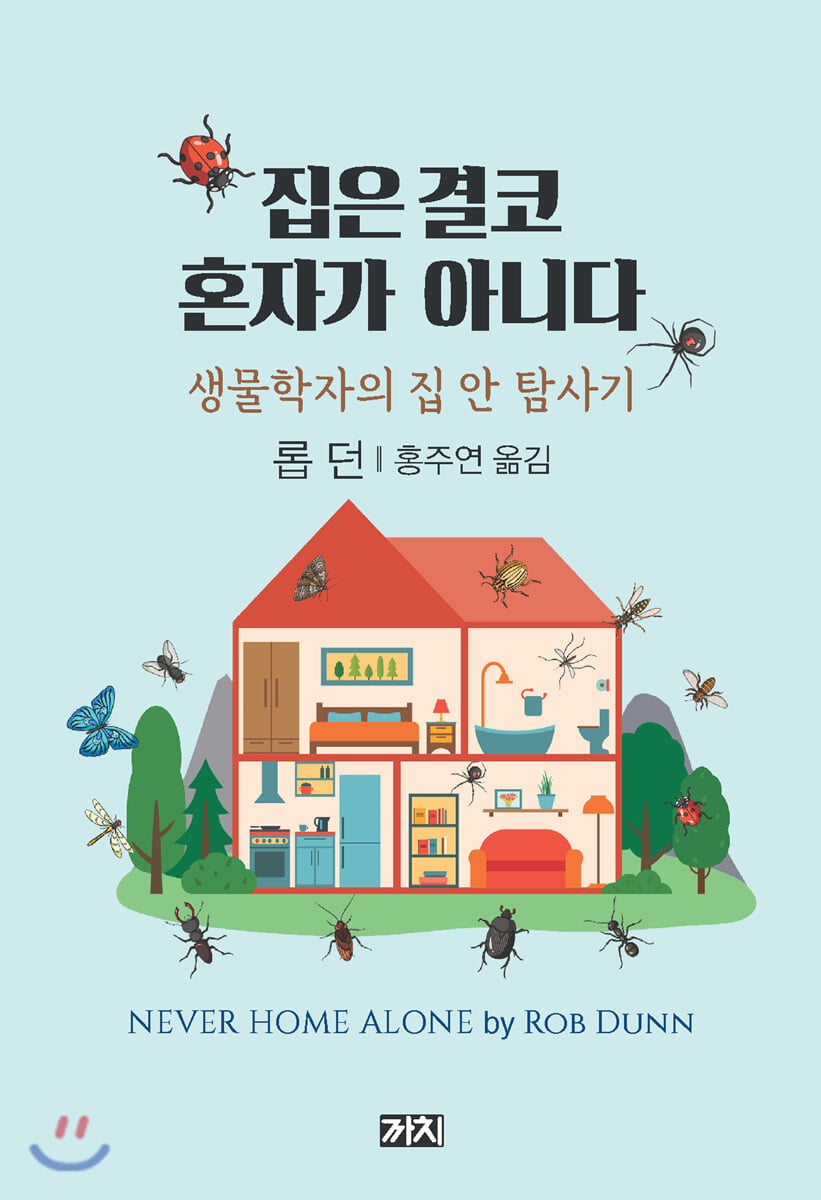
Home is never alone
 |
Description
Book Introduction
An exploration into the nooks and crannies of your home's ecosystem you never knew existed. Everything about our homes, the spaces we live in, through the eyes of a biologist. As a place where we spend much of our lives, home has many profound meanings. In addition, this book adds one new and unexpected meaning. This means that an ecosystem exists right inside the house. University of North Carolina biologist Rob Dunn explores the diverse creatures that live inside our homes, exploring every nook and cranny, from windowsills to shower heads. Following his guidance, you will discover that there is a wild world inside your home, including countless insects, microorganisms invisible to the naked eye, and even fungi. Home is never alone. A variety of creatures live with us in our homes, from those that follow us as we eat, sleep, and live, to those brought in by pets, and even those that come from the surrounding environment. Through this book, readers will be able to look at our home, our intimate space, from a new perspective. |
- You can preview some of the book's contents.
Preview
Publisher's Review
Chapter 1, “Wonder,” takes us back to the 17th century when Anton van Leeuwenhoek first discovered microorganisms.
Leeuwenhoek, a Dutch textile merchant, was the first to observe bacteria by pouring water on pepper he bought from a neighbor's shop and examining the water through a homemade microscope.
Humanity has finally been able to directly observe the world of tiny microorganisms that were previously invisible to the naked eye.
Chapter 2, “The Hot Springs in the Basement,” tells the story of microorganisms that survive in extreme environments.
Thermus aquaticus, which lives in a boiling geyser, has contributed to the identification of species in biology due to its ability to survive in extreme heat.
Chapter 3, “The Invisible World,” follows the process of investigating the diversity of life within the homes where we live.
The authors and their collaborators examined 1,000 homes in the United States and discovered a total of 80,000 species of bacteria and archaea.
Since ancient times, when humans began building houses and living there, countless microorganisms have existed in our homes.
Even on the International Space Station, which we consider the pinnacle of cutting-edge space, microorganisms live quietly.
Chapter 4, “The Disease of Deficiency,” begins with the discovery of the cause of the cholera epidemic that swept the world in the 1800s.
John Snow, who lived in London, traced the origins of cholera by mapping the households where it occurred.
Through his efforts, the technique of mapping and analyzing epidemics became widespread for the first time.
But starting in the 1950s, new diseases related to inflammation began to plague people.
The author presents a series of studies that reveal that these chronic diseases are related to our indoor environments, where we live cut off from nature.
According to these studies, the more disconnected you are from nature, the higher your risk of developing these chronic conditions.
Chapter 5, “Bathing in the Stream of Life,” is about the water we drink and use at home.
Not only in the water you drink, but also in the space that spews out such hot, powerful streams of water, living creatures can be found by examining the creatures inside the shower head.
Chapter 6, “The Problem with Too Many,” takes us into the world of fungi.
Our homes are spaces where mold inevitably develops when there is excessive moisture.
A study of over 1,000 American homes found as many as 40,000 different types of fungi.
And of course, fungi were still alive on the space station.
There are countless fungi that do not even have a species name yet coexisting in our homes.
Chapter 7, “The Ecologist Who Sees Far Away,” shows that we can discover countless new species not just in the exotic jungles of South America, but right here in our homes, right here in our own homes.
The inside of our homes can often be an unknown world, home to not only the arthropods we see—flies, mosquitoes, spiders, ants—but also new creatures we never knew existed.
Chapter 8, “What Uses a Hunchback?” introduces the usefulness of insects.
The gut microbes of crickets could be used to treat toxic waste, or the bacteria of other insects could be used to convert industrial waste into energy.
If we study the creatures inside our homes more deeply, we will discover tremendous potential in them.
Chapter 9, “The Cockroach’s Trouble is People,” is about cockroaches that become stronger and reappear the more humans try to eradicate them.
The most common cockroach in our homes is the German cockroach.
The German cockroach, which could not survive well in the wild, has evolved to live in human homes and now roams the world alongside humans.
Cockroaches survived by adapting to aversion to sugar in order to counteract the sugar-based bait developed to kill them.
As humans create more and more toxic drugs, the speed of wheel evolution becomes faster and faster.
Chapter 10, “What Cats Bring In,” introduces Toxoplasma gondii, a parasite that can spread its offspring only in the intestines of cats.
This parasite must enter the cat's intestine at the end of its life cycle.
Mice infected with Toxoplasma gondii became bolder than uninfected mice, making them more vulnerable to prey by cats.
Living with pets has brought countless parasites into our homes.
Chapter 11, “The Baby’s Body Garden,” discusses research on using harmless microbes to prevent harmful microbes from taking hold.
The author says that to live a healthy life, we need to restore the biodiversity of our bodies.
Chapter 12, “The Taste of Biodiversity,” features kimchi.
The author learned about the Korean concept of “hand taste” through a Korean acquaintance, and began to wonder whether an individual’s hands and the microorganisms in their home might also affect the taste of food.
He conducts experiments with the help of 15 bakers from 14 countries.
They were given the same ingredients and asked to make a starter that would make the bread rise.
They each created a starter in their own workspace, brought it together in the lab, and baked bread in their own way.
And we tasted each bread, each with a subtly different taste.
The microbiome of the bakers' hands differed from that of the general population, and even varied between bakers.
Even when making food with the same ingredients, the taste varies depending on the person who made it. This may be due to the microorganisms living on that person's hands.
These days, the term “staying home” is becoming a part of our daily lives.
However, not many people have thought about the ecosystem within our homes, the space where we spend more and more time.
This book offers a new perspective on what happens inside our homes, the spaces where we live.
Home is not alone, and there is a wild world inside the home.
Author Rob Dunn delves into the secrets hidden in indoor spaces, where we spend most of our daily lives, and unravels fascinating stories.
Their existence, which we never noticed before, unfolds vividly and fascinatingly in our homes.
Leeuwenhoek, a Dutch textile merchant, was the first to observe bacteria by pouring water on pepper he bought from a neighbor's shop and examining the water through a homemade microscope.
Humanity has finally been able to directly observe the world of tiny microorganisms that were previously invisible to the naked eye.
Chapter 2, “The Hot Springs in the Basement,” tells the story of microorganisms that survive in extreme environments.
Thermus aquaticus, which lives in a boiling geyser, has contributed to the identification of species in biology due to its ability to survive in extreme heat.
Chapter 3, “The Invisible World,” follows the process of investigating the diversity of life within the homes where we live.
The authors and their collaborators examined 1,000 homes in the United States and discovered a total of 80,000 species of bacteria and archaea.
Since ancient times, when humans began building houses and living there, countless microorganisms have existed in our homes.
Even on the International Space Station, which we consider the pinnacle of cutting-edge space, microorganisms live quietly.
Chapter 4, “The Disease of Deficiency,” begins with the discovery of the cause of the cholera epidemic that swept the world in the 1800s.
John Snow, who lived in London, traced the origins of cholera by mapping the households where it occurred.
Through his efforts, the technique of mapping and analyzing epidemics became widespread for the first time.
But starting in the 1950s, new diseases related to inflammation began to plague people.
The author presents a series of studies that reveal that these chronic diseases are related to our indoor environments, where we live cut off from nature.
According to these studies, the more disconnected you are from nature, the higher your risk of developing these chronic conditions.
Chapter 5, “Bathing in the Stream of Life,” is about the water we drink and use at home.
Not only in the water you drink, but also in the space that spews out such hot, powerful streams of water, living creatures can be found by examining the creatures inside the shower head.
Chapter 6, “The Problem with Too Many,” takes us into the world of fungi.
Our homes are spaces where mold inevitably develops when there is excessive moisture.
A study of over 1,000 American homes found as many as 40,000 different types of fungi.
And of course, fungi were still alive on the space station.
There are countless fungi that do not even have a species name yet coexisting in our homes.
Chapter 7, “The Ecologist Who Sees Far Away,” shows that we can discover countless new species not just in the exotic jungles of South America, but right here in our homes, right here in our own homes.
The inside of our homes can often be an unknown world, home to not only the arthropods we see—flies, mosquitoes, spiders, ants—but also new creatures we never knew existed.
Chapter 8, “What Uses a Hunchback?” introduces the usefulness of insects.
The gut microbes of crickets could be used to treat toxic waste, or the bacteria of other insects could be used to convert industrial waste into energy.
If we study the creatures inside our homes more deeply, we will discover tremendous potential in them.
Chapter 9, “The Cockroach’s Trouble is People,” is about cockroaches that become stronger and reappear the more humans try to eradicate them.
The most common cockroach in our homes is the German cockroach.
The German cockroach, which could not survive well in the wild, has evolved to live in human homes and now roams the world alongside humans.
Cockroaches survived by adapting to aversion to sugar in order to counteract the sugar-based bait developed to kill them.
As humans create more and more toxic drugs, the speed of wheel evolution becomes faster and faster.
Chapter 10, “What Cats Bring In,” introduces Toxoplasma gondii, a parasite that can spread its offspring only in the intestines of cats.
This parasite must enter the cat's intestine at the end of its life cycle.
Mice infected with Toxoplasma gondii became bolder than uninfected mice, making them more vulnerable to prey by cats.
Living with pets has brought countless parasites into our homes.
Chapter 11, “The Baby’s Body Garden,” discusses research on using harmless microbes to prevent harmful microbes from taking hold.
The author says that to live a healthy life, we need to restore the biodiversity of our bodies.
Chapter 12, “The Taste of Biodiversity,” features kimchi.
The author learned about the Korean concept of “hand taste” through a Korean acquaintance, and began to wonder whether an individual’s hands and the microorganisms in their home might also affect the taste of food.
He conducts experiments with the help of 15 bakers from 14 countries.
They were given the same ingredients and asked to make a starter that would make the bread rise.
They each created a starter in their own workspace, brought it together in the lab, and baked bread in their own way.
And we tasted each bread, each with a subtly different taste.
The microbiome of the bakers' hands differed from that of the general population, and even varied between bakers.
Even when making food with the same ingredients, the taste varies depending on the person who made it. This may be due to the microorganisms living on that person's hands.
These days, the term “staying home” is becoming a part of our daily lives.
However, not many people have thought about the ecosystem within our homes, the space where we spend more and more time.
This book offers a new perspective on what happens inside our homes, the spaces where we live.
Home is not alone, and there is a wild world inside the home.
Author Rob Dunn delves into the secrets hidden in indoor spaces, where we spend most of our daily lives, and unravels fascinating stories.
Their existence, which we never noticed before, unfolds vividly and fascinatingly in our homes.
GOODS SPECIFICS
- Date of issue: May 20, 2020
- Page count, weight, size: 368 pages | 618g | 150*220*30mm
- ISBN13: 9788972917137
- ISBN10: 8972917133
You may also like
카테고리
korean


korean

![GQ KOREA Mark (Monthly): December [2025]](http://librairie.coreenne.fr/cdn/shop/files/8ef265dbbfbf186523ed75ba7319009d.jpg?v=1765340328&width=3840)


