

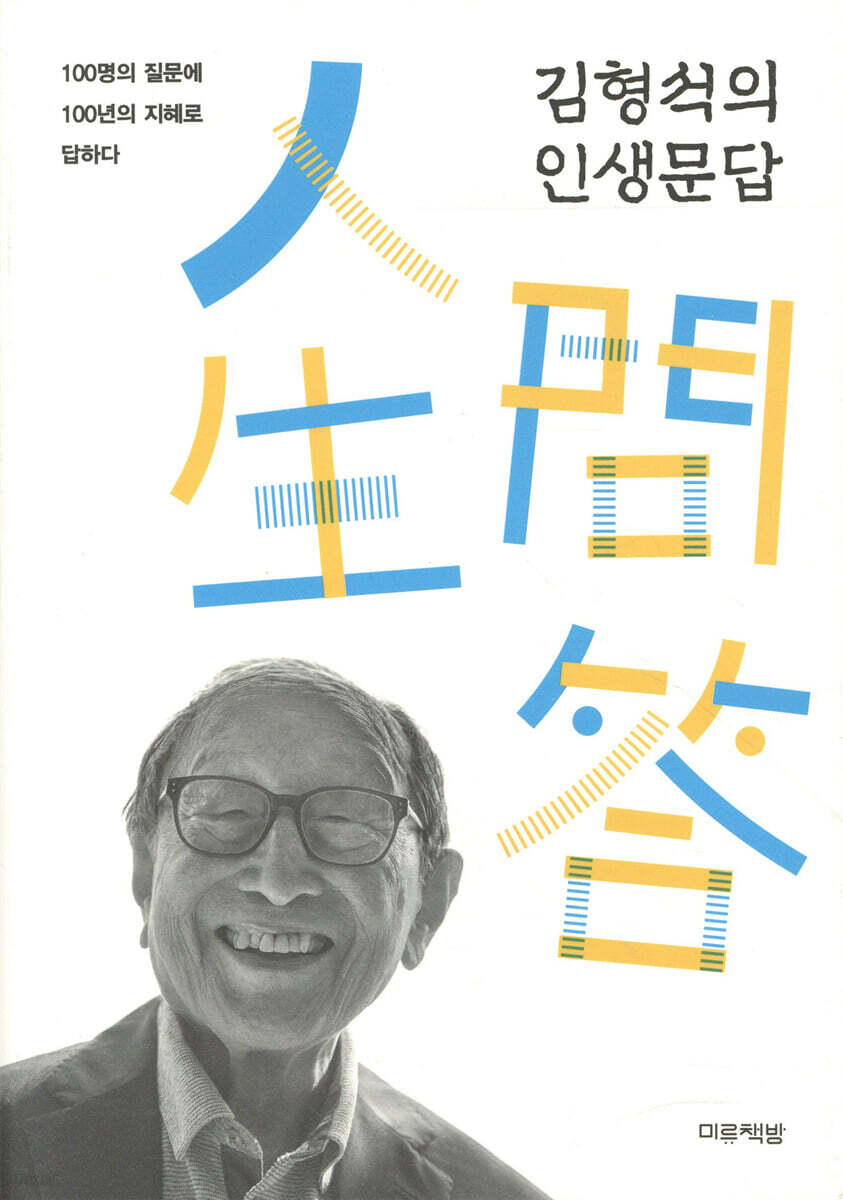
Kim Hyung-seok's Q&A on Life
 |
Description
Book Introduction
A loving answer to the questions we all face at some point in life. This is a writing style in which Professor Kim Hyung-seok, the 'eternal active', answers 31 questions he faces in life. We collected questions from 100 ordinary people in their 20s to 60s, selected 31 common questions, recorded the answers of the old philosopher, and recorded them to preserve his voice as much as possible. Is it something you learn only after living? These 31 answers contain the wisdom of a century of living. Each and every answer is like a twinkling star. However, this does not mean that any specific correct answer is forced. “I lived like this, so why don’t you try living like that too?” he simply suggests in a friendly tone. By connecting those twinkling dots, we can hope that perhaps we can cross the desert of life. |
- You can preview some of the book's contents.
Preview
index
Introduction
Q1.
How can I live my life without regrets?
Q2.
What should I do to have a happy old age?
Q3.
Why do we do things?
Q4.
What is happiness?
Q5.
How much money do I need to be happy?
Q6.
How can I live my life as myself?
Q7.
What is the core of personality?
Q8.
If there was a 'teacher' who had a great influence on you during your youth?
Q9.
What is love?
Q10.
How should I educate my children?
Q11.
How can we maintain a good relationship between couples?
Q12.
What do you think about the current situation where children are valued more than their parents?
Q13.
Is loneliness in old age inevitable?
Q14.
What are some things you should be wary of as you get older?
Q15.
Is it right to remarry in old age?
Q16.
In a fiercely competitive society, can the workplace become a place of happiness?
Q17.
If you had to choose between success and happiness, which would you choose?
Q18.
Why should I read books?
Q19.
How should we live in the 21st century, a century of advanced machine civilization?
Q20.
What do you think is the cause of conflict in our society?
Q21.
I'm curious about the secret to health.
Q22.
Is there a secret to staying mentally young as you age?
Q23.
Everyone wants to be happy, but are there people who can't be happy?
Q24.
Is there really such a thing as fate?
Q25.
What kind of religion is Christianity?
Q26.
How do you pray?
Q27.
Is a society without religion possible?
Q28.
Why is religion necessary?
Q29.
How do we overcome the painful moments that come in life?
Q30.
What does death mean?
Q31.
What remains at the end of life?
Q1.
How can I live my life without regrets?
Q2.
What should I do to have a happy old age?
Q3.
Why do we do things?
Q4.
What is happiness?
Q5.
How much money do I need to be happy?
Q6.
How can I live my life as myself?
Q7.
What is the core of personality?
Q8.
If there was a 'teacher' who had a great influence on you during your youth?
Q9.
What is love?
Q10.
How should I educate my children?
Q11.
How can we maintain a good relationship between couples?
Q12.
What do you think about the current situation where children are valued more than their parents?
Q13.
Is loneliness in old age inevitable?
Q14.
What are some things you should be wary of as you get older?
Q15.
Is it right to remarry in old age?
Q16.
In a fiercely competitive society, can the workplace become a place of happiness?
Q17.
If you had to choose between success and happiness, which would you choose?
Q18.
Why should I read books?
Q19.
How should we live in the 21st century, a century of advanced machine civilization?
Q20.
What do you think is the cause of conflict in our society?
Q21.
I'm curious about the secret to health.
Q22.
Is there a secret to staying mentally young as you age?
Q23.
Everyone wants to be happy, but are there people who can't be happy?
Q24.
Is there really such a thing as fate?
Q25.
What kind of religion is Christianity?
Q26.
How do you pray?
Q27.
Is a society without religion possible?
Q28.
Why is religion necessary?
Q29.
How do we overcome the painful moments that come in life?
Q30.
What does death mean?
Q31.
What remains at the end of life?
Detailed image

Into the book
Those who make possession the purpose of their work will lose everything, but those who find value in their work and live with others will find eternal joy.
Life is happier for those who can give more.
Giving to more people is the way I complete my life.
--- p.29
A person who possesses a lot of material wealth but is mentally poor is destined to live an awkward life, like enjoying a thick winter coat in the middle of summer.
--- p.41
When I think about what a person's life is, I think that if I were an apple tree, I could think of life as planting an apple tree and growing that tree.
--- p.48
As I live, I feel that I am who I am today because of the people I met, directly or indirectly.
If I hadn't met those people, I wouldn't be who I am today.
I think there are three things in an encounter.
What kind of teacher did you meet? What kind of friend did you live with? What kind of spouse did you have? I think those three things differentiate life.
--- p.61
Life shouldn't be judged until you're 50.
So, when raising children, I think it's right to think about what kind of people they will be able to contribute to society when they're around 50 years old.
--- p.76
If you think about it, life might be about each person carrying a heavy burden and walking for a limited time.
--- p.88
Being older means taking care of those below you.
If you have a loving and caring heart, you will be respected and appreciated even if you have mistakes and shortcomings.
--- p.103
A couple lives with love at first, but as they raise children, they live with affection, and as they grow old, they live with humanity.
--- p.106
What is the standard for success? If you're born with a 5 and achieve a 7, you're considered successful. If you're born with a 9 and achieve a 7, you're considered unsuccessful.
Your own standards are more important than others' standards.
--- p.118
It's one of the reasons I started keeping a diary when I turned 40.
Before writing the diary for that day, I read the diaries from last year and the year before.
Reading last year's, I thought, 'Oh, I made that mistake back then.
I shouldn't make that mistake again.' While reading the one from two years ago, I thought, 'Ah, I had such a good idea back then.
I think we need to develop this idea further.
I feel like I'm maturing as a person by writing a diary.
--- p.152
An egoist lives only for himself.
So, they don't have personality.
Character is a good value that comes from human relationships.
It's hard for an egoist to have that.
But the size of one's personality is ultimately the size of one's vessel.
Put happiness in that bowl.
Because the vessel of an egoist is small, the happiness he can contain is also small.
--- p.158
The higher your faith, the more likely you are to pray in a prayer-like manner, and the lower your faith, the more likely you are to pray to fulfill human desires.
So what does it mean to have a high level of faith? True faith is when Jesus' words become my outlook on life, and my life's purpose becomes the same as Jesus'.
--- p.180
People who have beautiful relationships are happy in death.
I think people who live with a lot of things like revenge or resentment can't die with satisfaction.
There are two things.
I wish I could be forgiven, but I feel remorseful for missing the opportunity.
Another thing is feeling resentful and wronged.
Ultimately, it can be said that the quality of one's death is determined by how one forms interpersonal relationships.
--- p.206
I think death is like crossing the finish line in a marathon.
Now that you've started the marathon, you have to cross the finish line.
If you've done your best up to this point, there's no need to think about what comes next.
Isn't it because there is death that humans live the best lives?
--- p.208
My joy, my happiness, is not something I create and take possession of, but something that others create and give to me.
For example, I am happy as a father because my sons and daughters are happy.
Because my disciples live fulfilling lives, I, as their teacher, am able to live like a human being.
So I started to think that my life wasn't for me, but to give back, to give.
Life is happier for those who can give more.
Giving to more people is the way I complete my life.
--- p.29
A person who possesses a lot of material wealth but is mentally poor is destined to live an awkward life, like enjoying a thick winter coat in the middle of summer.
--- p.41
When I think about what a person's life is, I think that if I were an apple tree, I could think of life as planting an apple tree and growing that tree.
--- p.48
As I live, I feel that I am who I am today because of the people I met, directly or indirectly.
If I hadn't met those people, I wouldn't be who I am today.
I think there are three things in an encounter.
What kind of teacher did you meet? What kind of friend did you live with? What kind of spouse did you have? I think those three things differentiate life.
--- p.61
Life shouldn't be judged until you're 50.
So, when raising children, I think it's right to think about what kind of people they will be able to contribute to society when they're around 50 years old.
--- p.76
If you think about it, life might be about each person carrying a heavy burden and walking for a limited time.
--- p.88
Being older means taking care of those below you.
If you have a loving and caring heart, you will be respected and appreciated even if you have mistakes and shortcomings.
--- p.103
A couple lives with love at first, but as they raise children, they live with affection, and as they grow old, they live with humanity.
--- p.106
What is the standard for success? If you're born with a 5 and achieve a 7, you're considered successful. If you're born with a 9 and achieve a 7, you're considered unsuccessful.
Your own standards are more important than others' standards.
--- p.118
It's one of the reasons I started keeping a diary when I turned 40.
Before writing the diary for that day, I read the diaries from last year and the year before.
Reading last year's, I thought, 'Oh, I made that mistake back then.
I shouldn't make that mistake again.' While reading the one from two years ago, I thought, 'Ah, I had such a good idea back then.
I think we need to develop this idea further.
I feel like I'm maturing as a person by writing a diary.
--- p.152
An egoist lives only for himself.
So, they don't have personality.
Character is a good value that comes from human relationships.
It's hard for an egoist to have that.
But the size of one's personality is ultimately the size of one's vessel.
Put happiness in that bowl.
Because the vessel of an egoist is small, the happiness he can contain is also small.
--- p.158
The higher your faith, the more likely you are to pray in a prayer-like manner, and the lower your faith, the more likely you are to pray to fulfill human desires.
So what does it mean to have a high level of faith? True faith is when Jesus' words become my outlook on life, and my life's purpose becomes the same as Jesus'.
--- p.180
People who have beautiful relationships are happy in death.
I think people who live with a lot of things like revenge or resentment can't die with satisfaction.
There are two things.
I wish I could be forgiven, but I feel remorseful for missing the opportunity.
Another thing is feeling resentful and wronged.
Ultimately, it can be said that the quality of one's death is determined by how one forms interpersonal relationships.
--- p.206
I think death is like crossing the finish line in a marathon.
Now that you've started the marathon, you have to cross the finish line.
If you've done your best up to this point, there's no need to think about what comes next.
Isn't it because there is death that humans live the best lives?
--- p.208
My joy, my happiness, is not something I create and take possession of, but something that others create and give to me.
For example, I am happy as a father because my sons and daughters are happy.
Because my disciples live fulfilling lives, I, as their teacher, am able to live like a human being.
So I started to think that my life wasn't for me, but to give back, to give.
--- p.214
Publisher's Review
This book is written in the form of a 103-year-old philosopher answering 31 questions he faces in life.
We collected questions from 100 ordinary people in their 20s to 60s, selected 31 common questions, and recorded the answers of the old philosopher, preserving his voice as much as possible.
There are questions that everyone has in life.
How should we live and for what, what is happiness, why do we work, etc.
There is no right answer, but if there is a wise man in life, I want to grab hold of his coattails and hear his answer.
As if he understood our sense of bewilderment, the old philosopher gives us answers to life's questions in a gentle and soft voice, filled with the wisdom of a century.
The author, Professor Kim Hyung-seok, is a contemporary intellectual who awakens us with philosophical thoughts that permeate life. Even at the age of 103, he is still an "eternal active" who gives over 200 lectures, appears on television, and writes newspaper columns.
The 31 questions in this book represent the concerns of all of us.
It covers all of life's unanswered questions, including life and death, fate, religion, science, success and happiness, and the meaning of life.
In addition, they ask questions about everyday issues such as how to raise children, the secret to a good marital relationship, and how much money is needed to be happy.
They also ask about how to stay young as you age, things to watch out for in old age, and secrets to good health.
The question seems easy and simple at first glance.
But it contains the countless worries of us who are lost and wandering.
Is it something you learn only after living? Professor Kim Hyung-seok, a life mentor to all of us, reflects on his own life and shares the secrets of life he's discovered with his juniors through these answers.
However, this does not mean that any specific correct answer is forced.
“I lived like this, so why don’t you try living like that too?” he simply suggests in a friendly tone.
The 31 answers contain the wisdom of a century of life.
As I read the book, I keep getting emotional.
There are more than one or two phrases I want to transcribe.
Each and every answer is like a twinkling star.
By connecting those twinkling dots, we begin to harbor hope that perhaps we can cross the desert of life.
We collected questions from 100 ordinary people in their 20s to 60s, selected 31 common questions, and recorded the answers of the old philosopher, preserving his voice as much as possible.
There are questions that everyone has in life.
How should we live and for what, what is happiness, why do we work, etc.
There is no right answer, but if there is a wise man in life, I want to grab hold of his coattails and hear his answer.
As if he understood our sense of bewilderment, the old philosopher gives us answers to life's questions in a gentle and soft voice, filled with the wisdom of a century.
The author, Professor Kim Hyung-seok, is a contemporary intellectual who awakens us with philosophical thoughts that permeate life. Even at the age of 103, he is still an "eternal active" who gives over 200 lectures, appears on television, and writes newspaper columns.
The 31 questions in this book represent the concerns of all of us.
It covers all of life's unanswered questions, including life and death, fate, religion, science, success and happiness, and the meaning of life.
In addition, they ask questions about everyday issues such as how to raise children, the secret to a good marital relationship, and how much money is needed to be happy.
They also ask about how to stay young as you age, things to watch out for in old age, and secrets to good health.
The question seems easy and simple at first glance.
But it contains the countless worries of us who are lost and wandering.
Is it something you learn only after living? Professor Kim Hyung-seok, a life mentor to all of us, reflects on his own life and shares the secrets of life he's discovered with his juniors through these answers.
However, this does not mean that any specific correct answer is forced.
“I lived like this, so why don’t you try living like that too?” he simply suggests in a friendly tone.
The 31 answers contain the wisdom of a century of life.
As I read the book, I keep getting emotional.
There are more than one or two phrases I want to transcribe.
Each and every answer is like a twinkling star.
By connecting those twinkling dots, we begin to harbor hope that perhaps we can cross the desert of life.
GOODS SPECIFICS
- Date of issue: February 3, 2022
- Page count, weight, size: 220 pages | 386g | 148*210*20mm
- ISBN13: 9791188632039
- ISBN10: 1188632035
You may also like
카테고리
korean


korean

![GQ KOREA Mark (Monthly): December [2025]](http://librairie.coreenne.fr/cdn/shop/files/8ef265dbbfbf186523ed75ba7319009d.jpg?v=1765340328&width=3840)


