

whale
 |
Description
Book Introduction
About the 90 species of whales living on Earth
Completely organized detailed profiles and characteristics of each species!
“Contains hundreds of vivid pictures of living whales swimming through the ocean.”
The whale, an animal so familiar to humans and beloved by our children, is a mammal and the most diverse and intelligent species on Earth, and this 'friend' who appears frequently in stories is surprisingly an animal that is not well known to us.
This is inevitable because whales migrate long distances and live in deep waters, so the time we can glimpse the lives of these animals is limited, and it is also difficult to study them due to various restrictions.
Naturally, books about 'whales' are rare, and those that do exist are woefully inadequate to satisfy our curiosity.
This book is the first to compile the most interesting facts about these amazing creatures.
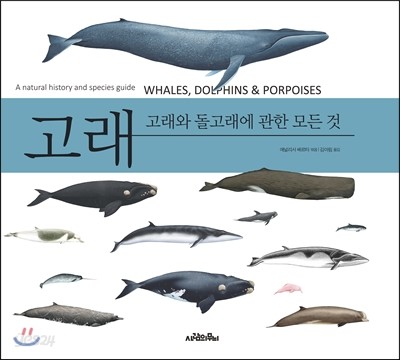
Filled with beautiful photographs and dynamic images of nearly every whale on Earth, this book is a definitive guide to whales, presenting research findings on the nature and behavior of whales and dolphins from around the world in a systematic and concise manner, organized by species.
This 'gift' book, which is fun to turn each page, contains enough reading material and things to see that parents and children can enjoy talking about together.
Completely organized detailed profiles and characteristics of each species!
“Contains hundreds of vivid pictures of living whales swimming through the ocean.”
The whale, an animal so familiar to humans and beloved by our children, is a mammal and the most diverse and intelligent species on Earth, and this 'friend' who appears frequently in stories is surprisingly an animal that is not well known to us.
This is inevitable because whales migrate long distances and live in deep waters, so the time we can glimpse the lives of these animals is limited, and it is also difficult to study them due to various restrictions.
Naturally, books about 'whales' are rare, and those that do exist are woefully inadequate to satisfy our curiosity.
This book is the first to compile the most interesting facts about these amazing creatures.
Filled with beautiful photographs and dynamic images of nearly every whale on Earth, this book is a definitive guide to whales, presenting research findings on the nature and behavior of whales and dolphins from around the world in a systematic and concise manner, organized by species.
This 'gift' book, which is fun to turn each page, contains enough reading material and things to see that parents and children can enjoy talking about together.
- You can preview some of the book's contents.
Preview
index
Entering
Biological characteristics
Phylogeny and evolution
Anatomy and Physiology
action
Food and foraging
Life history
Habitat range
Habitat
Protection and Management
Species identification tools and maps
Keys to Identifying Species
Behavior seen on the water
Where and how to observe
List of whale species
Whale Species List User Manual
right whale family
Southern right whale
North Atlantic right whale
North Pacific right whale
bowhead whale
small right whale
Gray whales and baleen whales
gray whale
Minke whale
Antarctic minke whale
Herring whale
Bryde's whale
Blue whale
Omura whale
Long-finned whale
humpback whale
Dolphin family
cephalopod dolphin
Chilean dolphin
Heaviside dolphin
Hector's dolphin
Long-beaked common dolphin
short-beaked dolphin
dwarf killer whale
Pilot whale
Pilot whale
Great white-nosed dolphin
Sarawak dolphin
Atlantic sickle dolphin
white-beaked dolphin
Pearl dolphin
Hourglass dolphin
sickle-headed dolphin
Dusky dolphin
slender dolphin
white-bellied dolphin
Irrawaddy dolphin
Australian snubfin dolphin
killer whale
Cat whale
Orca attachment
Little dolphin
Guiana dolphin
Indo-Pacific humpback whale
Indian Ocean humpback dolphin
Australian humpback dolphin
Atlantic humpback whale
black-faced dolphin
Clymen's dolphin
striped dolphin
Atlantic spotted dolphin
spinner dolphin
snakehead dolphin
Southern right whale
bottlenose dolphin
Sperm whales, sperm whales
sperm whale
Little sperm whale
sperm whale
Monodontidae
narwhal
white whale
Beaked whales
Arnoux beaked whale
Hammerhead whale
Northern bottlenose whale
Southern bottlenose whale
Indo-Pacific beaked whale
Sowerby's beaked whale
Andrew's beaked whale
Herb beaked whale
humpback whale
Gervais beaked whale
Bank-toothed whale
Gray beaked whale
Hector's beaked whale
Deraniyagala beaked whale
Strap-toothed whale
True beaked whale
Perrin's beaked whale
dwarf beaked whale
Great-toothed beaked whale
fan-toothed whale
Shepherd's beaked whale
Min's beaked whale
River dolphins
Yangtze River dolphin
La Plata River dolphin
Amazon River Dolphin
Ganges River dolphin
Dolphinidae
finless porpoise
Indo-Pacific finless porpoise
Spectacled dolphin
harbor porpoise
vaquita dolphin
Burmeister's dolphin
Magpie dolphin
supplement
Classification of cetaceans
Glossary
References
People who helped with this book
Search
Acknowledgements
Biological characteristics
Phylogeny and evolution
Anatomy and Physiology
action
Food and foraging
Life history
Habitat range
Habitat
Protection and Management
Species identification tools and maps
Keys to Identifying Species
Behavior seen on the water
Where and how to observe
List of whale species
Whale Species List User Manual
right whale family
Southern right whale
North Atlantic right whale
North Pacific right whale
bowhead whale
small right whale
Gray whales and baleen whales
gray whale
Minke whale
Antarctic minke whale
Herring whale
Bryde's whale
Blue whale
Omura whale
Long-finned whale
humpback whale
Dolphin family
cephalopod dolphin
Chilean dolphin
Heaviside dolphin
Hector's dolphin
Long-beaked common dolphin
short-beaked dolphin
dwarf killer whale
Pilot whale
Pilot whale
Great white-nosed dolphin
Sarawak dolphin
Atlantic sickle dolphin
white-beaked dolphin
Pearl dolphin
Hourglass dolphin
sickle-headed dolphin
Dusky dolphin
slender dolphin
white-bellied dolphin
Irrawaddy dolphin
Australian snubfin dolphin
killer whale
Cat whale
Orca attachment
Little dolphin
Guiana dolphin
Indo-Pacific humpback whale
Indian Ocean humpback dolphin
Australian humpback dolphin
Atlantic humpback whale
black-faced dolphin
Clymen's dolphin
striped dolphin
Atlantic spotted dolphin
spinner dolphin
snakehead dolphin
Southern right whale
bottlenose dolphin
Sperm whales, sperm whales
sperm whale
Little sperm whale
sperm whale
Monodontidae
narwhal
white whale
Beaked whales
Arnoux beaked whale
Hammerhead whale
Northern bottlenose whale
Southern bottlenose whale
Indo-Pacific beaked whale
Sowerby's beaked whale
Andrew's beaked whale
Herb beaked whale
humpback whale
Gervais beaked whale
Bank-toothed whale
Gray beaked whale
Hector's beaked whale
Deraniyagala beaked whale
Strap-toothed whale
True beaked whale
Perrin's beaked whale
dwarf beaked whale
Great-toothed beaked whale
fan-toothed whale
Shepherd's beaked whale
Min's beaked whale
River dolphins
Yangtze River dolphin
La Plata River dolphin
Amazon River Dolphin
Ganges River dolphin
Dolphinidae
finless porpoise
Indo-Pacific finless porpoise
Spectacled dolphin
harbor porpoise
vaquita dolphin
Burmeister's dolphin
Magpie dolphin
supplement
Classification of cetaceans
Glossary
References
People who helped with this book
Search
Acknowledgements
Detailed image

Publisher's Review
This one book will teach you everything you need to know about whales!
This book provides readers with a detailed introduction to the biology and species classification of these magnificent and charismatic marine mammals, cetaceans, and the unique characteristics of specific whales.
Part 1 [Biological Characteristics] contains stories about marine biology.
Phylogeny and Evolution covers where cetaceans originated, how they evolved, and how they spread from the tropics to the polar regions.
'Anatomy and Physiology' tells us that the whale's head, body, fins, flippers, and tail allowed it to live fully aquatic.
It also covers the emergence of novel adaptations in some cetaceans, such as the ability to produce and receive high-frequency sounds.
And in 'Behavior', we take a close look at the social organization of cetaceans, from the highly complex societies of toothed whales to solitary species.
In 'Food and Foraging' we look at where cetaceans find food and how they catch it.
'Life History' covers the growth, reproduction, and survival of whales, 'Habitat and Range' provides information on where whales live and their migration patterns, and 'Protection and Management' explores several endangered species, the main threats to them, and what efforts are needed to protect whales.
Part 2 [Species Identification Tools and Maps] explores the unique characteristics that help distinguish whales and dolphins into different species, including body size and color, spots, and the shape of their tails and flippers.
One of the whales' characteristic behaviors above the water is their "leaping", which can provide information about the whale species and the best places to see them around the world.
The checklist in the book will give you an idea of what species of whales you might encounter in different parts of the world.
Part 3 [List of Whale Species] includes 'Family Introduction' which introduces the common names of whales, the number of species, interesting biological characteristics, and representative species that exhibit key characteristics or typical diving or feeding behaviors, as well as detailed biological information on specific species, such as 'Information Chart', 'Species Identification Checklist', 'Anatomical Characteristics', 'Life History', 'Food and Foraging', 'Diving and Surface Behavior', and 'Distribution Map', allowing you to understand whales at a glance.
Whale, you must know this!
1.
How many species of whales are alive today?
Whales and dolphins are known as cetaceans, and there are currently 90 identified species.
Although some species of cetaceans are endangered, we occasionally hear exciting news about the discovery of a new species.
2.
What do whales eat?
Cetaceans have evolved to eat a variety of foods.
The types of food vary, from zooplankton less than 1-2 mm in length to large squids that can exceed 3 m in length.
Cetaceans, the largest animals, have enormous energy expenditures and must eat large amounts of food at once and frequently.
Blue whales can swallow up to 150% of their body weight in seawater at a time.
Blue whales can hold their breath for 30 minutes during a single dive and lunge up to six times at a school of krill.
To maintain its massive size, this whale eats 3,600 kg of krill every day.
3.
What is the largest whale?
The blue whale, the largest animal on Earth, can grow to 33 meters in length and weigh up to 150,000 kilograms.
4.
What is the smallest whale?
The smallest dolphin, the Hector's dolphin, is less than 1.5 meters long and weighs less than 50 kilograms.
5.
How long do whales live?
Cetaceans, like other large mammal species, are relatively long-lived.
The lifespan of the right whale is up to 100 years, and the bowhead whale, the longest-living species among whales, can live for over 100 years.
In 2007, weapon fragments found inside a bowhead whale were estimated to be at least 115 to 130 years old.
Recent research suggests that bowhead whales can live up to 200 years.
Whales caught by Inuit hunters were usually over 100 years old, and one whale was estimated to be 211 years old.
6.
How do whales communicate?
Whales communicate in a variety of ways, including jumping, a visual way of communicating with each other in the air, and using low-frequency sounds. Blue whales produce a unique sound with a frequency of 20 Hz or less, which varies from region to region, and these sounds are louder and longer than those of any other animal on Earth.
The sound of a blue whale is the loudest sound any animal can make, reaching about 188 decibels and can travel hundreds of kilometers.
They also use echolocation and click-based ultrasonic detection systems to find food and communicate.
Also, the act of striking the surface of the water with flippers and tail is a form of nonverbal communication.
7.
How long can whales dive?
Sperm whales have the longest diving time among cetaceans, being able to stay submerged for up to two hours.
Narwhals have one of the deepest diving depths among marine mammals, diving to depths of 1,500 to 2,000 meters and lasting up to 25 minutes at a time.
Hammerhead whales, which primarily feed on fish living on the seabed, make long, deep dives, sometimes reaching depths of 1,500 meters, where they dive for about 45 minutes and sometimes more than an hour.
The beaked whale holds the record for the longest and deepest dive of any vertebrate.
This is a record of diving 2,992 meters down after taking a single breath and lasting 137 minutes.
8.
How do whales reproduce?
The reproductive cycle of all cetaceans is divided into three periods: pregnancy, lactation, and resting.
In most species, females give birth to offspring throughout their lives.
The period between pregnancies is at least two years, but usually longer.
The gestation period for baleen whales is usually 11 months, and the lactation period is 6 to 7 months.
And females become pregnant every 2 to 4 years.
For bowhead whales and right whales, the gestation period is 12 to 13 months, and females conceive every 3 to 7 years.
Many species of small dolphins have a birth interval of about three years.
The reproductive cycle is a gestation period of 11 to 12 months, a lactation period of 1 to 2 years, a rest period of several months, and then pregnancy again.
Larger toothed whales, such as sperm whales, have longer reproductive cycles, with a gestation period of 12 to 17 months and a lactation period of three years or more.
This book provides readers with a detailed introduction to the biology and species classification of these magnificent and charismatic marine mammals, cetaceans, and the unique characteristics of specific whales.
Part 1 [Biological Characteristics] contains stories about marine biology.
Phylogeny and Evolution covers where cetaceans originated, how they evolved, and how they spread from the tropics to the polar regions.
'Anatomy and Physiology' tells us that the whale's head, body, fins, flippers, and tail allowed it to live fully aquatic.
It also covers the emergence of novel adaptations in some cetaceans, such as the ability to produce and receive high-frequency sounds.
And in 'Behavior', we take a close look at the social organization of cetaceans, from the highly complex societies of toothed whales to solitary species.
In 'Food and Foraging' we look at where cetaceans find food and how they catch it.
'Life History' covers the growth, reproduction, and survival of whales, 'Habitat and Range' provides information on where whales live and their migration patterns, and 'Protection and Management' explores several endangered species, the main threats to them, and what efforts are needed to protect whales.
Part 2 [Species Identification Tools and Maps] explores the unique characteristics that help distinguish whales and dolphins into different species, including body size and color, spots, and the shape of their tails and flippers.
One of the whales' characteristic behaviors above the water is their "leaping", which can provide information about the whale species and the best places to see them around the world.
The checklist in the book will give you an idea of what species of whales you might encounter in different parts of the world.
Part 3 [List of Whale Species] includes 'Family Introduction' which introduces the common names of whales, the number of species, interesting biological characteristics, and representative species that exhibit key characteristics or typical diving or feeding behaviors, as well as detailed biological information on specific species, such as 'Information Chart', 'Species Identification Checklist', 'Anatomical Characteristics', 'Life History', 'Food and Foraging', 'Diving and Surface Behavior', and 'Distribution Map', allowing you to understand whales at a glance.
Whale, you must know this!
1.
How many species of whales are alive today?
Whales and dolphins are known as cetaceans, and there are currently 90 identified species.
Although some species of cetaceans are endangered, we occasionally hear exciting news about the discovery of a new species.
2.
What do whales eat?
Cetaceans have evolved to eat a variety of foods.
The types of food vary, from zooplankton less than 1-2 mm in length to large squids that can exceed 3 m in length.
Cetaceans, the largest animals, have enormous energy expenditures and must eat large amounts of food at once and frequently.
Blue whales can swallow up to 150% of their body weight in seawater at a time.
Blue whales can hold their breath for 30 minutes during a single dive and lunge up to six times at a school of krill.
To maintain its massive size, this whale eats 3,600 kg of krill every day.
3.
What is the largest whale?
The blue whale, the largest animal on Earth, can grow to 33 meters in length and weigh up to 150,000 kilograms.
4.
What is the smallest whale?
The smallest dolphin, the Hector's dolphin, is less than 1.5 meters long and weighs less than 50 kilograms.
5.
How long do whales live?
Cetaceans, like other large mammal species, are relatively long-lived.
The lifespan of the right whale is up to 100 years, and the bowhead whale, the longest-living species among whales, can live for over 100 years.
In 2007, weapon fragments found inside a bowhead whale were estimated to be at least 115 to 130 years old.
Recent research suggests that bowhead whales can live up to 200 years.
Whales caught by Inuit hunters were usually over 100 years old, and one whale was estimated to be 211 years old.
6.
How do whales communicate?
Whales communicate in a variety of ways, including jumping, a visual way of communicating with each other in the air, and using low-frequency sounds. Blue whales produce a unique sound with a frequency of 20 Hz or less, which varies from region to region, and these sounds are louder and longer than those of any other animal on Earth.
The sound of a blue whale is the loudest sound any animal can make, reaching about 188 decibels and can travel hundreds of kilometers.
They also use echolocation and click-based ultrasonic detection systems to find food and communicate.
Also, the act of striking the surface of the water with flippers and tail is a form of nonverbal communication.
7.
How long can whales dive?
Sperm whales have the longest diving time among cetaceans, being able to stay submerged for up to two hours.
Narwhals have one of the deepest diving depths among marine mammals, diving to depths of 1,500 to 2,000 meters and lasting up to 25 minutes at a time.
Hammerhead whales, which primarily feed on fish living on the seabed, make long, deep dives, sometimes reaching depths of 1,500 meters, where they dive for about 45 minutes and sometimes more than an hour.
The beaked whale holds the record for the longest and deepest dive of any vertebrate.
This is a record of diving 2,992 meters down after taking a single breath and lasting 137 minutes.
8.
How do whales reproduce?
The reproductive cycle of all cetaceans is divided into three periods: pregnancy, lactation, and resting.
In most species, females give birth to offspring throughout their lives.
The period between pregnancies is at least two years, but usually longer.
The gestation period for baleen whales is usually 11 months, and the lactation period is 6 to 7 months.
And females become pregnant every 2 to 4 years.
For bowhead whales and right whales, the gestation period is 12 to 13 months, and females conceive every 3 to 7 years.
Many species of small dolphins have a birth interval of about three years.
The reproductive cycle is a gestation period of 11 to 12 months, a lactation period of 1 to 2 years, a rest period of several months, and then pregnancy again.
Larger toothed whales, such as sperm whales, have longer reproductive cycles, with a gestation period of 12 to 17 months and a lactation period of three years or more.
GOODS SPECIFICS
- Date of publication: April 29, 2016
- Format: Hardcover book binding method guide
- Page count, weight, size: 288 pages | 1,975g | 310*288*25mm
- ISBN13: 9791155501566
- ISBN10: 115550156X
You may also like
카테고리
korean


korean

![GQ KOREA Mark (Monthly): December [2025]](http://librairie.coreenne.fr/cdn/shop/files/8ef265dbbfbf186523ed75ba7319009d.jpg?v=1765340328&width=3840)


