

Natural Anatomy Atlas
 |
Description
Book Introduction
A beautiful science book that combines science and art.
One picture is enough to understand nature.
Amazon's bestseller in the natural science category!
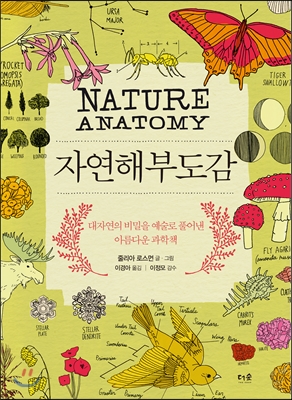
Julia Rothman, a popular New York artist who has captivated readers in English-speaking countries with her sensuous and warm works that cross science, history, and cities, has published her book, "Anatomy atlas."
Her delicate yet vibrant paintings, which breathe life into everyday life, have captivated major American media outlets such as the New York Times and the Washington Post, the publishing world, and countless readers.
In particular, the recently published 『Natural Anatomy Illustrated Guide』 has captured the wonders of nature with a unique liveliness and delicacy, and has garnered much anticipation from readers in English-speaking countries as well as domestic readers who have been waiting for her works.
The illustrated guide often shows only the actual appearance in a list format using photographs or detailed drawings.
However, Julia Rothman's 『Natural Anatomy Atlas』, with its richly colored illustrations that stimulate the imagination of the reader and the warm gaze of the author, changes the existing perception that atlases are simple books for children.
As a result, as soon as the book was published in the United States in 2015, it was loved by both young and adult readers, and became a bestseller in the natural science category on Amazon, with praise calling it a “surprising and beautiful science book.”
This book began with the author's small curiosity about trees and insects encountered on a walk.
We walk through the same city every day and spend similar days, but nature shows us a slightly different face each day, and it tells us that there is a whole world outside the city where we live.
The vibrant illustrations that fill the entire book, as if capturing the four seasons, capture the curiosity about nature, from small curiosities encountered in city parks to the vast Earth and constellations in space, in a more exciting way than any other science book.
One picture is enough to understand nature.
Amazon's bestseller in the natural science category!
Julia Rothman, a popular New York artist who has captivated readers in English-speaking countries with her sensuous and warm works that cross science, history, and cities, has published her book, "Anatomy atlas."
Her delicate yet vibrant paintings, which breathe life into everyday life, have captivated major American media outlets such as the New York Times and the Washington Post, the publishing world, and countless readers.
In particular, the recently published 『Natural Anatomy Illustrated Guide』 has captured the wonders of nature with a unique liveliness and delicacy, and has garnered much anticipation from readers in English-speaking countries as well as domestic readers who have been waiting for her works.
The illustrated guide often shows only the actual appearance in a list format using photographs or detailed drawings.
However, Julia Rothman's 『Natural Anatomy Atlas』, with its richly colored illustrations that stimulate the imagination of the reader and the warm gaze of the author, changes the existing perception that atlases are simple books for children.
As a result, as soon as the book was published in the United States in 2015, it was loved by both young and adult readers, and became a bestseller in the natural science category on Amazon, with praise calling it a “surprising and beautiful science book.”
This book began with the author's small curiosity about trees and insects encountered on a walk.
We walk through the same city every day and spend similar days, but nature shows us a slightly different face each day, and it tells us that there is a whole world outside the city where we live.
The vibrant illustrations that fill the entire book, as if capturing the four seasons, capture the curiosity about nature, from small curiosities encountered in city parks to the vast Earth and constellations in space, in a more exciting way than any other science book.
- You can preview some of the book's contents.
Preview
index
preface
Reviewer's Note
CHAPTER 1 The Earth We Live On: The World of Earth
Does the Earth Really Move? / Earth's Strata / Minerals / Rock Cycle / Fossils / Landforms / Mountains / North American Landscapes / Vegetation Transitions / Landscape Paintings by the Brush
CHAPTER 2 The Sun, the Moon, the Clouds, the Stars: The World of the Sky
Atmosphere / Weather Forecast / Water Cycle / Storms / Why Are Snowflakes Different Shapes / Rainbows / Sunsets / Phases of the Moon / Constellations
CHAPTER 3 Getting Closer to Nature: The World of Flowers and Insects
Flower Anatomy / Wildflowers / Bee Anatomy / Butterfly Anatomy / Butterfly Life Cycle / Plants That Attract Butterflies / The Beautiful World of Butterflies / Colorful Moths / Cyperaceae, Rhesus, and Lepidoptera / Edible Grasses / The Amazing World of Insects / The Amazing World of Spiders / Ant Anatomy
CHAPTER 4 A Walk in the Forest: The World of Forest Plants
Deciduous tree anatomy / Tree trunk anatomy / Leaf identification / Trees of North America / Beautiful bark / Flowers, cones, seeds, and fruits of some trees / Imprinting leaf patterns / Fern anatomy / Tall lichens / The mysterious world of mosses / Tardigrades / Mycelium / Mushroom anatomy / Colorful mushrooms / Life in decaying trees / Finding food in the forest
CHAPTER 5 Untamed Wilds: The Animal World
Native North American Species / Bat Anatomy / Common Bats in North America / Squirrels / Ground Squirrels / The Life Cycle of the Bacteria That Carry Lyme Disease / Black Bears vs. Grizzly Bears / Underground Animals / Snakes / Lizards / Bobcats / Wild Dogs / Antlers / Other Horned Animals / Aquatic Mammals / Masters of Adaptation / Marine Mammals
CHAPTER 6 What the Little Bird Told Me: The World of Birds
Anatomy of birds / Various birds / Types of feathers / Bird calls / Various bird nests / Uniquely shaped eggs / Interesting bird habits / Birds of prey / Various owls / Large birds / Beaks of various shapes / Waterfowl
CHAPTER 7 Swimming in Fantasy: The World of Underwater Life
Water bodies / Pond ecosystem / Freshwater fish / Salmon life cycle / Insects living in the water / Toads vs. frogs / Frog life cycle / Intertidal zone ecosystem / Fantastic saltwater fish / Jellyfish anatomy / Creatures on the sand / Seashells on the beach / Seaweed
A short essay on environmental protection
References
Reviewer's Note
CHAPTER 1 The Earth We Live On: The World of Earth
Does the Earth Really Move? / Earth's Strata / Minerals / Rock Cycle / Fossils / Landforms / Mountains / North American Landscapes / Vegetation Transitions / Landscape Paintings by the Brush
CHAPTER 2 The Sun, the Moon, the Clouds, the Stars: The World of the Sky
Atmosphere / Weather Forecast / Water Cycle / Storms / Why Are Snowflakes Different Shapes / Rainbows / Sunsets / Phases of the Moon / Constellations
CHAPTER 3 Getting Closer to Nature: The World of Flowers and Insects
Flower Anatomy / Wildflowers / Bee Anatomy / Butterfly Anatomy / Butterfly Life Cycle / Plants That Attract Butterflies / The Beautiful World of Butterflies / Colorful Moths / Cyperaceae, Rhesus, and Lepidoptera / Edible Grasses / The Amazing World of Insects / The Amazing World of Spiders / Ant Anatomy
CHAPTER 4 A Walk in the Forest: The World of Forest Plants
Deciduous tree anatomy / Tree trunk anatomy / Leaf identification / Trees of North America / Beautiful bark / Flowers, cones, seeds, and fruits of some trees / Imprinting leaf patterns / Fern anatomy / Tall lichens / The mysterious world of mosses / Tardigrades / Mycelium / Mushroom anatomy / Colorful mushrooms / Life in decaying trees / Finding food in the forest
CHAPTER 5 Untamed Wilds: The Animal World
Native North American Species / Bat Anatomy / Common Bats in North America / Squirrels / Ground Squirrels / The Life Cycle of the Bacteria That Carry Lyme Disease / Black Bears vs. Grizzly Bears / Underground Animals / Snakes / Lizards / Bobcats / Wild Dogs / Antlers / Other Horned Animals / Aquatic Mammals / Masters of Adaptation / Marine Mammals
CHAPTER 6 What the Little Bird Told Me: The World of Birds
Anatomy of birds / Various birds / Types of feathers / Bird calls / Various bird nests / Uniquely shaped eggs / Interesting bird habits / Birds of prey / Various owls / Large birds / Beaks of various shapes / Waterfowl
CHAPTER 7 Swimming in Fantasy: The World of Underwater Life
Water bodies / Pond ecosystem / Freshwater fish / Salmon life cycle / Insects living in the water / Toads vs. frogs / Frog life cycle / Intertidal zone ecosystem / Fantastic saltwater fish / Jellyfish anatomy / Creatures on the sand / Seashells on the beach / Seaweed
A short essay on environmental protection
References
Detailed image
.jpg)
Into the book
No matter how large a book we make, it cannot contain even a small part of the vast world that surrounds us.
So where does this book end? From constellations to the Earth's core, there's so much to learn.
So, I thought, what if I called this project 'My Nature Book'?
This book contains things I was interested in, things I wanted to find out, and things I wanted to do.
Through this nature book project, I was able to properly study the plants, animals, trees, grass, insects, precipitation, land, and water bodies that I had always been curious about whenever I passed by.
---From the "Preface"
Knowing a few ways to predict the weather can help you avoid the unpleasant surprises of sudden weather changes while out on a walk.
Some clouds act as a warning that rain or a storm is coming.
On days when there is a lot of dew, the wind will not blow very strongly.
Morning dew usually portends sunny and good weather.
Before a storm approaches, birds feel pain in their ears due to air pressure.
That's why it lowers its body and flies close to the ground.
---From "Weather Forecast"
At first glance, the way ants deal with dead mates is very similar to how people do.
The ant's body is left unattended for two days, as the ants do not notice it is dead until a chemical called oleic acid is released from the body.
Once the ants detect the smell, the rotting ant carcass, which gives off a strange smell, is taken to a landfill.
Entomologist Edward Wilson discovered that when he sprayed oleic acid on a live ant, other ants thought the ant was dead and moved it to another location.
---From "Ant Anatomy"
A dead tree on the forest floor may not seem like much, but the decaying wood attracts countless plants and animals.
The larvae of various insects burrow into rotting wood to escape the winter cold.
Snails and slugs prefer fungi that grow on wood chips and decaying wood.
Earthworms digest a significant amount of decaying organic matter and then excrete nutrient-rich feces.
The damp, decaying wood serves as a perfect breeding ground for lichens, mosses, flowers, and even other trees to take root and survive.
---From “Life in a Rotting Tree”
Nature is remarkably resilient and adaptable, but there's no denying that countless species are currently facing massive extinction.
Most natural habitats on Earth are under unprecedented threat from human destruction.
Conserving vast tracts of virgin forest, oceans, wetlands, and grasslands is crucial for the survival of endangered species and a healthy future for our planet. Our individual efforts to protect untouched wilderness and reduce unnecessary consumption can make a difference.
I hope you'll join us in protecting the Earth's biodiversity and learn more by keeping an eye on environmental organizations in your area.
So where does this book end? From constellations to the Earth's core, there's so much to learn.
So, I thought, what if I called this project 'My Nature Book'?
This book contains things I was interested in, things I wanted to find out, and things I wanted to do.
Through this nature book project, I was able to properly study the plants, animals, trees, grass, insects, precipitation, land, and water bodies that I had always been curious about whenever I passed by.
---From the "Preface"
Knowing a few ways to predict the weather can help you avoid the unpleasant surprises of sudden weather changes while out on a walk.
Some clouds act as a warning that rain or a storm is coming.
On days when there is a lot of dew, the wind will not blow very strongly.
Morning dew usually portends sunny and good weather.
Before a storm approaches, birds feel pain in their ears due to air pressure.
That's why it lowers its body and flies close to the ground.
---From "Weather Forecast"
At first glance, the way ants deal with dead mates is very similar to how people do.
The ant's body is left unattended for two days, as the ants do not notice it is dead until a chemical called oleic acid is released from the body.
Once the ants detect the smell, the rotting ant carcass, which gives off a strange smell, is taken to a landfill.
Entomologist Edward Wilson discovered that when he sprayed oleic acid on a live ant, other ants thought the ant was dead and moved it to another location.
---From "Ant Anatomy"
A dead tree on the forest floor may not seem like much, but the decaying wood attracts countless plants and animals.
The larvae of various insects burrow into rotting wood to escape the winter cold.
Snails and slugs prefer fungi that grow on wood chips and decaying wood.
Earthworms digest a significant amount of decaying organic matter and then excrete nutrient-rich feces.
The damp, decaying wood serves as a perfect breeding ground for lichens, mosses, flowers, and even other trees to take root and survive.
---From “Life in a Rotting Tree”
Nature is remarkably resilient and adaptable, but there's no denying that countless species are currently facing massive extinction.
Most natural habitats on Earth are under unprecedented threat from human destruction.
Conserving vast tracts of virgin forest, oceans, wetlands, and grasslands is crucial for the survival of endangered species and a healthy future for our planet. Our individual efforts to protect untouched wilderness and reduce unnecessary consumption can make a difference.
I hope you'll join us in protecting the Earth's biodiversity and learn more by keeping an eye on environmental organizations in your area.
---From "Thoughts on Environmental Protection"
Publisher's Review
A beautiful science book that combines science and art.
One picture is enough to understand nature.
Amazon's bestseller in the natural science category!
Julia Rothman, a popular New York artist who has captivated readers in English-speaking countries with her sensuous and warm works that cross science, history, and the city, has published her book, "Anatomy atlas."
Her delicate yet vibrant paintings, which breathe life into everyday life, have captivated major American media outlets such as the New York Times and the Washington Post, the publishing world, and countless readers.
In particular, the recently published 『Natural Anatomy Illustrated Guide』 has captured the wonders of nature with a unique liveliness and delicacy, and has garnered much anticipation from readers in English-speaking countries as well as domestic readers who have been waiting for her works.
The illustrated guide often shows only the actual appearance in a list format using photographs or detailed drawings.
However, Julia Rothman's 『Natural Anatomy Atlas』, with its richly colored illustrations that stimulate the imagination of the reader and the warm gaze of the author, changes the existing perception that atlases are simple books for children.
As a result, as soon as the book was published in the United States in 2015, it was loved by both young and adult readers, and became a bestseller in the natural science category on Amazon, with praise calling it a “surprising and beautiful science book.”
This book began with the author's small curiosity about trees and insects encountered on a walk.
For us who walk through the same city every day and spend similar days, nature shows us a slightly different face each day, and tells us that there is a whole world outside the city where we live.
The vibrant illustrations that fill the entire book, as if capturing the four seasons, capture the curiosity about nature, from small curiosities encountered in city parks to the vast Earth and constellations in space, in a more exciting way than any other science book.
A nature guide for city explorers
The mysterious world of animals and insects, how to guess the age of a tree,
The wondrous life that dwells in a rotting tree, what a little bird tells us…
Born and raised in New York, the author's greatest joy during the day was taking his dog for a walk or run in the park near his home.
The author's life in Brooklyn, a high-rise neighborhood in downtown New York, mirrors our own, where we find solace in nature, even if only for a moment, during our commutes or weekend outings.
"What's the name of that tree with those pretty leaves? When will that flower I saw last year bloom?" The author began to explore nature in his own way, taking a closer look at the scenery he had only ever seen on his walks, looking through books, and sometimes even eating every single grass he came across in the park. He then captured the wonders of nature he discovered one by one in his paintings.
The way nature is discussed in this book is very interesting.
Rather than simply listing names and information, it follows the author's curiosity and the way he explores it. With childlike curiosity, he unravels a single creature like a story, asking questions like, "Why aren't all bird beaks the same? Can you tell what kind of bird lives in a nest?"
Each bird's beak has its own unique shape, and exploring birds by categorizing them in interesting ways, such as the color of their feathers, the shape of their nests, and the shape of their eggs, which come in different sizes and patterns, is something that can never be achieved through the uniform information provided by the Internet.
As you discover interesting facts you never knew before, such as the fact that even the same type of bird call has a regional dialect, or that ants handle the bodies of their dead companions in a similar way to humans, you'll find yourself becoming an explorer of nature, exploring every corner of the city without having to go far.
Dissecting nature reveals an unfamiliar beauty.
A meaningful exploration that goes beyond simply looking at nature with interest.
Another special thing about this book is that it doesn't just show the surface, it dissects it.
Cross sections of trees, birds, insects, and parts of plants are classified, broken down, shown, and explained.
Through this process, the interconnectedness between life forms becomes clearer, and we naturally come to realize that we are all connected by a vast chain of connections that make us part of the Earth.
Director Lee Jeong-mo of the Seodaemun Museum of Natural History, who supervised this book, said the following:
“This book is not just a simple guide, but an ‘anatomy’ guide.
As we 'dissect' nature, we come to realize that different living things are relatives made up of the same parts.
I hope that through this book, readers will realize what kind of relationships we humans must have with other living beings and how we must coexist in order to survive.”
As you read this book, you will realize that this is not a grand story and that no special trigger is needed.
As author Julia Rothman says, nature is surprisingly close to us, and it doesn't matter whether it's in the backyard or in a flower pot on the fire escape.
The vibrant exploration of nature presented in this book will give us a new perspective on the world around us.
One picture is enough to understand nature.
Amazon's bestseller in the natural science category!
Julia Rothman, a popular New York artist who has captivated readers in English-speaking countries with her sensuous and warm works that cross science, history, and the city, has published her book, "Anatomy atlas."
Her delicate yet vibrant paintings, which breathe life into everyday life, have captivated major American media outlets such as the New York Times and the Washington Post, the publishing world, and countless readers.
In particular, the recently published 『Natural Anatomy Illustrated Guide』 has captured the wonders of nature with a unique liveliness and delicacy, and has garnered much anticipation from readers in English-speaking countries as well as domestic readers who have been waiting for her works.
The illustrated guide often shows only the actual appearance in a list format using photographs or detailed drawings.
However, Julia Rothman's 『Natural Anatomy Atlas』, with its richly colored illustrations that stimulate the imagination of the reader and the warm gaze of the author, changes the existing perception that atlases are simple books for children.
As a result, as soon as the book was published in the United States in 2015, it was loved by both young and adult readers, and became a bestseller in the natural science category on Amazon, with praise calling it a “surprising and beautiful science book.”
This book began with the author's small curiosity about trees and insects encountered on a walk.
For us who walk through the same city every day and spend similar days, nature shows us a slightly different face each day, and tells us that there is a whole world outside the city where we live.
The vibrant illustrations that fill the entire book, as if capturing the four seasons, capture the curiosity about nature, from small curiosities encountered in city parks to the vast Earth and constellations in space, in a more exciting way than any other science book.
A nature guide for city explorers
The mysterious world of animals and insects, how to guess the age of a tree,
The wondrous life that dwells in a rotting tree, what a little bird tells us…
Born and raised in New York, the author's greatest joy during the day was taking his dog for a walk or run in the park near his home.
The author's life in Brooklyn, a high-rise neighborhood in downtown New York, mirrors our own, where we find solace in nature, even if only for a moment, during our commutes or weekend outings.
"What's the name of that tree with those pretty leaves? When will that flower I saw last year bloom?" The author began to explore nature in his own way, taking a closer look at the scenery he had only ever seen on his walks, looking through books, and sometimes even eating every single grass he came across in the park. He then captured the wonders of nature he discovered one by one in his paintings.
The way nature is discussed in this book is very interesting.
Rather than simply listing names and information, it follows the author's curiosity and the way he explores it. With childlike curiosity, he unravels a single creature like a story, asking questions like, "Why aren't all bird beaks the same? Can you tell what kind of bird lives in a nest?"
Each bird's beak has its own unique shape, and exploring birds by categorizing them in interesting ways, such as the color of their feathers, the shape of their nests, and the shape of their eggs, which come in different sizes and patterns, is something that can never be achieved through the uniform information provided by the Internet.
As you discover interesting facts you never knew before, such as the fact that even the same type of bird call has a regional dialect, or that ants handle the bodies of their dead companions in a similar way to humans, you'll find yourself becoming an explorer of nature, exploring every corner of the city without having to go far.
Dissecting nature reveals an unfamiliar beauty.
A meaningful exploration that goes beyond simply looking at nature with interest.
Another special thing about this book is that it doesn't just show the surface, it dissects it.
Cross sections of trees, birds, insects, and parts of plants are classified, broken down, shown, and explained.
Through this process, the interconnectedness between life forms becomes clearer, and we naturally come to realize that we are all connected by a vast chain of connections that make us part of the Earth.
Director Lee Jeong-mo of the Seodaemun Museum of Natural History, who supervised this book, said the following:
“This book is not just a simple guide, but an ‘anatomy’ guide.
As we 'dissect' nature, we come to realize that different living things are relatives made up of the same parts.
I hope that through this book, readers will realize what kind of relationships we humans must have with other living beings and how we must coexist in order to survive.”
As you read this book, you will realize that this is not a grand story and that no special trigger is needed.
As author Julia Rothman says, nature is surprisingly close to us, and it doesn't matter whether it's in the backyard or in a flower pot on the fire escape.
The vibrant exploration of nature presented in this book will give us a new perspective on the world around us.
GOODS SPECIFICS
- Date of issue: March 3, 2016
- Page count, weight, size: 232 pages | 676g | 165*217*20mm
- ISBN13: 9791186900048
- ISBN10: 1186900040
You may also like
카테고리
korean


korean

![ELLE 엘르 스페셜 에디션 A형 : 12월 [2025]](http://librairie.coreenne.fr/cdn/shop/files/b8e27a3de6c9538896439686c6b0e8fb.jpg?v=1766436872&width=3840)


