

Undone Science
 |
Description
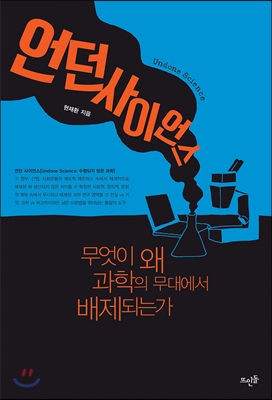
Book Introduction
The "commissioned science" theory, which posits that certain forces—power, capital, the left, and others—intentionally and systematically distort the truth in scientific debate, despite its inherent social role, has fundamental limitations.
Because by reducing all controversies to a simple truth game, it erases the socio-political, historical, and cultural elements embedded in the controversies.
The concept the author brought up to overcome this is ‘Undone Science.’
'Under-science' is a concept created by American science activist David Hess to refer to 'knowledge that has not been produced and systematically excluded from the institutional matrix of government, industry, and social movements.'
The author further expands this to mean 'areas of scientific research that have been ignored and excluded within a specific social, political, and cultural context.'
This perspective, which reflects research findings from interdisciplinary fields such as the history of science, philosophy of science, and science and technology studies (STS), allows us to look at the controversies of modern science from a new perspective, transcending the dichotomies of “truth vs. falsehood” or “science vs. non-science.”
The author analyzes various scientific controversies from the 19th century to the present from the perspective of unknown science.
Part 1 reinterprets past cases, including Nazi racial hygiene, within a historical context, and Part 2 demonstrates the usefulness of the concept of "understood science" by observing contemporary issues, including the culling of foot-and-mouth disease.
And in Part 3, we delve into sharp scientific controversies such as mad cow disease, Samsung leukemia, and low-dose radiation through the detailed lens of Unden Science.
Because by reducing all controversies to a simple truth game, it erases the socio-political, historical, and cultural elements embedded in the controversies.
The concept the author brought up to overcome this is ‘Undone Science.’
'Under-science' is a concept created by American science activist David Hess to refer to 'knowledge that has not been produced and systematically excluded from the institutional matrix of government, industry, and social movements.'
The author further expands this to mean 'areas of scientific research that have been ignored and excluded within a specific social, political, and cultural context.'
This perspective, which reflects research findings from interdisciplinary fields such as the history of science, philosophy of science, and science and technology studies (STS), allows us to look at the controversies of modern science from a new perspective, transcending the dichotomies of “truth vs. falsehood” or “science vs. non-science.”
The author analyzes various scientific controversies from the 19th century to the present from the perspective of unknown science.
Part 1 reinterprets past cases, including Nazi racial hygiene, within a historical context, and Part 2 demonstrates the usefulness of the concept of "understood science" by observing contemporary issues, including the culling of foot-and-mouth disease.
And in Part 3, we delve into sharp scientific controversies such as mad cow disease, Samsung leukemia, and low-dose radiation through the detailed lens of Unden Science.
- You can preview some of the book's contents.
Preview
index
prolog
[Part 1] Rewriting the Science of Suspect X
Chapter 1 “Depressing Female Hormones, Brave Male Hormones”: Science Distorted by Sexists?
Chapter 2 “Inferior Race, Superior Nation”: Racist Propaganda?
Chapter 3 “Disabled People Must Be Abolished”: The Specter of National Socialism?
[Part 2] Undone Science: Beyond the Science of Suspect X
Chapter 4: The Immortal Science of Race: Race in Modern Life Science Research
Chapter 5: The Disaster Called Foot-and-Mouth Disease: Culling Policies and Reductive Science
Chapter 6: Health Inequalities in the Neoliberal Era: What's Forgotten in Clinical Trials and Neglected Disease Research
Chapter 7: Gender Politics in Modern Science: Breast Cancer Research and the Women's Health Movement
[Part 3] Unpracticed Sciences of East Asia
Chapter 8: The United States, Beef, and International Scientific Organizations: The Mad Cow Disease and Ractopamine Debates
Chapter 9: The Public Epidemiology of RCA Cancer and Samsung Leukemia: The Knowledge Struggle for Occupational Safety and Health in Taiwan and Korea
Chapter 10: Fukushima and Beyond: The Politics of Low-Dose Ionizing Radiation
Epilogue
References
[Part 1] Rewriting the Science of Suspect X
Chapter 1 “Depressing Female Hormones, Brave Male Hormones”: Science Distorted by Sexists?
Chapter 2 “Inferior Race, Superior Nation”: Racist Propaganda?
Chapter 3 “Disabled People Must Be Abolished”: The Specter of National Socialism?
[Part 2] Undone Science: Beyond the Science of Suspect X
Chapter 4: The Immortal Science of Race: Race in Modern Life Science Research
Chapter 5: The Disaster Called Foot-and-Mouth Disease: Culling Policies and Reductive Science
Chapter 6: Health Inequalities in the Neoliberal Era: What's Forgotten in Clinical Trials and Neglected Disease Research
Chapter 7: Gender Politics in Modern Science: Breast Cancer Research and the Women's Health Movement
[Part 3] Unpracticed Sciences of East Asia
Chapter 8: The United States, Beef, and International Scientific Organizations: The Mad Cow Disease and Ractopamine Debates
Chapter 9: The Public Epidemiology of RCA Cancer and Samsung Leukemia: The Knowledge Struggle for Occupational Safety and Health in Taiwan and Korea
Chapter 10: Fukushima and Beyond: The Politics of Low-Dose Ionizing Radiation
Epilogue
References
Detailed image

Into the book
“The research of science and technology scholars shows that the process ideas that separated science from other human activities are literally just ‘beliefs,’ and transforms science into a part of human activities like culture and politics.
In other words, it brings down to earth the noble science that was once in the high heavens, separated from human activity.
“Science is not a collection of concepts or theoretical realities, but the practical and real activities of scientists.” --- p.21
“To view it from the perspective of ‘unperformed science’ means to critically trace and reexamine, within the social, political, and historical context, why some things are emphasized and others are excluded in the process of producing scientific knowledge, and why some things are ‘judged’ to be scientifically correct and others ‘considered’ to be incorrect.” --- p.22
“Instead of Suspect X ordering government scientists to create false knowledge, we will find ‘scientists in society’ who share contemporary views on women, race, and disease and create scientific research projects based on those views.” --- p.28
“The Eyes of Underscience not only provides a clearer understanding of how a new racial science emerged in our time, but also shows that even the well-intentioned work of scientists and others can lead to unexpected results and problems.
Furthermore, it demands that we become much more sensitive than we are now to the various problems that scientific activities create.” --- p.101
“Those who advocate the ‘Suspect X theory’ often reduce the concept of ‘undone science’, or ‘science that has not been performed,’ to a discussion about whether or not a certain research should be funded.
However, the series of trends surrounding neglected diseases suggests that the very framework that focuses on whether or not to invest in research funds needs to be reexamined.” --- p.137
“The case of breast cancer science shows us that even when one type of undetected science is performed, another type of undetected science can arise in the process.” --- p.155
“Given that the Korean government unilaterally decided to import American beef, ignoring the public’s anxieties and doubts, the candlelight protests, which were a form of civil resistance, are fully justified.
But that doesn't guarantee the scientific correctness of candlelight at the same time.
Regardless of the sociopolitical legitimacy of the candlelight protests, the 'scientific truth' about mad cow disease remains an unfinished business for us. --- p.173
“Just because the answer is uncertain doesn’t mean the priorities for solving the problem are uncertain.
Before we hastily claim that one side is telling a scientific lie, the perspective of Undone Science demands that we ask which perspective is more appropriate in this case: an epidemiological perspective or a clinical perspective.
“Reducing the dangers on earth is more important than pursuing the scientific truths of the heavens, and unlike movies, real-world problems are not solved by simply finding Suspect X.” --- p.225
“The primary question we must ask is not whether scientific truth exists, but whether the exclusions that arise in the process of approaching that truth are socially, morally, and politically justifiable.” --- p.230
"When we, the vast majority in society, can calmly analyze and judge scientific controversies through the lens of unscientific understanding, we will find a way to resolve the issues currently at the brink of conflict in Fukushima and Gori, Tokyo and Seoul, and the courts of Taiwan and Korea."
In other words, it brings down to earth the noble science that was once in the high heavens, separated from human activity.
“Science is not a collection of concepts or theoretical realities, but the practical and real activities of scientists.” --- p.21
“To view it from the perspective of ‘unperformed science’ means to critically trace and reexamine, within the social, political, and historical context, why some things are emphasized and others are excluded in the process of producing scientific knowledge, and why some things are ‘judged’ to be scientifically correct and others ‘considered’ to be incorrect.” --- p.22
“Instead of Suspect X ordering government scientists to create false knowledge, we will find ‘scientists in society’ who share contemporary views on women, race, and disease and create scientific research projects based on those views.” --- p.28
“The Eyes of Underscience not only provides a clearer understanding of how a new racial science emerged in our time, but also shows that even the well-intentioned work of scientists and others can lead to unexpected results and problems.
Furthermore, it demands that we become much more sensitive than we are now to the various problems that scientific activities create.” --- p.101
“Those who advocate the ‘Suspect X theory’ often reduce the concept of ‘undone science’, or ‘science that has not been performed,’ to a discussion about whether or not a certain research should be funded.
However, the series of trends surrounding neglected diseases suggests that the very framework that focuses on whether or not to invest in research funds needs to be reexamined.” --- p.137
“The case of breast cancer science shows us that even when one type of undetected science is performed, another type of undetected science can arise in the process.” --- p.155
“Given that the Korean government unilaterally decided to import American beef, ignoring the public’s anxieties and doubts, the candlelight protests, which were a form of civil resistance, are fully justified.
But that doesn't guarantee the scientific correctness of candlelight at the same time.
Regardless of the sociopolitical legitimacy of the candlelight protests, the 'scientific truth' about mad cow disease remains an unfinished business for us. --- p.173
“Just because the answer is uncertain doesn’t mean the priorities for solving the problem are uncertain.
Before we hastily claim that one side is telling a scientific lie, the perspective of Undone Science demands that we ask which perspective is more appropriate in this case: an epidemiological perspective or a clinical perspective.
“Reducing the dangers on earth is more important than pursuing the scientific truths of the heavens, and unlike movies, real-world problems are not solved by simply finding Suspect X.” --- p.225
“The primary question we must ask is not whether scientific truth exists, but whether the exclusions that arise in the process of approaching that truth are socially, morally, and politically justifiable.” --- p.230
"When we, the vast majority in society, can calmly analyze and judge scientific controversies through the lens of unscientific understanding, we will find a way to resolve the issues currently at the brink of conflict in Fukushima and Gori, Tokyo and Seoul, and the courts of Taiwan and Korea."
--- p.235
Publisher's Review
The mad cow disease controversy, the Samsung leukemia debate, the truth about nuclear power plants and low-dose radiation…
21st-century scientific debates that can't be resolved through the dichotomy of "truth vs. lies."
Something is being left out of the arena of scientific research and debate!
A New Window on Modern Science: Undone Science
Scientific debates in modern society often transcend the boundaries of expert groups and spread to encompass the entire society.
This is the case with the mad cow disease controversy that shook South Korea, and the Samsung leukemia controversy that led to a fierce legal battle between large corporations and civil society.
It is not uncommon for global debates to unfold, such as the debate over the safety of low-dose radiation that erupted after the Fukushima nuclear accident.
The problem is that it is rarely clear which of the opposing positions is true (or closer to the truth).
Even though these issues are deeply connected to daily life and even directly affect life, the conclusions are always shrouded in fog, so the public cannot help but feel anxious and confused.
The easiest way out of confusion is to believe that someone is deliberately distorting the truth.
This argument, which has been consistently raised by many scholars and writers, is called the 'commissioned science theory.'
Just as the racial theories of Nazi-controlled contract scientists became the theoretical basis for the Holocaust, even today, there are dark forces that distort the conclusions of certain studies or obstruct the progress of certain research.
The claim that “the pro-American government is intentionally hiding the dangers of American beef” and the claim that “imperfect forces are spreading mad cow disease rumors to incite social unrest” are two versions of the contract science theory that start from the same premise.
The author calls this point of view the 'Suspect X theory', comparing it to Keigo Higashino's novel.
In that case, contract science becomes 'science used by Suspect X', and those who track down the suspect and try to uncover the truth become genius physicist Yukawa.
“They believe that the suspects X, such as powerful organizations such as corporations, governments, and the media, or those behind political conspiracies, are concealing or misleading the truth, and by exposing their conspiracies, they try to free the truth of science from distortion and political trickery.” (From the text)
The problem is that the 'Suspect X theory' - despite its positive aspects of often leading to social awakening by revealing the true nature of 'nuclear power plant connections' and pro-corporate research institutes - has fundamental limitations in understanding scientific controversies in their entirety.
By reducing all controversies to a simple truth game, it erases all the socio-political, historical, and cultural elements inherent in each debate.
Instead of the 'Suspect X Theory', which has such clear limitations, the new concept the author has come up with is 'Undone Science'.
A new perspective that integrates comprehensive research in scientific fields
'Undone science' is a concept created by American science activist David Hess to refer to 'knowledge that has not been produced and systematically excluded from the institutional matrix of government, industry, and social movements.'
The author further expands this to mean 'areas of scientific research that have been ignored and excluded within a specific social, political, and cultural context.'
This perspective, which reflects research findings from interdisciplinary fields such as the history of science, philosophy of science, and science and technology studies (STS), allows us to look at the controversies of modern science from a new perspective, transcending the dichotomies of “truth vs. falsehood” or “science vs. non-science.”
The author, who completed his doctoral course in the 'Interdisciplinary Program in History and Philosophy of Science' at Seoul National University, analyzes various scientific topics and controversies from the 19th century to the present from the perspective of under-scientific science.
Part 1 reinterprets past cases, including Nazi Germany's racial hygiene, within a historical context, and Part 2 demonstrates the usefulness of the concept of "understood science" by observing contemporary social issues, including the culling of people affected by foot-and-mouth disease.
And in Part 3, we delve into sharp scientific controversies such as mad cow disease, Samsung leukemia, and low-dose radiation through the detailed lens of Unden Science.
The author's work is not simply to determine who is scientifically right and who is wrong.
Recent research in science and technology studies reminds us that countless 'uncertainties' exist in scientific debates.
The theory of contract science, which reduces all problems to a dichotomy of good and evil, cannot resolve this uncertainty, nor can it properly explain why different standards and interpretations emerge on the same topic.
This means that before we can discern truth from falsehood, we must reexamine the origins and progress of the controversy.
“Standing from the perspective of under-science means critically tracing and re-examining, within the social, political, and historical context, why some things are emphasized and others are excluded in the process of producing scientific knowledge, and why some things are ‘judged’ to be scientifically correct and others ‘considered’ to be incorrect.
(…) What we should primarily ask is not whether there is scientific truth, but whether the exclusion that occurs in the process of approaching that truth is socially, morally, and politically justifiable.” (From the text)
What 'science as a social product' ignores or excludes
The starting point of the discussion is to understand that the discipline of 'science' is not a value-neutral concept or 'heavenly truth' detached from society, but rather a product of human activity intertwined with complex interests, like politics or culture.
After carefully examining the Nazi genocide of the disabled, the gender-discriminatory science of the 19th century, and the study of Korean race during the Japanese colonial period, the author says this.
“Instead of Suspect X, who orders government scientists to create false knowledge, we find ‘scientists in society’ who share contemporary views on women, race, and disease and create scientific research projects based on them.” (From the text)
The fact that science is also a social product means that there is always a possibility that certain values or methods will be ignored or excluded during the process of its creation.
And it suggests that another exclusion may inadvertently occur in the process of problem solving.
The culling of foot-and-mouth disease in Britain, which resulted in a massacre of livestock, was scientifically the result of excluding one of two epidemiological models, and socioeconomically the result of excluding livestock farmers other than large-scale corporate farms in the name of the "public good."
The two-pronged women's movement on breast cancer in the United States in the 20th century filled a gap in existing research, but at the same time created another "unperformed science."
The same goes for the mad cow disease controversy in Korea surrounding American beef and the ractopamine controversy in Taiwan.
The World Organization for Animal Health (OIE) and the Codex Alimentarius Organization (Codex), which set international standards for food hygiene, adopted the American-style risk analysis as their primary framework, thereby excluding the socio-cultural, religious, and environmental characteristics of individual countries, and this has sparked intense debate around the world.
Therefore, before examining the truth/falsehood of mad cow disease (scientifically, it is still an area of uncertainty), the author argues that we must first determine what has been unilaterally emphasized and what has been unfairly excluded in relation to the standard of 'safety'.
Undone Science and Citizen Science
The perspective of Undone Science differs from agnosticism, which holds that “we don’t know what is true,” or wait-and-see, which holds that “we shouldn’t make any claims until we know for sure.”
The idea that we must closely examine the process by which scientific knowledge is created, even if only to get one step closer to scientific truth, is fully compatible with legitimate citizenship in raising issues and taking action against social injustice.
For example, regarding the candlelight protests related to mad cow disease, the author says this:
“Given that the Korean government unilaterally decided to import American beef, ignoring the public’s anxieties and doubts, the candlelight protests, which were a form of civil resistance, are fully justified.
But that doesn't guarantee the scientific correctness of candlelight at the same time.
Regardless of the sociopolitical legitimacy of the candlelight protests, the 'scientific truth' about mad cow disease remains an unfinished business for us.
(…) In relation to the ongoing debate over the safety of American beef, a priority is to closely examine what constitutes ‘unperformed science’ in the regulatory culture of the OIE, which determines each country’s risk rating or status.” (From the text)
While maintaining a consistently critical stance toward the government that ignores the safety of its citizens and the conglomerates that conceal responsibility for occupational diseases, the author also maintains a sharp tone toward the neoliberalism that lies behind all of this, suggesting "citizen science" as an alternative.
Citizen science, which organizes excluded knowledge and voices to create new knowledge, can be an alternative force that captures the risks and interests that power and capital ignore.
If you're looking for a definitive answer to who's right and who's wrong in any debate, the book's conclusion might leave you feeling a little disappointed.
But readers who listen carefully to the author's arguments will be able to look at those debates in a completely different way than in the past.
What's important is the attitude of seeking the 'earthly truth' rather than the 'heavenly truth', and it's a new perspective that finds what both Suspect X and Yugawa are missing.
“This book does not provide complete answers to the complex scientific controversies surrounding us.
But one thing can be said for sure.
“Through this new window called ‘Underground Science,’ we will be able to more accurately view and understand the various problems of modern science.” (From the text)
21st-century scientific debates that can't be resolved through the dichotomy of "truth vs. lies."
Something is being left out of the arena of scientific research and debate!
A New Window on Modern Science: Undone Science
Scientific debates in modern society often transcend the boundaries of expert groups and spread to encompass the entire society.
This is the case with the mad cow disease controversy that shook South Korea, and the Samsung leukemia controversy that led to a fierce legal battle between large corporations and civil society.
It is not uncommon for global debates to unfold, such as the debate over the safety of low-dose radiation that erupted after the Fukushima nuclear accident.
The problem is that it is rarely clear which of the opposing positions is true (or closer to the truth).
Even though these issues are deeply connected to daily life and even directly affect life, the conclusions are always shrouded in fog, so the public cannot help but feel anxious and confused.
The easiest way out of confusion is to believe that someone is deliberately distorting the truth.
This argument, which has been consistently raised by many scholars and writers, is called the 'commissioned science theory.'
Just as the racial theories of Nazi-controlled contract scientists became the theoretical basis for the Holocaust, even today, there are dark forces that distort the conclusions of certain studies or obstruct the progress of certain research.
The claim that “the pro-American government is intentionally hiding the dangers of American beef” and the claim that “imperfect forces are spreading mad cow disease rumors to incite social unrest” are two versions of the contract science theory that start from the same premise.
The author calls this point of view the 'Suspect X theory', comparing it to Keigo Higashino's novel.
In that case, contract science becomes 'science used by Suspect X', and those who track down the suspect and try to uncover the truth become genius physicist Yukawa.
“They believe that the suspects X, such as powerful organizations such as corporations, governments, and the media, or those behind political conspiracies, are concealing or misleading the truth, and by exposing their conspiracies, they try to free the truth of science from distortion and political trickery.” (From the text)
The problem is that the 'Suspect X theory' - despite its positive aspects of often leading to social awakening by revealing the true nature of 'nuclear power plant connections' and pro-corporate research institutes - has fundamental limitations in understanding scientific controversies in their entirety.
By reducing all controversies to a simple truth game, it erases all the socio-political, historical, and cultural elements inherent in each debate.
Instead of the 'Suspect X Theory', which has such clear limitations, the new concept the author has come up with is 'Undone Science'.
A new perspective that integrates comprehensive research in scientific fields
'Undone science' is a concept created by American science activist David Hess to refer to 'knowledge that has not been produced and systematically excluded from the institutional matrix of government, industry, and social movements.'
The author further expands this to mean 'areas of scientific research that have been ignored and excluded within a specific social, political, and cultural context.'
This perspective, which reflects research findings from interdisciplinary fields such as the history of science, philosophy of science, and science and technology studies (STS), allows us to look at the controversies of modern science from a new perspective, transcending the dichotomies of “truth vs. falsehood” or “science vs. non-science.”
The author, who completed his doctoral course in the 'Interdisciplinary Program in History and Philosophy of Science' at Seoul National University, analyzes various scientific topics and controversies from the 19th century to the present from the perspective of under-scientific science.
Part 1 reinterprets past cases, including Nazi Germany's racial hygiene, within a historical context, and Part 2 demonstrates the usefulness of the concept of "understood science" by observing contemporary social issues, including the culling of people affected by foot-and-mouth disease.
And in Part 3, we delve into sharp scientific controversies such as mad cow disease, Samsung leukemia, and low-dose radiation through the detailed lens of Unden Science.
The author's work is not simply to determine who is scientifically right and who is wrong.
Recent research in science and technology studies reminds us that countless 'uncertainties' exist in scientific debates.
The theory of contract science, which reduces all problems to a dichotomy of good and evil, cannot resolve this uncertainty, nor can it properly explain why different standards and interpretations emerge on the same topic.
This means that before we can discern truth from falsehood, we must reexamine the origins and progress of the controversy.
“Standing from the perspective of under-science means critically tracing and re-examining, within the social, political, and historical context, why some things are emphasized and others are excluded in the process of producing scientific knowledge, and why some things are ‘judged’ to be scientifically correct and others ‘considered’ to be incorrect.
(…) What we should primarily ask is not whether there is scientific truth, but whether the exclusion that occurs in the process of approaching that truth is socially, morally, and politically justifiable.” (From the text)
What 'science as a social product' ignores or excludes
The starting point of the discussion is to understand that the discipline of 'science' is not a value-neutral concept or 'heavenly truth' detached from society, but rather a product of human activity intertwined with complex interests, like politics or culture.
After carefully examining the Nazi genocide of the disabled, the gender-discriminatory science of the 19th century, and the study of Korean race during the Japanese colonial period, the author says this.
“Instead of Suspect X, who orders government scientists to create false knowledge, we find ‘scientists in society’ who share contemporary views on women, race, and disease and create scientific research projects based on them.” (From the text)
The fact that science is also a social product means that there is always a possibility that certain values or methods will be ignored or excluded during the process of its creation.
And it suggests that another exclusion may inadvertently occur in the process of problem solving.
The culling of foot-and-mouth disease in Britain, which resulted in a massacre of livestock, was scientifically the result of excluding one of two epidemiological models, and socioeconomically the result of excluding livestock farmers other than large-scale corporate farms in the name of the "public good."
The two-pronged women's movement on breast cancer in the United States in the 20th century filled a gap in existing research, but at the same time created another "unperformed science."
The same goes for the mad cow disease controversy in Korea surrounding American beef and the ractopamine controversy in Taiwan.
The World Organization for Animal Health (OIE) and the Codex Alimentarius Organization (Codex), which set international standards for food hygiene, adopted the American-style risk analysis as their primary framework, thereby excluding the socio-cultural, religious, and environmental characteristics of individual countries, and this has sparked intense debate around the world.
Therefore, before examining the truth/falsehood of mad cow disease (scientifically, it is still an area of uncertainty), the author argues that we must first determine what has been unilaterally emphasized and what has been unfairly excluded in relation to the standard of 'safety'.
Undone Science and Citizen Science
The perspective of Undone Science differs from agnosticism, which holds that “we don’t know what is true,” or wait-and-see, which holds that “we shouldn’t make any claims until we know for sure.”
The idea that we must closely examine the process by which scientific knowledge is created, even if only to get one step closer to scientific truth, is fully compatible with legitimate citizenship in raising issues and taking action against social injustice.
For example, regarding the candlelight protests related to mad cow disease, the author says this:
“Given that the Korean government unilaterally decided to import American beef, ignoring the public’s anxieties and doubts, the candlelight protests, which were a form of civil resistance, are fully justified.
But that doesn't guarantee the scientific correctness of candlelight at the same time.
Regardless of the sociopolitical legitimacy of the candlelight protests, the 'scientific truth' about mad cow disease remains an unfinished business for us.
(…) In relation to the ongoing debate over the safety of American beef, a priority is to closely examine what constitutes ‘unperformed science’ in the regulatory culture of the OIE, which determines each country’s risk rating or status.” (From the text)
While maintaining a consistently critical stance toward the government that ignores the safety of its citizens and the conglomerates that conceal responsibility for occupational diseases, the author also maintains a sharp tone toward the neoliberalism that lies behind all of this, suggesting "citizen science" as an alternative.
Citizen science, which organizes excluded knowledge and voices to create new knowledge, can be an alternative force that captures the risks and interests that power and capital ignore.
If you're looking for a definitive answer to who's right and who's wrong in any debate, the book's conclusion might leave you feeling a little disappointed.
But readers who listen carefully to the author's arguments will be able to look at those debates in a completely different way than in the past.
What's important is the attitude of seeking the 'earthly truth' rather than the 'heavenly truth', and it's a new perspective that finds what both Suspect X and Yugawa are missing.
“This book does not provide complete answers to the complex scientific controversies surrounding us.
But one thing can be said for sure.
“Through this new window called ‘Underground Science,’ we will be able to more accurately view and understand the various problems of modern science.” (From the text)
GOODS SPECIFICS
- Date of issue: August 24, 2015
- Page count, weight, size: 248 pages | 449g | 152*224*15mm
- ISBN13: 9788958075868
- ISBN10: 8958075864
You may also like
카테고리
korean


korean

![ELLE 엘르 스페셜 에디션 A형 : 12월 [2025]](http://librairie.coreenne.fr/cdn/shop/files/b8e27a3de6c9538896439686c6b0e8fb.jpg?v=1766436872&width=3840)


