

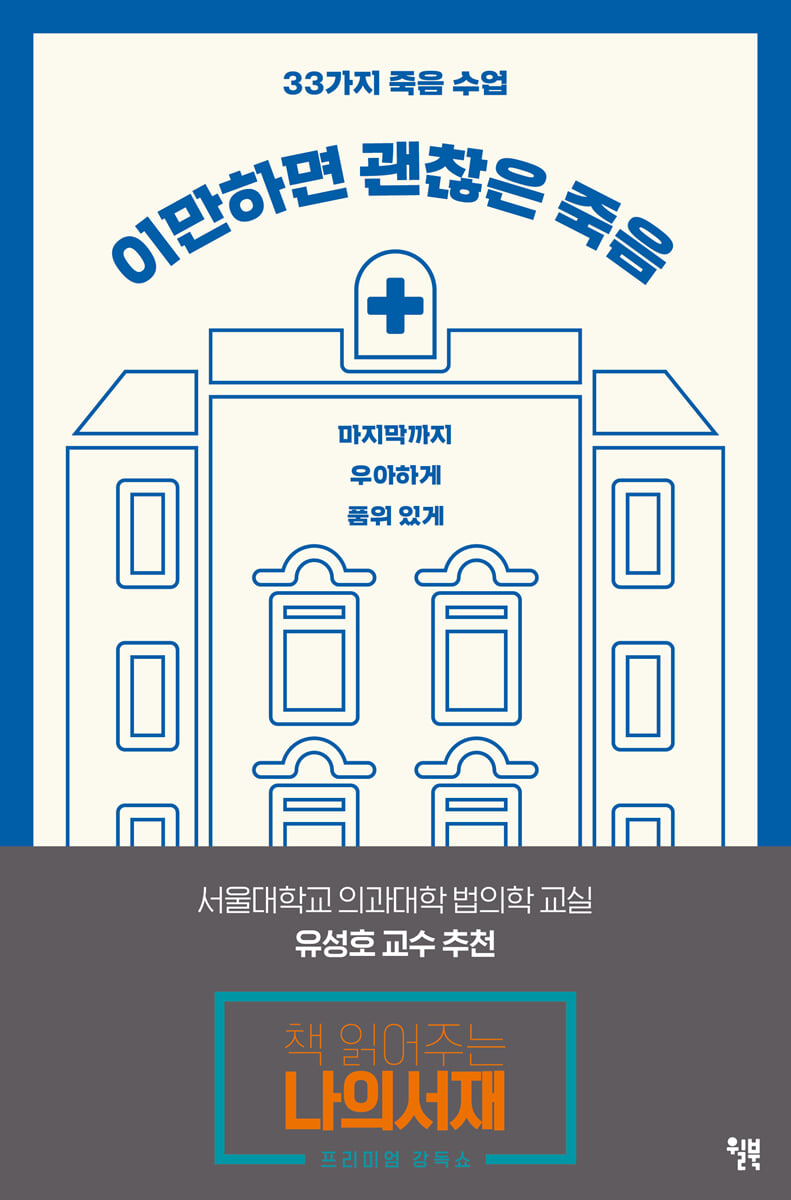
This is a decent death
 |
Description
Book Introduction
Sad yet cheerful sentences that speak of a 'good death' Is there really such a thing as a "death that's good enough"? Every death is followed by excruciating pain and profound sorrow. But this book is full of sentences that change our perspective on death 180 degrees. The protagonist, who does not lose humor even in situations filled with sorrow and talks about a change in perception of death, is Dr. David Jarrett, who has worked as a doctor for 40 years. As a geriatrician specializing in the care of people in hospitals, he has met countless people closer to the end of their lives than at the beginning. The deaths they face are as different as the lives they lived. Although it consistently talks about death, including disease, aging, dementia, suicide, and sudden death, it is ultimately a story about life, providing sharp insights into human affairs. The author urges that the government, society, and individuals should now talk more frequently about the taboo topic of 'death.' A society that talks a lot about death may actually be healthier. The '33 Death Lessons' he teaches do not glorify death or elicit forced lessons or emotions. It simply records the real medical scene as if sketching it. It's like watching the death of someone I've never met before. Perhaps that's why I'm beginning to think more deeply and objectively about my own death, something I've always feared. The time spent thinking about death like that becomes the best meditation. Talk about death always becomes a talk about life. A day spent thinking about death might be better than a day spent thinking about life. Keeping this book by your side and facing death head-on will explain why today is a more valuable day to live. |
- You can preview some of the book's contents.
Preview
index
Author's Note
Good Death
bad death
Why do we age?
Good aging
When you become aware of death
Death on a Plate
A journey into the past
Signs of Death
How to kill a patient
When you punch death
A new way of dying
high tide
long-term effort
Red Car and Home Visit
mother
Neither this nor that
father
How Doctors Die
Living Statement and Living Will
Conversation about stroke
Let go
The changing care landscape
John 11:35
Modern death
Joyce
Subtle Differences and Modern Medicine
A story told by Potter Cabin
experts
other drums
Ardbeg's solution
It's absolutely useless
A modern-day Tithonus
The Four Last Songs
People I'm grateful for
Quote Source
Good Death
bad death
Why do we age?
Good aging
When you become aware of death
Death on a Plate
A journey into the past
Signs of Death
How to kill a patient
When you punch death
A new way of dying
high tide
long-term effort
Red Car and Home Visit
mother
Neither this nor that
father
How Doctors Die
Living Statement and Living Will
Conversation about stroke
Let go
The changing care landscape
John 11:35
Modern death
Joyce
Subtle Differences and Modern Medicine
A story told by Potter Cabin
experts
other drums
Ardbeg's solution
It's absolutely useless
A modern-day Tithonus
The Four Last Songs
People I'm grateful for
Quote Source
Detailed image
.jpg)
Into the book
There was a frantic knocking on the door.
“Dr. Jarrett, someone collapsed in the hallway, and they’re in cardiac arrest!” Cardiac arrest is the only situation in which a doctor or nurse can stop what they’re doing and walk away without offering any courtesy or apology to the patient they’re seeing.
--- p.13
Like the nurses, speech therapists, physical therapists, and many others who had devoted countless hours to Edna, I felt devastated.
The reason we felt so devastated was not because Edna died, but because she had suffered such a long, prolonged death.
--- p.21
Pauline became a passenger on the bus that carried all the patients I could not save.
As time goes by, the seats on this bus fill up.
Every doctor has his own bus full of ghosts.
I think most doctors have different abilities to handle the light and dark sides of medicine, so they gravitate toward specialties that fit their abilities.
--- p.86
In reality, CPR is difficult, chaotic, and often unsuccessful.
If cardiac arrest occurs outside of a hospital, the chances of leaving the hospital with intact brain damage are very slim.
The best places for a heart attack to occur are the emergency room, coronary care unit, or intensive care unit.
The further you get from these places, the lower your chances of survival.
The chances of survival without brain damage are much lower.
--- p.91
Every time a resuscitation fails, I die a little.
But at the same time something grows.
Experience inevitably grows, but so does wisdom.
You come to realize that life is unfair and fickle, but at the same time, it is precious and should never be taken for granted.
--- p.95
I wiped the poop off my mother's bottom and said how many times she had wiped my bottom when I was a baby, and that she never imagined that the day would come when I would do the same for her.
Mother smiled crookedly.
In her lucid days, my mother always hated the thought of growing old, especially of losing her senses.
Although he was a devout Catholic, he supported euthanasia.
What would the mother have thought if she had known that her son would suffer the humiliation of having to carry him to the bathroom?
--- p.139
If you are in a nursing home or care facility, you will be in an environment where extreme emotions do not exist.
Getting wet from rain, cold or experiencing the blazing sun will be rare.
You will be protected from all the natural discomforts and inconveniences that come with living a normal life.
Nothing will be excessive.
There will be no need to get drunk.
There is no sexual desire.
There is nothing to be thrown away.
This is the weak light layer.
--- p.172
There are many grim statistics surrounding death, but the deaths that are banished to the most secret dungeons of our minds are those involving parents who send their children away first.
One in five parents will see one of their children die before them.
The child may be an adult or a young adult, but the impact is equally devastating.
When examining the medical histories of elderly patients in outpatient clinics, hidden mental illnesses are often discovered.
Such patients exude an almost imperceptible sense of sadness, as if the thermostat of life had been turned down a notch or two.
--- p.193
As the nurses tried to move him from the bed, Tom tried to be helpful.
“Don’t worry, Tom.
“We’ll lift your body,” Tom replied to the nurses.
“Yes, please take care of the nursing side.
"I'll take the dying side." It was a typical Tom move, as it was not uncommon to hear humor on the verge of death.
It was a selfless appearance with a dark humor.
“Dr. Jarrett, someone collapsed in the hallway, and they’re in cardiac arrest!” Cardiac arrest is the only situation in which a doctor or nurse can stop what they’re doing and walk away without offering any courtesy or apology to the patient they’re seeing.
--- p.13
Like the nurses, speech therapists, physical therapists, and many others who had devoted countless hours to Edna, I felt devastated.
The reason we felt so devastated was not because Edna died, but because she had suffered such a long, prolonged death.
--- p.21
Pauline became a passenger on the bus that carried all the patients I could not save.
As time goes by, the seats on this bus fill up.
Every doctor has his own bus full of ghosts.
I think most doctors have different abilities to handle the light and dark sides of medicine, so they gravitate toward specialties that fit their abilities.
--- p.86
In reality, CPR is difficult, chaotic, and often unsuccessful.
If cardiac arrest occurs outside of a hospital, the chances of leaving the hospital with intact brain damage are very slim.
The best places for a heart attack to occur are the emergency room, coronary care unit, or intensive care unit.
The further you get from these places, the lower your chances of survival.
The chances of survival without brain damage are much lower.
--- p.91
Every time a resuscitation fails, I die a little.
But at the same time something grows.
Experience inevitably grows, but so does wisdom.
You come to realize that life is unfair and fickle, but at the same time, it is precious and should never be taken for granted.
--- p.95
I wiped the poop off my mother's bottom and said how many times she had wiped my bottom when I was a baby, and that she never imagined that the day would come when I would do the same for her.
Mother smiled crookedly.
In her lucid days, my mother always hated the thought of growing old, especially of losing her senses.
Although he was a devout Catholic, he supported euthanasia.
What would the mother have thought if she had known that her son would suffer the humiliation of having to carry him to the bathroom?
--- p.139
If you are in a nursing home or care facility, you will be in an environment where extreme emotions do not exist.
Getting wet from rain, cold or experiencing the blazing sun will be rare.
You will be protected from all the natural discomforts and inconveniences that come with living a normal life.
Nothing will be excessive.
There will be no need to get drunk.
There is no sexual desire.
There is nothing to be thrown away.
This is the weak light layer.
--- p.172
There are many grim statistics surrounding death, but the deaths that are banished to the most secret dungeons of our minds are those involving parents who send their children away first.
One in five parents will see one of their children die before them.
The child may be an adult or a young adult, but the impact is equally devastating.
When examining the medical histories of elderly patients in outpatient clinics, hidden mental illnesses are often discovered.
Such patients exude an almost imperceptible sense of sadness, as if the thermostat of life had been turned down a notch or two.
--- p.193
As the nurses tried to move him from the bed, Tom tried to be helpful.
“Don’t worry, Tom.
“We’ll lift your body,” Tom replied to the nurses.
“Yes, please take care of the nursing side.
"I'll take the dying side." It was a typical Tom move, as it was not uncommon to hear humor on the verge of death.
It was a selfless appearance with a dark humor.
--- p.303
Publisher's Review
Records of countless deaths encountered over 40 years
This book contains 33 stories about death that I have seen, heard, felt, and thought about as a family member and medical professional while working as a doctor for 40 years.
People die for a variety of reasons, including cancer, a boy who died from an asthma attack, a student who drowned in a swimming pool, a young man who committed suicide, sudden infant death, and death from illnesses like stroke and dementia that come with age.
The stories are diverse, including parents who lost their children first and the death of a fellow doctor.
Author David Jarrett experienced death as a daily occurrence, plagued by endless cardiac arrest calls, aka "blue light alerts."
Unlike movies and dramas, we also know the often-neglected fact that most resuscitation attempts end in failure.
Although the causes of death and the reactions to accepting death are different for each person, they are all the same in that from the moment of birth, humans gradually move towards death.
The author says it's time for all of us to begin having honest conversations so we can walk well toward death, which stands at the other end of life.
A seemingly trivial but important truth he learned through experiencing countless deaths is that in order to escape the fear of death, we must talk about it more often.
Ironically, the more I think about it, the better it is for death to be good.
Striving for a dignified ending
The most common form of death experienced by most people is the 'most frequent death', which is the death that occurs as a result of the natural aging process.
As a geriatrician and consultant in geriatrics and stroke for the NHS (National Health Service), the author has witnessed more deaths among the elderly than anyone else.
As life expectancy increases, 'death in old age' must be discussed in a new way, with a different frame than before.
Around the world, the objects of care are no longer children, but the elderly.
Modern medicine has slowed down the aging process, but it has also led to a growing number of elderly people dying a long, slow death.
The author strongly urges that the patient's right to self-determination regarding death be respected, as this is the last moment of a human being who has lived independently before becoming an elderly patient.
Rather than prolonging suffering by going against nature, this is a heartfelt appeal for the nation, the medical community, and individuals to reflect on their respective attitudes toward death and consider ways to face death with more dignity.
Here is an old man who loves hunting.
Even though my body is uncomfortable, I go hunting from dawn today.
The author questions whether it can be said that death was wrong even if it was said that someone died alone in the forest.
To the 70-something who loves wine the most, “Stop drinking wine.
The question is whether the medical advice that “You have to do this to live a long life” is correct.
The Art of Death for the 21st Century
There is a duality to everything that happens in the world: light and dark, joy and sorrow, gain and loss.
This immutable truth, perhaps cruel, governs life.
We all live, but we must die.
The author sublimates this ironic reality with his own black humor.
It's not because he has a special sense of humor, but because it reflects reality.
A patient with severe dementia who still uses high-quality humor, a patient who smiles and cracks cheerful jokes even before death, an awkward yet cheerful greeting offered as the body is delivered… The daily life of a hospital, where life and death coexist, is a space where sadness and joy strangely mix.
In their stories, we can encounter our own existence in a more existential way.
If your fear of death is so overwhelming that you can't even begin to talk about it, meet Jared, a doctor and comforter.
His experiences and understanding of death will help him explain 'my death' in a kind and detailed way.
It's time to end our collective amnesia about death.
We need a 'technology of death' for the 21st century.
For a 'death that is good enough'.
This book contains 33 stories about death that I have seen, heard, felt, and thought about as a family member and medical professional while working as a doctor for 40 years.
People die for a variety of reasons, including cancer, a boy who died from an asthma attack, a student who drowned in a swimming pool, a young man who committed suicide, sudden infant death, and death from illnesses like stroke and dementia that come with age.
The stories are diverse, including parents who lost their children first and the death of a fellow doctor.
Author David Jarrett experienced death as a daily occurrence, plagued by endless cardiac arrest calls, aka "blue light alerts."
Unlike movies and dramas, we also know the often-neglected fact that most resuscitation attempts end in failure.
Although the causes of death and the reactions to accepting death are different for each person, they are all the same in that from the moment of birth, humans gradually move towards death.
The author says it's time for all of us to begin having honest conversations so we can walk well toward death, which stands at the other end of life.
A seemingly trivial but important truth he learned through experiencing countless deaths is that in order to escape the fear of death, we must talk about it more often.
Ironically, the more I think about it, the better it is for death to be good.
Striving for a dignified ending
The most common form of death experienced by most people is the 'most frequent death', which is the death that occurs as a result of the natural aging process.
As a geriatrician and consultant in geriatrics and stroke for the NHS (National Health Service), the author has witnessed more deaths among the elderly than anyone else.
As life expectancy increases, 'death in old age' must be discussed in a new way, with a different frame than before.
Around the world, the objects of care are no longer children, but the elderly.
Modern medicine has slowed down the aging process, but it has also led to a growing number of elderly people dying a long, slow death.
The author strongly urges that the patient's right to self-determination regarding death be respected, as this is the last moment of a human being who has lived independently before becoming an elderly patient.
Rather than prolonging suffering by going against nature, this is a heartfelt appeal for the nation, the medical community, and individuals to reflect on their respective attitudes toward death and consider ways to face death with more dignity.
Here is an old man who loves hunting.
Even though my body is uncomfortable, I go hunting from dawn today.
The author questions whether it can be said that death was wrong even if it was said that someone died alone in the forest.
To the 70-something who loves wine the most, “Stop drinking wine.
The question is whether the medical advice that “You have to do this to live a long life” is correct.
The Art of Death for the 21st Century
There is a duality to everything that happens in the world: light and dark, joy and sorrow, gain and loss.
This immutable truth, perhaps cruel, governs life.
We all live, but we must die.
The author sublimates this ironic reality with his own black humor.
It's not because he has a special sense of humor, but because it reflects reality.
A patient with severe dementia who still uses high-quality humor, a patient who smiles and cracks cheerful jokes even before death, an awkward yet cheerful greeting offered as the body is delivered… The daily life of a hospital, where life and death coexist, is a space where sadness and joy strangely mix.
In their stories, we can encounter our own existence in a more existential way.
If your fear of death is so overwhelming that you can't even begin to talk about it, meet Jared, a doctor and comforter.
His experiences and understanding of death will help him explain 'my death' in a kind and detailed way.
It's time to end our collective amnesia about death.
We need a 'technology of death' for the 21st century.
For a 'death that is good enough'.
GOODS SPECIFICS
- Publication date: October 15, 2020
- Page count, weight, size: 320 pages | 474g | 145*220*20mm
- ISBN13: 9791155813119
- ISBN10: 1155813111
You may also like
카테고리
korean


korean

![GQ KOREA Mark (Monthly): December [2025]](http://librairie.coreenne.fr/cdn/shop/files/8ef265dbbfbf186523ed75ba7319009d.jpg?v=1765340328&width=3840)


