

A story told through pictures
 |
Description
Book Introduction
A comprehensive art textbook covering modern life
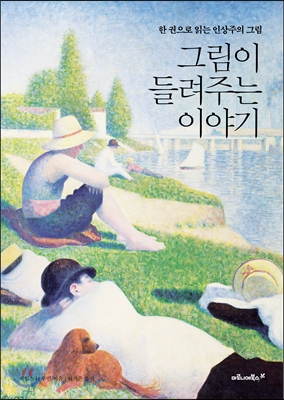
Stories told through pictures - Impressionist Paintings in One Volume is a book that looks at Impressionism, the 19th-century art movement that changed art history, from a new and original perspective.
Rather than introducing the works of artists from different eras, which are common around us, James H. Rubin divided his works into topics related to everyday life, such as the aesthetics of the city and life.
Through this format, the author offers readers a way to think critically and analytically about Impressionism, helping them understand the overall content that allowed the painter's originality and dedication to a then-unconventional subject matter to be captured.
You can experience modern life as intended by well-known impressionist painters such as Edouard Manet, Claude Monet, Pierre-Auguste Renoir, Edgar Degas, and Paul Cézanne.
Stories told through pictures - Impressionist Paintings in One Volume is a book that looks at Impressionism, the 19th-century art movement that changed art history, from a new and original perspective.
Rather than introducing the works of artists from different eras, which are common around us, James H. Rubin divided his works into topics related to everyday life, such as the aesthetics of the city and life.
Through this format, the author offers readers a way to think critically and analytically about Impressionism, helping them understand the overall content that allowed the painter's originality and dedication to a then-unconventional subject matter to be captured.
You can experience modern life as intended by well-known impressionist painters such as Edouard Manet, Claude Monet, Pierre-Auguste Renoir, Edgar Degas, and Paul Cézanne.
- You can preview some of the book's contents.
Preview
index
Pioneers and Innovators
Eugène Boudin [Empress Eugénie and her entourage visiting Trouville]
Jean-Baptiste Camille Corot [The Road to Sevres]
Claude Monet [Bodmer Oak, Forest of Fontainebleau]
Frédéric Bazille, [Landscape of Chailly]
Gustave Courbet [Normandy Coastal Landscape]
Edouard Manet [Concert in the Tuileries Gardens]
Edouard Manet [Luncheon on the Grass]
Claude Monet [The Terrace at Sainte-Adère]
Paul Cézanne [The Kidnapping]
Edgar Degas [The Bellelli Family]
Gustave Caillebotte [The Scrapers]
Claude Monet [Impression, Sunrise]
Colleagues and Supporters
Pierre-Auguste Renoir [Aunt Anthony's Tavern]
Henri Fantin-Latour [Workshop in the Batignolles District]
Édouard Manet [Portrait of Émile Zola]
Frédéric Bazille [The Wounded Claude Monet (Makeshift Field Hospital)]
Frédéric Bazille [The Painter's Studio in the Rue Condamine]
Pierre-Auguste Renoir [Alfred Sisley and Lise Treaud in the Garden]
Paul Cézanne [Portrait of Achille Enfrere]
Edouard Manet [Rest - Berthe Morisot in her Studio]
Edgar Degas [Portrait of Edmond Duranty]
Claude Monet [Turkey]
Pierre-Auguste Renoir [Madame Georges Charpentier and Children]
Édouard Manet [baritone Jean-Baptiste Faure as Hamlet]
Family and friends
Frédéric Bazille [Family Reunion]
Edgar Degas [Carriage at the Racecourse]
Mary Cassatt [Carriage Driving]
Mary Cassatt [Mrs. Cassatt reading Le Figaro]
Paul Cézanne [Self-Portrait]
Paul Cézanne [Madame Cézanne in a Red Armchair]
Édouard Manet [The Monet Family in the Garden at Argenteuil]
Claude Monet [Camille on Her Deathbed]
Mary Cassatt [Little Girl in a Blue Armchair]
Edouard Manet [Stephane Mallarmé]
Berthe Morisot [The Painter's Sister Sitting at the Window]
Berthe Morisot [Julie Manet and Her Greyhound Laertes]
City life and urban landscapes
Claude Monet [The Princess' Garden, Louvre]
Claude Monet [Boulevard des Capucines]
Gustave Caillebotte [Young Man Standing at a Window]
Gustave Caillebotte [Traffic Island, Boulevard Haussmann]
Pierre-Auguste Renoir [Grand Boulevard]
Armand Guillaumin [The Seine, a Rainy Day]
Gustave Caillebotte [Paris Street, Rainy Day]
Pierre-Auguste Renoir [Pont des Arts, Paris]
Alfred Sisley [Canal Saint-Martin]
Edgar Degas [Two Women Ironing or Laundress]
Edgar Degas [Absinthe]
Edouard Manet [Lunch at Lathuille's Restaurant]
Fashion and Entertainment
Claude Monet [Women in the Garden]
Edouard Manet [Nana]
Pierre-Auguste Renoir [The Woman of Algiers]
Edouard Manet [Woman with a Fan - Portrait of Nina de Caillas]
Berthe Morisot [Pink Dress]
Pierre-Auguste Renoir [The Baffled Auditorium]
Mary Cassatt [from the bleachers]
Edgar Degas [Ballet Rehearsal on Stage]
Edgar Degas [The Song of the Dog]
Edgar Degas [Lady Lara of the Fernando Circus]
Pierre-Auguste Renoir [Ball at the Moulin de la Galette]
Edouard Manet [Bar at the Folies-Bergère]
Industry and Technology
Armand Guillaumin [Sunset at Ivry]
Paul Cézanne [Railroad Cut]
Alfred Sisley [The Road to Masin, Louveciennes]
Alfred Sisley [Sand heaps on the Seine at Marly]
Camille Pissarro [Factory near Pontoise]
Claude Monet [Railway Bridge at Argenteuil]
Claude Monet [Country Train]
Claude Monet [Gare Saint-Lazare - Arrival of the Train]
Claude Monet [Coal Workers]
Gustave Caillebotte [European Bridge]
Armand Guillaumin [Aqueduct and Railway at Arceuil]
Camille Pissarro [Place de la Fayette, Rouen]
Politics and Society
Edouard Manet [The Execution of Emperor Maximilian]
Edouard Manet [Civil War]
Claude Monet [Reconstruction of the Argenteuil Road Bridge]
Edgar Degas [The Vicomte de Lepic and His Daughters (Place de la Concorde)]
Claude Monet [Rue Saint-Denis, Festival of June 30, 1878]
Armand Guillaumin [The Arcole Pont seen from the Seine quay where the city hall is located]
Edgar Degas [Portrait of a Cotton Office, New Orleans]
Berthe Morisot [The Nanny]
Camille Pissarro [The Seine at Port Marly, Laundry]
Camille Pissarro [The Harvest of Montfoucauld]
Camille Pissarro [Portrait of Paul Cézanne]
Georges Seurat [Bathers at Asnières]
Interiors and still lifes
Paul Cézanne [Still Life with a Black Table Clock]
Berthe Morisot [Interior]
Frédéric Bazille [Grooming]
Edgar Degas [The Displeased Face]
Berthe Morisot [The Cradle]
Edouard Manet [Luncheon in the Studio]
Gustave Caillebotte [Luncheon]
Mary Cassatt [Afternoon Tea]
Camille Pissarro [Still Life - Boats in a Round Basket]
Edouard Manet [Pink and Clematis in a Crystal Vase]
Vincent van Gogh [Sunflowers]
Paul Cézanne [Still Life with Plaster Statue of Cupid]
Gender and Sexuality
Edouard Manet [Olympia]
Berthe Morisot [Port of Lorient]
Berthe Morisot [The Balcony of Passy]
Mary Cassatt [Girl with Hair]
Berthe Morisot [Before Psyche]
Berthe Morisot [Reading in the Outdoors]
Pierre-Auguste Renoir [Motherhood]
Pierre-Auguste Renoir [The Little Boat]
Marie Bracquemont [On the Terrace at Sevres]
Gustave Caillebotte [Man Drying His Body]
Pierre-Auguste Renoir [Griffin with a Bathing Woman]
Édouard Manet [Portrait of Irma Brunner (Viennese Woman)]
Walking and traveling
Camille Pissarro [L'Hermitage at Pontoise]
Pierre-Auguste Renoir [Road to Louveciennes]
Camille Pissarro [Fox Hill, Upper Norwood]
Armand Guillaumin [Walking through the Plains of Bagno]
Alfred Sisley [Under the Bridge at Hampton Court]
Pierre-Auguste Renoir [The Craggy Rocks of Lestac]
Claude Monet [Bordighera]
Paul Gauguin [Martinique Landscape]
Claude Monet [Valley of the Creuse (Sunlight Effects)]
Claude Monet [The Red House at Bioerngaard, Norway]
Alfred Sisley [Waves, Lady's Cove, Langland Bay]
Claude Monet [Path in the Giverny Garden]
Sports and Outdoor Activities
Frédéric Bazille [Summer Landscape]
Claude Monet [La Grenouillere]
Claude Monet [Hotel Roche Noir, Trouville]
Alfred Sisley [Pont de Villeneuve-la-Garenne]
Claude Monet [Road Bridge and Sailboat]
Pierre-Auguste Renoir [Luncheon of the Boating Party]
Alfred Sisley [The Boat Race at Molsey on the Thames]
Gustave Caillebotte, Rowers on the Hyère
Edgar Degas [Parade of Colors]
Claude Monet [Woman with Parasol, Looking Left]
Paul Cézanne [The Bather]
Pierre-Auguste Renoir [The Great Bathers]
Light and air
Camille Pissarro [Frost]
Alfred Sisley [The Flood at Port Marly]
Alfred Sisley [Snow at Louveciennes]
Armand Guillaumin [Snow in Ivry]
Paul Gauguin [The Eye on the Rue Carcel]
Gustave Caillebotte [Rain in Hyères]
Armand Guillaumin [Epinay-sur-Orge]
Edouard Manet [Laundry]
Edouard Manet [Boating]
Camille Pissarro [Côte des Boeufs in the Hermitage]
Paul Cézanne [The Winding Road, Pontoise]
Georges Seurat [The Bec du Hoc, The Grand Can]
Renewal and regeneration
Paul Cézanne [Eternal Woman]
Vincent van Gogh [Bridge on the Seine at Asnières]
Paul Gauguin [The Blue Roof (Rouen)]
Pierre-Auguste Renoir [Umbrellas]
Georges Seurat [A Sunday Afternoon on the Island of La Grande Jatte]
Camille Pissarro [The Apple Pickers]
Mary Cassatt [Mother and Child (Oval Mirror)]
Paul Cézanne [Still Life with Chest of Drawers]
Vincent van Gogh [Augustine Roulin (Lullaby)]
Vincent van Gogh [Starry Night]
Paul Cézanne [The Card Players]
Armand Guillaumin [Age Landscape]
Techniques and other media
Edgar Degas [Fourteen-Year-Old Ballerina]
Camille Pissarro [Fan Painting - Cabbage Harvesters]
Edgar Degas [Bath]
Mary Cassatt [Lydia Cassatt in the Theatre]
Edgar Degas [Mary Cassatt - Etruscan Gallery at the Louvre]
Edgar Degas [Stephane Mallarmé and Pierre-Auguste Renoir]
Edouard Manet [Hot Air Balloon]
Camille Pissarro [Twilight over Haystacks]
Edgar Degas [The Lady's Name-day]
Paul Cézanne [Rocks near the cave above Chateau Noir]
Mary Cassatt [letter]
Edouard Vuillard [Interior with Pink Wallpaper II]
Late works and legacy
Georges Seurat [Chauille Dance]
Paul Signac [The Setting Sun.
Fishing for sardines.
Adagio.
Work 221]
Paul Signac [Work 217, Rhythm and Angles on Enamel Background,
[Tone and Color, Portrait of Mr. Felix Fénéon, 1890]
Claude Monet [Rouen Cathedral, West Façade in Sunlight]
Paul Cézanne [Mont Sainte-Victoire and the Viaduct over the Arc River Valley]
Paul Signac [Demolition Worker]
Camille Pissarro [Opera Street, Sunny Winter Morning]]
Pierre-Auguste Renoir [The Judgement of Paris]
Claude Monet [Water Lilies]
Childe Haesum [Winter in Union Square]
Henri Matisse [Joy of Life]
Jackson Pollock [Five Feet Deep]
Eugène Boudin [Empress Eugénie and her entourage visiting Trouville]
Jean-Baptiste Camille Corot [The Road to Sevres]
Claude Monet [Bodmer Oak, Forest of Fontainebleau]
Frédéric Bazille, [Landscape of Chailly]
Gustave Courbet [Normandy Coastal Landscape]
Edouard Manet [Concert in the Tuileries Gardens]
Edouard Manet [Luncheon on the Grass]
Claude Monet [The Terrace at Sainte-Adère]
Paul Cézanne [The Kidnapping]
Edgar Degas [The Bellelli Family]
Gustave Caillebotte [The Scrapers]
Claude Monet [Impression, Sunrise]
Colleagues and Supporters
Pierre-Auguste Renoir [Aunt Anthony's Tavern]
Henri Fantin-Latour [Workshop in the Batignolles District]
Édouard Manet [Portrait of Émile Zola]
Frédéric Bazille [The Wounded Claude Monet (Makeshift Field Hospital)]
Frédéric Bazille [The Painter's Studio in the Rue Condamine]
Pierre-Auguste Renoir [Alfred Sisley and Lise Treaud in the Garden]
Paul Cézanne [Portrait of Achille Enfrere]
Edouard Manet [Rest - Berthe Morisot in her Studio]
Edgar Degas [Portrait of Edmond Duranty]
Claude Monet [Turkey]
Pierre-Auguste Renoir [Madame Georges Charpentier and Children]
Édouard Manet [baritone Jean-Baptiste Faure as Hamlet]
Family and friends
Frédéric Bazille [Family Reunion]
Edgar Degas [Carriage at the Racecourse]
Mary Cassatt [Carriage Driving]
Mary Cassatt [Mrs. Cassatt reading Le Figaro]
Paul Cézanne [Self-Portrait]
Paul Cézanne [Madame Cézanne in a Red Armchair]
Édouard Manet [The Monet Family in the Garden at Argenteuil]
Claude Monet [Camille on Her Deathbed]
Mary Cassatt [Little Girl in a Blue Armchair]
Edouard Manet [Stephane Mallarmé]
Berthe Morisot [The Painter's Sister Sitting at the Window]
Berthe Morisot [Julie Manet and Her Greyhound Laertes]
City life and urban landscapes
Claude Monet [The Princess' Garden, Louvre]
Claude Monet [Boulevard des Capucines]
Gustave Caillebotte [Young Man Standing at a Window]
Gustave Caillebotte [Traffic Island, Boulevard Haussmann]
Pierre-Auguste Renoir [Grand Boulevard]
Armand Guillaumin [The Seine, a Rainy Day]
Gustave Caillebotte [Paris Street, Rainy Day]
Pierre-Auguste Renoir [Pont des Arts, Paris]
Alfred Sisley [Canal Saint-Martin]
Edgar Degas [Two Women Ironing or Laundress]
Edgar Degas [Absinthe]
Edouard Manet [Lunch at Lathuille's Restaurant]
Fashion and Entertainment
Claude Monet [Women in the Garden]
Edouard Manet [Nana]
Pierre-Auguste Renoir [The Woman of Algiers]
Edouard Manet [Woman with a Fan - Portrait of Nina de Caillas]
Berthe Morisot [Pink Dress]
Pierre-Auguste Renoir [The Baffled Auditorium]
Mary Cassatt [from the bleachers]
Edgar Degas [Ballet Rehearsal on Stage]
Edgar Degas [The Song of the Dog]
Edgar Degas [Lady Lara of the Fernando Circus]
Pierre-Auguste Renoir [Ball at the Moulin de la Galette]
Edouard Manet [Bar at the Folies-Bergère]
Industry and Technology
Armand Guillaumin [Sunset at Ivry]
Paul Cézanne [Railroad Cut]
Alfred Sisley [The Road to Masin, Louveciennes]
Alfred Sisley [Sand heaps on the Seine at Marly]
Camille Pissarro [Factory near Pontoise]
Claude Monet [Railway Bridge at Argenteuil]
Claude Monet [Country Train]
Claude Monet [Gare Saint-Lazare - Arrival of the Train]
Claude Monet [Coal Workers]
Gustave Caillebotte [European Bridge]
Armand Guillaumin [Aqueduct and Railway at Arceuil]
Camille Pissarro [Place de la Fayette, Rouen]
Politics and Society
Edouard Manet [The Execution of Emperor Maximilian]
Edouard Manet [Civil War]
Claude Monet [Reconstruction of the Argenteuil Road Bridge]
Edgar Degas [The Vicomte de Lepic and His Daughters (Place de la Concorde)]
Claude Monet [Rue Saint-Denis, Festival of June 30, 1878]
Armand Guillaumin [The Arcole Pont seen from the Seine quay where the city hall is located]
Edgar Degas [Portrait of a Cotton Office, New Orleans]
Berthe Morisot [The Nanny]
Camille Pissarro [The Seine at Port Marly, Laundry]
Camille Pissarro [The Harvest of Montfoucauld]
Camille Pissarro [Portrait of Paul Cézanne]
Georges Seurat [Bathers at Asnières]
Interiors and still lifes
Paul Cézanne [Still Life with a Black Table Clock]
Berthe Morisot [Interior]
Frédéric Bazille [Grooming]
Edgar Degas [The Displeased Face]
Berthe Morisot [The Cradle]
Edouard Manet [Luncheon in the Studio]
Gustave Caillebotte [Luncheon]
Mary Cassatt [Afternoon Tea]
Camille Pissarro [Still Life - Boats in a Round Basket]
Edouard Manet [Pink and Clematis in a Crystal Vase]
Vincent van Gogh [Sunflowers]
Paul Cézanne [Still Life with Plaster Statue of Cupid]
Gender and Sexuality
Edouard Manet [Olympia]
Berthe Morisot [Port of Lorient]
Berthe Morisot [The Balcony of Passy]
Mary Cassatt [Girl with Hair]
Berthe Morisot [Before Psyche]
Berthe Morisot [Reading in the Outdoors]
Pierre-Auguste Renoir [Motherhood]
Pierre-Auguste Renoir [The Little Boat]
Marie Bracquemont [On the Terrace at Sevres]
Gustave Caillebotte [Man Drying His Body]
Pierre-Auguste Renoir [Griffin with a Bathing Woman]
Édouard Manet [Portrait of Irma Brunner (Viennese Woman)]
Walking and traveling
Camille Pissarro [L'Hermitage at Pontoise]
Pierre-Auguste Renoir [Road to Louveciennes]
Camille Pissarro [Fox Hill, Upper Norwood]
Armand Guillaumin [Walking through the Plains of Bagno]
Alfred Sisley [Under the Bridge at Hampton Court]
Pierre-Auguste Renoir [The Craggy Rocks of Lestac]
Claude Monet [Bordighera]
Paul Gauguin [Martinique Landscape]
Claude Monet [Valley of the Creuse (Sunlight Effects)]
Claude Monet [The Red House at Bioerngaard, Norway]
Alfred Sisley [Waves, Lady's Cove, Langland Bay]
Claude Monet [Path in the Giverny Garden]
Sports and Outdoor Activities
Frédéric Bazille [Summer Landscape]
Claude Monet [La Grenouillere]
Claude Monet [Hotel Roche Noir, Trouville]
Alfred Sisley [Pont de Villeneuve-la-Garenne]
Claude Monet [Road Bridge and Sailboat]
Pierre-Auguste Renoir [Luncheon of the Boating Party]
Alfred Sisley [The Boat Race at Molsey on the Thames]
Gustave Caillebotte, Rowers on the Hyère
Edgar Degas [Parade of Colors]
Claude Monet [Woman with Parasol, Looking Left]
Paul Cézanne [The Bather]
Pierre-Auguste Renoir [The Great Bathers]
Light and air
Camille Pissarro [Frost]
Alfred Sisley [The Flood at Port Marly]
Alfred Sisley [Snow at Louveciennes]
Armand Guillaumin [Snow in Ivry]
Paul Gauguin [The Eye on the Rue Carcel]
Gustave Caillebotte [Rain in Hyères]
Armand Guillaumin [Epinay-sur-Orge]
Edouard Manet [Laundry]
Edouard Manet [Boating]
Camille Pissarro [Côte des Boeufs in the Hermitage]
Paul Cézanne [The Winding Road, Pontoise]
Georges Seurat [The Bec du Hoc, The Grand Can]
Renewal and regeneration
Paul Cézanne [Eternal Woman]
Vincent van Gogh [Bridge on the Seine at Asnières]
Paul Gauguin [The Blue Roof (Rouen)]
Pierre-Auguste Renoir [Umbrellas]
Georges Seurat [A Sunday Afternoon on the Island of La Grande Jatte]
Camille Pissarro [The Apple Pickers]
Mary Cassatt [Mother and Child (Oval Mirror)]
Paul Cézanne [Still Life with Chest of Drawers]
Vincent van Gogh [Augustine Roulin (Lullaby)]
Vincent van Gogh [Starry Night]
Paul Cézanne [The Card Players]
Armand Guillaumin [Age Landscape]
Techniques and other media
Edgar Degas [Fourteen-Year-Old Ballerina]
Camille Pissarro [Fan Painting - Cabbage Harvesters]
Edgar Degas [Bath]
Mary Cassatt [Lydia Cassatt in the Theatre]
Edgar Degas [Mary Cassatt - Etruscan Gallery at the Louvre]
Edgar Degas [Stephane Mallarmé and Pierre-Auguste Renoir]
Edouard Manet [Hot Air Balloon]
Camille Pissarro [Twilight over Haystacks]
Edgar Degas [The Lady's Name-day]
Paul Cézanne [Rocks near the cave above Chateau Noir]
Mary Cassatt [letter]
Edouard Vuillard [Interior with Pink Wallpaper II]
Late works and legacy
Georges Seurat [Chauille Dance]
Paul Signac [The Setting Sun.
Fishing for sardines.
Adagio.
Work 221]
Paul Signac [Work 217, Rhythm and Angles on Enamel Background,
[Tone and Color, Portrait of Mr. Felix Fénéon, 1890]
Claude Monet [Rouen Cathedral, West Façade in Sunlight]
Paul Cézanne [Mont Sainte-Victoire and the Viaduct over the Arc River Valley]
Paul Signac [Demolition Worker]
Camille Pissarro [Opera Street, Sunny Winter Morning]]
Pierre-Auguste Renoir [The Judgement of Paris]
Claude Monet [Water Lilies]
Childe Haesum [Winter in Union Square]
Henri Matisse [Joy of Life]
Jackson Pollock [Five Feet Deep]
Into the book
Impressionism was the first art movement to depict modern life and environments using techniques that indicated the modernity of the subject matter.
Well-known Impressionist painters include Édouard Manet, Claude Monet, Pierre-Auguste Renoir, Edgar Degas, and Paul Cézanne.
They rejected both the nostalgia for classicism and academic painting, and the traditional art formulas taught in accredited schools, painting what they observed directly in an ostensibly improvisational manner.
Although sketches of finished paintings were often used in the studio, the majority of Impressionist paintings, especially landscapes, were painted outdoors from nature.
Another characteristic of Impressionist painting is the role of color.
Bright colors were used to match the effects of sunlight or modern artificial lighting, and dots or brushstrokes of color create painterly forms.
These aspects seem to reinforce the feeling that time has stopped for a moment, while also expressing a world that is constantly changing.
The Impressionist painters knew each other well, and although sometimes confused, they worked with a passion for a mastery of all subjects, techniques, and styles, which was conveyed through highly original compositions.
The book presents a rich cross-reference and comparison between the paintings, with the intention of making connections between the paintings' detailed interpretations and the broader context of visual culture, other artists, and the artist's own career.
Through this book you will discover the entire history of Impressionism.
But if we look at it another way, we can also feel that the history of Impressionism is not simply a list of pretty pictures.
You will see that it is a broad overview of modern life, as the Impressionist painters intended, and that, despite individual differences, the relationships among the painters make them a cohesive group.
I hope that these strategies will make this book more engaging for all readers, from beginners to the many scholars immersed in the study of Impressionism.
Well-known Impressionist painters include Édouard Manet, Claude Monet, Pierre-Auguste Renoir, Edgar Degas, and Paul Cézanne.
They rejected both the nostalgia for classicism and academic painting, and the traditional art formulas taught in accredited schools, painting what they observed directly in an ostensibly improvisational manner.
Although sketches of finished paintings were often used in the studio, the majority of Impressionist paintings, especially landscapes, were painted outdoors from nature.
Another characteristic of Impressionist painting is the role of color.
Bright colors were used to match the effects of sunlight or modern artificial lighting, and dots or brushstrokes of color create painterly forms.
These aspects seem to reinforce the feeling that time has stopped for a moment, while also expressing a world that is constantly changing.
The Impressionist painters knew each other well, and although sometimes confused, they worked with a passion for a mastery of all subjects, techniques, and styles, which was conveyed through highly original compositions.
The book presents a rich cross-reference and comparison between the paintings, with the intention of making connections between the paintings' detailed interpretations and the broader context of visual culture, other artists, and the artist's own career.
Through this book you will discover the entire history of Impressionism.
But if we look at it another way, we can also feel that the history of Impressionism is not simply a list of pretty pictures.
You will see that it is a broad overview of modern life, as the Impressionist painters intended, and that, despite individual differences, the relationships among the painters make them a cohesive group.
I hope that these strategies will make this book more engaging for all readers, from beginners to the many scholars immersed in the study of Impressionism.
---From the text
Publisher's Review
A new attempt at reading impressionism
This book repeats important information so that readers can pick and choose what they want to see.
I also intentionally placed some paintings in unexpected categories to elicit new dimensions of interpretation.
It reinforces the diverse and comprehensive feel of Impressionism by incorporating aspects that are not immediately associated with Impressionist art, such as industrial landscapes.
Comparative illustrations have been inserted appropriately to provide information necessary for reading the text, and in cases where comparison is not possible due to circumstances, the illustrations have been marked so that readers can refer to them, allowing the book to be utilized in a variety of ways.
Through detailed writing, comparisons of specific works, and a wealth of illustrations, the author creates a link between the rich visual culture of the time and the Impressionist artists who forged their own paths regardless of the circumstances of their time.
This book will offer a completely new perspective on the entire history of contemporary Impressionism and will bring about new innovations.
Introduction Abstract
Impressionism was the first art movement to depict modern life and environments using techniques that indicated the modernity of the subject matter.
Well-known Impressionist painters include Édouard Manet, Claude Monet, Pierre-Auguste Renoir, Edgar Degas, and Paul Cézanne.
They rejected both the nostalgia for classicism and academic painting, and the traditional art formulas taught in accredited schools, painting what they observed directly in an ostensibly improvisational manner.
Although sketches of finished paintings were often used in the studio, the majority of Impressionist paintings, especially landscapes, were painted outdoors from nature.
Another characteristic of Impressionist painting is the role of color.
Bright colors were used to match the effects of sunlight or modern artificial lighting, and dots or brushstrokes of color create painterly forms.
These aspects seem to reinforce the feeling that time has stopped for a moment, while also expressing a world that is constantly changing.
The Impressionist painters knew each other well, and although sometimes confused, they worked with a fusion of subjects, techniques, and styles, which was conveyed through highly original compositions.
The book presents a rich cross-reference and comparison between the paintings, with the intention of making connections between the paintings' detailed interpretations and the broader context of visual culture, other artists, and the artist's own career.
Through this book you will discover the entire history of Impressionism.
But if we look at it another way, we can also feel that the history of Impressionism is not simply a list of pretty pictures.
You will see that it is a broad overview of modern life, as the Impressionist painters intended, and that, despite individual differences, the relationships among the painters make them a cohesive group.
I hope that these strategies will make this book more engaging for all readers, from beginners to the many scholars immersed in the study of Impressionism.
This book repeats important information so that readers can pick and choose what they want to see.
I also intentionally placed some paintings in unexpected categories to elicit new dimensions of interpretation.
It reinforces the diverse and comprehensive feel of Impressionism by incorporating aspects that are not immediately associated with Impressionist art, such as industrial landscapes.
Comparative illustrations have been inserted appropriately to provide information necessary for reading the text, and in cases where comparison is not possible due to circumstances, the illustrations have been marked so that readers can refer to them, allowing the book to be utilized in a variety of ways.
Through detailed writing, comparisons of specific works, and a wealth of illustrations, the author creates a link between the rich visual culture of the time and the Impressionist artists who forged their own paths regardless of the circumstances of their time.
This book will offer a completely new perspective on the entire history of contemporary Impressionism and will bring about new innovations.
Introduction Abstract
Impressionism was the first art movement to depict modern life and environments using techniques that indicated the modernity of the subject matter.
Well-known Impressionist painters include Édouard Manet, Claude Monet, Pierre-Auguste Renoir, Edgar Degas, and Paul Cézanne.
They rejected both the nostalgia for classicism and academic painting, and the traditional art formulas taught in accredited schools, painting what they observed directly in an ostensibly improvisational manner.
Although sketches of finished paintings were often used in the studio, the majority of Impressionist paintings, especially landscapes, were painted outdoors from nature.
Another characteristic of Impressionist painting is the role of color.
Bright colors were used to match the effects of sunlight or modern artificial lighting, and dots or brushstrokes of color create painterly forms.
These aspects seem to reinforce the feeling that time has stopped for a moment, while also expressing a world that is constantly changing.
The Impressionist painters knew each other well, and although sometimes confused, they worked with a fusion of subjects, techniques, and styles, which was conveyed through highly original compositions.
The book presents a rich cross-reference and comparison between the paintings, with the intention of making connections between the paintings' detailed interpretations and the broader context of visual culture, other artists, and the artist's own career.
Through this book you will discover the entire history of Impressionism.
But if we look at it another way, we can also feel that the history of Impressionism is not simply a list of pretty pictures.
You will see that it is a broad overview of modern life, as the Impressionist painters intended, and that, despite individual differences, the relationships among the painters make them a cohesive group.
I hope that these strategies will make this book more engaging for all readers, from beginners to the many scholars immersed in the study of Impressionism.
GOODS SPECIFICS
- Date of issue: January 17, 2017
- Page count, weight, size: 406 pages | 944g | 165*216*35mm
- ISBN13: 9788960533882
- ISBN10: 8960533882
You may also like
카테고리
korean


korean

![GQ KOREA Mark (Monthly): December [2025]](http://librairie.coreenne.fr/cdn/shop/files/8ef265dbbfbf186523ed75ba7319009d.jpg?v=1765340328&width=3840)


