

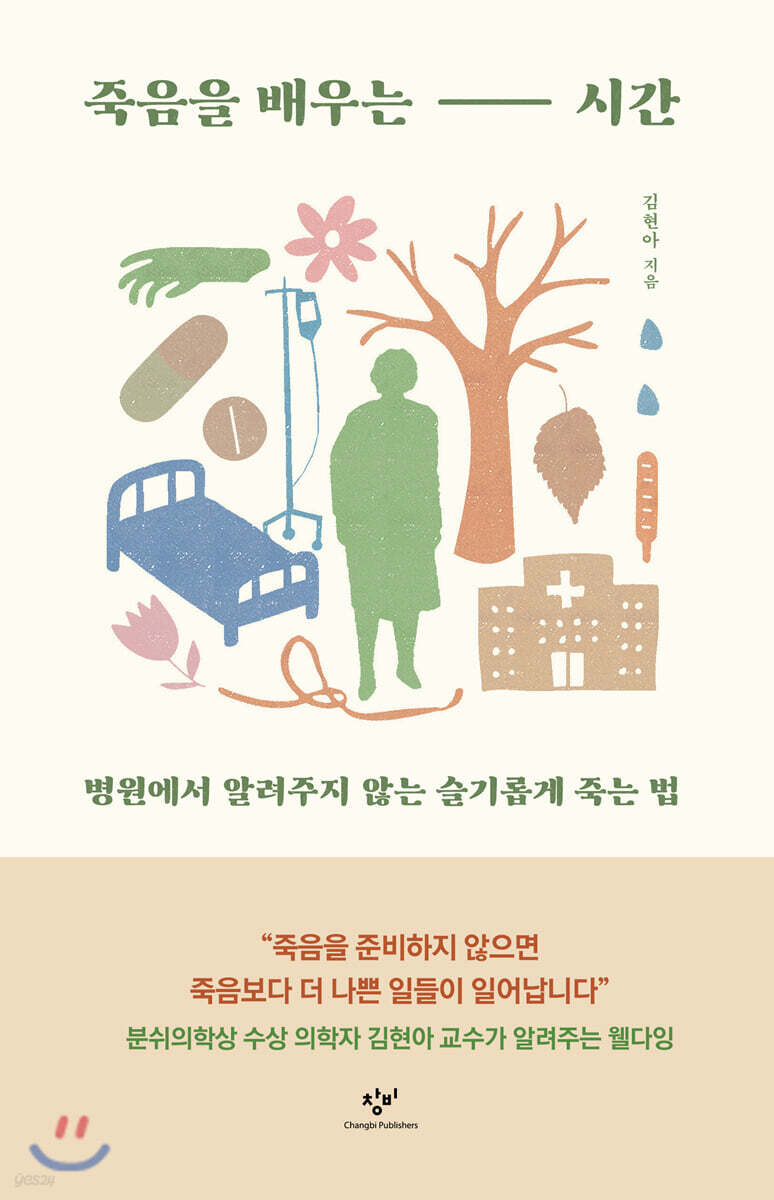
Time to learn about death
 |
Description
Book Introduction
2021 Sejong Books Selected for the General Education Category To avoid being fooled by the 'death business' of modern medicine, Everyone needs time to learn about death. Death is the greatest event that happens to everyone without exception. Yet, we are less prepared for this once-in-a-lifetime event than we are for buying a new car. How to end your life with dignity in a way of your own choosing is not taught at home, in school, or even in hospitals. The author, Professor Kim Hyun-ah (Department of Rheumatology, Hallym University), is a leading medical scientist in Korean rheumatology research who has made various achievements in basic and clinical research on arthritis. The author, who has been intensely contemplating "what is a good death" on the front lines of the medical field for 30 years, conveys the message in "Time to Learn About Death" that maintaining health and learning about and preparing for death are equally important for the goal of a good life. The author points out that modern medicine has made us less prepared for death by portraying aging and death as diseases that need to be cured. As medical technology advances, we live in a paradoxical era where medicine increasingly ignores death. This book contains everything we need to know about aging and death, from how to write an advance directive for life-sustaining treatment. This book can be read as a kind of manual that specifically explains what preparations are actually necessary to end one's life the way one wants without being fooled by the hospital's 'death business'. |
- You can preview some of the book's contents.
Preview
index
Starting the book
Prologue: The Beginning of a Day
Chapter 1: Death Scene
1 Doctors who were not prepared for the last moment
2 At the crossroads of life and death
√ Medical Humanities Class I
Chapter 2: The Centennial Era
3 Why did we have to die like this?
4 From Aging to Death
5. Don't look for the reason for birth, aging, illness, and death.
√ Medical Humanities Class II
Chapter 3: The Business of Death
6 Why Do Doctors Lie in the Face of Death?
7 Instructions for Use of the End-of-Life Treatment Decision Act
8 What Happens in the ICU
9 Legal Circus
√ Preparing an advance directive for medical care
Chapter 4: A Good Death, a Desirable Death
10 The Future of Death
11 Some Death
I want to die at home
Epilogue My Ending Note
Prologue: The Beginning of a Day
Chapter 1: Death Scene
1 Doctors who were not prepared for the last moment
2 At the crossroads of life and death
√ Medical Humanities Class I
Chapter 2: The Centennial Era
3 Why did we have to die like this?
4 From Aging to Death
5. Don't look for the reason for birth, aging, illness, and death.
√ Medical Humanities Class II
Chapter 3: The Business of Death
6 Why Do Doctors Lie in the Face of Death?
7 Instructions for Use of the End-of-Life Treatment Decision Act
8 What Happens in the ICU
9 Legal Circus
√ Preparing an advance directive for medical care
Chapter 4: A Good Death, a Desirable Death
10 The Future of Death
11 Some Death
I want to die at home
Epilogue My Ending Note
Publisher's Review
We also treat natural causes
What will I do when my body becomes so frail that I can't move my arms or legs on my own and need help to eat? There's probably no one who hasn't imagined this terrifying thought in their head since middle age.
But usually, we don't think about it for long and just erase it from our minds as if it were an unlucky imagination.
There are countless different ideas about what kind of death is desirable.
Many people would prefer to die peacefully at home, surrounded by loving family and friends, but only a few are so fortunate.
The average human lifespan, which was around 40 years just 100 years ago, has nearly doubled in recent years.
The functions of the human body remain almost the same, but the period of use has been dramatically extended.
The author points out that modern medicine is caught in a dilemma between extending human lifespan and improving quality of life.
When a patient suffering from a terminal illness eventually dies in a hospital, it would be humane for medical professionals to share in the grief of the surviving family and offer comfort to them.
However, in the modern medical system, medical staff tend to think of options that avoid blame from guardians rather than prioritizing the patient's quality of life and quality of death.
Furthermore, we must examine whether there is anything that could be criticized at the hospital's regular death conference and even whether it would have a negative impact on the hospital's evaluation.
This system makes it increasingly difficult for doctors to view death as a natural process.
The entire process of death is broken down into various diagnoses and we are rushing to respond to emergency situations as they arise.
If they can't eat well, they are forced to eat, and if they can't breathe well, they are intubated.
All natural stages of human death are transformed into treatable diseases.
This 'medicalization of death' causes prolonged suffering and economic loss to patients and their families, and wastes limited medical resources at the national level.
Life-Sustaining Treatment Decisions Act and Advance Directives for Life-Sustaining Treatment
In Korea, discussions about palliative care and end-of-life care are still in their infancy.
The author points out that in this medical system, once a person is admitted to a hospital in an emergency situation, they are inevitably subject to life-sustaining treatment regardless of the wishes of the person or their guardian.
In 2009, the Supreme Court recognized the right of patients and their families to choose a dignified death in the case of Mrs. Kim at Boramae Hospital, sparking a full-fledged discussion on well-dying in Korea, and in 2016, the Act on Decisions on Life-Sustaining Treatment finally passed the plenary session of the National Assembly.
However, the bill's insufficient details have led to criticism that it may actually encourage the meaningless prolongation of the end-of-life process, and in reality, out of the 330,000 advance directives written up until 2019, only 725 cases resulted in death according to them.
Unless the patient and guardian reach a sufficient agreement in advance, the advance directive for life-sustaining treatment is likely to become a scrap of paper in an emergency.
In an emergency situation, you may have no choice but to hand over the power to decide life or death to the hospital and your guardians. Therefore, it is important to clearly express your wishes to your guardians and to have sufficient conversations with them on a regular basis.
This is also essential for families who may suffer from guilt when they give up life-sustaining treatment.
"Learning About Death" provides detailed explanations from the family's perspective on when to begin organizing their thoughts and discussing death, as well as the administrative procedures required.
In addition to writing an advance directive, it includes information necessary to prepare for death, such as how to cope with functional decline that occurs during the aging process, how to use long-term care insurance for the elderly, and things to consider when choosing a place to die.
Your Ending Note
The reality is that while we worry countless times about how to live well, we only vaguely think about death or put it off.
The practical information and manuals provided in this book will be most useful when each person has prepared his or her own answer to the question, "What is a good death?"
In the Korean reality where people are routinely hospitalized and then suddenly face death, long-term consideration and preparation are essential to ending one's life with dignity.
"Learning to Die" introduces various well-dying cases from Korea and abroad, including the case of a 91-year-old grandmother who went on a long trip with her family after being diagnosed with cancer, an example of someone who refused hospitalization and died comfortably with her family through hospice care, and Dr. Goodall who chose euthanasia and passed away in Switzerland.
The various deaths make us ask ourselves, 'How do I want to die?'
The author ends the book with an 'ending note' to his daughters.
“I’ve made all the preparations to the point where I could die at home.
As you read the cheerful letter listing bucket lists, saying things like, “I don’t want to be sick, so I’ll take as many painkillers as I want,” the reader will also start to think about what to write in their ending note.
A good life and a good death are ultimately the same thing, is the message left behind by "Time to Learn to Die."
What will I do when my body becomes so frail that I can't move my arms or legs on my own and need help to eat? There's probably no one who hasn't imagined this terrifying thought in their head since middle age.
But usually, we don't think about it for long and just erase it from our minds as if it were an unlucky imagination.
There are countless different ideas about what kind of death is desirable.
Many people would prefer to die peacefully at home, surrounded by loving family and friends, but only a few are so fortunate.
The average human lifespan, which was around 40 years just 100 years ago, has nearly doubled in recent years.
The functions of the human body remain almost the same, but the period of use has been dramatically extended.
The author points out that modern medicine is caught in a dilemma between extending human lifespan and improving quality of life.
When a patient suffering from a terminal illness eventually dies in a hospital, it would be humane for medical professionals to share in the grief of the surviving family and offer comfort to them.
However, in the modern medical system, medical staff tend to think of options that avoid blame from guardians rather than prioritizing the patient's quality of life and quality of death.
Furthermore, we must examine whether there is anything that could be criticized at the hospital's regular death conference and even whether it would have a negative impact on the hospital's evaluation.
This system makes it increasingly difficult for doctors to view death as a natural process.
The entire process of death is broken down into various diagnoses and we are rushing to respond to emergency situations as they arise.
If they can't eat well, they are forced to eat, and if they can't breathe well, they are intubated.
All natural stages of human death are transformed into treatable diseases.
This 'medicalization of death' causes prolonged suffering and economic loss to patients and their families, and wastes limited medical resources at the national level.
Life-Sustaining Treatment Decisions Act and Advance Directives for Life-Sustaining Treatment
In Korea, discussions about palliative care and end-of-life care are still in their infancy.
The author points out that in this medical system, once a person is admitted to a hospital in an emergency situation, they are inevitably subject to life-sustaining treatment regardless of the wishes of the person or their guardian.
In 2009, the Supreme Court recognized the right of patients and their families to choose a dignified death in the case of Mrs. Kim at Boramae Hospital, sparking a full-fledged discussion on well-dying in Korea, and in 2016, the Act on Decisions on Life-Sustaining Treatment finally passed the plenary session of the National Assembly.
However, the bill's insufficient details have led to criticism that it may actually encourage the meaningless prolongation of the end-of-life process, and in reality, out of the 330,000 advance directives written up until 2019, only 725 cases resulted in death according to them.
Unless the patient and guardian reach a sufficient agreement in advance, the advance directive for life-sustaining treatment is likely to become a scrap of paper in an emergency.
In an emergency situation, you may have no choice but to hand over the power to decide life or death to the hospital and your guardians. Therefore, it is important to clearly express your wishes to your guardians and to have sufficient conversations with them on a regular basis.
This is also essential for families who may suffer from guilt when they give up life-sustaining treatment.
"Learning About Death" provides detailed explanations from the family's perspective on when to begin organizing their thoughts and discussing death, as well as the administrative procedures required.
In addition to writing an advance directive, it includes information necessary to prepare for death, such as how to cope with functional decline that occurs during the aging process, how to use long-term care insurance for the elderly, and things to consider when choosing a place to die.
Your Ending Note
The reality is that while we worry countless times about how to live well, we only vaguely think about death or put it off.
The practical information and manuals provided in this book will be most useful when each person has prepared his or her own answer to the question, "What is a good death?"
In the Korean reality where people are routinely hospitalized and then suddenly face death, long-term consideration and preparation are essential to ending one's life with dignity.
"Learning to Die" introduces various well-dying cases from Korea and abroad, including the case of a 91-year-old grandmother who went on a long trip with her family after being diagnosed with cancer, an example of someone who refused hospitalization and died comfortably with her family through hospice care, and Dr. Goodall who chose euthanasia and passed away in Switzerland.
The various deaths make us ask ourselves, 'How do I want to die?'
The author ends the book with an 'ending note' to his daughters.
“I’ve made all the preparations to the point where I could die at home.
As you read the cheerful letter listing bucket lists, saying things like, “I don’t want to be sick, so I’ll take as many painkillers as I want,” the reader will also start to think about what to write in their ending note.
A good life and a good death are ultimately the same thing, is the message left behind by "Time to Learn to Die."
GOODS SPECIFICS
- Date of publication: July 15, 2020
- Page count, weight, size: 344 pages | 522g | 140*210*30mm
- ISBN13: 9788936465957
- ISBN10: 8936465953
You may also like
카테고리
korean


korean

![GQ KOREA Mark (Monthly): December [2025]](http://librairie.coreenne.fr/cdn/shop/files/8ef265dbbfbf186523ed75ba7319009d.jpg?v=1765340328&width=3840)


