

body
 |
Description
Book Introduction
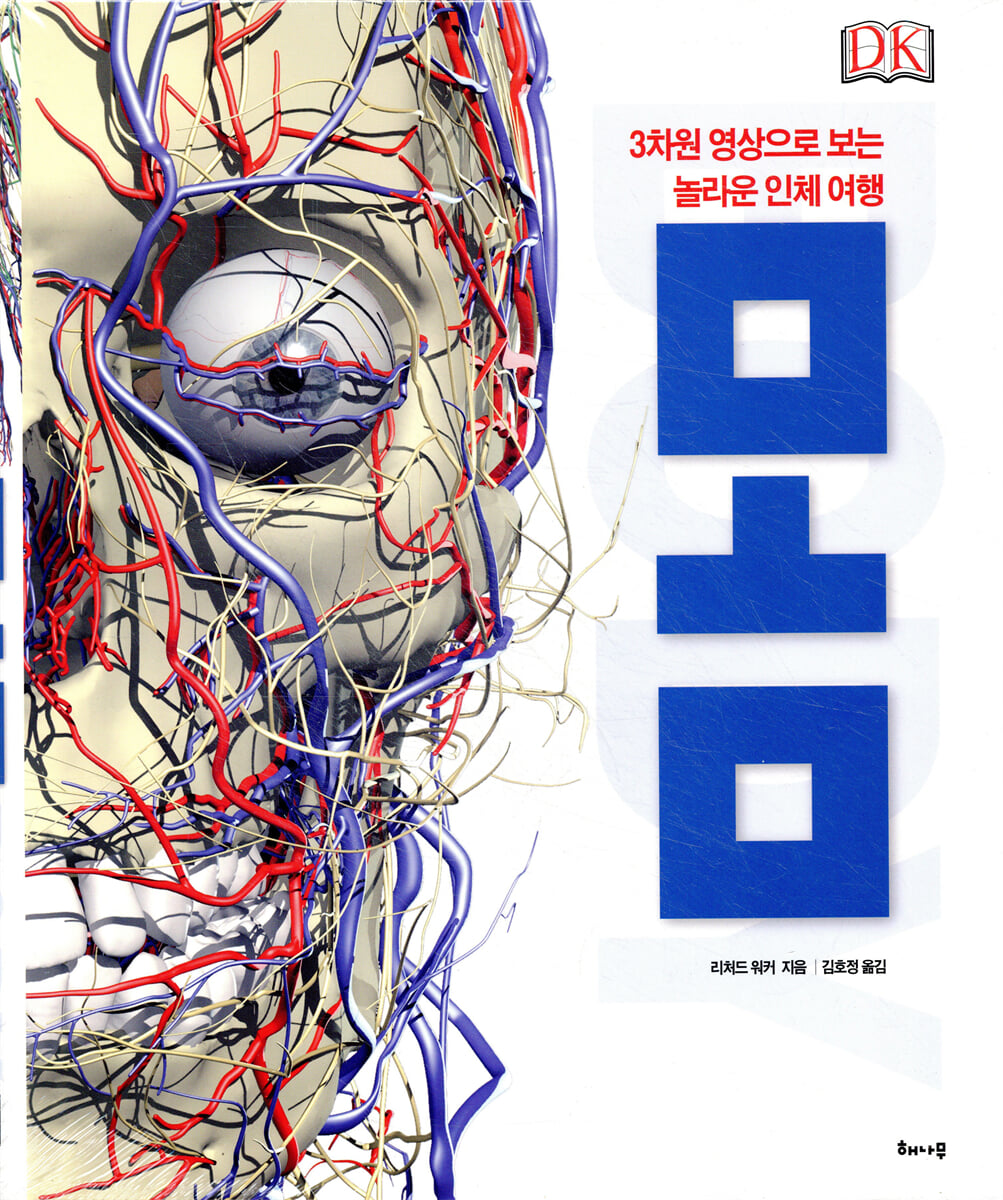
This book is a book about exploring the human body through MRI scans.
Each organ in our body has its own surprising number and interesting story.
It also introduces examples of anatomical knowledge used in real life and short episodes related to our human body, allowing us to build up various common sense about our body along with eye-catching color illustrations.
Each organ in our body has its own surprising number and interesting story.
It also introduces examples of anatomical knowledge used in real life and short episodes related to our human body, allowing us to build up various common sense about our body along with eye-catching color illustrations.
- You can preview some of the book's contents.
Preview
Publisher's Review
"What is essential is invisible to the eye."
But now, we can see the really important parts of our body hidden beneath the skin!
The little prince said.
“What is essential is invisible to the eye.”
The little prince was right.
The respiratory system that allows us to breathe, the blood vessels that act as blood vessels that carry nutrients and oxygen to every corner of the body, the muscles in the legs that allow us to walk or run powerfully by kicking off the ground, the skeleton that gives shape to the entire body, and other organs that are responsible for each function that allow humans to live a full life as humans are mostly hidden deep under the skin tissue.
So people wondered.
How our muscles move when we walk, how we can see objects, and what path food takes when it enters our mouths and eventually comes out as feces.
People began to cut open their bodies and explore every nook and cranny of the human body to satisfy their curiosity.
However, the anatomical knowledge known so far was not easy for the general public to understand due to difficult terms and complex drawings.
A 3D image that scans the human body in detail!
A dissection scene unfolds before your eyes!
The world's first digital model created using MRI scans of actual bodies recreates the wondrous world of the human body!
This book is based on the world's first fully digital model of a real body created using magnetic resonance imaging (MRI).
The video, completed using the latest image reproduction technology and 3D computer graphics, creates the illusion that a dissection is taking place right before your eyes.
The images contained here scan the thousands of parts that make up our bodies, from large structures like the brain to tiny bones and tiny muscles in the middle ear.
It shows how the eye perceives light and creates images, how blood flows from the heart and circulates through our body, and how food is digested in the intestines.
As you turn each page, you'll unravel a fascinating thread of curiosity about the human body, uncovering the intricately fitted bones, the tens of thousands of kilometers of blood vessels that pump blood throughout the body, and the incredible efficiency of the digestive system in digesting food and excreting waste.
Did you know that the salivary glands produce a liter of saliva a day?
The skin, which appears to be the thinnest and lightest organ, is actually the heaviest organ, weighing 5 kilograms?
The small intestine is a whopping 6.5 meters long?
Each organ in our body has its own surprising number and interesting story.
The fact that our noses can distinguish over ten thousand odors, that our salivary glands produce about a liter of saliva a day, that our entire hand contains over 17,000 tactile receptors for sensing sensations, and that the villi in our small intestine, if laid flat, would be the size of a wide tennis court, make us realize the boundless and delicate capabilities of our bodies.
The "Did You Know?" section introduces examples of anatomical knowledge applied in real life and brief historical episodes related to the human body, making reading even more enjoyable, along with the splendid images of the human body.
The story of how Vesalius, the Belgian physician who published the first case study of human anatomy in a book, stole a hanged corpse for dissection in his youth; how many scientists thought that sperm, when first discovered in the late 17th century, already contained a small, fully formed human being; and how today's forensic sculptors can reconstruct the face of a dead person based on a human skull. These stories help us understand the history of human exploration and trial and error, as well as recent anatomical achievements.
An anatomy textbook that anyone can read easily and enjoyably.
A fun story about our bodies, combined with stunning visuals!
"Body" was written by science writer Richard Walker, author of numerous books on health and science for adults and children, and supervised by scientist Robert Winston, known for his work on the BBC TV series.
The wonders of the human body, revealed by two scientific experts recognized for their exceptional public communication skills, will provide new insights and interest in our bodies.
In particular, this book will be a smart friend who provides kind answers to children who ask questions about everything they encounter.
For parents who are tired of being bombarded with questions from their children, this is an essential guide to keep on your bookshelf and to turn to for help.
Of course, it will also be an interesting read for adults who are interested in our bodies.
The technical terminology for anatomical structures used in the translation was referenced from the 4th edition of the Korean Anatomical Terminology established by the Korean Society of Anatomists. Considering that recently established anatomical terminology is not yet fully known or used, important terms are listed alongside older terms to enhance the reader's understanding.
Additionally, OHP films were inserted in the middle to specifically explain the movement of blood, oxygen, and nutrients through each organ.
But now, we can see the really important parts of our body hidden beneath the skin!
The little prince said.
“What is essential is invisible to the eye.”
The little prince was right.
The respiratory system that allows us to breathe, the blood vessels that act as blood vessels that carry nutrients and oxygen to every corner of the body, the muscles in the legs that allow us to walk or run powerfully by kicking off the ground, the skeleton that gives shape to the entire body, and other organs that are responsible for each function that allow humans to live a full life as humans are mostly hidden deep under the skin tissue.
So people wondered.
How our muscles move when we walk, how we can see objects, and what path food takes when it enters our mouths and eventually comes out as feces.
People began to cut open their bodies and explore every nook and cranny of the human body to satisfy their curiosity.
However, the anatomical knowledge known so far was not easy for the general public to understand due to difficult terms and complex drawings.
A 3D image that scans the human body in detail!
A dissection scene unfolds before your eyes!
The world's first digital model created using MRI scans of actual bodies recreates the wondrous world of the human body!
This book is based on the world's first fully digital model of a real body created using magnetic resonance imaging (MRI).
The video, completed using the latest image reproduction technology and 3D computer graphics, creates the illusion that a dissection is taking place right before your eyes.
The images contained here scan the thousands of parts that make up our bodies, from large structures like the brain to tiny bones and tiny muscles in the middle ear.
It shows how the eye perceives light and creates images, how blood flows from the heart and circulates through our body, and how food is digested in the intestines.
As you turn each page, you'll unravel a fascinating thread of curiosity about the human body, uncovering the intricately fitted bones, the tens of thousands of kilometers of blood vessels that pump blood throughout the body, and the incredible efficiency of the digestive system in digesting food and excreting waste.
Did you know that the salivary glands produce a liter of saliva a day?
The skin, which appears to be the thinnest and lightest organ, is actually the heaviest organ, weighing 5 kilograms?
The small intestine is a whopping 6.5 meters long?
Each organ in our body has its own surprising number and interesting story.
The fact that our noses can distinguish over ten thousand odors, that our salivary glands produce about a liter of saliva a day, that our entire hand contains over 17,000 tactile receptors for sensing sensations, and that the villi in our small intestine, if laid flat, would be the size of a wide tennis court, make us realize the boundless and delicate capabilities of our bodies.
The "Did You Know?" section introduces examples of anatomical knowledge applied in real life and brief historical episodes related to the human body, making reading even more enjoyable, along with the splendid images of the human body.
The story of how Vesalius, the Belgian physician who published the first case study of human anatomy in a book, stole a hanged corpse for dissection in his youth; how many scientists thought that sperm, when first discovered in the late 17th century, already contained a small, fully formed human being; and how today's forensic sculptors can reconstruct the face of a dead person based on a human skull. These stories help us understand the history of human exploration and trial and error, as well as recent anatomical achievements.
An anatomy textbook that anyone can read easily and enjoyably.
A fun story about our bodies, combined with stunning visuals!
"Body" was written by science writer Richard Walker, author of numerous books on health and science for adults and children, and supervised by scientist Robert Winston, known for his work on the BBC TV series.
The wonders of the human body, revealed by two scientific experts recognized for their exceptional public communication skills, will provide new insights and interest in our bodies.
In particular, this book will be a smart friend who provides kind answers to children who ask questions about everything they encounter.
For parents who are tired of being bombarded with questions from their children, this is an essential guide to keep on your bookshelf and to turn to for help.
Of course, it will also be an interesting read for adults who are interested in our bodies.
The technical terminology for anatomical structures used in the translation was referenced from the 4th edition of the Korean Anatomical Terminology established by the Korean Society of Anatomists. Considering that recently established anatomical terminology is not yet fully known or used, important terms are listed alongside older terms to enhance the reader's understanding.
Additionally, OHP films were inserted in the middle to specifically explain the movement of blood, oxygen, and nutrients through each organ.
GOODS SPECIFICS
- Date of issue: March 10, 2007
- Format: Hardcover book binding method guide
- Page count, weight, size: 96 pages | 920g | 265*310*15mm
- ISBN13: 9788989799580
- ISBN10: 8989799589
You may also like
카테고리
korean


korean

![ELLE 엘르 스페셜 에디션 A형 : 12월 [2025]](http://librairie.coreenne.fr/cdn/shop/files/b8e27a3de6c9538896439686c6b0e8fb.jpg?v=1766436872&width=3840)


